Keep this author quotes for later
Sign in to save

Rebecca Skloot

The most-loved lines from Rebecca Skloot, drawn from 1 book in the library.

Lines labelled “HourLife takeaway” are our wording of the book’s ideas and may paraphrase it. Only lines in quotation marks are the author’s own words, with where they appear. Check the book for exact wording before you quote it. Spot an error?

Behind every sample is a person with a name, a family and a life.

The Immortal Life of Henrietta Lacks Rebecca Skloot HourLife takeaway

For decades labs knew the cells only as HeLa, and the name behind them was often given out wrongly as Helen Lane. Skloot starts with the woman instead: a tobacco farmer's daughter from Clover, Virginia, who moved to Turner Station near Baltimore and raised five children. The book keeps returning her to the centre of her own story.


Nobody asked Henrietta, and at the time that was normal, which is exactly the problem.

The Immortal Life of Henrietta Lacks Rebecca Skloot HourLife takeaway

Taking tissue from patients for research without telling them was routine in 1951. The book does not cast one doctor as a villain. It shows a system in which nobody thought a poor Black patient in a public ward needed to be told, and it traces how slowly the rules changed.

One woman’s cells changed medicine while her own children struggled to pay for a doctor.

The Immortal Life of Henrietta Lacks Rebecca Skloot HourLife takeaway

HeLa helped test the polio vaccine and fed research into cancer, viruses and much else. Meanwhile the Lacks children grew up poor, and as adults several of them could not afford health insurance. The book sets the two facts side by side and lets the gap speak.

Being told something is not the same as understanding it.

The Immortal Life of Henrietta Lacks Rebecca Skloot HourLife takeaway

When researchers took blood from the family in the 1970s, the family believed they were being tested for the cancer that killed Henrietta. Nobody explained in plain words what the samples were for. Consent given in language people cannot follow is not really consent.

Who profits from tissue taken from your body is still an open question.

The Immortal Life of Henrietta Lacks Rebecca Skloot HourLife takeaway

The book follows the case of John Moore, whose doctor developed a commercial cell line from his removed spleen. California's Supreme Court ruled that Moore had no property right in his cells. Companies sold HeLa for years, and the Lacks family received nothing.

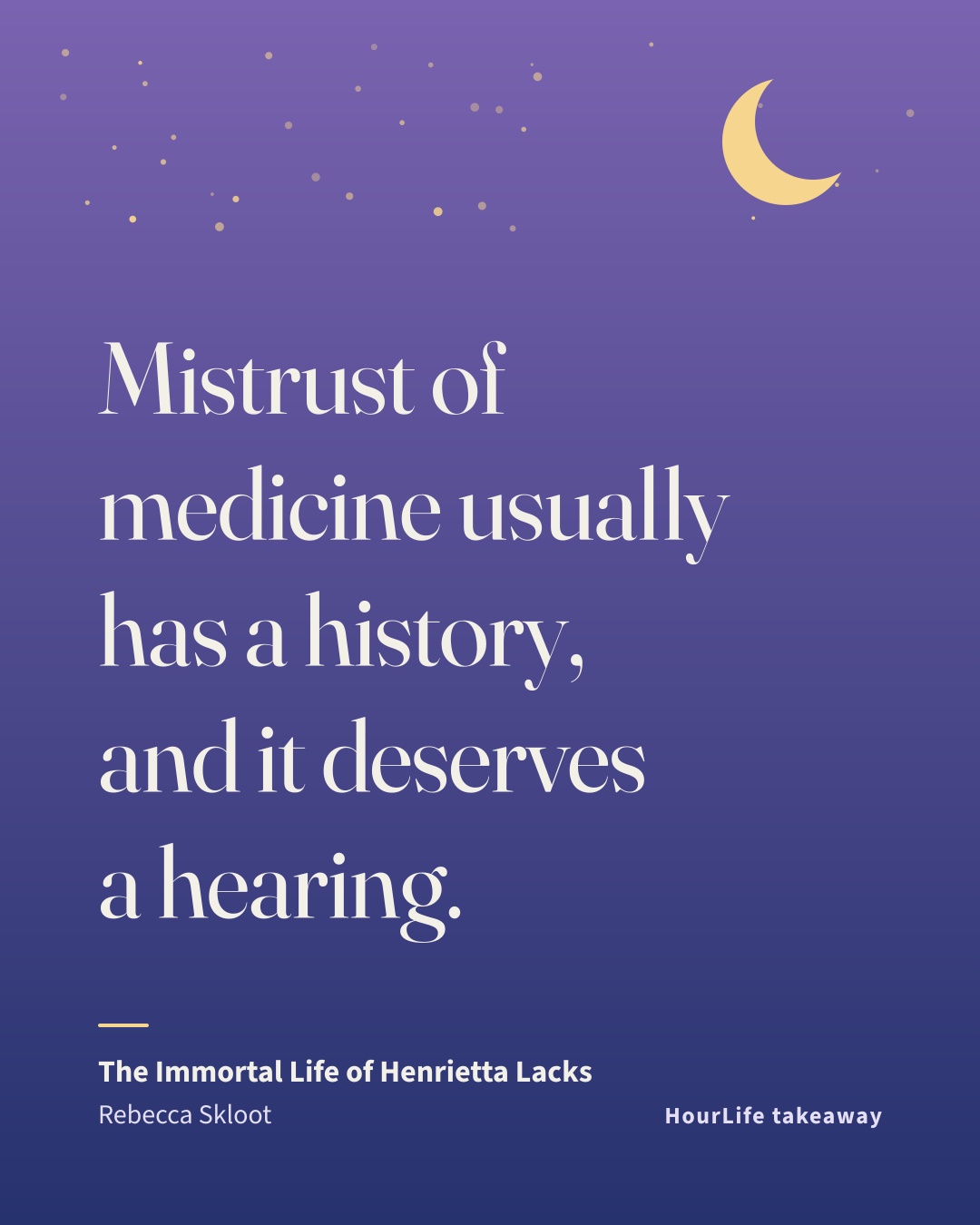
Mistrust of medicine usually has a history, and it deserves a hearing.

The Immortal Life of Henrietta Lacks Rebecca Skloot HourLife takeaway

The Lacks family grew up with stories of night doctors who took Black people for experiments, and with the real record of the Tuskegee syphilis study. Skloot shows why their fear made sense. Explaining, listening and following up are part of good research, not extras.

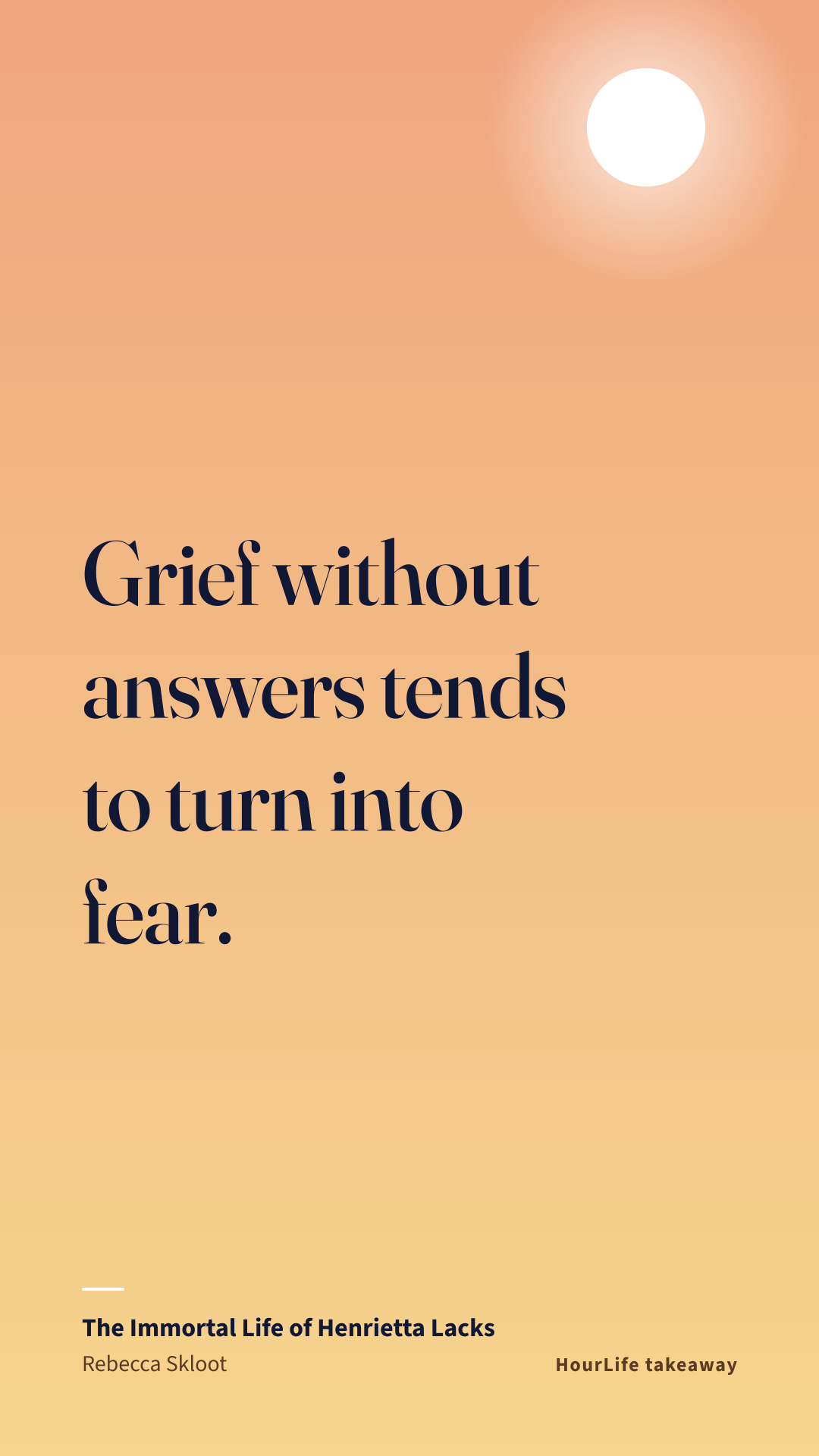
Grief without answers tends to turn into fear.

The Immortal Life of Henrietta Lacks Rebecca Skloot HourLife takeaway

Deborah was a small child when her mother died, and she never learned what had happened to her older sister Elsie. With so few facts she worried whether the cells could feel pain and whether her mother was being cloned. Clear information, given with care, eased some of that weight.

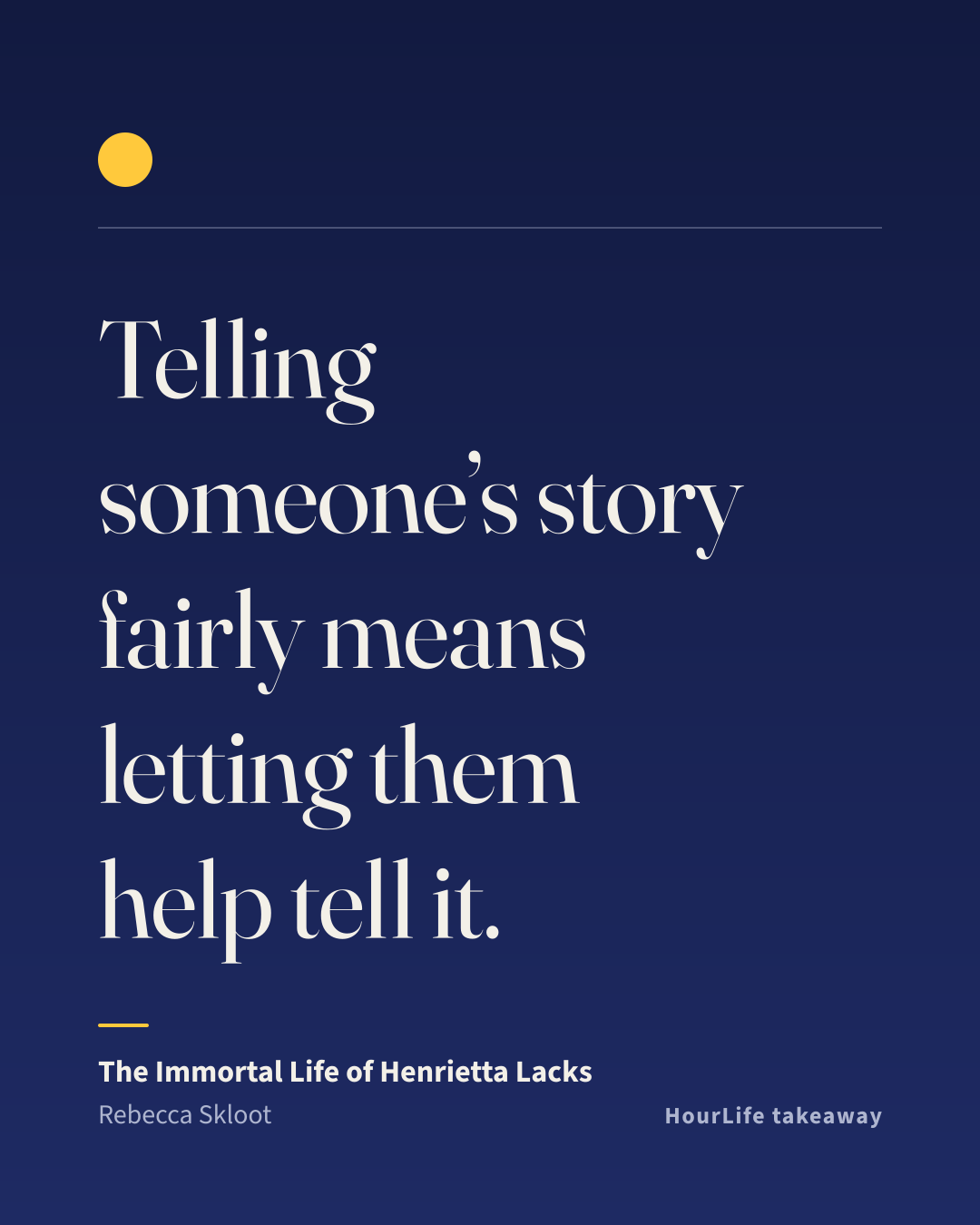
Telling someone’s story fairly means letting them help tell it.

The Immortal Life of Henrietta Lacks Rebecca Skloot HourLife takeaway

Skloot spent years earning the family's trust, especially Deborah's, and she put their voices, doubts and anger into the book. She also wrote herself into the story. That choice shows how much listening a fair account of other people takes.

Science can be a gift and a harm at the same time, and both should be said.

The Immortal Life of Henrietta Lacks Rebecca Skloot HourLife takeaway

The book does not argue that HeLa should never have been grown. It argues that the benefits and the harm happened together. A fair account names the vaccines and the discoveries, and it names the woman and the family who were left out.

Keep this going in the app.

HourLife turns these ideas into a daily system — goals, habits, focus, and reflection in one private place.