Keep this author quotes for later
Sign in to save

Robert H. Lustig

The most-loved lines from Robert H. Lustig, drawn from 1 book in the library.

Lines labelled “HourLife takeaway” are our wording of the book’s ideas and may paraphrase it. Only lines in quotation marks are the author’s own words, with where they appear. Check the book for exact wording before you quote it. Spot an error?

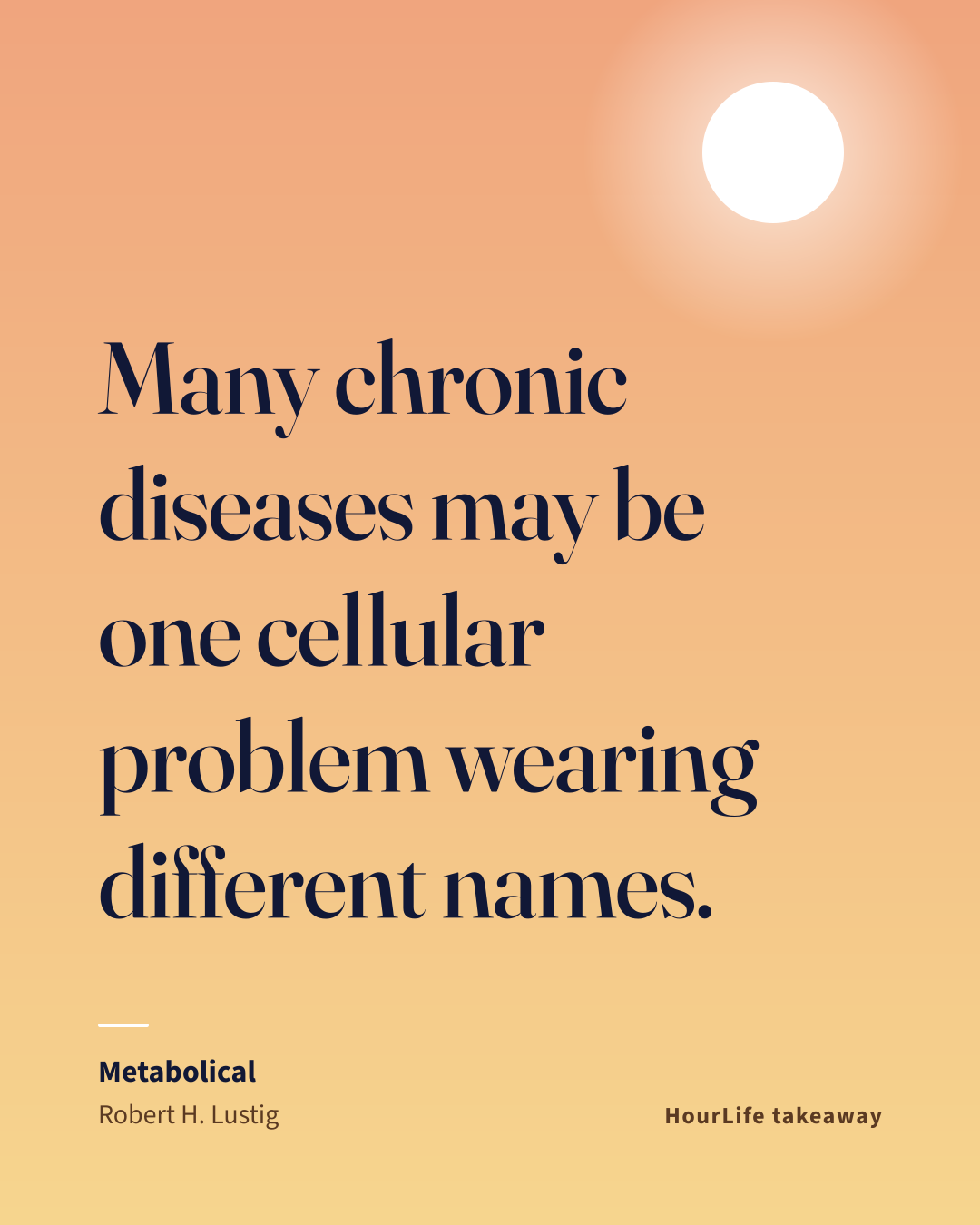
Many chronic diseases may be one cellular problem wearing different names.

Metabolical Robert H. Lustig HourLife takeaway

Lustig argues that type 2 diabetes, fatty liver disease, heart disease and several other conditions share the same few faults inside the cell. He counts eight of them, from glycation to autophagy. If he is right, fixing the shared faults helps several diagnoses at once.


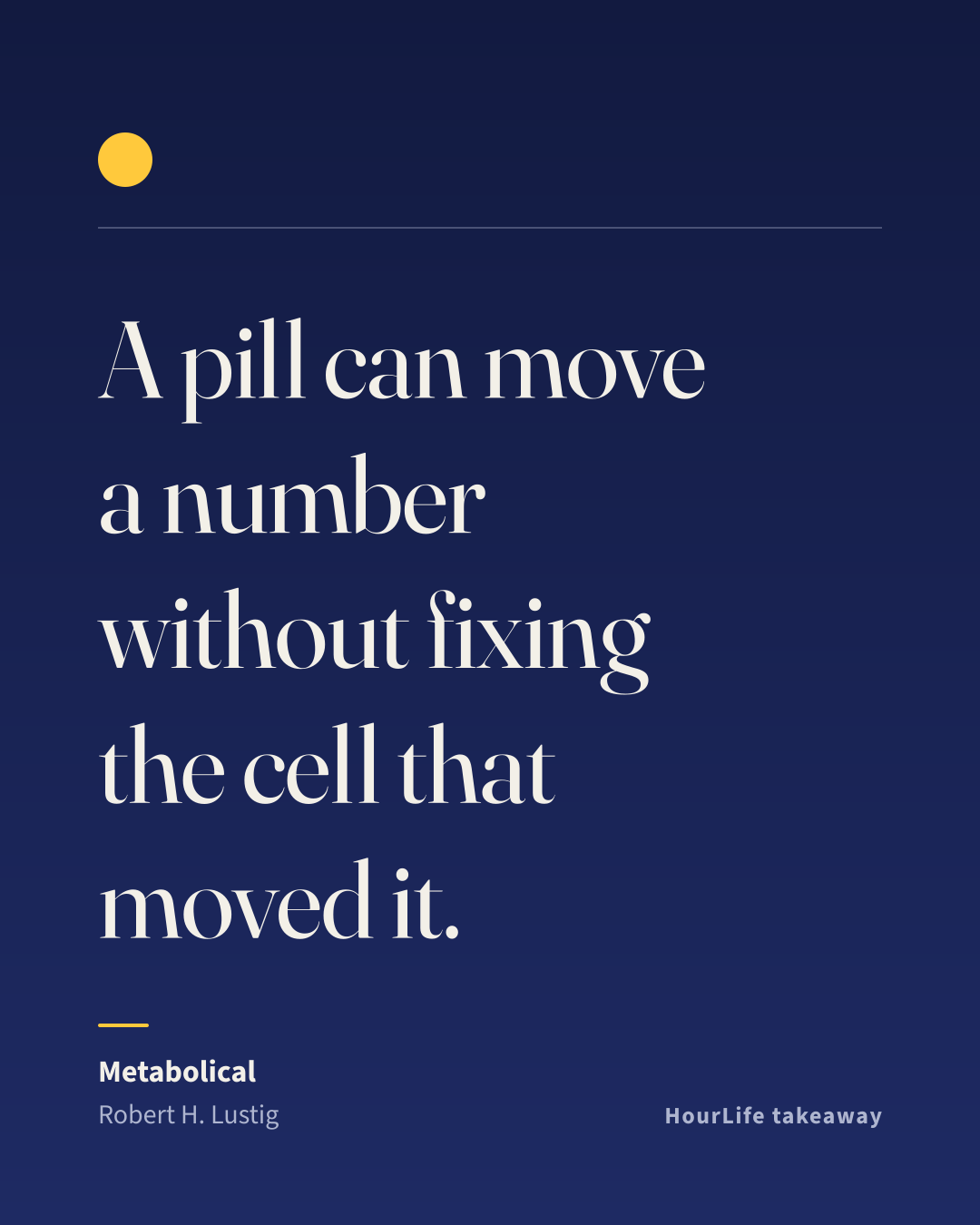
A pill can move a number without fixing the cell that moved it.

Metabolical Robert H. Lustig HourLife takeaway

Drugs for blood sugar, cholesterol and blood pressure act on the readings. Lustig's point is that the eight subcellular pathologies are hard to treat with drugs but respond to what you eat, which he calls being foodable. That is a reason to change food alongside treatment, never a reason to drop treatment on your own.

The problem is less what is in the food than what was done to it.

Metabolical Robert H. Lustig HourLife takeaway

Processing adds sugar, strips out fibre and changes fats so a product lasts longer and costs less. Lustig cares more about that treatment than about counting single nutrients. An apple and apple juice contain the same sugar, but only one still has its fibre.

Real food passes two tests: it protects the liver and it feeds the gut.

Metabolical Robert H. Lustig HourLife takeaway

This is the book's rule of thumb. The liver handles most of the fructose and alcohol you take in, and the gut and its bacteria need fibre. A food that spares one and feeds the other is doing its job.

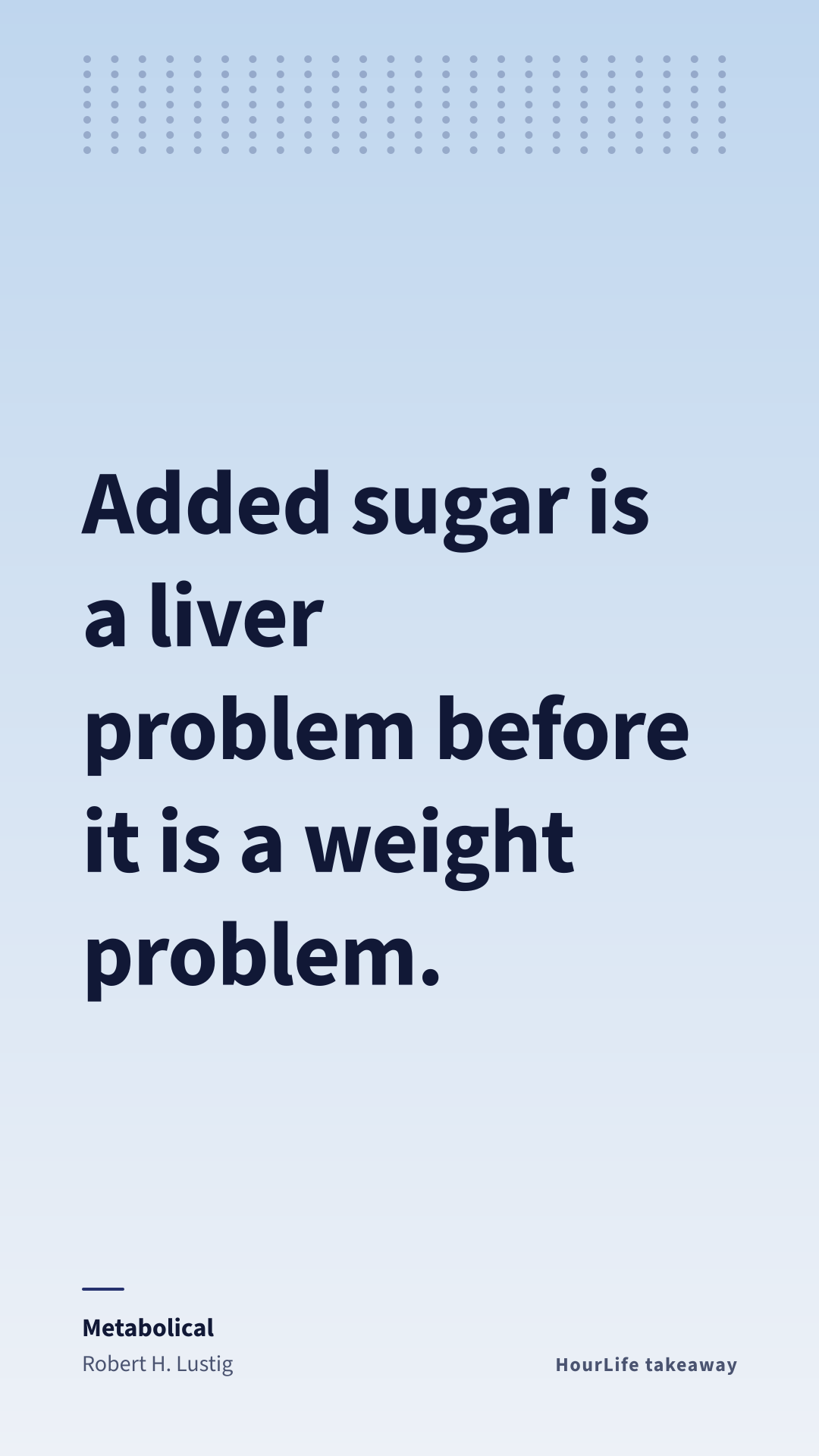
Added sugar is a liver problem before it is a weight problem.

Metabolical Robert H. Lustig HourLife takeaway

Lustig argues that fructose is processed mostly in the liver, and that a large dose without fibre pushes the liver to turn some of it into fat. He links that liver fat to insulin resistance. Other researchers think the harm comes mostly from extra calories overall, so how special fructose is remains debated.

Fibre is the first thing processing takes out, and one of the most useful.

Metabolical Robert H. Lustig HourLife takeaway

In Lustig's account fibre slows how fast sugar reaches the liver and feeds the bacteria in the gut. Whole fruit comes with its fibre and juice does not. Refining grain and juicing fruit both remove it.

You can be a normal weight and still be metabolically unwell.

Metabolical Robert H. Lustig HourLife takeaway

Lustig stresses that weight is a poor guide to what is happening inside the cell. Some people of normal weight carry fat in the liver and show insulin resistance. The scale cannot tell you that, which is one reason to talk to your doctor about other checks.

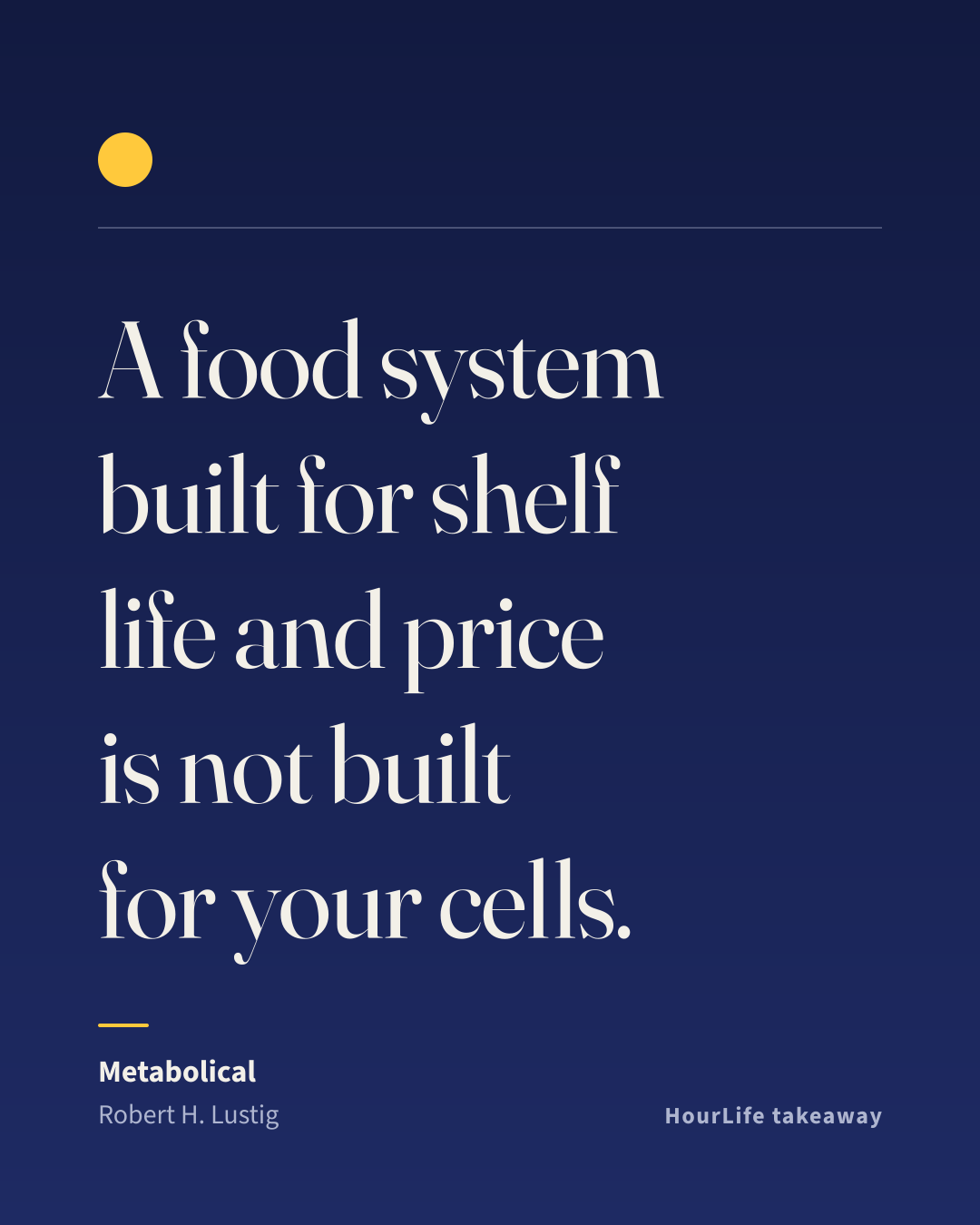
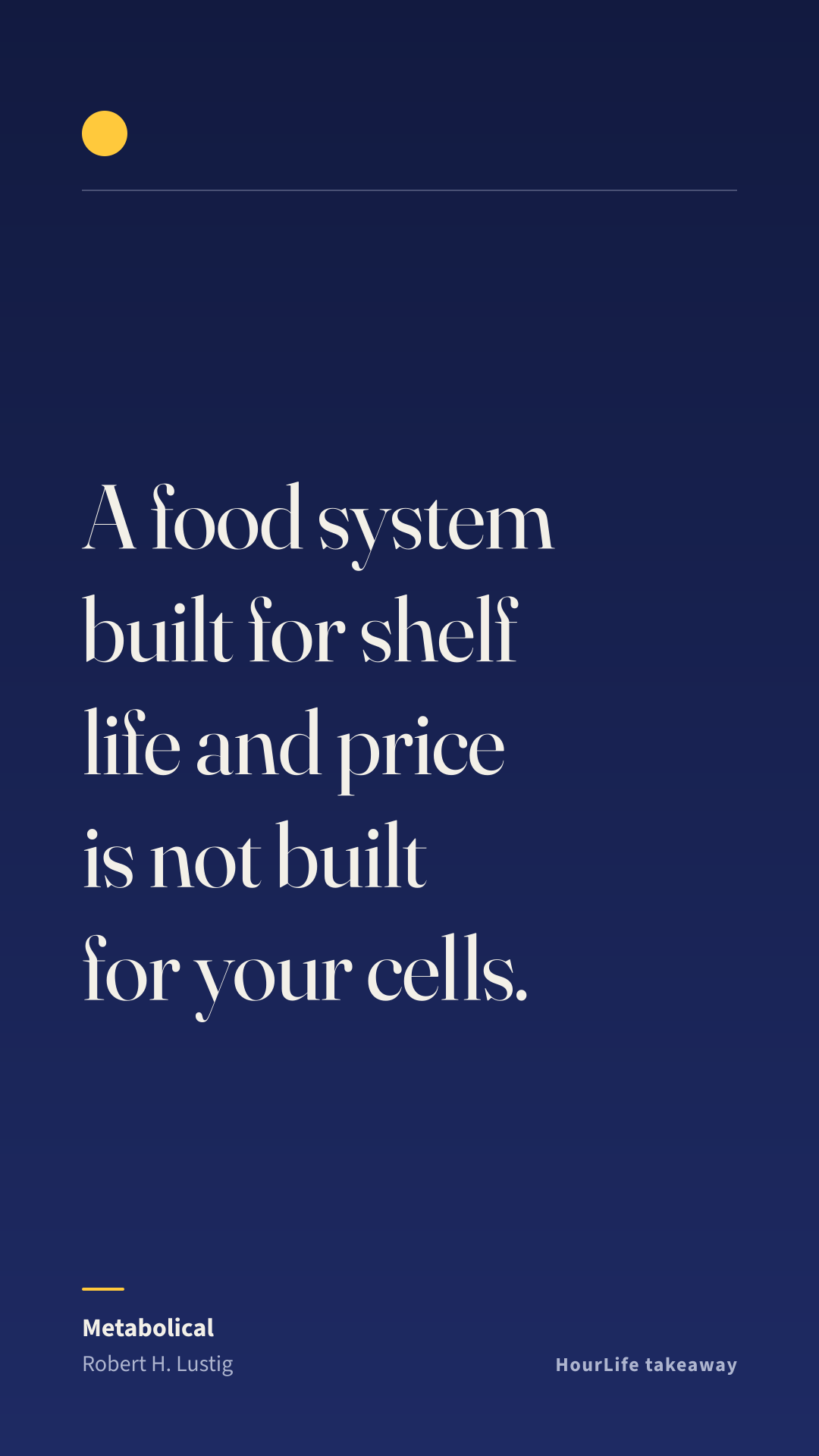
A food system built for shelf life and price is not built for your cells.

Metabolical Robert H. Lustig HourLife takeaway

Lustig points at the food industry for selling products made to keep and to sell, and at regulators and dietary advice for being slow to respond. He also faults medicine for being organised around treating disease once it shows up. He treats this as a system problem, not a willpower problem.

Changing what you eat can change what your medicine does, so keep your doctor in the loop.

Metabolical Robert H. Lustig HourLife takeaway

Eating less sugar and more fibre can shift blood sugar and blood pressure, sometimes quickly. If you take medicine for either, a dose that was right before may not be right after. Deciding that is your doctor's job, not a book's.

Keep this going in the app.

HourLife turns these ideas into a daily system — goals, habits, focus, and reflection in one private place.