Keep this author quotes for later
Sign in to save

Robert M. Sapolsky

The most-loved lines from Robert M. Sapolsky, drawn from 1 book in the library.

Lines labelled “HourLife takeaway” are our wording of the book’s ideas and may paraphrase it. Only lines in quotation marks are the author’s own words, with where they appear. Check the book for exact wording before you quote it. Spot an error?

One act has causes on every timescale at once, from a neuron firing a second ago to selection over millions of years.

Behave Robert M. Sapolsky HourLife takeaway

This is the book's spine. Each early chapter steps further back from the same moment: the brain, then sensory cues, hormones, months of brain change, adolescence, childhood and the womb, genes, culture and evolution. No level wins, and you cannot explain the act while ignoring any of them.


The frontal cortex is the part of you that does the harder thing when it is the right thing, and it is the last part of the brain to finish developing.

Behave Robert M. Sapolsky HourLife takeaway

Sapolsky gives adolescence a chapter of its own because the frontal cortex is not fully wired until about the mid-twenties. That helps explain why teenagers take more risks, especially in front of peers. It also means the region doing the most self-control work is the one most shaped by experience.

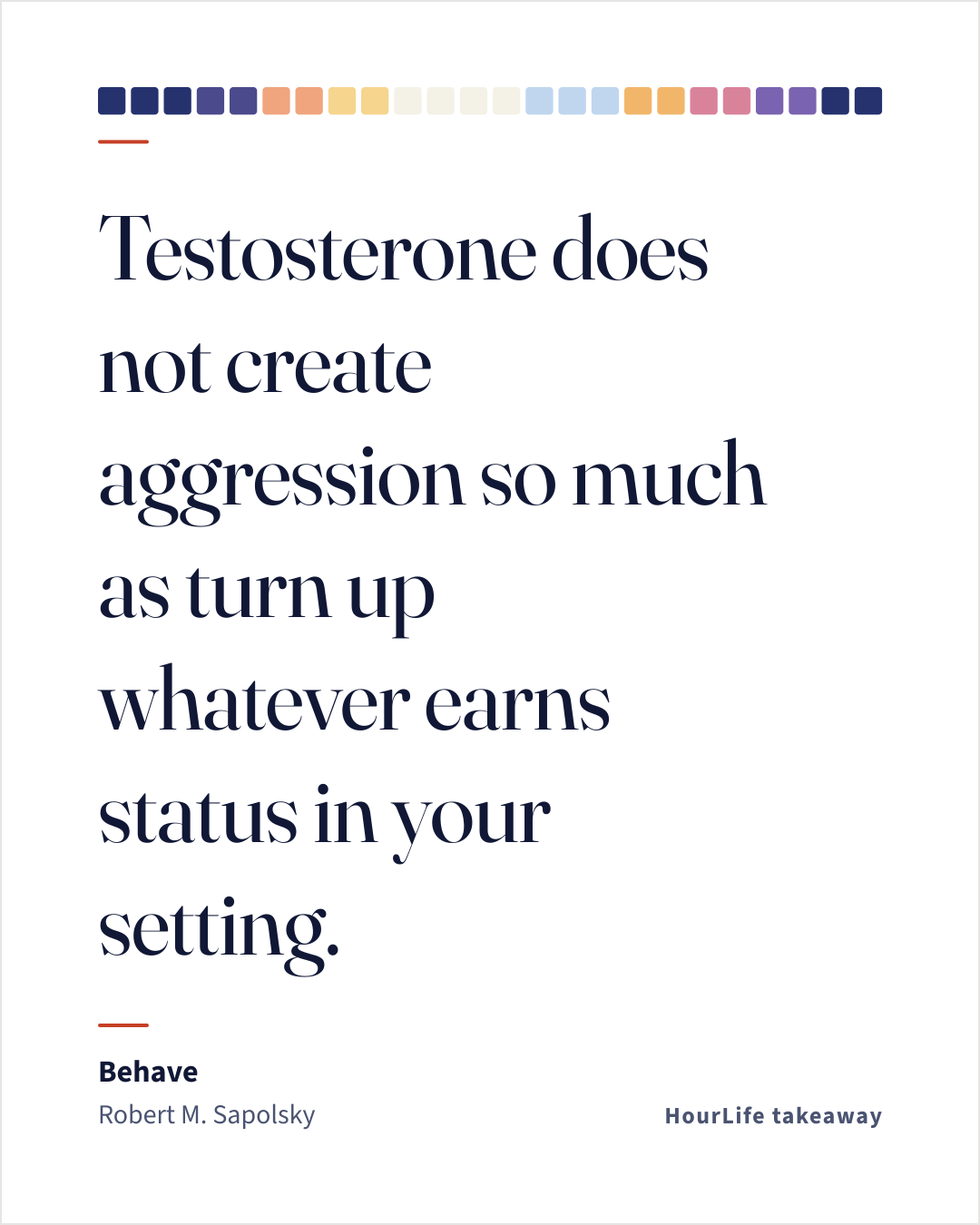
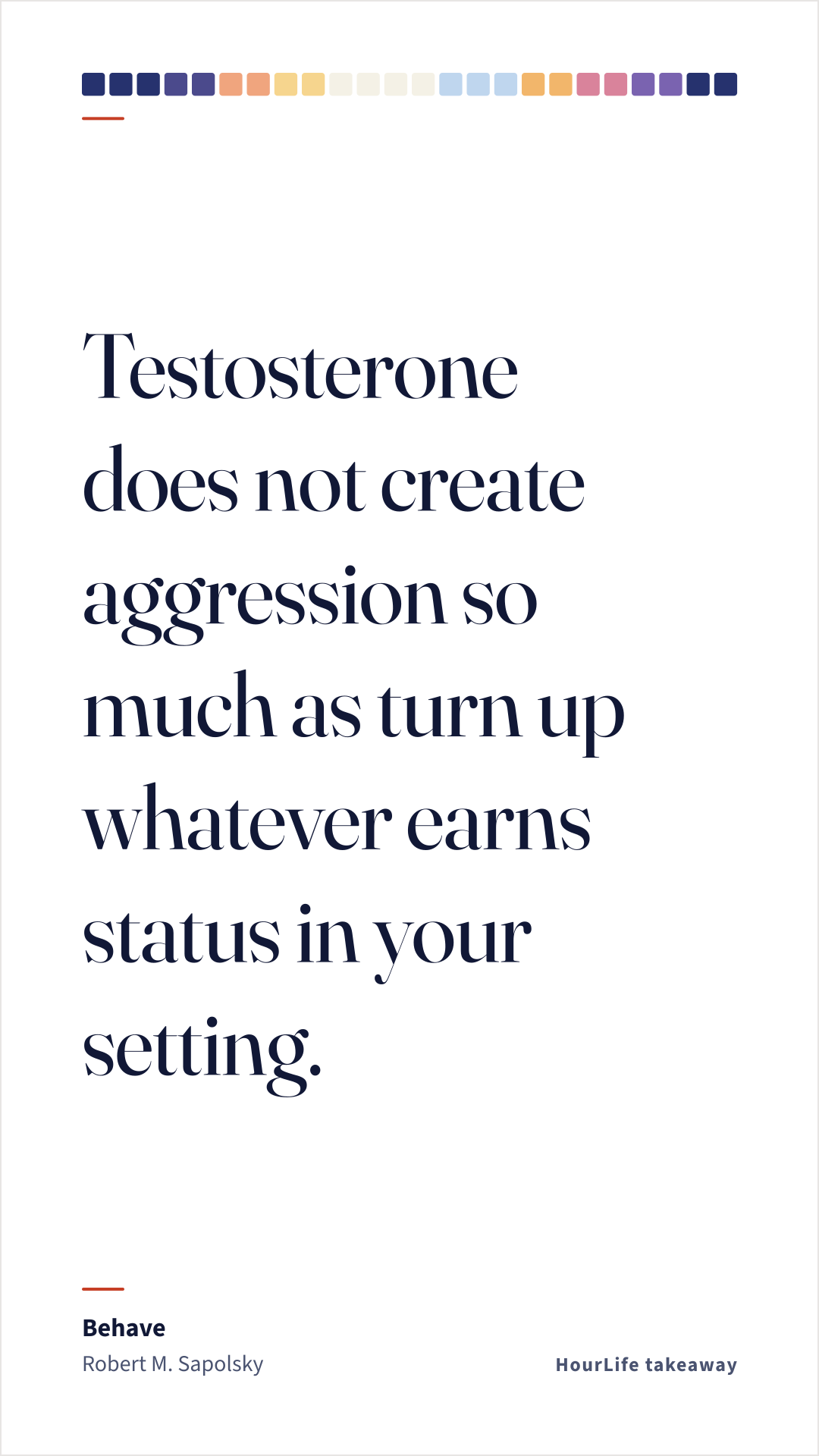
Testosterone does not create aggression so much as turn up whatever earns status in your setting.

Behave Robert M. Sapolsky HourLife takeaway

The book reviews studies where testosterone mostly amplified tendencies people already had. Sapolsky's argument follows from that: in a group where standing came from generosity, the hormone would push people toward generosity. The setting decides what the chemistry pushes for.

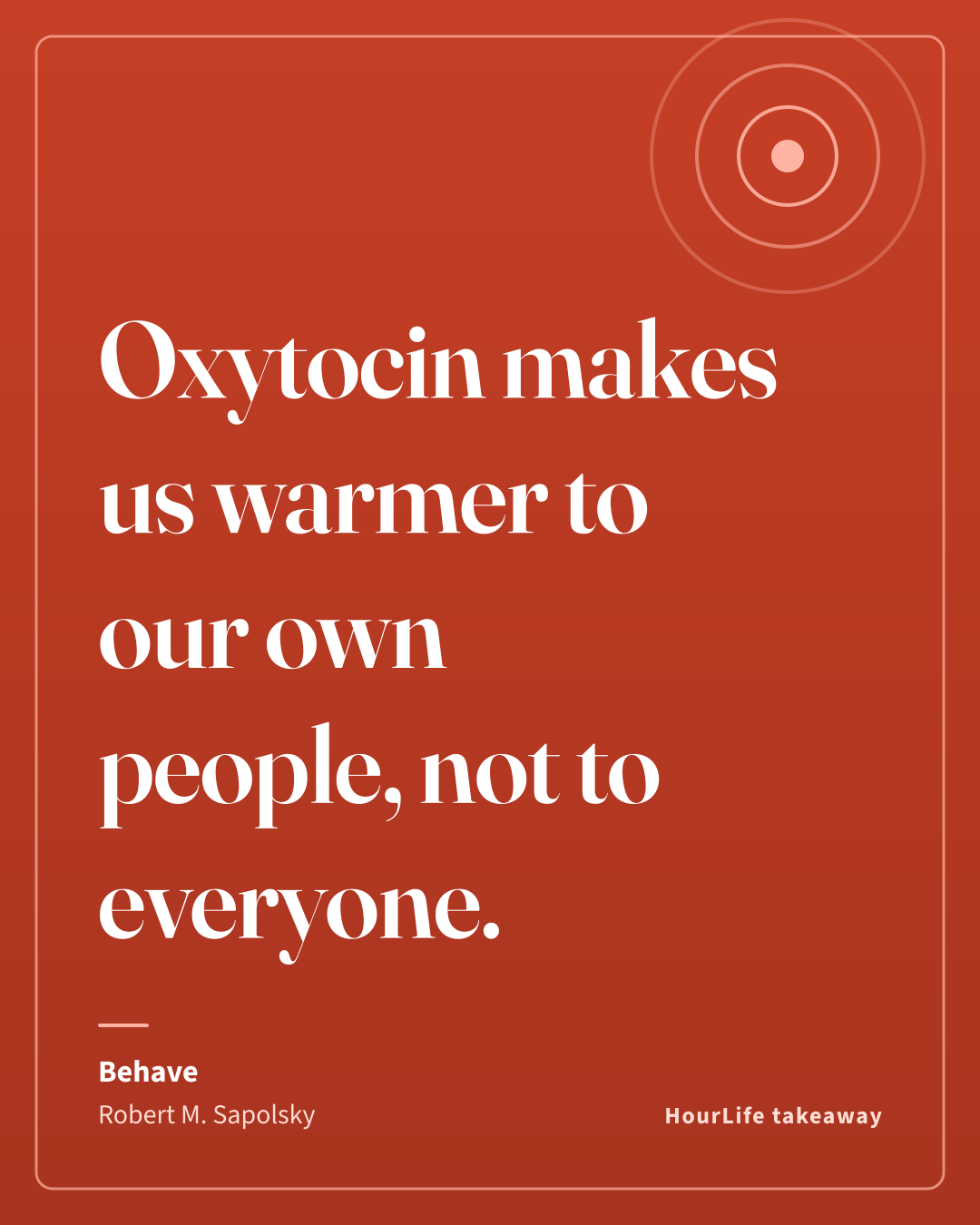
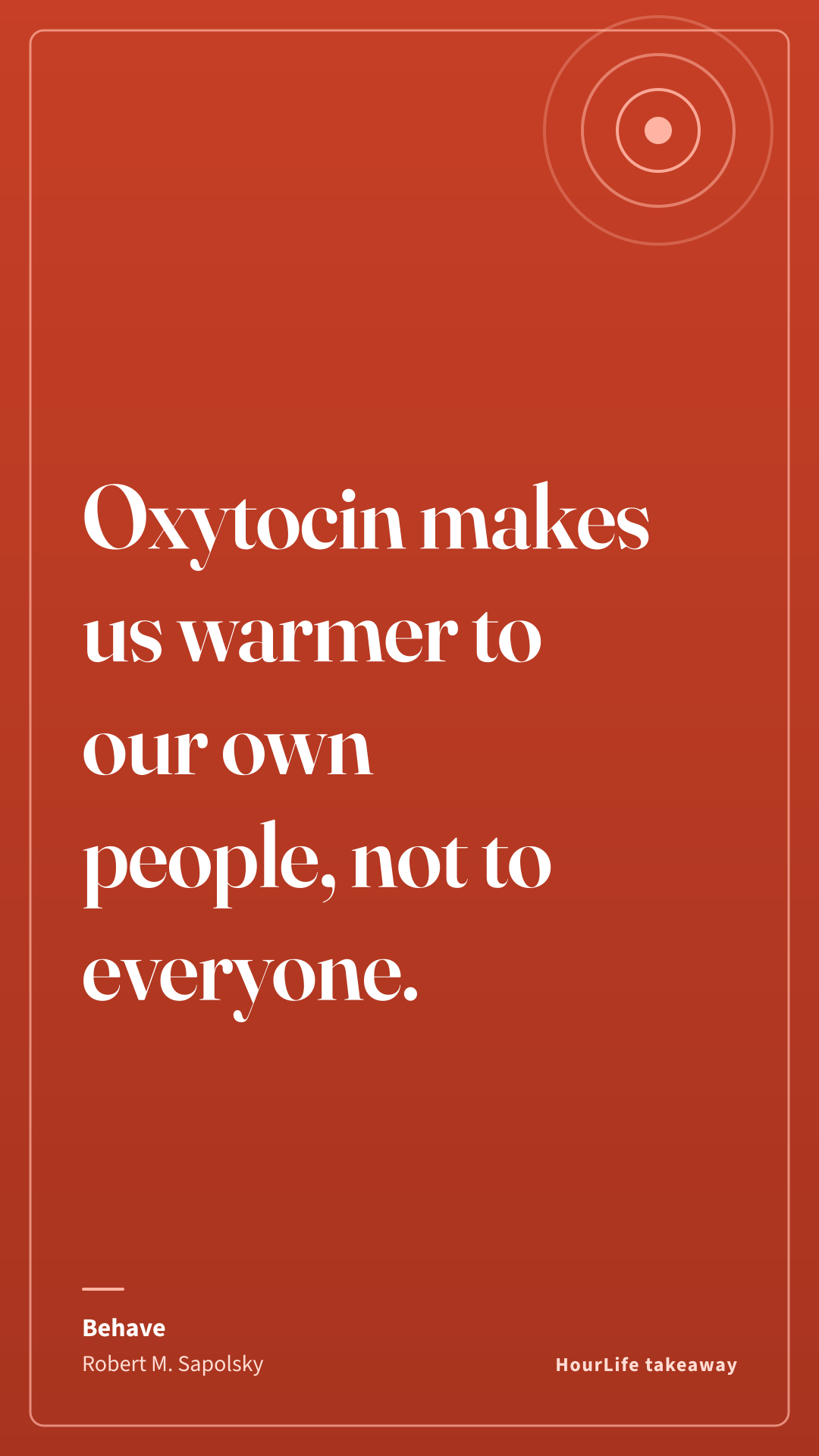
Oxytocin makes us warmer to our own people, not to everyone.

Behave Robert M. Sapolsky HourLife takeaway

The hormone helps bond parents, children and partners. The book shows its other edge: in studies it can also sharpen preference for the in-group and wariness of outsiders. Warmth and tribalism can come from the same chemistry.

We sort people into Us and Them in a fraction of a second, but who counts as Them shifts easily.

Behave Robert M. Sapolsky HourLife takeaway

The brain reacts to markers of group difference almost at once. Yet people will favour a group formed on a trivial basis, and a shared category, such as backing the same team, can soften the reaction. The sorting is automatic; the categories are not fixed.

Genes are about potential and vulnerability in a given environment, not about destiny.

Behave Robert M. Sapolsky HourLife takeaway

Sapolsky takes apart the idea that a single gene drives a behaviour. Most effects are small, and many show up only in certain settings: a gene variant linked to aggression seems to matter mostly in people who were abused as children. Ask what a gene does, and in which environment.

How your ancestors fed themselves still echoes in how you handle insult and obligation.

Behave Robert M. Sapolsky HourLife takeaway

The culture chapter contrasts collectivist and individualist societies, and herding peoples with farming ones. Where a herd can be stolen in a night, cultures of honour tend to grow, with fast retaliation for insults. The book traces echoes of this in places such as the American South.

The brain reuses old wiring for new jobs, so moral disgust can feel like smelling something rotten.

Behave Robert M. Sapolsky HourLife takeaway

The insula reacts to spoiled food and also to acts we find morally wrong. Sapolsky argues this is why metaphors matter so much: calling a group vermin or filth recruits that gut reaction. Language that makes people feel physically sick of other people is doing biological work.

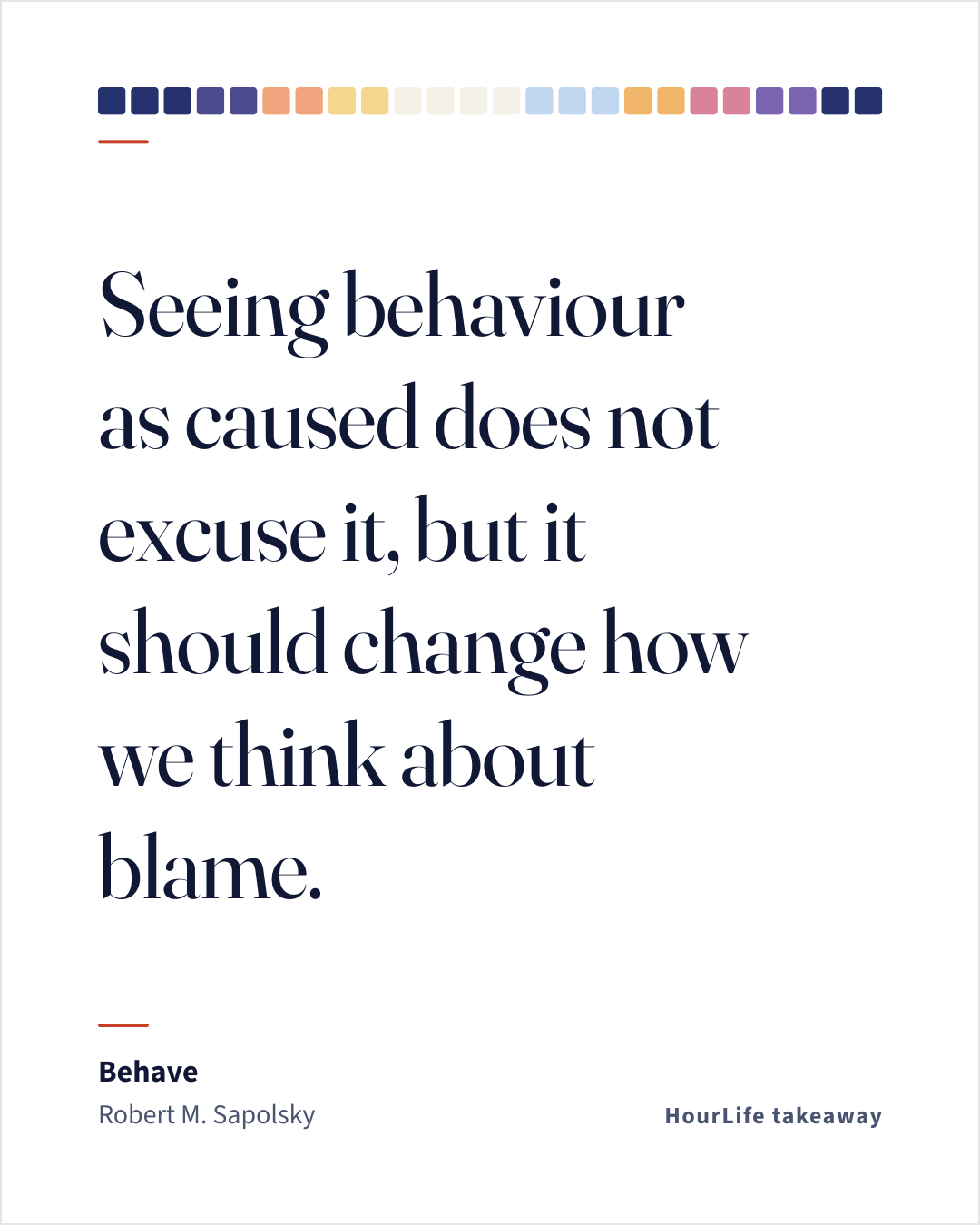
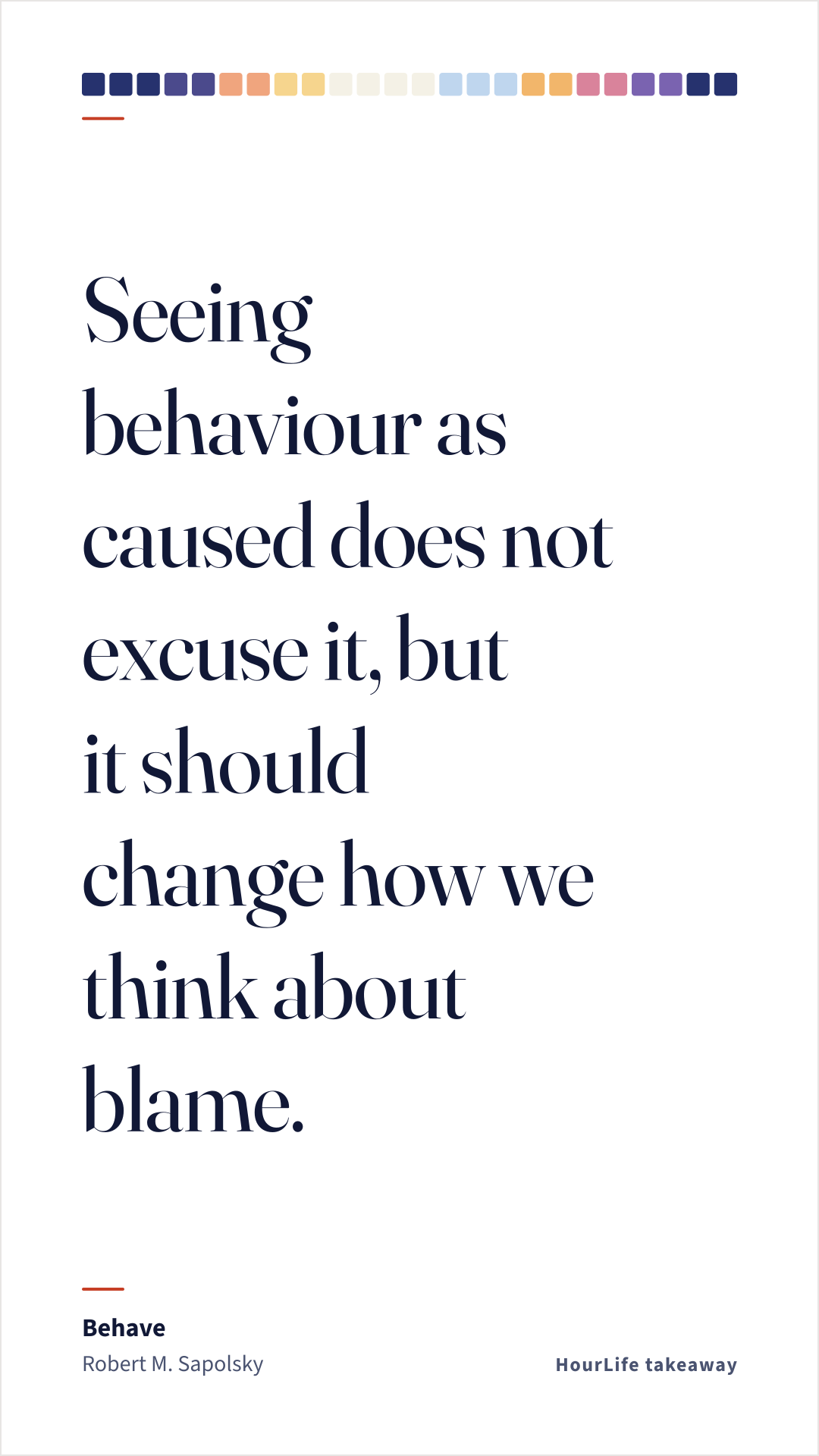
Seeing behaviour as caused does not excuse it, but it should change how we think about blame.

Behave Robert M. Sapolsky HourLife takeaway

In the chapter on justice and free will, Sapolsky points out that seizures were once blamed on possession or sin. He argues that more of what we now pin on character may one day look the same way. Keeping people safe from harm still matters; punishment as payback makes less sense.

Keep this going in the app.

HourLife turns these ideas into a daily system — goals, habits, focus, and reflection in one private place.