When you eat matters as much as what you eat.
Circadian biology treats food timing as a signal. A consistent eating window improves glucose control, appetite regulation, and sleep quality.
The most-loved lines from Satchin Panda, drawn from 1 book in the library.
Lines labelled “HourLife takeaway” are our wording of the book’s ideas and may paraphrase it. Only lines in quotation marks are the author’s own words, with where they appear. Check the book for exact wording before you quote it. Spot an error?
When you eat matters as much as what you eat.
Circadian biology treats food timing as a signal. A consistent eating window improves glucose control, appetite regulation, and sleep quality.
Every organ has a clock, and food sets many of them.
Your liver, gut, and pancreas respond to feeding rhythm. Irregular meals desynchronize these peripheral clocks from the brain's master clock.
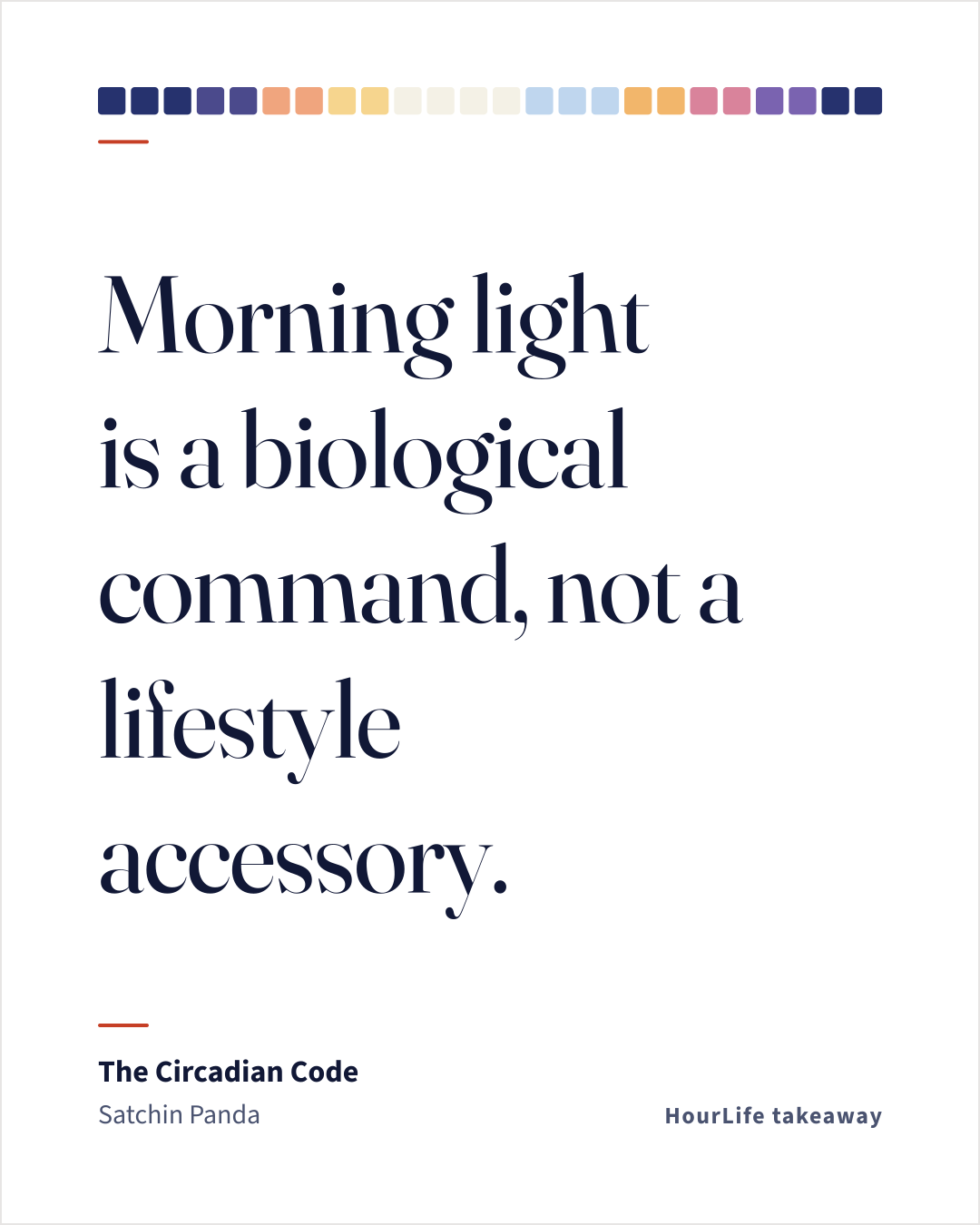
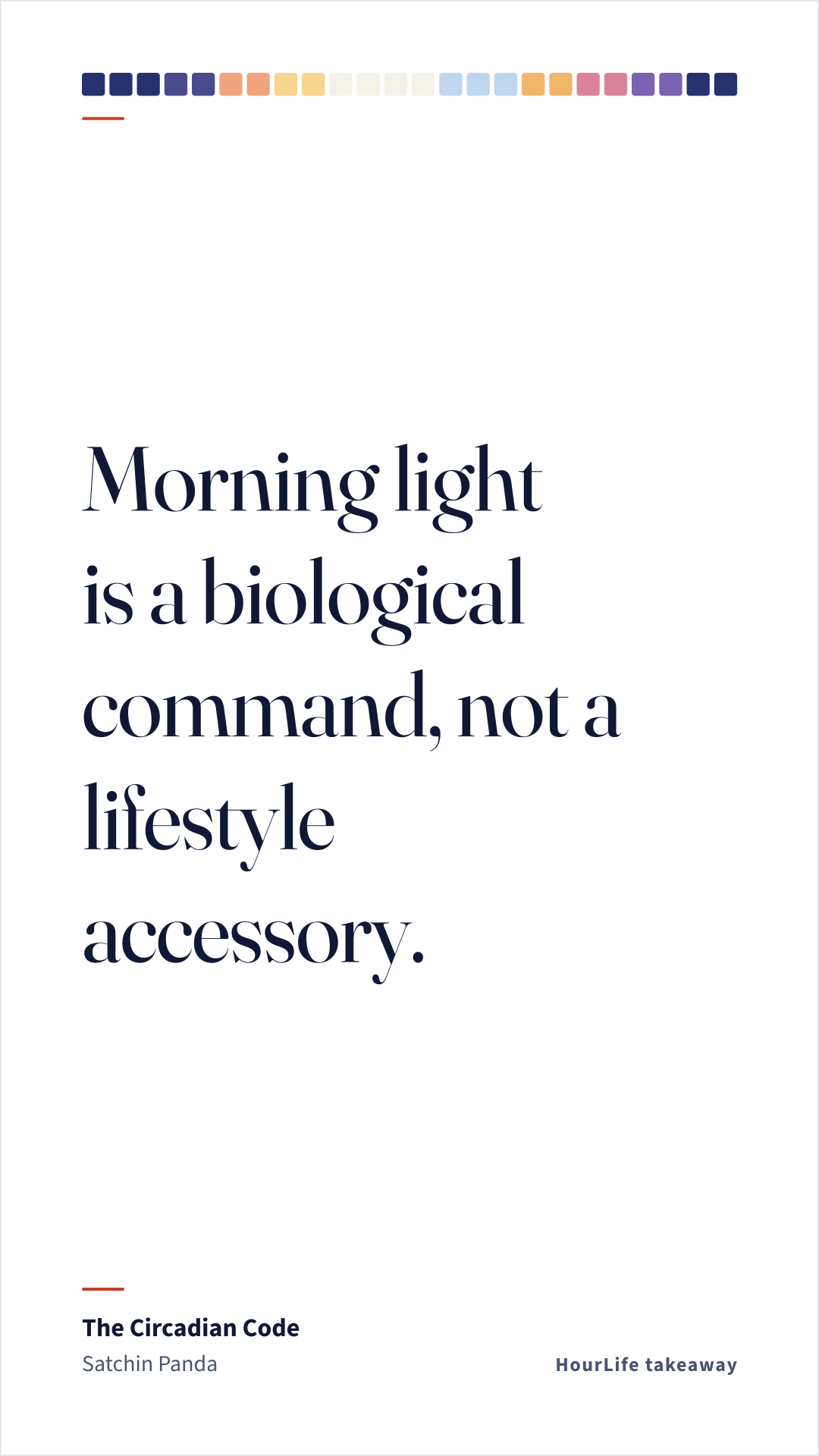
Morning light is a biological command, not a lifestyle accessory.
Early outdoor light anchors circadian phase, increases daytime alertness, and supports melatonin timing at night.
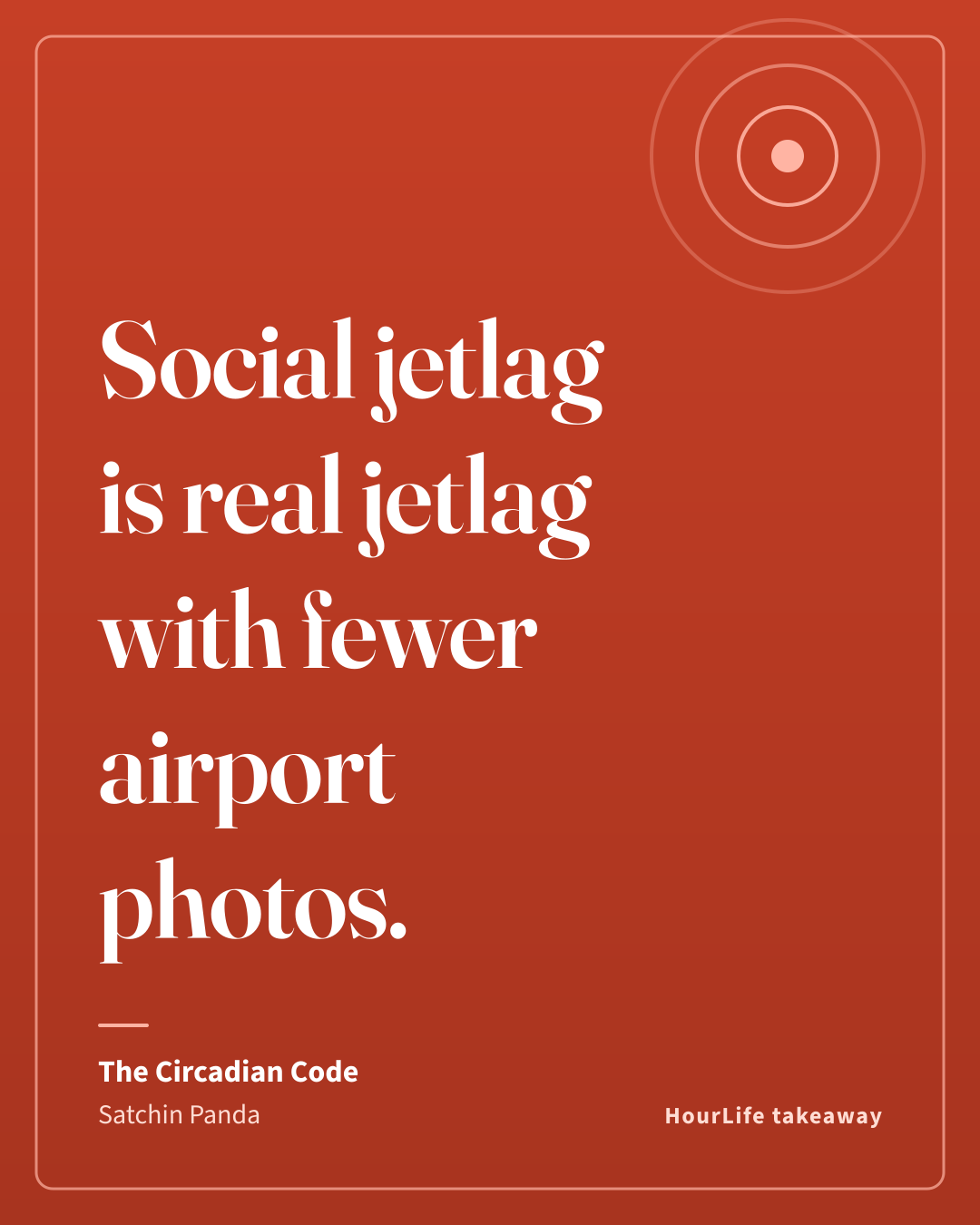
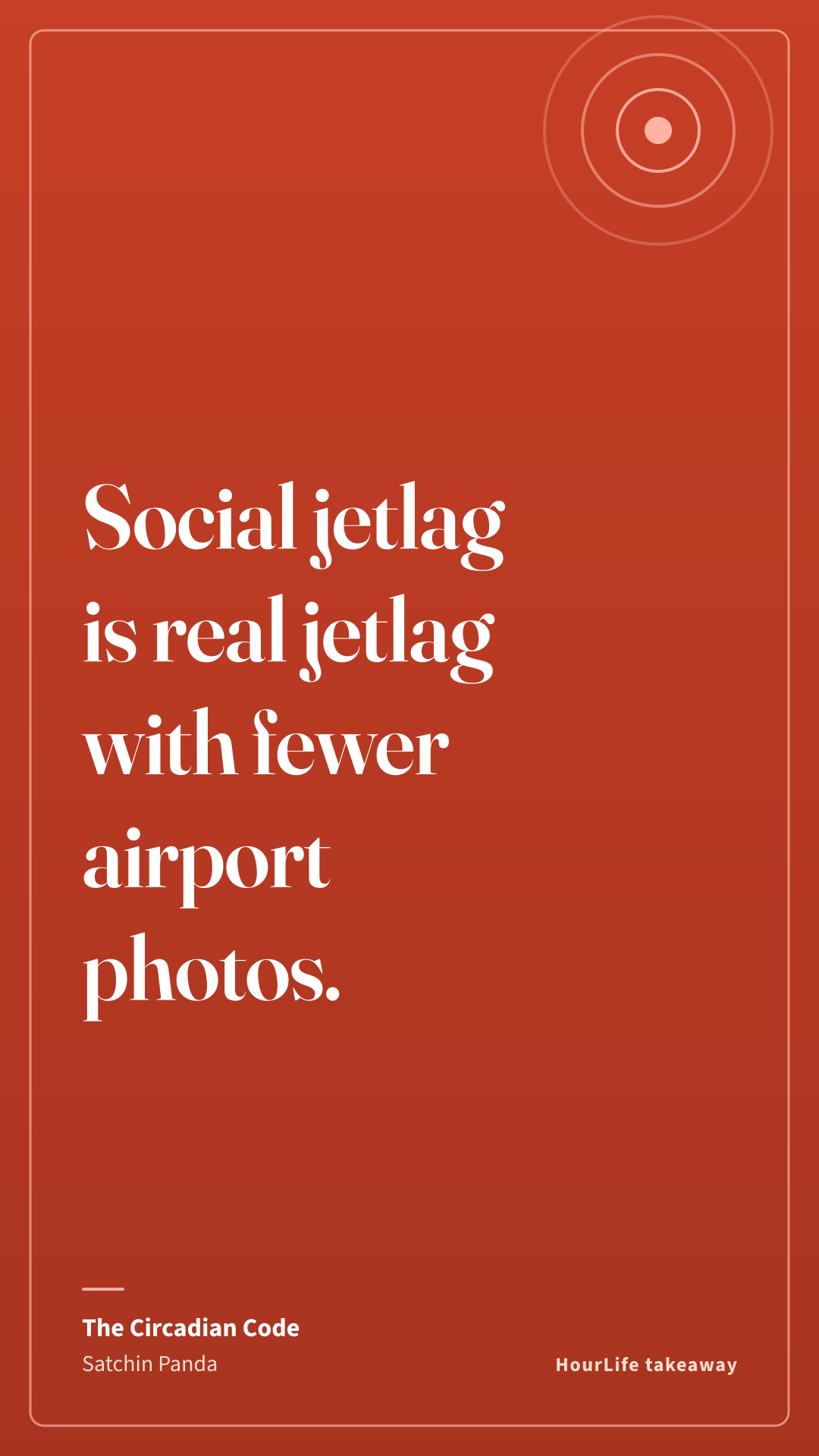
Social jetlag is real jetlag with fewer airport photos.
Large weekend sleep and wake shifts create a recurring circadian mismatch that weakens energy stability and metabolic resilience.
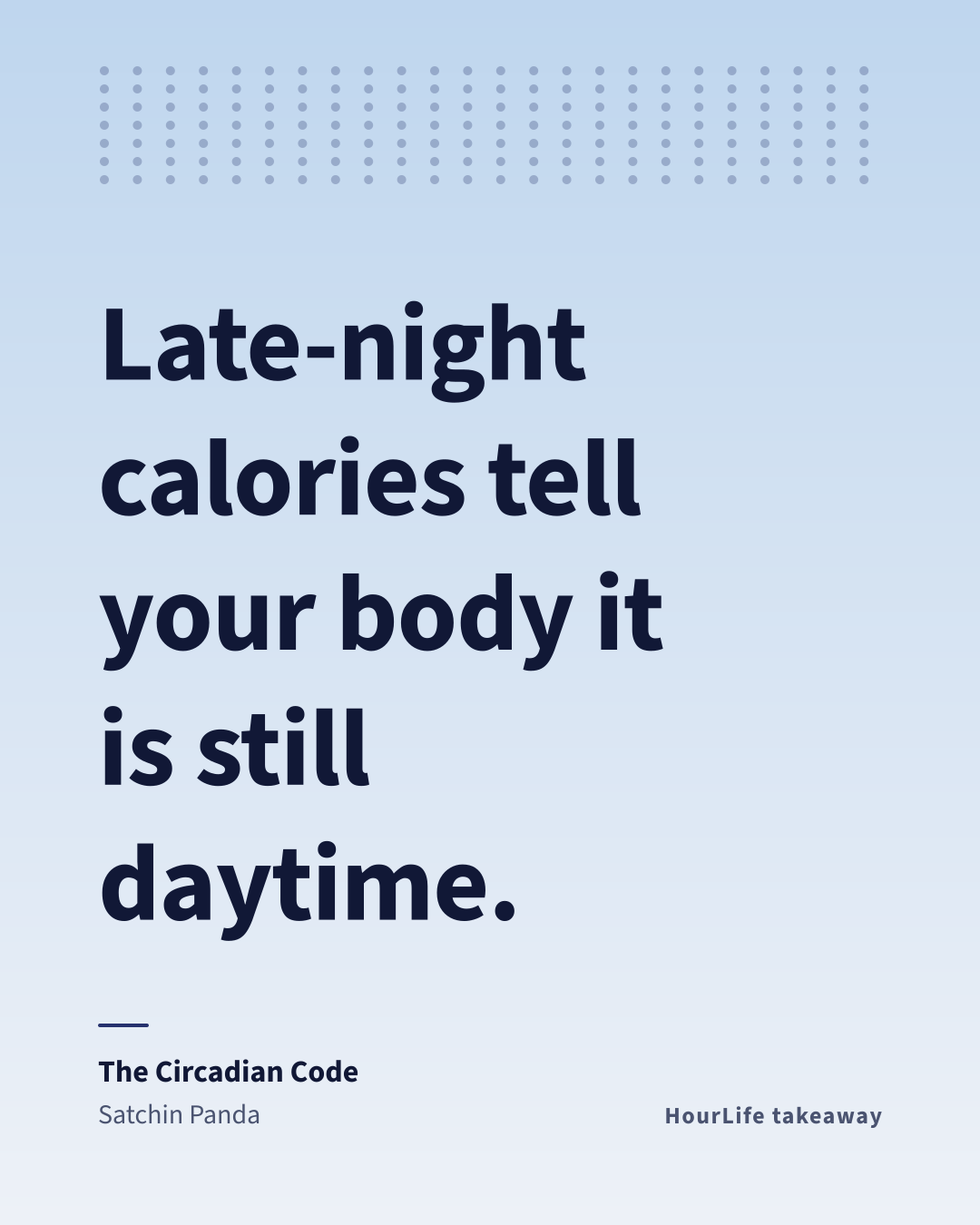
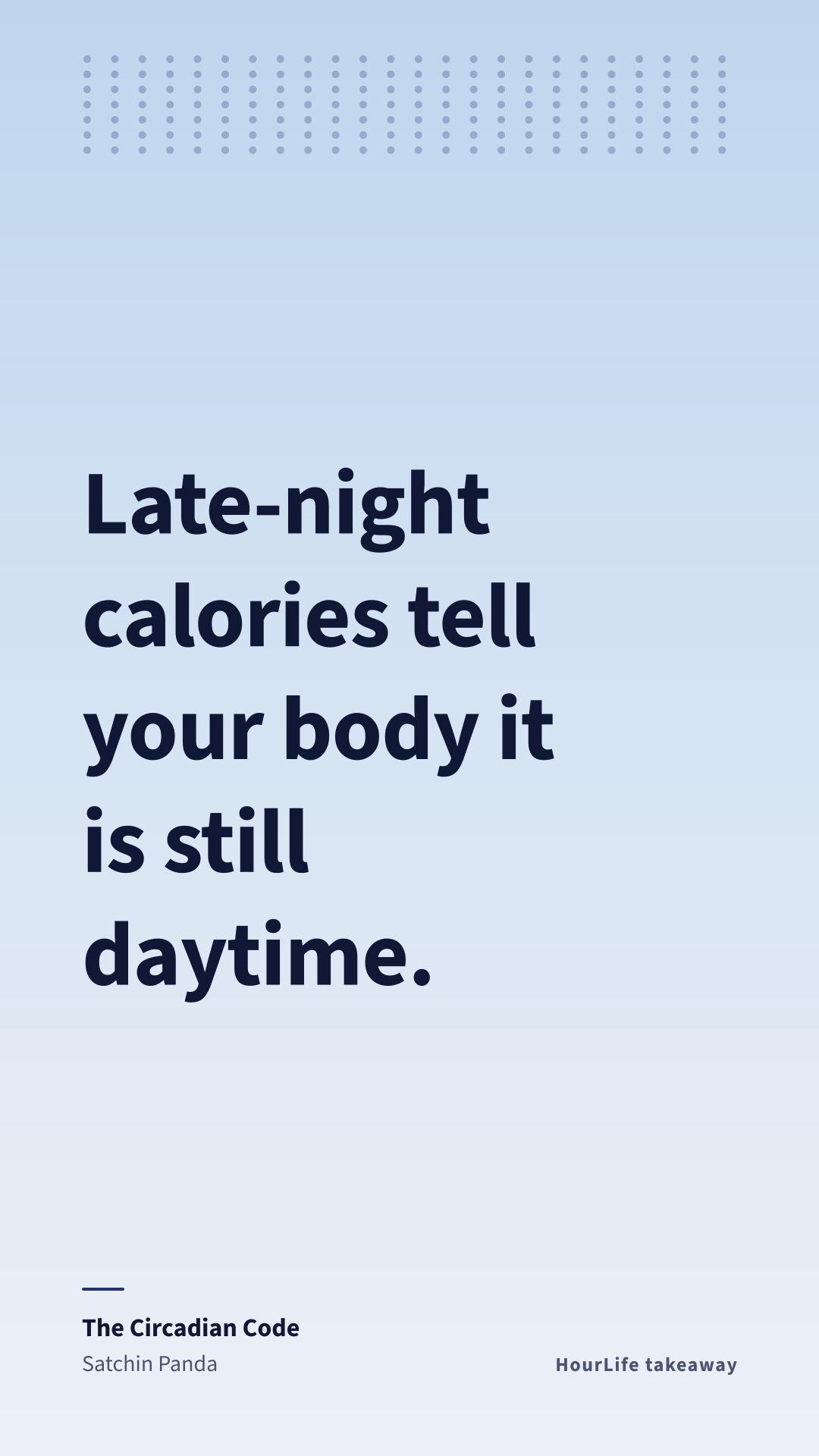
Late-night calories tell your body it is still daytime.
Eating close to bedtime can delay internal repair pathways, disturb sleep depth, and reduce next-day glucose tolerance.
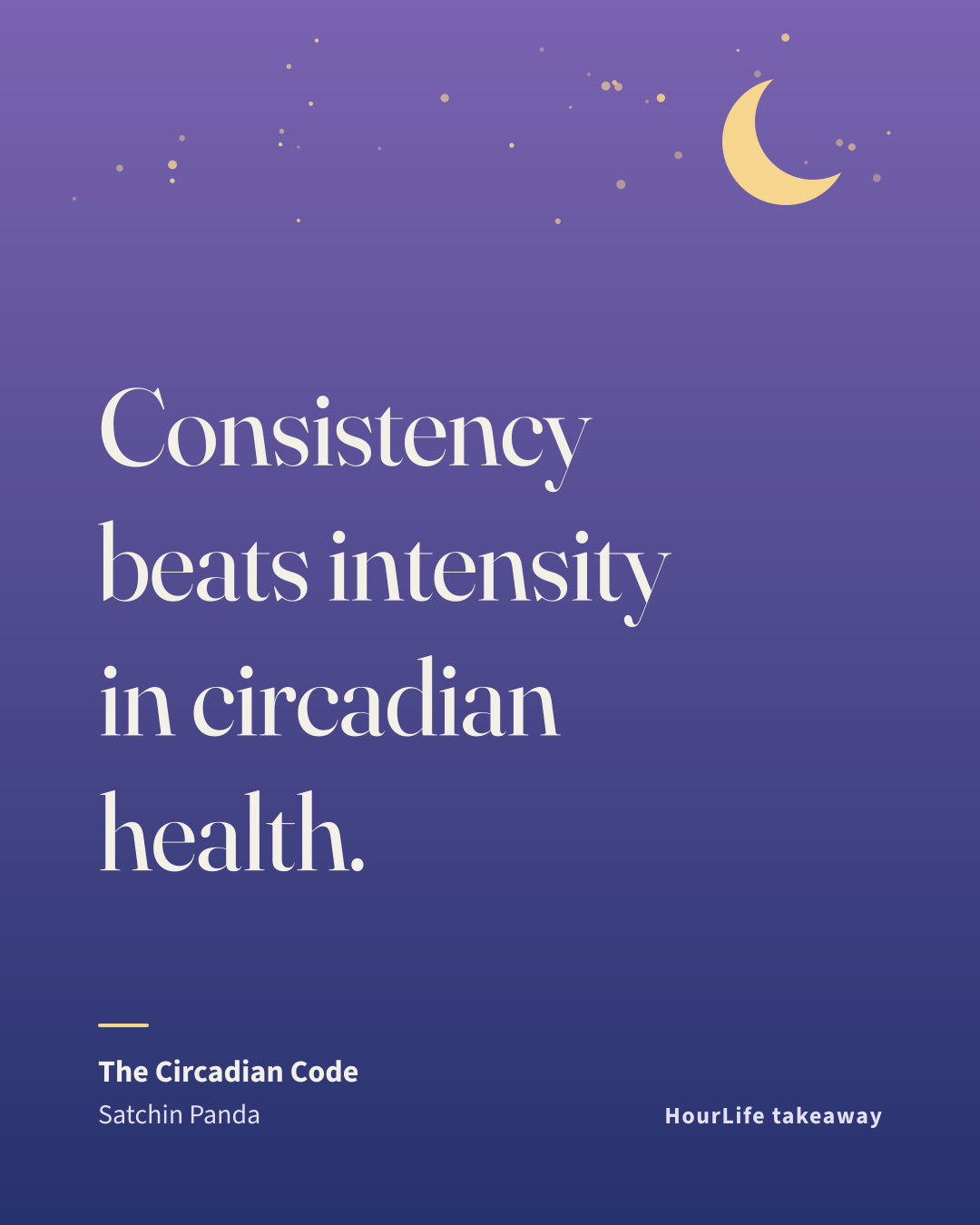
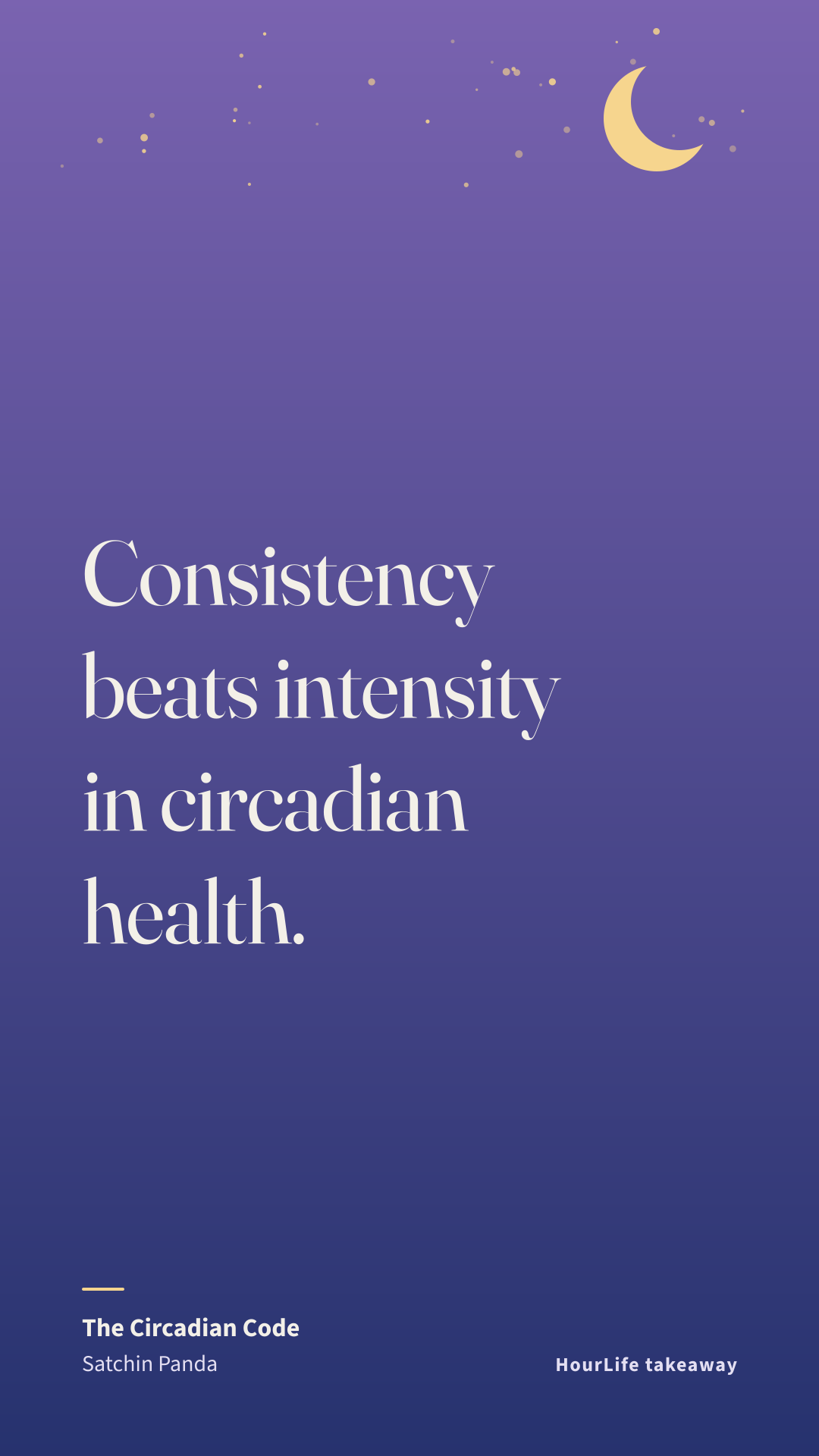
Consistency beats intensity in circadian health.
You do not need perfect routines. You need repeatable cues that your biology can trust across weekdays and weekends.
HourLife turns these ideas into a daily system — goals, habits, focus, and reflection in one private place.