Keep this author quotes for later
Sign in to save

Siegfried Engelmann

The most-loved lines from Siegfried Engelmann, drawn from 1 book in the library.

Lines labelled “HourLife takeaway” are our wording of the book’s ideas and may paraphrase it. Only lines in quotation marks are the author’s own words, with where they appear. Check the book for exact wording before you quote it. Spot an error?

Short and daily beats long and occasional.

Teach Your Child to Read in 100 Easy Lessons Siegfried Engelmann, Phyllis Haddox and Elaine Bruner HourLife takeaway

Each lesson is built to take about 20 minutes. A tired child learns little and starts to dread the sessions, so the book's rhythm is a short lesson every day rather than a long one now and then. Stopping while the child is still keen is part of the method.


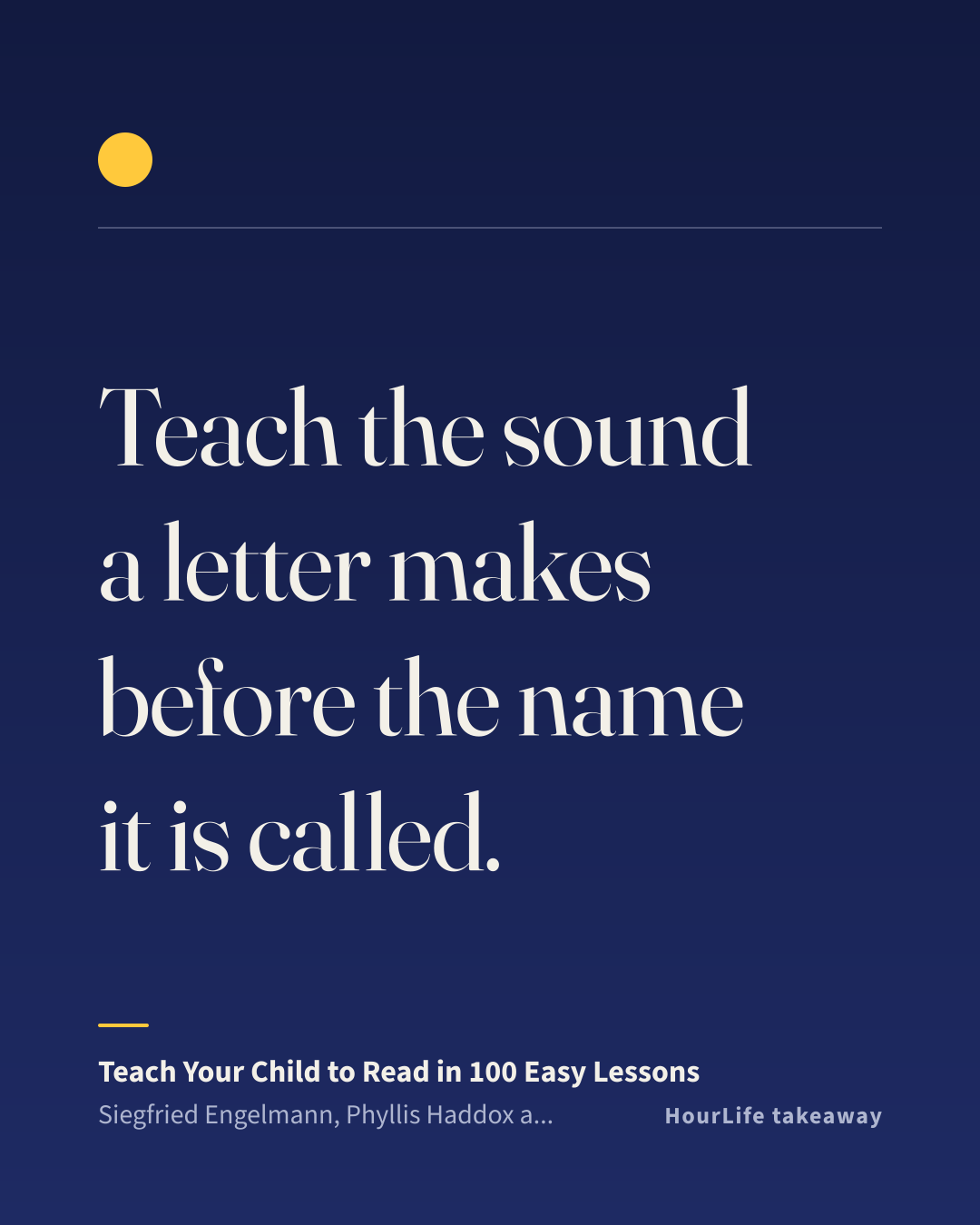
Teach the sound a letter makes before the name it is called.

Teach Your Child to Read in 100 Easy Lessons Siegfried Engelmann, Phyllis Haddox and Elaine Bruner HourLife takeaway

A child who knows that m says mmm can start sounding out words. A child who knows it is called em has to translate first. The programme teaches sounds and leaves letter names aside, because names do not help a beginner read a word.

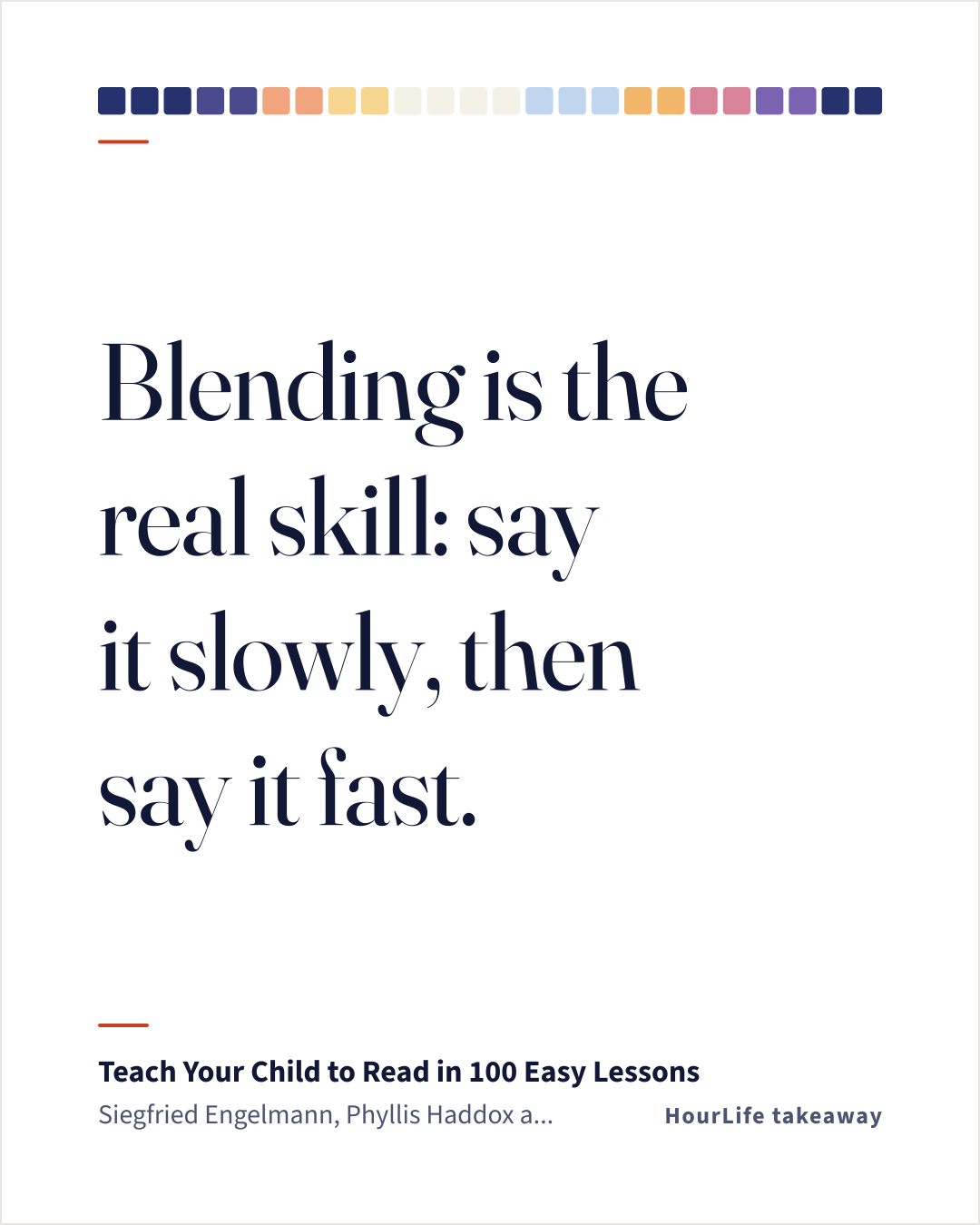
Blending is the real skill: say it slowly, then say it fast.

Teach Your Child to Read in 100 Easy Lessons Siegfried Engelmann, Phyllis Haddox and Elaine Bruner HourLife takeaway

The child says each sound in a word without stopping between them, then says the word at normal speed. Plenty of children can name every sound on a page and still not hear the word. The say-it-fast step is practised again and again until the join feels natural.

A script frees the parent to watch the child.

Teach Your Child to Read in 100 Easy Lessons Siegfried Engelmann, Phyllis Haddox and Elaine Bruner HourLife takeaway

Every word the parent says is written out, along with what to point to. You do not have to invent explanations or decide what comes next. Your attention can go where it matters: whether your child got it.

Correct a mistake at once, then go back to the start of the task.

Teach Your Child to Read in 100 Easy Lessons Siegfried Engelmann, Phyllis Haddox and Elaine Bruner HourLife takeaway

When the child gets something wrong, the parent says the right answer, has the child say it, and repeats the task from the top. There is no lecture and no sigh. The aim is that every task ends with the child doing it correctly.

Clean print first, ordinary print later.

Teach Your Child to Read in 100 Easy Lessons Siegfried Engelmann, Phyllis Haddox and Elaine Bruner HourLife takeaway

English spelling is full of letters that do not sound the way they look. The early lessons use a modified print where joined letters show one sound, long vowels carry a mark and silent letters are printed small. The aids fade out so the child finishes on ordinary text.

Praise is part of the method, not a bonus.

Teach Your Child to Read in 100 Easy Lessons Siegfried Engelmann, Phyllis Haddox and Elaine Bruner HourLife takeaway

A young child keeps going when effort is noticed. The lessons build in frequent, specific praise for correct answers. Short, honest praise keeps a 20-minute lesson moving and makes the next one easier to start.

Reading means understanding, not only sounding out.

Teach Your Child to Read in 100 Easy Lessons Siegfried Engelmann, Phyllis Haddox and Elaine Bruner HourLife takeaway

Once the child reads stories, the parent asks simple questions about what happened. The picture comes after the words are read, so the child learns to get the story from the text rather than guess it from the drawing.

Firm ground before the next step.

Teach Your Child to Read in 100 Easy Lessons Siegfried Engelmann, Phyllis Haddox and Elaine Bruner HourLife takeaway

Each lesson leans on the skills of the lessons before it, so a shaky skill causes trouble later. When a task keeps falling apart, going back over it is faster than pushing on to hit a date. Progress through 100 lessons is not a race.

Keep this going in the app.

HourLife turns these ideas into a daily system — goals, habits, focus, and reflection in one private place.