The true price of leadership is the willingness to place the needs of others above your own.
Sinek turns leadership from status into cost. The leader earns trust by proving comfort, credit, and safety do not flow upward first.
The most-loved lines from Simon Sinek, drawn from 2 books in the library.
Lines labelled “HourLife takeaway” are our wording of the book’s ideas and may paraphrase it. Only lines in quotation marks are the author’s own words, with where they appear. Check the book for exact wording before you quote it. Spot an error?
The true price of leadership is the willingness to place the needs of others above your own.
Sinek turns leadership from status into cost. The leader earns trust by proving comfort, credit, and safety do not flow upward first.
A purpose becomes clearer when the work supports it.
Sinek asks leaders to begin with why the work matters. A practical follow-up is to identify the choices that make that purpose visible to the people you serve.
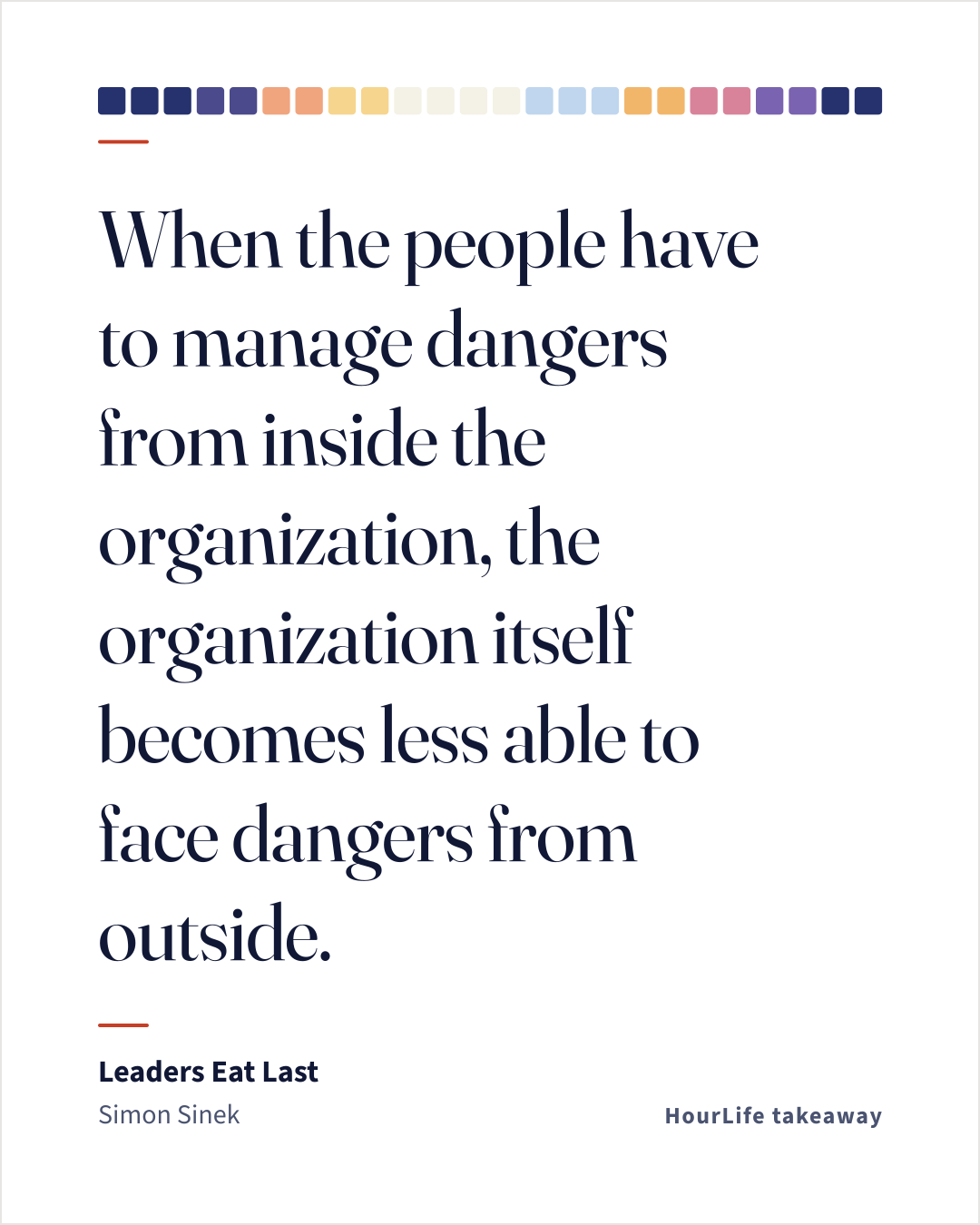
When the people have to manage dangers from inside the organization, the organization itself becomes less able to face dangers from outside.
The Circle of Safety is not softness. It is an efficiency argument: stop wasting human energy on internal threat detection.
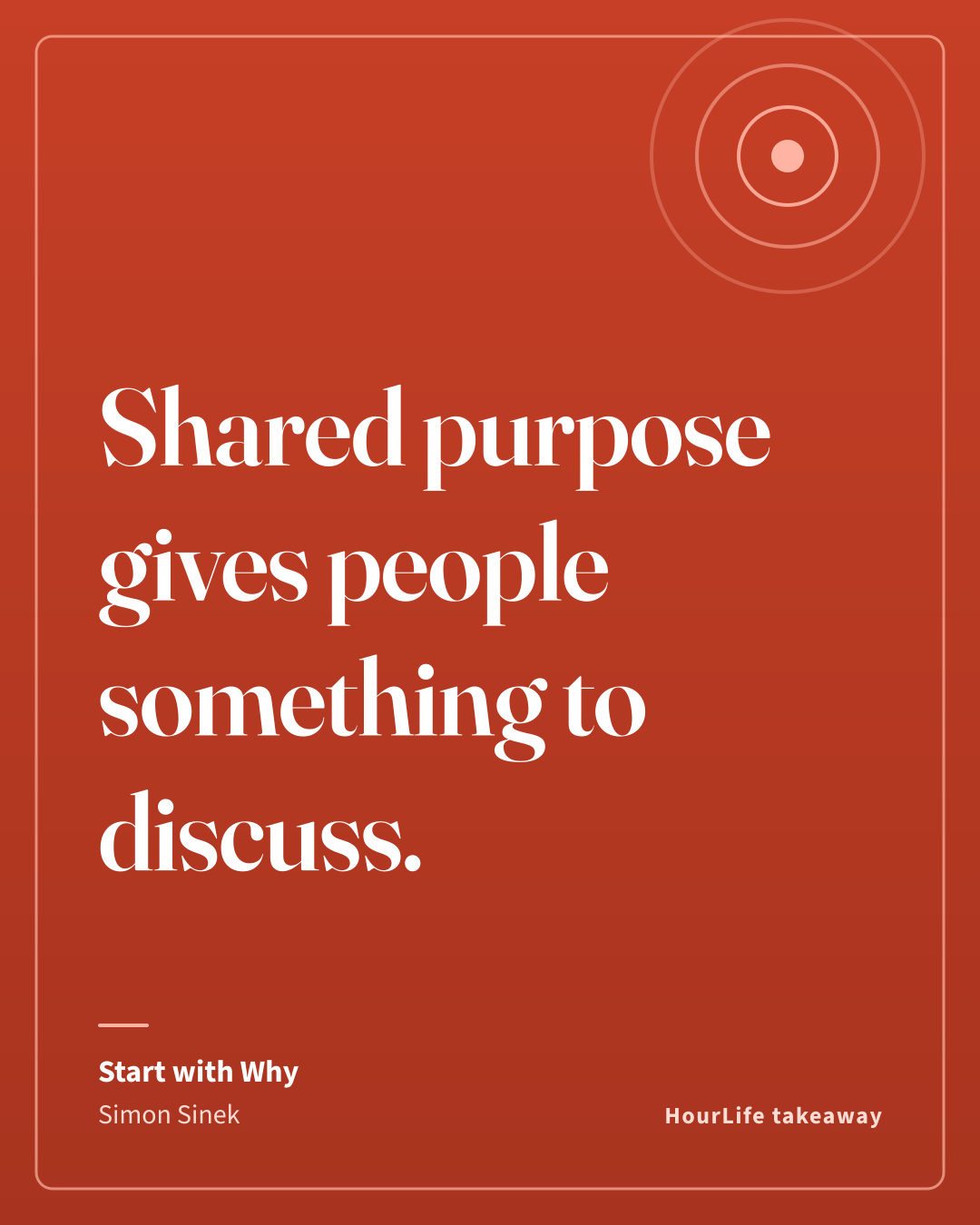
Shared purpose gives people something to discuss.
Explain whom your work is meant to help and what you hope to contribute. Then listen: people may share the concern while seeing a different way to address it.
Treat the Golden Circle as a communication framework.
Why, how, and what help organize an explanation. They do not supply a percentage chance of persuasion or replace evidence about what an audience needs.
Trust is not formed through a screen. It is formed across a table, through repeated evidence that people will not abandon one another.
For Sinek, trust is embodied. Teams believe what they repeatedly experience in meetings, tradeoffs, mistakes, and moments of pressure.
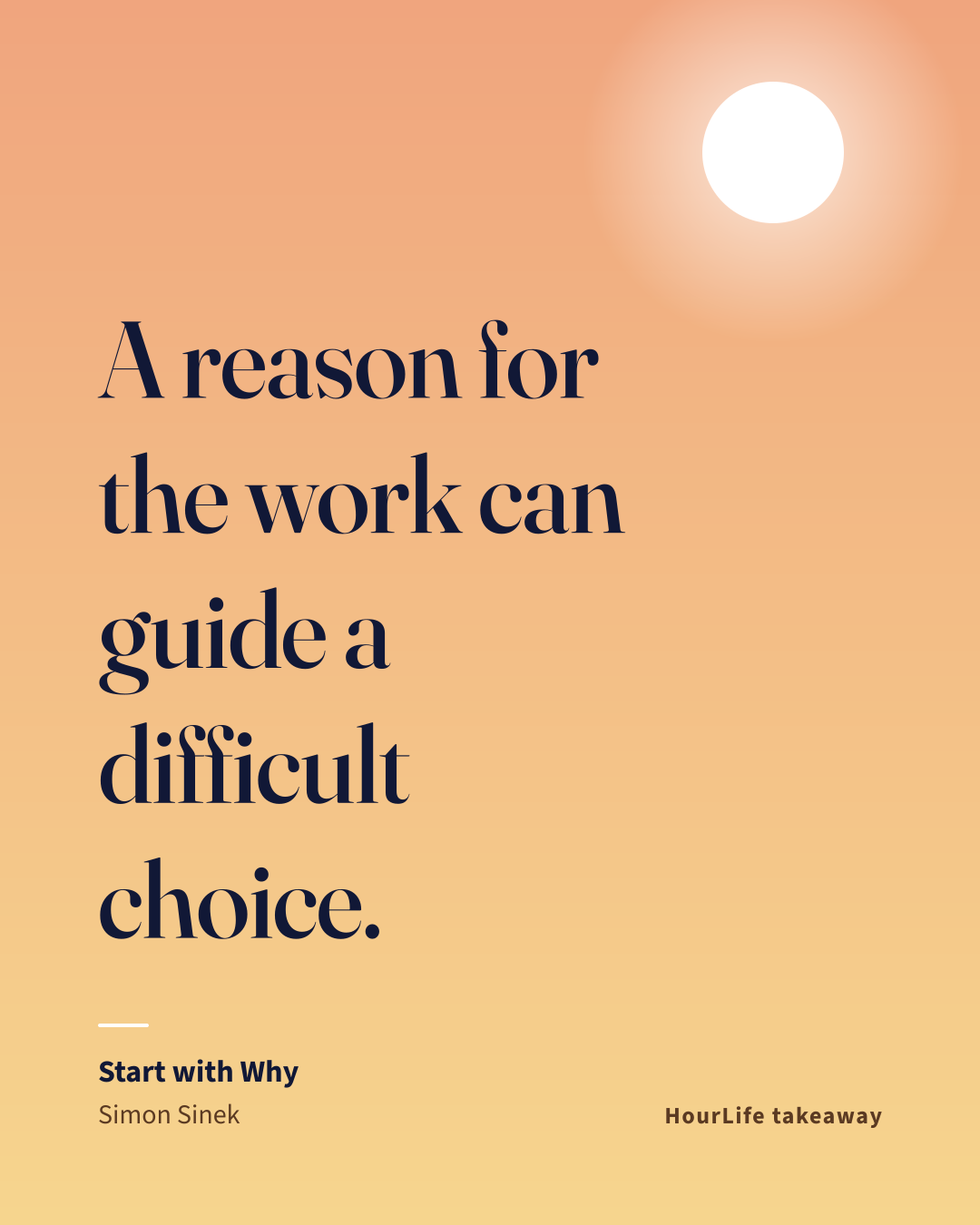
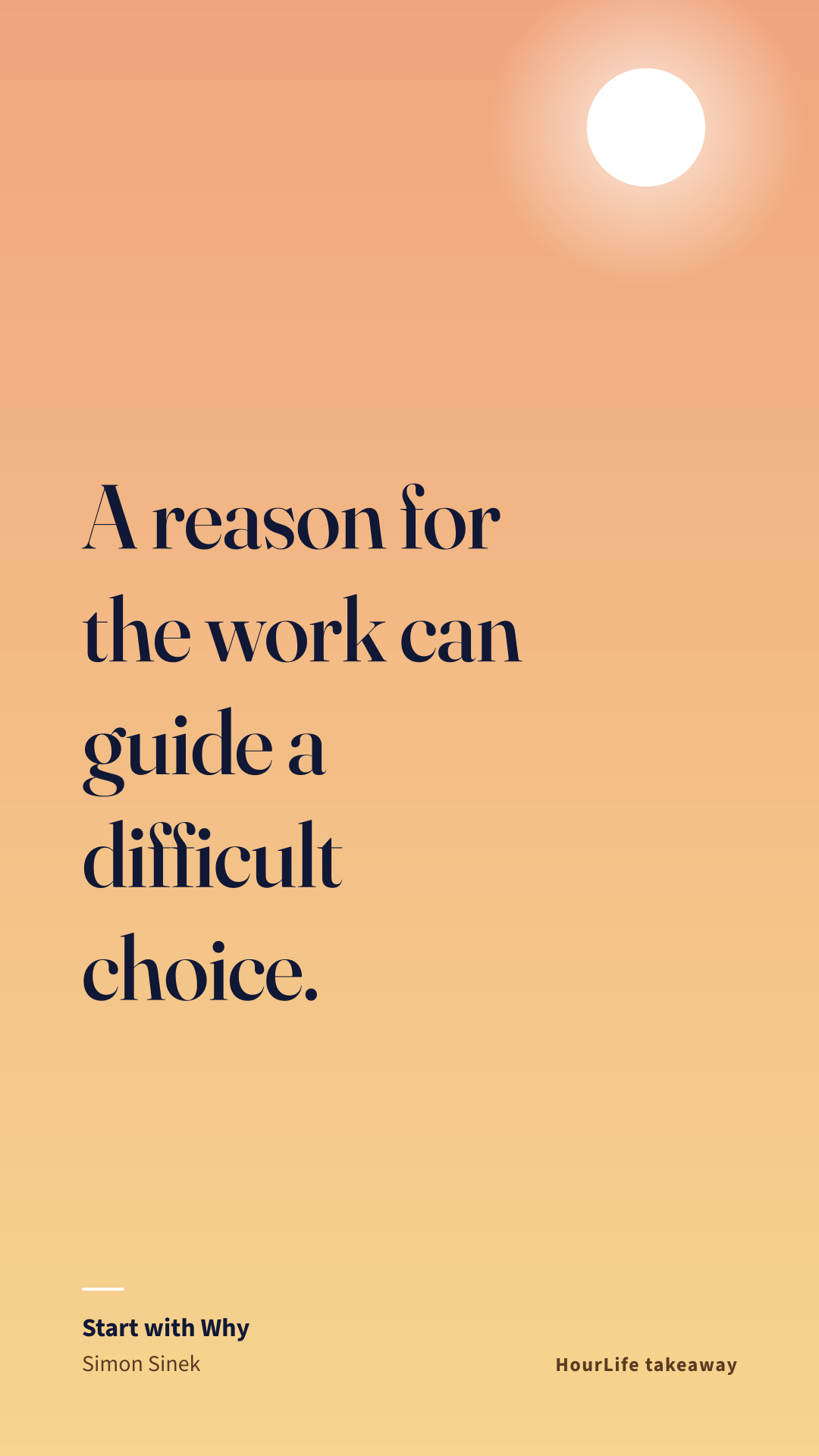
A reason for the work can guide a difficult choice.
When two options compete for time or money, ask how each serves the purpose you have stated. Make the trade-off specific enough for someone else to understand.
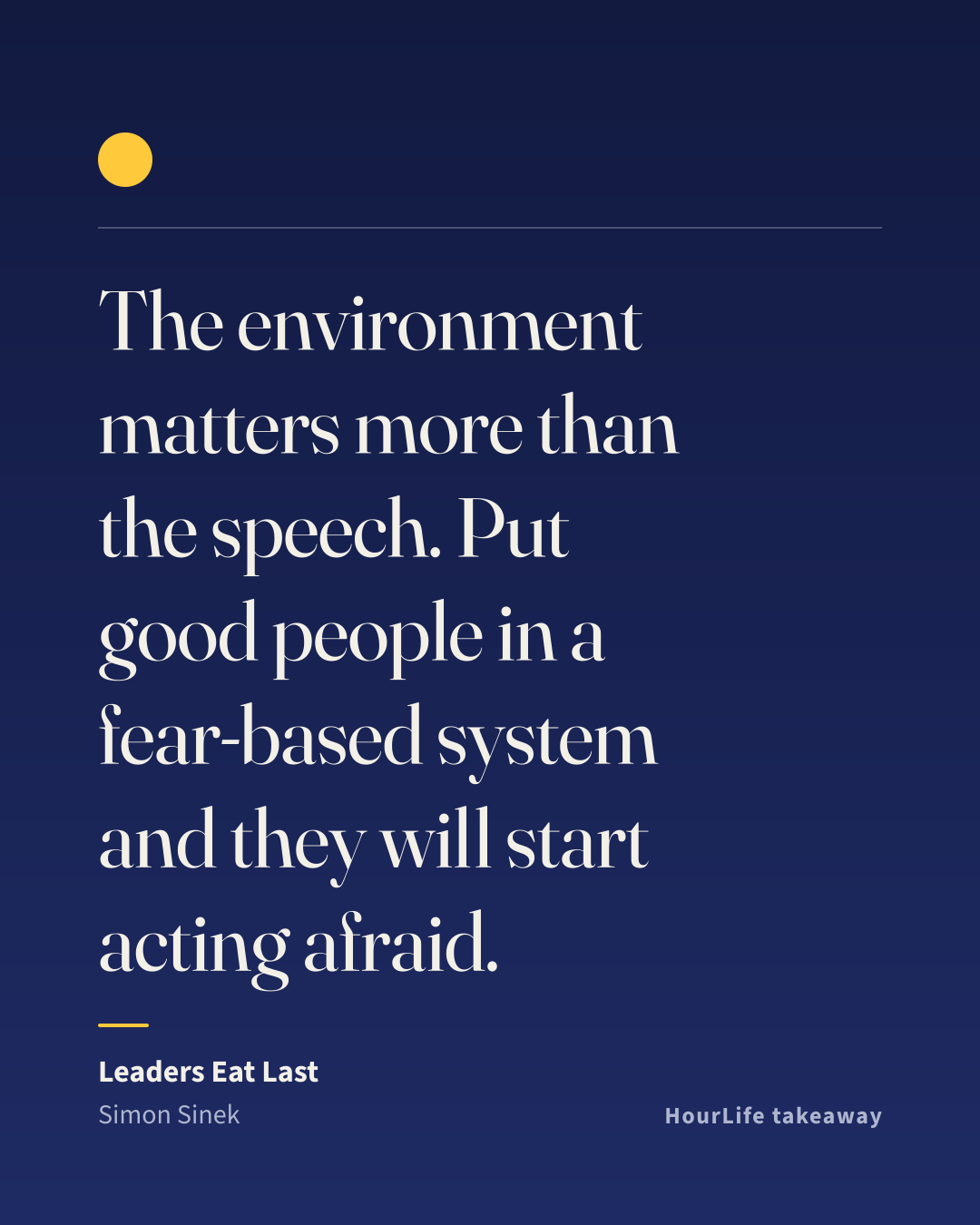
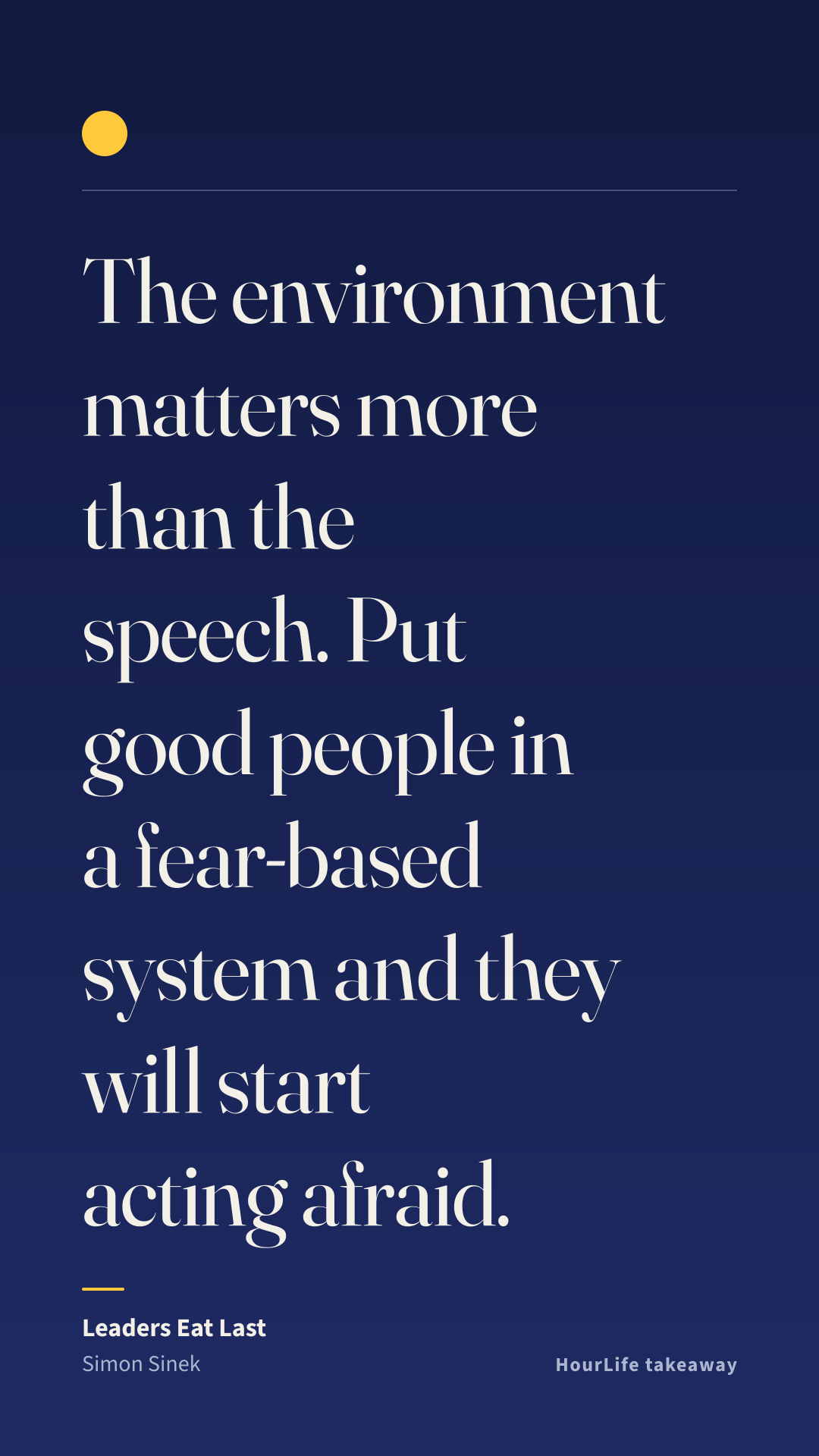
The environment matters more than the speech. Put good people in a fear-based system and they will start acting afraid.
The book keeps returning to design. Incentives, layoffs, status games, and leader behavior produce the chemistry people live inside.
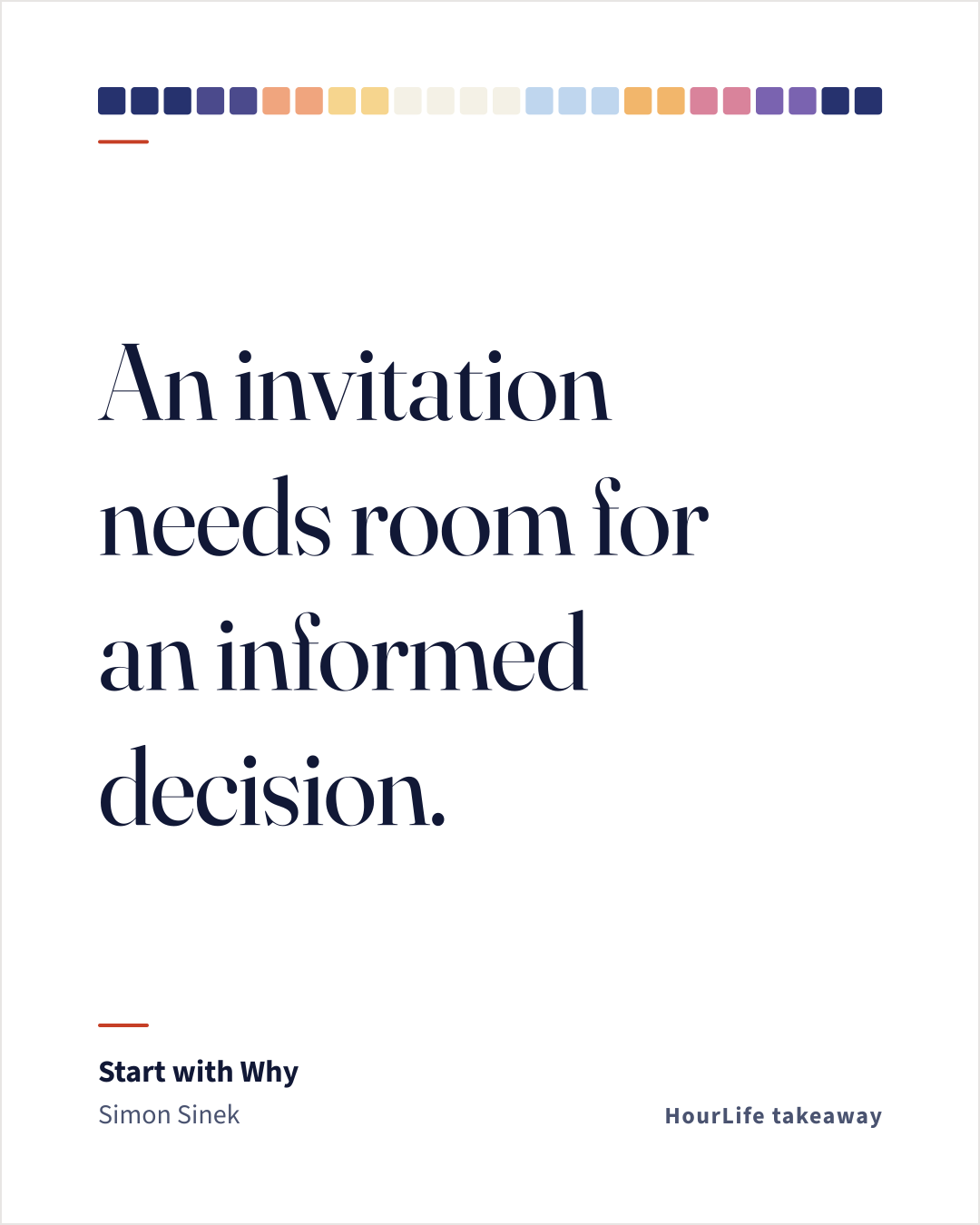
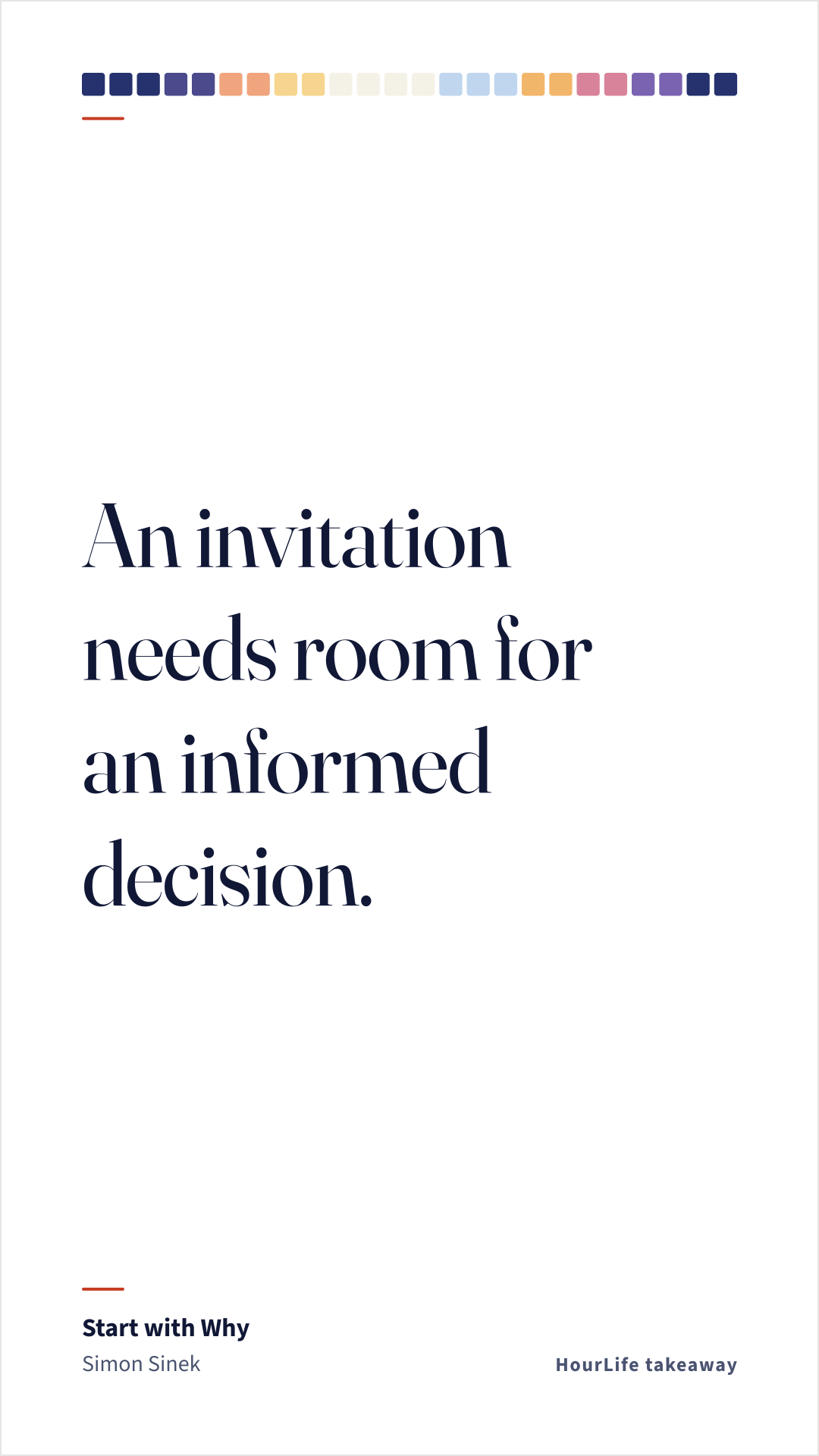
An invitation needs room for an informed decision.
Say what you believe, describe what you offer, and explain the terms clearly. Let people decide whether the work fits their needs without relying on pressure.
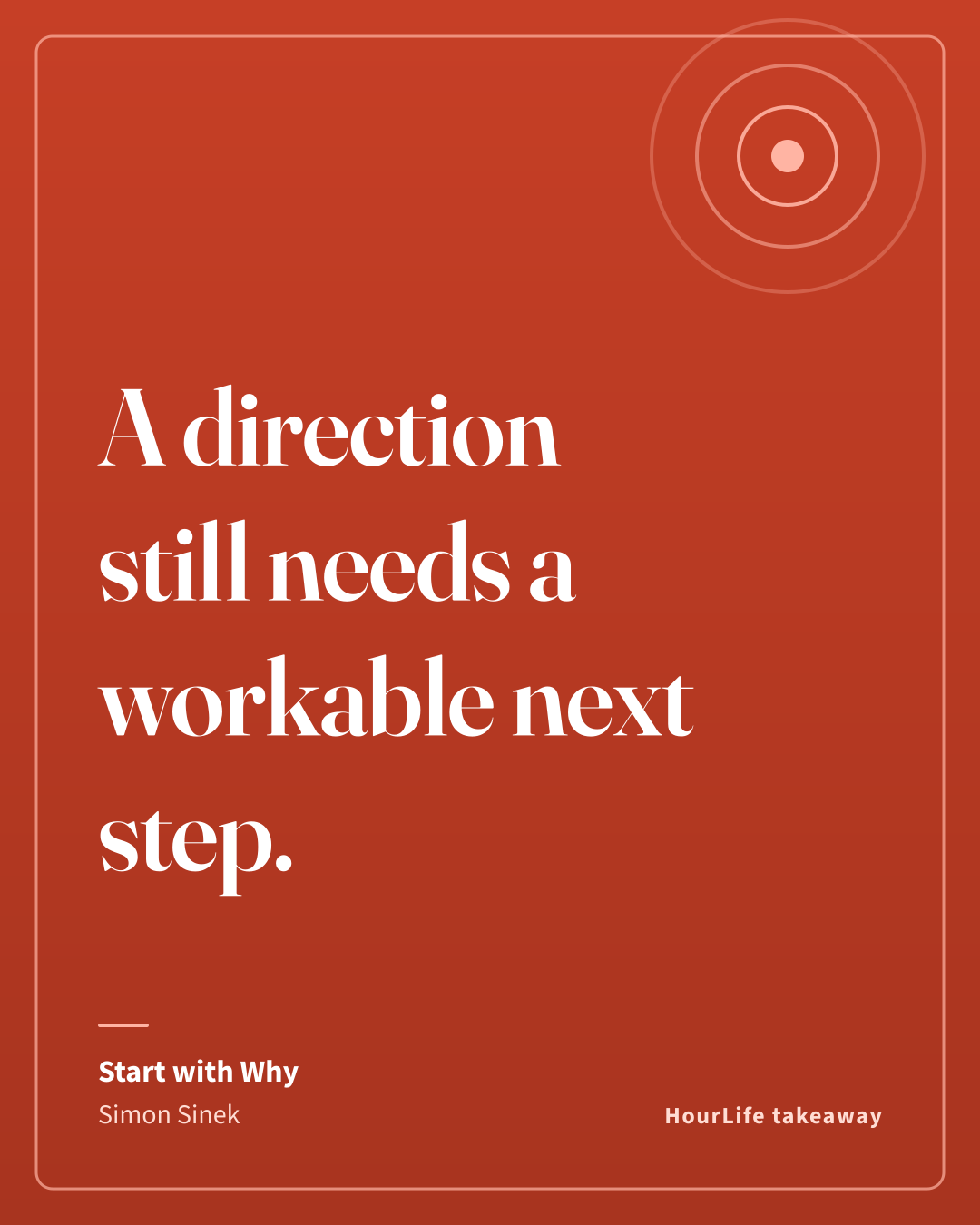
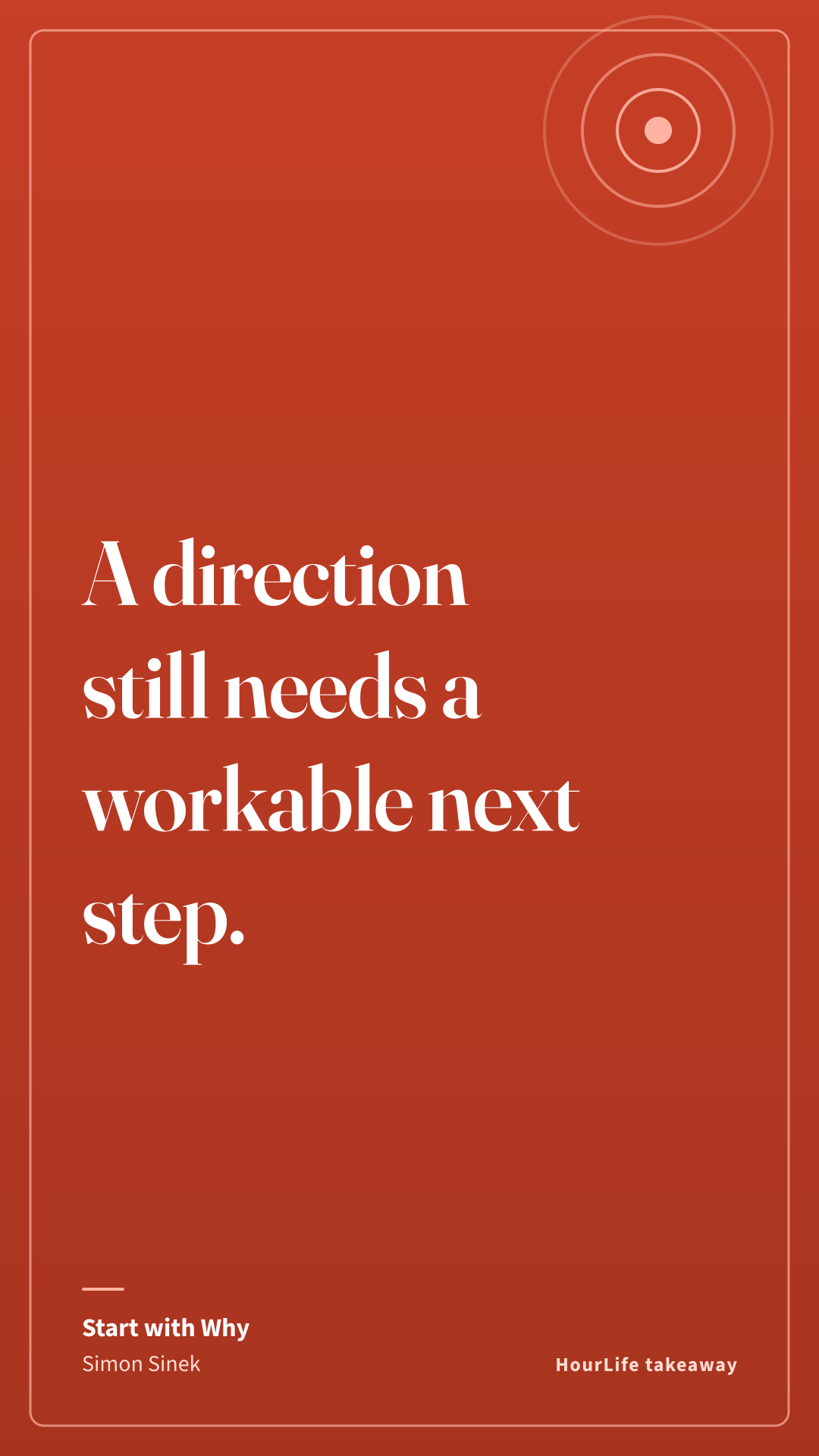
A direction still needs a workable next step.
A purpose can explain why the work matters. A plan names what will happen next, who will do it, and how you will learn whether it helped.
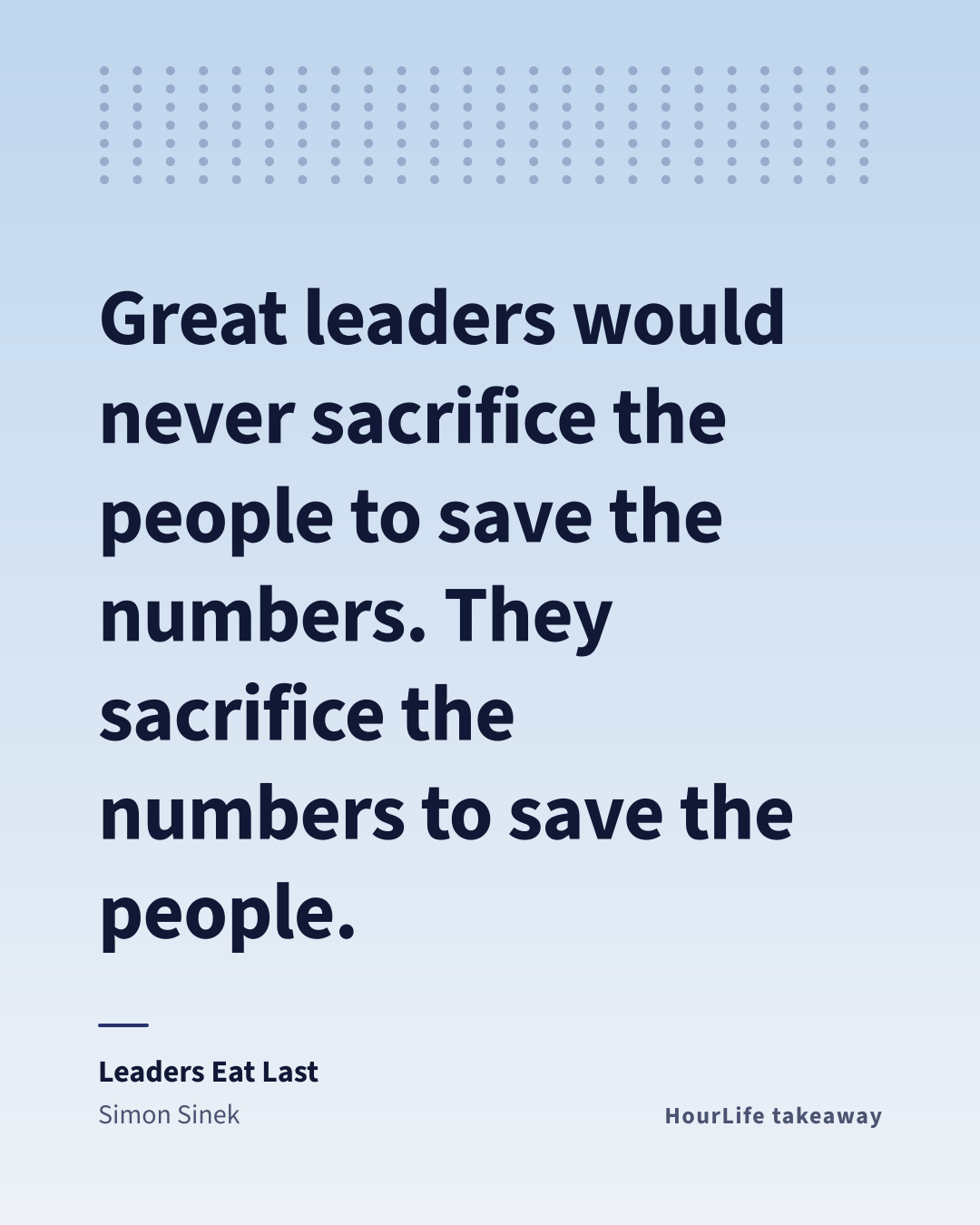
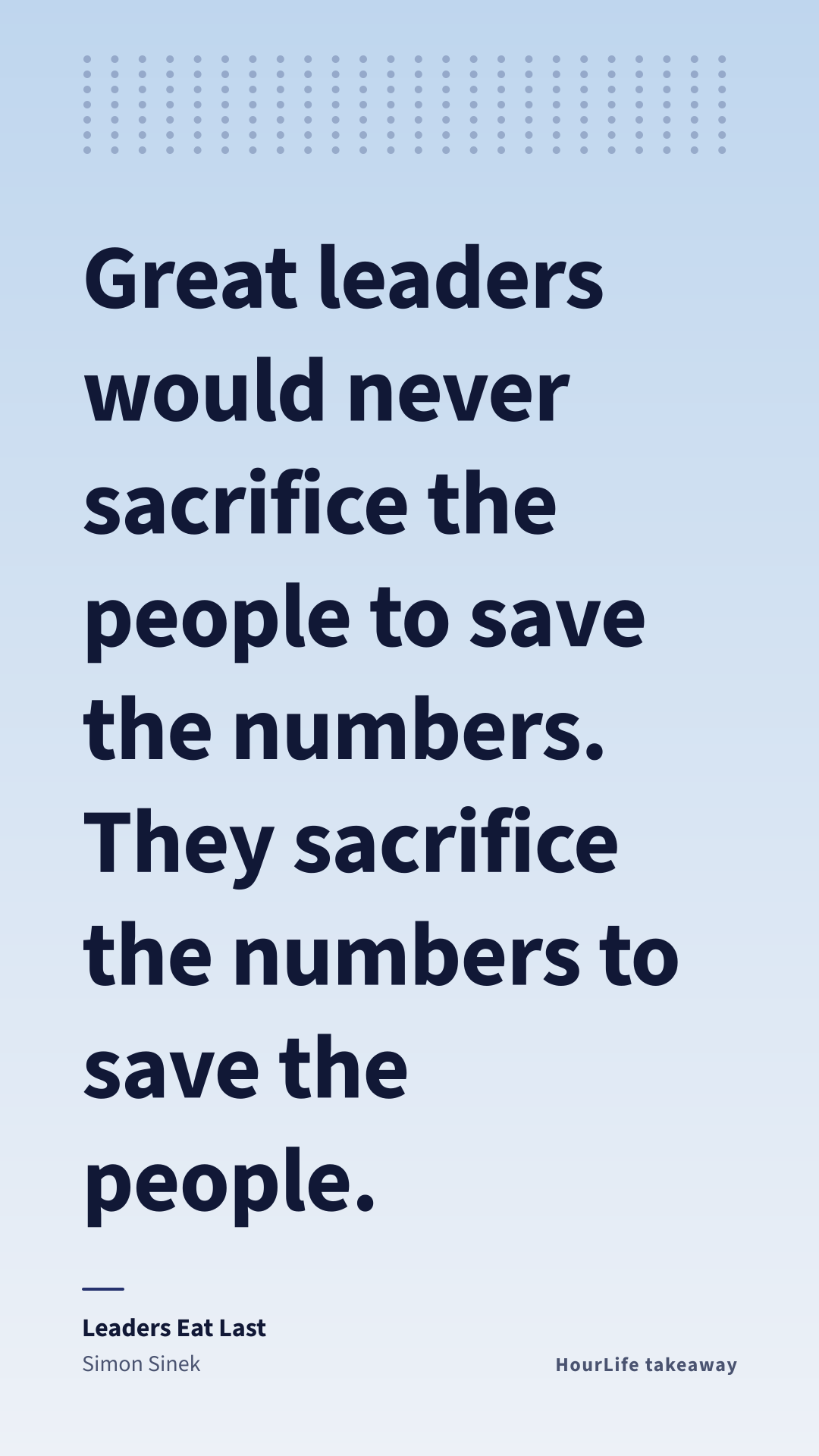
Great leaders would never sacrifice the people to save the numbers. They sacrifice the numbers to save the people.
This is the hardest line in the book because it is expensive. It separates values painted on walls from values used in boardrooms.
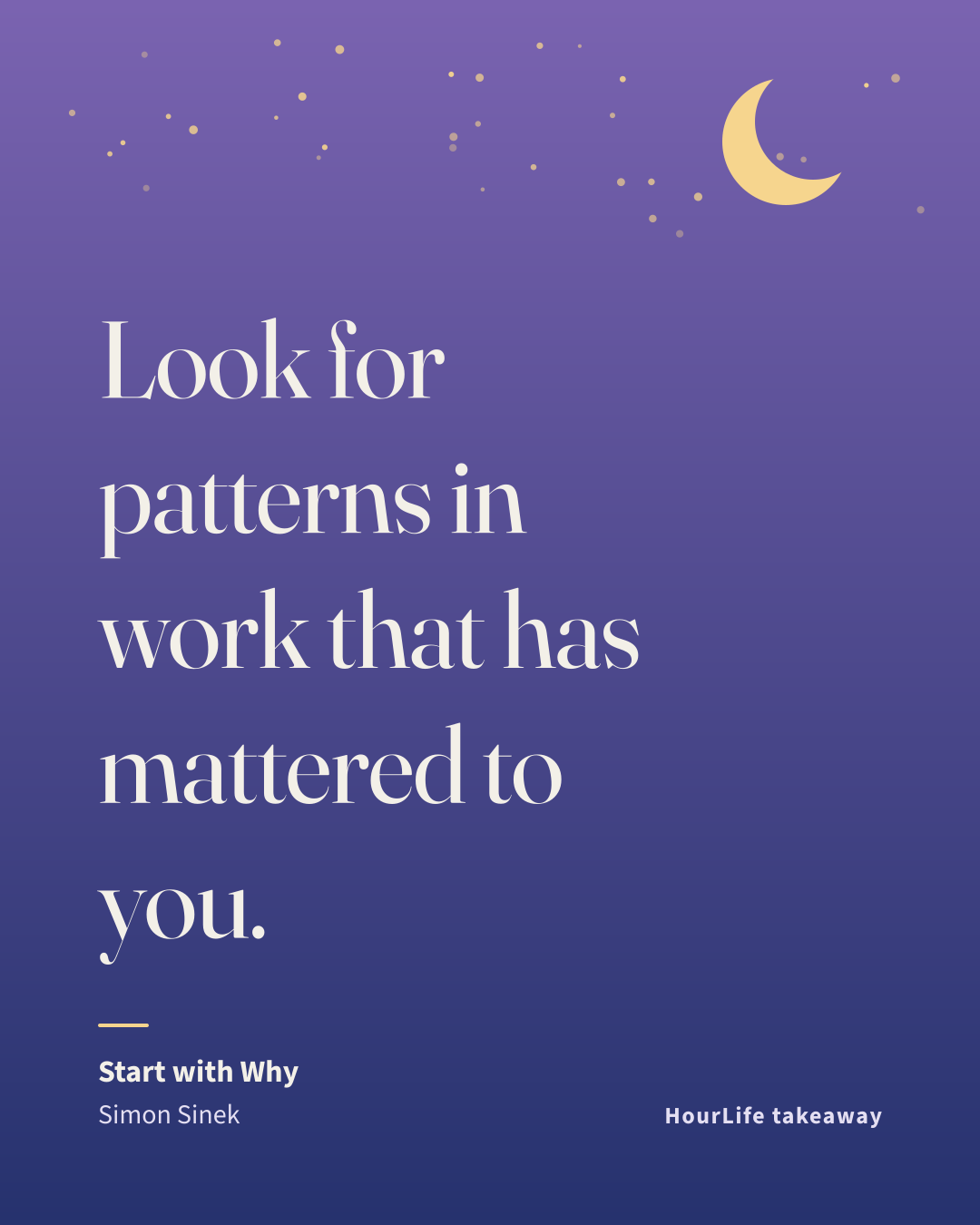
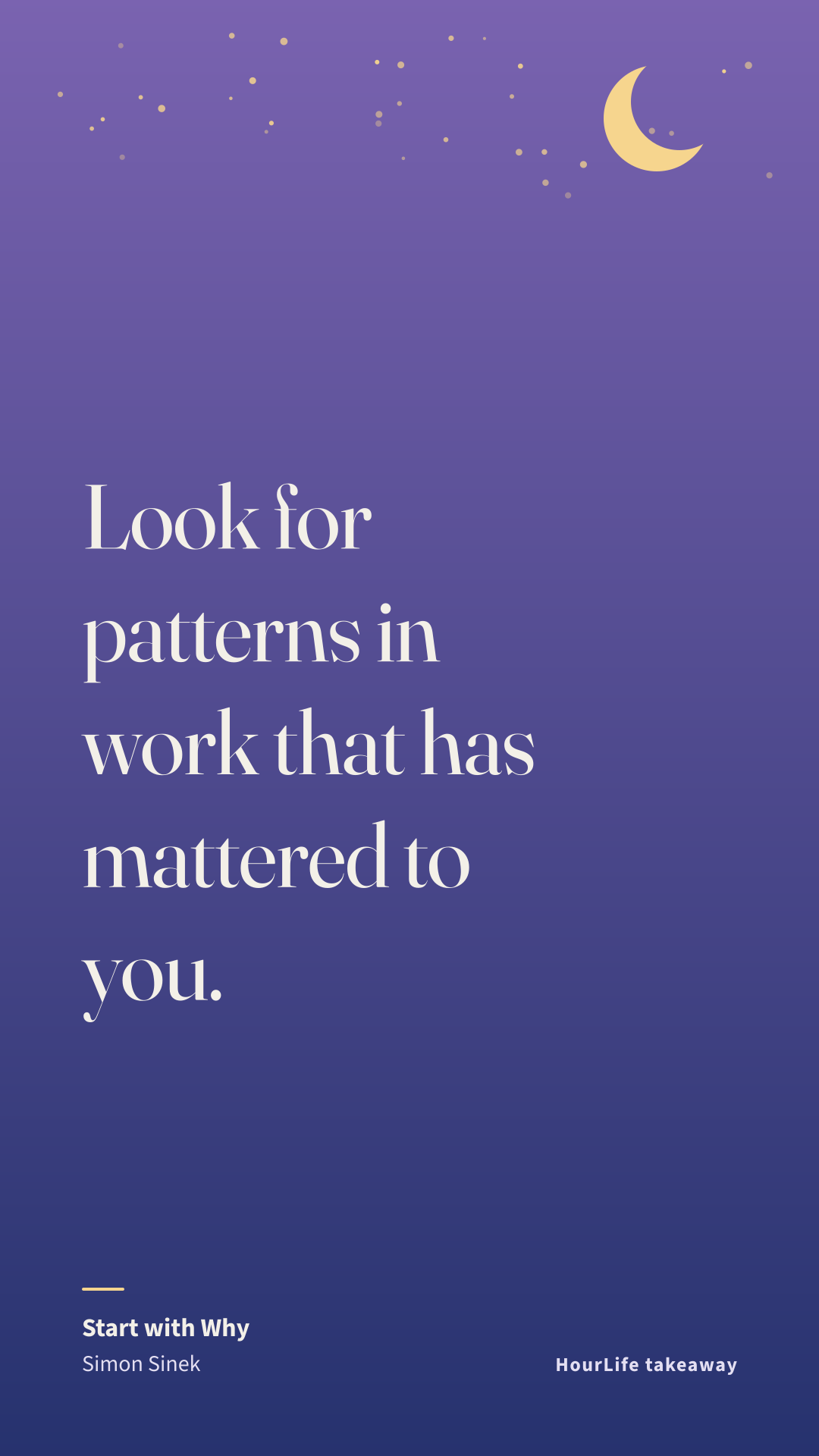
Look for patterns in work that has mattered to you.
Recall a few occasions when your contribution felt useful. Describe what you did and whom it helped. Treat the pattern as a starting point for reflection rather than a fixed personal identity.
A team needs ways to put a stated belief into practice.
Discuss what the purpose means for everyday decisions. Skills, expectations, resources, and the ability to disagree also matter when people work together.
HourLife turns these ideas into a daily system — goals, habits, focus, and reflection in one private place.