Keep this author quotes for later
Sign in to save

Stanley Rosenberg

The most-loved lines from Stanley Rosenberg, drawn from 1 book in the library.

Lines labelled “HourLife takeaway” are our wording of the book’s ideas and may paraphrase it. Only lines in quotation marks are the author’s own words, with where they appear. Check the book for exact wording before you quote it. Spot an error?

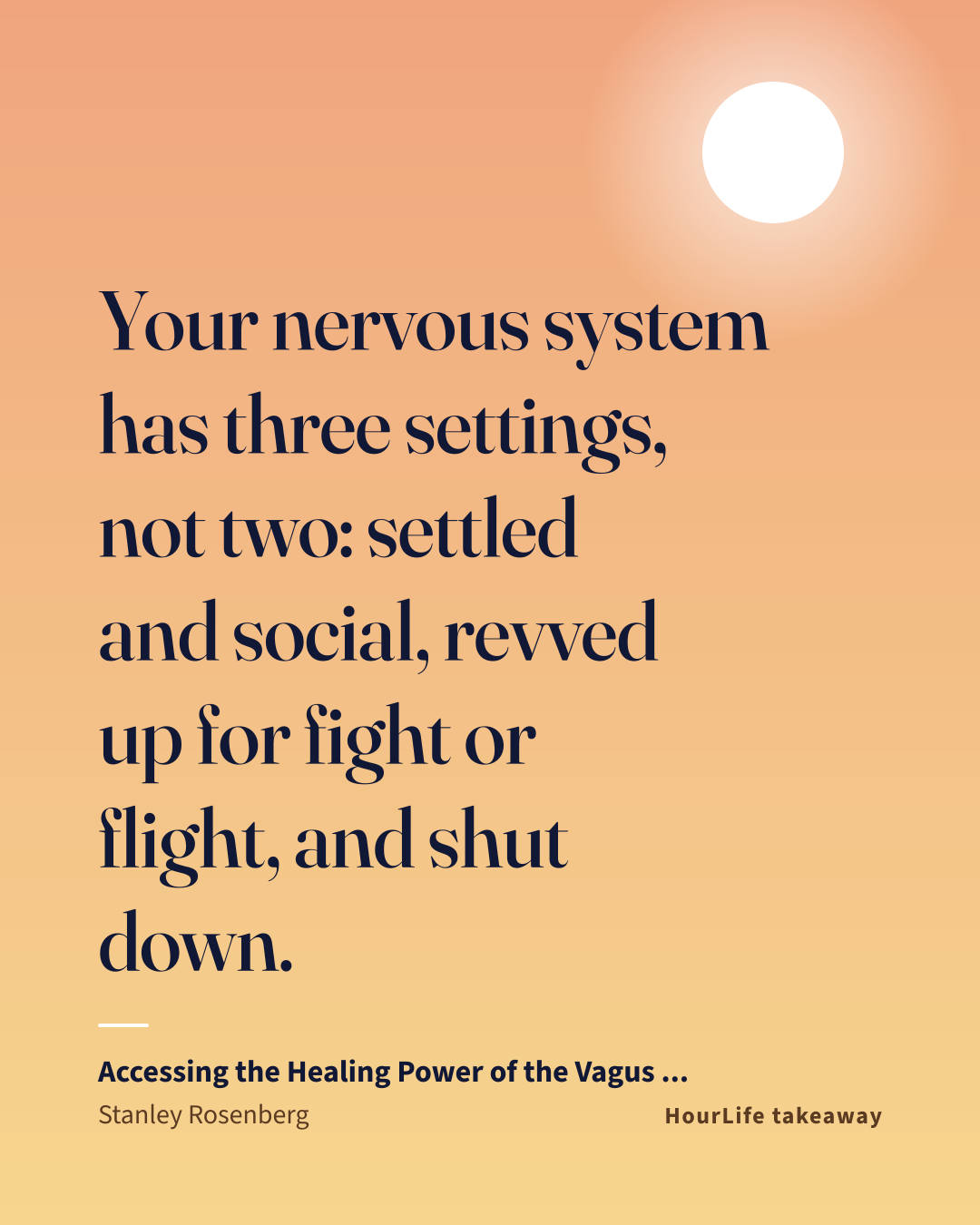
Your nervous system has three settings, not two: settled and social, revved up for fight or flight, and shut down.

Accessing the Healing Power of the Vagus Nerve Stanley Rosenberg HourLife takeaway

Rosenberg builds on Stephen Porges's polyvagal theory, which adds a third state to the familiar picture of stress versus relaxation. In the theory, the dorsal branch of the vagus can slow the body right down when a threat feels inescapable. The calm, connected state is called ventral vagal.


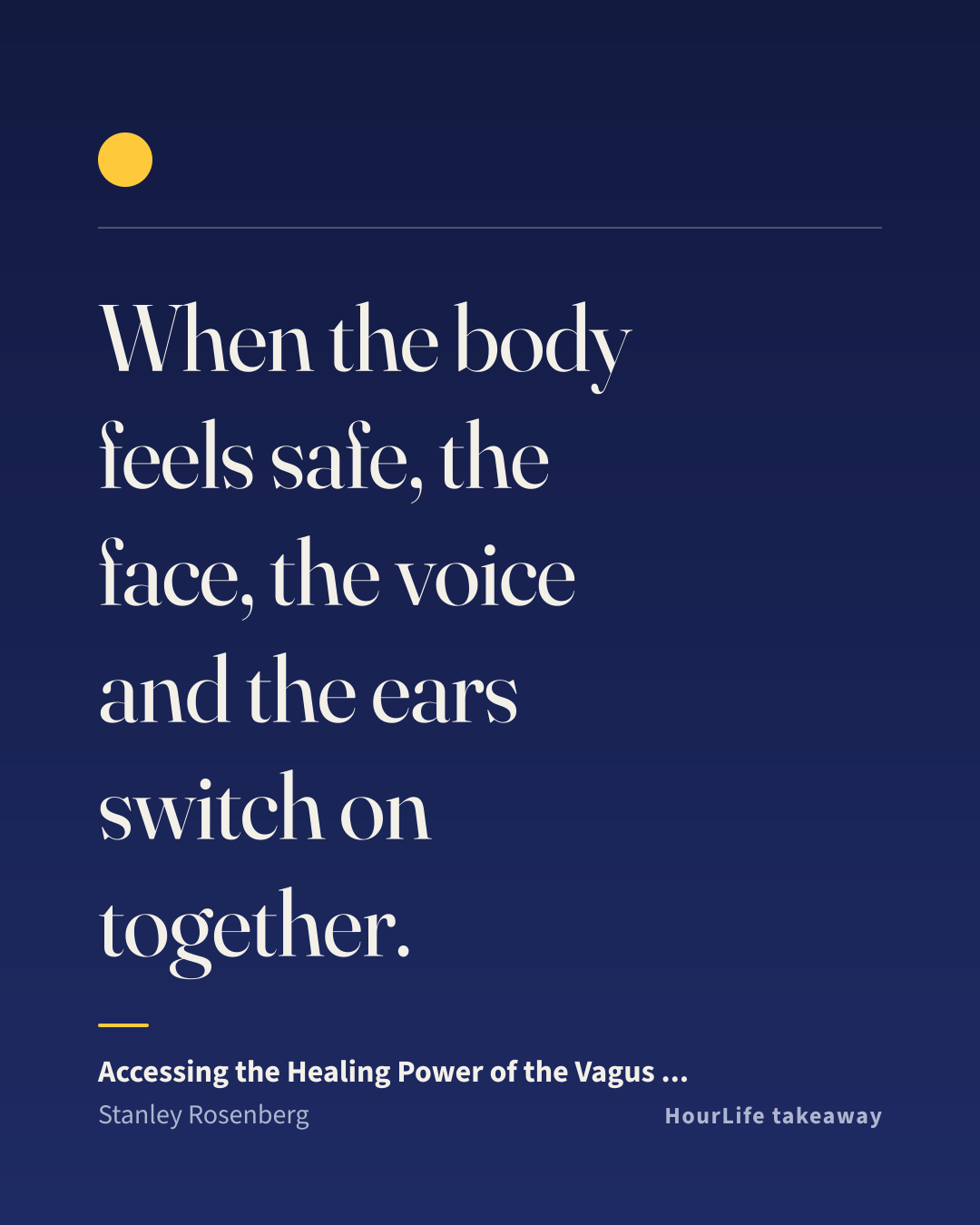
When the body feels safe, the face, the voice and the ears switch on together.

Accessing the Healing Power of the Vagus Nerve Stanley Rosenberg HourLife takeaway

Following Porges, Rosenberg ties social engagement to five cranial nerves that serve the face, jaw, throat, middle ear and the muscles that turn the head. That is why a flat face, a monotone voice and trouble following speech in a noisy room can show up together. It is also why he works on the face and neck to change how safe the body feels.

A small eye movement can be a way into the nervous system.

Accessing the Healing Power of the Vagus Nerve Stanley Rosenberg HourLife takeaway

The Basic Exercise asks you to lace your fingers behind your head, keep your head still and move only your eyes to one side until you yawn, swallow or sigh, then repeat on the other side. Rosenberg presents it as a quick way to shift toward the social engagement state. The support for it is mainly his clinical experience and reports from people who have tried it.

A yawn, a swallow or a sigh is a signal worth noticing.

Accessing the Healing Power of the Vagus Nerve Stanley Rosenberg HourLife takeaway

Rosenberg treats these as signs that the autonomic nervous system is shifting during an exercise. So instead of only counting seconds, you wait for one of them before moving on. It is a useful cue to pay attention to your body, not a measurement.

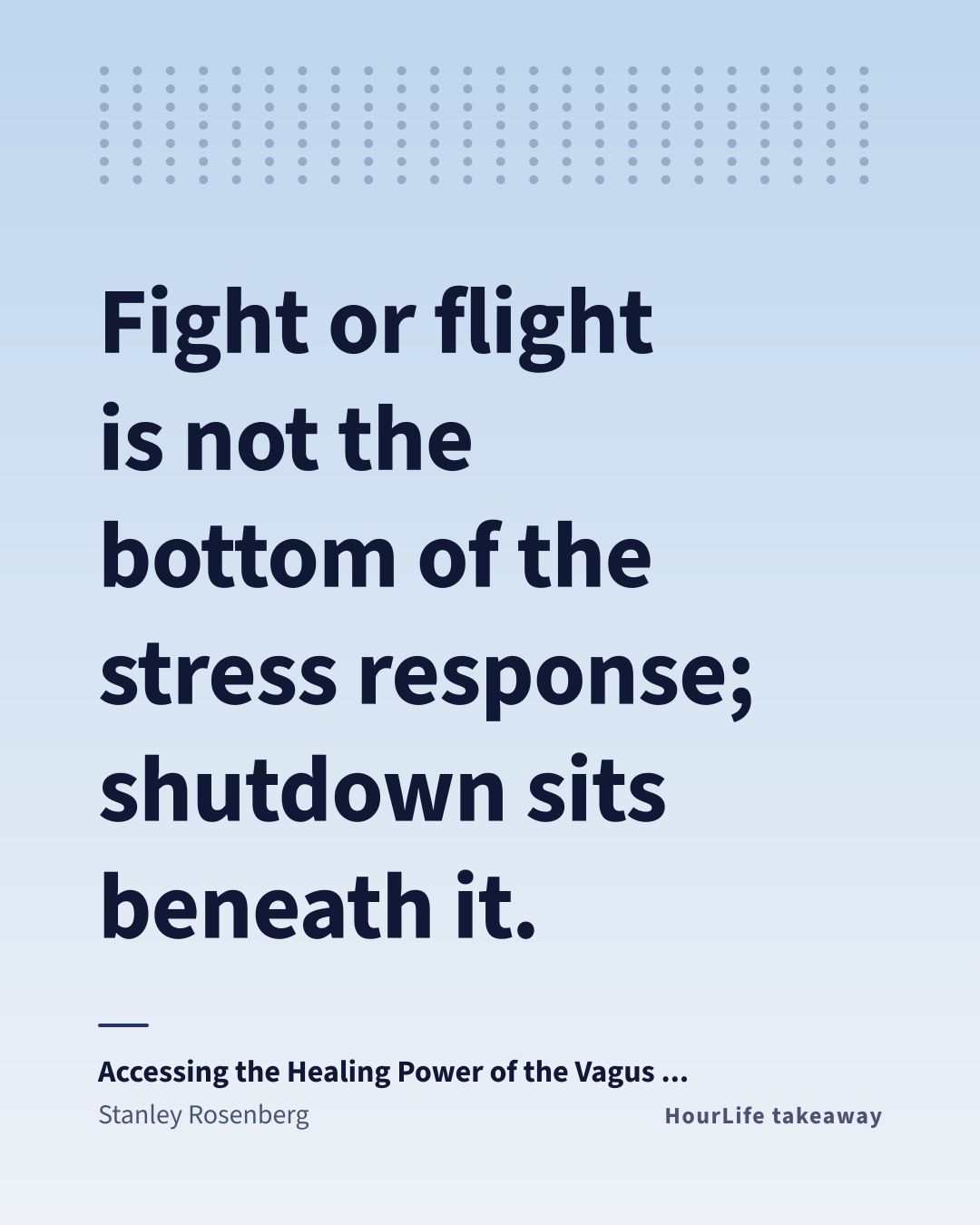
Fight or flight is not the bottom of the stress response; shutdown sits beneath it.

Accessing the Healing Power of the Vagus Nerve Stanley Rosenberg HourLife takeaway

Polyvagal theory arranges the states in order: the body tries social engagement first, then fight or flight, and falls back on shutdown when neither works. Rosenberg uses this to explain why some people under strain go flat, foggy and withdrawn rather than anxious. Seen this way, low energy is not laziness but a state with its own logic.

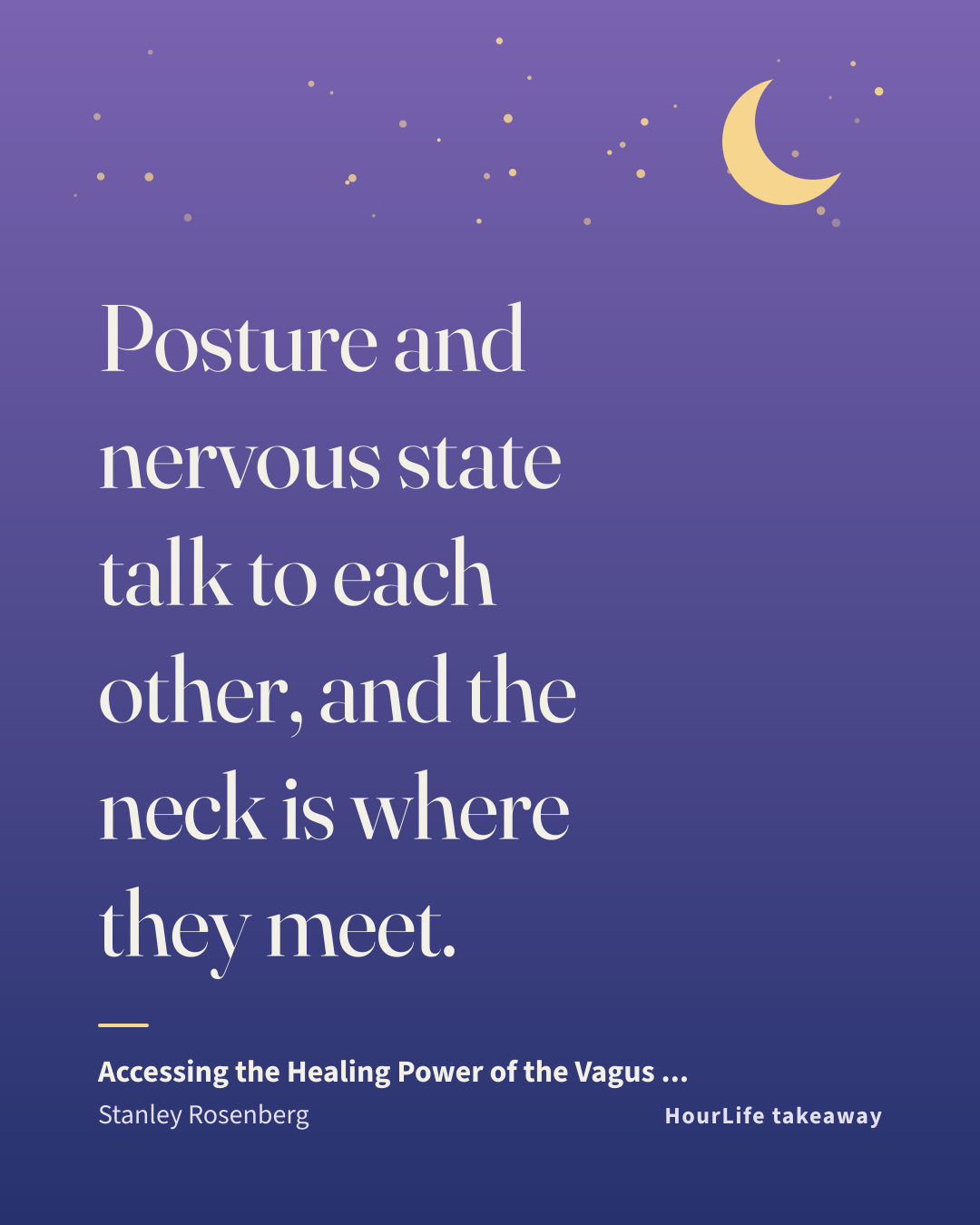
Posture and nervous state talk to each other, and the neck is where they meet.

Accessing the Healing Power of the Vagus Nerve Stanley Rosenberg HourLife takeaway

Rosenberg pays close attention to forward head posture and to tight trapezius and sternocleidomastoid muscles, which are served by the eleventh cranial nerve. In his view, freeing the neck and bringing the head back over the body helps breathing and social engagement. The salamander exercises are part of how he works on this.

Judge an exercise by what you notice in your own body, not by the theory behind it.

Accessing the Healing Power of the Vagus Nerve Stanley Rosenberg HourLife takeaway

The book is full of case stories, but your own experience is the test that matters to you. Noting your state before and after, and any yawn or sigh, turns a vague attempt into a small experiment. If nothing changes after a fair try, that is worth knowing too.

The three states make a useful map even while scientists argue over the territory.

Accessing the Healing Power of the Vagus Nerve Stanley Rosenberg HourLife takeaway

Polyvagal theory is debated, and some neuroscientists dispute parts of it, including Porges's account of how the branches of the vagus evolved and what each one does. Rosenberg presents the theory with confidence. You can use the three states as a language for what you feel without treating every physiological claim as proven.

Self-help exercises belong beside professional care, not in place of it.

Accessing the Healing Power of the Vagus Nerve Stanley Rosenberg HourLife takeaway

The subtitle names anxiety, depression, trauma and autism, and the case stories describe striking changes. These are Rosenberg's reports from his own practice. Anyone living with those conditions should keep working with their clinician and treat the exercises as something gentle to add.

Keep this going in the app.

HourLife turns these ideas into a daily system — goals, habits, focus, and reflection in one private place.