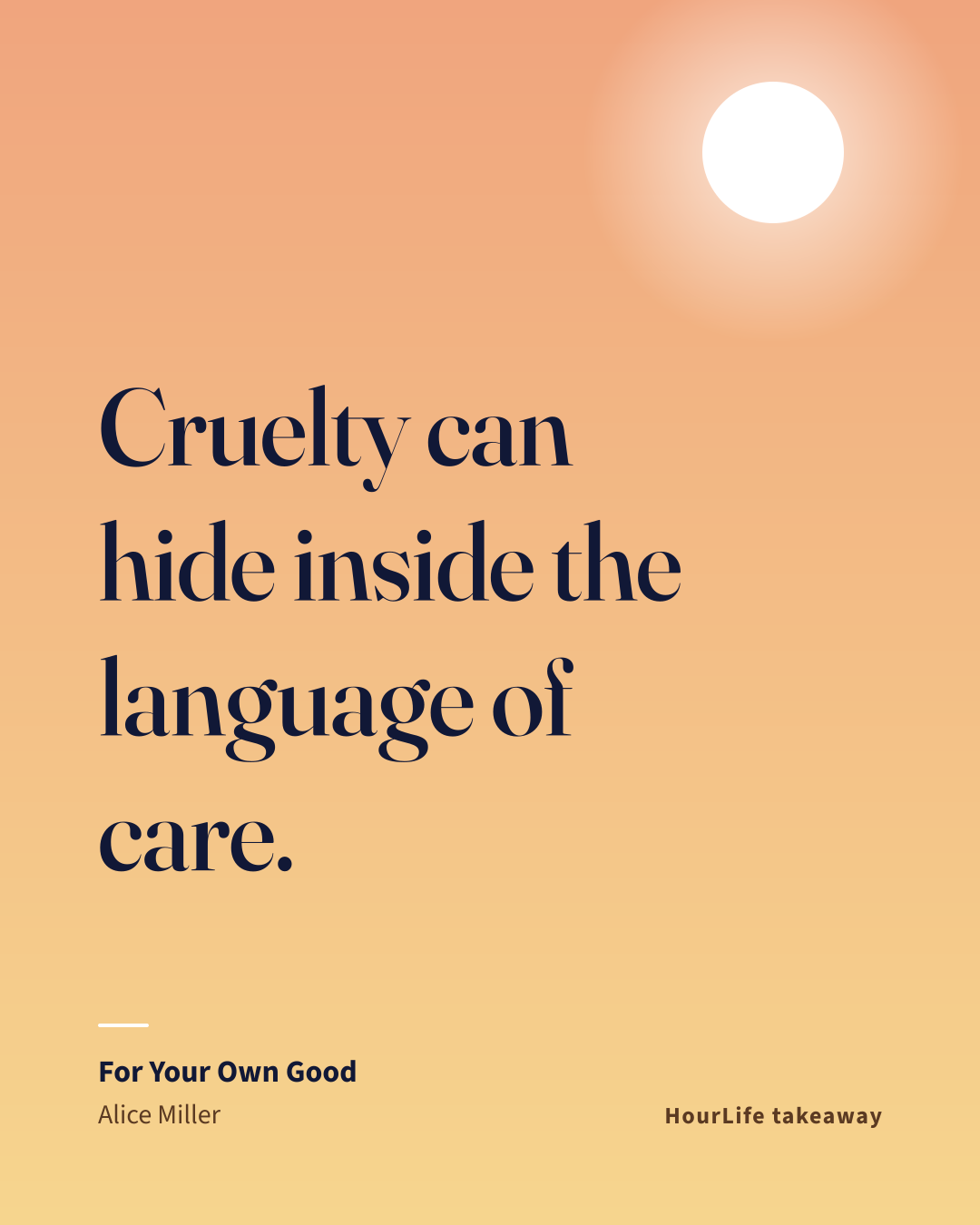
Cruelty can hide inside the language of care.
The manuals Miller quotes presented control, shaming and beating as being for the child's own good. Noticing that framing, in old books and in everyday phrases, is the first step to choosing differently.
8 memorable lines from For Your Own Good: Hidden Cruelty in Child-Rearing and the Roots of Violence by Alice Miller, each with the idea behind it.
As an Amazon Associate, HourLife earns from qualifying purchases.
Lines labelled “HourLife takeaway” are our wording of the book’s ideas and may paraphrase it. Only lines in quotation marks are the author’s own words, with where they appear. Check the book for exact wording before you quote it. Spot an error?
Cruelty can hide inside the language of care.
The manuals Miller quotes presented control, shaming and beating as being for the child's own good. Noticing that framing, in old books and in everyday phrases, is the first step to choosing differently.
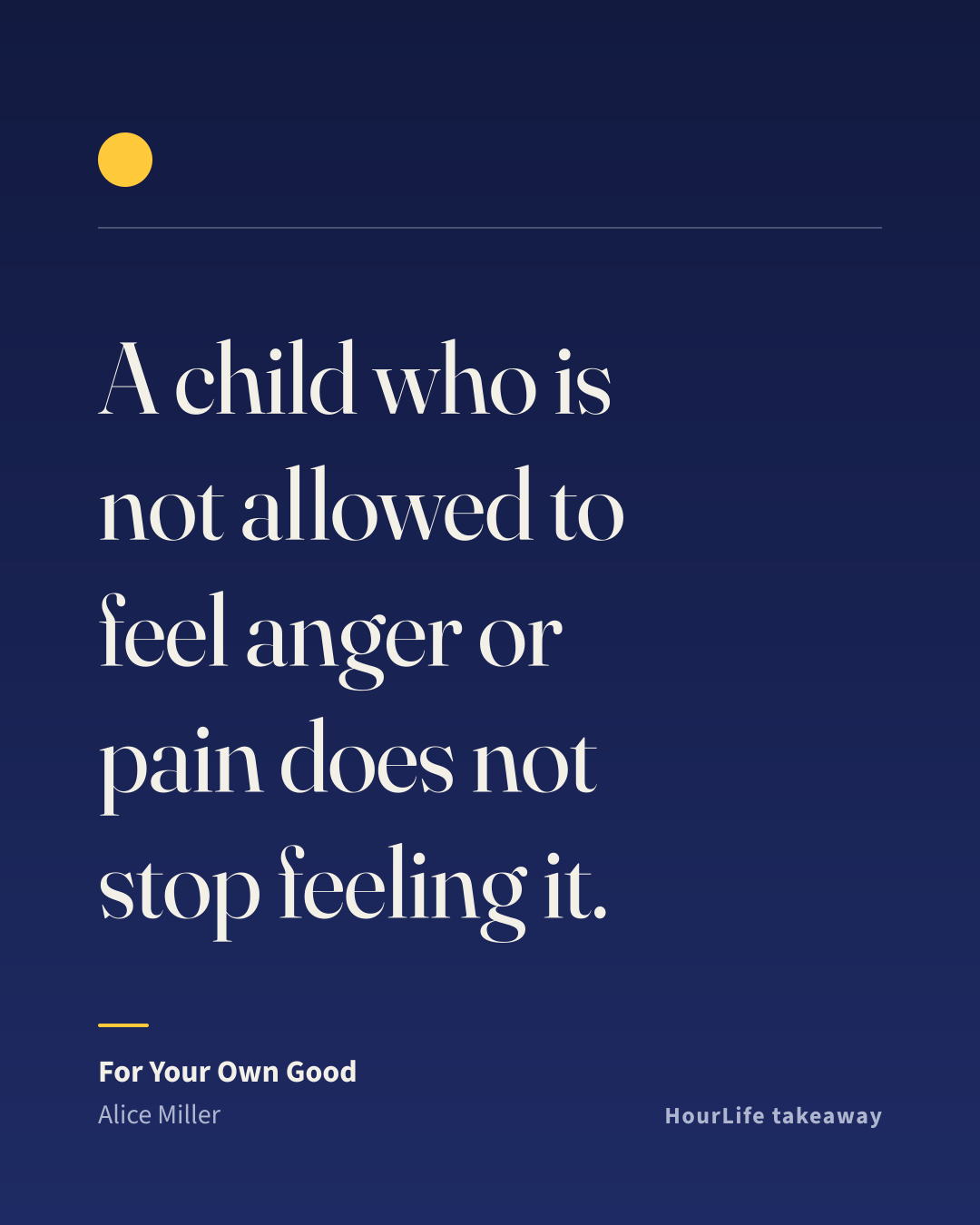
A child who is not allowed to feel anger or pain does not stop feeling it.
Feelings a child must hide go underground rather than away, Miller argues. Making room for a child's protest and tears is not indulgence; it is how they learn that feelings can be survived.
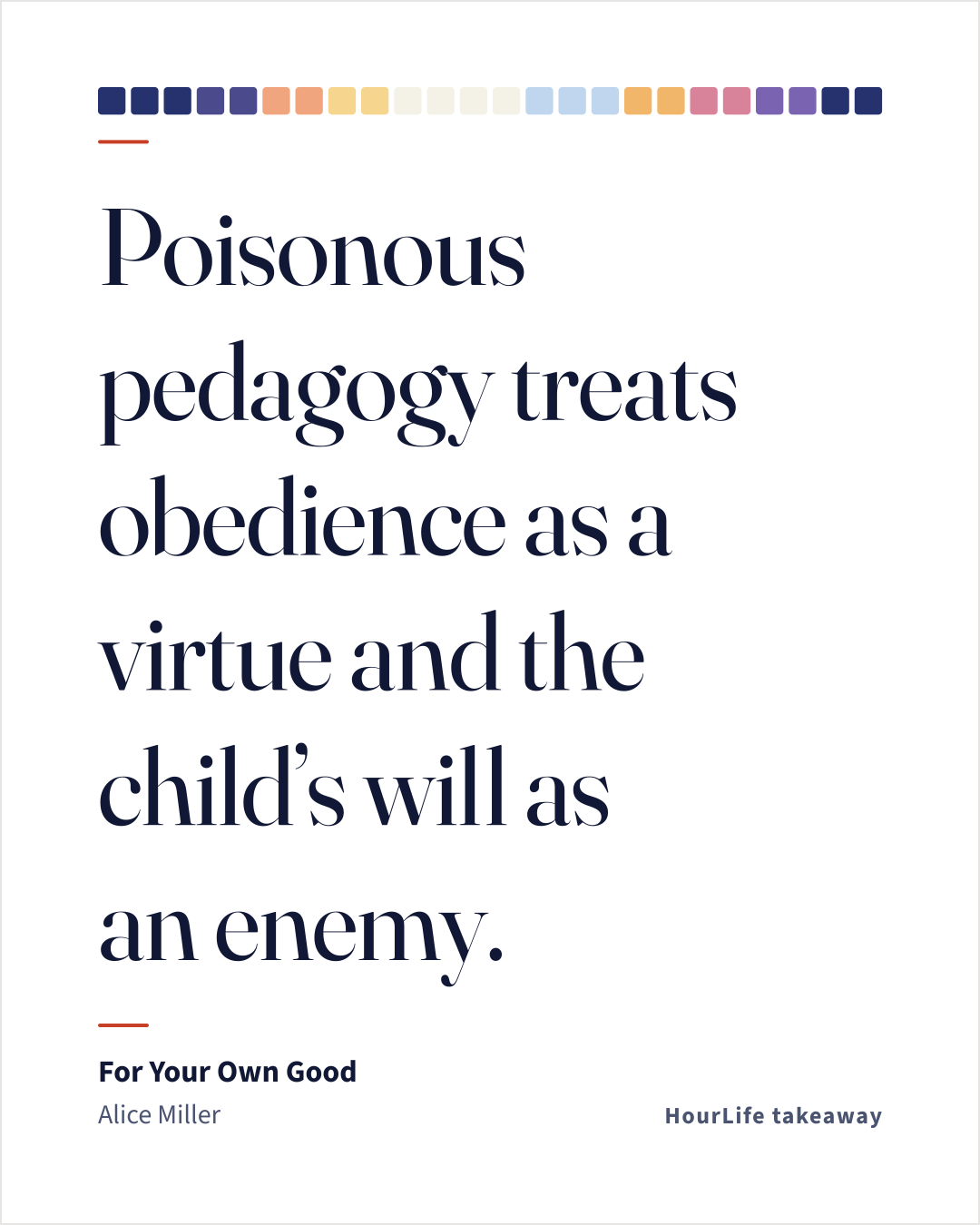
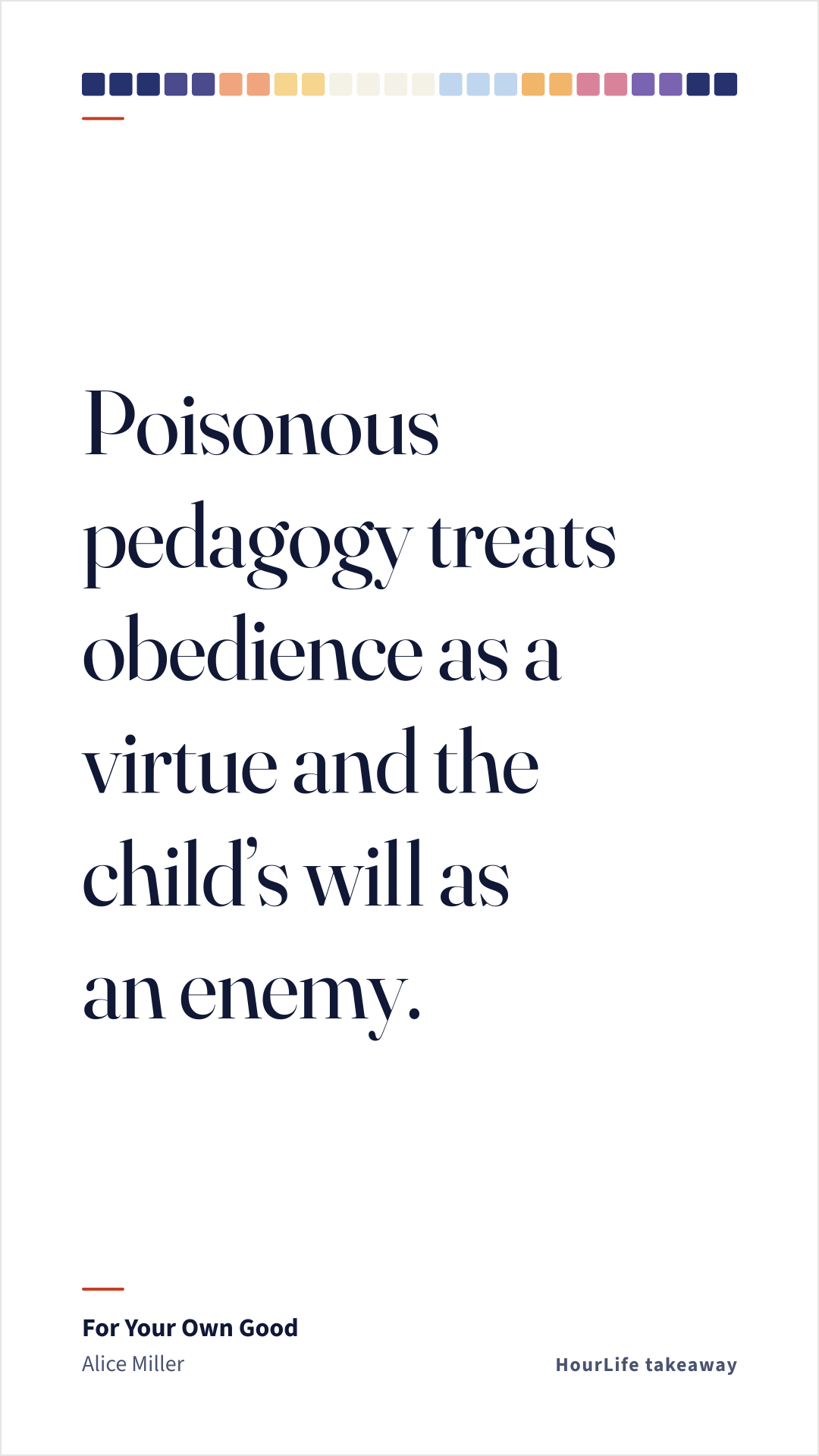
Poisonous pedagogy treats obedience as a virtue and the child’s will as an enemy.
Miller's term names a whole set of beliefs, such as parents always being right and tenderness being harmful. Seeing them written out makes it easier to notice where they still live.
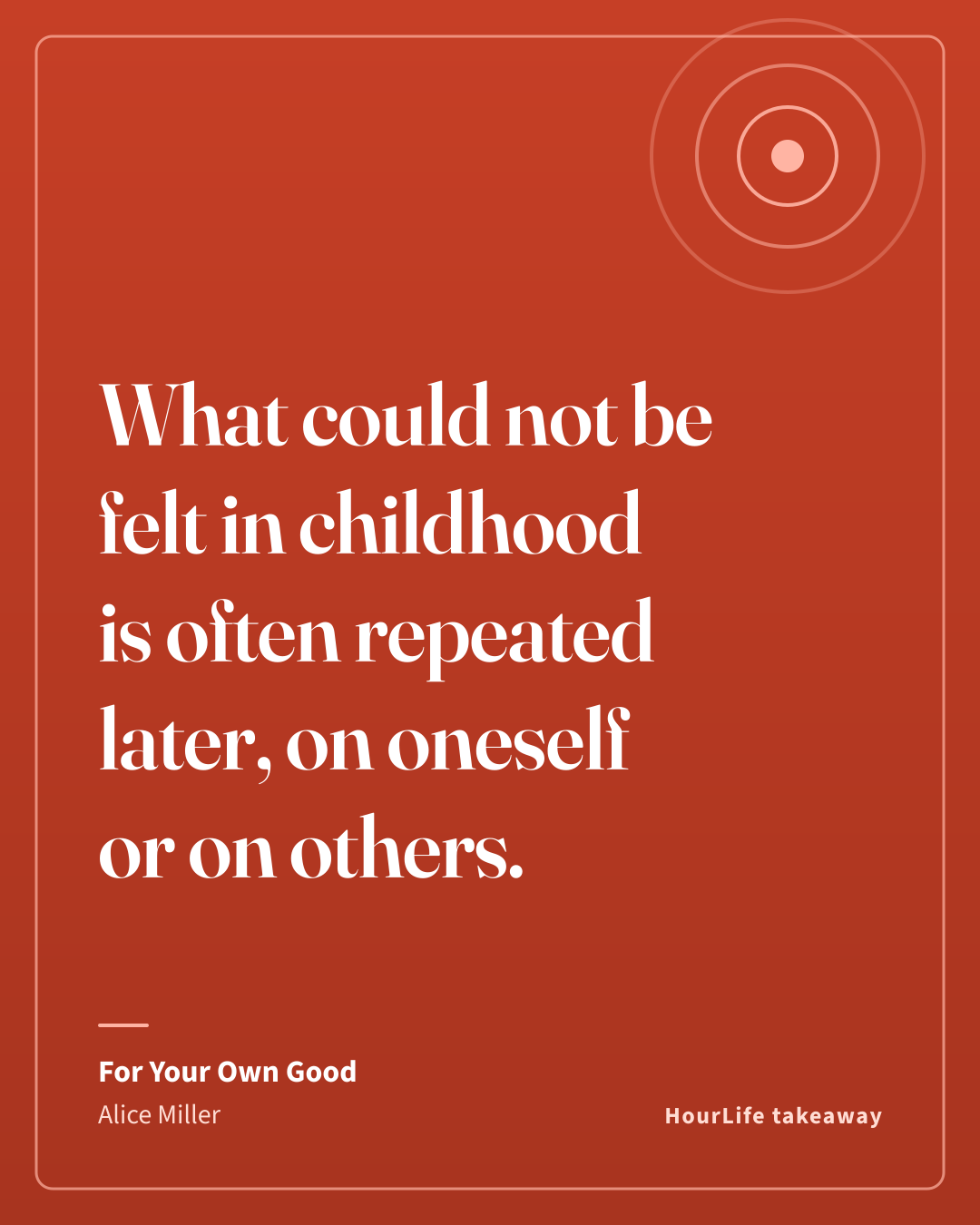
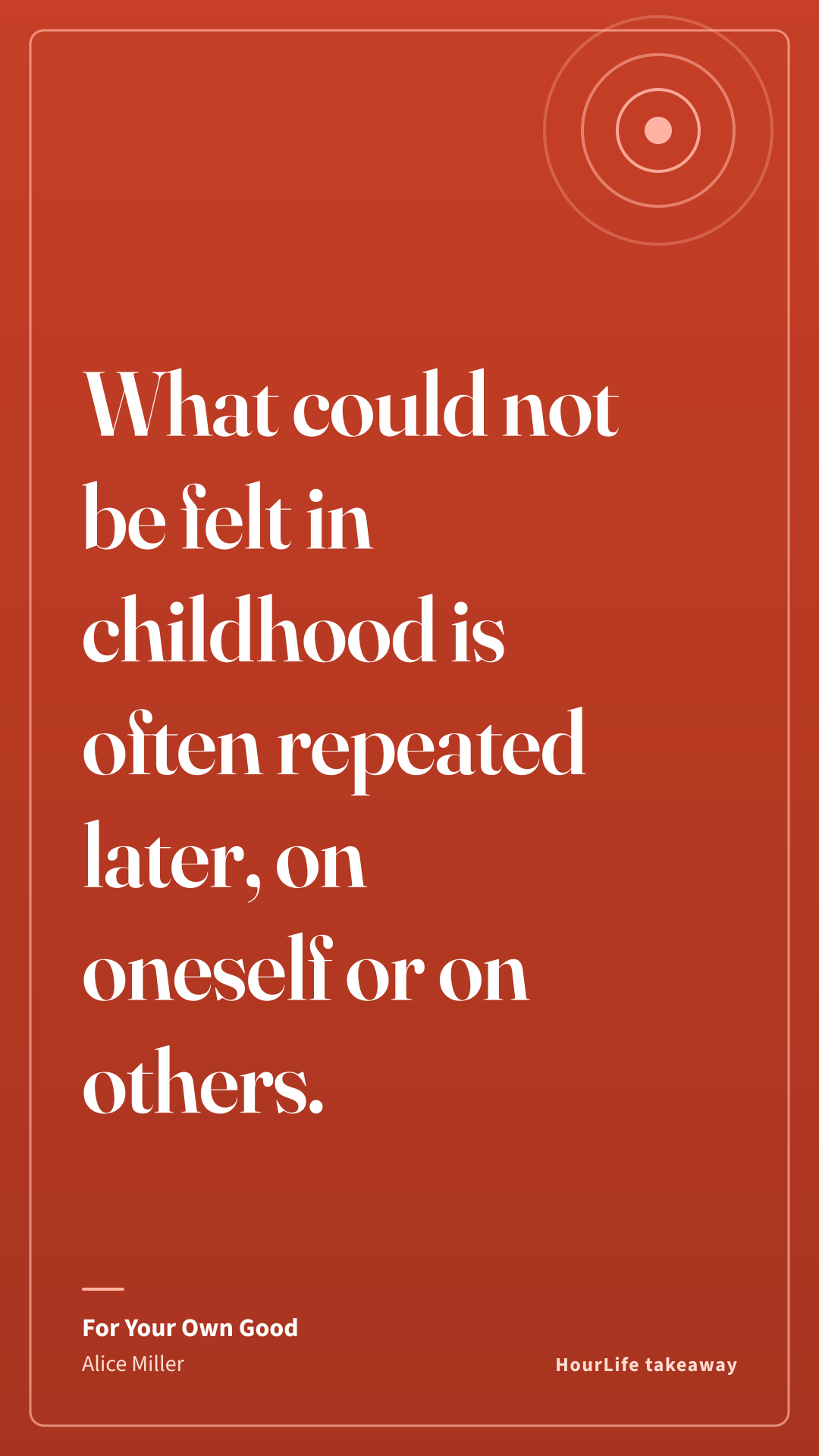
What could not be felt in childhood is often repeated later, on oneself or on others.
Her three case studies trace how unacknowledged humiliation can return as self-destruction or violence. It is an argument about patterns, not a verdict on any one person.
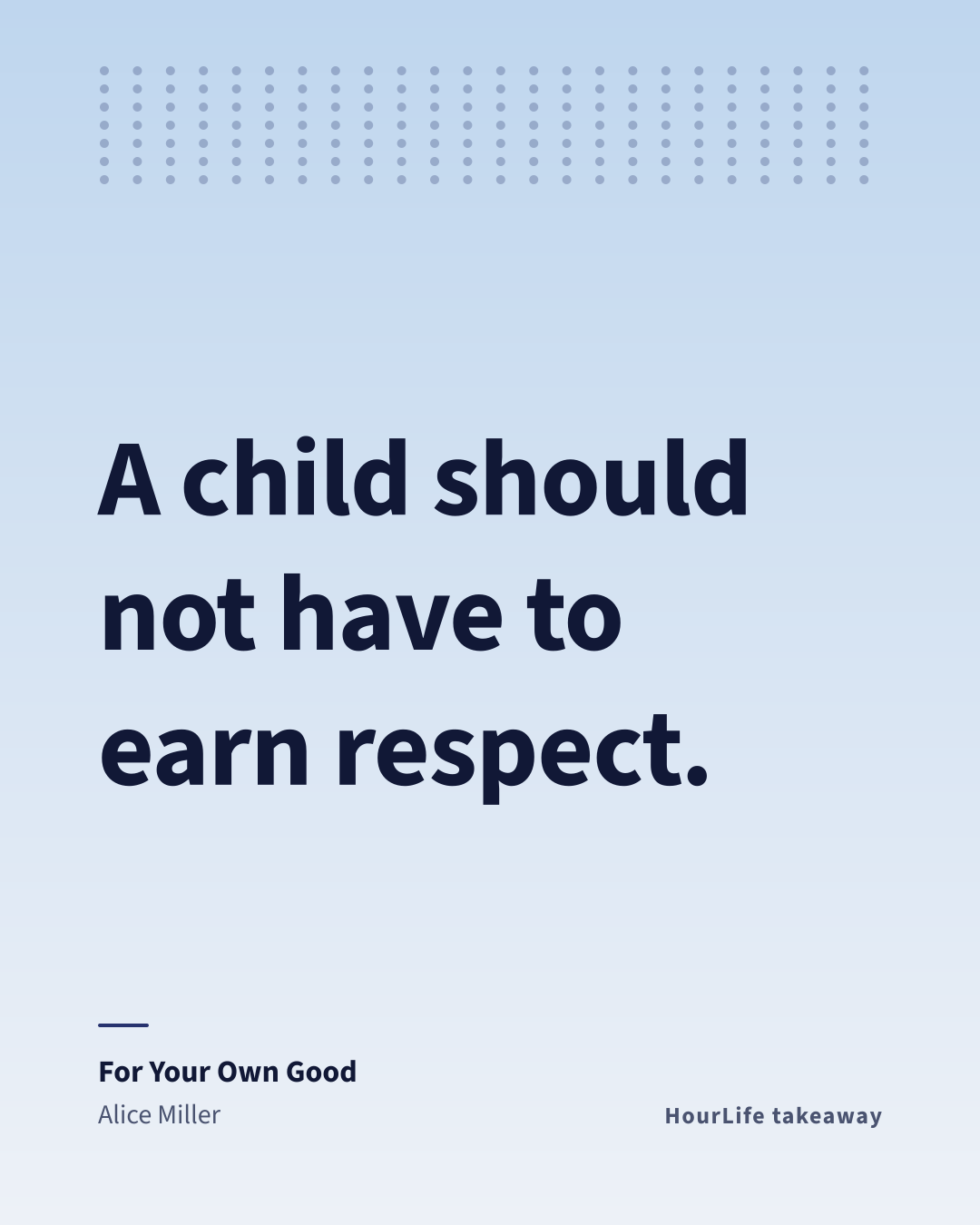
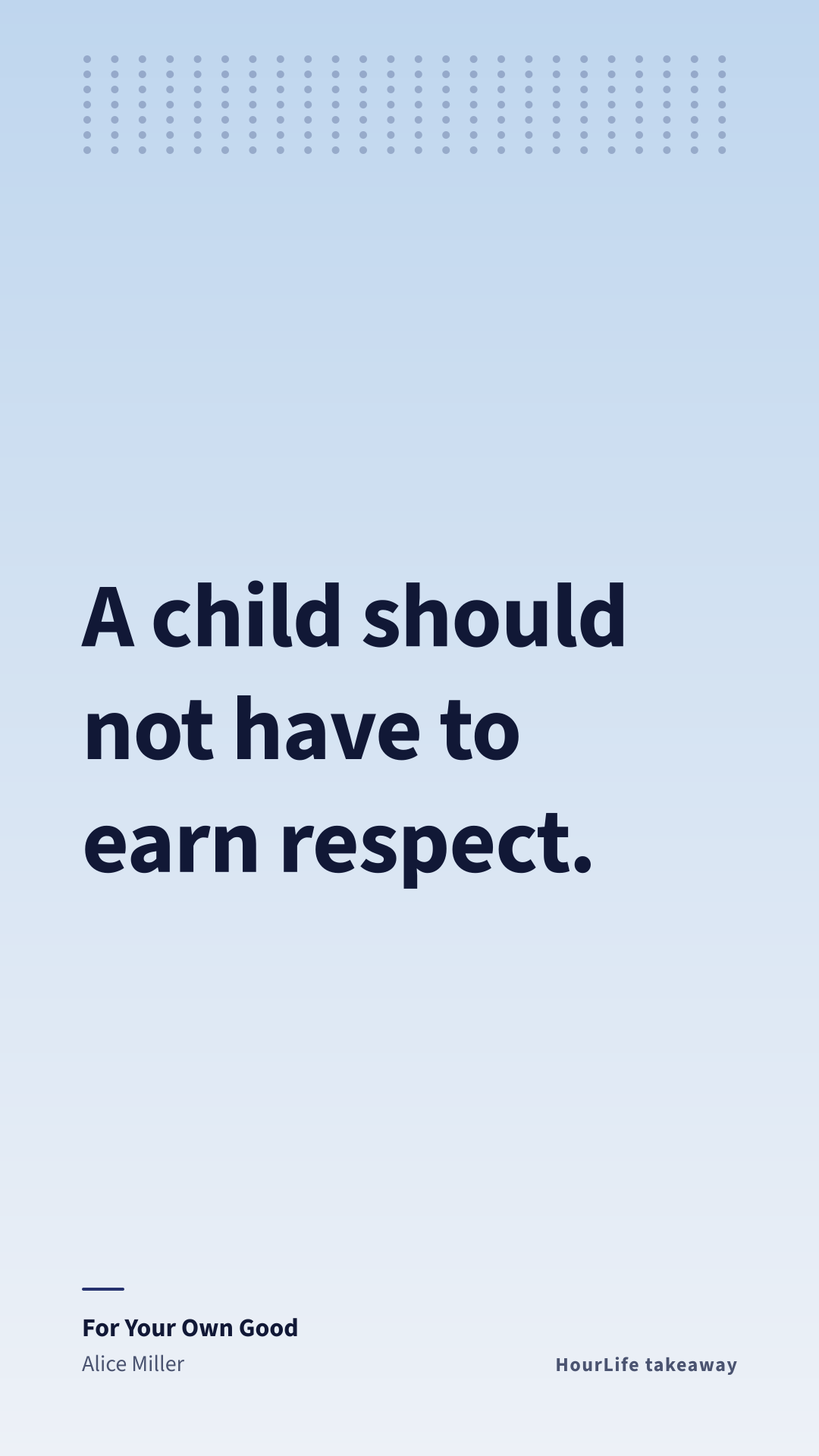
A child should not have to earn respect.
The old manuals made respect run one way, from child to adult. Miller asks adults to offer it in the other direction as a starting point.
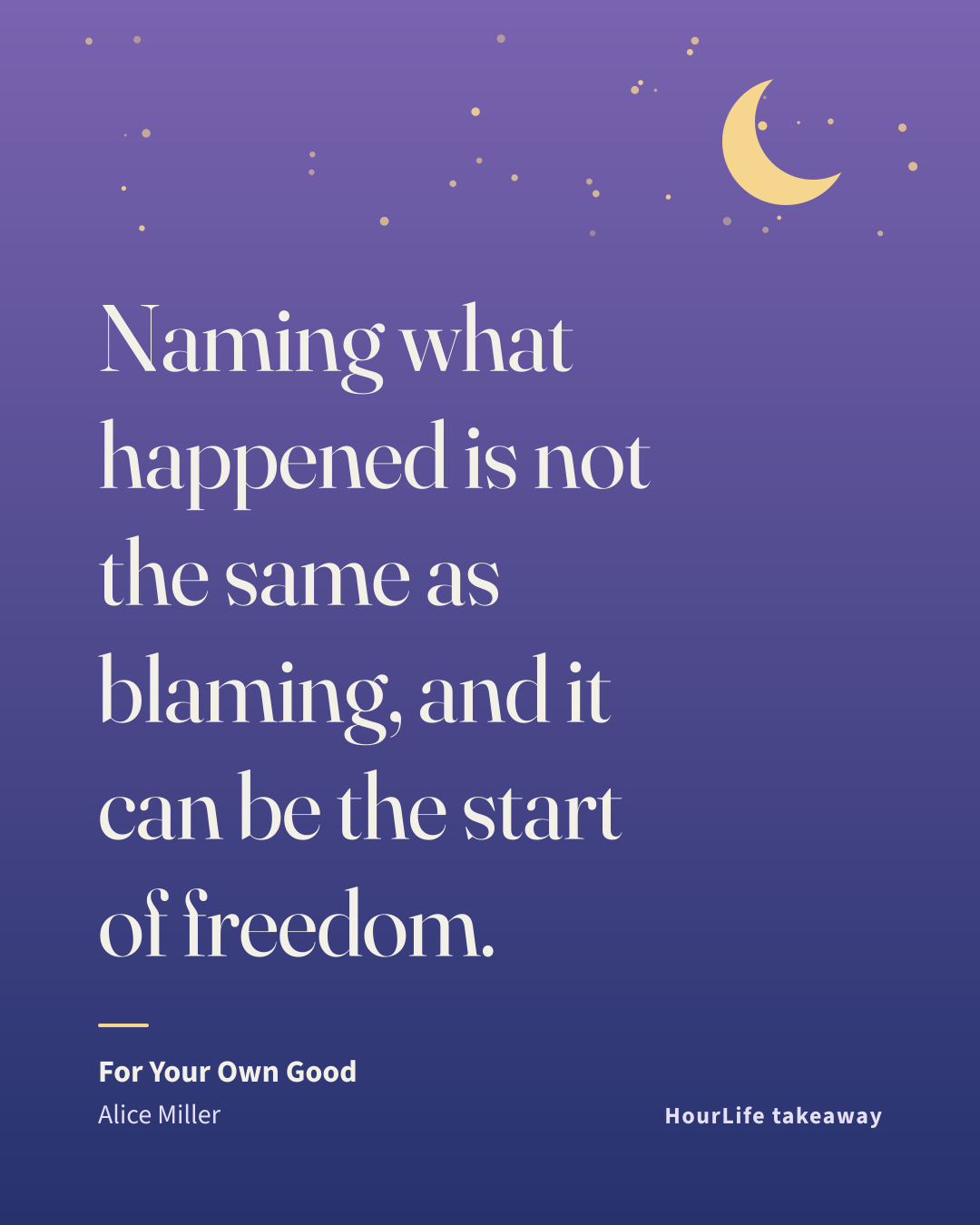
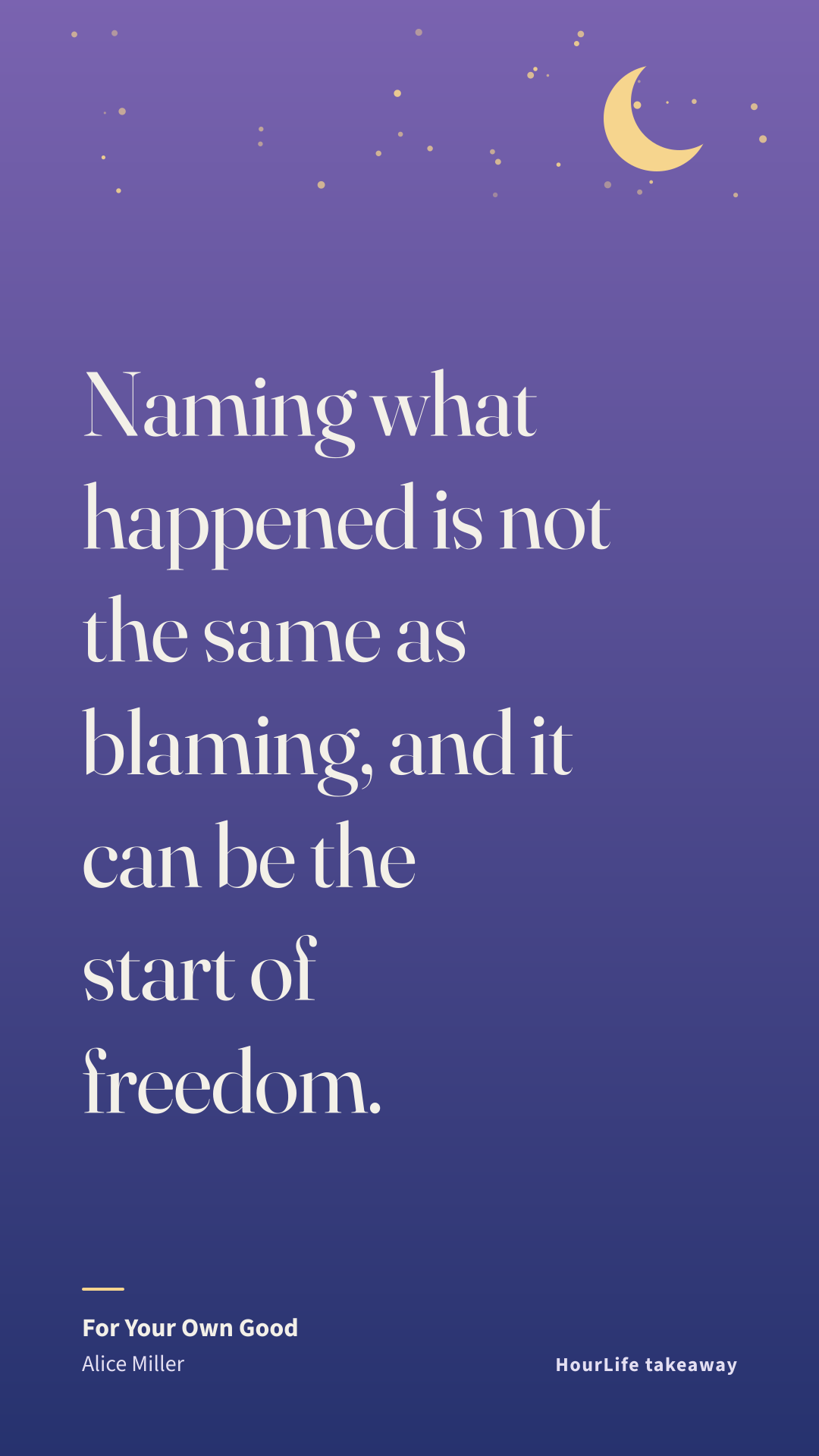
Naming what happened is not the same as blaming, and it can be the start of freedom.
Miller sees honest recognition of childhood pain, instead of idealising parents, as necessary to stop passing it on. You can see clearly and still choose how you relate to your family today.
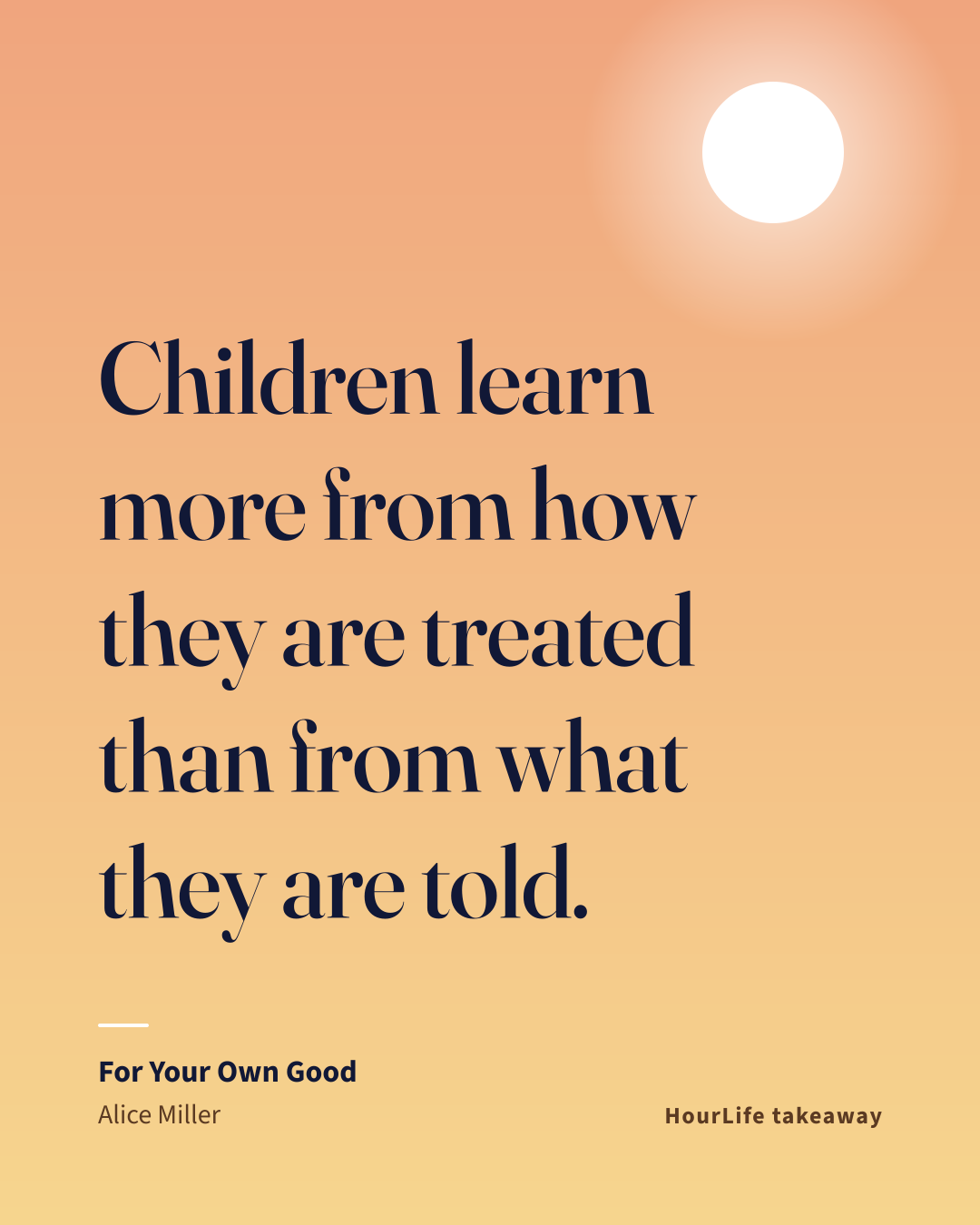
Children learn more from how they are treated than from what they are told.
A lecture on kindness delivered with contempt teaches contempt. The everyday tone of a household is the real lesson.
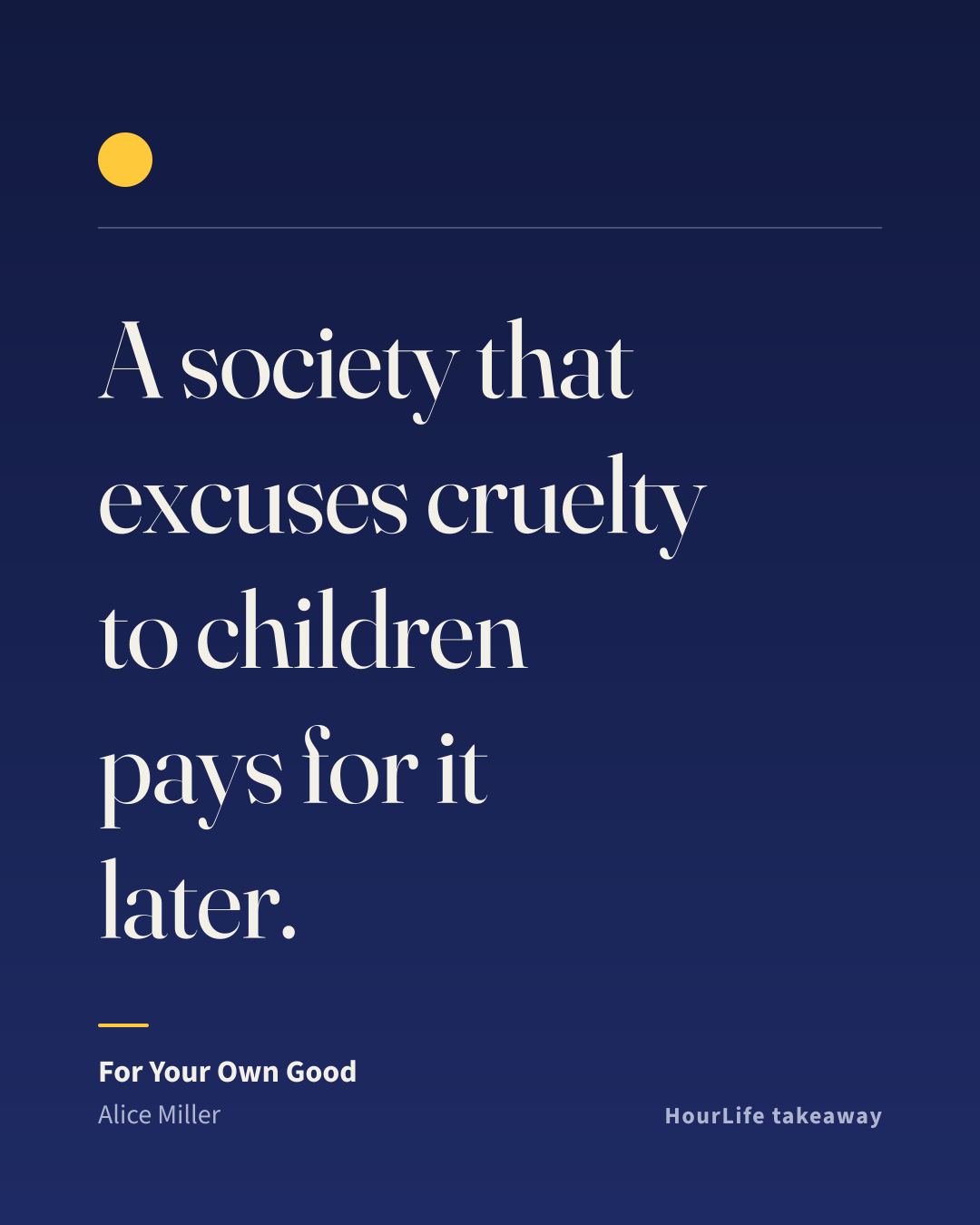
A society that excuses cruelty to children pays for it later.
By asking how a generation was raised, Miller links private child-rearing to public violence. Protecting children's dignity is part of protecting everyone.
HourLife turns these ideas into a daily system — goals, habits, focus, and reflection in one private place.