Resilience is not fixed. It can be built through the stories we tell ourselves after loss.
The book reframes recovery as a skill, not a personality trait you either have or lack.
6 memorable lines from Option B by Sheryl Sandberg, Adam Grant, each with the idea behind it.
As an Amazon Associate, HourLife earns from qualifying purchases.
Lines labelled “HourLife takeaway” are our wording of the book’s ideas and may paraphrase it. Only lines in quotation marks are the author’s own words, with where they appear. Check the book for exact wording before you quote it. Spot an error?
Resilience is not fixed. It can be built through the stories we tell ourselves after loss.
The book reframes recovery as a skill, not a personality trait you either have or lack.
The three P traps make suffering heavier: personalization, pervasiveness, and permanence.
Sandberg and Grant give readers a practical diagnostic for the thoughts that turn pain into despair.
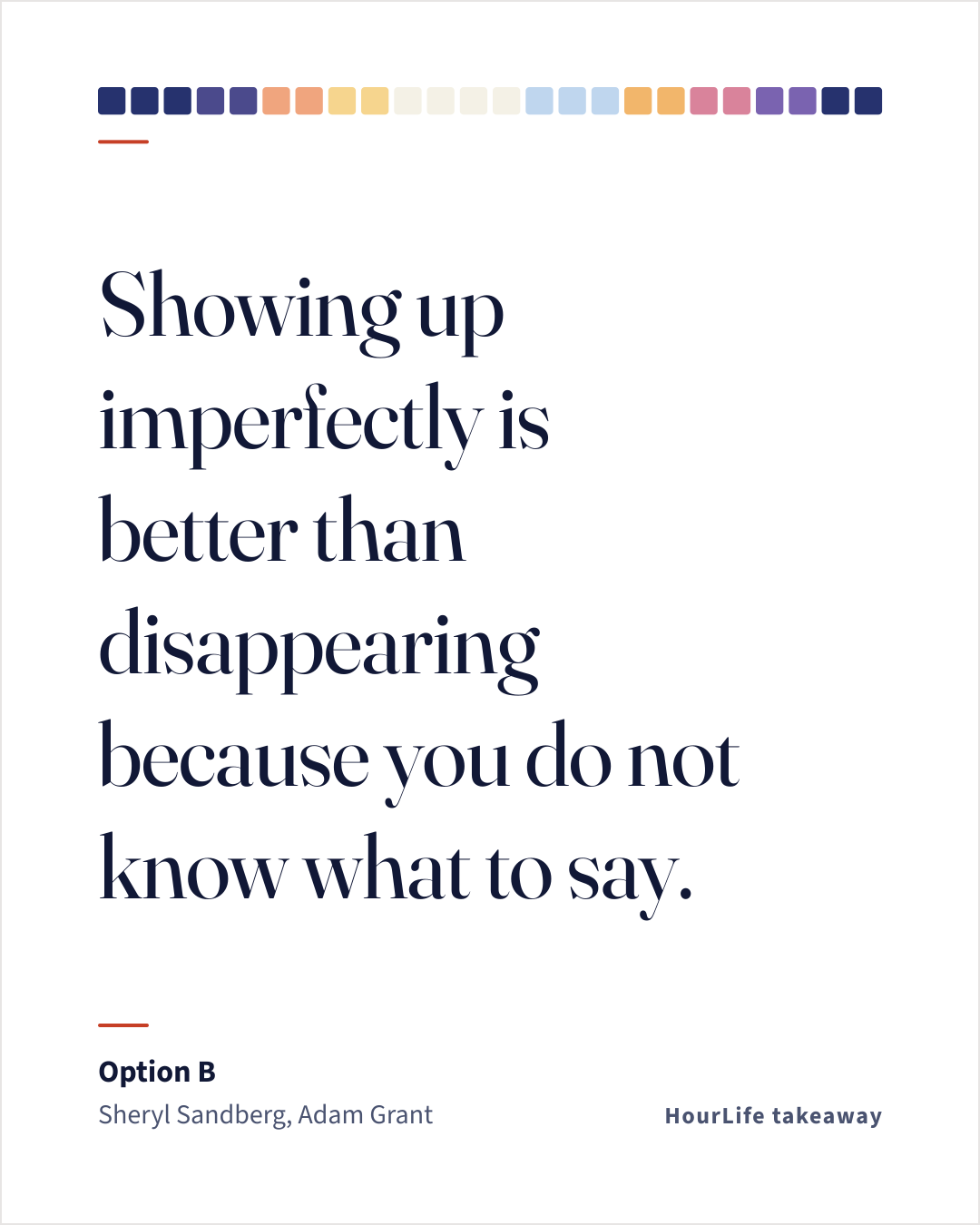
Showing up imperfectly is better than disappearing because you do not know what to say.
Option B is unusually useful for friends and family because it makes support concrete.
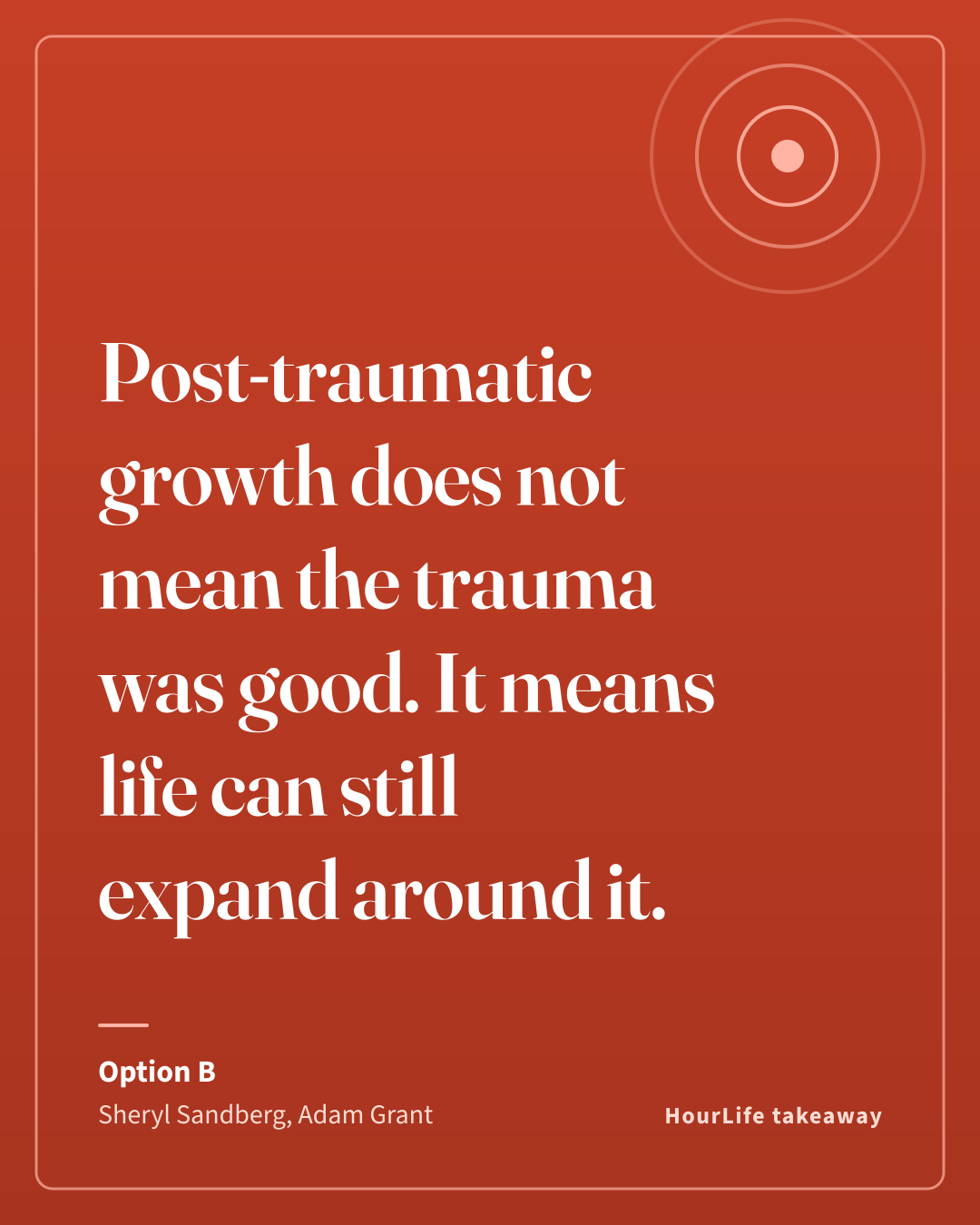
Post-traumatic growth does not mean the trauma was good. It means life can still expand around it.
The distinction protects the book from cheap optimism while preserving agency.
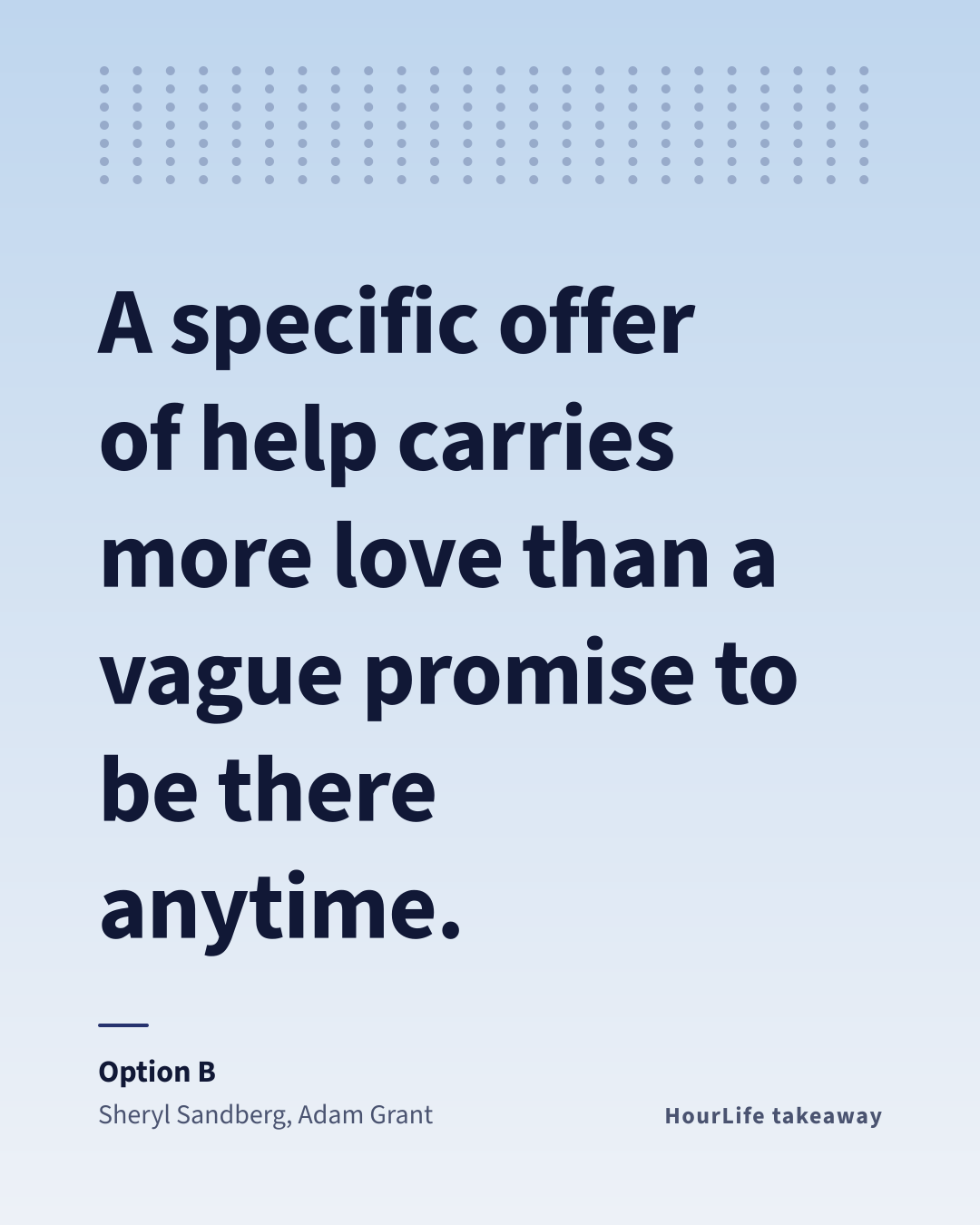
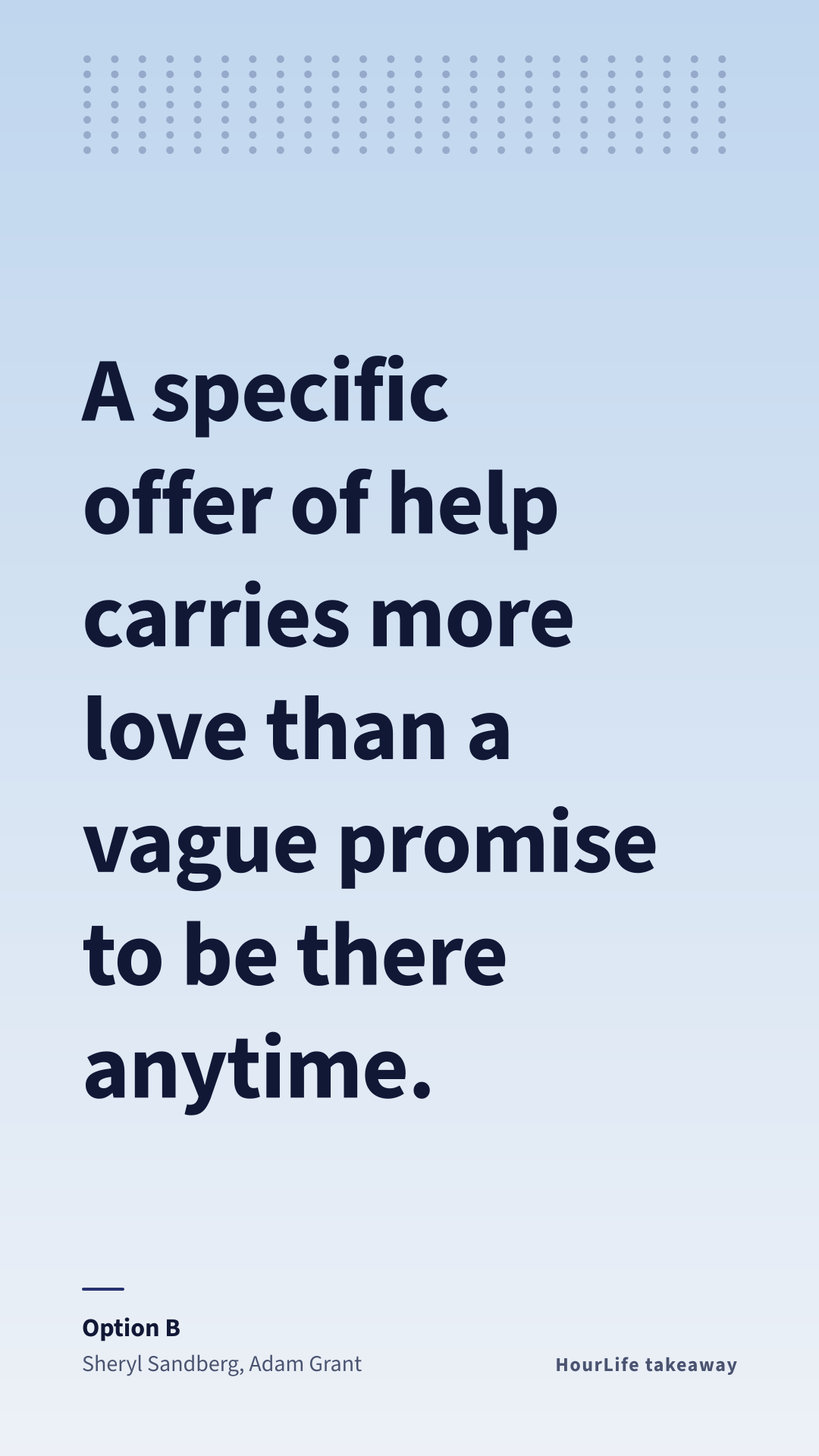
A specific offer of help carries more love than a vague promise to be there anytime.
The strongest support removes one real burden instead of asking a grieving person to assign tasks.
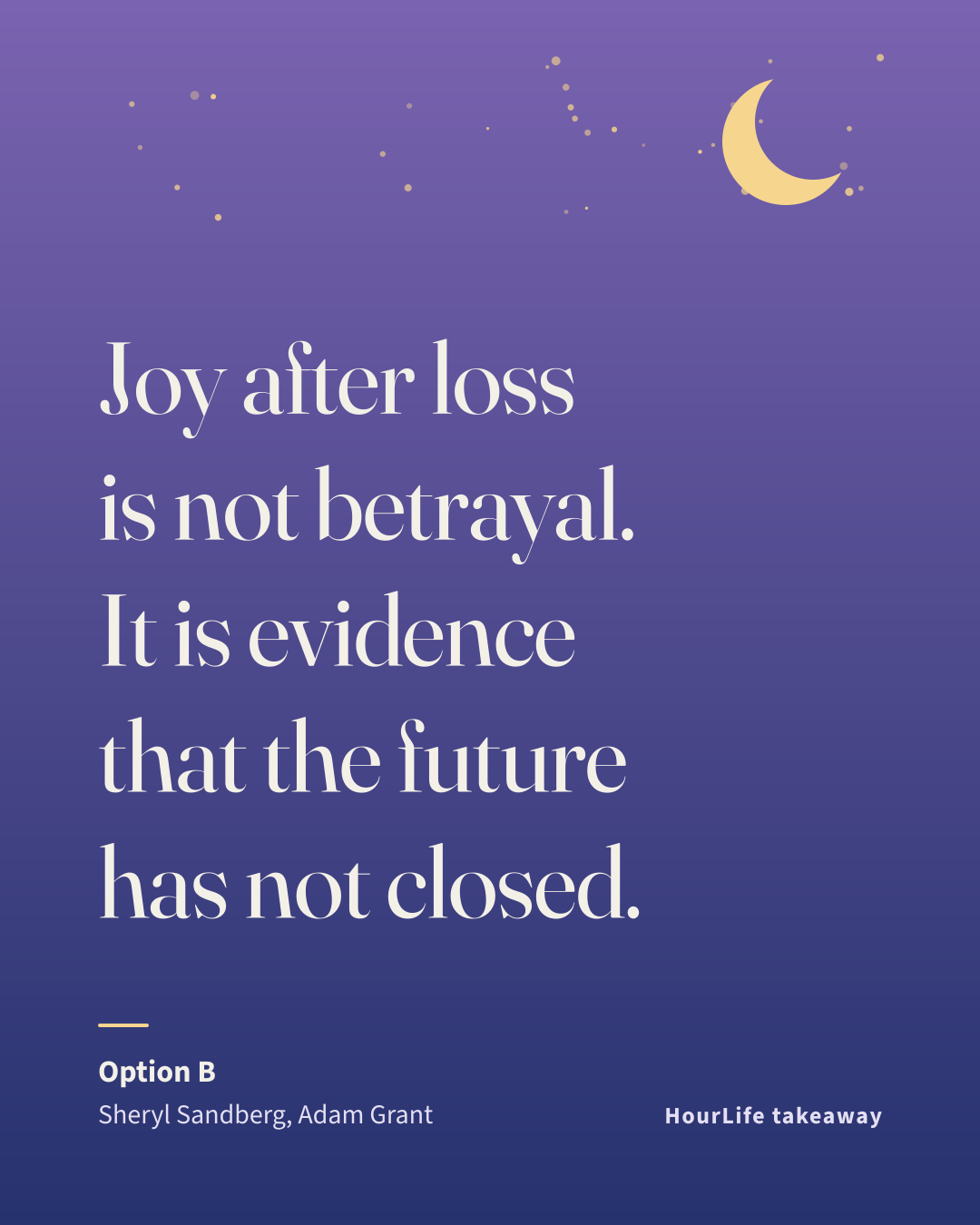
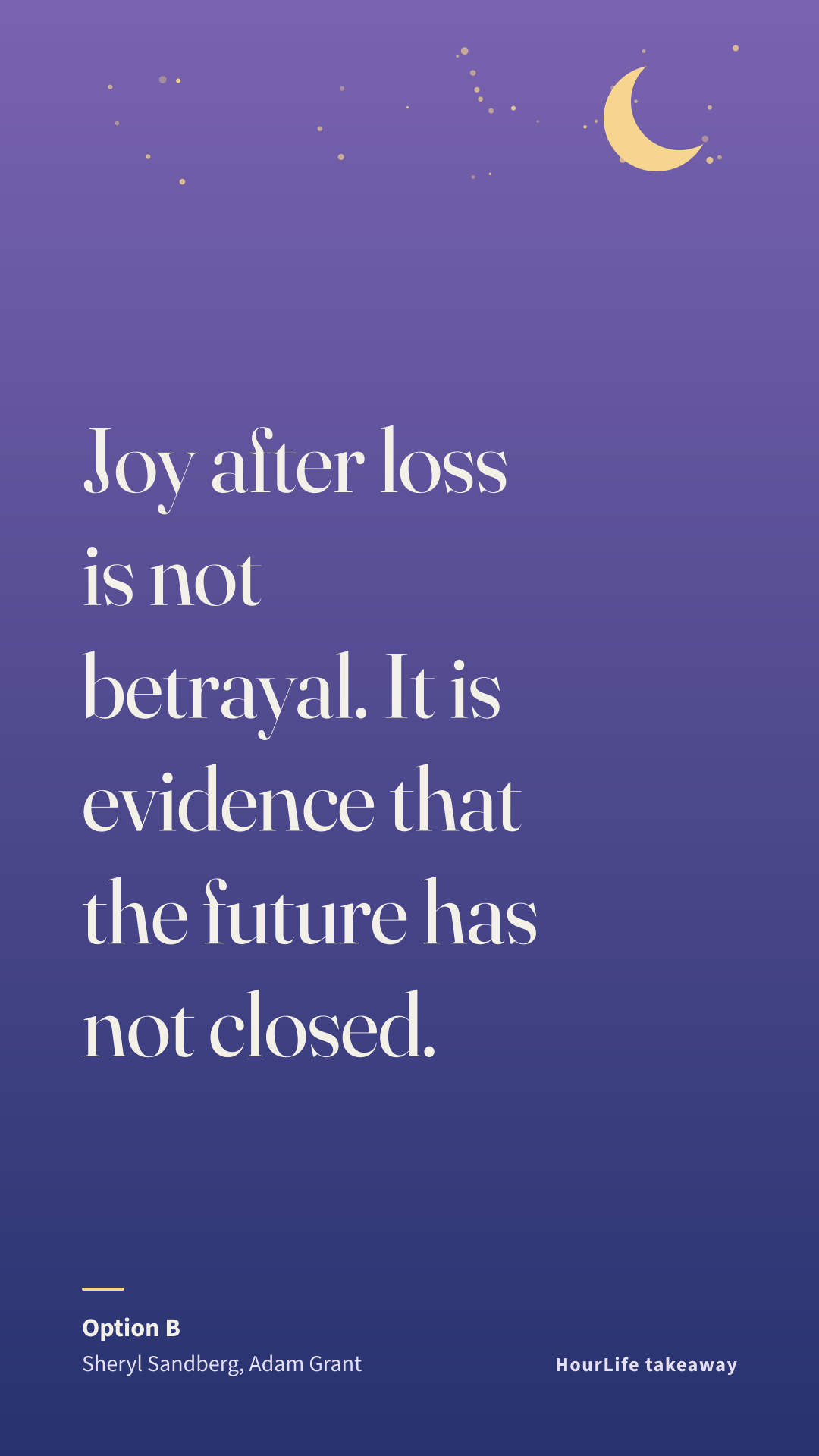
Joy after loss is not betrayal. It is evidence that the future has not closed.
The book gives permission to experience lightness without treating grief as unfinished work.
HourLife turns these ideas into a daily system — goals, habits, focus, and reflection in one private place.