Sensitivity is not the problem. Having no filter for what deserves your energy is.
Chidiac opens with the research on high sensitivity to reframe it as a trait to route, not a defect to fix.
8 memorable lines from Stop Letting Everything Affect You by Daniel Chidiac, each with the idea behind it.
As an Amazon Associate, HourLife earns from qualifying purchases.
Lines labelled “HourLife takeaway” are our wording of the book’s ideas and may paraphrase it. Only lines in quotation marks are the author’s own words, with where they appear. Check the book for exact wording before you quote it. Spot an error?
Sensitivity is not the problem. Having no filter for what deserves your energy is.
Chidiac opens with the research on high sensitivity to reframe it as a trait to route, not a defect to fix.
Overthinking is not thinking. It is the same thought, rehearsed.
Rumination mimics problem-solving closely enough to feel productive, which is exactly why it runs so long.
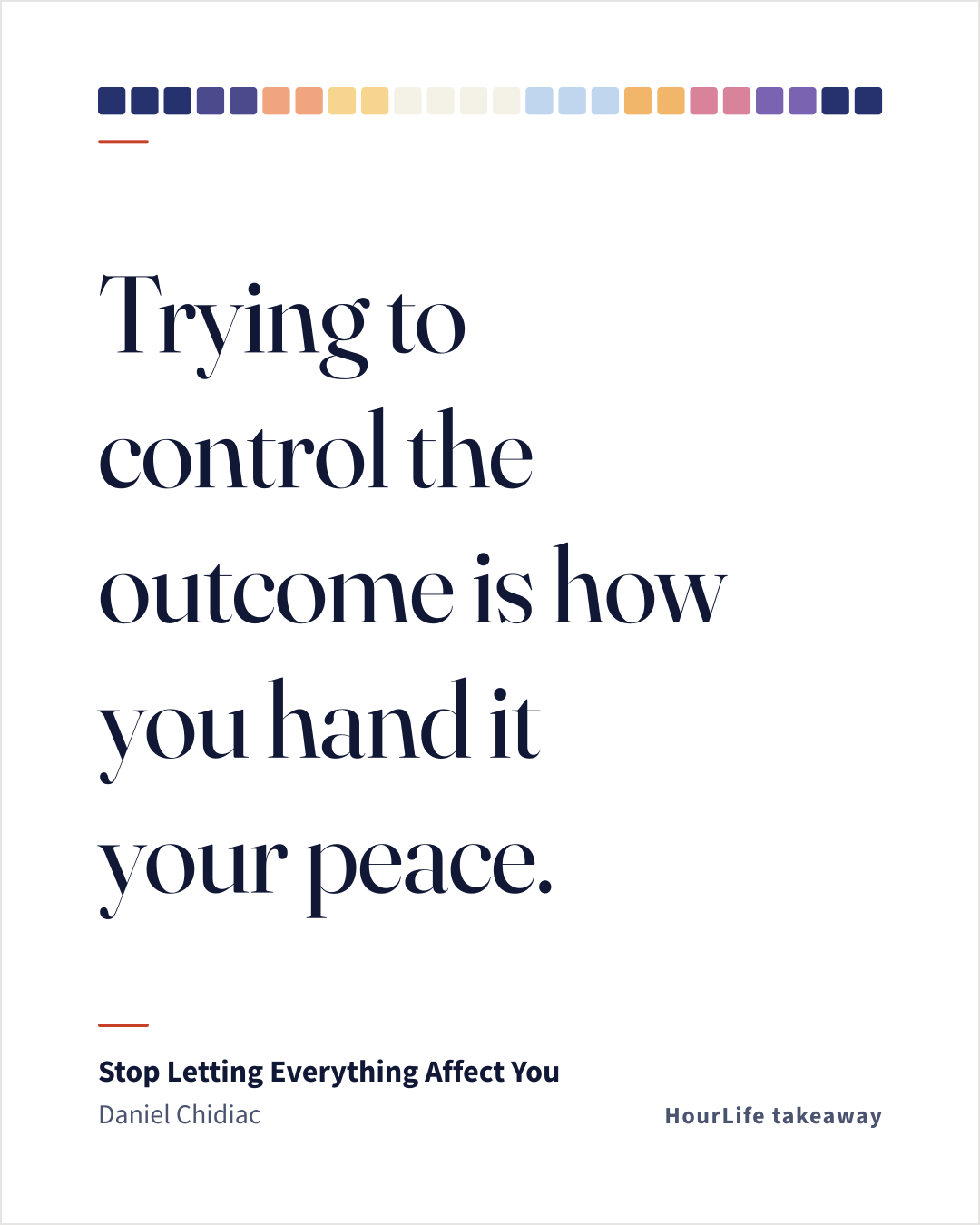
Trying to control the outcome is how you hand it your peace.
The control inventory exists to separate the small set of things you can act on from the much larger set you can only worry about.
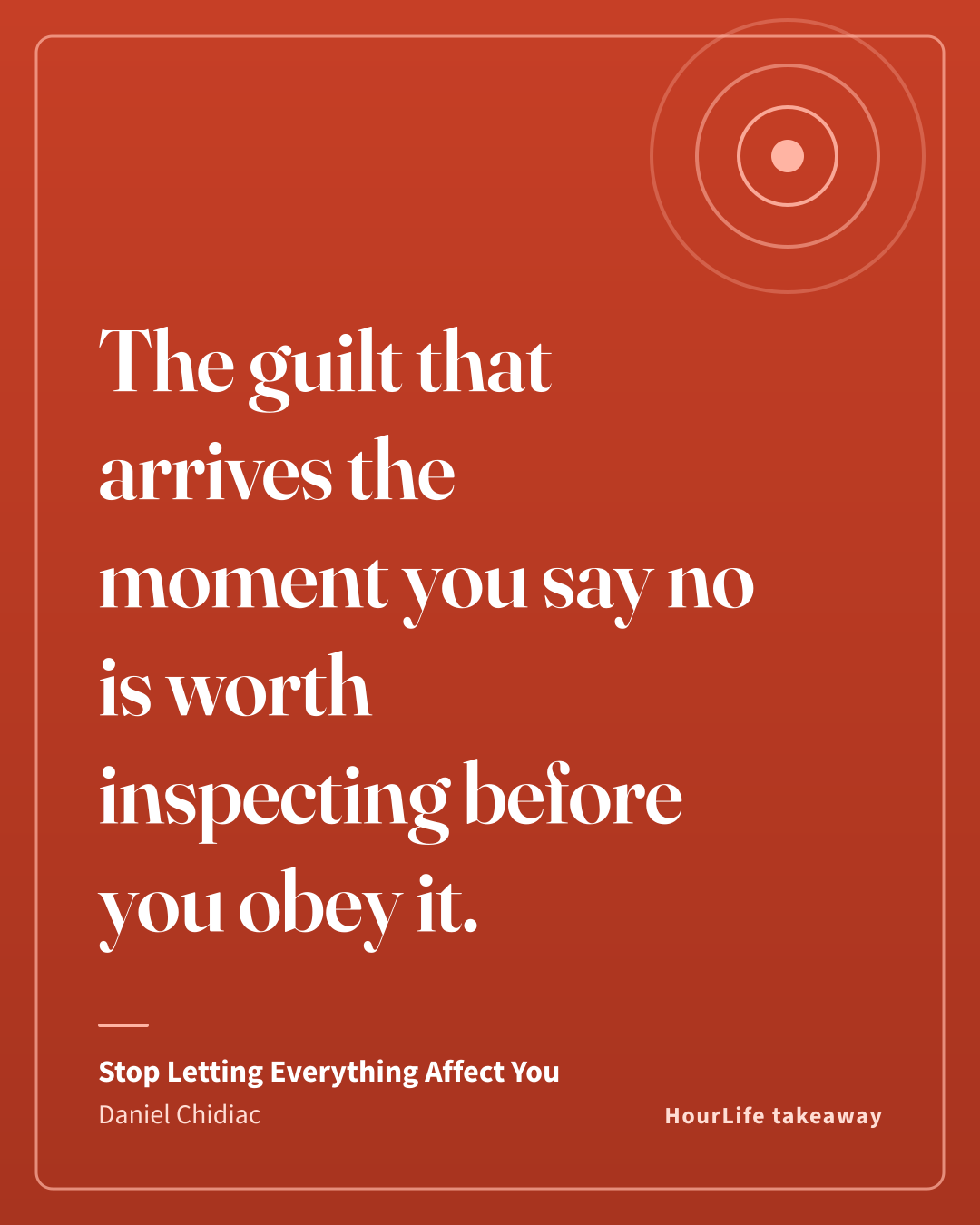
The guilt that arrives the moment you say no is worth inspecting before you obey it.
Chidiac distinguishes guilt that signals you crossed your own values from guilt that was installed by someone who benefits from your yes.
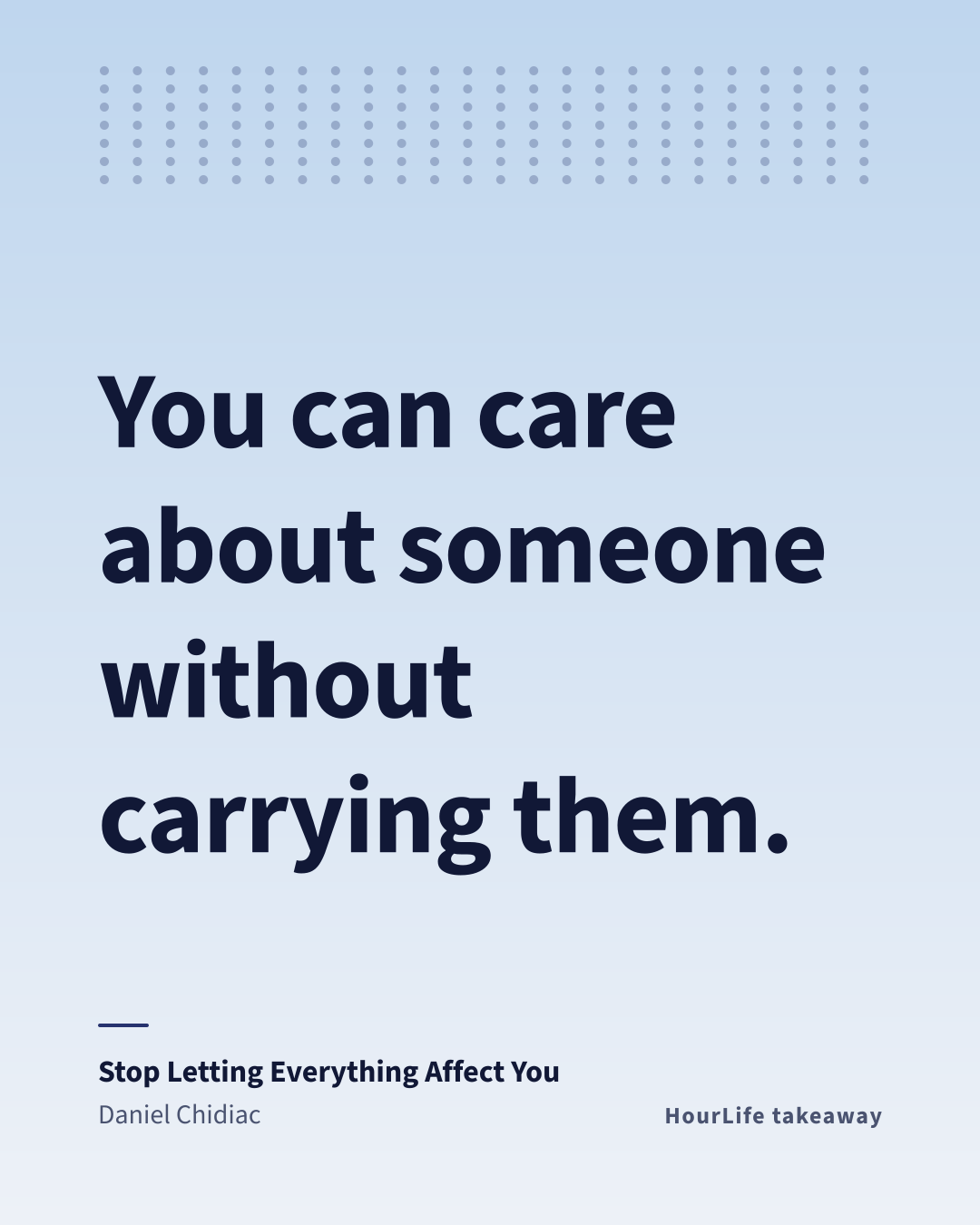
You can care about someone without carrying them.
Compassion fatigue comes from absorbing the feeling rather than witnessing it — the difference between holding the container and drinking from it.
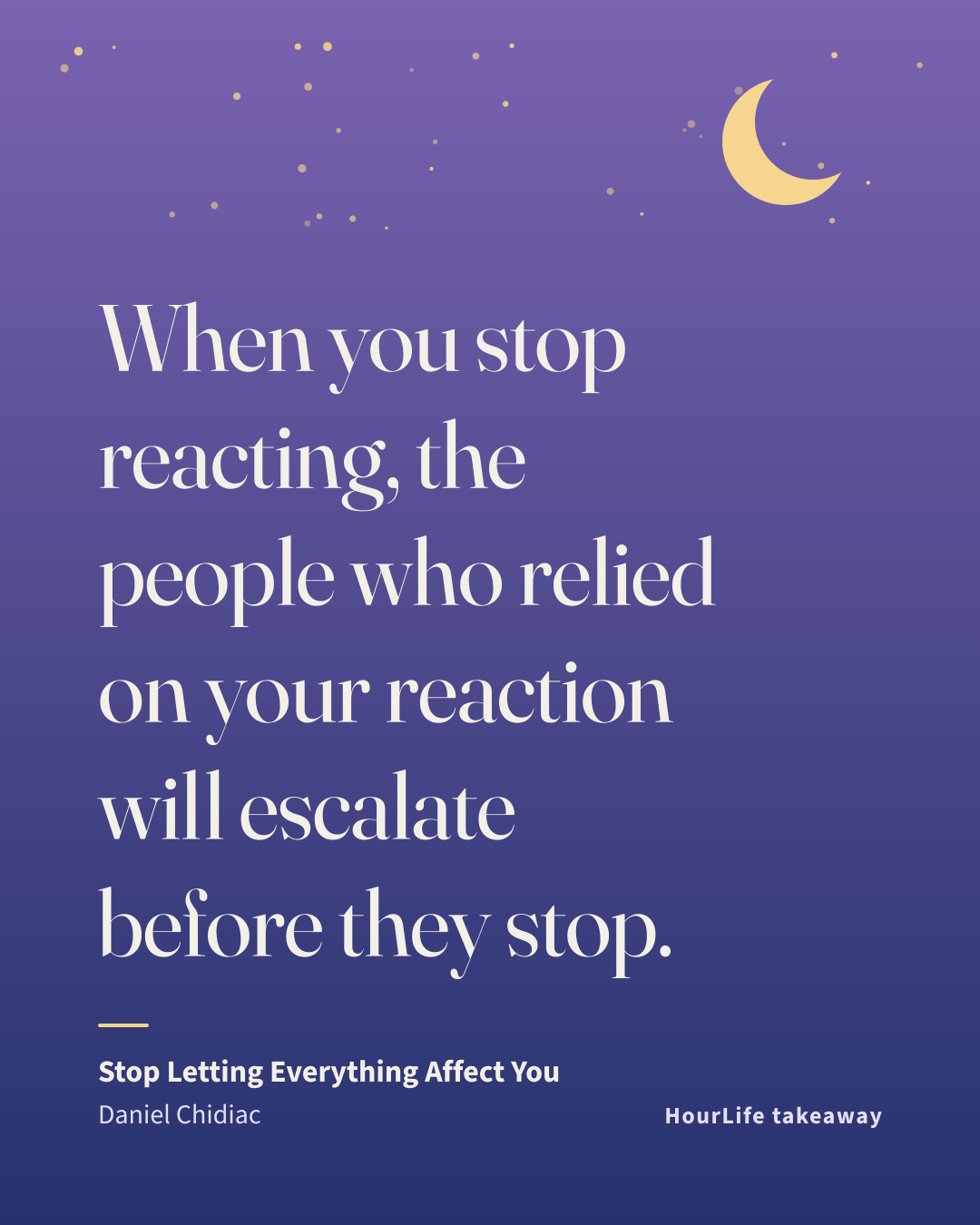
When you stop reacting, the people who relied on your reaction will escalate before they stop.
The extinction burst is the book's most practical warning: the spike is evidence the boundary is working, not that it was wrong.
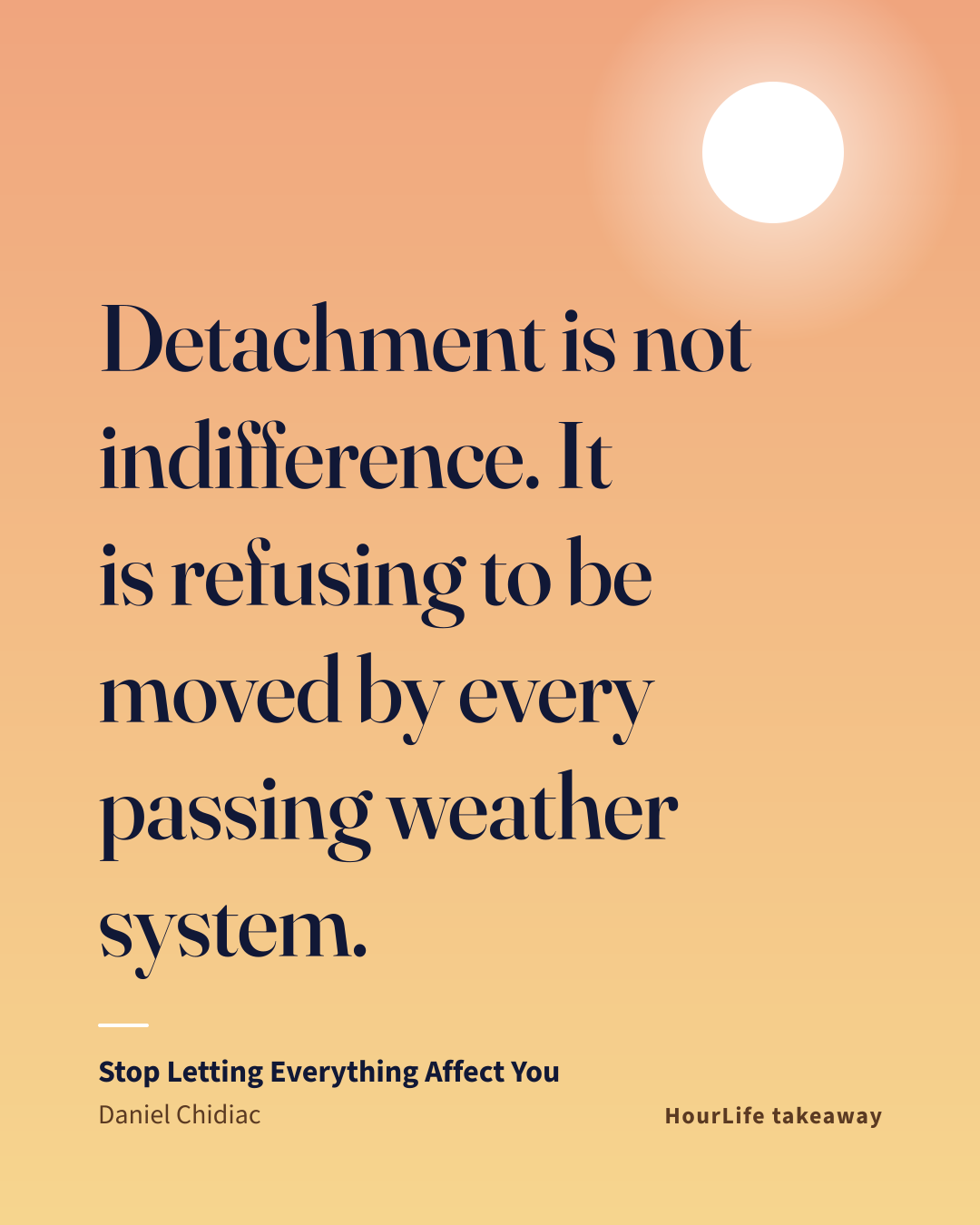
Detachment is not indifference. It is refusing to be moved by every passing weather system.
The whole book turns on this narrow definition — unbothered without becoming cold, which is a skill rather than a temperament.
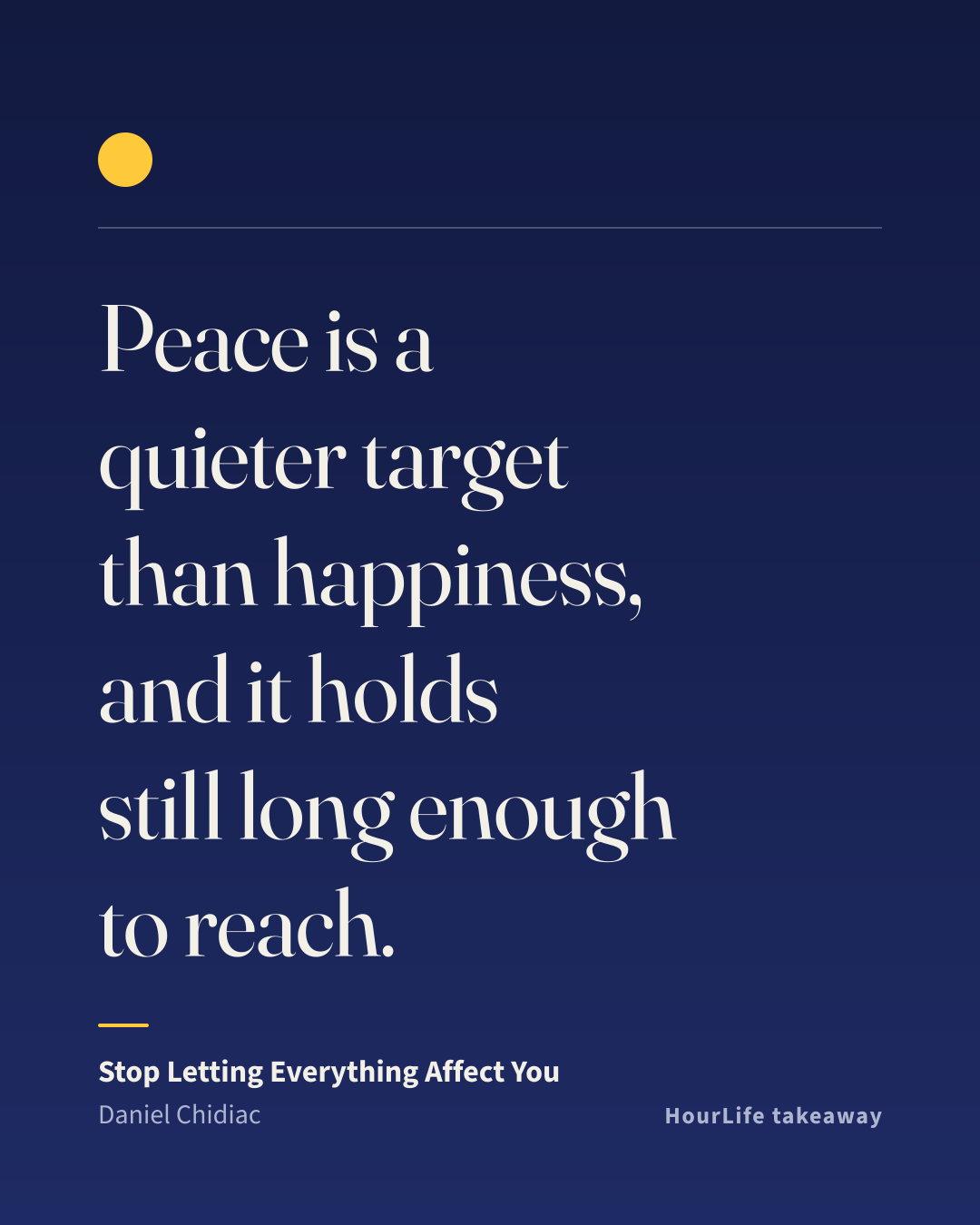
Peace is a quieter target than happiness, and it holds still long enough to reach.
Part six argues that chasing happiness keeps the nervous system in pursuit, while peace asks you to stop adding to the load.
HourLife turns these ideas into a daily system — goals, habits, focus, and reflection in one private place.