Listening only counts when people can see it led somewhere.
Feedback that disappears teaches people to stop giving it. Closing the loop, the last step of Younger's cycle, is the one leaders skip most and the one that rebuilds trust fastest.
8 memorable lines from The Art of Active Listening: How People at Work Feel Heard, Valued, and Understood by Heather R. Younger, each with the idea behind it.
As an Amazon Associate, HourLife earns from qualifying purchases.
Lines labelled “HourLife takeaway” are our wording of the book’s ideas and may paraphrase it. Only lines in quotation marks are the author’s own words, with where they appear. Check the book for exact wording before you quote it. Spot an error?
Listening only counts when people can see it led somewhere.
Feedback that disappears teaches people to stop giving it. Closing the loop, the last step of Younger's cycle, is the one leaders skip most and the one that rebuilds trust fastest.
Recognize the unsaid: not everyone can say what they really feel, in every room.
Watch for the shrug, the quiet person, the joke that covers a worry. Offer a safer setting, such as a one-to-one or a written channel, and ask again there.
Seeking to understand takes curiosity, empathy, courage and presence.
Put your own agenda to one side and stay with theirs. Keep asking until you can explain their point back in words they would accept as their own.
Decide before you act: take time to make sense of what you heard.
Reflect, look into it, or ask a follow-up question before reaching for a fix. A quick solution to the wrong problem is another way of not listening.
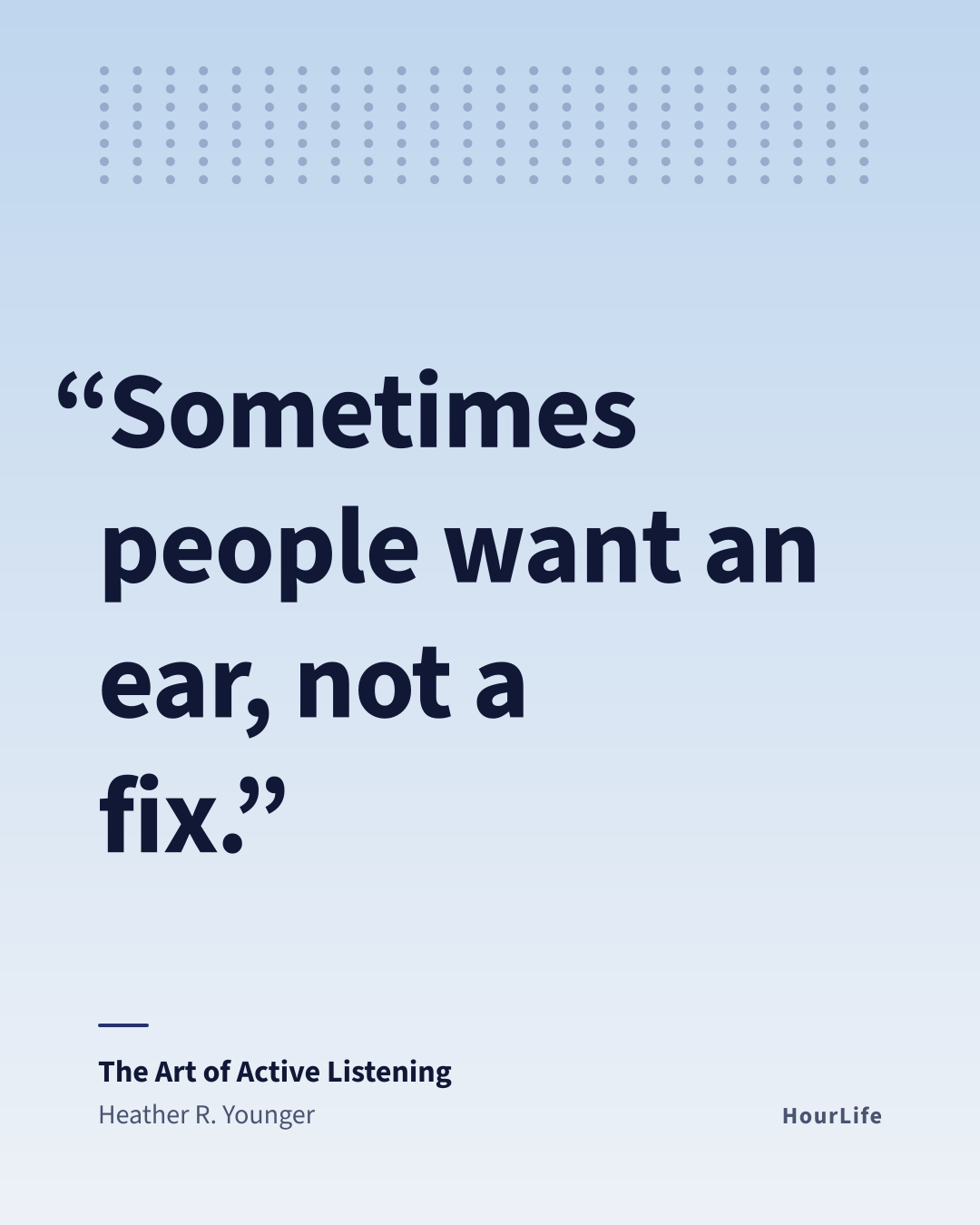
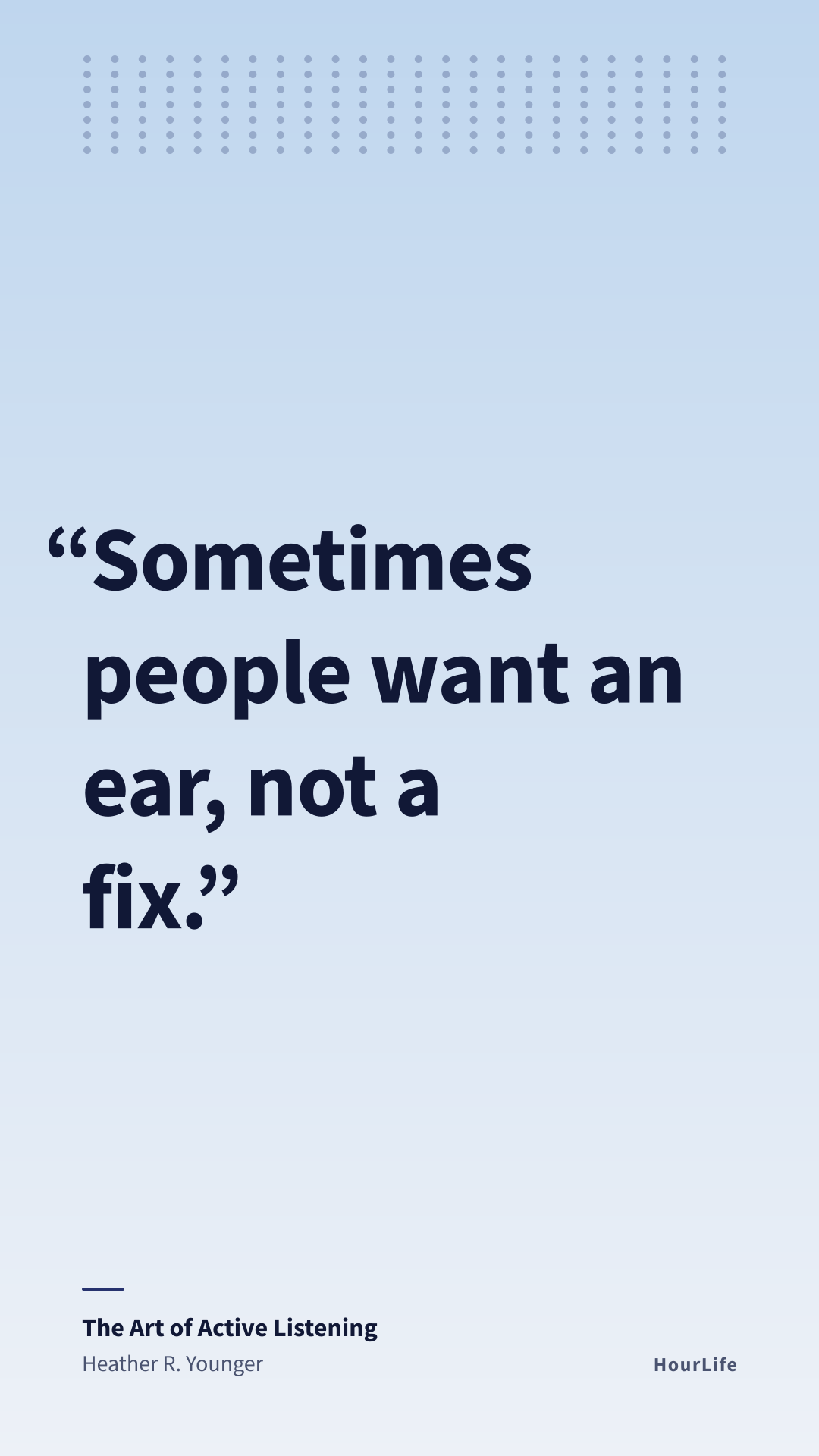
Sometimes people want an ear, not a fix.
Not every concern is a request for action. When you are not sure, ask whether they want help solving it or just want to be heard, and respect the answer.
Acting on what you hear takes compassion, and compassion needs refuelling.
Younger warns about compassion fatigue in leaders who carry everyone's concerns. Looking after your own energy is part of listening well, not a break from it.
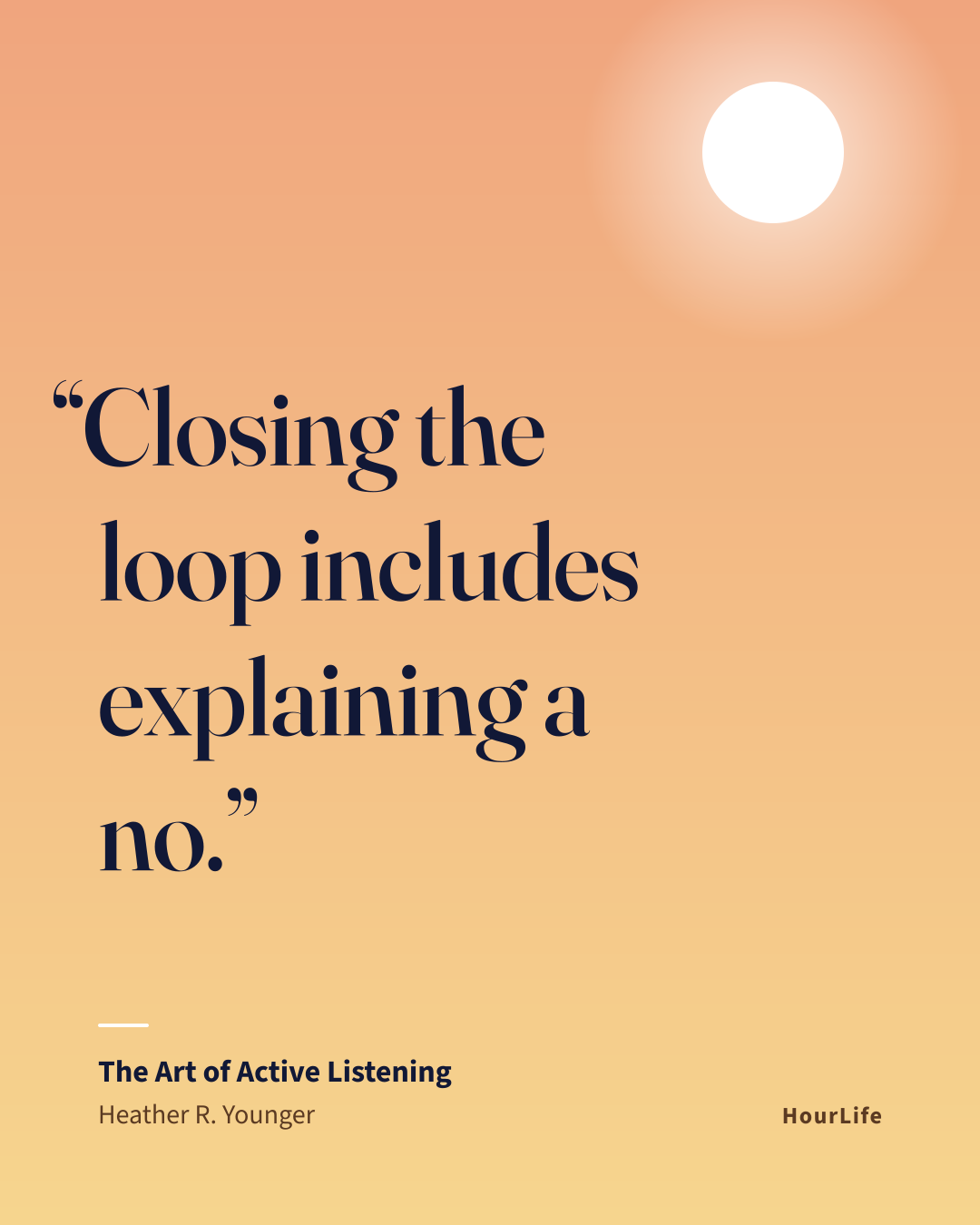
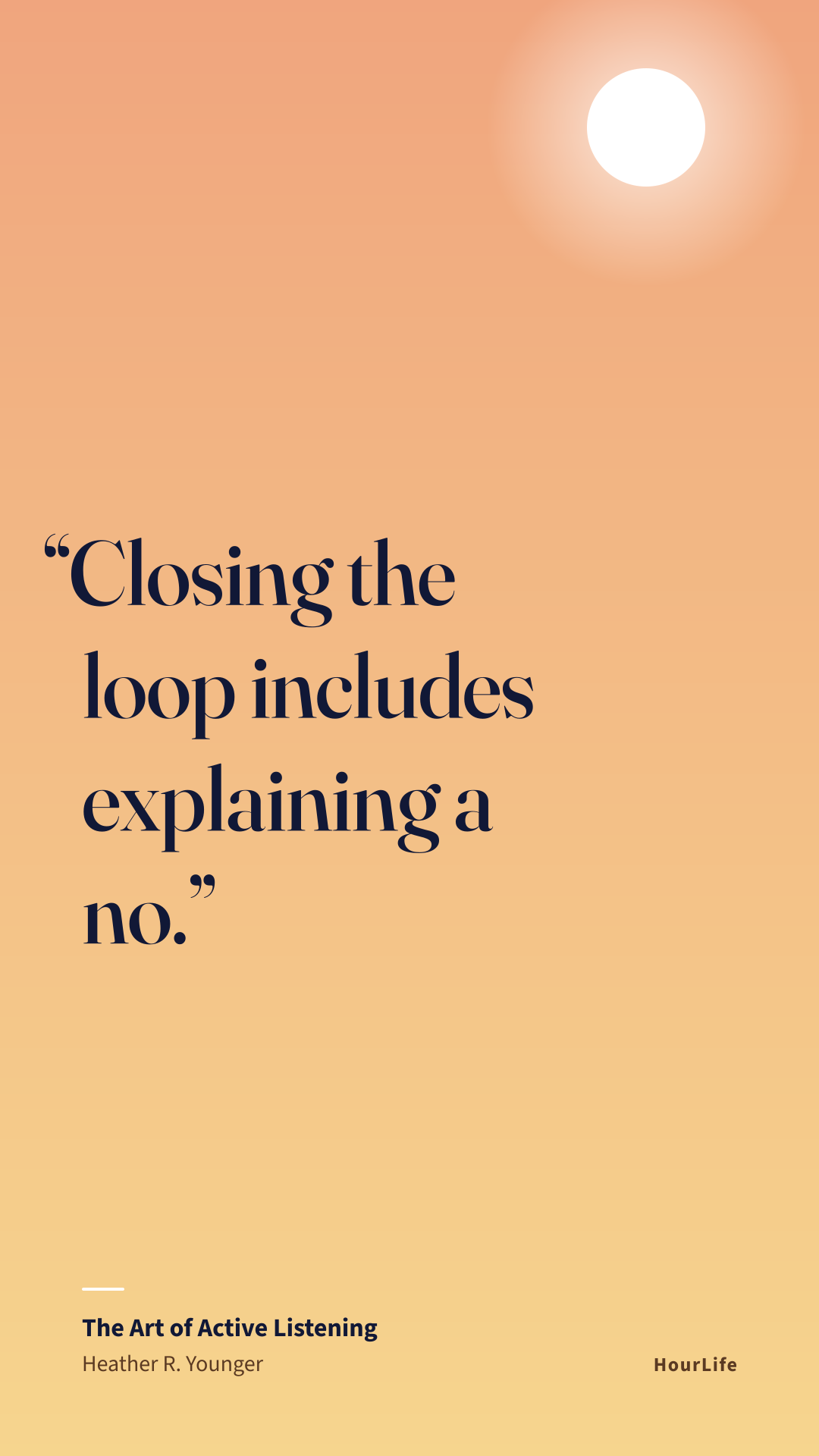
Closing the loop includes explaining a no.
When you cannot do what was asked, say so and say why. Silence reads as dismissal; a clear answer with reasons still tells people they were heard.
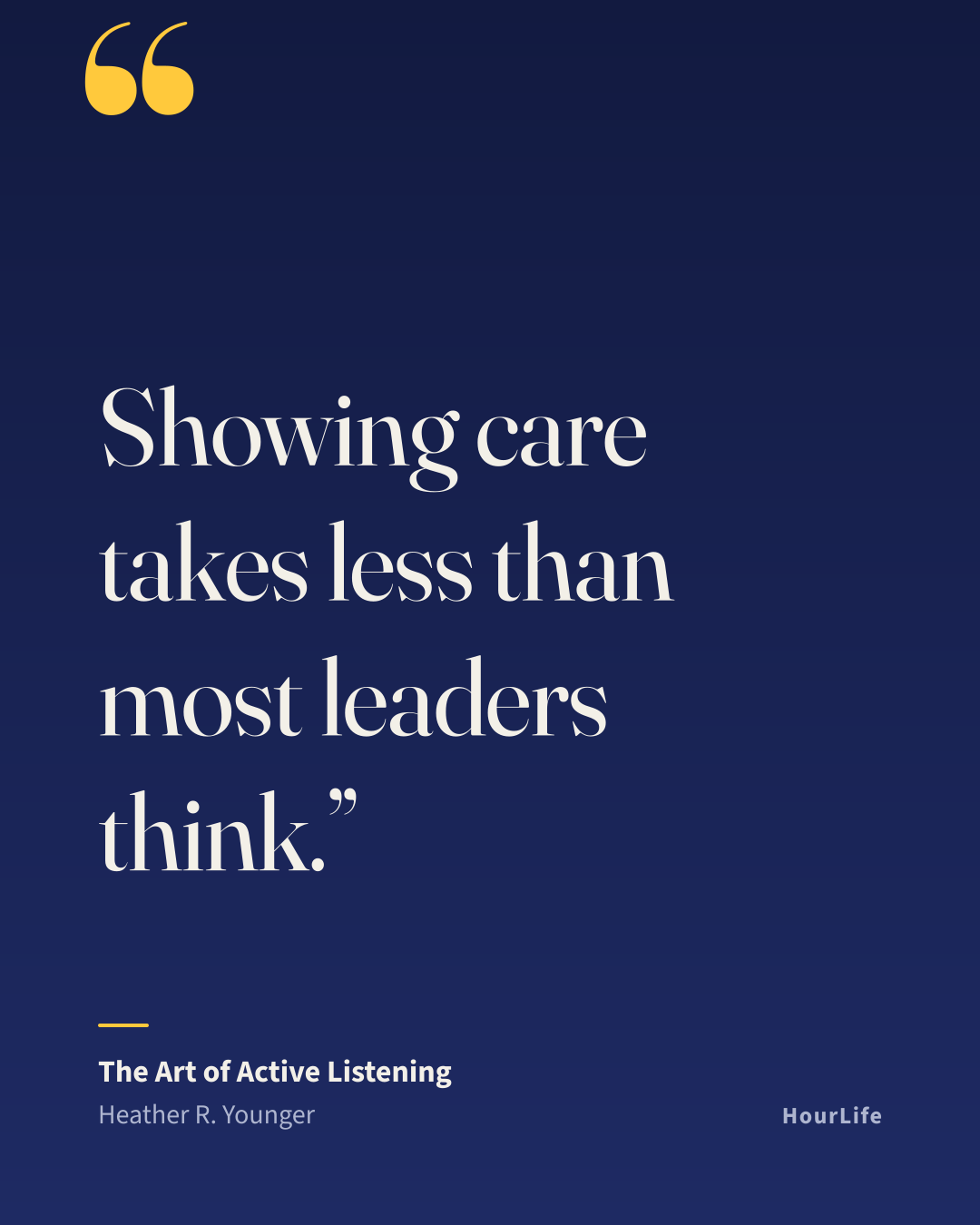
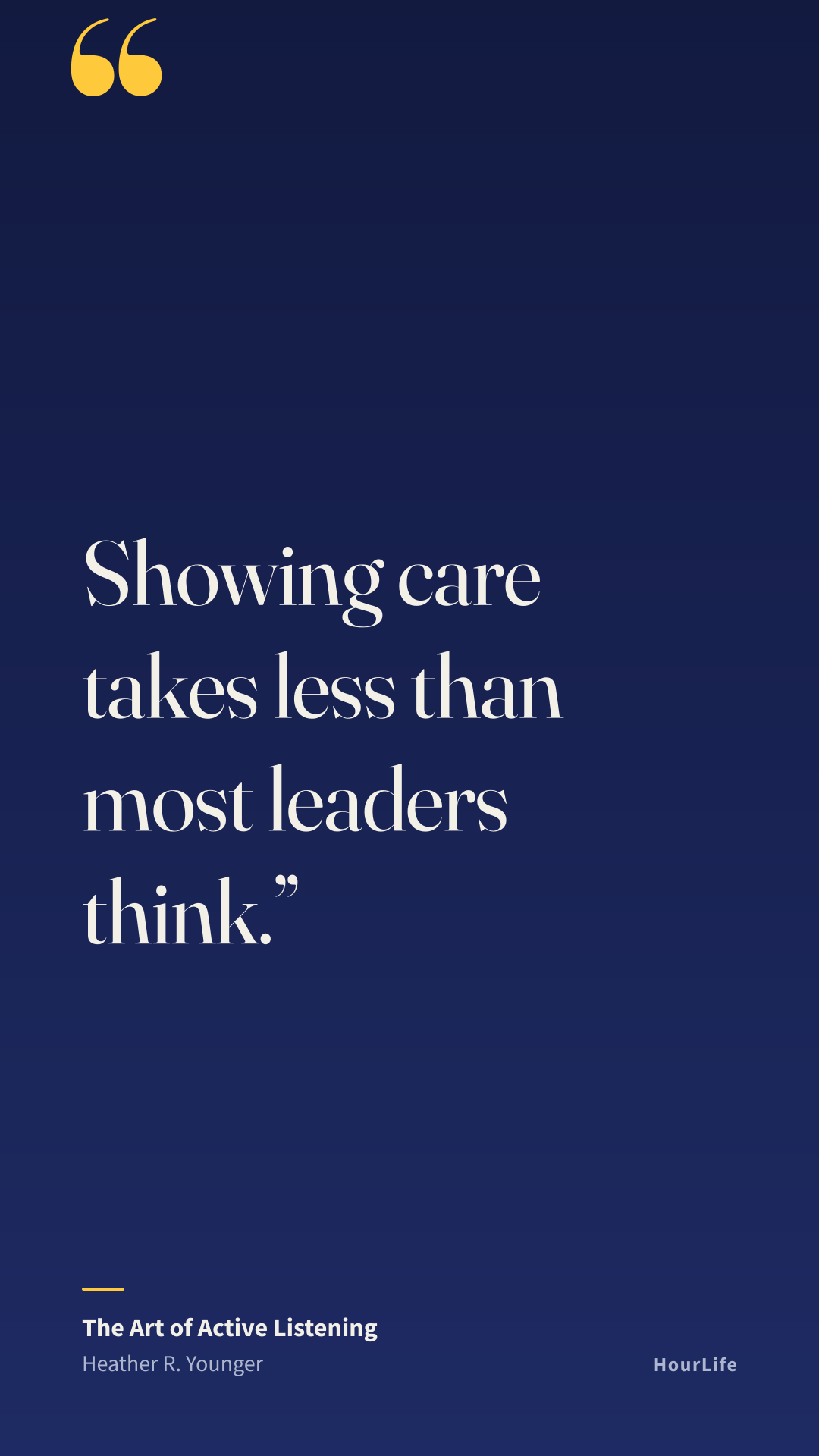
Showing care takes less than most leaders think.
A short follow-up note or one small change often matters more than a big programme. Small, visible actions, repeated, are what people come to trust.
HourLife turns these ideas into a daily system — goals, habits, focus, and reflection in one private place.