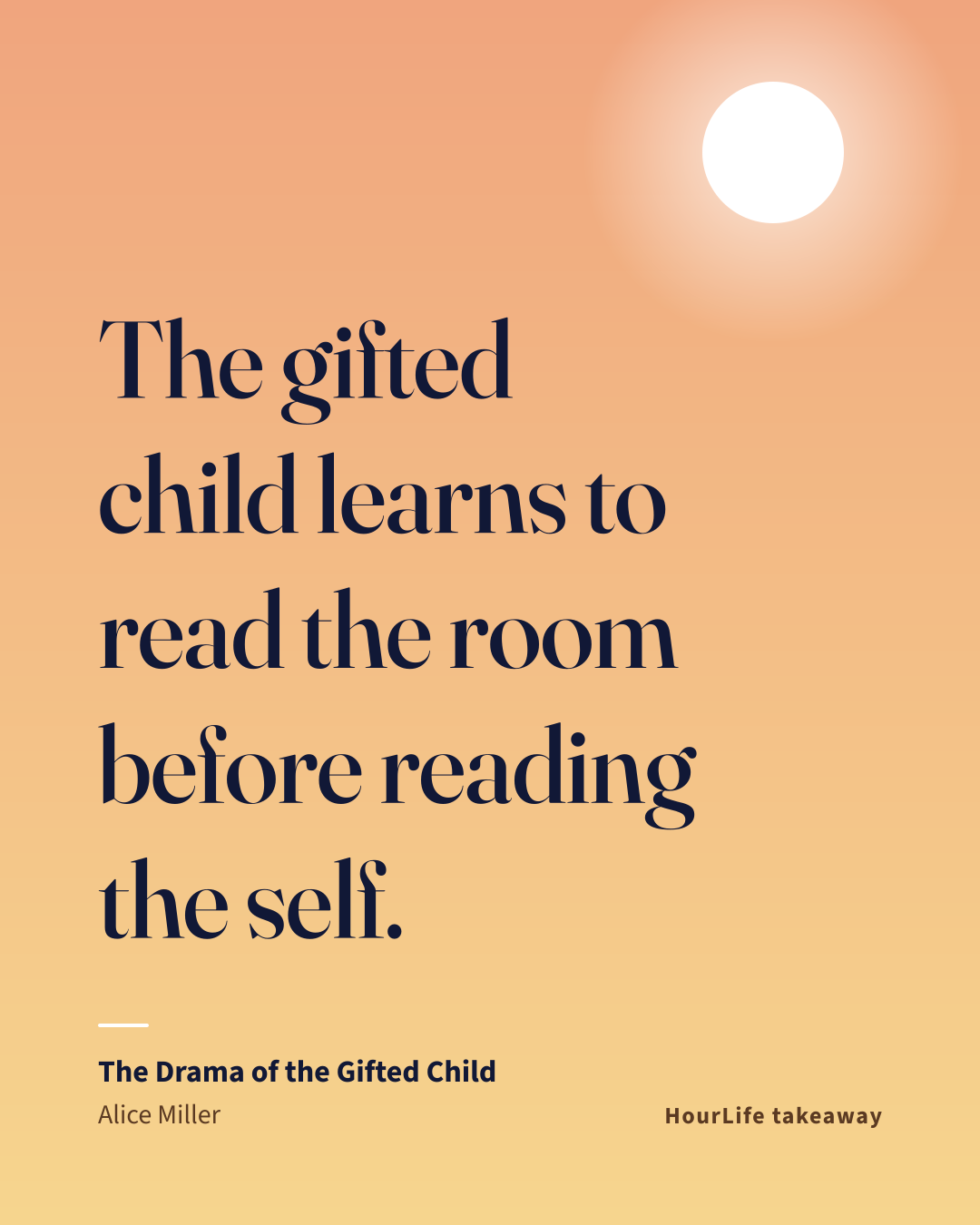
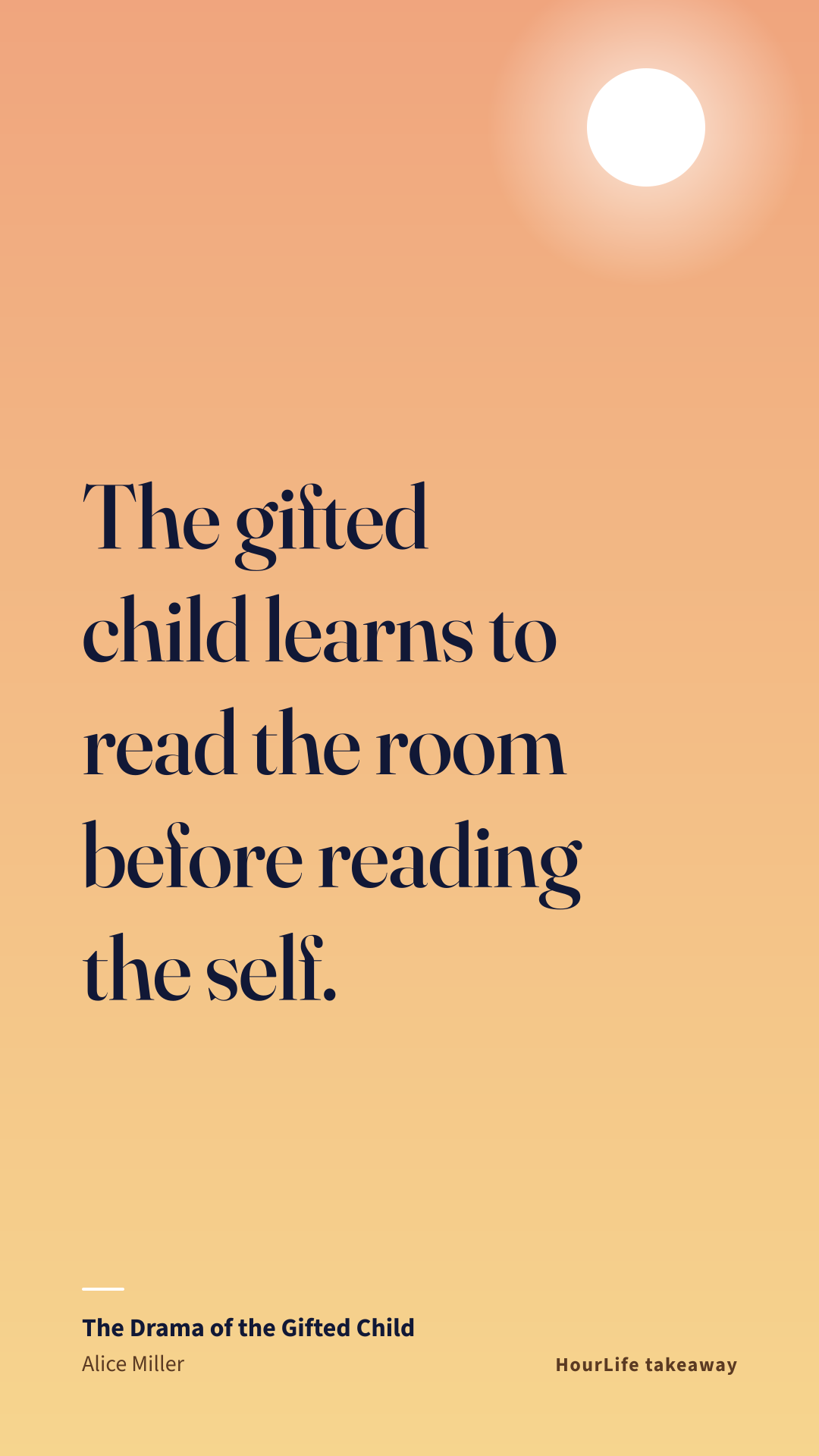
The gifted child learns to read the room before reading the self.
Miller reframes giftedness as sensitivity under pressure: the child becomes brilliant at detecting what the parent can handle.
6 memorable lines from The Drama of the Gifted Child by Alice Miller, each with the idea behind it.
As an Amazon Associate, HourLife earns from qualifying purchases.
Lines labelled “HourLife takeaway” are our wording of the book’s ideas and may paraphrase it. Only lines in quotation marks are the author’s own words, with where they appear. Check the book for exact wording before you quote it. Spot an error?
The gifted child learns to read the room before reading the self.
Miller reframes giftedness as sensitivity under pressure: the child becomes brilliant at detecting what the parent can handle.
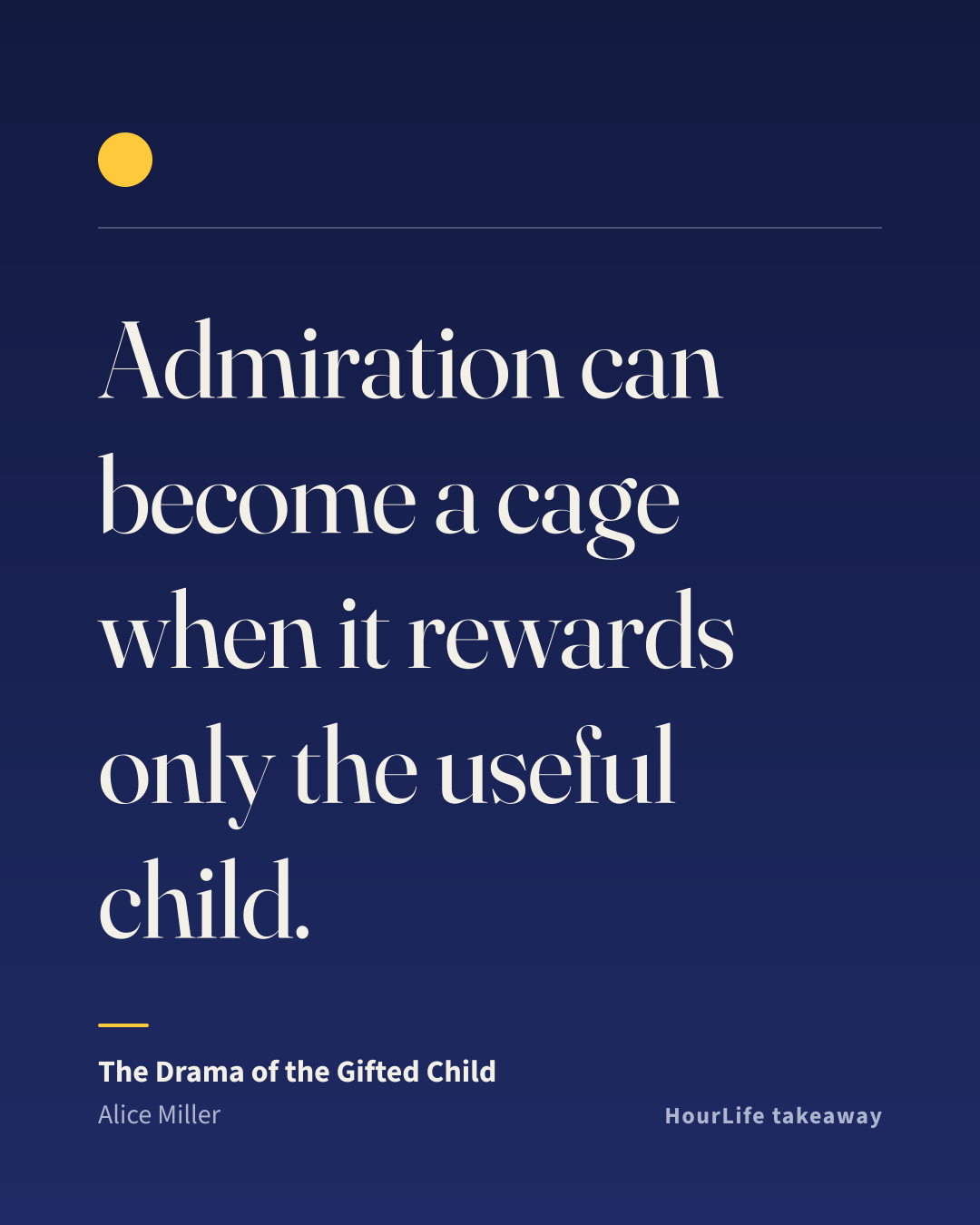
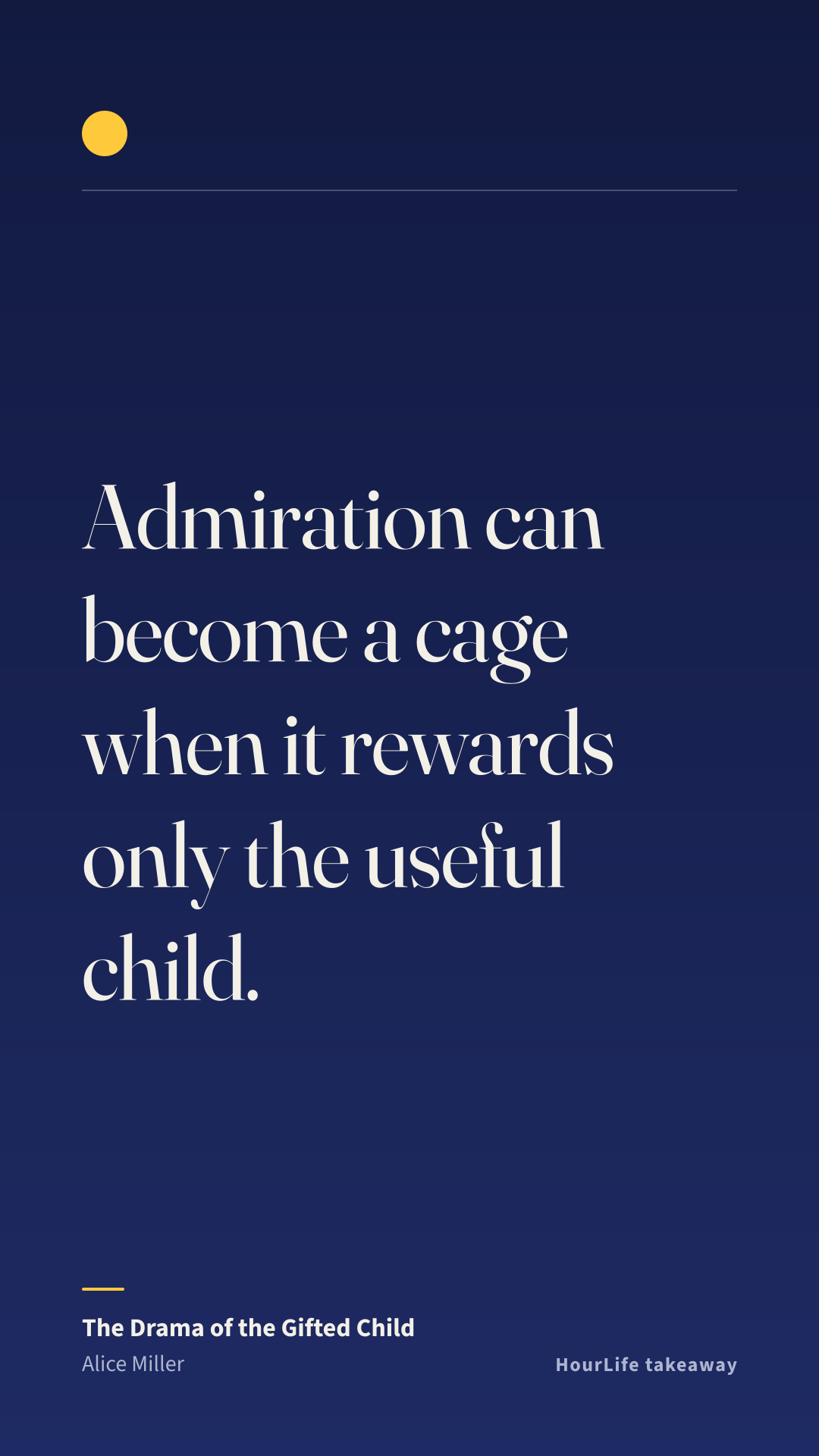
Admiration can become a cage when it rewards only the useful child.
Praise feels warm, but it can still miss the inner life if the child is valued mainly for performance, maturity, or emotional convenience.
The false self is not vanity; it is early survival intelligence.
The polished adult persona often began as a precise childhood adaptation to stay attached, safe, and emotionally necessary.
Depression may be grief finally asking for a witness.
Numbness and emptiness can be signals that the abandoned parts of the self are no longer willing to stay silent.
Anger returns when the adult stops protecting the idealized parent.
Miller treats anger as morally important information, especially for adults trained to excuse every wound too quickly.
Healing begins when the child within is believed without being put on trial.
The work is not blame for its own sake. It is restoring reality where the child once had to defend the adults instead of themselves.
HourLife turns these ideas into a daily system — goals, habits, focus, and reflection in one private place.