Keep this book quotes for later
Sign in to save

The Wild Edge of Sorrow

8 memorable lines from The Wild Edge of Sorrow by Francis Weller, each with the idea behind it.

As an Amazon Associate, HourLife earns from qualifying purchases.

Lines labelled “HourLife takeaway” are our wording of the book’s ideas and may paraphrase it. Only lines in quotation marks are the author’s own words, with where they appear. Check the book for exact wording before you quote it. Spot an error?

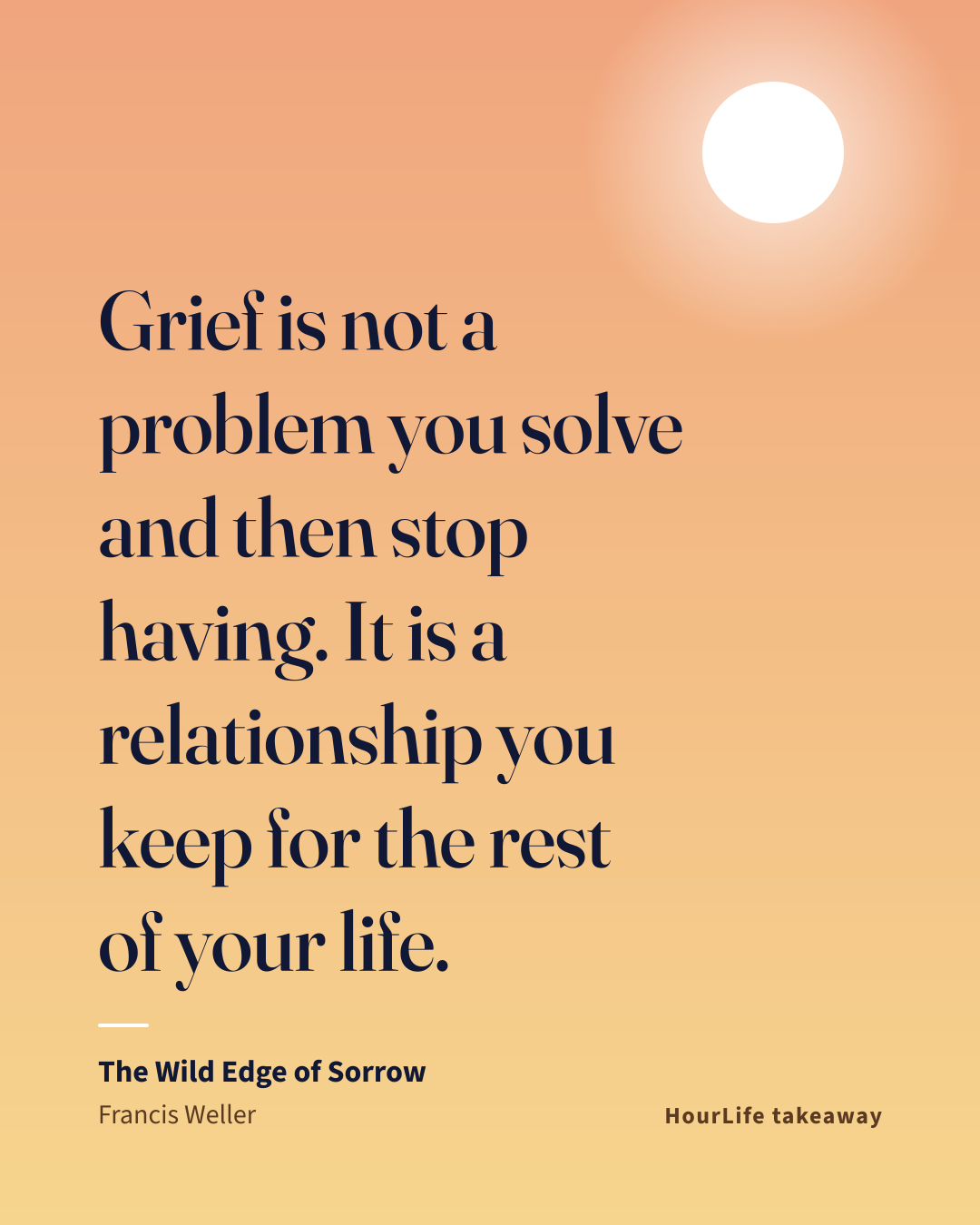
Grief is not a problem you solve and then stop having. It is a relationship you keep for the rest of your life.

The Wild Edge of Sorrow Francis Weller HourLife takeaway

Weller's word for it is apprenticeship — something taken up rather than got through. That reframing removes the deadline, and with it the private suspicion that you should have finished by now.


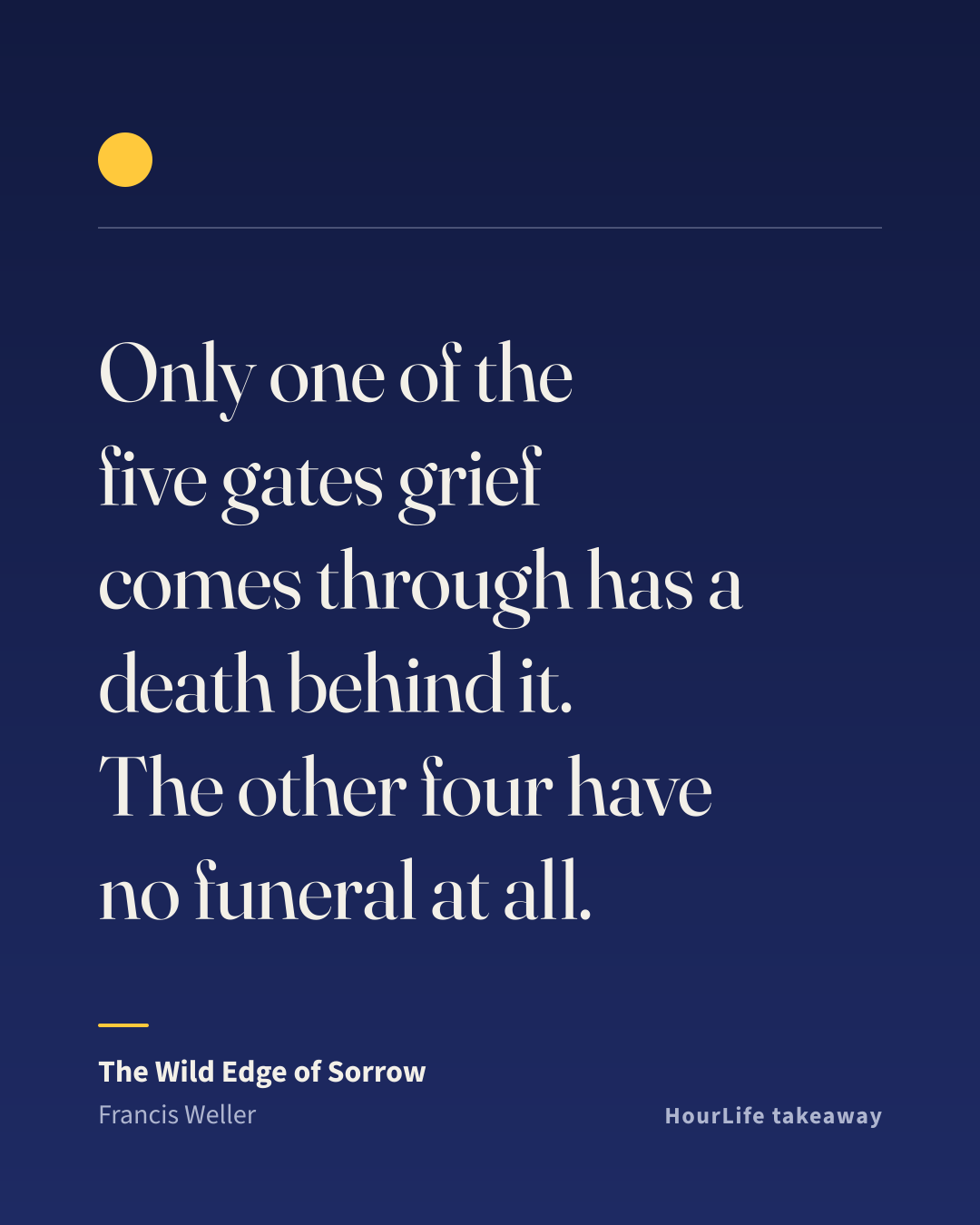
Only one of the five gates grief comes through has a death behind it. The other four have no funeral at all.

The Wild Edge of Sorrow Francis Weller HourLife takeaway

Everything we love we will lose. The places in us that have not known love. The sorrows of the world. What we expected and did not receive. And what our ancestors never got to mourn. Most people can name the first. The unnamed ones do not stop weighing anything.

There is a grief for the childhood you were owed and never got — and it is harder because nothing visibly happened.

The Wild Edge of Sorrow Francis Weller HourLife takeaway

Weller's fourth gate. We arrive expecting a village, elders, initiation, meaningful work, a place. Most of us get none of it, and grieving the absence of something you never had feels illegitimate in a way that grieving a person does not.

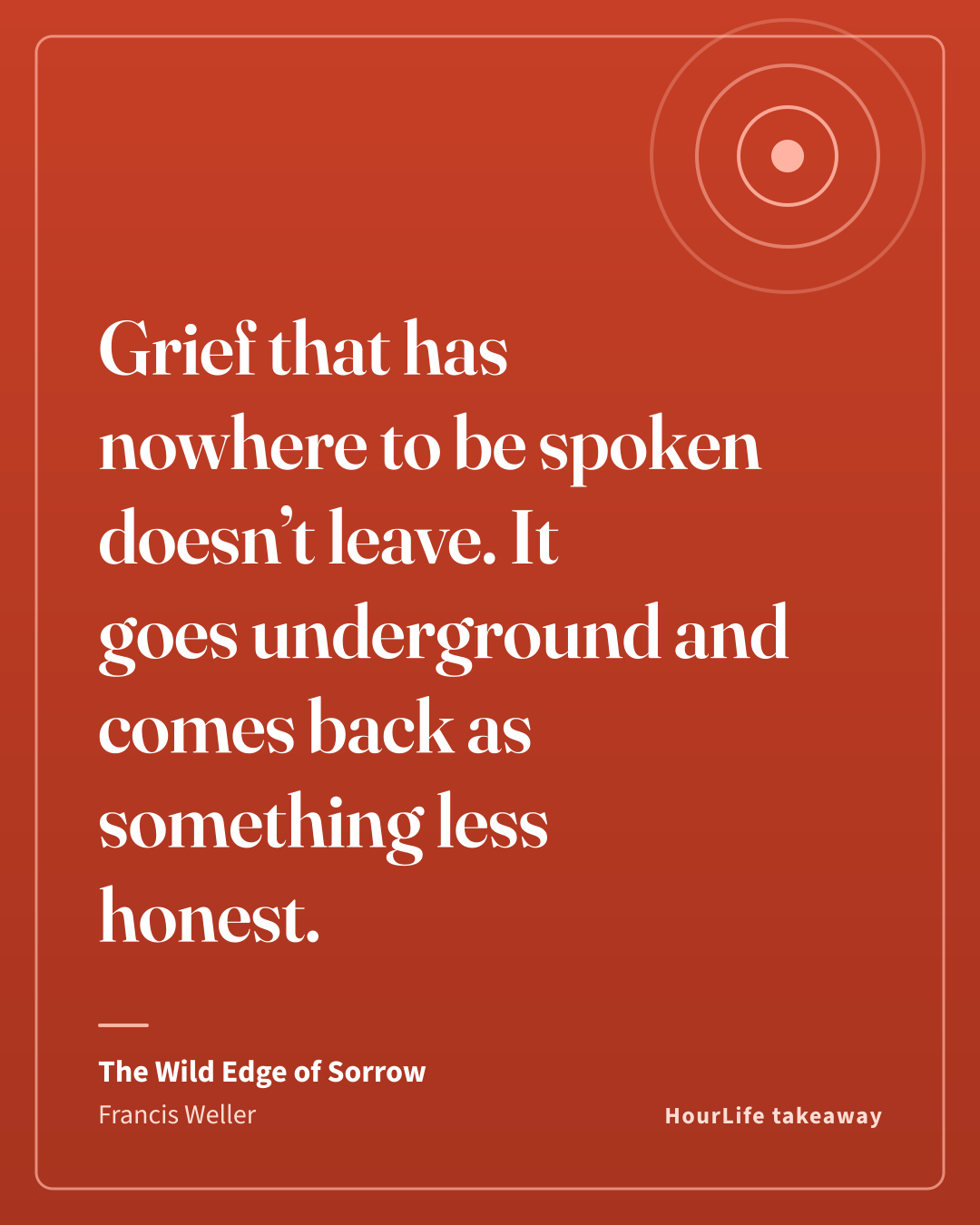
Grief that has nowhere to be spoken doesn’t leave. It goes underground and comes back as something less honest.

The Wild Edge of Sorrow Francis Weller HourLife takeaway

Weller's own line is that when our grief cannot be spoken, it falls into the shadow. What surfaces instead tends to be numbness, low-grade cynicism, exhaustion, or an appetite that nothing satisfies — none of which look like sorrow, which is precisely the problem.

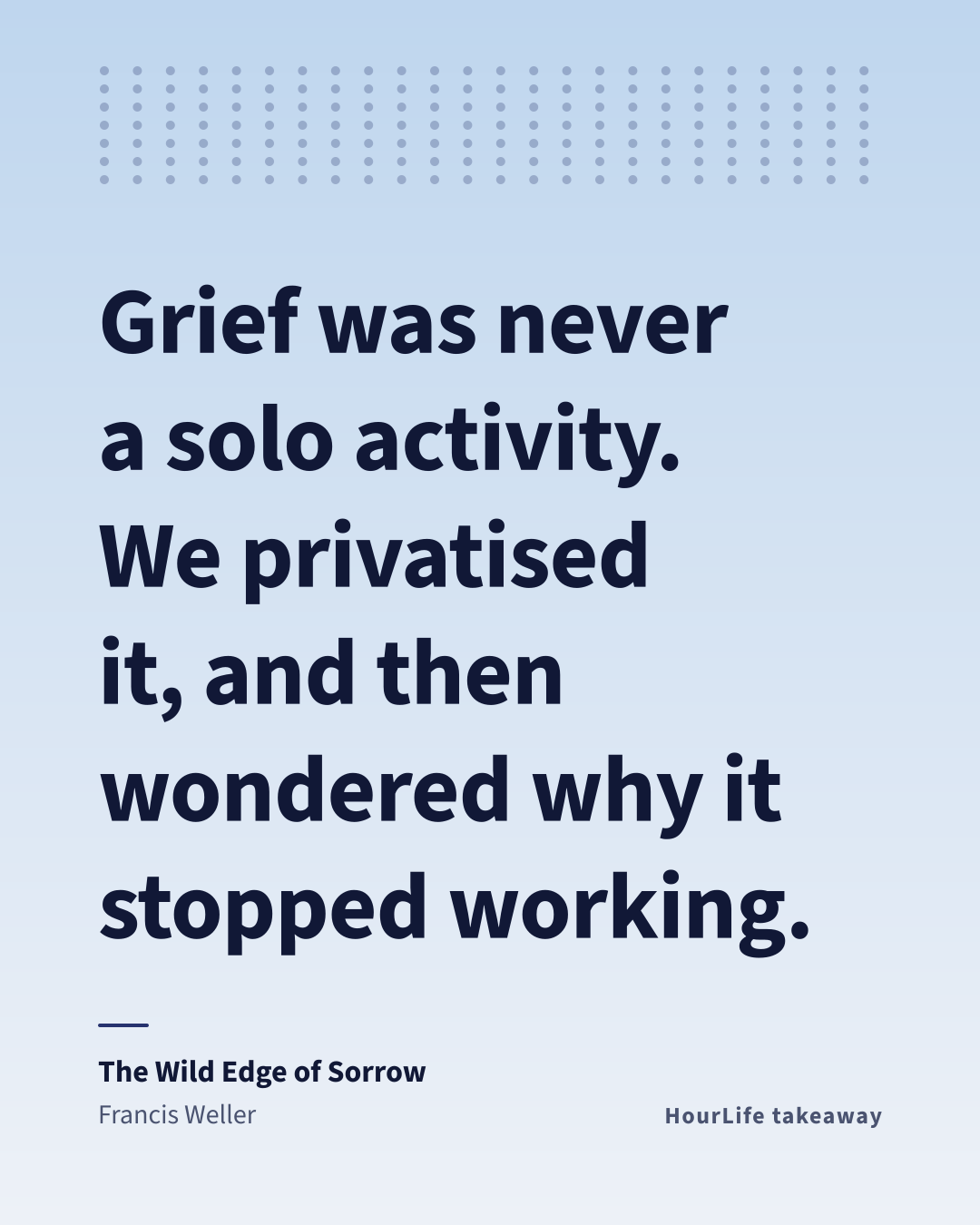
Grief was never a solo activity. We privatised it, and then wondered why it stopped working.

The Wild Edge of Sorrow Francis Weller HourLife takeaway

Almost every culture that has thought about this at length put grief in a circle with witnesses, sound, and a container built to hold it. A room alone is not a container. Weller runs grief rituals for exactly this reason.

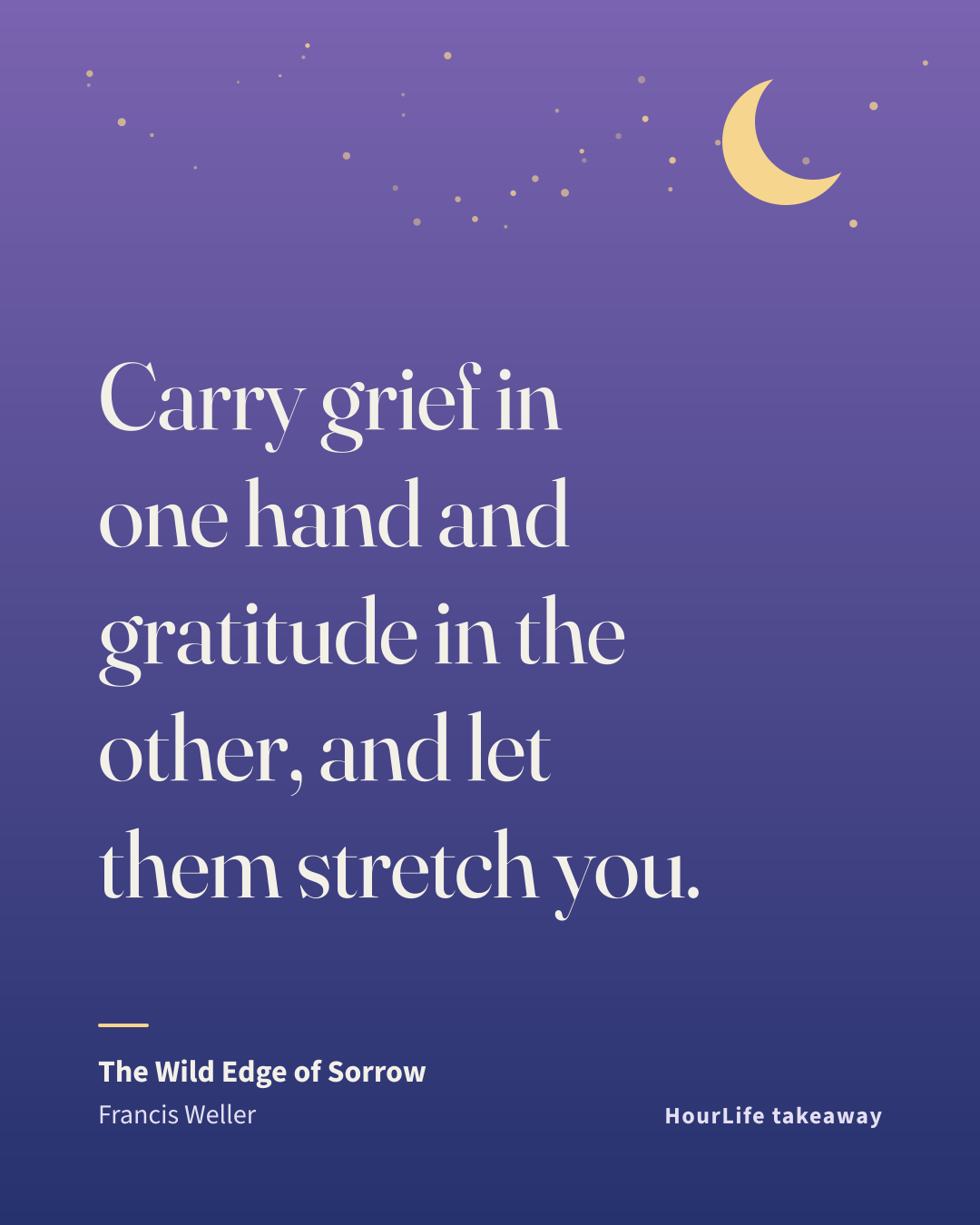
Carry grief in one hand and gratitude in the other, and let them stretch you.

The Wild Edge of Sorrow Francis Weller HourLife takeaway

Weller: how much sorrow can I hold — that's how much gratitude I can give. Only grief and you bend toward cynicism and despair; only gratitude and you go saccharine and never develop much compassion for anyone else's suffering. The capacity is the smaller of the two hands.

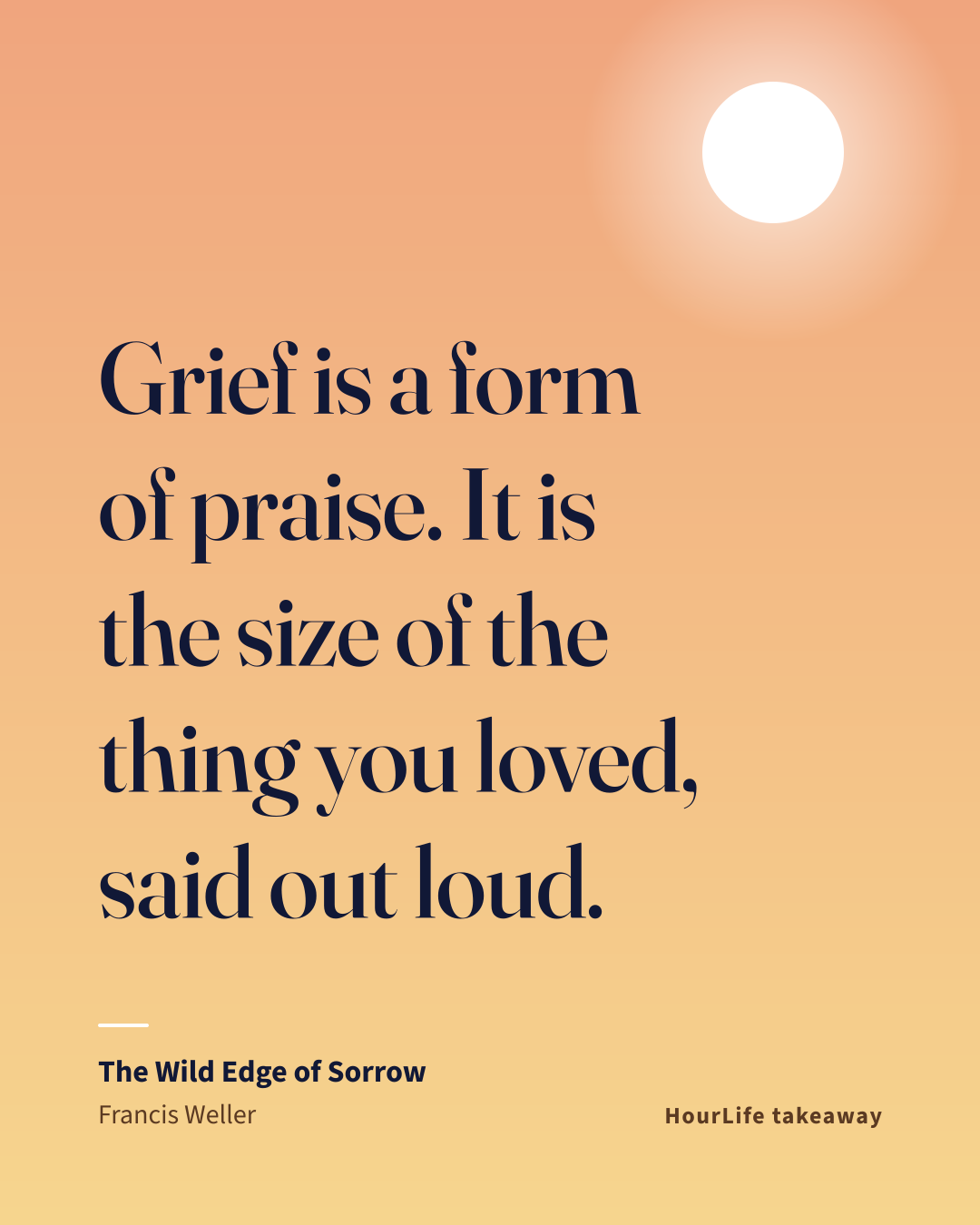
Grief is a form of praise. It is the size of the thing you loved, said out loud.

The Wild Edge of Sorrow Francis Weller HourLife takeaway

In Weller's phrasing, grief is akin to praise — it is how the soul recounts the depth to which someone has touched our lives. Read that way, the intensity is not a symptom to be reduced. It is information about the love.

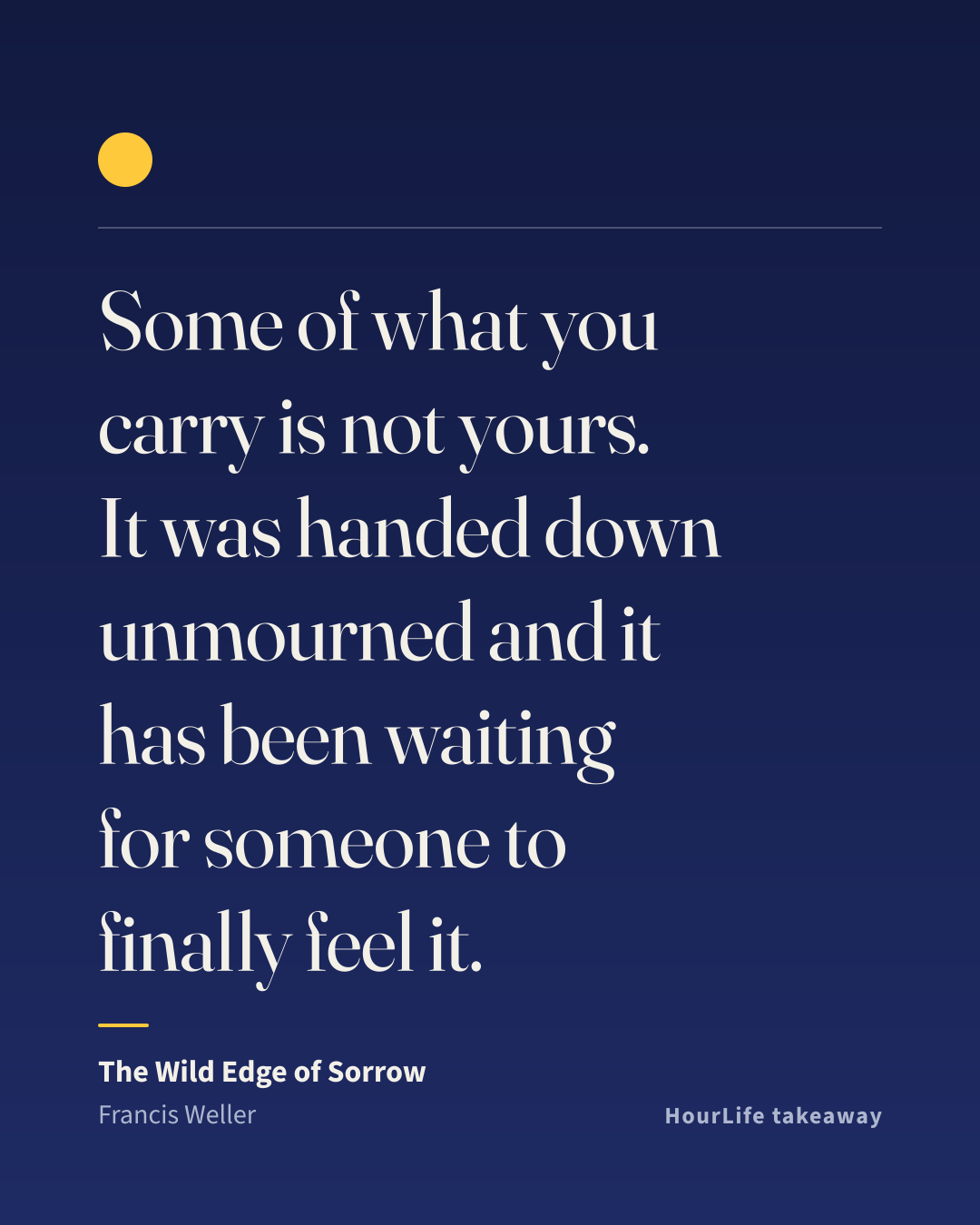
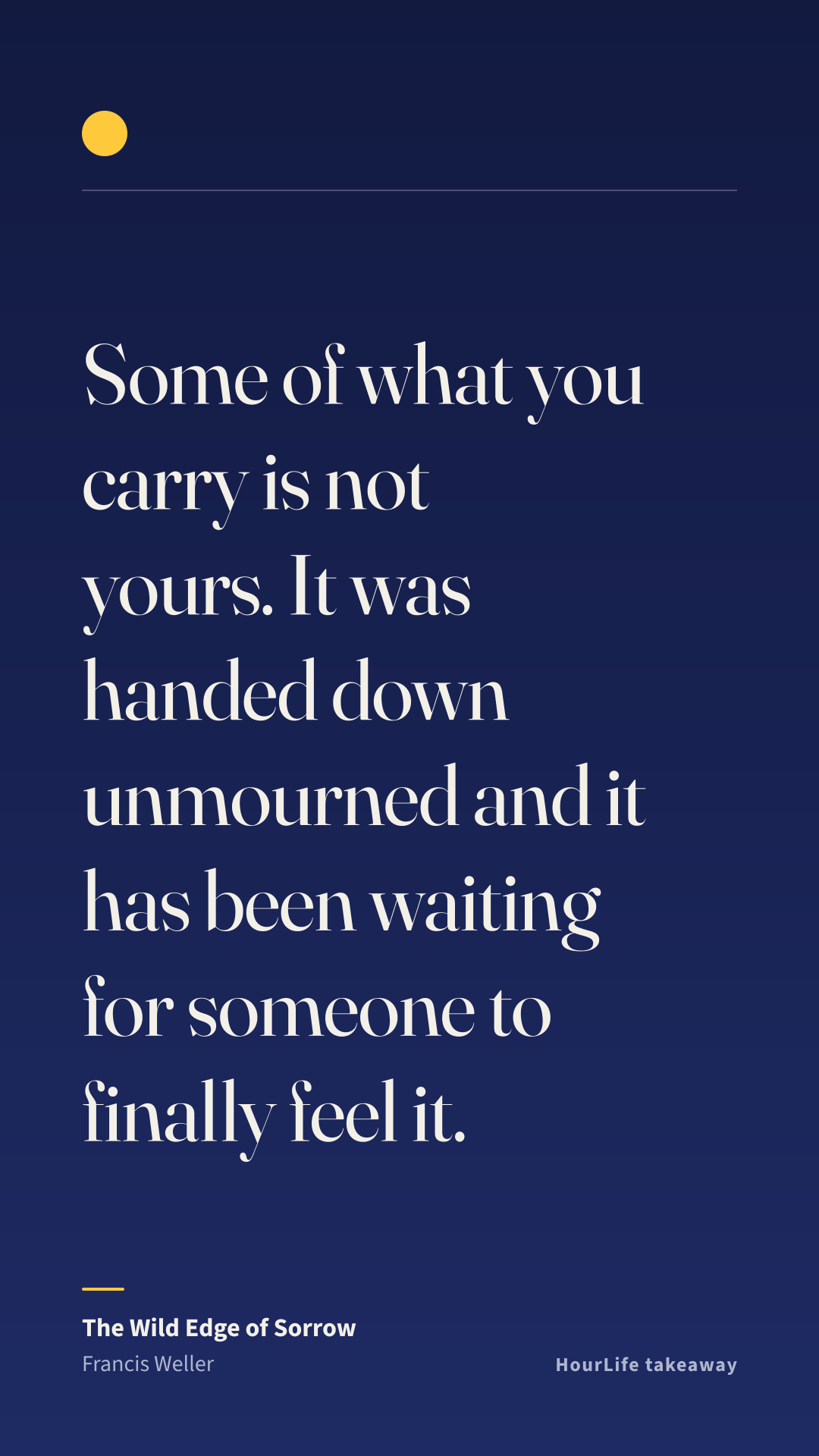
Some of what you carry is not yours. It was handed down unmourned and it has been waiting for someone to finally feel it.

The Wild Edge of Sorrow Francis Weller HourLife takeaway

The fifth gate — ancestral grief. Weller means both family lines and whole cultural traumas that went un-grieved because there was no safe moment to stop and do it. You cannot heal what was never named, and naming it is most of the work available to you.

Keep this going in the app.

HourLife turns these ideas into a daily system — goals, habits, focus, and reflection in one private place.