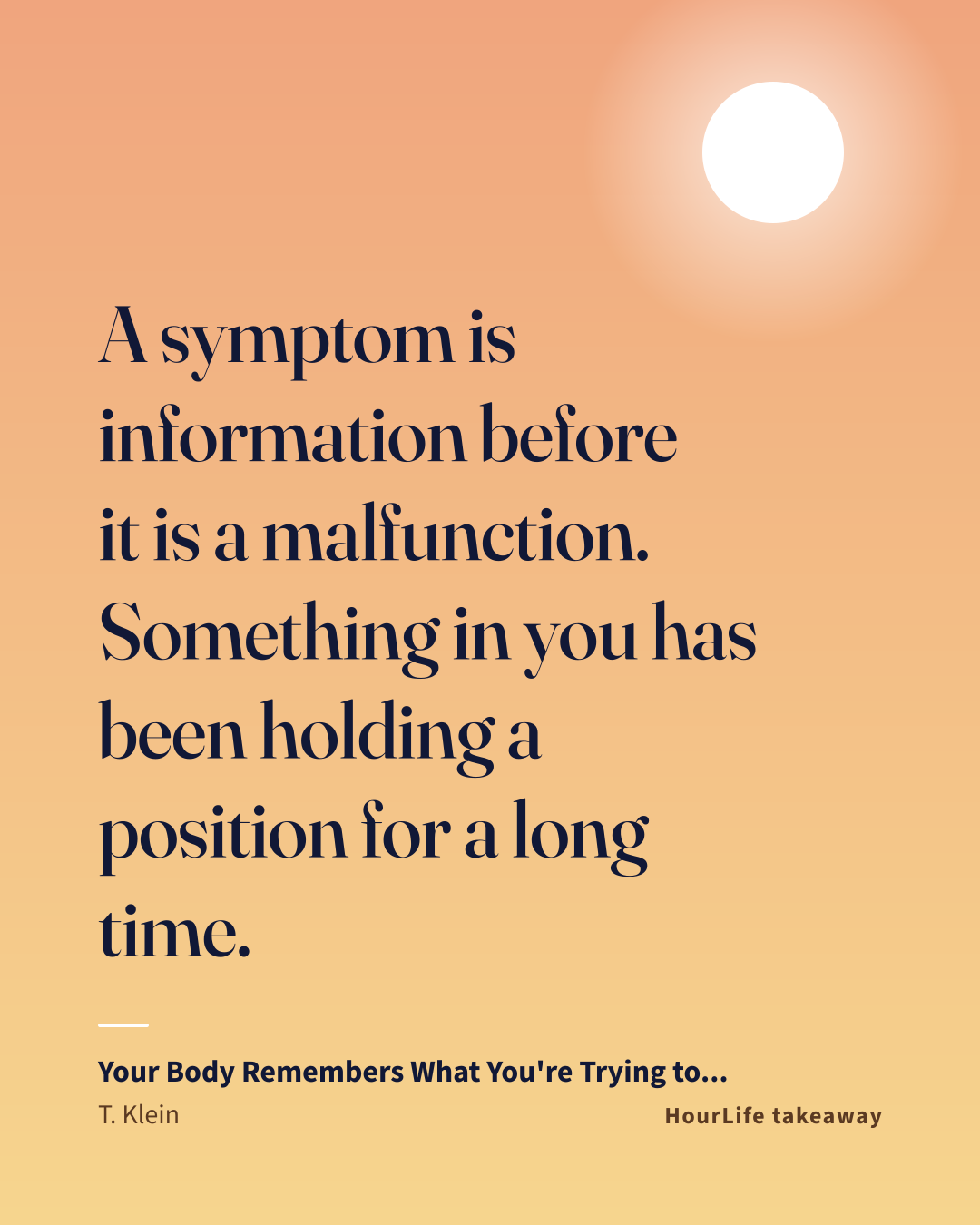
A symptom is information before it is a malfunction. Something in you has been holding a position for a long time.
The book's founding move, and the reason it treats symptoms as loyal rather than hostile.
8 memorable lines from Your Body Remembers What You're Trying to Forget by T. Klein, each with the idea behind it.
As an Amazon Associate, HourLife earns from qualifying purchases.
Lines labelled “HourLife takeaway” are our wording of the book’s ideas and may paraphrase it. Only lines in quotation marks are the author’s own words, with where they appear. Check the book for exact wording before you quote it. Spot an error?
A symptom is information before it is a malfunction. Something in you has been holding a position for a long time.
The book's founding move, and the reason it treats symptoms as loyal rather than hostile.
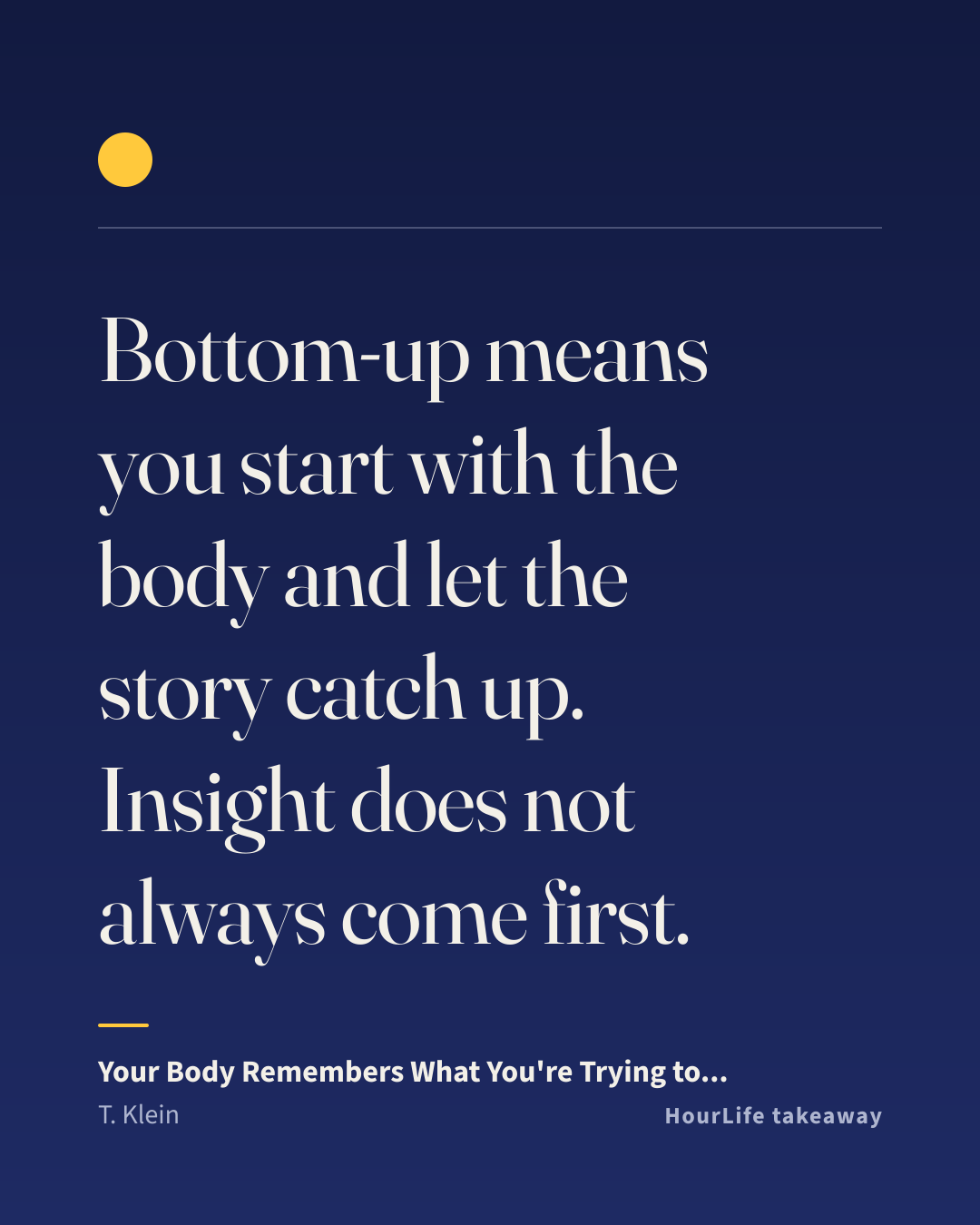
Bottom-up means you start with the body and let the story catch up. Insight does not always come first.
The Levine and Porges half of the lineage, and the part with the strongest support behind it.
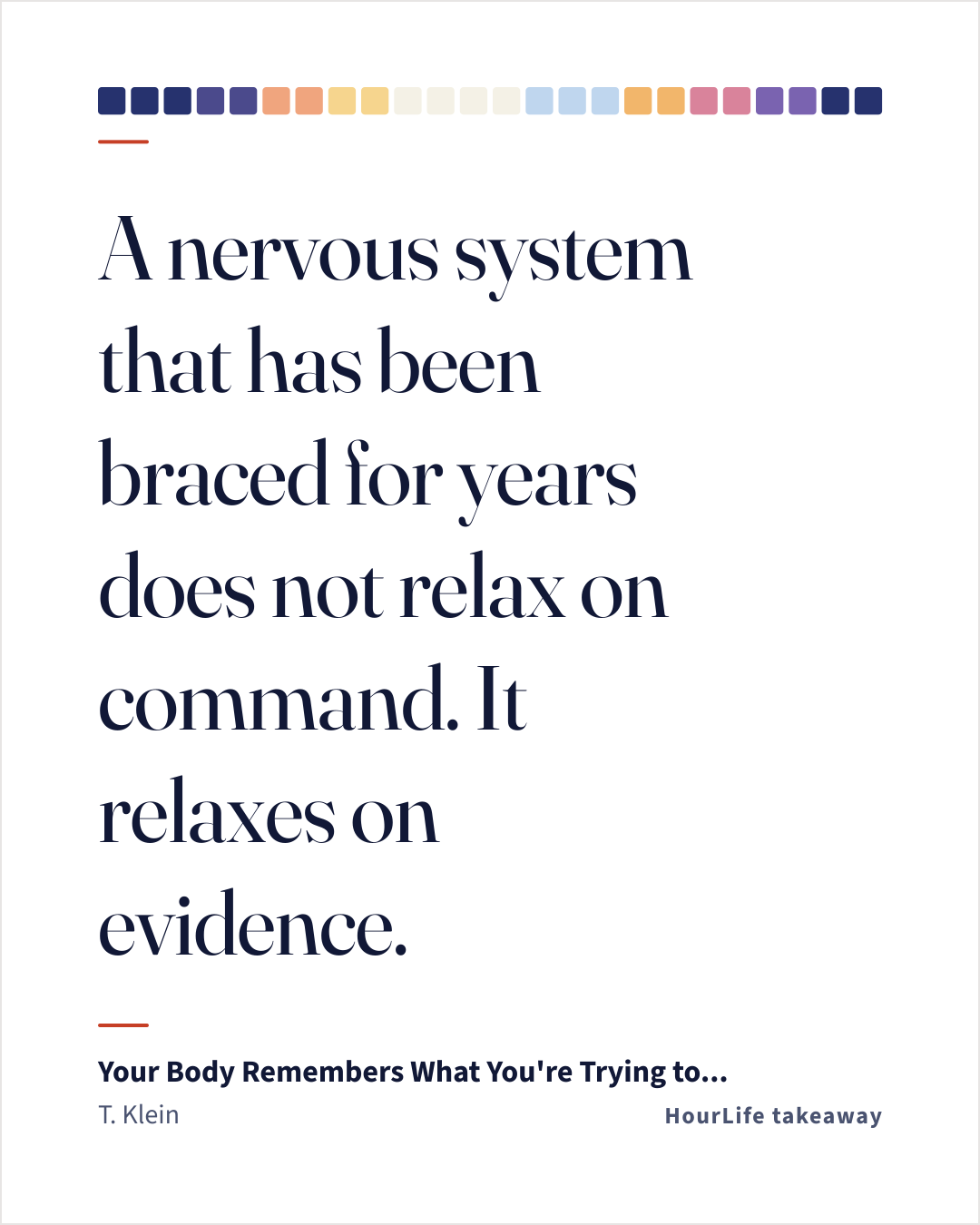
A nervous system that has been braced for years does not relax on command. It relaxes on evidence.
Why the practices are small, repeated and physical rather than persuasive.
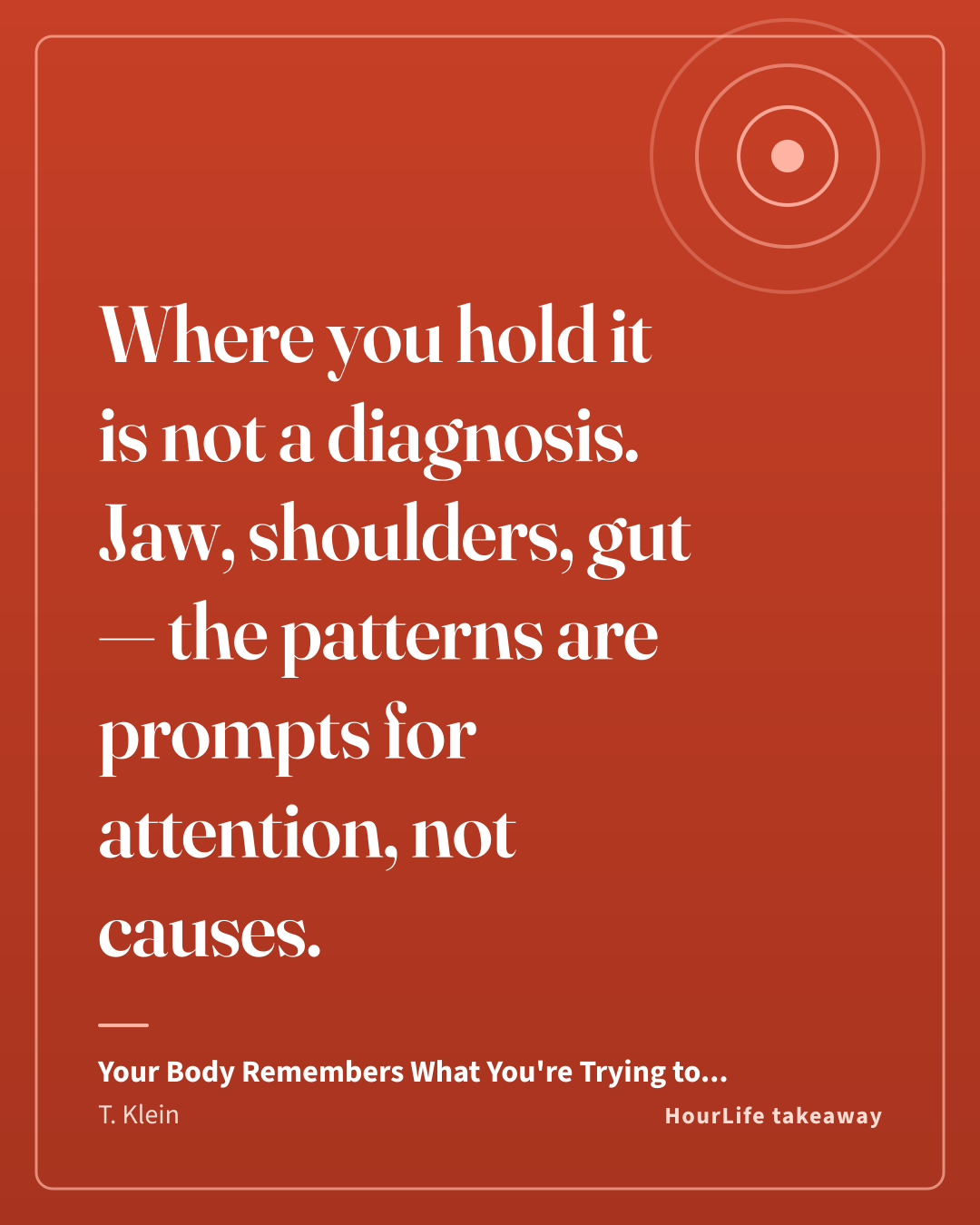
Where you hold it is not a diagnosis. Jaw, shoulders, gut — the patterns are prompts for attention, not causes.
The correction this genre needs, and the way to read the 122 entries without harming yourself.
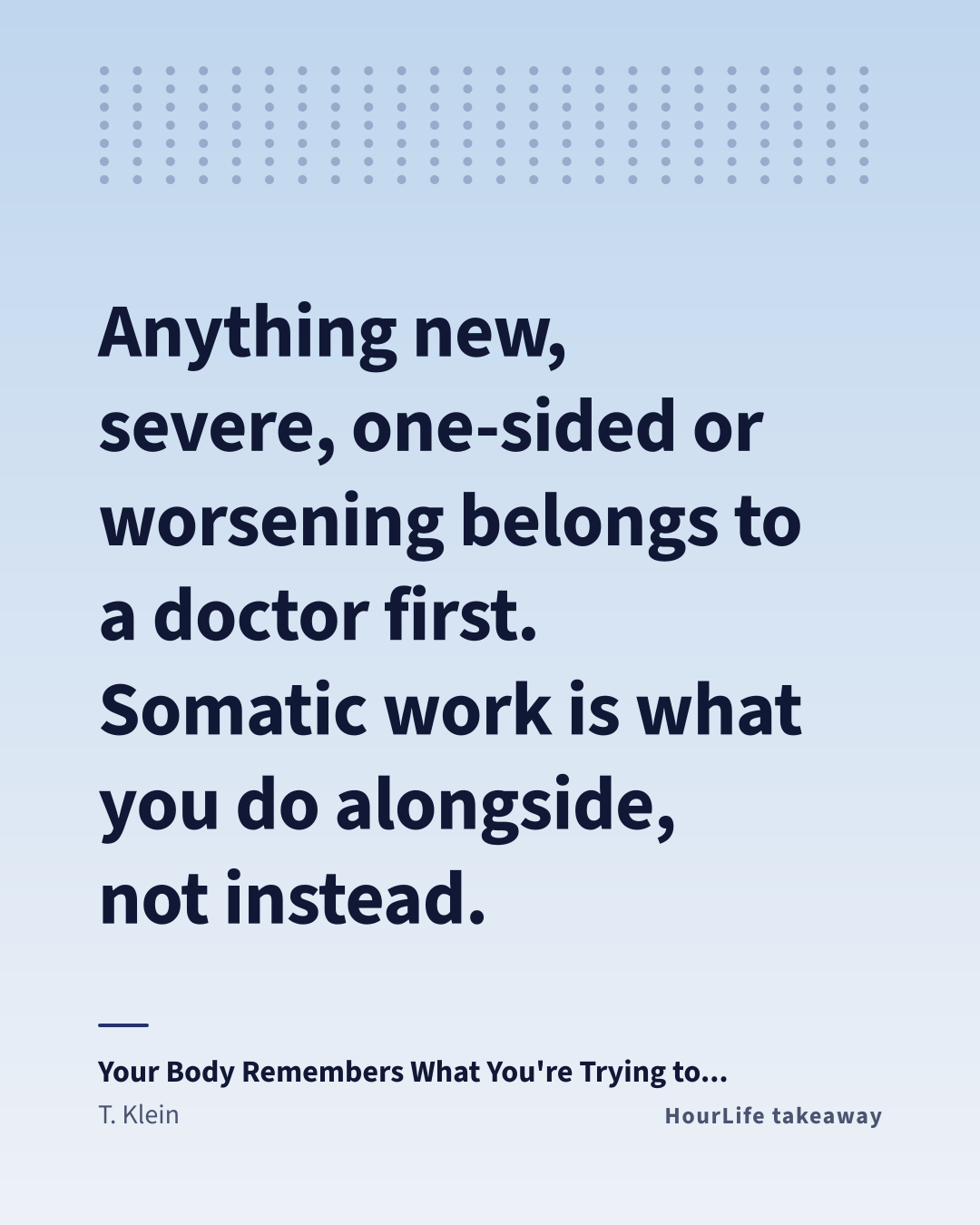
Anything new, severe, one-sided or worsening belongs to a doctor first. Somatic work is what you do alongside, not instead.
Non-negotiable. The field guide format invites self-diagnosis; this is the guardrail it needs.
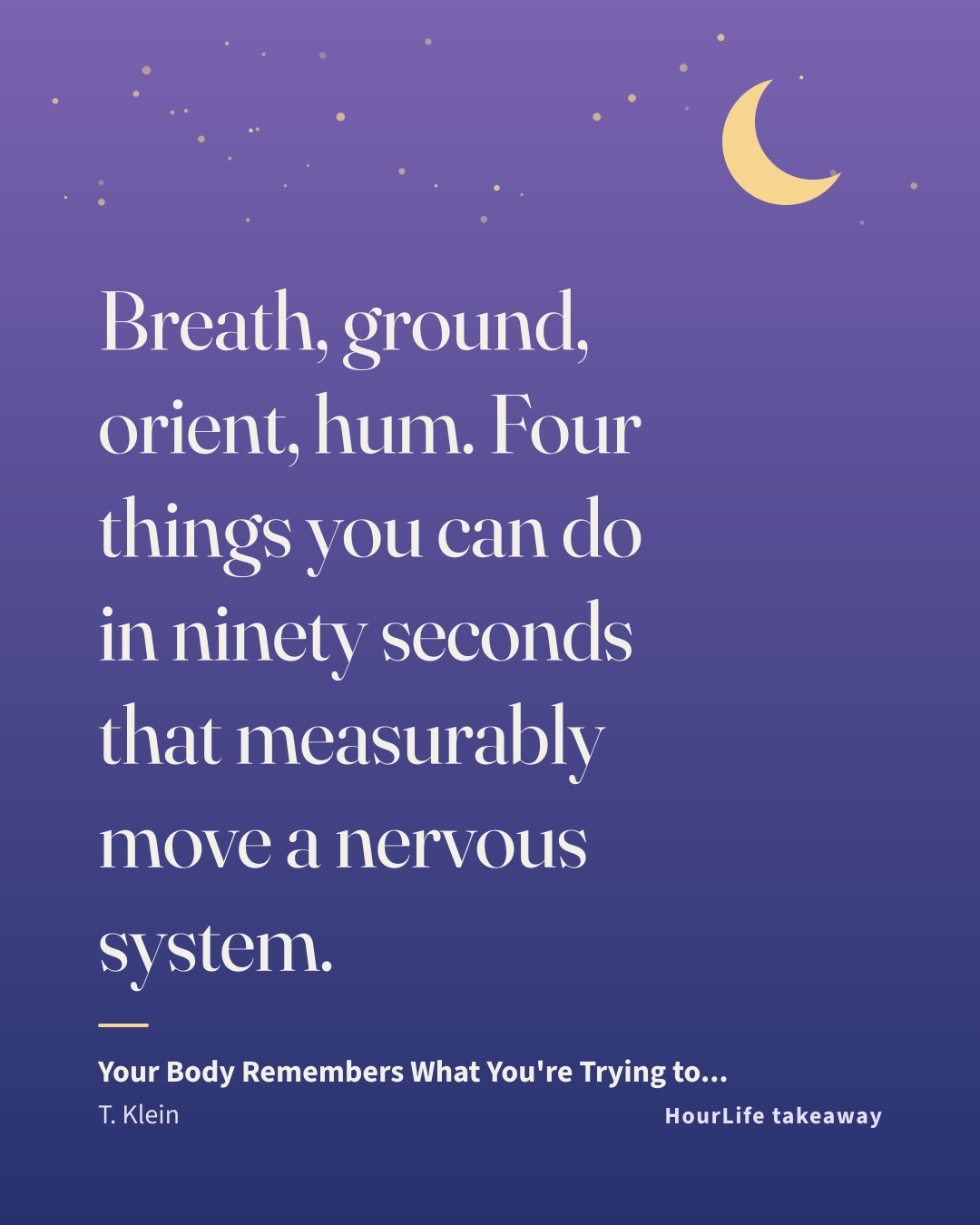
Breath, ground, orient, hum. Four things you can do in ninety seconds that measurably move a nervous system.
The practical core, portable regardless of what you make of the emotional mappings.
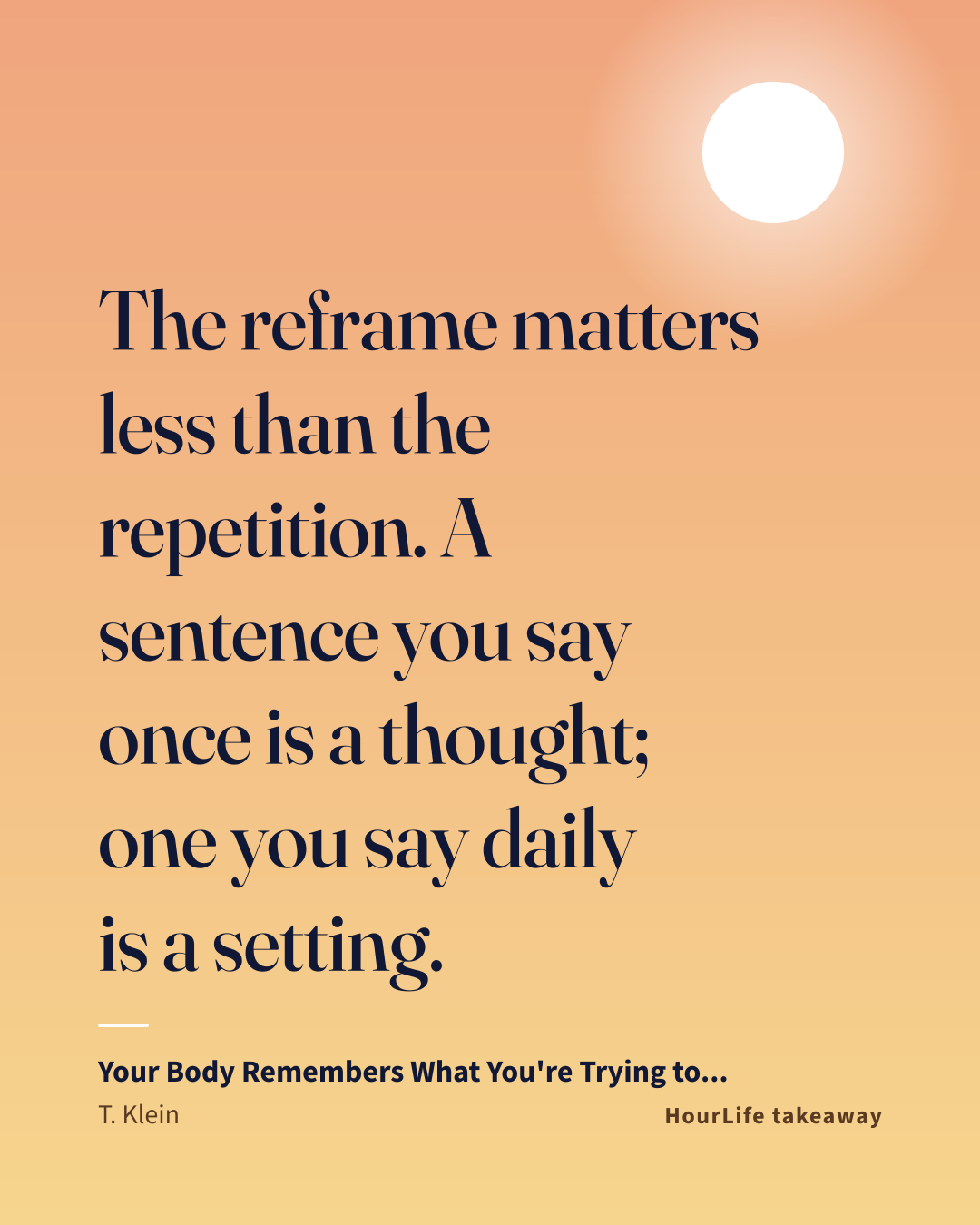
The reframe matters less than the repetition. A sentence you say once is a thought; one you say daily is a setting.
Each of the book's entries pairs an exercise with a reframe — this is which half does the work.
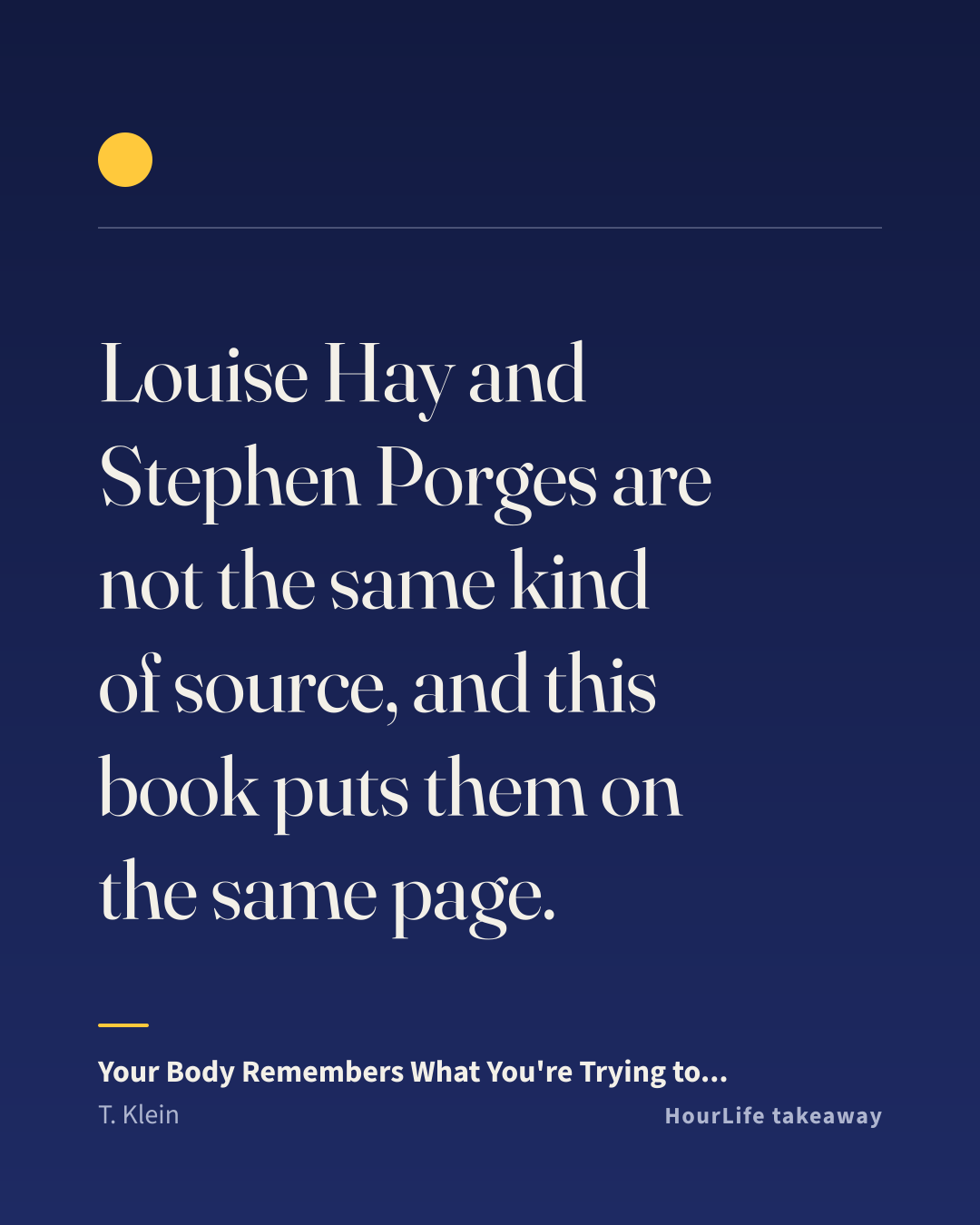
Louise Hay and Stephen Porges are not the same kind of source, and this book puts them on the same page.
Worth knowing before you start: one lineage is measurable, the other is metaphor. Both are here.
HourLife turns these ideas into a daily system — goals, habits, focus, and reflection in one private place.