The Arbinger Institute · 2006 · conflict repair
The Anatomy of Peace
The Arbinger Institute turns conflict inward first: the way you see people determines whether your strategy heals or keeps the fight alive.
Core idea.
Conflict hardens when people become objects in our story: obstacles, villains, projects, or irrelevancies. Peace begins when we recover their full humanity without surrendering truth.
interactive tool
Conflict Heart Scanner
diagnosis
Choose the stance.
The tactic matters less than the heart behind it.
Ask what this person is carrying that my story leaves out.
Reader notes.
Move toward peace.
Name the object label
Write the role you have reduced the other person to: obstacle, villain, project, or irrelevant.
Add missing humanity
List three pressures, hopes, or fears your story may be excluding.
Own one contribution
Identify one way your stance may be keeping the conflict alive.
Ask before advising
In the next hard conversation, ask what they want understood before offering a fix.
State truth cleanly
Make one clear request without character judgment.
Pause the case
When rehearsing arguments privately, stop and write the repair goal instead.
Look for one right thing
Find one valid concern inside the other person's position.
Choose a peace move
Do one small action that humanizes without surrendering your boundary.
Debrief the stance
After a conflict, ask whether you were trying to prove, avoid, fix, or see.
Build your mini action book.
Pick setup actions and daily habits from The Anatomy of Peace, choose a start date, and download a printable checklist with real calendar pages.
Frequently asked
What is The Anatomy of Peace about?
A conflict-resolution book about shifting from seeing people as objects to seeing them as people, so boundaries, truth, and repair can happen from a heart at peace.
What are the key takeaways from The Anatomy of Peace?
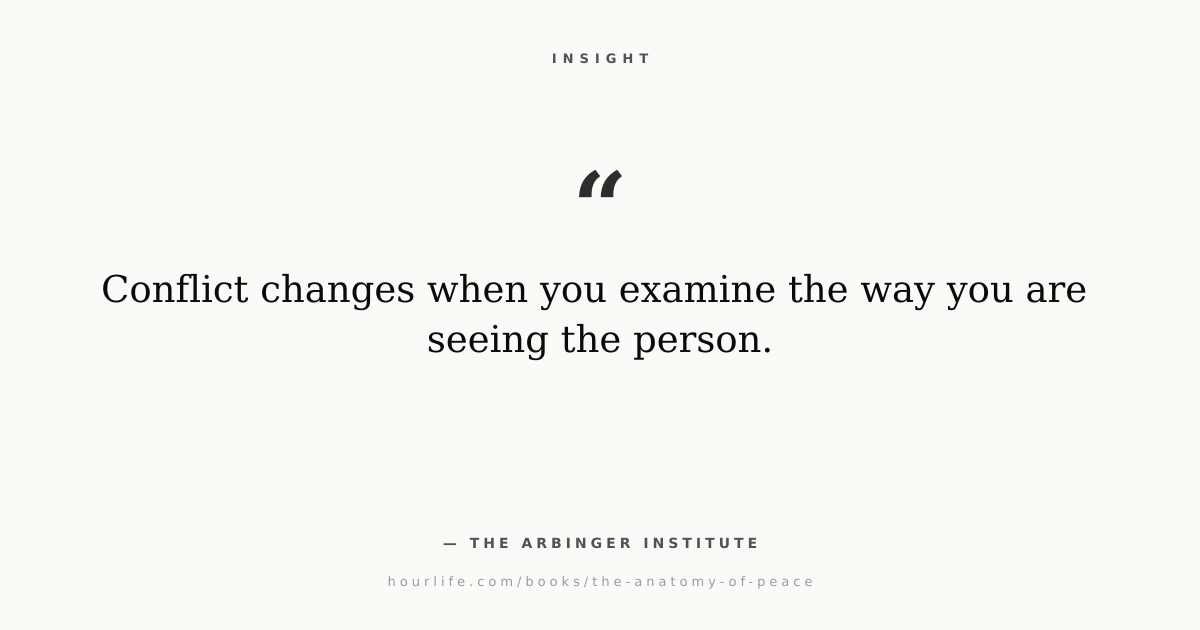
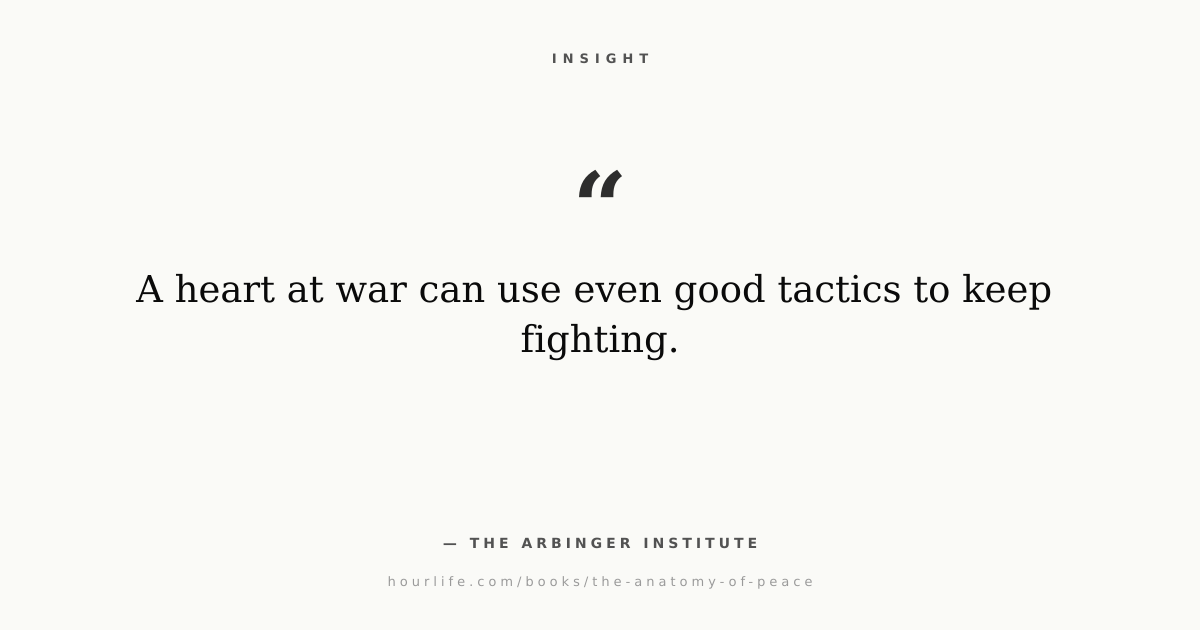
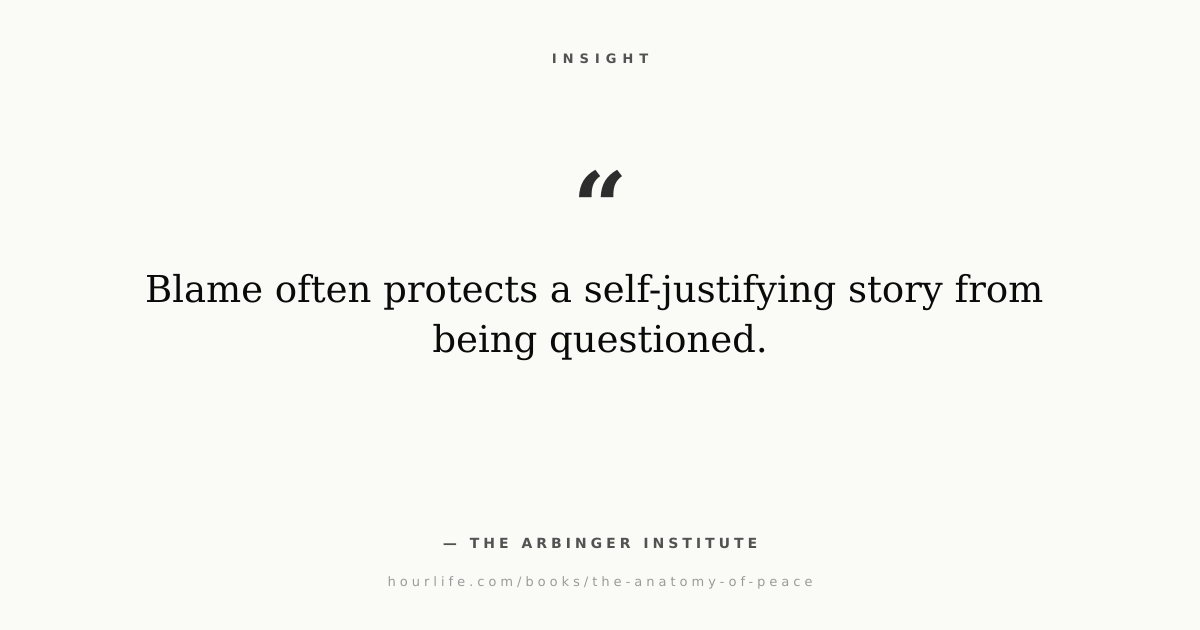
Readers on HourLife most often highlight ideas such as: “Conflict changes when you examine the way you are seeing the person.” “A heart at war can use even good tactics to keep fighting.” “Blame often protects a self-justifying story from being questioned.”
Who should read The Anatomy of Peace?
It's a strong pick for readers exploring Character & Integrity, Relationship Repair, and The Art of Communication. HourLife distills its core idea into community-voted insights and one practical action worth trying.
What's one thing I can do after reading The Anatomy of Peace?
Name the object label — Write the role you have reduced the other person to: obstacle, villain, project, or irrelevant.
How long does it take to read the The Anatomy of Peace summary?
About five minutes. The HourLife summary distills The Anatomy of Peace into its core idea, 7 community insights, and 9 practical actions you can apply right away.
Downloads & shareables
Print it, pin it, post it. Ways to take The Anatomy of Peace off the screen and into the world.
-
Read the text summary
The core idea, key takeaways, and how to apply The Anatomy of Peace, as one clean, readable page.
Read summary -
Action checklist
Every action from this page as a printable to-do list, with a 7-day tracker.
Download PDF -
Book summary card
A shareable card with the book and its top-voted insight, for saving or posting.
Resource library
The summary card and every quote card in six sizes: Instagram feed, Story, Pinterest, YouTube thumbnail, phone wallpaper, and link preview.
Turn this book into a daily practice.
Save the insights that land, build the habits that stick, and keep what you learn from The Anatomy of Peace working long after you close the page — inside HourLife.