Allan Pease · 2004 · nonverbal signals
The Definitive Book of Body Language
Read gestures as clusters, not isolated tells. Context decides whether the body is guarding, opening, or negotiating.
Core idea.
Pease treats body language as probability, not mind reading. A crossed arm, a tilted head, or a foot pointed toward the door matters only when the gesture repeats, fits the situation, and matches or conflicts with the words being spoken.
interactive tool
Signal Reader
read the cluster
Choose a cue.
Pair the cue with context, words, and repeated patterns.
Ask one clarifying question before deciding what the signal means.
Reader signals.
Practice observation.
Track cue clusters
Notice face, hands, torso, and feet together before interpreting anything.
Ask for context
Before deciding what a cue means, name one practical explanation.
Watch direction
Observe where someone's body points during a conversation.
Reduce your own threat cues
Uncross arms, lower speed, and keep palms visible in a tense exchange.
Pause before interpreting
When you spot a cue, wait for a second cue before deciding.
Mirror naturally
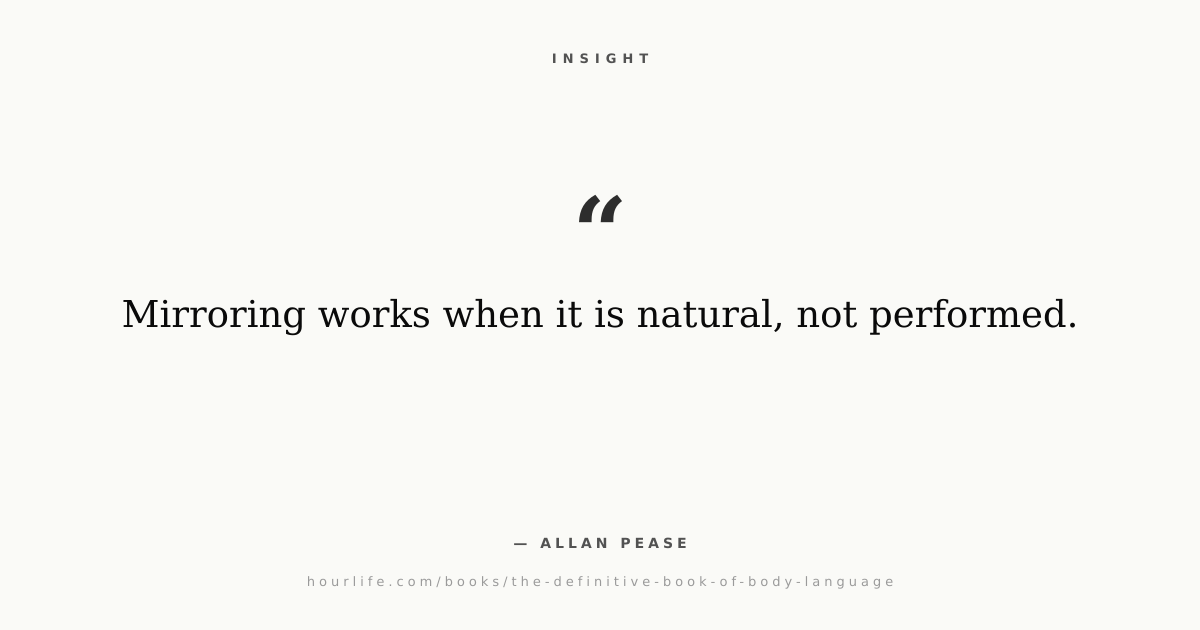
Match pace and warmth without copying gestures mechanically.
Clarify incongruence
Ask one soft question when words and body seem mismatched.
Check your posture
Before a high-stakes conversation, choose an open but grounded stance.
Leave room for error
End each read with an alternative explanation.
Build your mini action book.
Pick setup actions and daily habits from The Definitive Book of Body Language, choose a start date, and download a printable checklist with real calendar pages.
Frequently asked
What is The Definitive Book of Body Language about?
A practical guide to reading nonverbal communication as clusters of cues shaped by context, timing, and repeated patterns.
What are the key takeaways from The Definitive Book of Body Language?
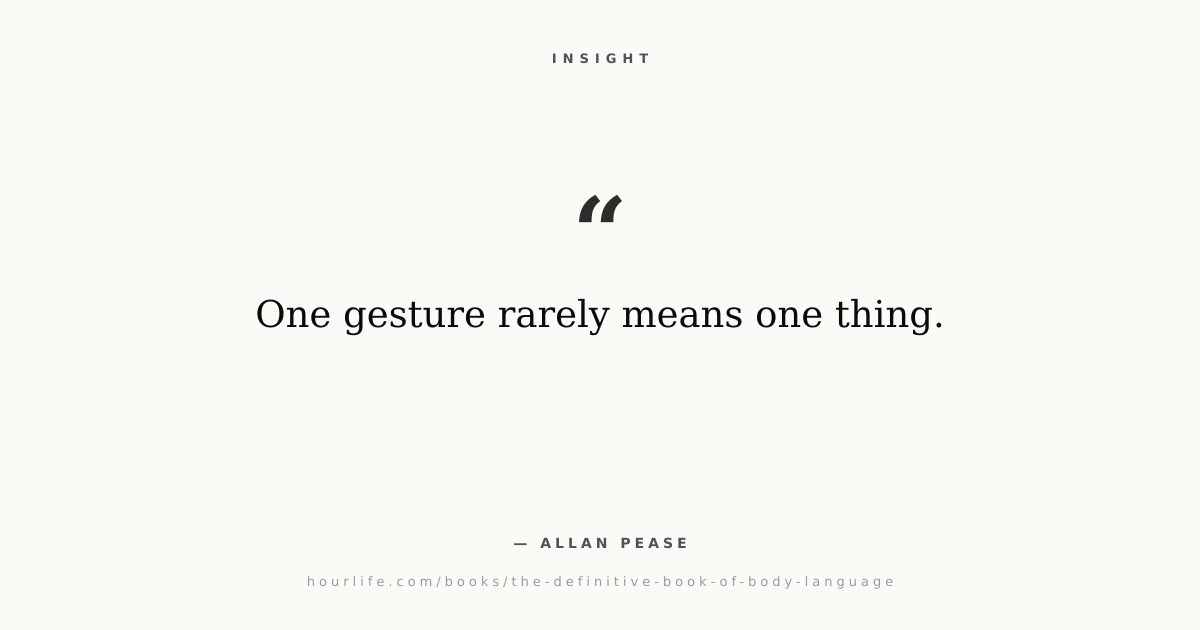
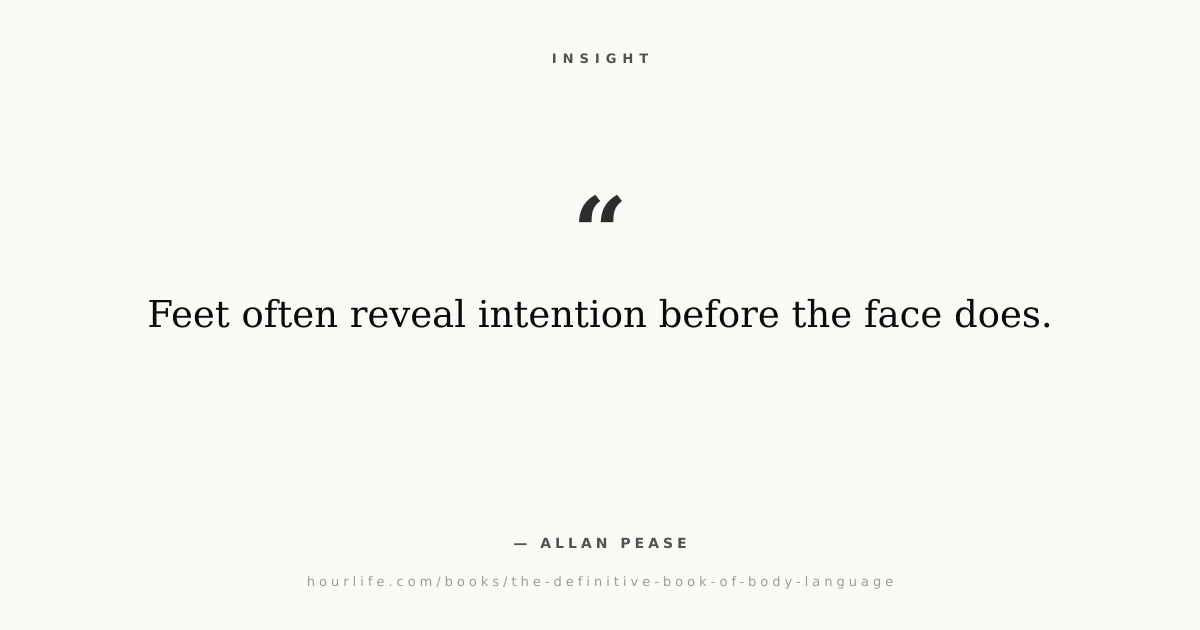
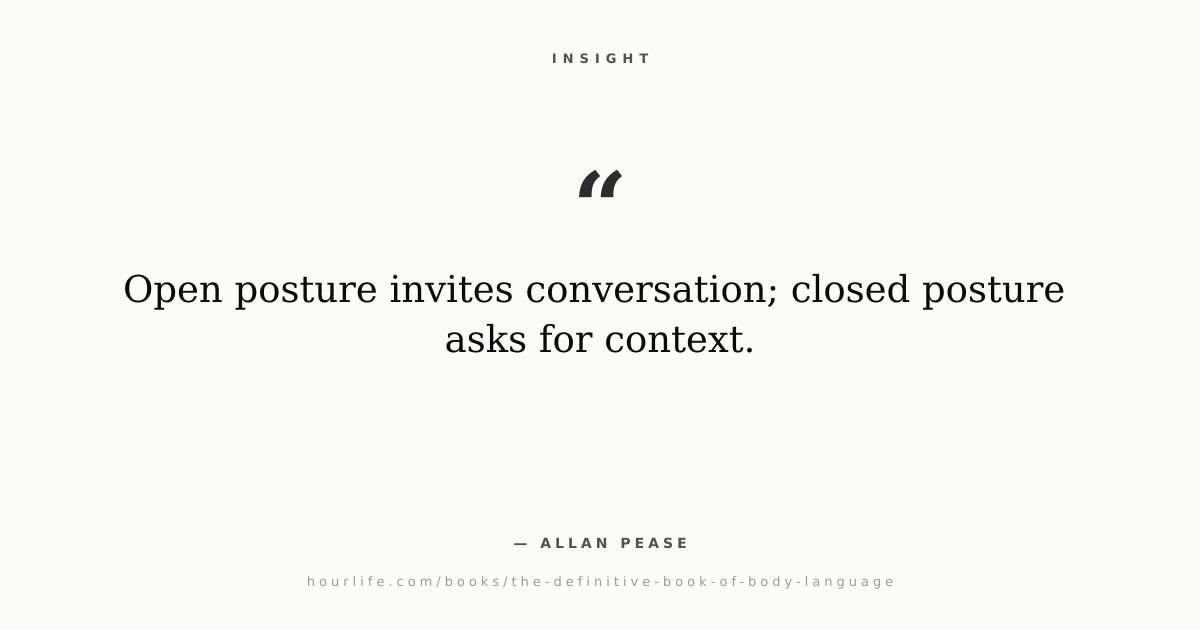
Readers on HourLife most often highlight ideas such as: “One gesture rarely means one thing.” “Feet often reveal intention before the face does.” “Open posture invites conversation; closed posture asks for context.”
Who should read The Definitive Book of Body Language?
It's a strong pick for readers exploring Reading People and The Art of Communication. HourLife distills its core idea into community-voted insights and one practical action worth trying.
What's one thing I can do after reading The Definitive Book of Body Language?
Track cue clusters — Notice face, hands, torso, and feet together before interpreting anything.
How long does it take to read the The Definitive Book of Body Language summary?
About five minutes. The HourLife summary distills The Definitive Book of Body Language into its core idea, 7 community insights, and 9 practical actions you can apply right away.
Downloads & shareables
Print it, pin it, post it. Ways to take The Definitive Book of Body Language off the screen and into the world.
-
Read the text summary
The core idea, key takeaways, and how to apply The Definitive Book of Body Language, as one clean, readable page.
Read summary -
Action checklist
Every action from this page as a printable to-do list, with a 7-day tracker.
Download PDF -
Book summary card
A shareable card with the book and its top-voted insight, for saving or posting.
Resource library
The summary card and every quote card in six sizes: Instagram feed, Story, Pinterest, YouTube thumbnail, phone wallpaper, and link preview.
Turn this book into a daily practice.
Save the insights that land, build the habits that stick, and keep what you learn from The Definitive Book of Body Language working long after you close the page — inside HourLife.