Confident humility
Hold a view strongly enough to test it and lightly enough to update it.
Intelligence is not how fast you defend a belief. It is how quickly you notice the belief has expired.
core idea
Grant argues that people often slip into preacher, prosecutor, or politician mode: defending beliefs, attacking alternatives, or campaigning for approval. Those modes feel productive, but they protect identity more than truth.
The alternative is scientist mode. Treat ideas as hypotheses, search for disconfirming evidence, invite thoughtful challenge, and measure strength by willingness to revise.
Hold a view strongly enough to test it and lightly enough to update it.
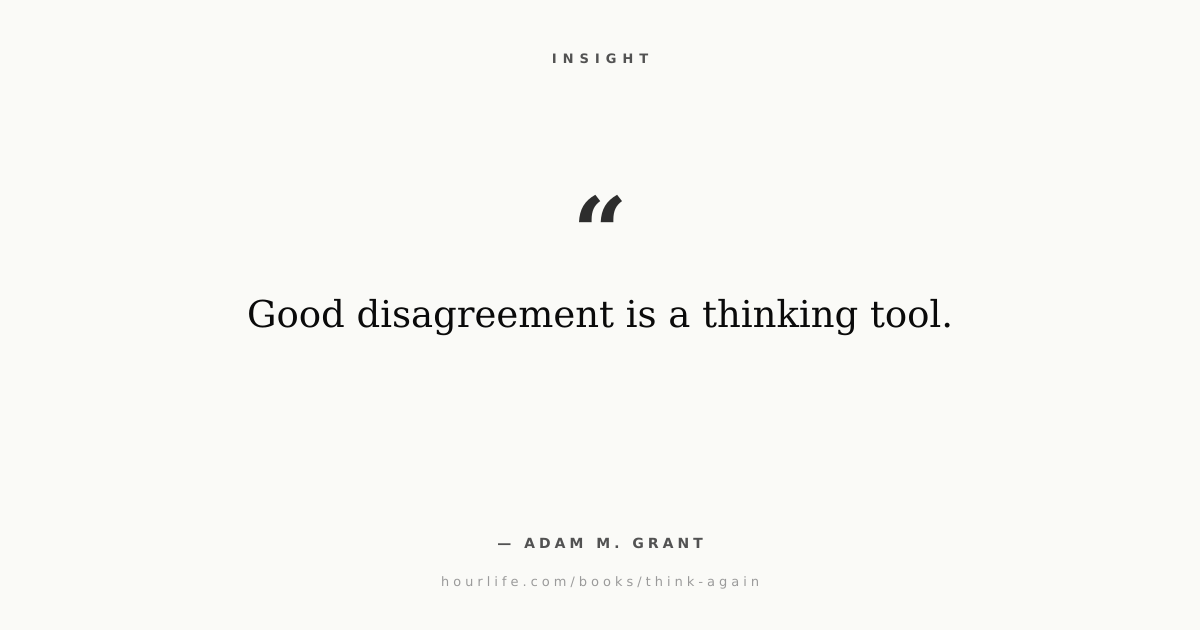
The right disagreement is not an attack. It is a tool for making the idea sharper.
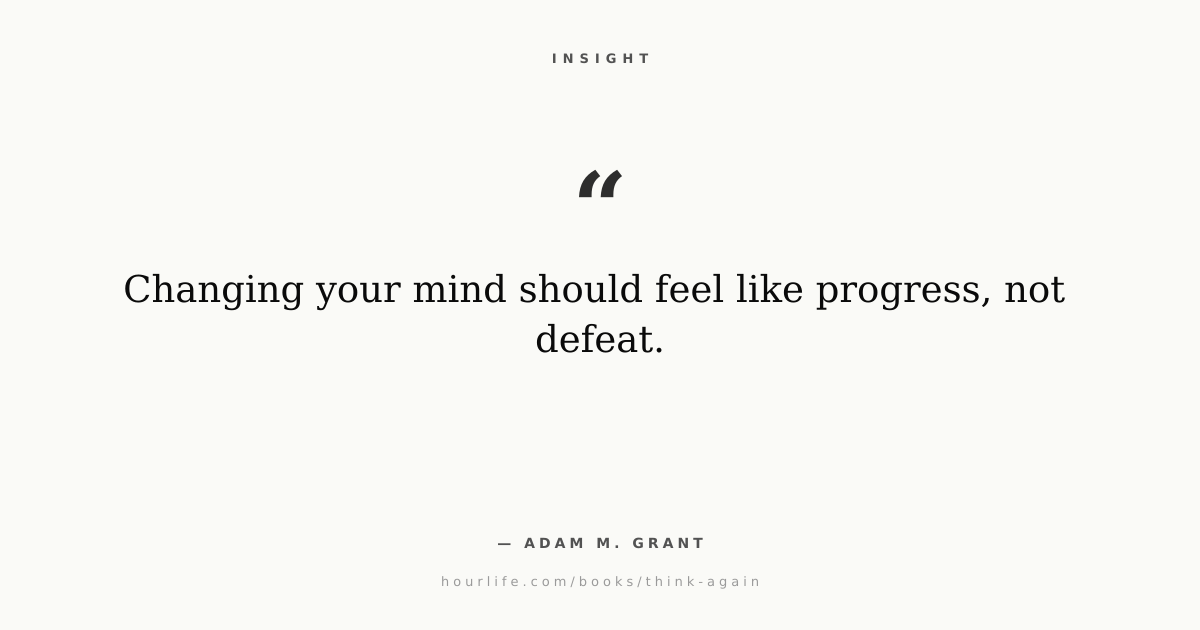
When your identity is tied to values instead of opinions, changing your mind becomes easier.
interactive tool
Pick your current mental posture, evidence quality, and dissent source. The lab turns certainty into a testable next question.
1 / current stance
2 / evidence quality
3 / dissent source
rethinking protocol
Ask whether you are preaching, prosecuting, politicking, or testing.
Tie your identity to values and methods, not the opinion of the week.
Look for the observation that would make the belief smaller, sharper, or false.
Ask a thoughtful critic to improve the idea rather than attack your character.
State what changed, why it changed, and what you still do not know.
community insights
Vote for the notes that make humility practical and disagreement useful.
action steps
Before arguing a belief, write which mode you are in: preacher, prosecutor, politician, or scientist. Switch modes before deciding.
Name one observation that would make your current belief weaker, narrower, or false. If nothing could, it is identity, not inquiry.
List two people who can disagree with you honestly without trying to embarrass you. Ask one for the strongest counterpoint.
Write a rule for when you will revise the belief: new data, failed prediction, expert disagreement, or repeated exception.
When certainty spikes, ask: what am I missing, what would change my mind, or how would I know if this were wrong?
Before responding to disagreement, restate the other person's view in language they would recognize as fair.
Once a week, say one thing you changed your mind about and the evidence that moved you.
"The mark of intelligence is not defending a belief forever. It is knowing when the belief has stopped earning its place."
HourLife field note
Back to libraryPick setup actions and daily habits from Think Again: The Power of Knowing What You Don't Know, choose a start date, and download a printable checklist with real calendar pages.
Adam Grant's guide to rethinking shows how to replace defensive certainty with scientist-mode curiosity: test beliefs, seek better disagreement, and update views without making it an identity crisis.
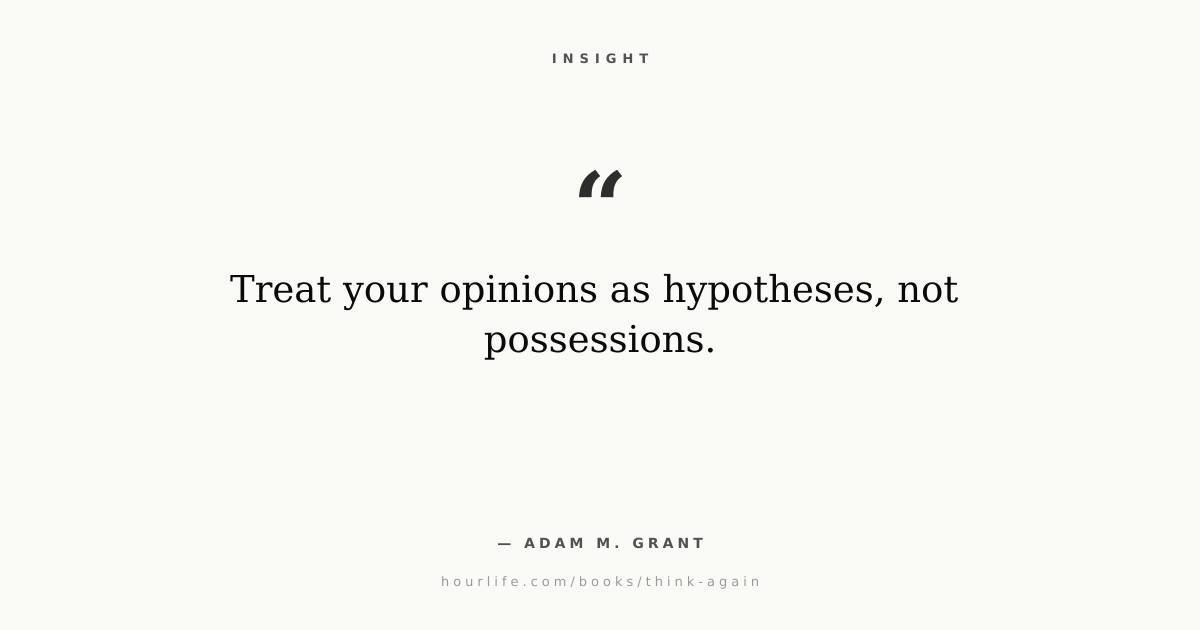
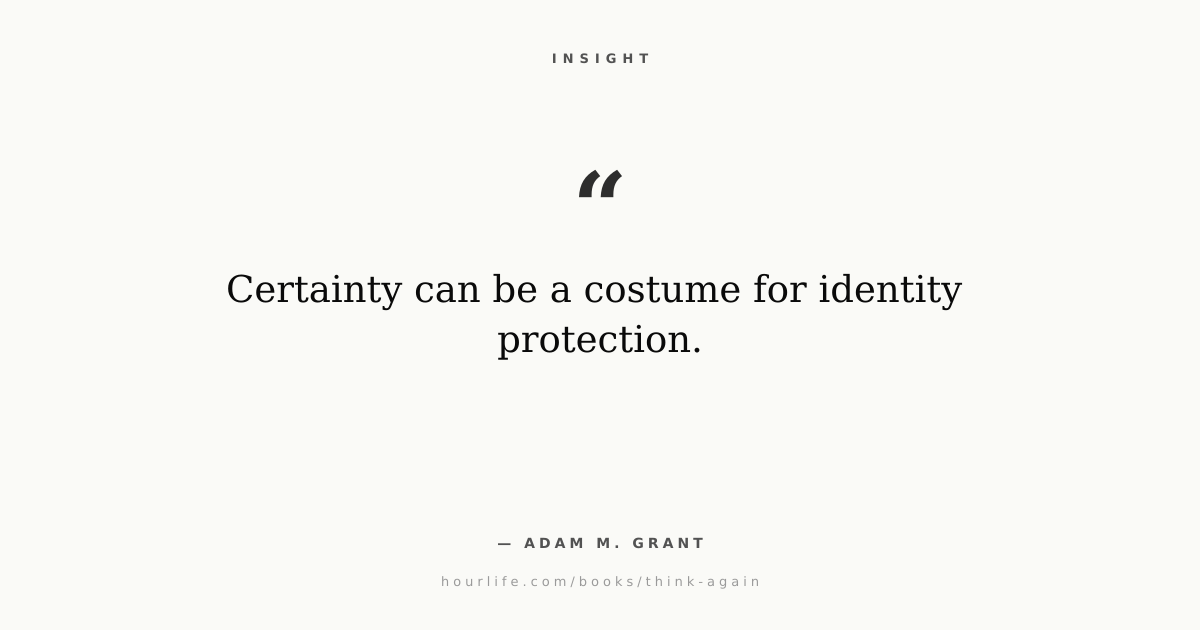
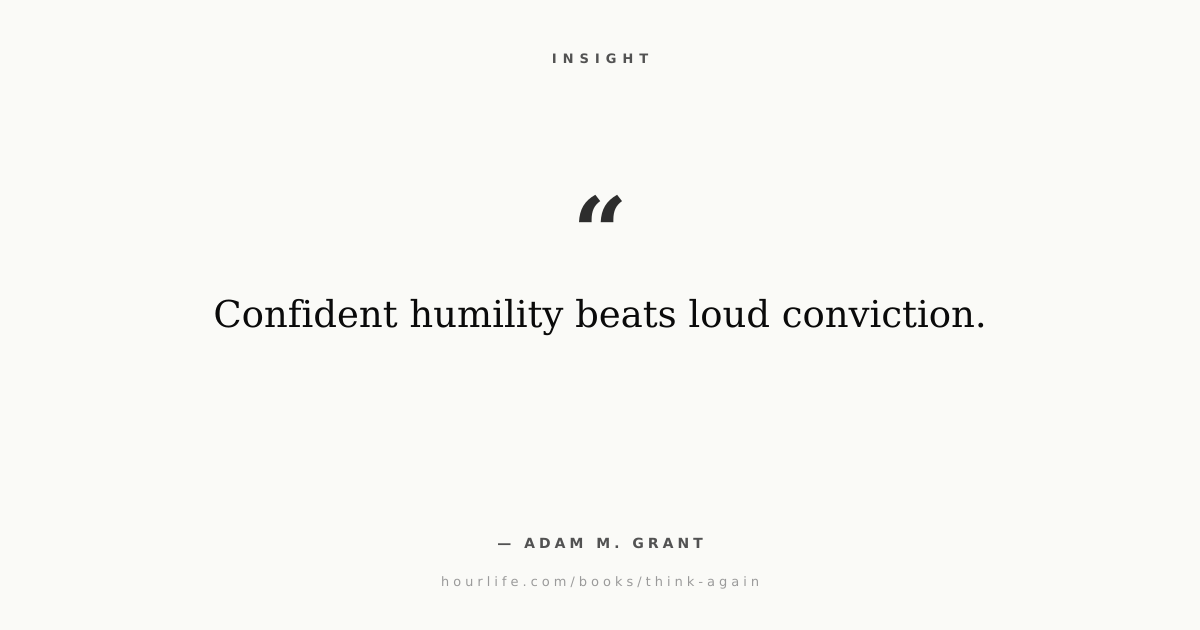
Readers on HourLife most often highlight ideas such as: “Treat your opinions as hypotheses, not possessions.” “Certainty can be a costume for identity protection.” “Confident humility beats loud conviction.”
It's a strong pick for readers exploring Decision Making, Leadership & Management, and Learning & Mastery. HourLife distills its core idea into community-voted insights and one practical action worth trying.
Label your thinking mode — Before arguing a belief, write which mode you are in: preacher, prosecutor, politician, or scientist. Switch modes before deciding.
About five minutes. The HourLife summary distills Think Again: The Power of Knowing What You Don't Know into its core idea, 5 community insights, and 7 practical actions you can apply right away.
Print it, pin it, post it. Ways to take Think Again: The Power of Knowing What You Don't Know off the screen and into the world.
The core idea, key takeaways, and how to apply Think Again: The Power of Knowing What You Don't Know, as one clean, readable page.
Read summaryEvery action from this page as a printable to-do list, with a 7-day tracker.
Download PDFA shareable card with the book and its top-voted insight, for saving or posting.
The summary card and every quote card in six sizes: Instagram feed, Story, Pinterest, YouTube thumbnail, phone wallpaper, and link preview.
Save the insights that land, build the habits that stick, and keep what you learn from Think Again: The Power of Knowing What You Don't Know working long after you close the page — inside HourLife.