Gabor Maté · 2003 · stress and boundaries
When the
Body Says No
The body often reports the cost of self-silencing before the mind is ready to call it stress.
interactive tool
Body Boundary Signal Board
Select a body signal and a social pattern. The board turns it into a boundary experiment, not a diagnosis.
body signal
pattern
boundary experiment
Choose a signal and a pattern.
Your body data will point to one small protection of capacity.
Three useful readings.
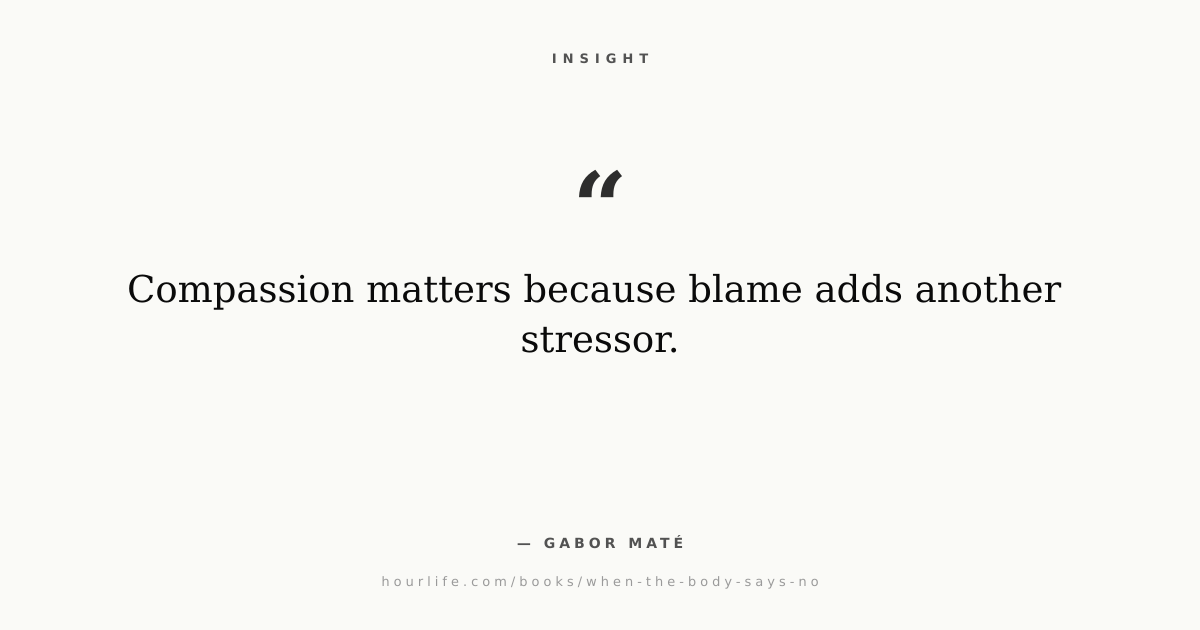
Not blame
The point is listening, not accusing yourself for illness.
Earlier signals
Tiny body data matters before crisis forces a stop.
Real boundaries
A no protects physiology, attention, recovery, and truth.
What readers keep.
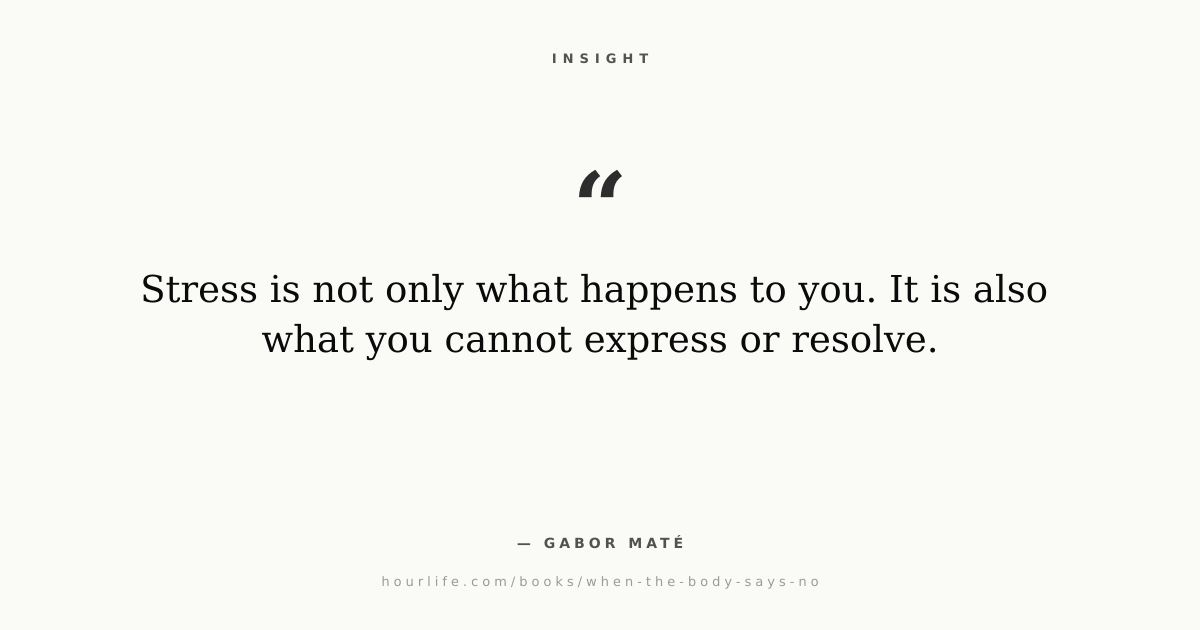
"Stress is not only what happens to you. It is also what you cannot express or resolve."
Listen earlier.
Map your body alarm
List three physical signals that usually appear before you admit you are overloaded.
Identify the forbidden no
Name one area where saying no feels dangerous, disloyal, or selfish.
Build a recovery appointment
Put one non-negotiable recovery block on the calendar and treat it like medical infrastructure.
Write the safe boundary script
Create a short boundary sentence that protects capacity without giving a courtroom defense.
Scan before yes
Before accepting a request, check jaw, chest, stomach, and shoulders for a quiet no.
Discharge one emotion
Give anger, grief, or fear a safe outlet through movement, voice notes, or writing.
End the day with body data
Record one body signal and one context that may have contributed to it.
Build your mini action book.
Pick setup actions and daily habits from When the Body Says No: The Cost of Hidden Stress, choose a start date, and download a printable checklist with real calendar pages.
Frequently asked
What is When the Body Says No: The Cost of Hidden Stress about?
When the Body Says No explores how chronic stress, emotional suppression, and boundary loss can burden health. The practical reading is not blame: it is learning to hear body signals before self-abandonment becomes a way of life.
What are the key takeaways from When the Body Says No: The Cost of Hidden Stress?
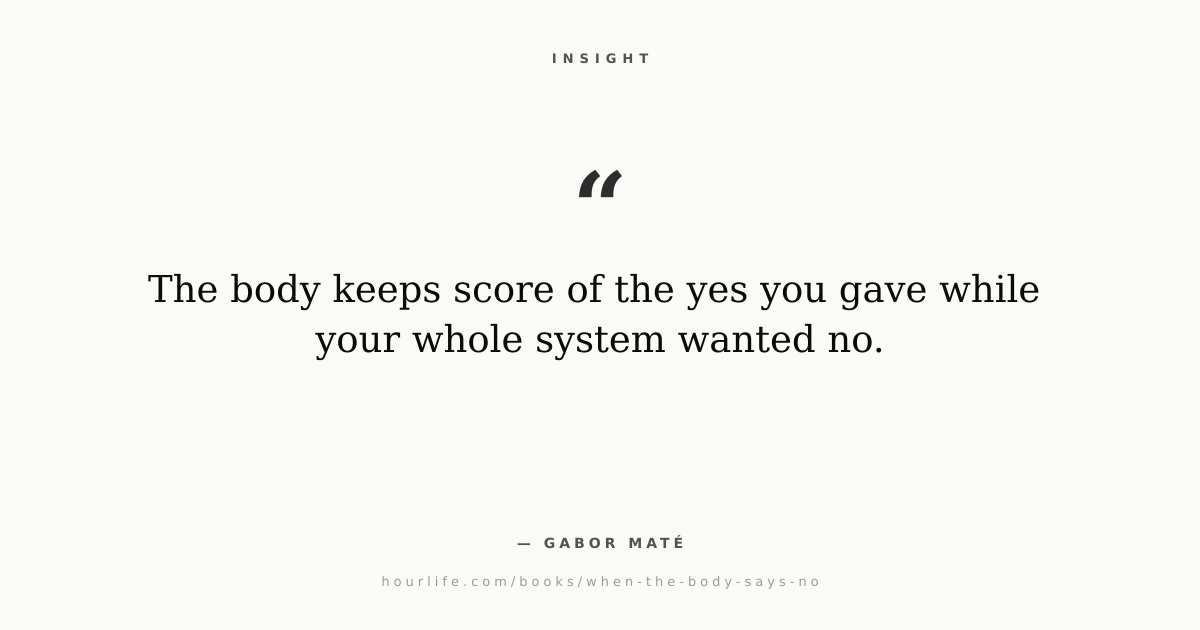
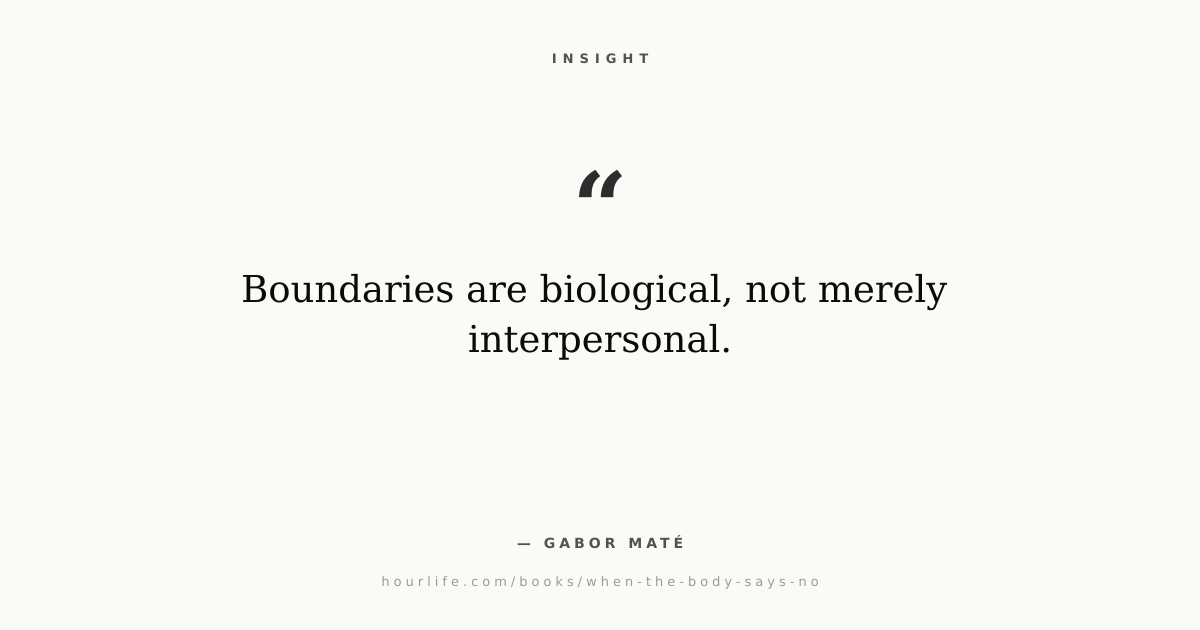
Readers on HourLife most often highlight ideas such as: “The body keeps score of the yes you gave while your whole system wanted no.” “Stress is not only what happens to you. It is also what you cannot express or resolve.” “Boundaries are biological, not merely interpersonal.”
Who should read When the Body Says No: The Cost of Hidden Stress?
It's a strong pick for readers exploring How Your Body Works, Stress Less, and Therapy & Mental Health. HourLife distills its core idea into community-voted insights and one practical action worth trying.
What's one thing I can do after reading When the Body Says No: The Cost of Hidden Stress?
Map your body alarm — List three physical signals that usually appear before you admit you are overloaded.
How long does it take to read the When the Body Says No: The Cost of Hidden Stress summary?
About five minutes. The HourLife summary distills When the Body Says No: The Cost of Hidden Stress into its core idea, 5 community insights, and 7 practical actions you can apply right away.
Downloads & shareables
Print it, pin it, post it. Ways to take When the Body Says No: The Cost of Hidden Stress off the screen and into the world.
-
Read the text summary
The core idea, key takeaways, and how to apply When the Body Says No: The Cost of Hidden Stress, as one clean, readable page.
Read summary -
Action checklist
Every action from this page as a printable to-do list, with a 7-day tracker.
Download PDF -
Book summary card
A shareable card with the book and its top-voted insight, for saving or posting.
Resource library
The summary card and every quote card in six sizes: Instagram feed, Story, Pinterest, YouTube thumbnail, phone wallpaper, and link preview.
Turn this book into a daily practice.
Save the insights that land, build the habits that stick, and keep what you learn from When the Body Says No: The Cost of Hidden Stress working long after you close the page — inside HourLife.