Robin Sharma · 1999 · legacy practice
Who Will Cry When You Die?
A useful life is built from small daily proofs of presence, generosity, courage, and repair.
Core idea.
Sharma's short chapters keep returning to one sober question: will today's behavior make life smaller or more generous? The page turns mortality into a prioritization tool, not a melodrama.
interactive tool
Legacy Lens
small proof
Choose the circle.
Pick one domain where a small act would make your values visible.
Make one concrete kindness easier for someone else today.
What readers keep.
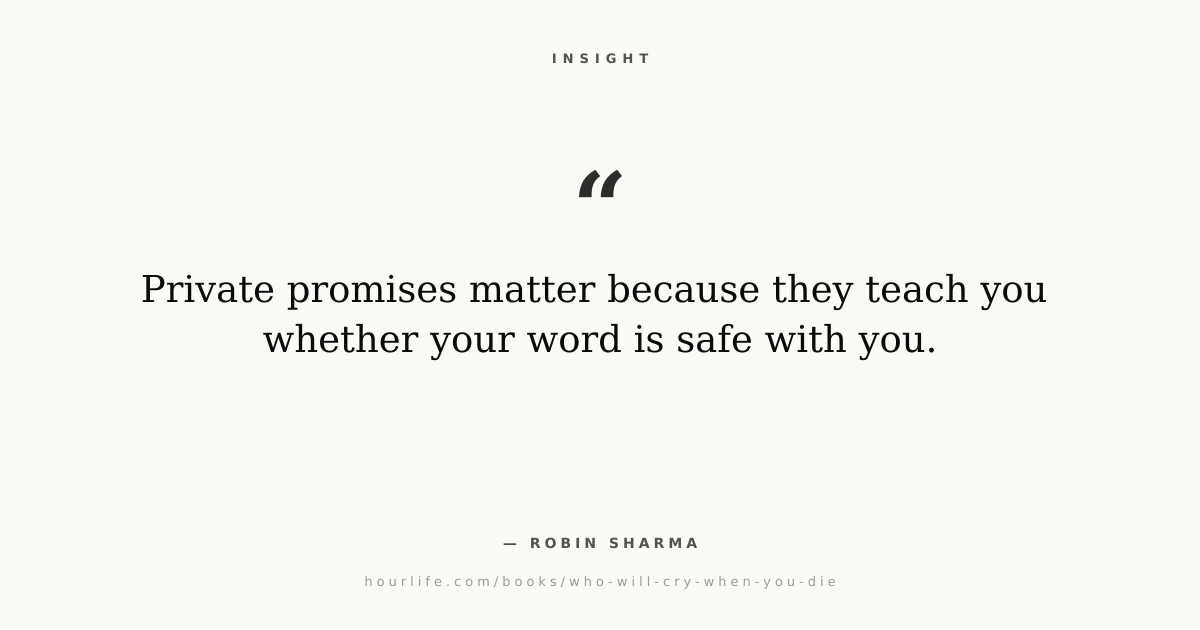
"Private promises matter because they teach you whether your word is safe with you."
Practice a visible life.
Make one repair
Send the apology, clarification, or honest message you keep delaying.
Protect a presence block
Give someone ten minutes without multitasking or checking your phone.
Write a legacy line
Finish this sentence: today I want to be remembered in this room as someone who...
Do one quiet kindness
Help someone without making the act into a performance.
Keep a private promise
Pick one small commitment and complete it before the day ends.
Call before convenience wins
Contact the person you assume will understand another delay.
Remove one needless hurry
Slow one routine moment enough to notice who is affected by you.
Name the real priority
Choose the person or value that should get your best energy this week.
End with gratitude
Write three specific things you were given today and one way to honor them.
Build your mini action book.
Pick setup actions and daily habits from Who Will Cry When You Die?, choose a start date, and download a printable checklist with real calendar pages.
Frequently asked
What is Who Will Cry When You Die? about?
Short reflections on living with attention, kindness, courage, and a sense of legacy.
What are the key takeaways from Who Will Cry When You Die??
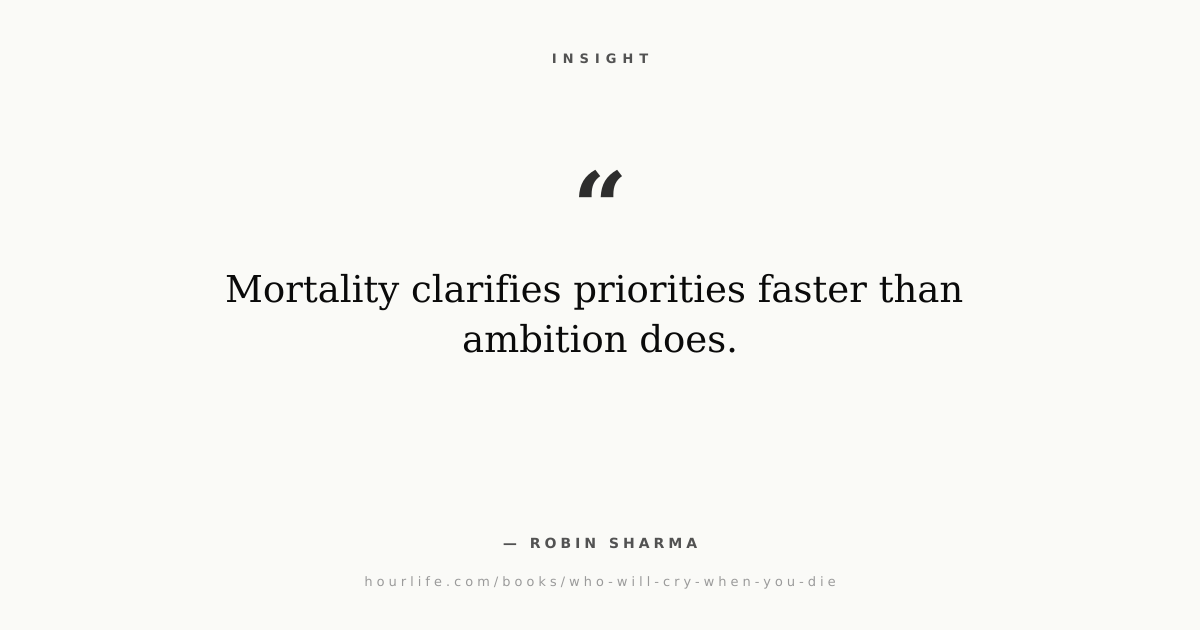
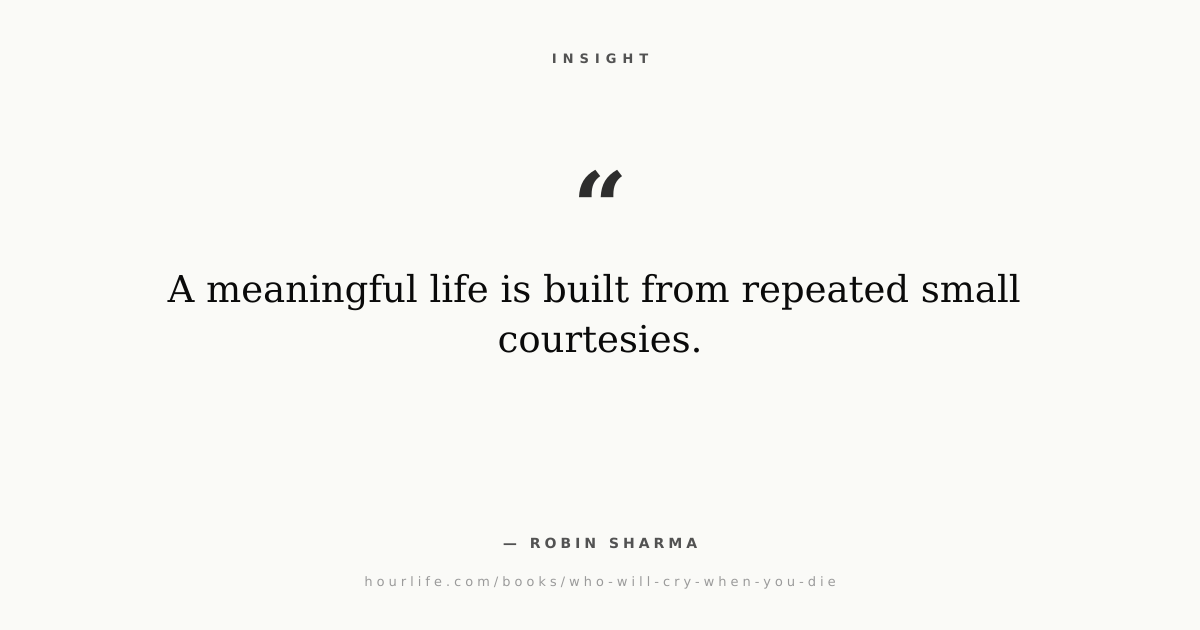
Readers on HourLife most often highlight ideas such as: “Mortality clarifies priorities faster than ambition does.” “A meaningful life is built from repeated small courtesies.” “Private promises matter because they teach you whether your word is safe with you.”
Who should read Who Will Cry When You Die??
It's a strong pick for readers exploring Spiritual Growth and Stop Wasting Your Life. HourLife distills its core idea into community-voted insights and one practical action worth trying.
What's one thing I can do after reading Who Will Cry When You Die??
Make one repair — Send the apology, clarification, or honest message you keep delaying.
How long does it take to read the Who Will Cry When You Die? summary?
About five minutes. The HourLife summary distills Who Will Cry When You Die? into its core idea, 7 community insights, and 9 practical actions you can apply right away.
Downloads & shareables
Print it, pin it, post it. Ways to take Who Will Cry When You Die? off the screen and into the world.
-
Read the text summary
The core idea, key takeaways, and how to apply Who Will Cry When You Die?, as one clean, readable page.
Read summary -
Action checklist
Every action from this page as a printable to-do list, with a 7-day tracker.
Download PDF -
Book summary card
A shareable card with the book and its top-voted insight, for saving or posting.
Resource library
The summary card and every quote card in six sizes: Instagram feed, Story, Pinterest, YouTube thumbnail, phone wallpaper, and link preview.
Turn this book into a daily practice.
Save the insights that land, build the habits that stick, and keep what you learn from Who Will Cry When You Die? working long after you close the page — inside HourLife.