A snap judgment is not automatically shallow. Sometimes it is compressed expertise noticing the few cues that matter.
Fast cognition becomes valuable when it has been trained by repeated feedback, not merely energized by confidence.
5 memorable lines from Blink: The Power of Thinking Without Thinking by Malcolm Gladwell, each with the idea behind it.
As an Amazon Associate, HourLife earns from qualifying purchases.
Lines labelled “HourLife takeaway” are our wording of the book’s ideas and may paraphrase it. Only lines in quotation marks are the author’s own words, with where they appear. Check the book for exact wording before you quote it. Spot an error?
A snap judgment is not automatically shallow. Sometimes it is compressed expertise noticing the few cues that matter.
Fast cognition becomes valuable when it has been trained by repeated feedback, not merely energized by confidence.
The danger of intuition is that bias often arrives with the same feeling of obviousness as insight.
Blink is strongest when it treats certainty as evidence to inspect, not proof to obey.
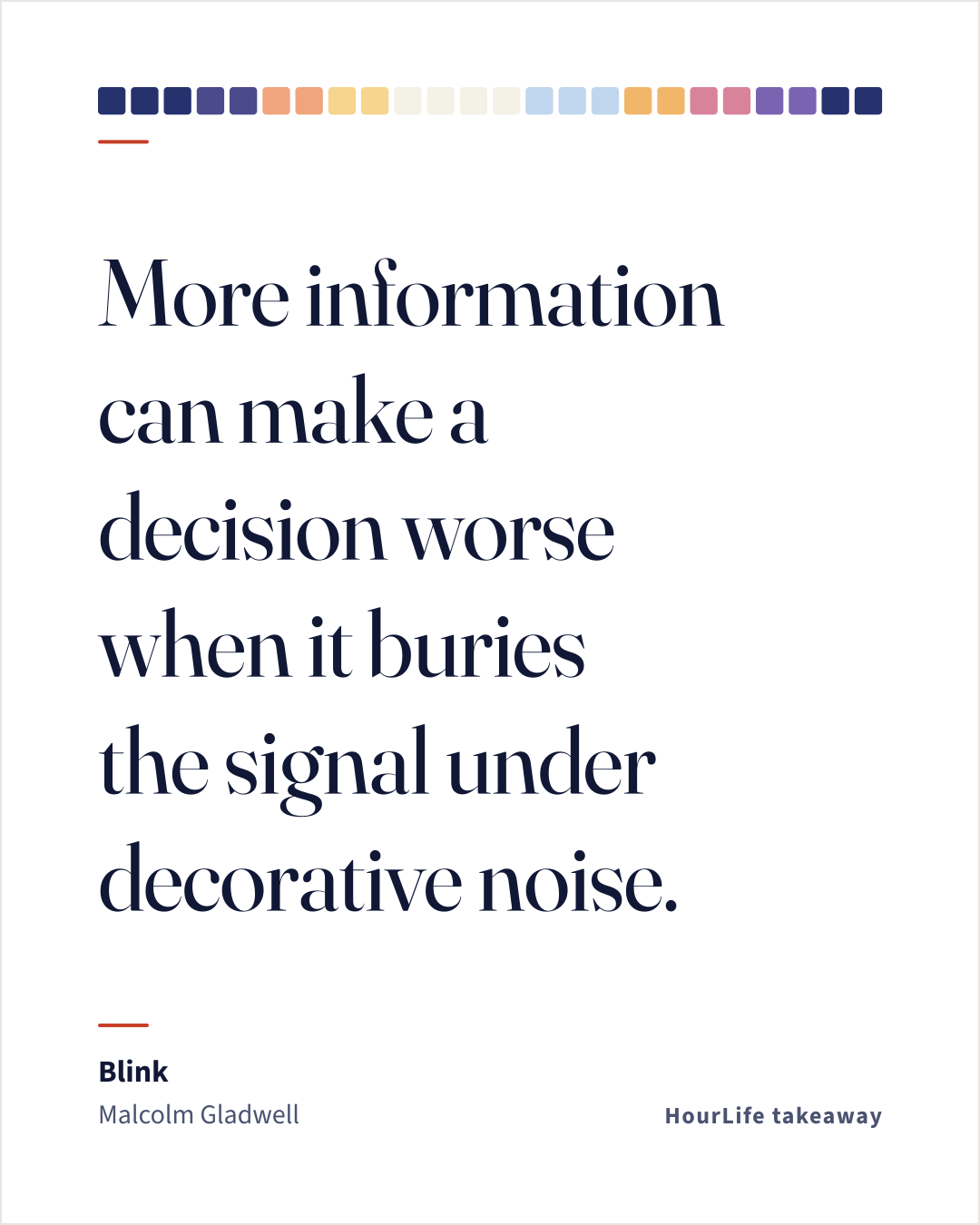
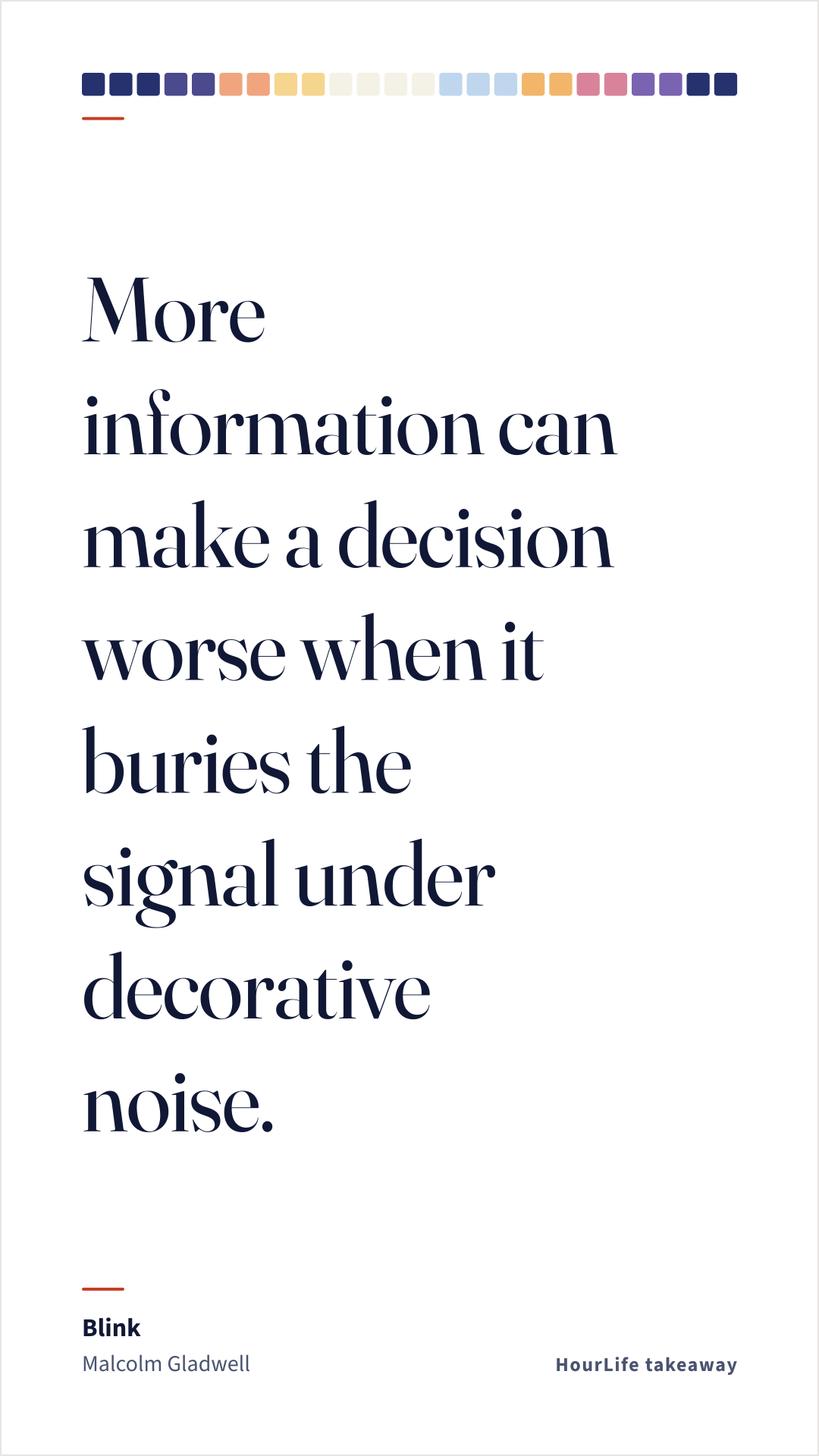
More information can make a decision worse when it buries the signal under decorative noise.
The practical skill is subtraction: remove status, framing, pressure, and irrelevant detail until the real cue is visible.
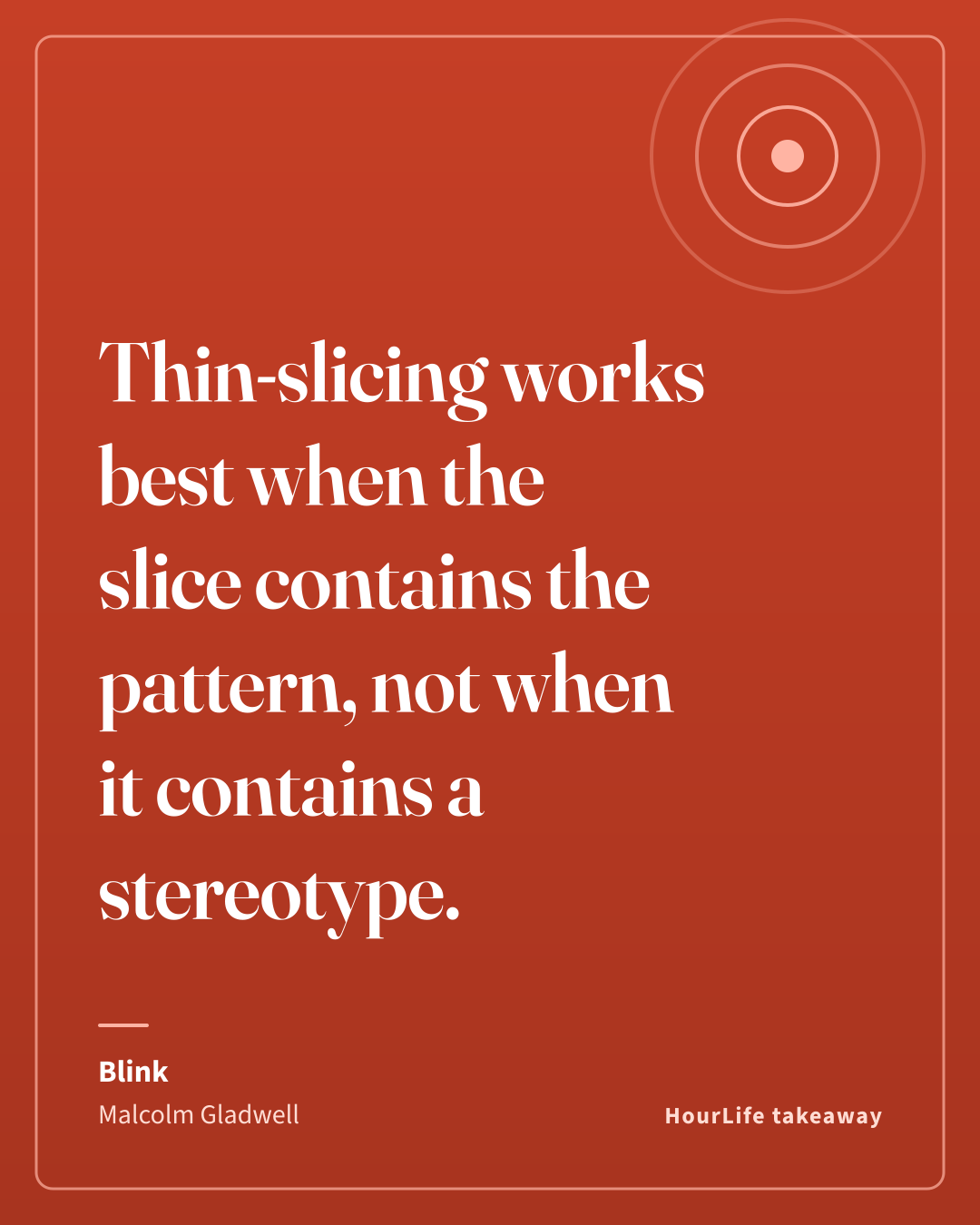
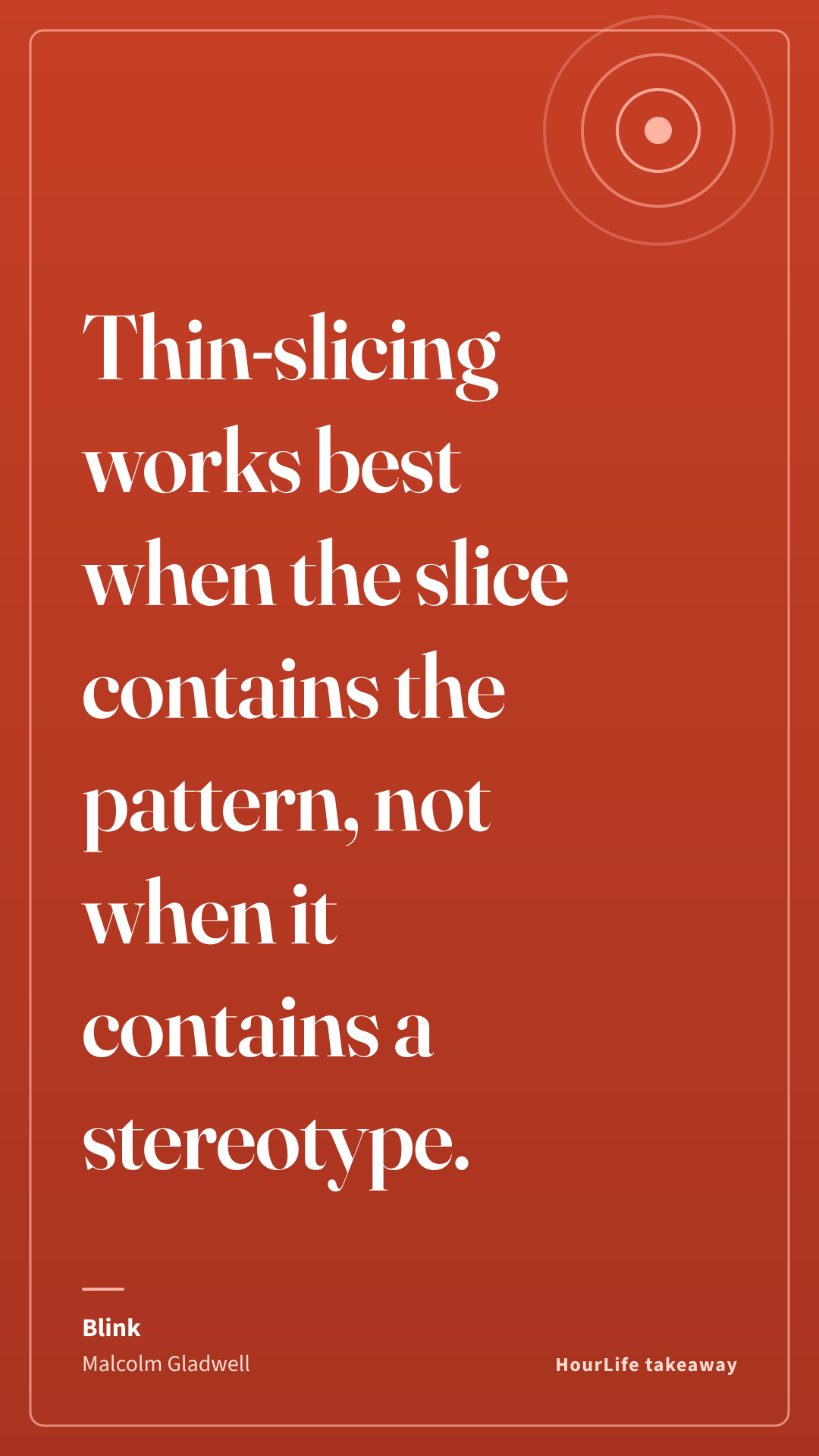
Thin-slicing works best when the slice contains the pattern, not when it contains a stereotype.
Small samples can be enough, but only when the sample is connected to what actually predicts the outcome.
You improve first impressions by designing better conditions before the first impression happens.
Good judgment is partly environmental design: blind auditions, clean criteria, feedback loops, and slower moments at the right time.
HourLife turns these ideas into a daily system — goals, habits, focus, and reflection in one private place.