Keep this author quotes for later
Sign in to save

Clara Hughes

The most-loved lines from Clara Hughes, drawn from 1 book in the library.

Lines labelled “HourLife takeaway” are our wording of the book’s ideas and may paraphrase it. Only lines in quotation marks are the author’s own words, with where they appear. Check the book for exact wording before you quote it. Spot an error?

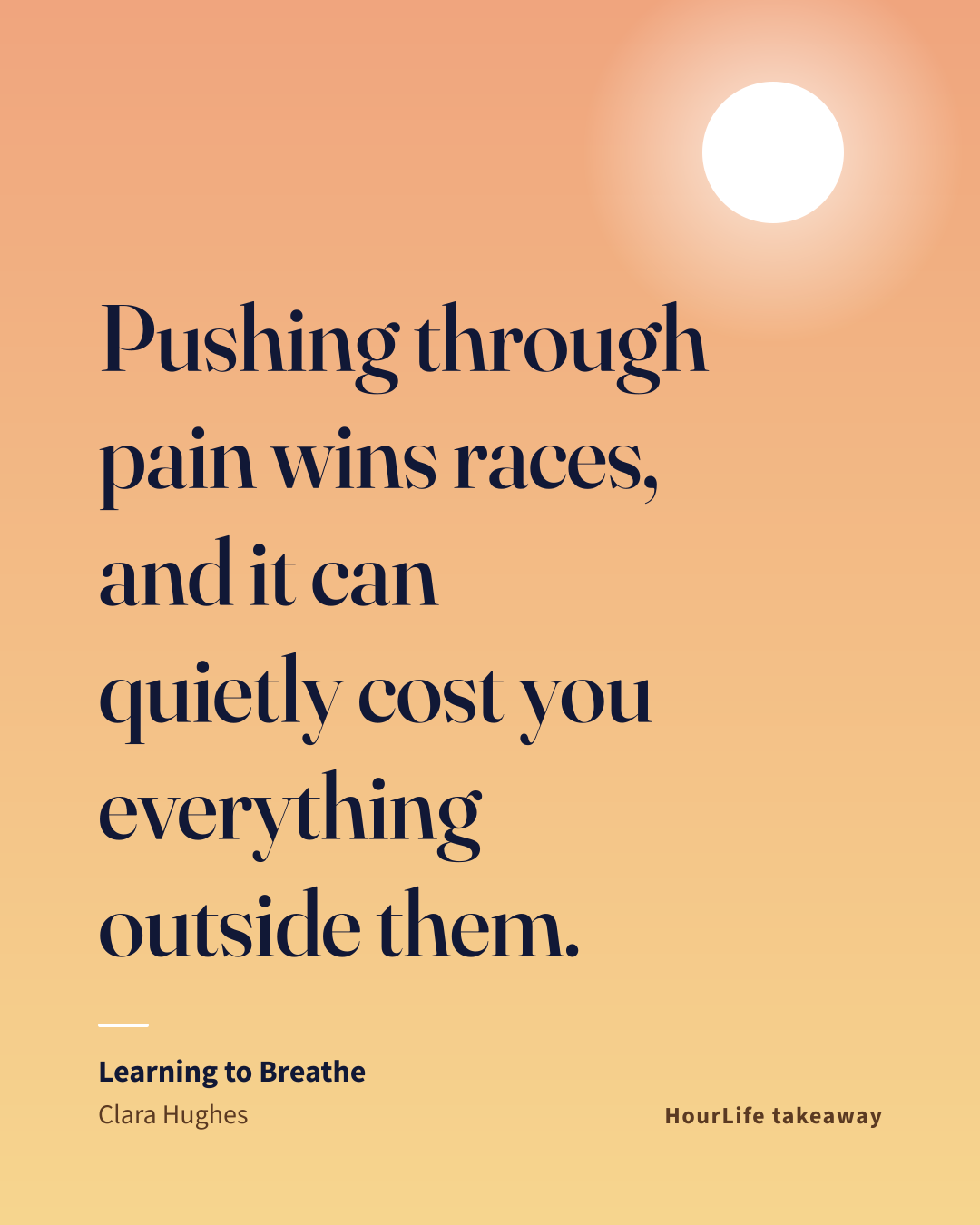
Pushing through pain wins races, and it can quietly cost you everything outside them.

Learning to Breathe Clara Hughes HourLife takeaway

Hughes built two Olympic careers on overriding what her body told her. The memoir asks what that habit did once the racing stopped and there was no medal to make the pain worth it.


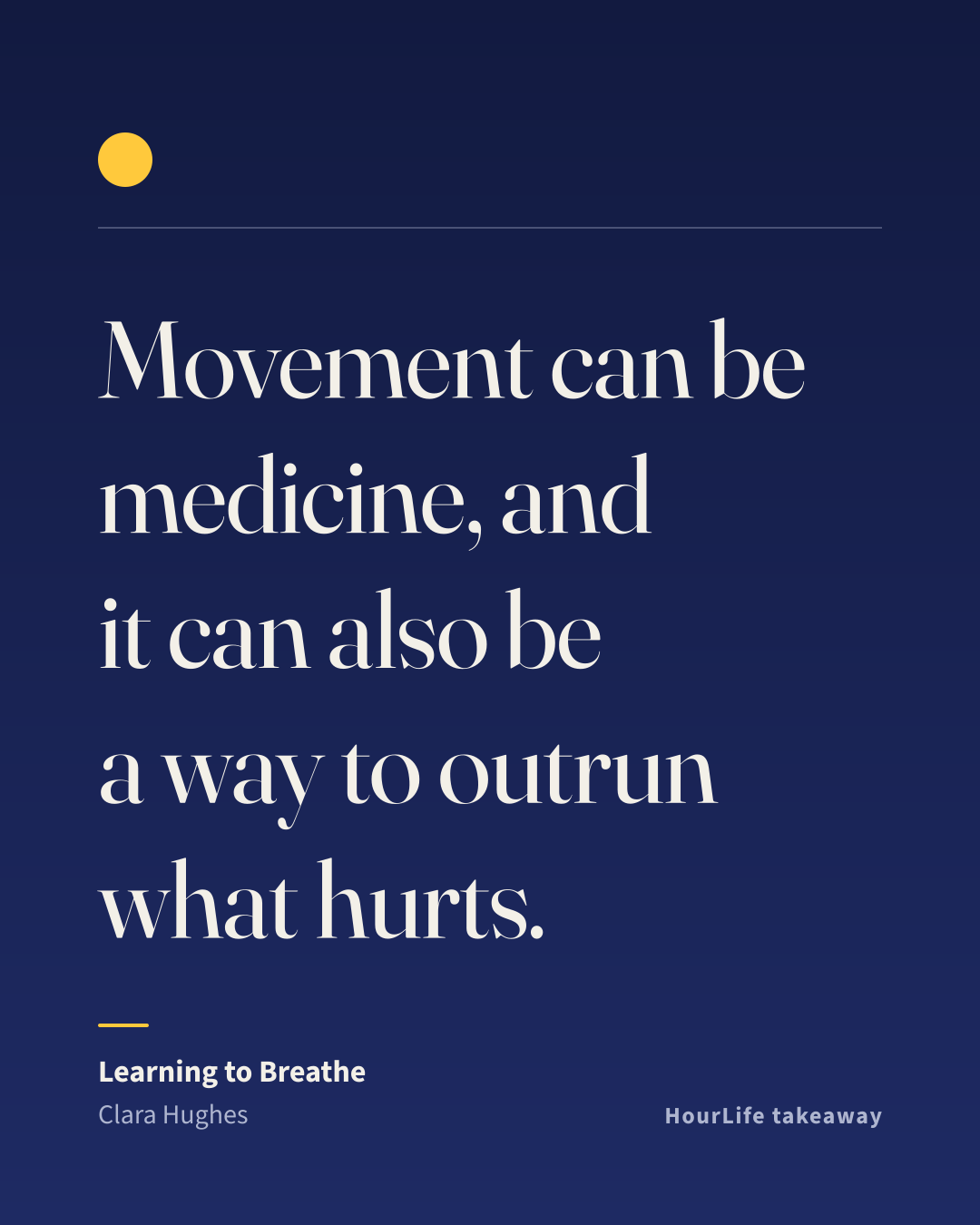
Movement can be medicine, and it can also be a way to outrun what hurts.

Learning to Breathe Clara Hughes HourLife takeaway

After retiring she championed movement as medicine for mental health. Yet the pull toward ever longer hikes and bikepacking trips kept wearing her down. The same habit can help you heal or help you hide, and only you can tell which it is today.

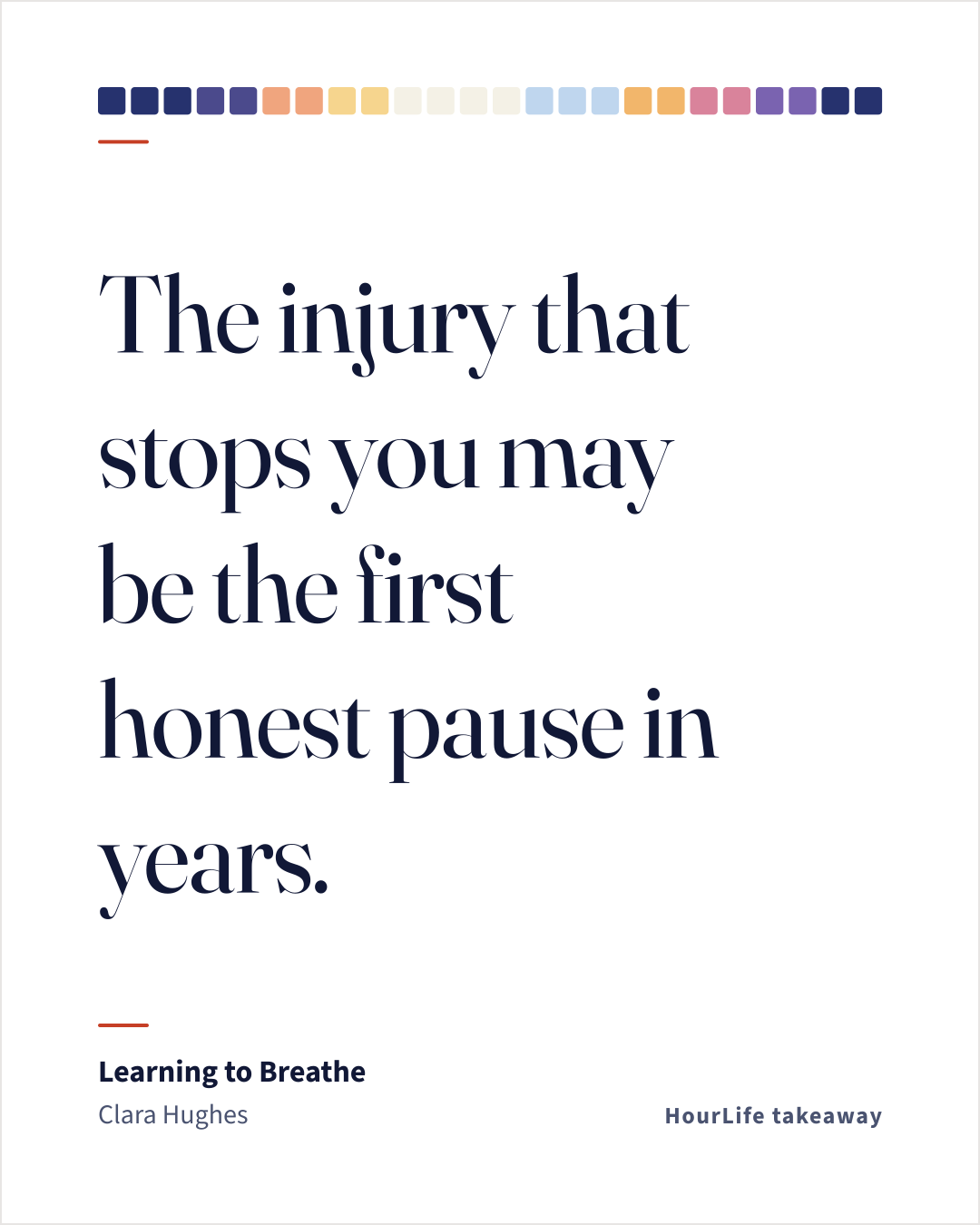
The injury that stops you may be the first honest pause in years.

Learning to Breathe Clara Hughes HourLife takeaway

In 2021 a serious knee injury took away the thing she used to cope. With nowhere to run, the feelings she had kept at a distance caught up with her. A forced stop is painful, and it is also information.

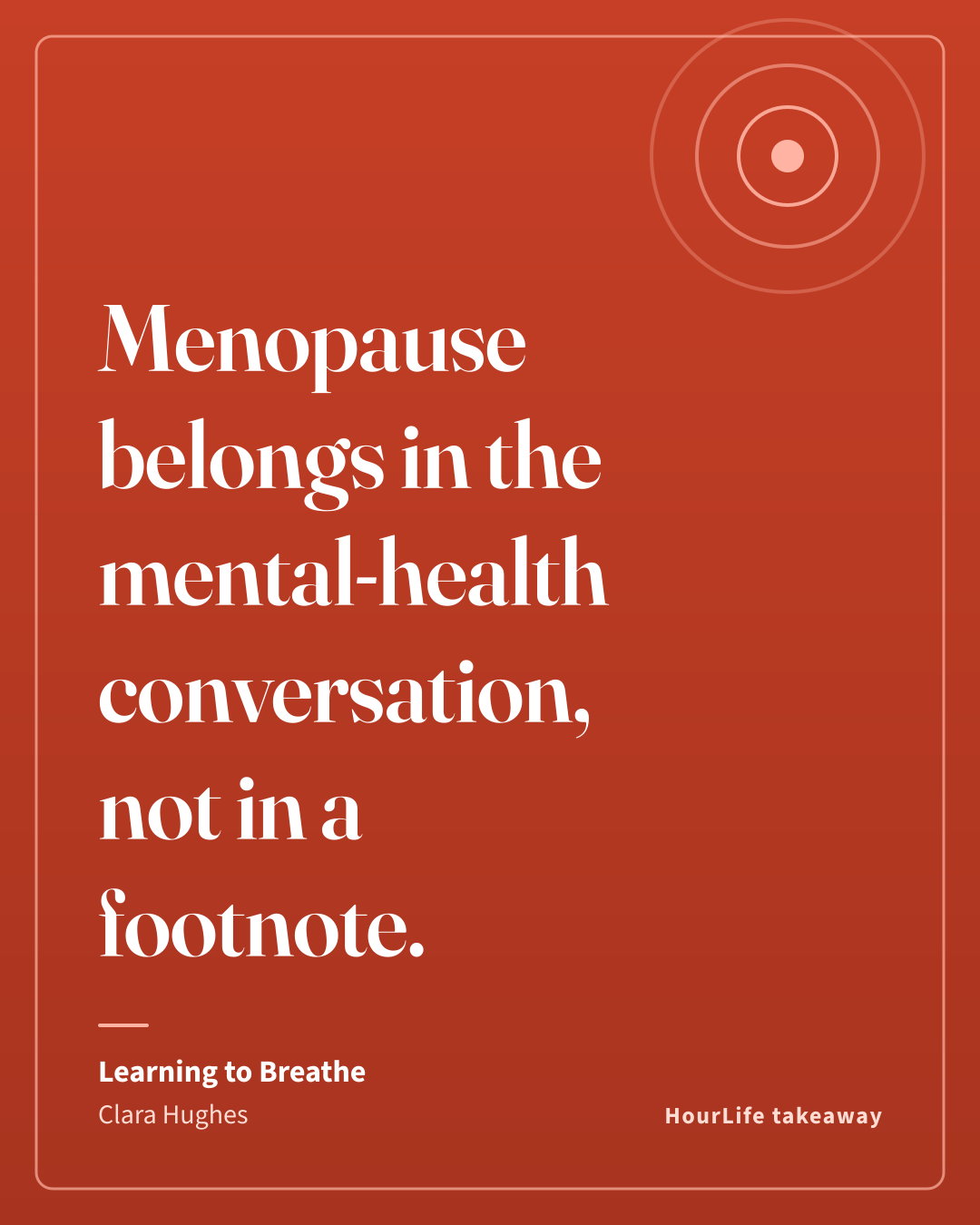
Menopause belongs in the mental-health conversation, not in a footnote.

Learning to Breathe Clara Hughes HourLife takeaway

Hot flashes and mood swings arrived at the same time as her depression came back. She found little support for what menopause was doing to her. If your mood shifts in midlife, it is worth asking a clinician about hormones as well as mood.

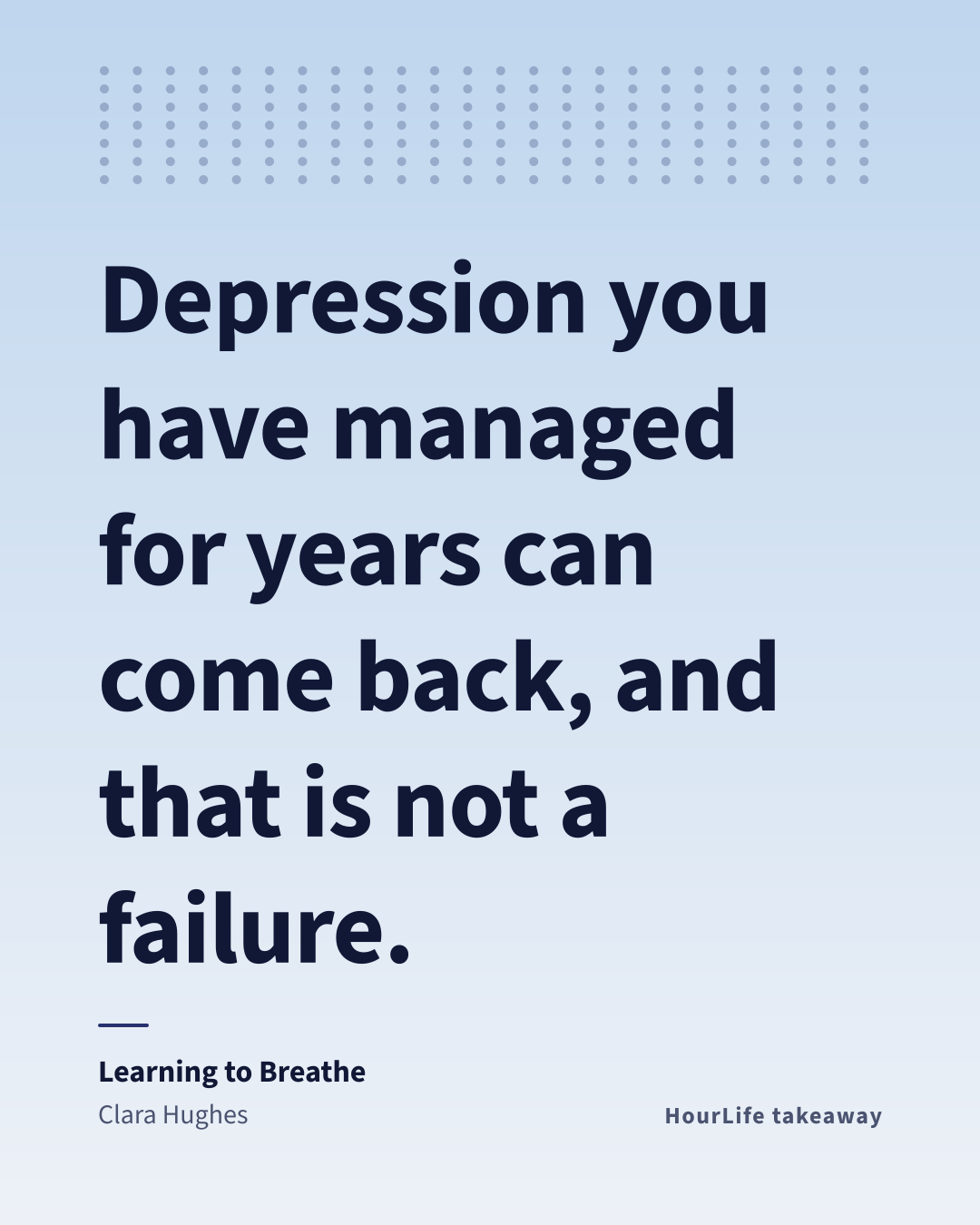
Depression you have managed for years can come back, and that is not a failure.

Learning to Breathe Clara Hughes HourLife takeaway

Hughes had spoken publicly about depression for a long time. Its return showed that recovery is not a finish line you cross once. Noticing it early and asking for help again is the skill.

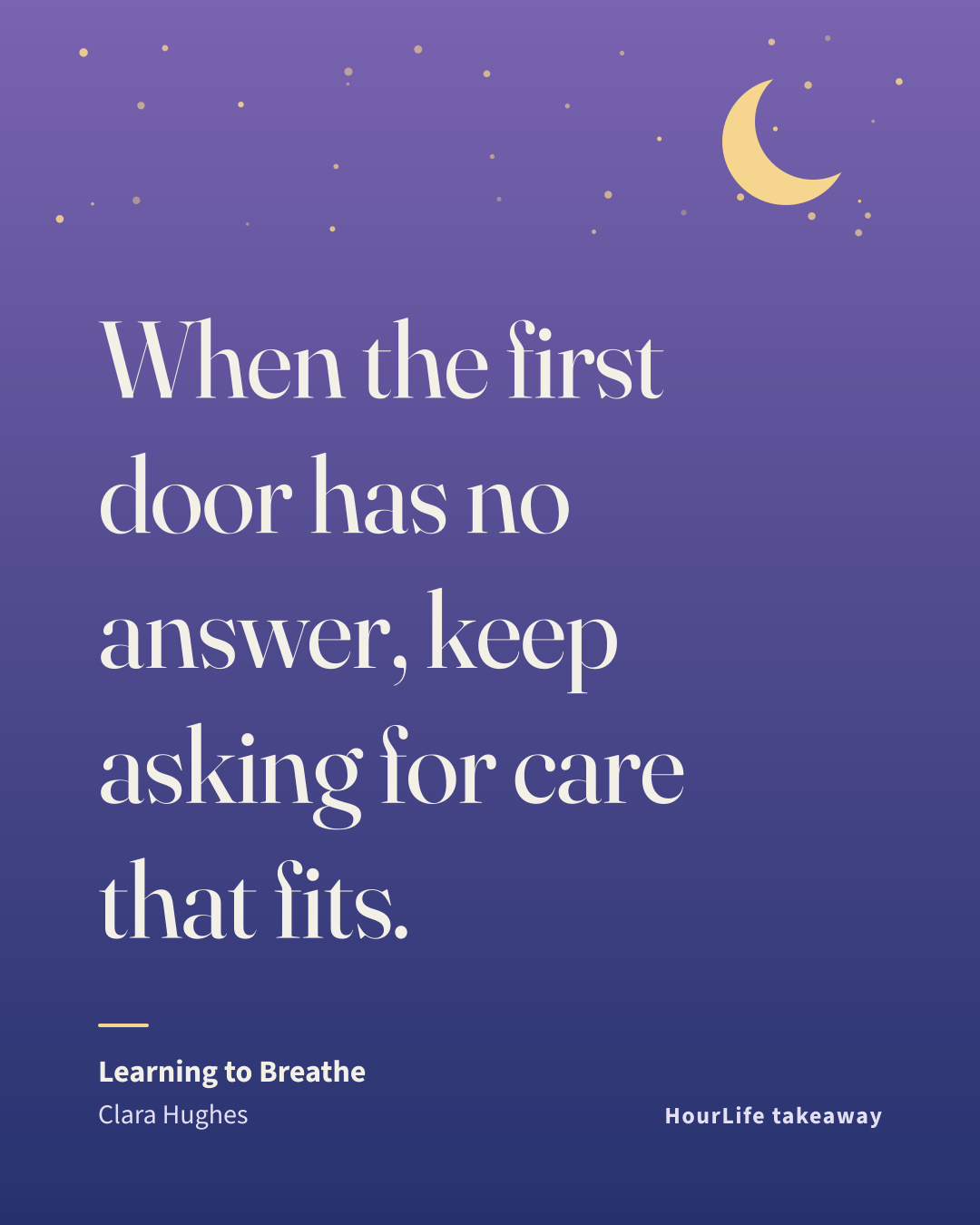
When the first door has no answer, keep asking for care that fits.

Learning to Breathe Clara Hughes HourLife takeaway

The memoir describes conventional care that had little to offer her for menopause. She kept looking rather than settling. Advocating for yourself, with notes, questions and a second opinion, is part of getting well.

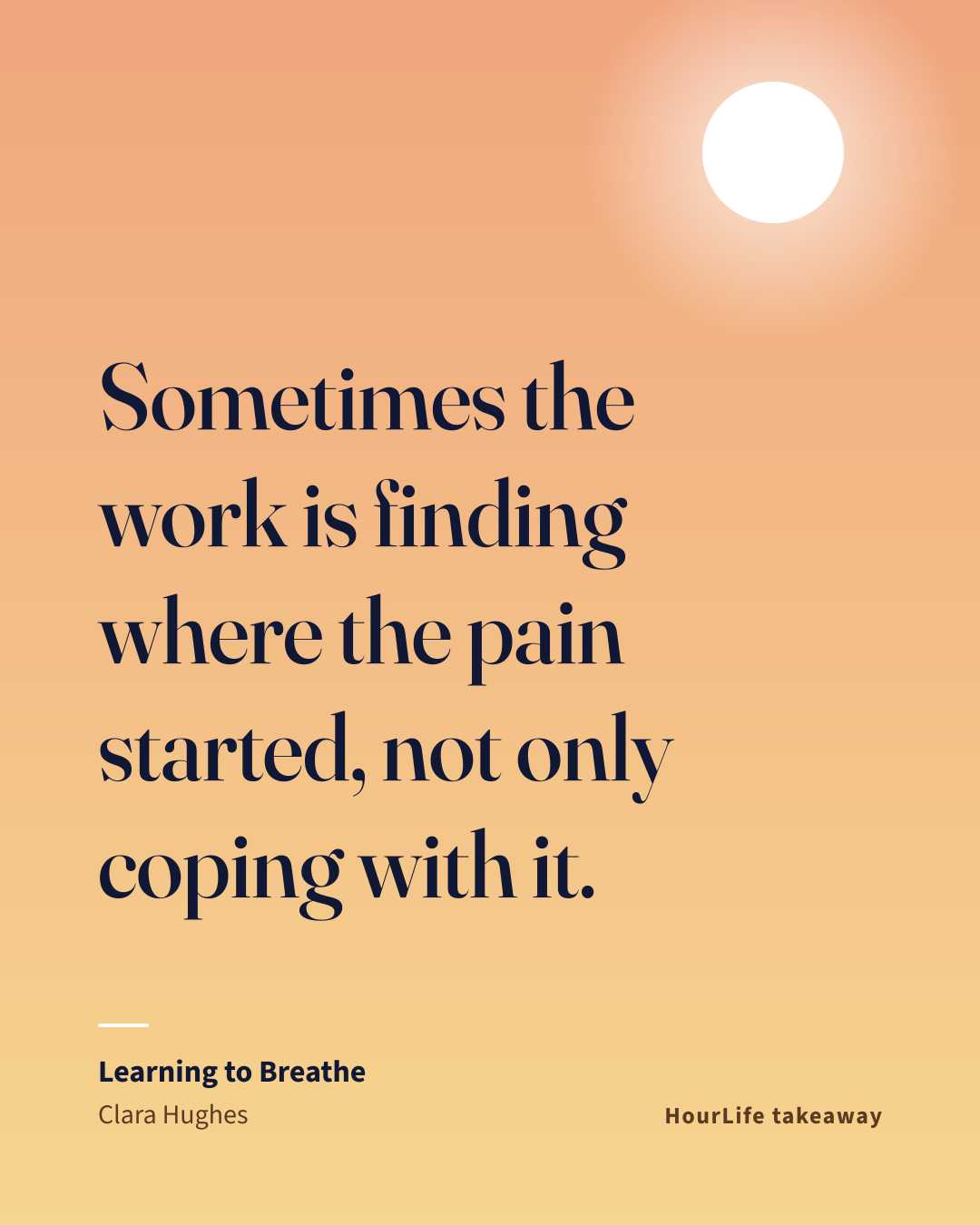
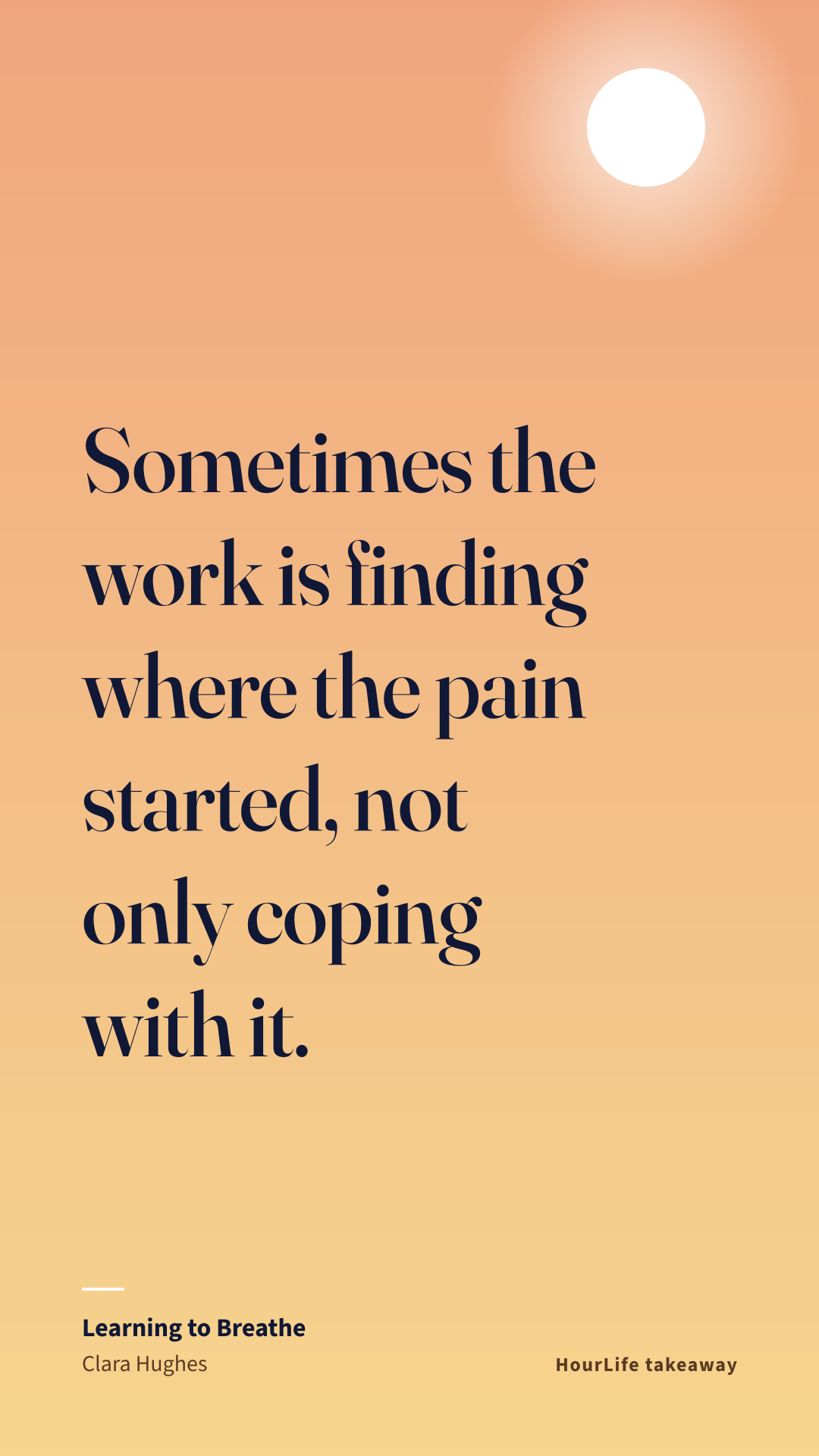
Sometimes the work is finding where the pain started, not only coping with it.

Learning to Breathe Clara Hughes HourLife takeaway

The long stillness after her injury brought back childhood trauma she had spent decades outrunning in sport. Coping skills get you through the day. Looking at the roots is what changes the pattern.

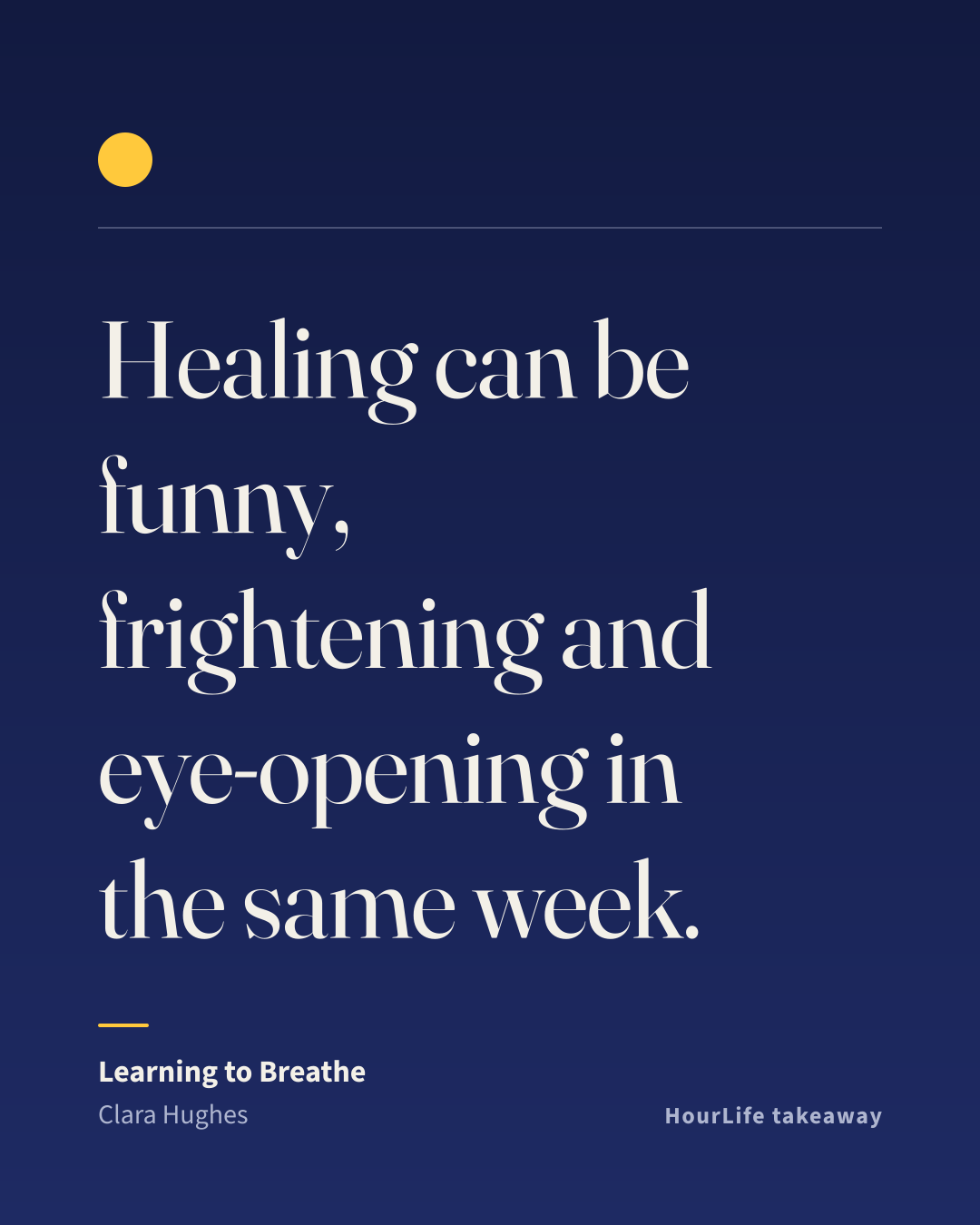
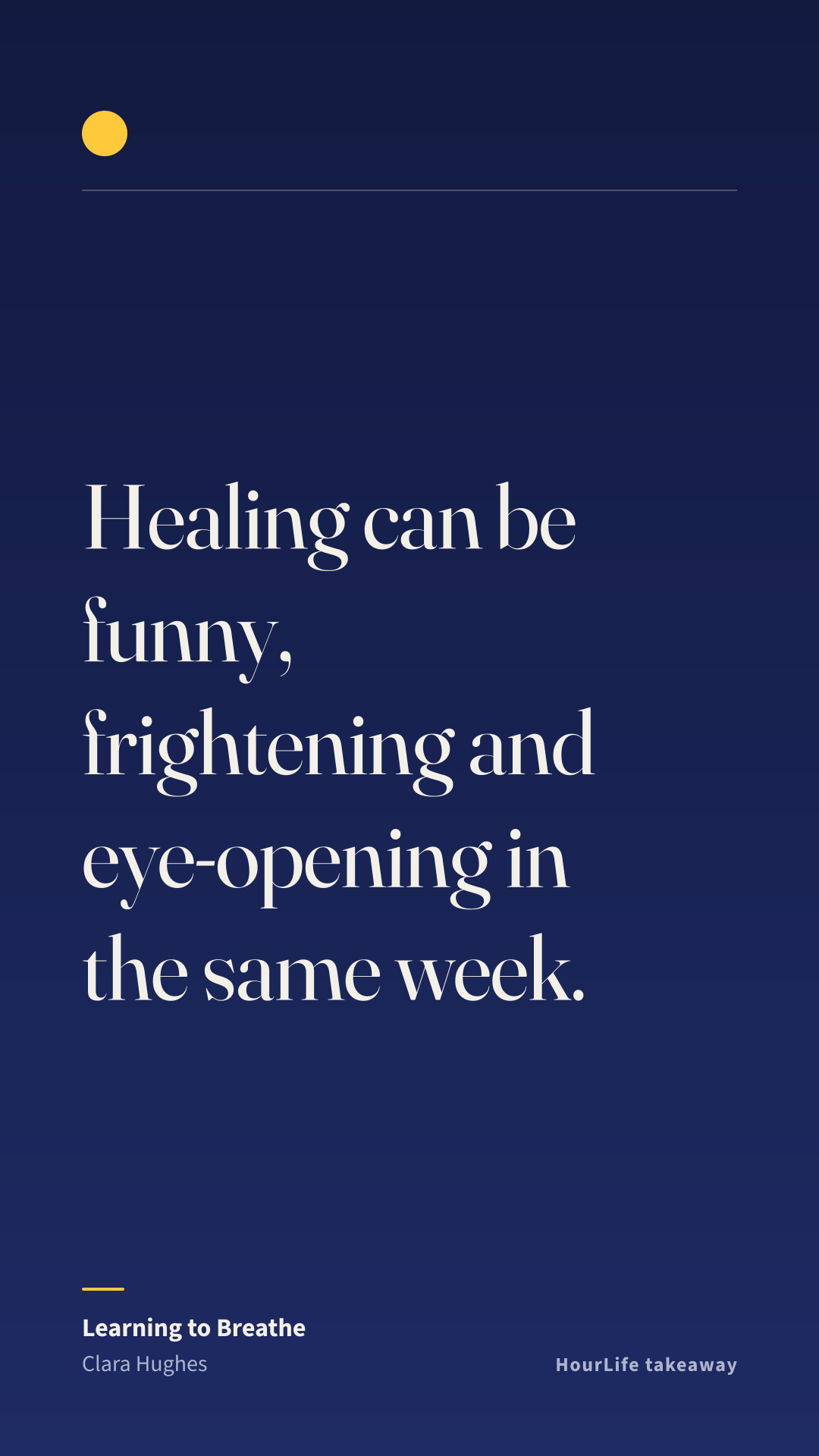
Healing can be funny, frightening and eye-opening in the same week.

Learning to Breathe Clara Hughes HourLife takeaway

She describes her guided psychedelic-assisted sessions with humour and alarm by turns, alongside somatic therapy and breathwork. This is her story, not a recommendation: such therapy is still experimental and tightly regulated in most places, Canada included. Talk to a clinician before considering any treatment.

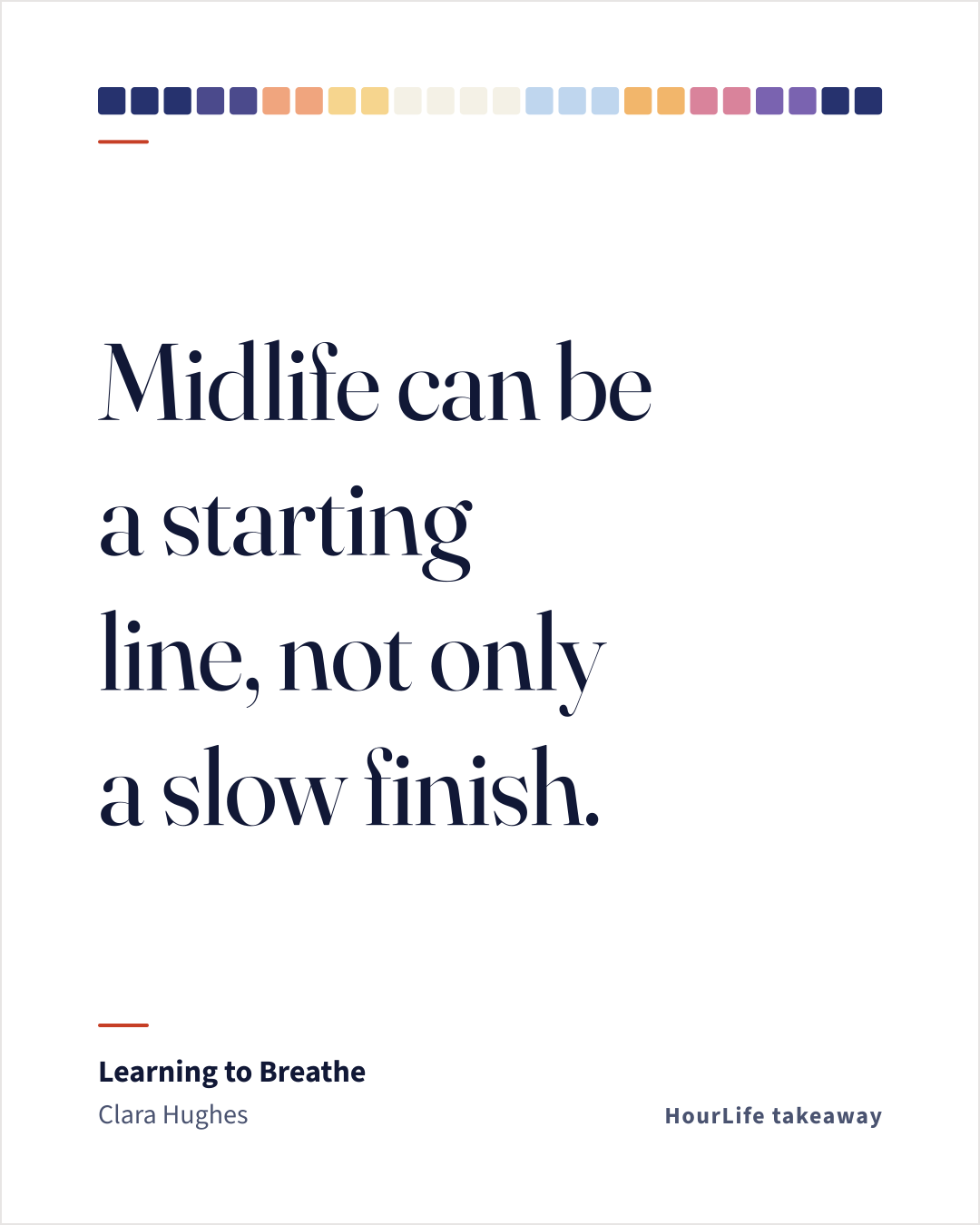
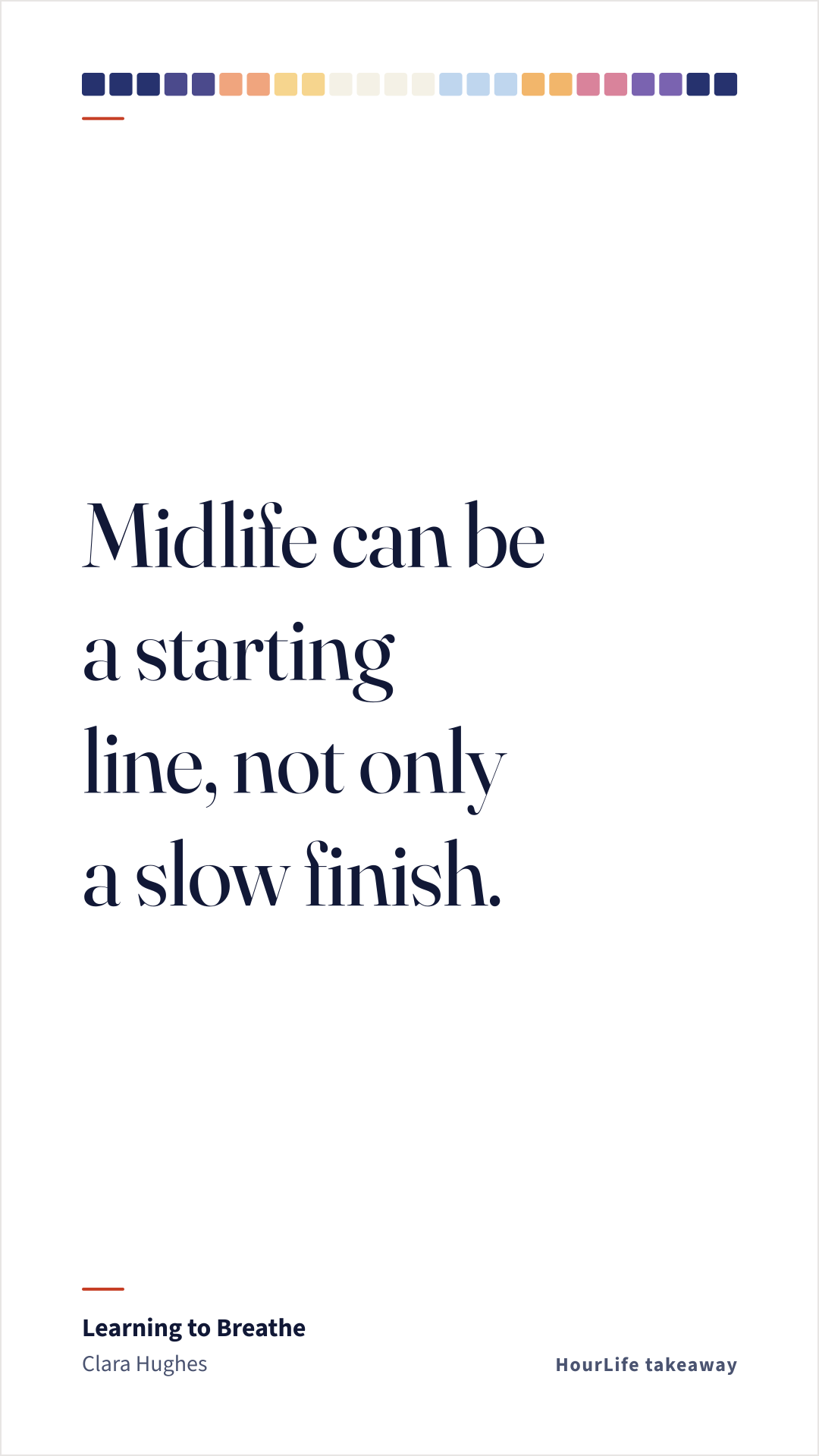
Midlife can be a starting line, not only a slow finish.

Learning to Breathe Clara Hughes HourLife takeaway

The book ends with mended relationships, new ones, and old fears faced. Hughes changed course in midlife. You can begin again at any age, with your body as a partner rather than a tool.

Keep this going in the app.

HourLife turns these ideas into a daily system — goals, habits, focus, and reflection in one private place.