Keep this author quotes for later
Sign in to save

Gad Saad

The most-loved lines from Gad Saad, drawn from 1 book in the library.

Lines labelled “HourLife takeaway” are our wording of the book’s ideas and may paraphrase it. Only lines in quotation marks are the author’s own words, with where they appear. Check the book for exact wording before you quote it. Spot an error?

Saad is not against empathy; his case is that it fails the way any good trait fails, by running too hot or aiming at the wrong target.

Suicidal Empathy Gad Saad HourLife takeaway

He describes empathy as an evolved capacity that serves a social species well within a sensible range. The trouble he names is empathy that has come loose from that range. The word suicidal in the title is a metaphor for kindness that harms the one who offers it.


Suicidal empathy is his name for compassion that ends up damaging the person or the society that shows it.

Suicidal Empathy Gad Saad HourLife takeaway

The test he applies is about outcomes: does the kind act leave the giver, or the group, worse off? A feeling can be sincere and still lead to a choice that backfires. You do not need to share his politics to find that distinction useful in your own life.

The book is a sequel to The Parasitic Mind: there, bad ideas hijack reasoning; here, they hijack feeling.

Suicidal Empathy Gad Saad HourLife takeaway

In the earlier book Saad called certain ideas parasites that disable clear thinking. Here he turns to the emotional side and argues that a strong moral feeling can switch off the questions a person would normally ask. Both books share one aim: to put evidence and reason back in charge.

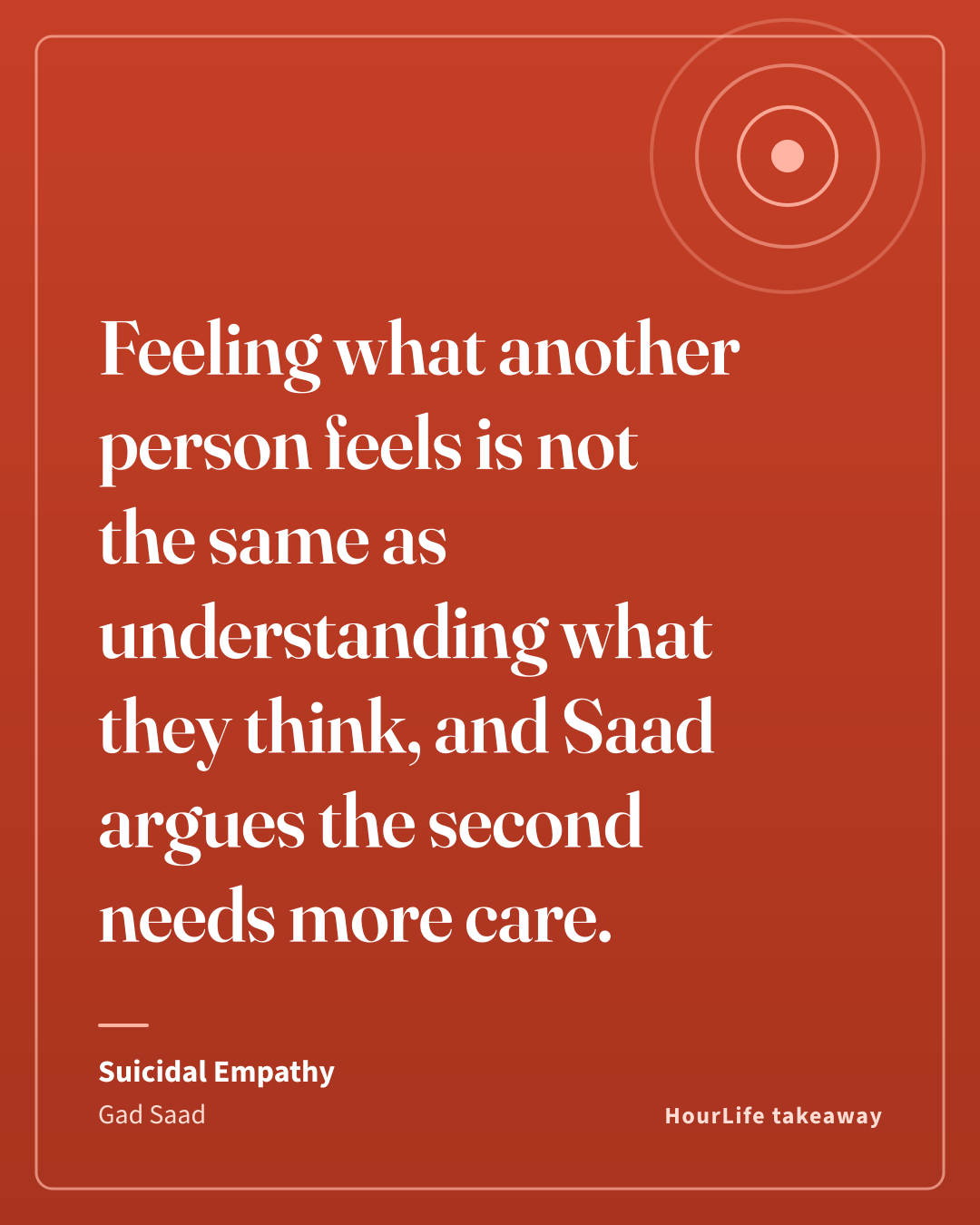
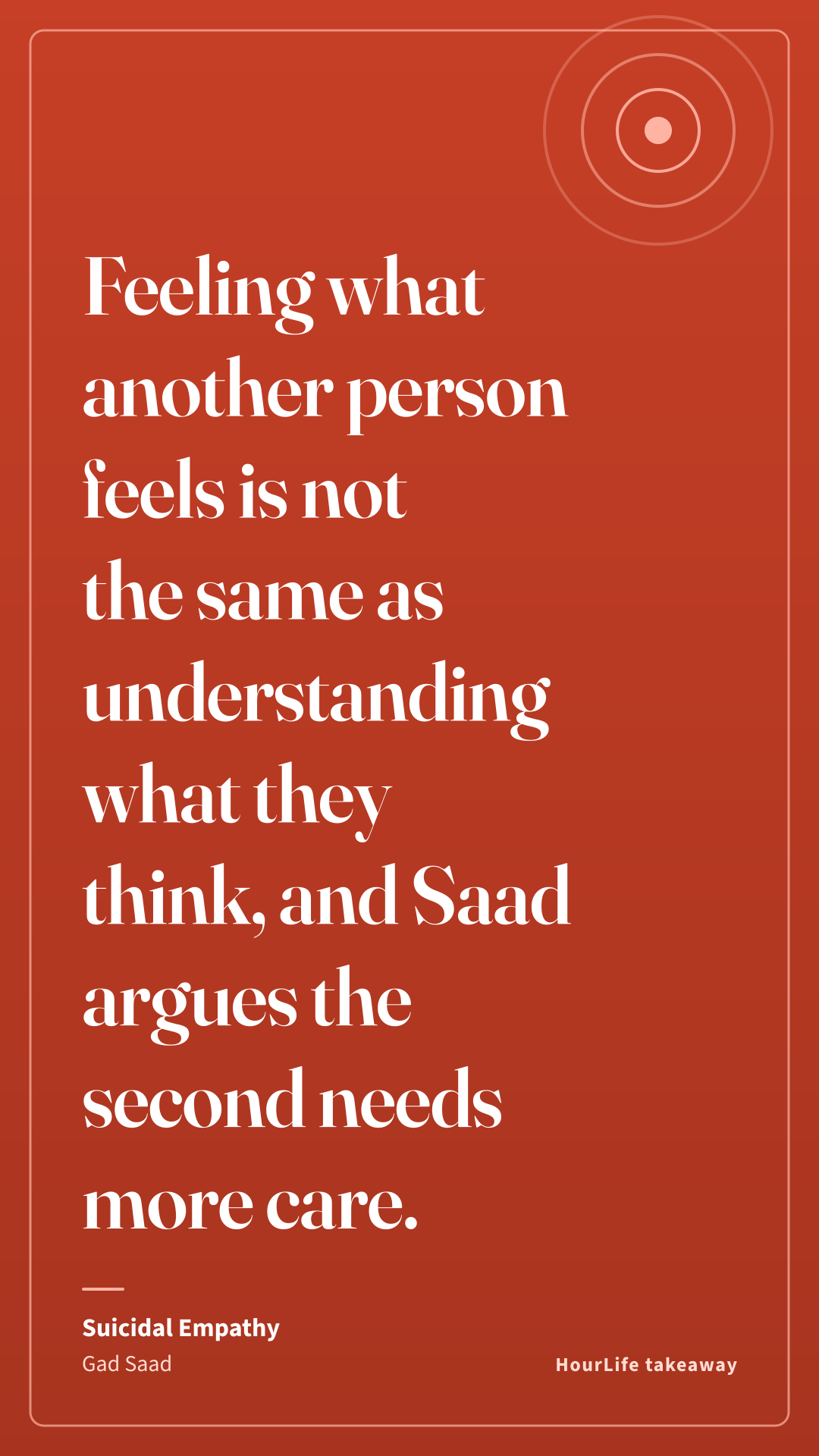
Feeling what another person feels is not the same as understanding what they think, and Saad argues the second needs more care.

Suicidal Empathy Gad Saad HourLife takeaway

He separates the emotional side of empathy from the cognitive side, which psychologists tie to theory of mind: the ability to model what is in someone else's head. His claim is that people often assume others share their own values and fears. He calls the failure to model a different culture's values a missing cultural theory of mind.

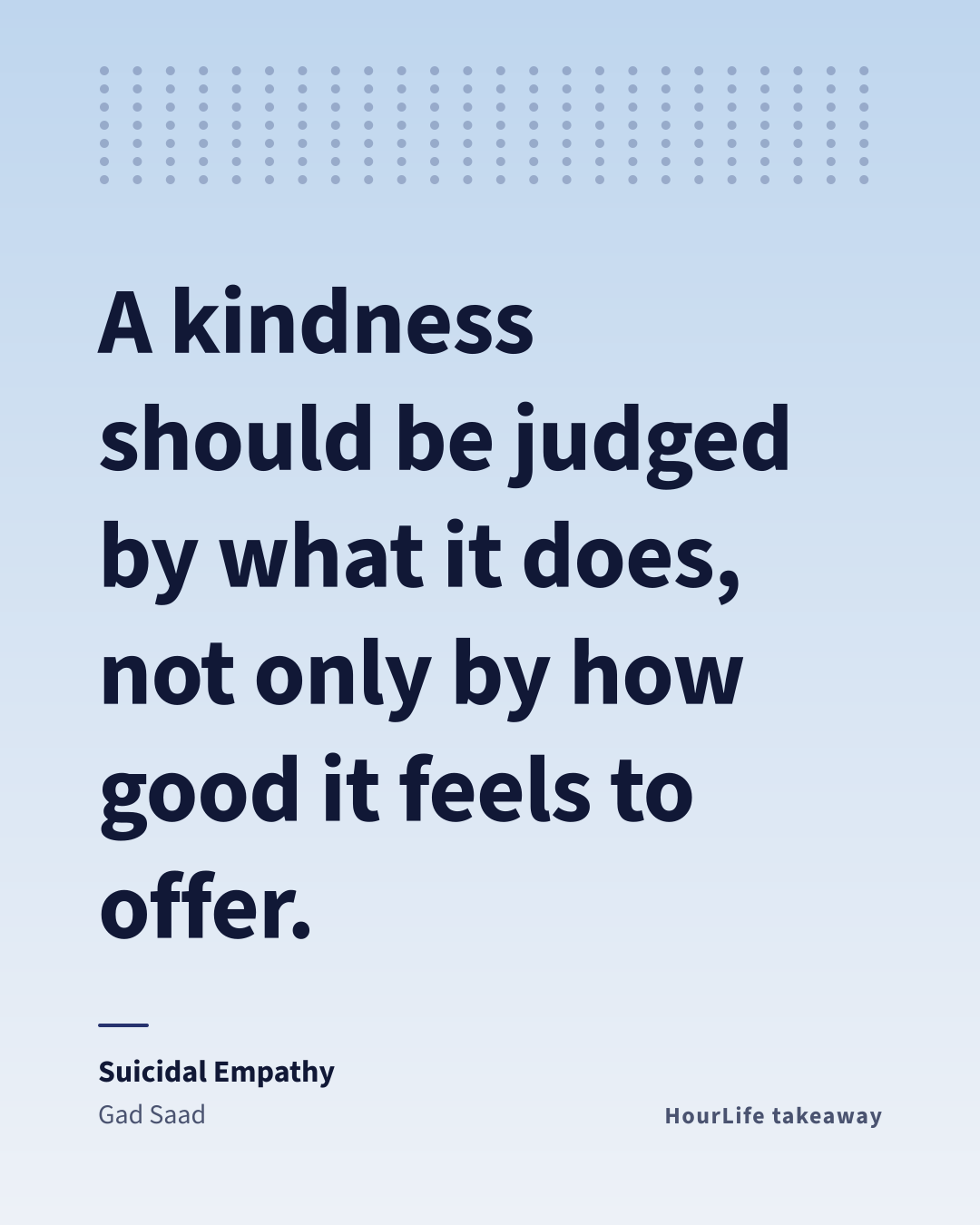
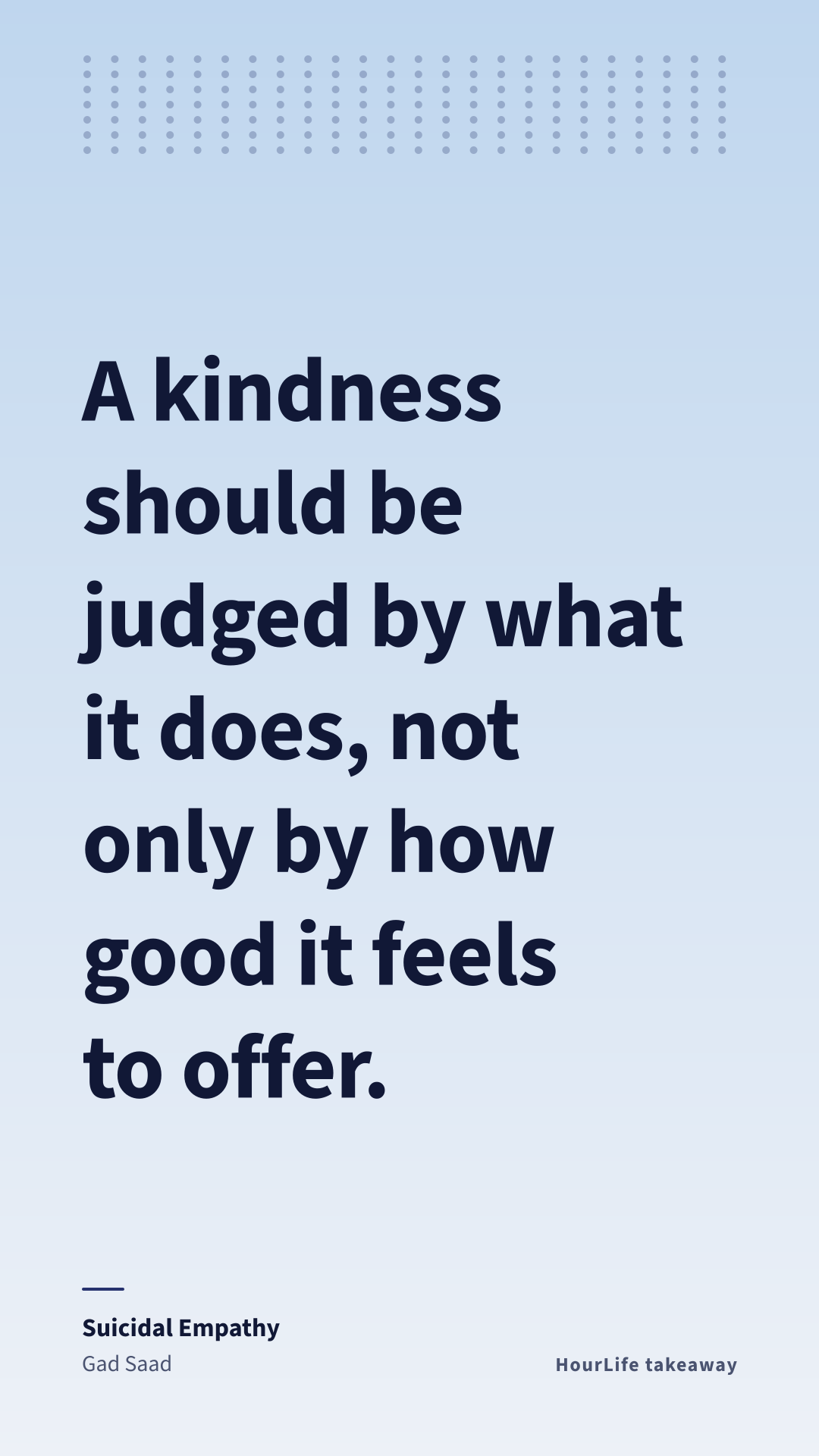
A kindness should be judged by what it does, not only by how good it feels to offer.

Suicidal Empathy Gad Saad HourLife takeaway

Saad returns again and again to the gap between how a choice feels to support and what it does once it is in place. He argues that public policy is often defended by the warmth of its intentions. The same gap shows up in private life, in the loan that is never repaid or the favour that becomes a duty.

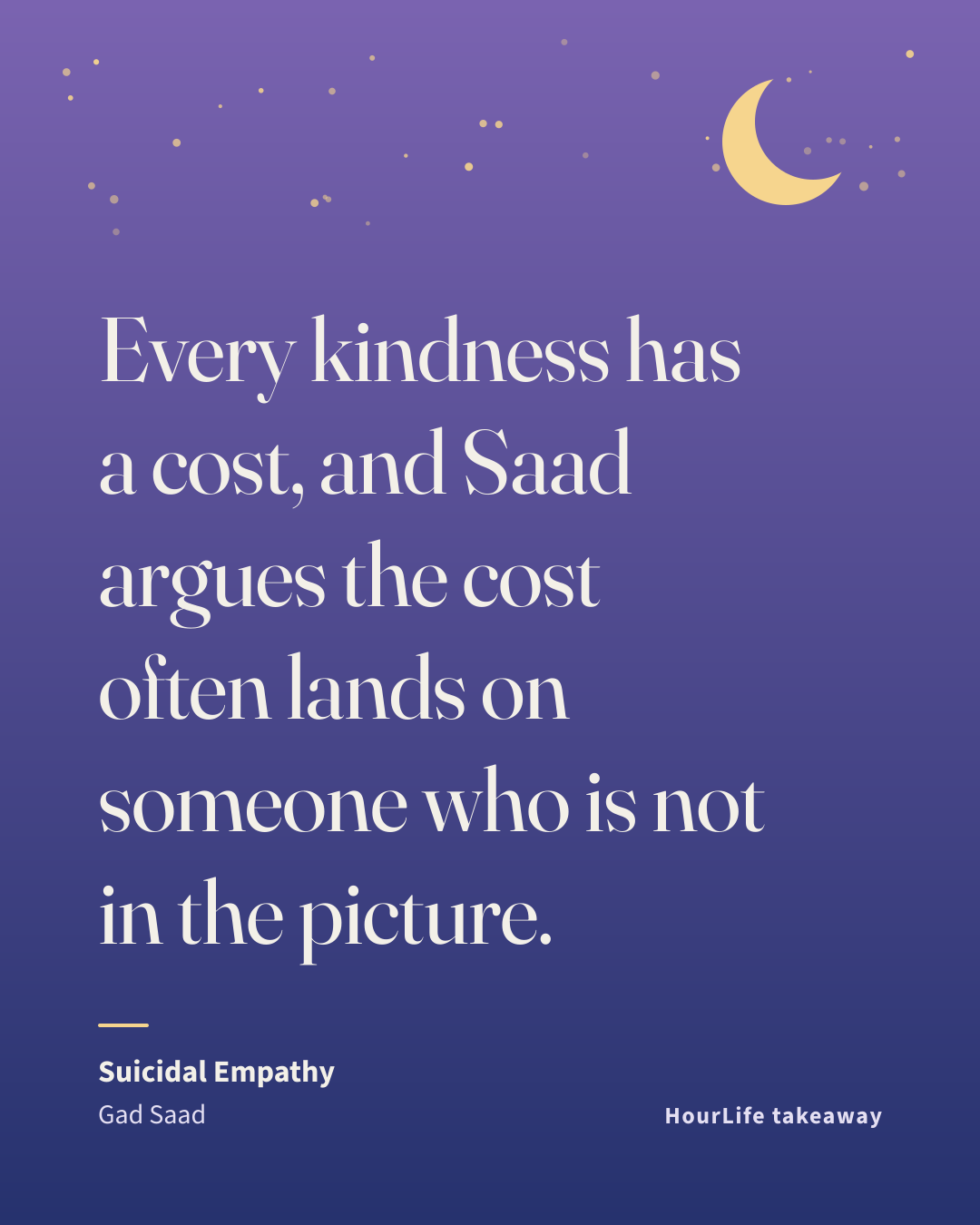
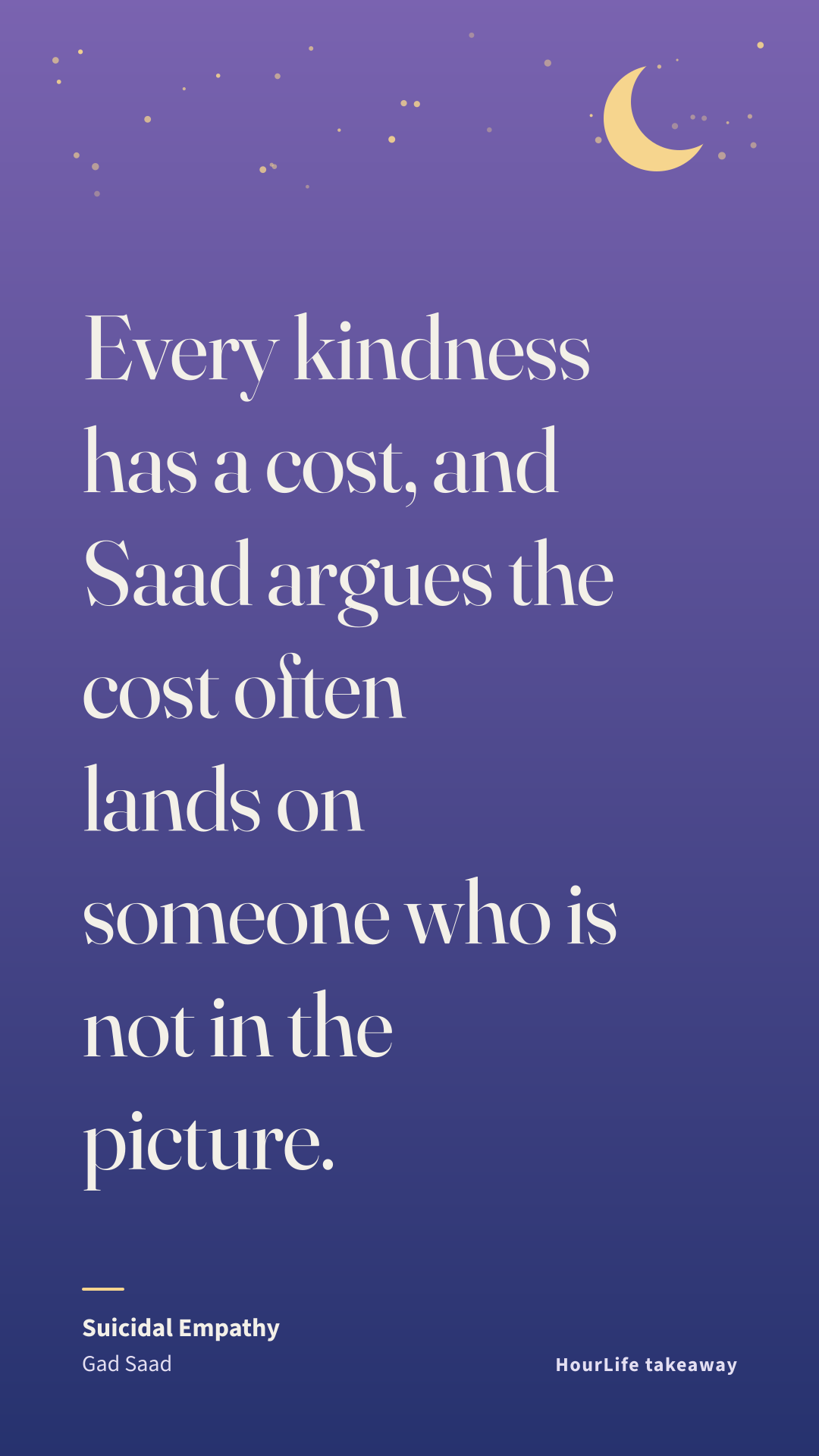
Every kindness has a cost, and Saad argues the cost often lands on someone who is not in the picture.

Suicidal Empathy Gad Saad HourLife takeaway

Many of his examples ask who pays when compassion for one group becomes a rule: neighbours, victims of crime, or the next generation. Critics reply that he picks the cases that suit his conclusion and that the costs he names are contested. Asking who is missing from the frame is still a useful habit for any decision.

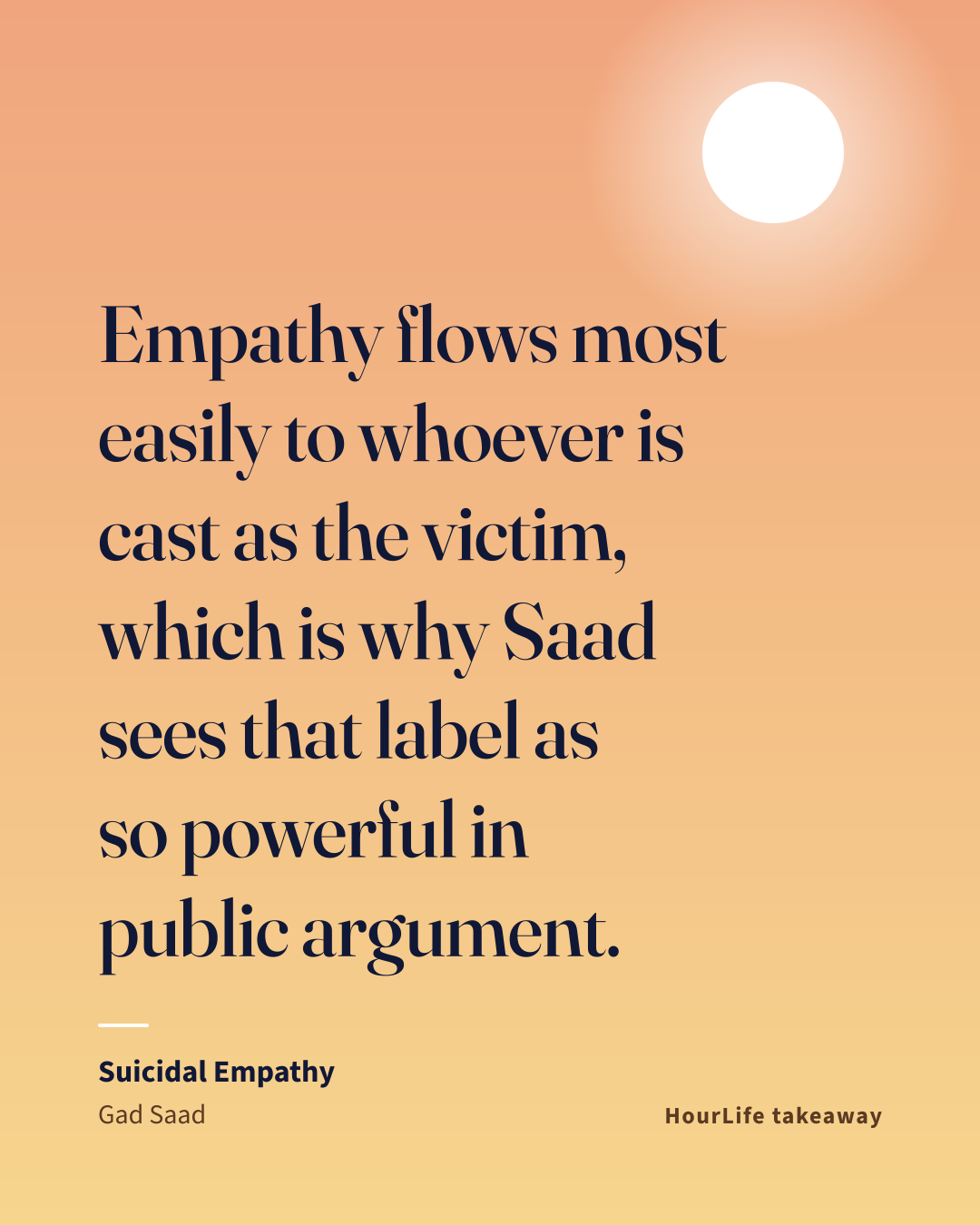
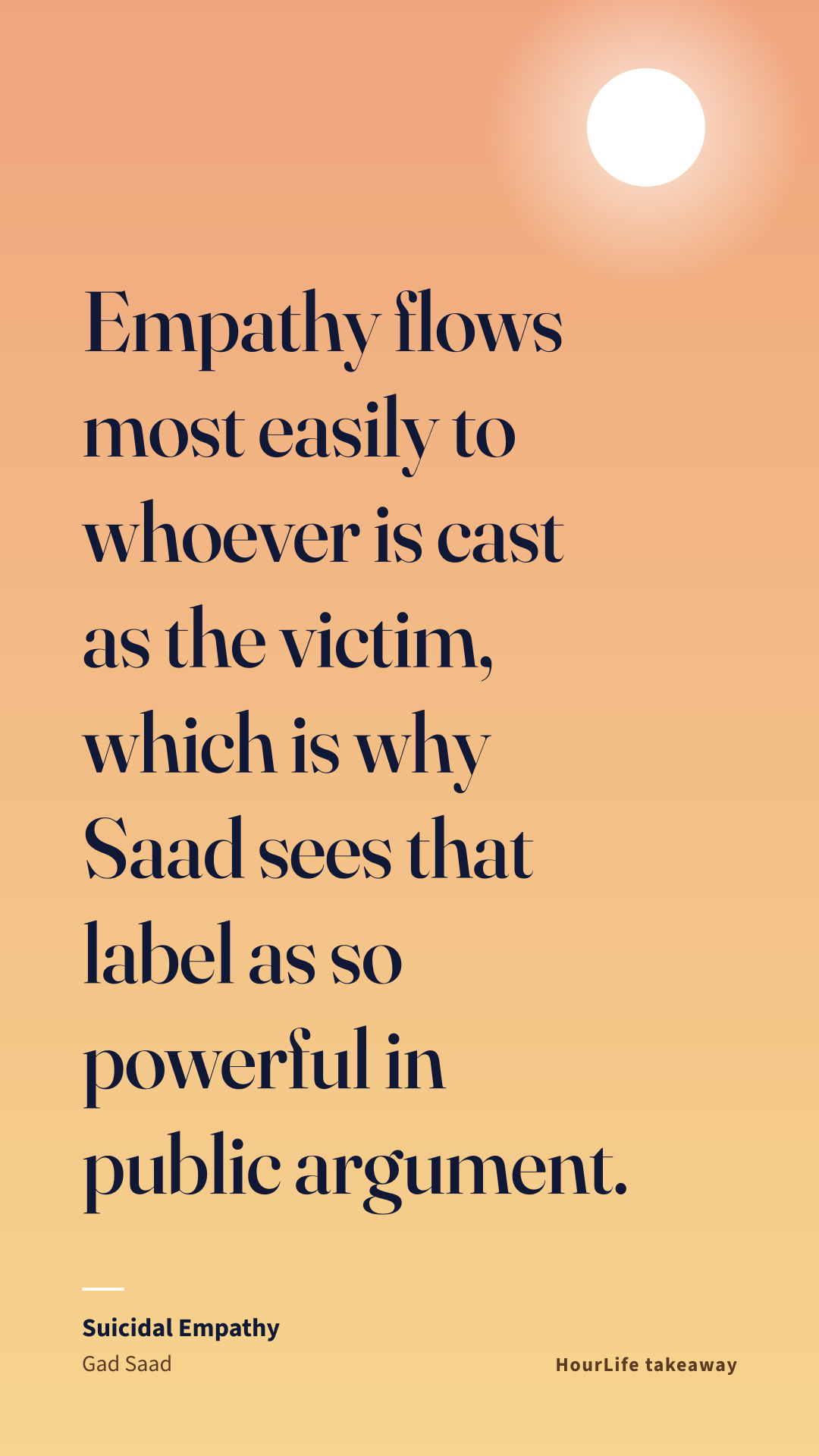
Empathy flows most easily to whoever is cast as the victim, which is why Saad sees that label as so powerful in public argument.

Suicidal Empathy Gad Saad HourLife takeaway

In his account, being seen as the victim draws sympathy, so debates turn into contests over who holds that position. He applies this to arguments about crime, migration and gender. His critics note that people on every side of politics make the same move.

Saad writes as someone whose family fled Lebanon’s civil war, and he treats an open, stable society as rare and easy to lose.

Suicidal Empathy Gad Saad HourLife takeaway

He argues that the safety and freedoms many readers take for granted are recent and fragile. That history explains the urgency of his tone. Reviewers who disagree with him say the same fear leads him to overstate the threats he describes.

The remedy the book points to is not less empathy but empathy with reason in charge of it.

Suicidal Empathy Gad Saad HourLife takeaway

Saad's alternative is calibration: keep the feeling, then check it against evidence, consequences and everyone the choice affects. That check works on small, personal decisions as well as public ones. It is also the part of the book that readers on different sides are most likely to share.

Keep this going in the app.

HourLife turns these ideas into a daily system — goals, habits, focus, and reflection in one private place.