Keep this author quotes for later
Sign in to save

Gregg D. Jacobs

The most-loved lines from Gregg D. Jacobs, drawn from 1 book in the library.

Lines labelled “HourLife takeaway” are our wording of the book’s ideas and may paraphrase it. Only lines in quotation marks are the author’s own words, with where they appear. Check the book for exact wording before you quote it. Spot an error?

Insomnia that lasts is usually learned, which means it can be unlearned.

Say Good Night to Insomnia Gregg D. Jacobs HourLife takeaway

A stressful stretch brings a few bad nights. The ways we cope, such as lying in, napping, going to bed early to catch up and worrying in bed, then keep poor sleep going after the stress has passed. Jacobs aims his programme at those habits and thoughts rather than at the original trigger.


Spending less time in bed is often the quickest way to sleep more of it.

Say Good Night to Insomnia Gregg D. Jacobs HourLife takeaway

Hours spent lying awake teach the body that bed is a place to be awake. Bringing time in bed closer to the time you actually sleep makes sleep deeper and less broken, and the window then widens as sleep fills it. This is sleep scheduling, the step most people resist and the one the programme leans on hardest.

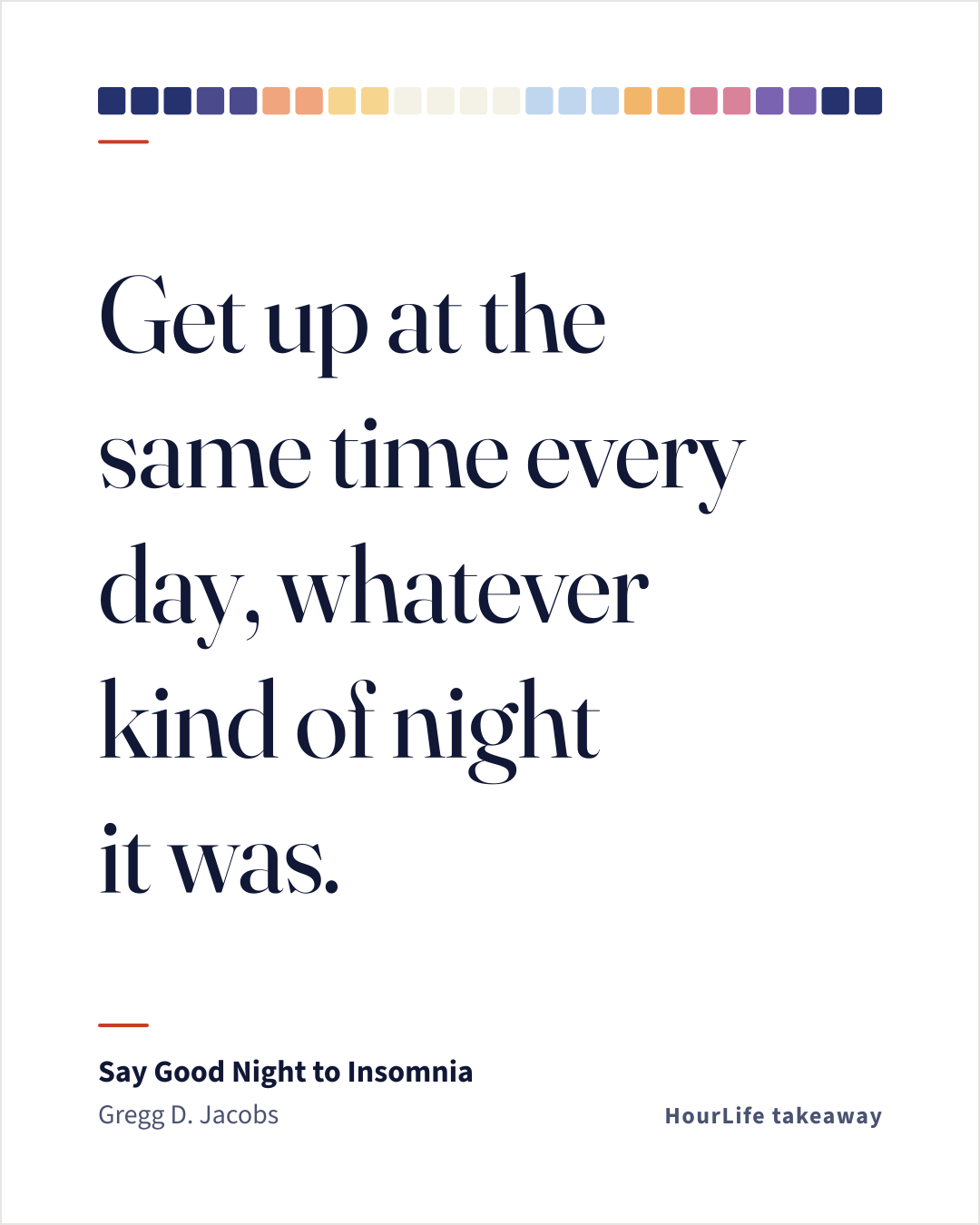
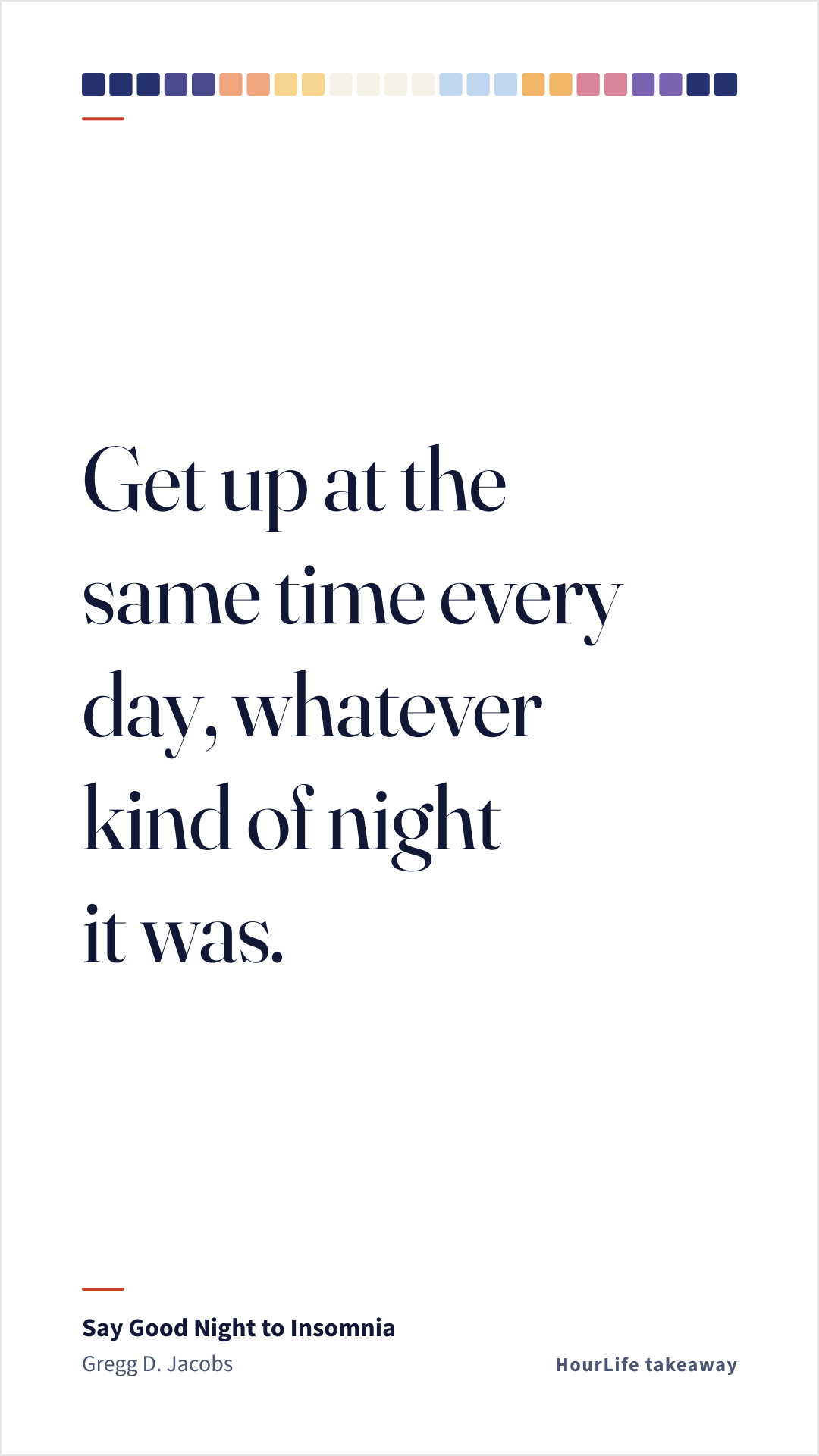
Get up at the same time every day, whatever kind of night it was.

Say Good Night to Insomnia Gregg D. Jacobs HourLife takeaway

A fixed rise time sets the body clock. Sleeping in after a bad night feels like repair, but it pushes the next night's sleepiness later and starts the cycle again. Weekends count too.

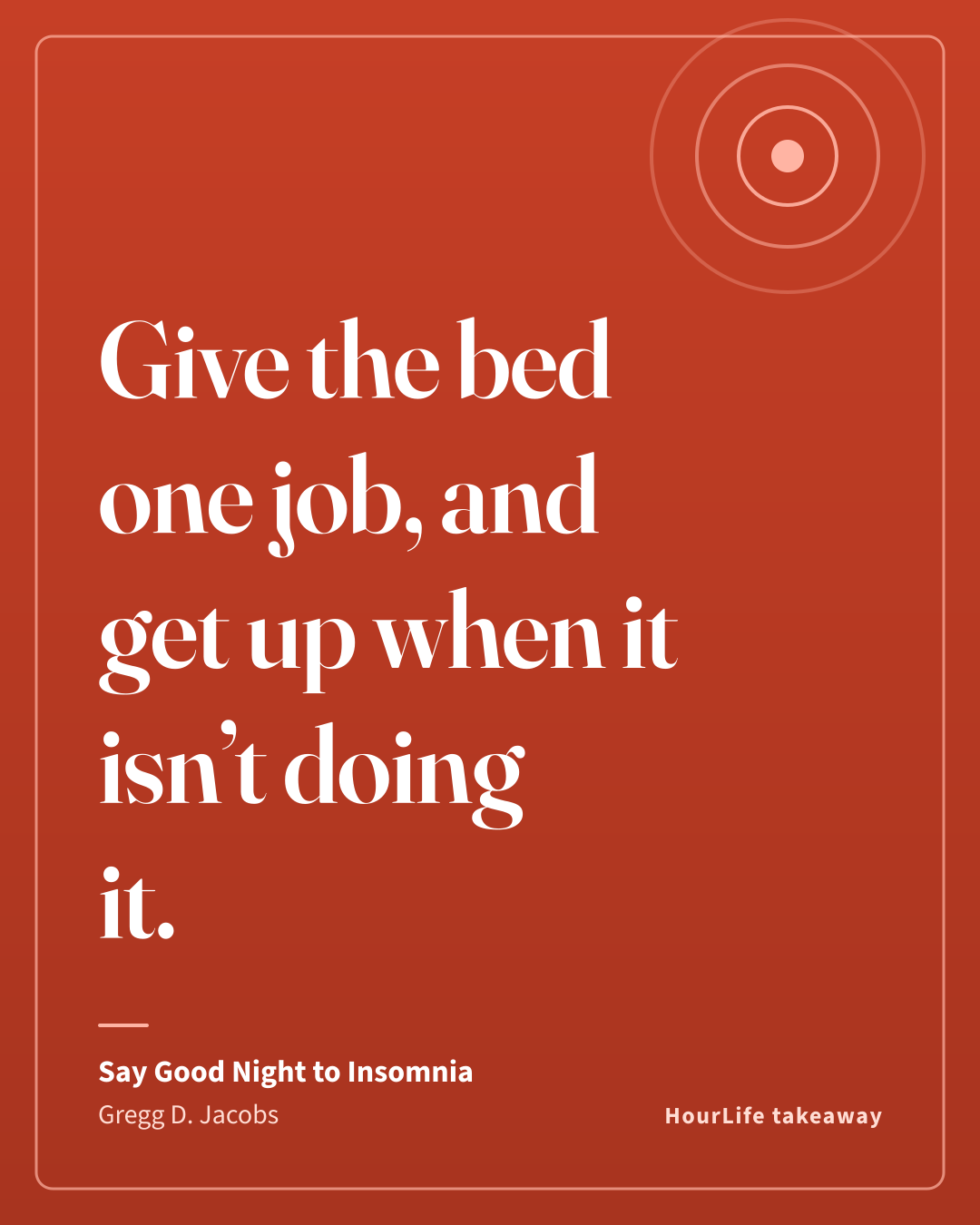
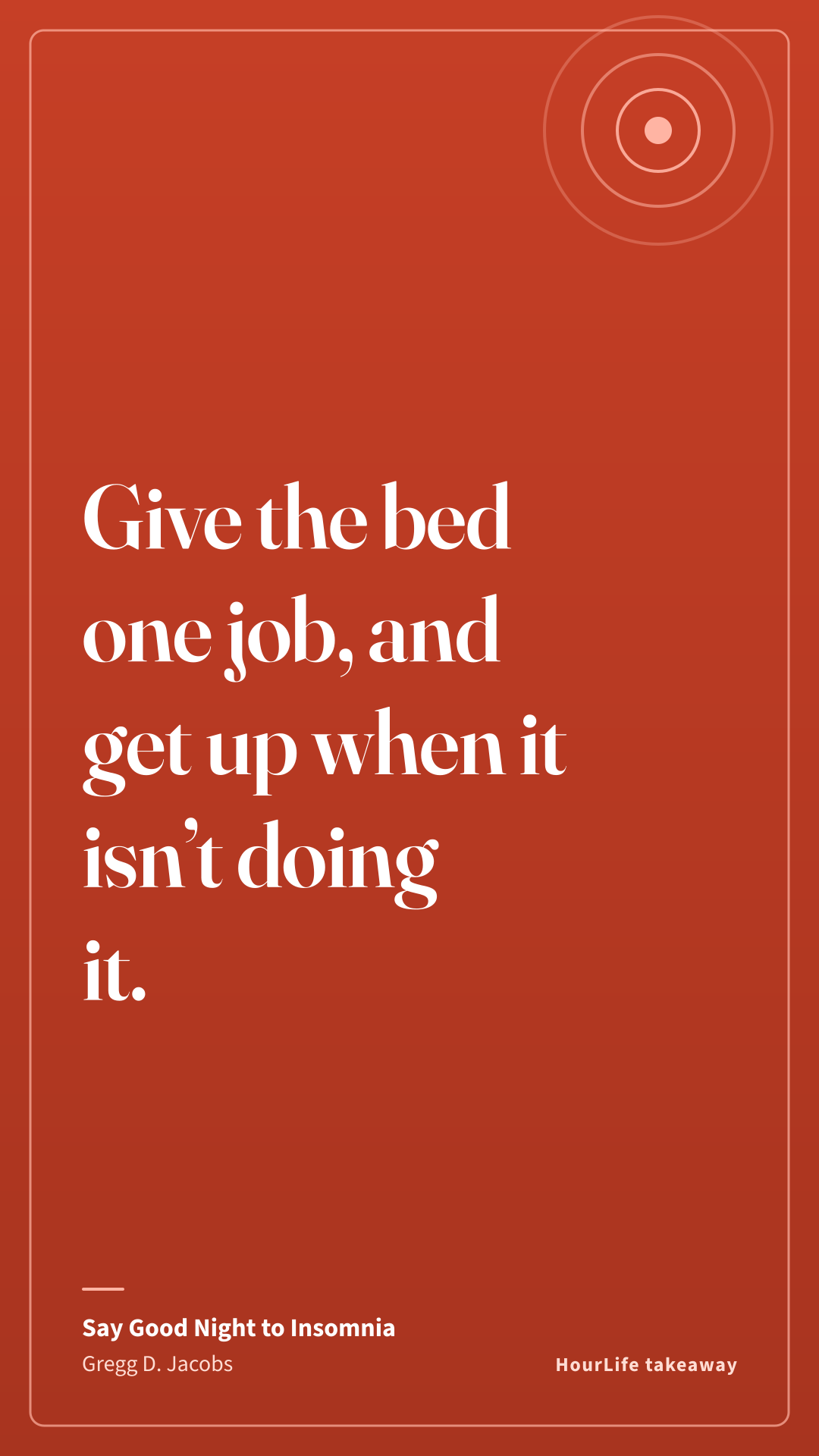
Give the bed one job, and get up when it isn’t doing it.

Say Good Night to Insomnia Gregg D. Jacobs HourLife takeaway

If you are wide awake and getting frustrated, the programme says to leave the bed, do something quiet in dim light, and come back only when sleepy. Repeated over a few weeks, this rebuilds the link between bed and sleep. Behavioural sleep medicine calls it stimulus control.

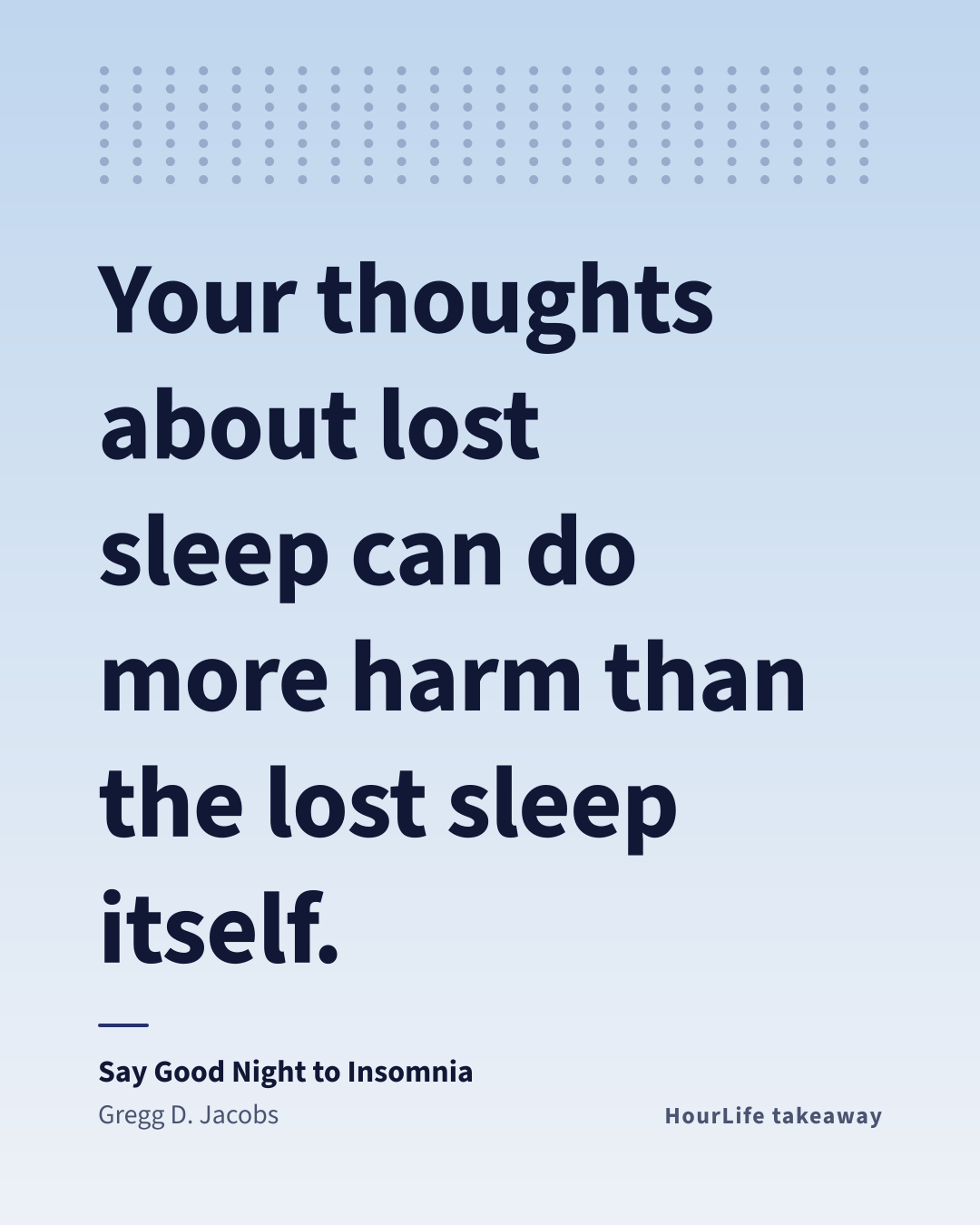
Your thoughts about lost sleep can do more harm than the lost sleep itself.

Say Good Night to Insomnia Gregg D. Jacobs HourLife takeaway

Predictions like a ruined tomorrow or never sleeping again raise arousal at the very moment you need to wind down. Jacobs asks readers to catch these thoughts and answer them with more accurate ones, for example that most people get through a short night better than they expect.

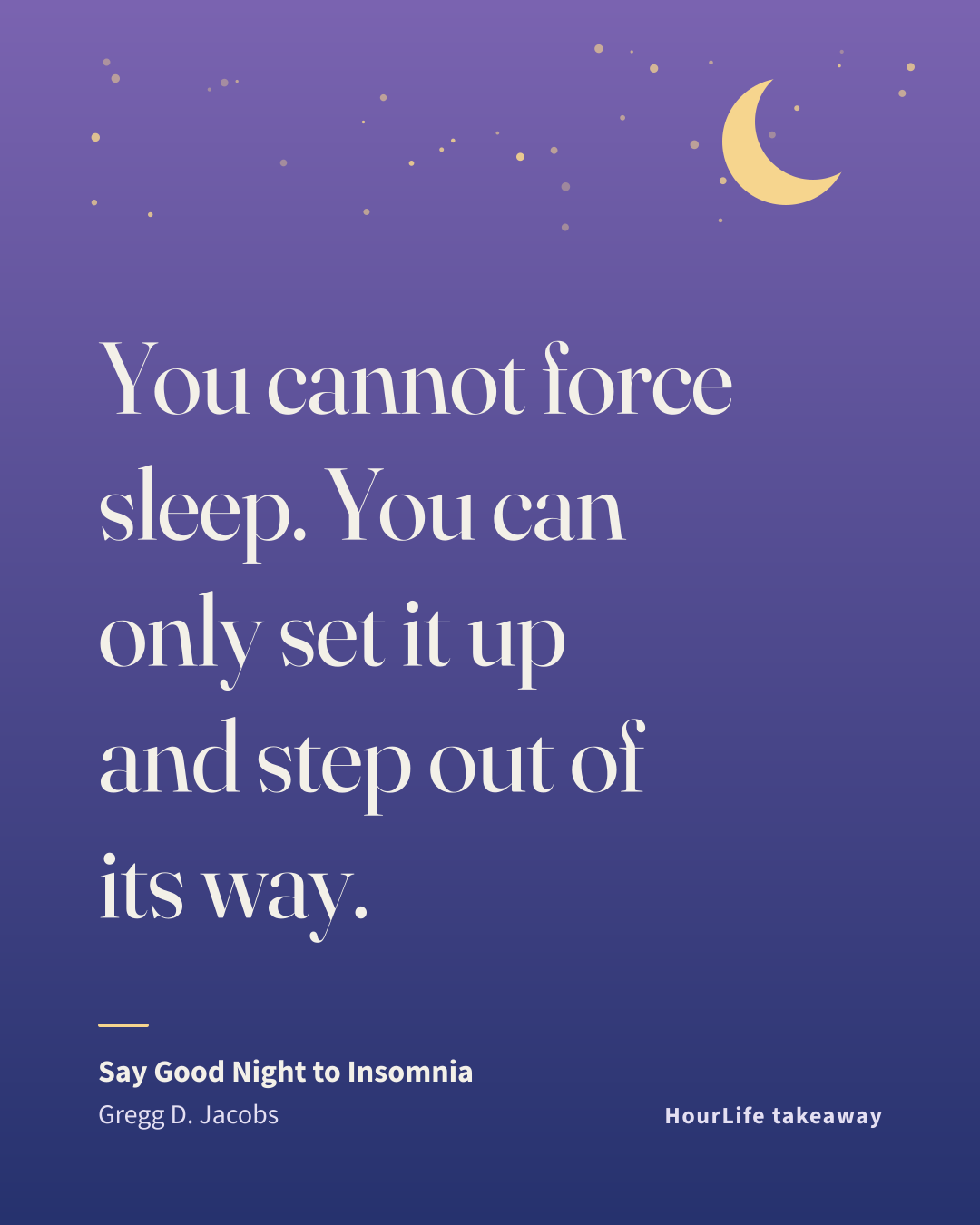
You cannot force sleep. You can only set it up and step out of its way.

Say Good Night to Insomnia Gregg D. Jacobs HourLife takeaway

Trying hard to sleep is a form of effort, and effort keeps the brain alert. The programme moves the work to the daytime: a steady schedule, a calmer evening, a quieter mind. At night the job is to let go of the outcome.

A daily relaxation practice lowers the arousal that keeps you awake.

Say Good Night to Insomnia Gregg D. Jacobs HourLife takeaway

The book teaches the relaxation response, the method Herbert Benson described: sit quietly, breathe slowly, repeat a word or attend to the breath, and let passing thoughts go. Practised daily, it becomes a skill you can also use when you wake in the night.

Light, movement and temperature tell the body clock when night has come.

Say Good Night to Insomnia Gregg D. Jacobs HourLife takeaway

Daylight in the morning, exercise during the day and a cool, dark bedroom all support the body's own rhythm, while late caffeine and evening alcohol work against it. On their own these sleep hygiene steps rarely fix chronic insomnia. They help as part of the whole programme.

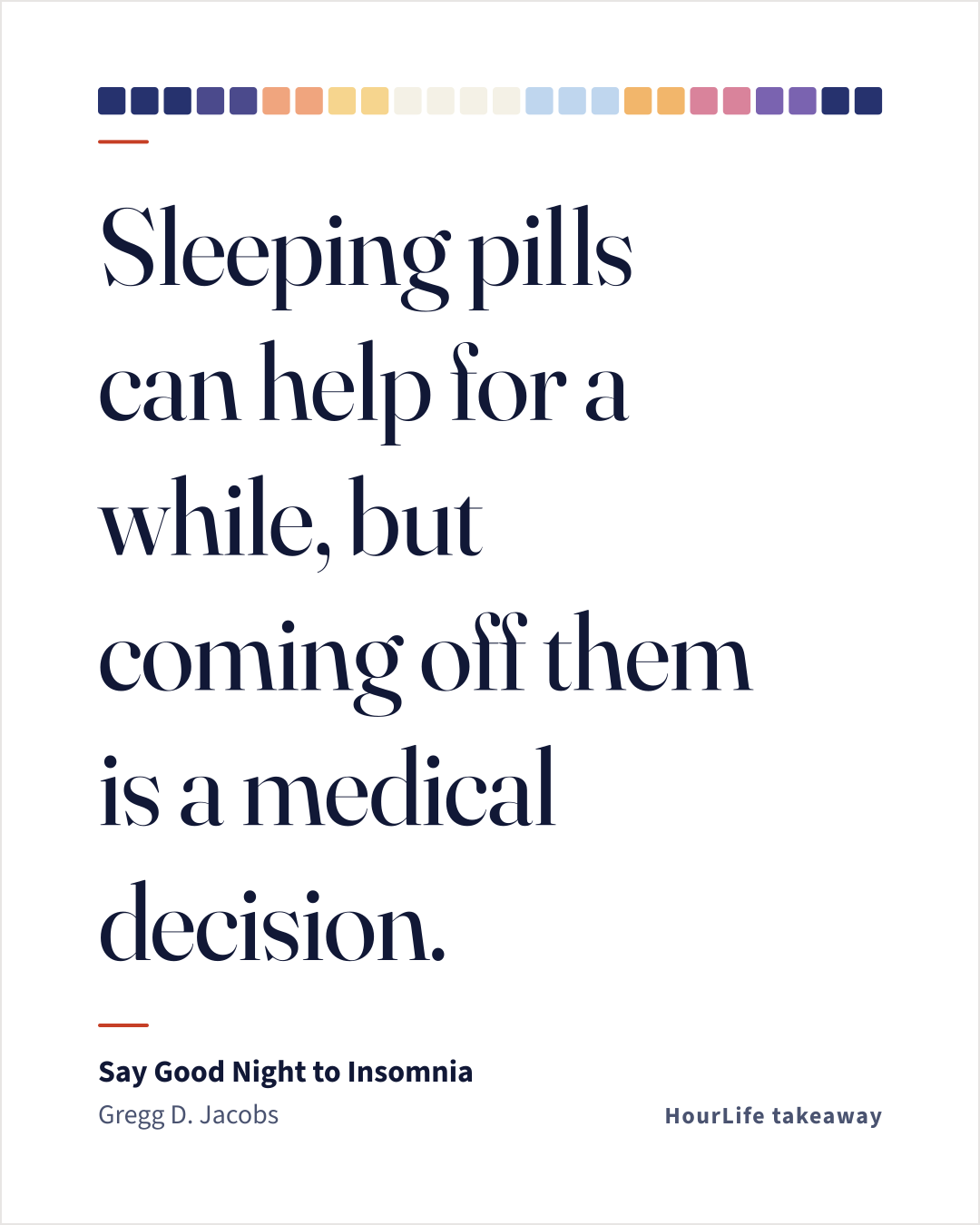
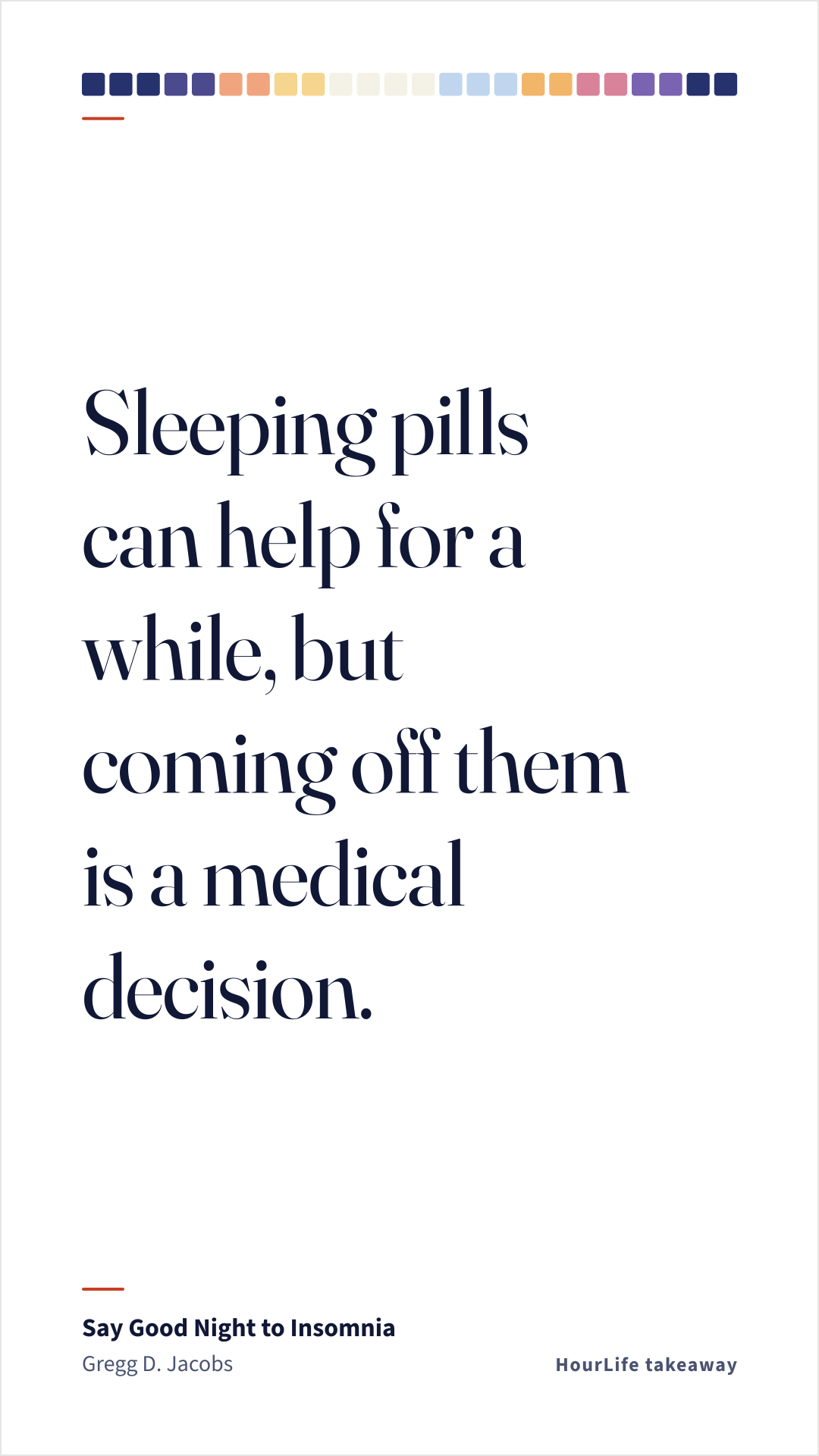
Sleeping pills can help for a while, but coming off them is a medical decision.

Say Good Night to Insomnia Gregg D. Jacobs HourLife takeaway

Jacobs presents the behavioural programme as a lasting alternative to pills, and a 2004 trial he led found it did better than the sleeping pill zolpidem. For readers already taking medication, the book describes cutting down slowly. Any change to a medicine should be planned with the doctor who prescribed it.

Keep this going in the app.

HourLife turns these ideas into a daily system — goals, habits, focus, and reflection in one private place.