Keep this author quotes for later
Sign in to save

Karen Hao

The most-loved lines from Karen Hao, drawn from 1 book in the library.

Lines labelled “HourLife takeaway” are our wording of the book’s ideas and may paraphrase it. Only lines in quotation marks are the author’s own words, with where they appear. Check the book for exact wording before you quote it. Spot an error?

The AI industry runs like an empire: it takes what is not its own and tells a story about saving the world to make the taking feel right.

Empire of AI Karen Hao HourLife takeaway

Hao borrows the frame from the colonial empires of the 1800s. The resources have changed: people's writing and art, cheap labour, land, electricity and fresh water. The pattern has not. The point is not that the people involved are villains, but that the structure rewards taking.


Scale at all costs was a choice, not a law of nature.

Empire of AI Karen Hao HourLife takeaway

OpenAI bet that bigger models, more data and more computing power would win, and once it moved, its rivals followed it into a race. Hao argues that this one bet, rather than anything inevitable about the technology, is what drives the hunger for data centres, chips and workers. Other ways of building AI existed, and still do.

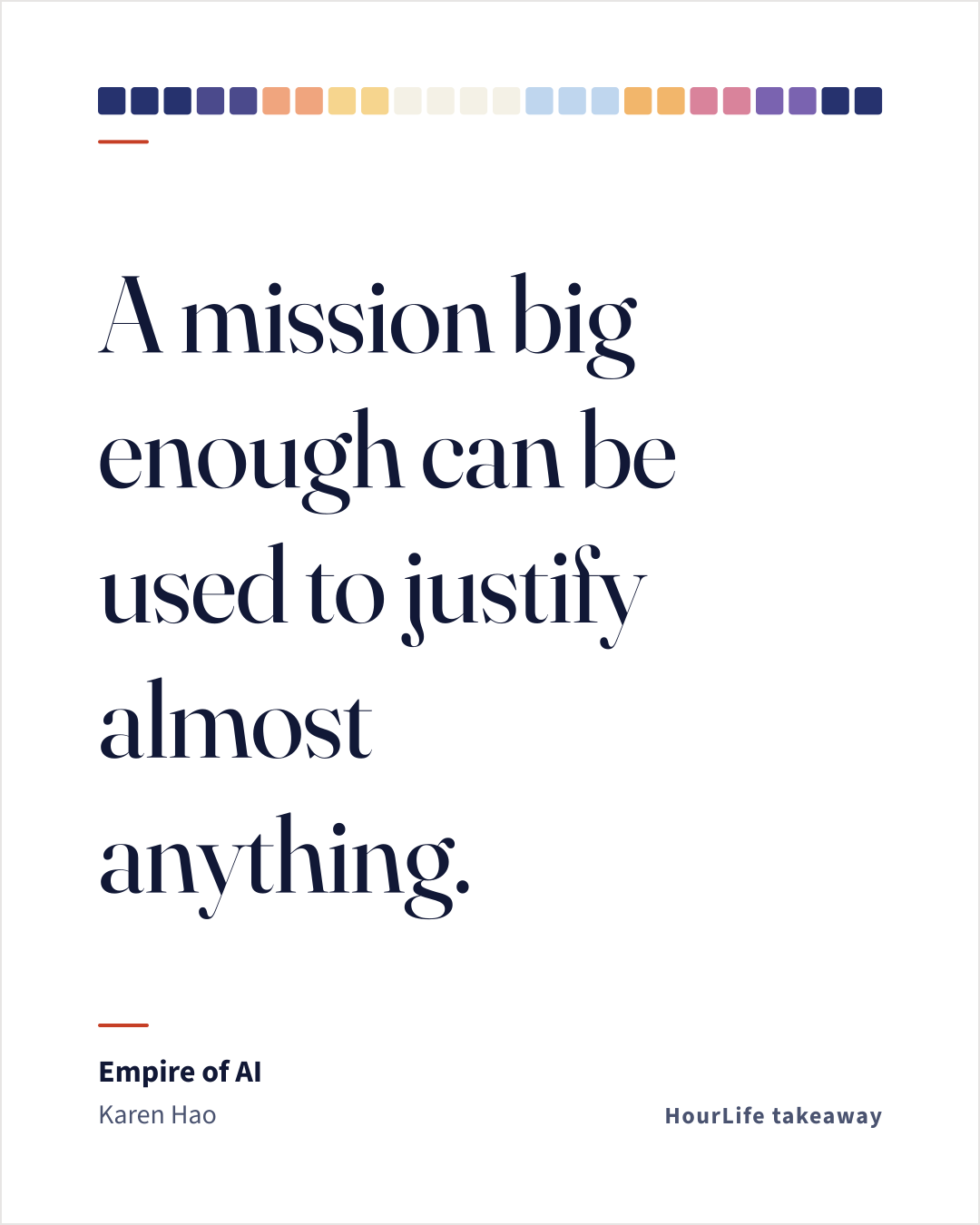
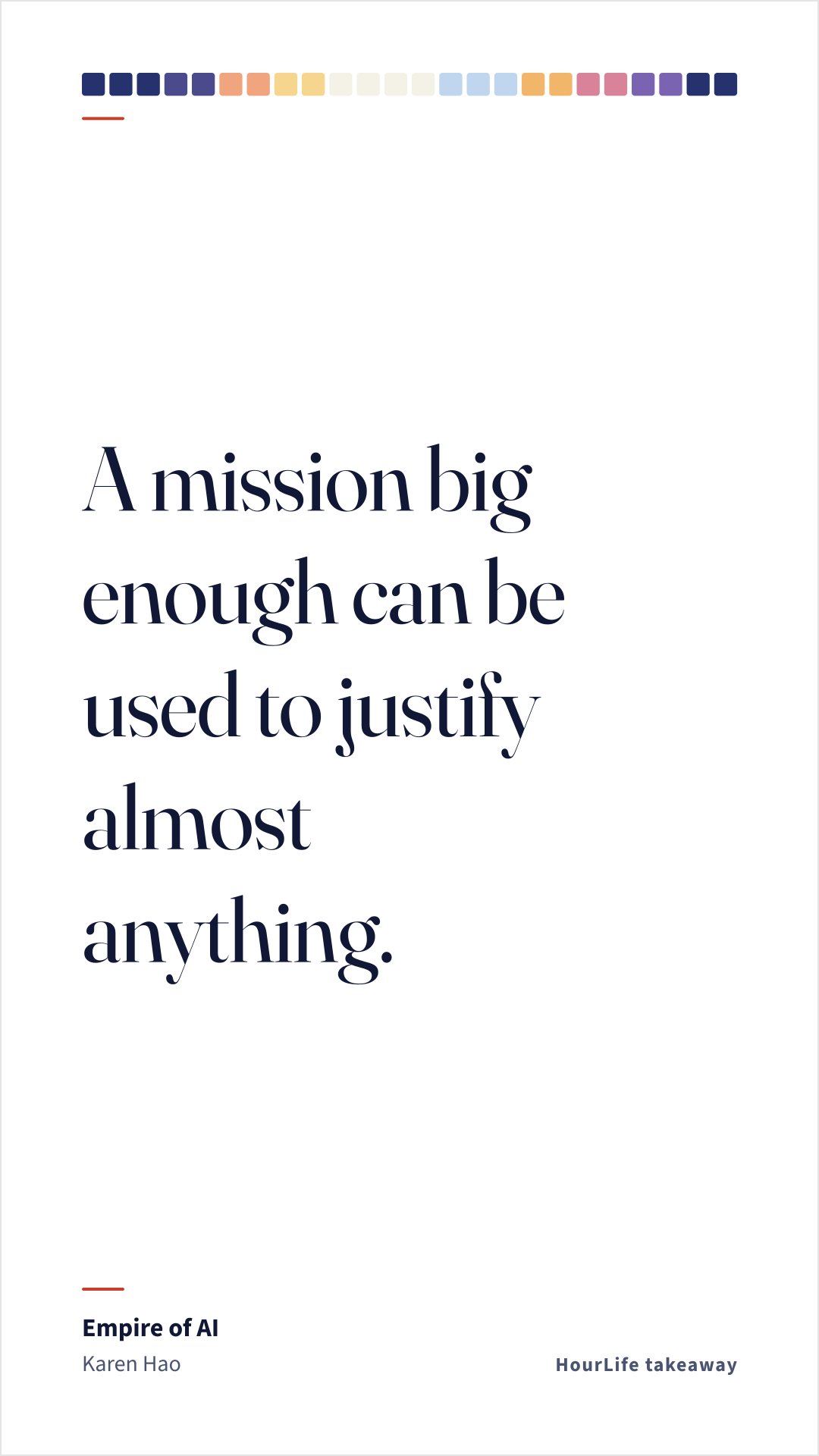
A mission big enough can be used to justify almost anything.

Empire of AI Karen Hao HourLife takeaway

OpenAI was founded to make sure artificial general intelligence benefits all of humanity. Hao reports how that mission was later used to explain secrecy, a for-profit arm and an ever faster race. She keeps asking who is counted in that 'humanity', and who is left out of it.

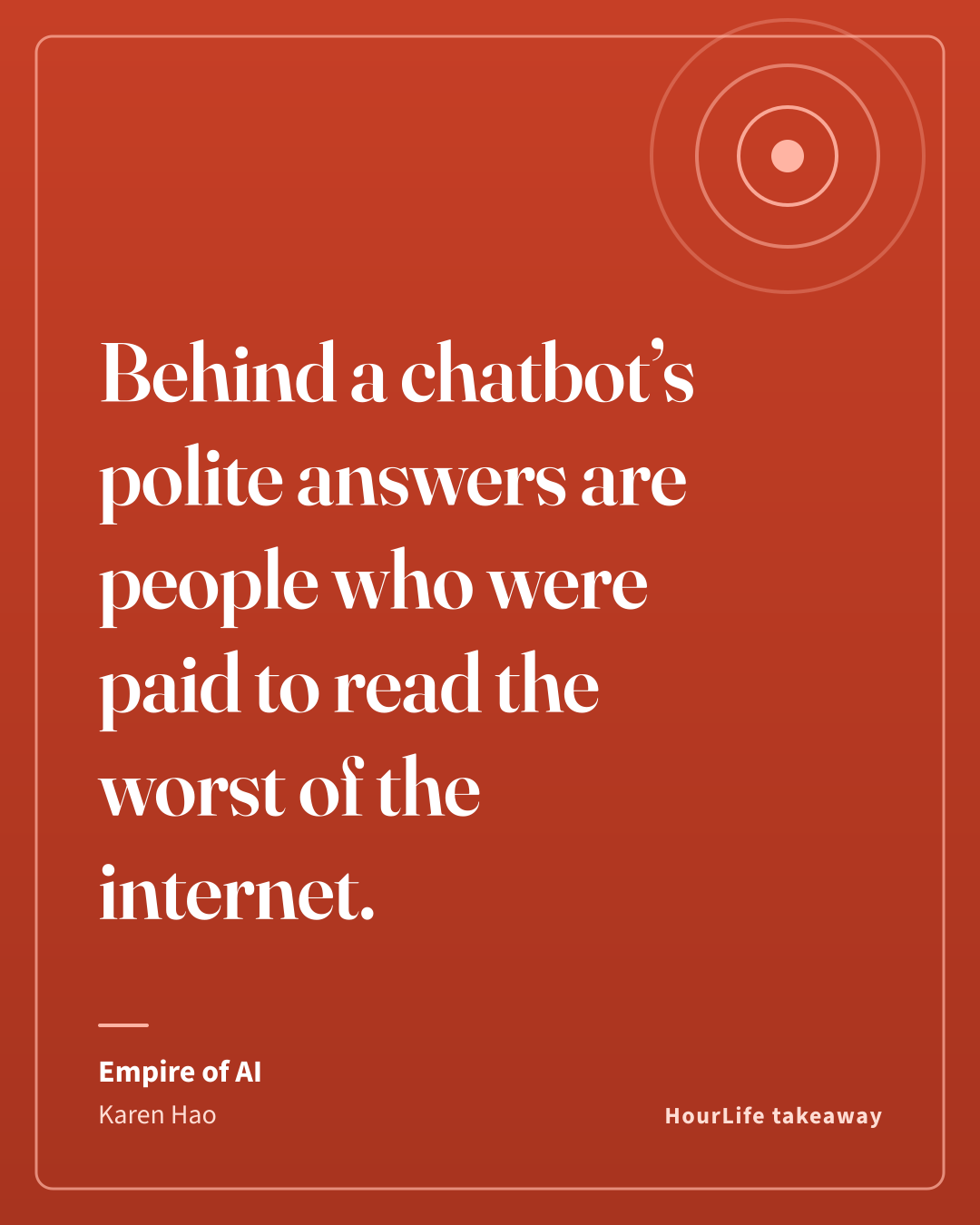
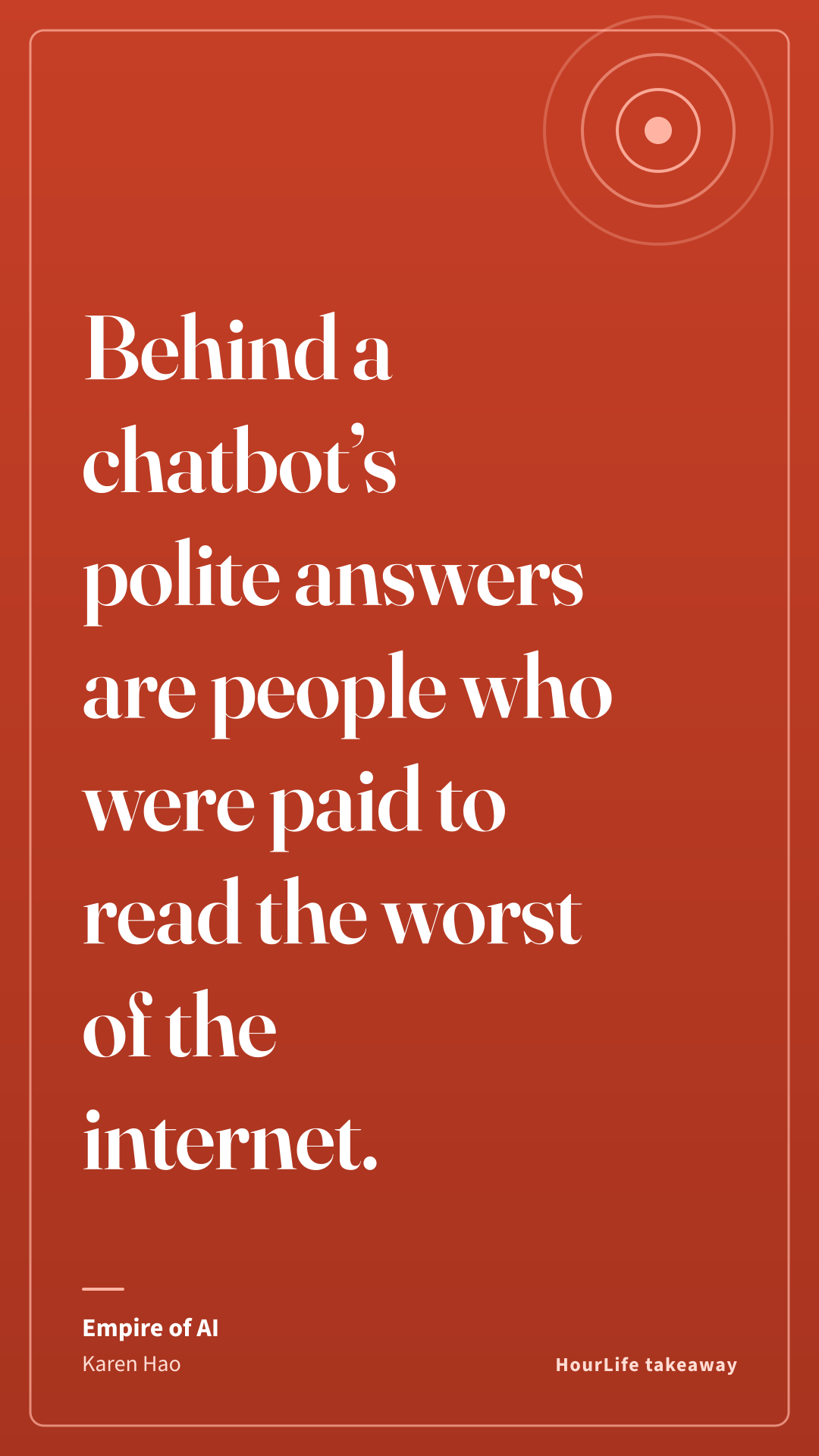
Behind a chatbot’s polite answers are people who were paid to read the worst of the internet.

Empire of AI Karen Hao HourLife takeaway

Hao reports on Kenyan contract workers, hired through the outsourcing firm Sama, who sorted violent and abusive text so OpenAI could build a content filter. They were paid a few dollars an hour, and she describes the lasting harm the work did to some of them. The safety the user sees was built on someone else's exposure.

The industry goes where labour is cheapest, and a crisis makes labour cheap.

Empire of AI Karen Hao HourLife takeaway

Hao reports how Venezuela's economic collapse pushed educated people into piece-rate data labelling on online platforms. She argues that the gap between their pay and a researcher's pay reflects how the industry values people, not some objective difference in the worth of the work.

The cloud is a building, and the building needs power and water.

Empire of AI Karen Hao HourLife takeaway

Data centres draw electricity and fresh water, and they are often placed where local people have little say. Hao follows residents in Chile and Uruguay who organised against planned Google data centres while their regions faced drought. The costs of AI land on a map, not in the abstract.

Hype and fear can be two halves of the same pitch.

Empire of AI Karen Hao HourLife takeaway

Hao describes a field split between people who think AGI will save us and people who fear it will end us. Both camps agree it is near and enormous, and both conclusions hand more power to the few labs building it. In her telling, that split helped set up the 2023 board crisis.

Controlling what the public knows is part of controlling the empire.

Empire of AI Karen Hao HourLife takeaway

A company with 'open' in its name came to share less and less about its models and training data. Hao argues that when a few firms fund most research and decide what gets published, they also shape what everyone else believes about AI. OpenAI declined to take part in her book, so she built it from hundreds of interviews and documents.

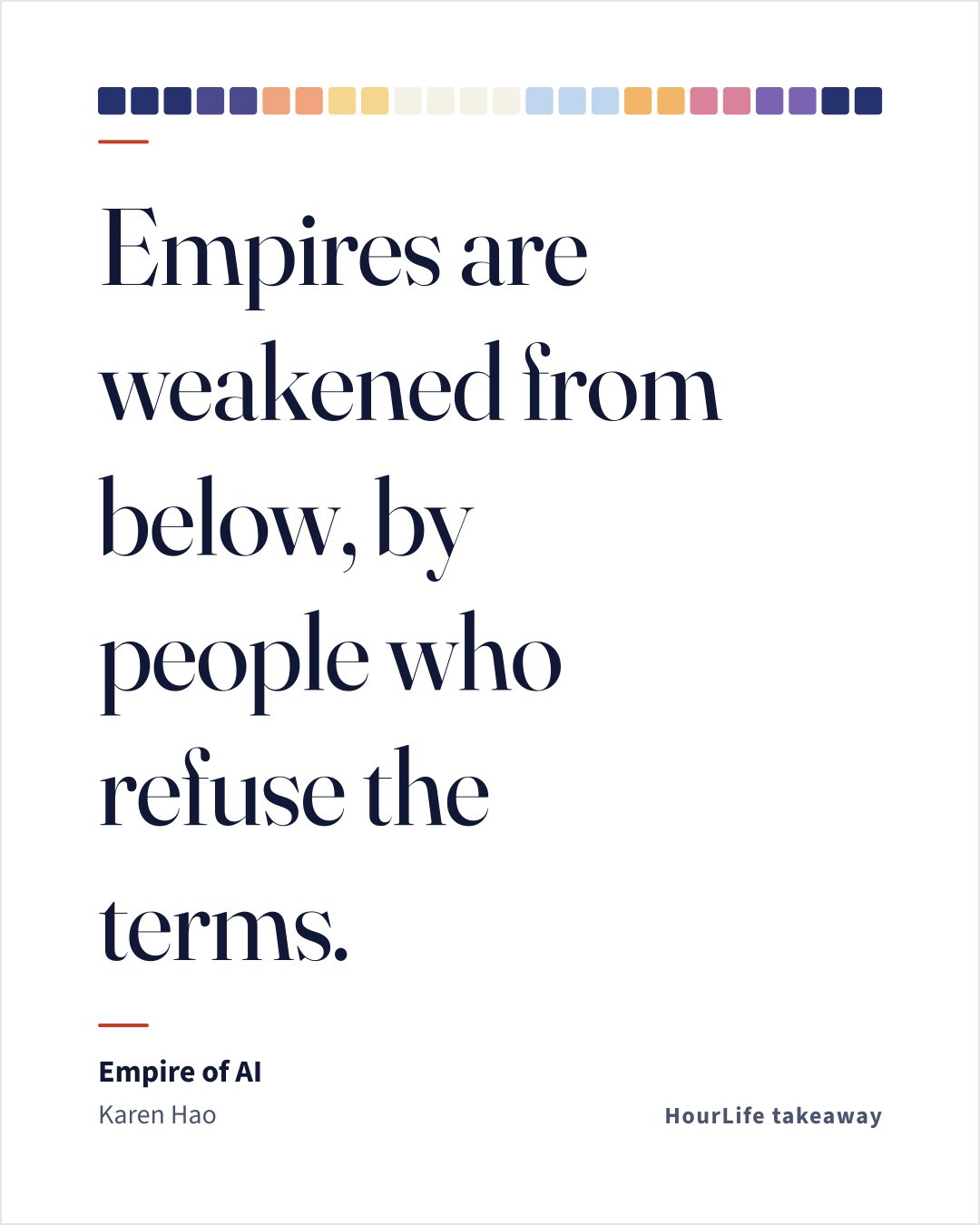
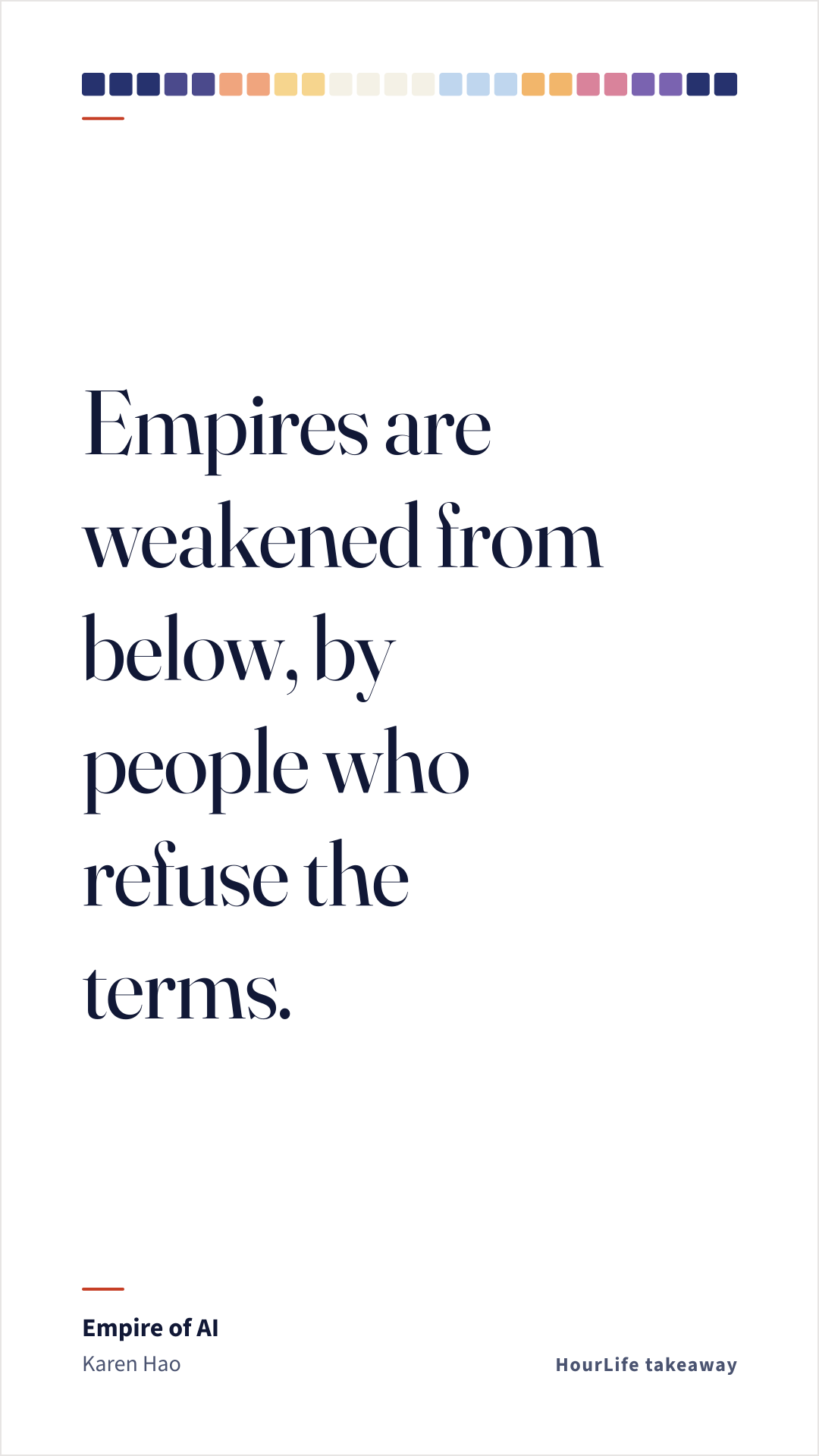
Empires are weakened from below, by people who refuse the terms.

Empire of AI Karen Hao HourLife takeaway

Hao does not ask readers to wait for a wise leader. She points to artists and writers who sue or strike, communities that demand real terms before a data centre is built, and small projects such as Te Hiku Media in New Zealand, which builds language tools with its community's consent. Power spread across the supply chain is harder to concentrate.

Keep this going in the app.

HourLife turns these ideas into a daily system — goals, habits, focus, and reflection in one private place.