Keep this author quotes for later
Sign in to save

Mary Claire Haver

The most-loved lines from Mary Claire Haver, drawn from 1 book in the library.

Lines labelled “HourLife takeaway” are our wording of the book’s ideas and may paraphrase it. Only lines in quotation marks are the author’s own words, with where they appear. Check the book for exact wording before you quote it. Spot an error?

Menopause is a whole-body event, not a thermostat problem.

The New Menopause Mary Claire Haver HourLife takeaway

Estrogen acts on tissue all over the body, so when it falls the effects can show up in the brain, joints, skin, gut, bladder and heart. Haver's point is that hot flashes are only the best-known sign. Seeing the whole picture is what lets you and your clinician connect symptoms that look unrelated.


If nobody connects your symptoms, you get a pile of referrals instead of an answer.

The New Menopause Mary Claire Haver HourLife takeaway

The book's toolkit covers dozens of changes that may be linked to perimenopause and menopause, from brain fog and joint pain to palpitations and vertigo. Many women see a different specialist for each one. Many of these also have other causes, which is exactly why it helps to raise them together.

A generation’s fear of hormone therapy came more from how one study was reported than from what it later showed.

The New Menopause Mary Claire Haver HourLife takeaway

The combined-hormone arm of the Women's Health Initiative was stopped early in 2002, and the headlines focused on risk. Haver argues that the fallout overstated the risks and buried the benefits for younger women near menopause. Later analyses by age and timing gave a more mixed, more personal picture, and that is the conversation she wants women to be able to have.

With hormone therapy, timing changes the math.

The New Menopause Mary Claire Haver HourLife takeaway

Haver presents the benefits as greatest when therapy starts before 60 or within about ten years of the final period, and the risks as higher when it starts much later. Major menopause societies take a similar view for treating symptoms, though they do not advise hormone therapy only to prevent heart disease or dementia. Whether it suits you depends on your own history, which is a decision to make with your clinician.

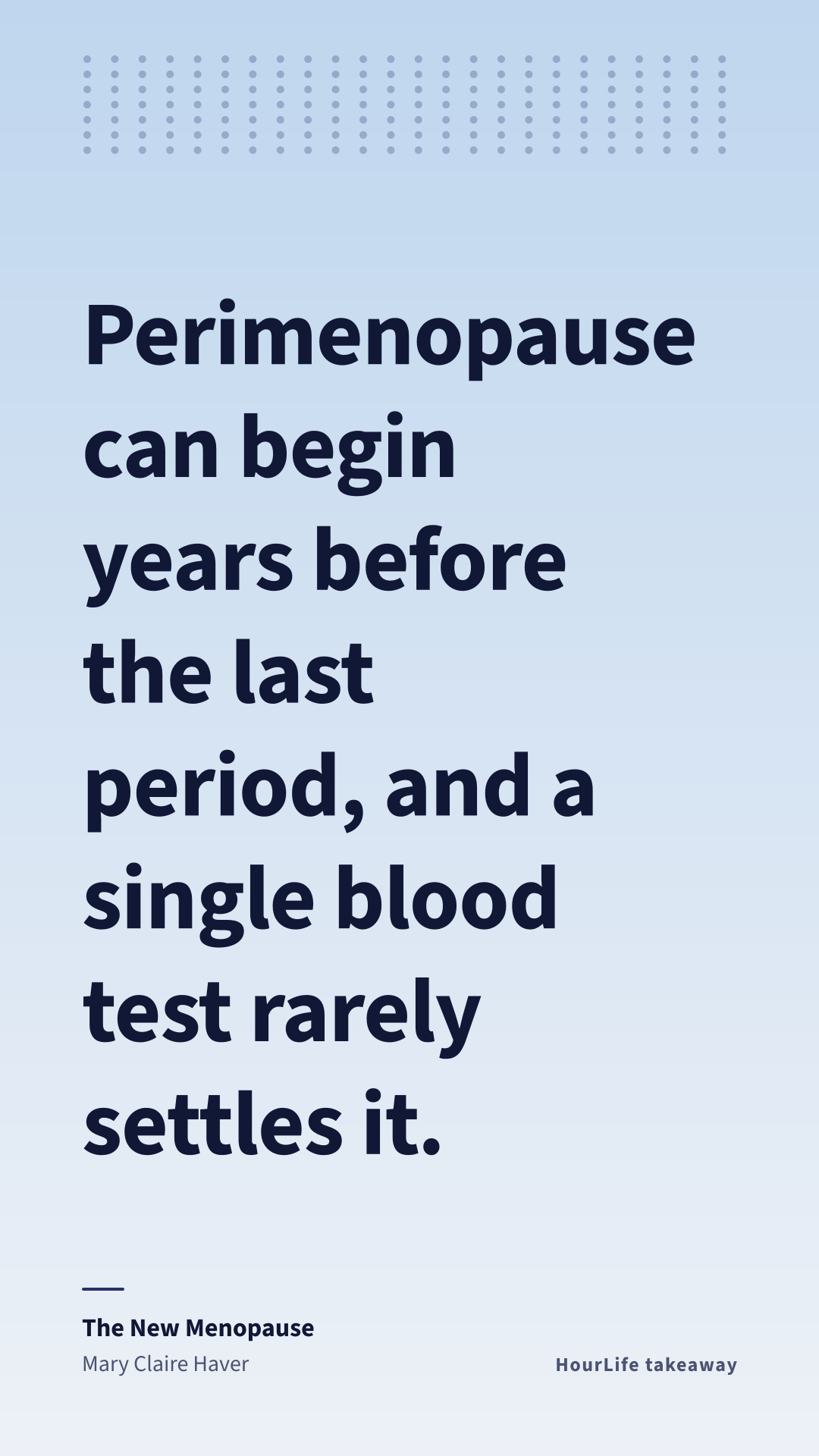
Perimenopause can begin years before the last period, and a single blood test rarely settles it.

The New Menopause Mary Claire Haver HourLife takeaway

Hormone levels swing from week to week in the transition, so one normal result does not rule anything out. Cycle changes, age and the pattern of symptoms usually say more. That is why a written record of what you notice is worth bringing.

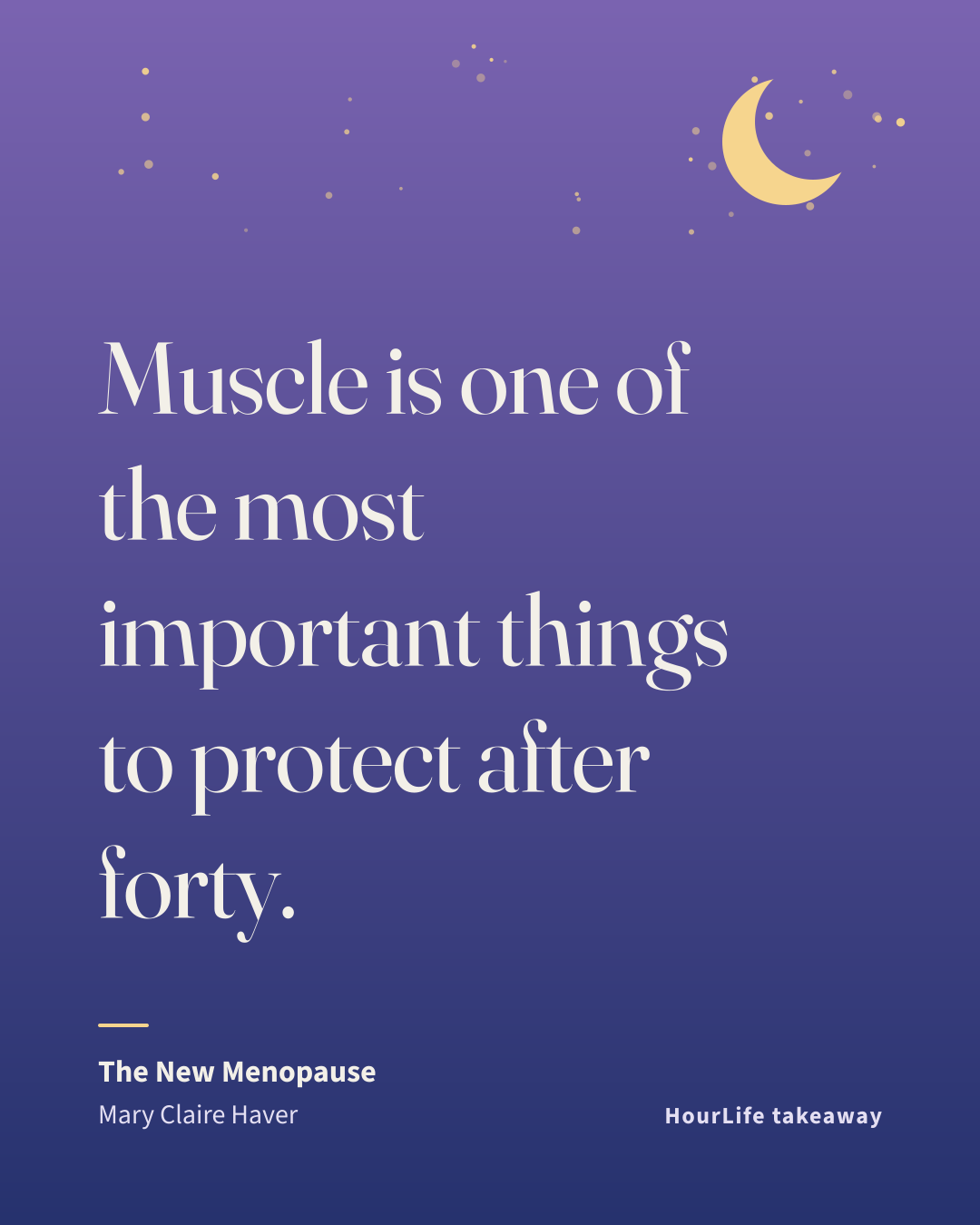
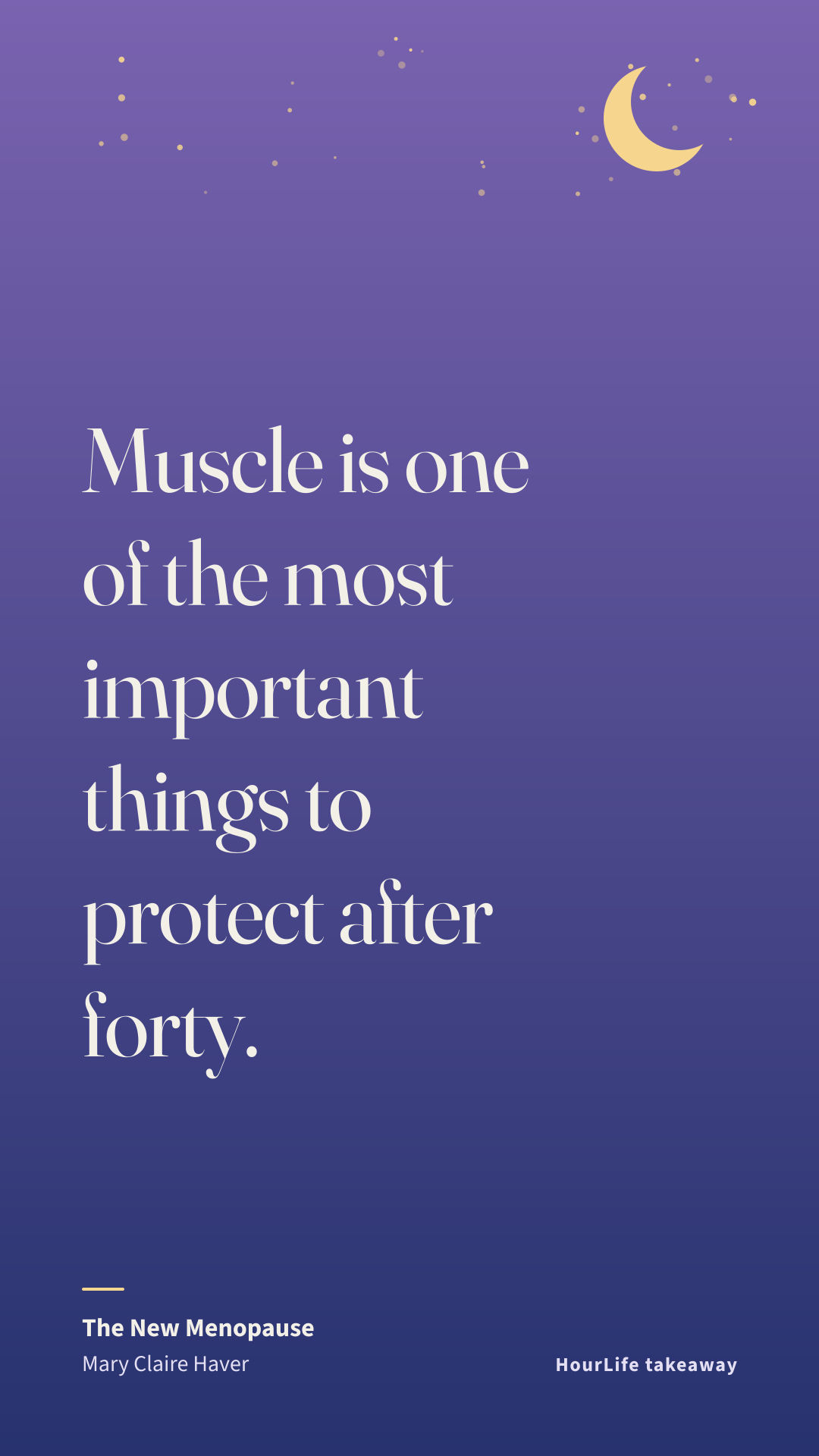
Muscle is one of the most important things to protect after forty.

The New Menopause Mary Claire Haver HourLife takeaway

Haver treats sarcopenia, the gradual loss of muscle, as a central risk of midlife. Her answer is strength training alongside aerobic exercise, and enough protein; she suggests at least 1.2 grams per kilogram of body weight a day. Ask your clinician whether that target suits you, especially if you have kidney disease.

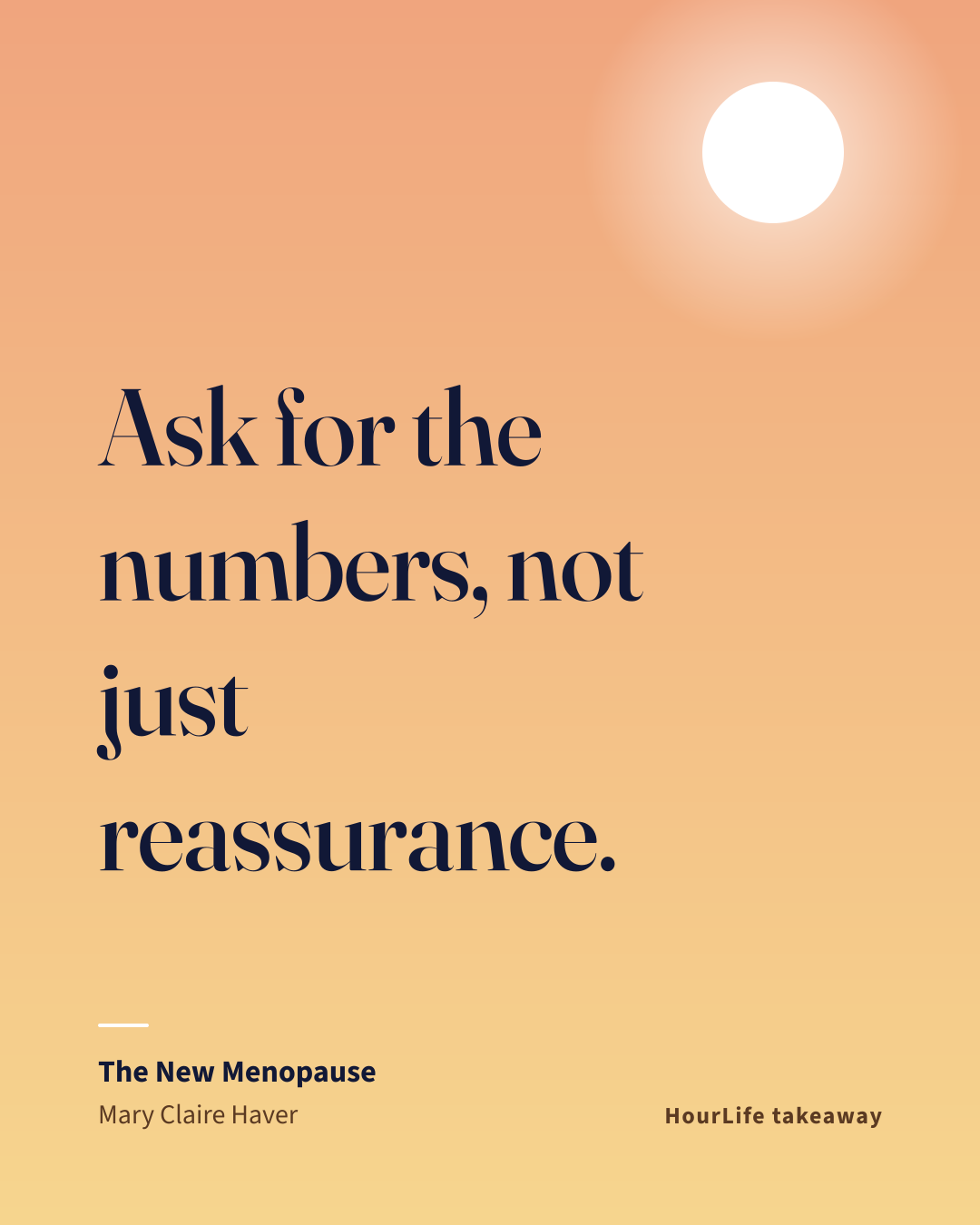
Ask for the numbers, not just reassurance.

The New Menopause Mary Claire Haver HourLife takeaway

Menopause shifts cholesterol, blood sugar and where the body stores fat, and heart disease is the leading cause of death for women. The book encourages tracking blood pressure, lipids, A1C and fasting glucose, and asking whether further tests make sense. Numbers turn a vague worry into something you can watch change.

Dryness, pain and bladder trouble are treatable, and they tend not to go away on their own.

The New Menopause Mary Claire Haver HourLife takeaway

The genitourinary syndrome of menopause covers vaginal dryness, pain with sex, urgency and repeat urinary infections. Haver has called low-dose vaginal estrogen one of the most undertreated options, and it is worth asking about even years after menopause. Many women never mention these symptoms unless asked, so raise them yourself.

You are allowed to look for a clinician who will actually talk about options.

The New Menopause Mary Claire Haver HourLife takeaway

A recurring thread in the book is women being told their symptoms are normal ageing or all in their head. Haver's advice is to arrive prepared, ask for a real risk and benefit discussion, and review it every year. If a provider will not have that conversation, it is reasonable to find one who will.

Keep this going in the app.

HourLife turns these ideas into a daily system — goals, habits, focus, and reflection in one private place.