Keep this author quotes for later
Sign in to save

Robin Wall Kimmerer

The most-loved lines from Robin Wall Kimmerer, drawn from 1 book in the library.

Lines labelled “HourLife takeaway” are our wording of the book’s ideas and may paraphrase it. Only lines in quotation marks are the author’s own words, with where they appear. Check the book for exact wording before you quote it. Spot an error?

A gift starts a relationship. A purchase usually ends one.

Braiding Sweetgrass Robin Wall Kimmerer HourLife takeaway

Kimmerer grew up picking wild strawberries and understood them as gifts from the land, not goods. A gift comes with a bond and a duty to give something in return. Bought goods change hands and the bond ends at the till. She asks what would change if we treated more of what we receive as gifts.


Whatever you take, something should go back.

Braiding Sweetgrass Robin Wall Kimmerer HourLife takeaway

Reciprocity is the thread through the whole book. The living world gives, and people owe a return. That return can be care, attention, restoration or simple thanks. Kimmerer treats it as the basic test of a good relationship with land.

The Honorable Harvest: take only what is given, leave enough, and use it well.

Braiding Sweetgrass Robin Wall Kimmerer HourLife takeaway

Kimmerer describes the Honorable Harvest as a set of unwritten guidelines for taking. Ask first. Never take the first or the last. Take only what you need, leave some for others, waste nothing, share, give thanks and give a gift back. She shows them at a small scale, digging wild leeks in spring, then asks how they would read if a whole economy followed them.

The words we use for plants and animals decide whether we treat them as beings or as things.

Braiding Sweetgrass Robin Wall Kimmerer HourLife takeaway

Learning Potawatomi as an adult, Kimmerer found a grammar that marks the living world as animate. English sorts almost everything that is not human into objects. She suggests that the habits of a language shape the habits of care.

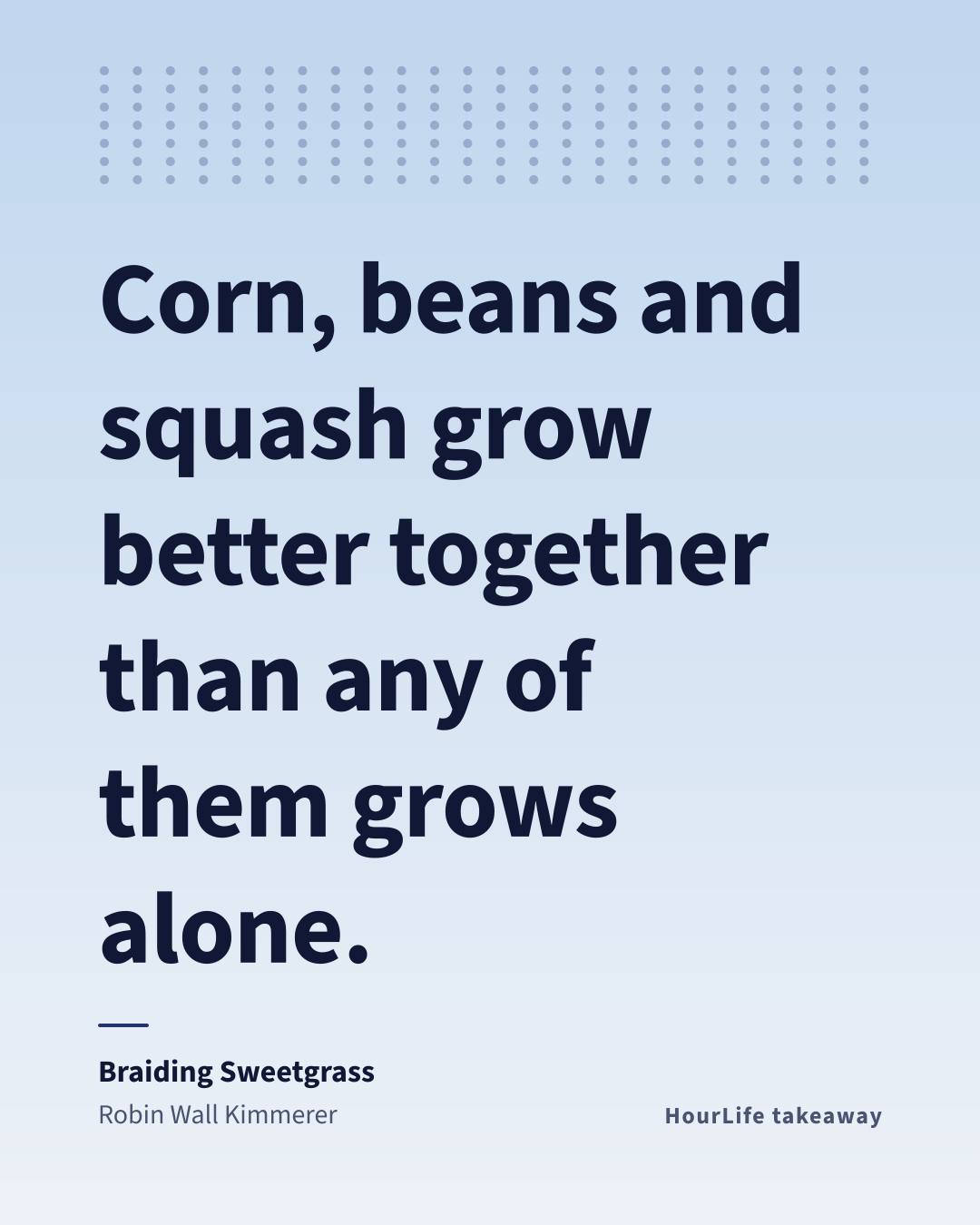
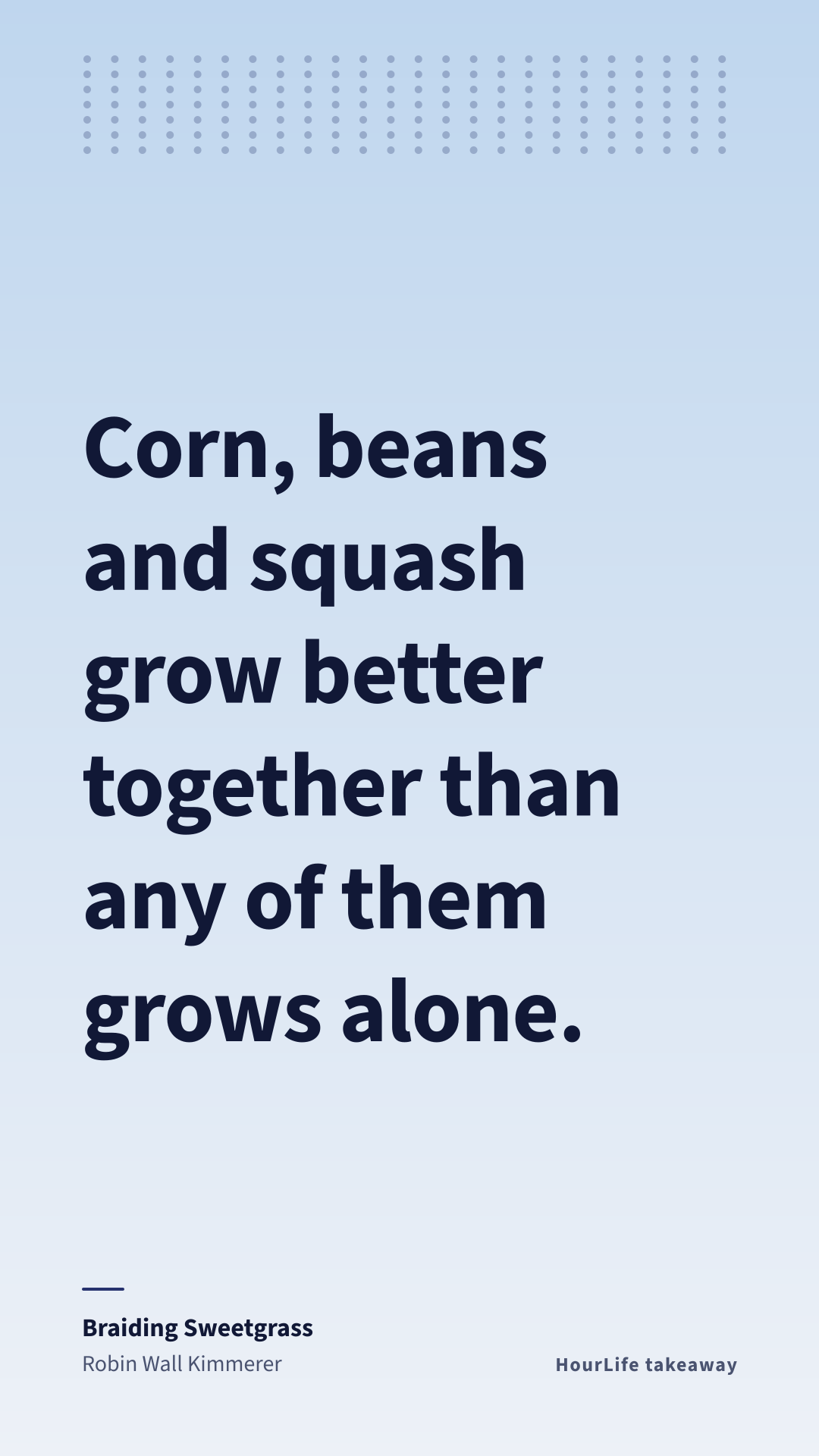
Corn, beans and squash grow better together than any of them grows alone.

Braiding Sweetgrass Robin Wall Kimmerer HourLife takeaway

In a Three Sisters garden the corn gives a stalk to climb, the beans feed nitrogen into the soil, and the squash shades the ground with broad leaves that hold water and keep weeds down. Kimmerer reads it as a model of a community where each member brings a different gift and all of them are needed.

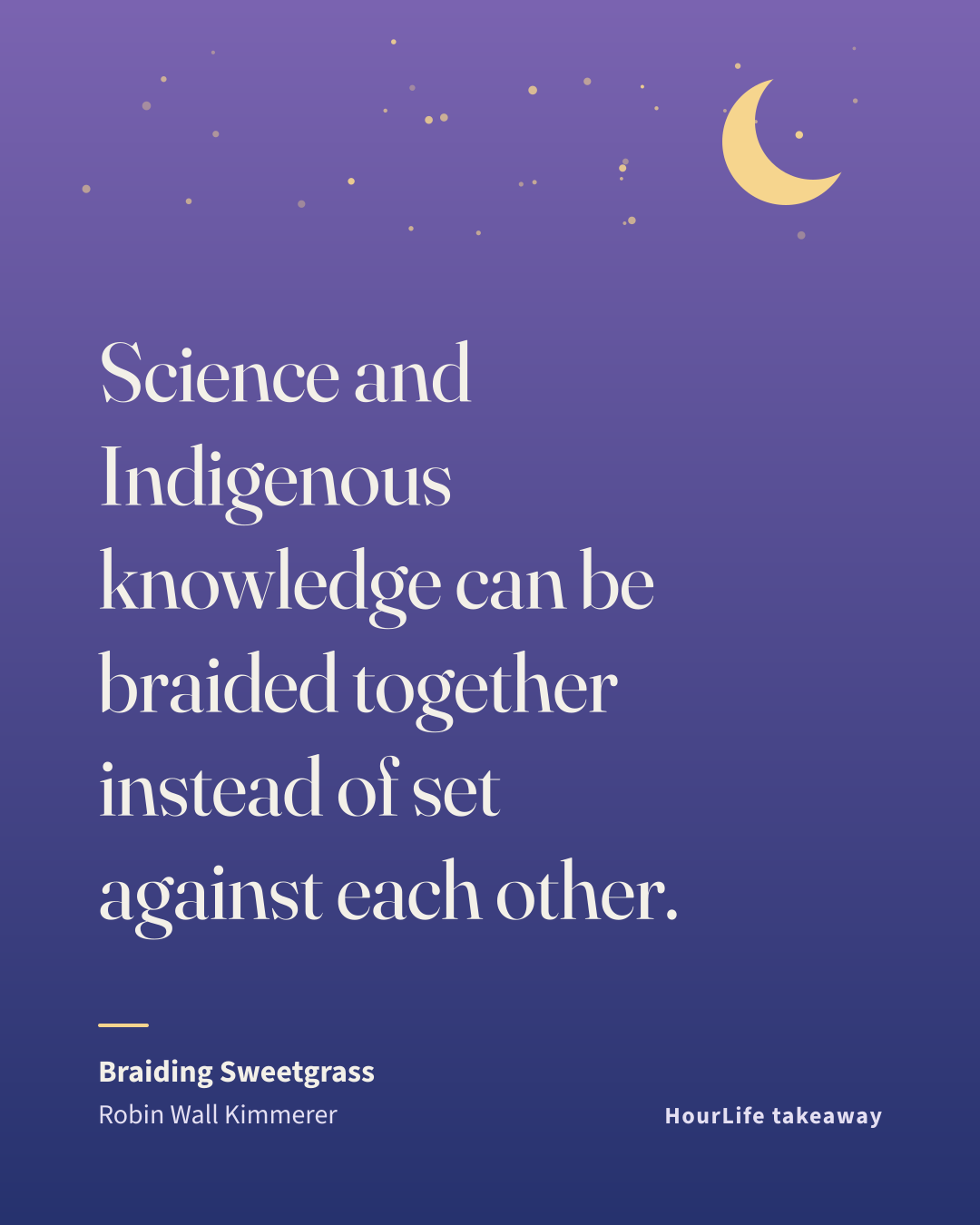
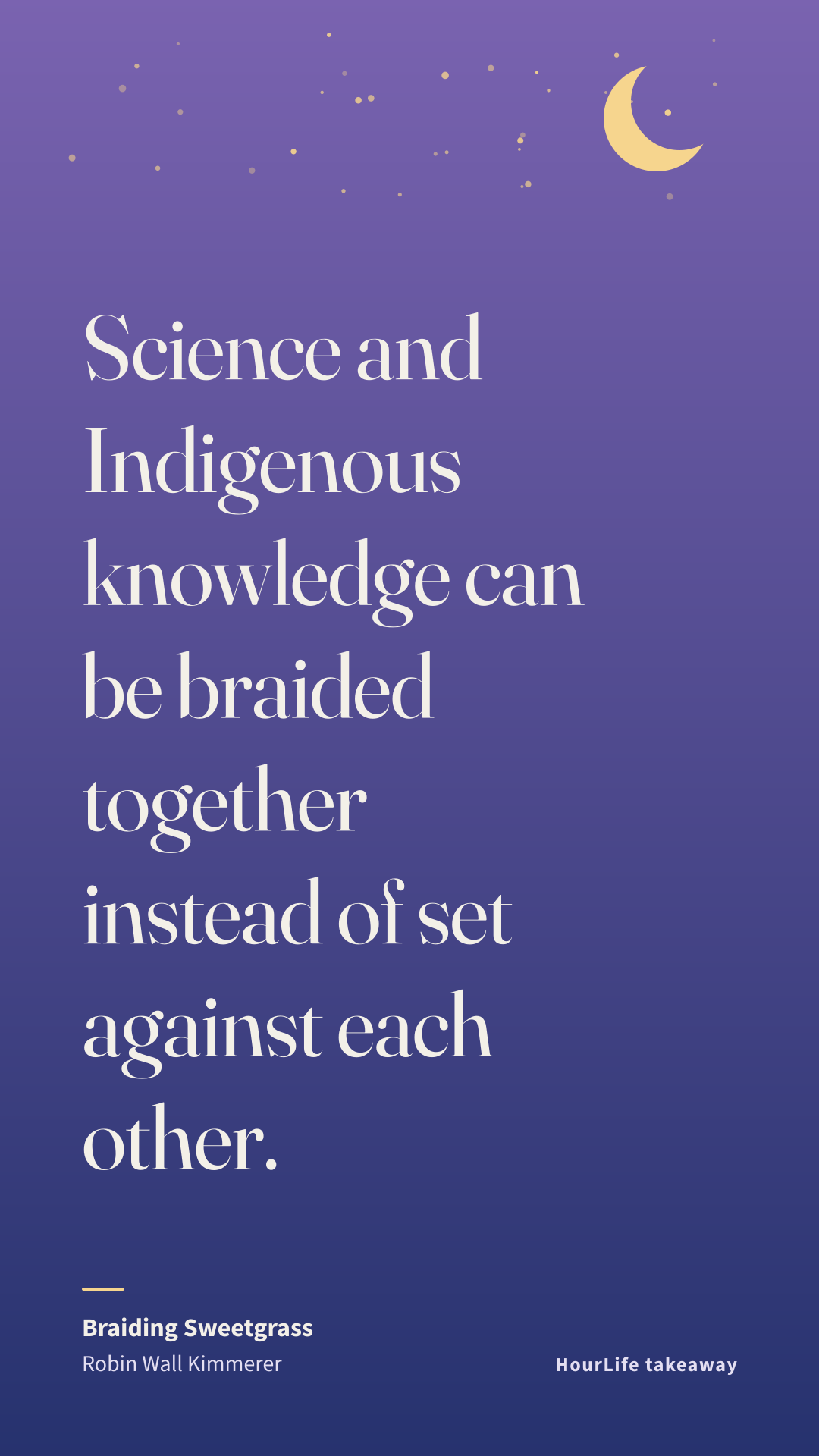
Science and Indigenous knowledge can be braided together instead of set against each other.

Braiding Sweetgrass Robin Wall Kimmerer HourLife takeaway

As a first-year botany student, Kimmerer said she wanted to learn why asters and goldenrod look so beautiful together, and was told that was not a question for science. Later she found part of the answer in how pollinators respond to purple and yellow side by side. The book joins careful observation with the idea that plants have something to teach.

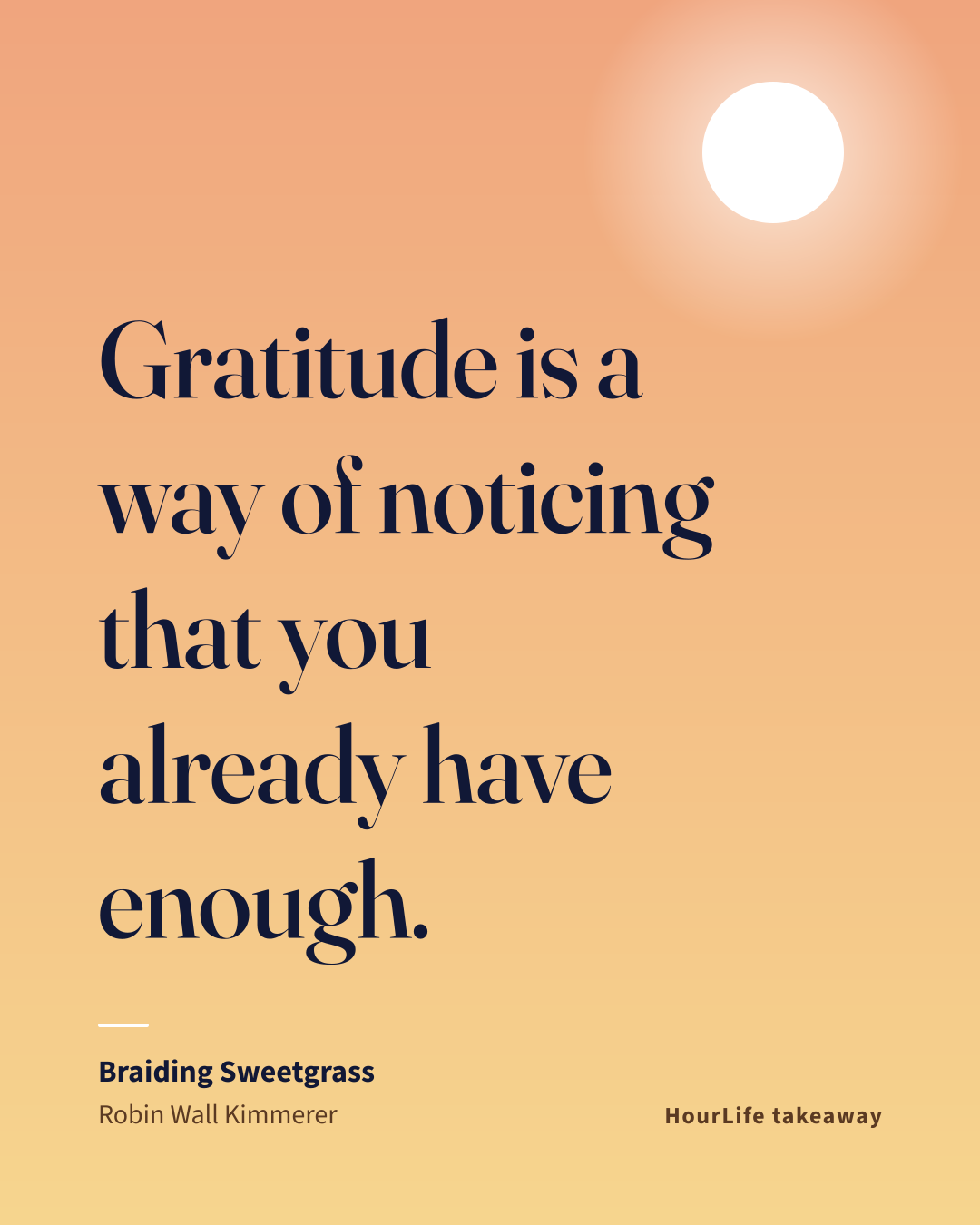
Gratitude is a way of noticing that you already have enough.

Braiding Sweetgrass Robin Wall Kimmerer HourLife takeaway

Kimmerer describes the Thanksgiving Address of the Haudenosaunee, which greets and thanks each part of the natural world in turn, and which children at the Onondaga Nation School recite in place of a pledge. She argues that gratitude works against the endless wanting a consumer economy depends on.

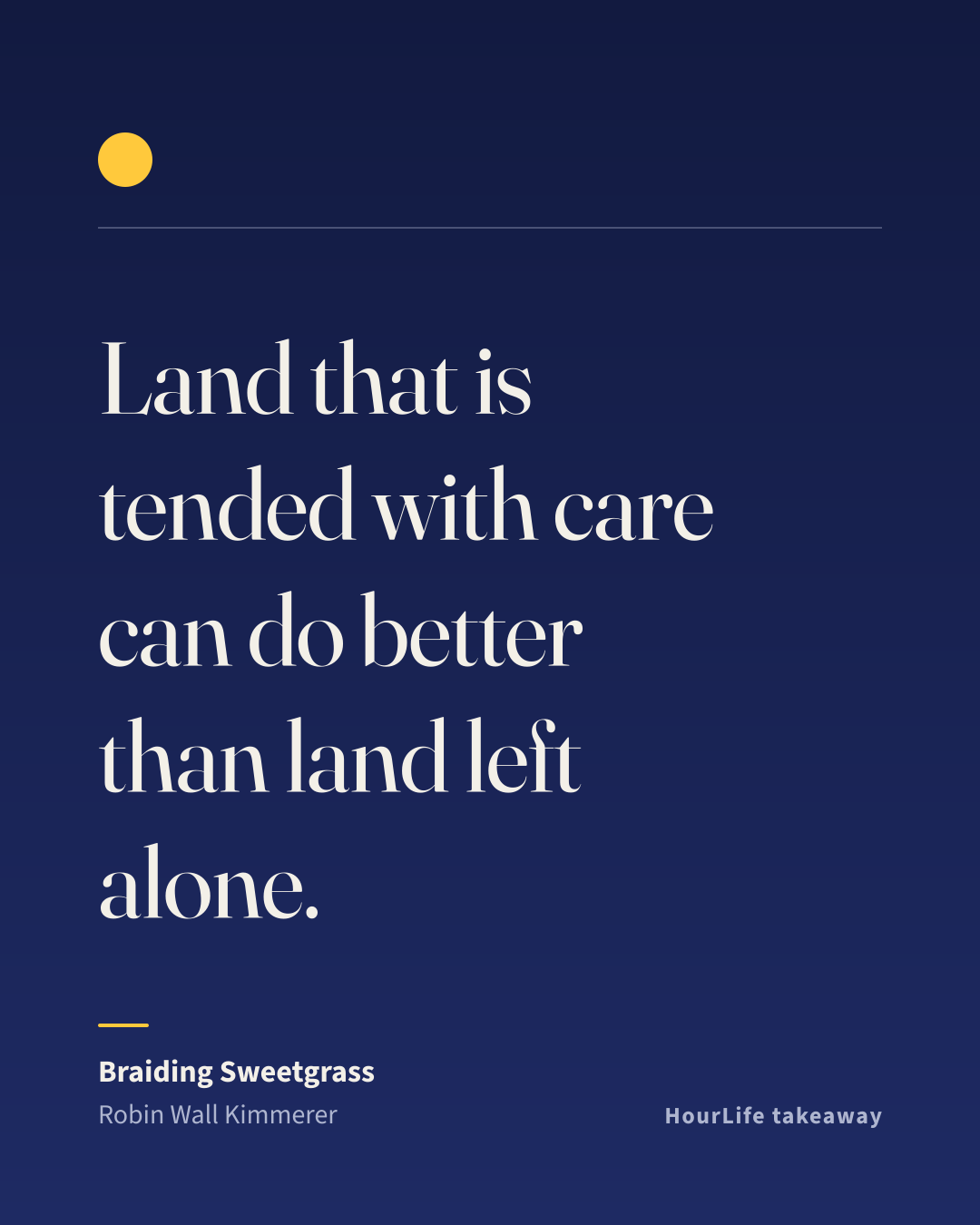
Land that is tended with care can do better than land left alone.

Braiding Sweetgrass Robin Wall Kimmerer HourLife takeaway

A graduate student's study found that sweetgrass harvested in the traditional way came back stronger than plots that were never picked. For Kimmerer it upends the idea that the best thing people can do for nature is to stay away. The better question is how to take part well.

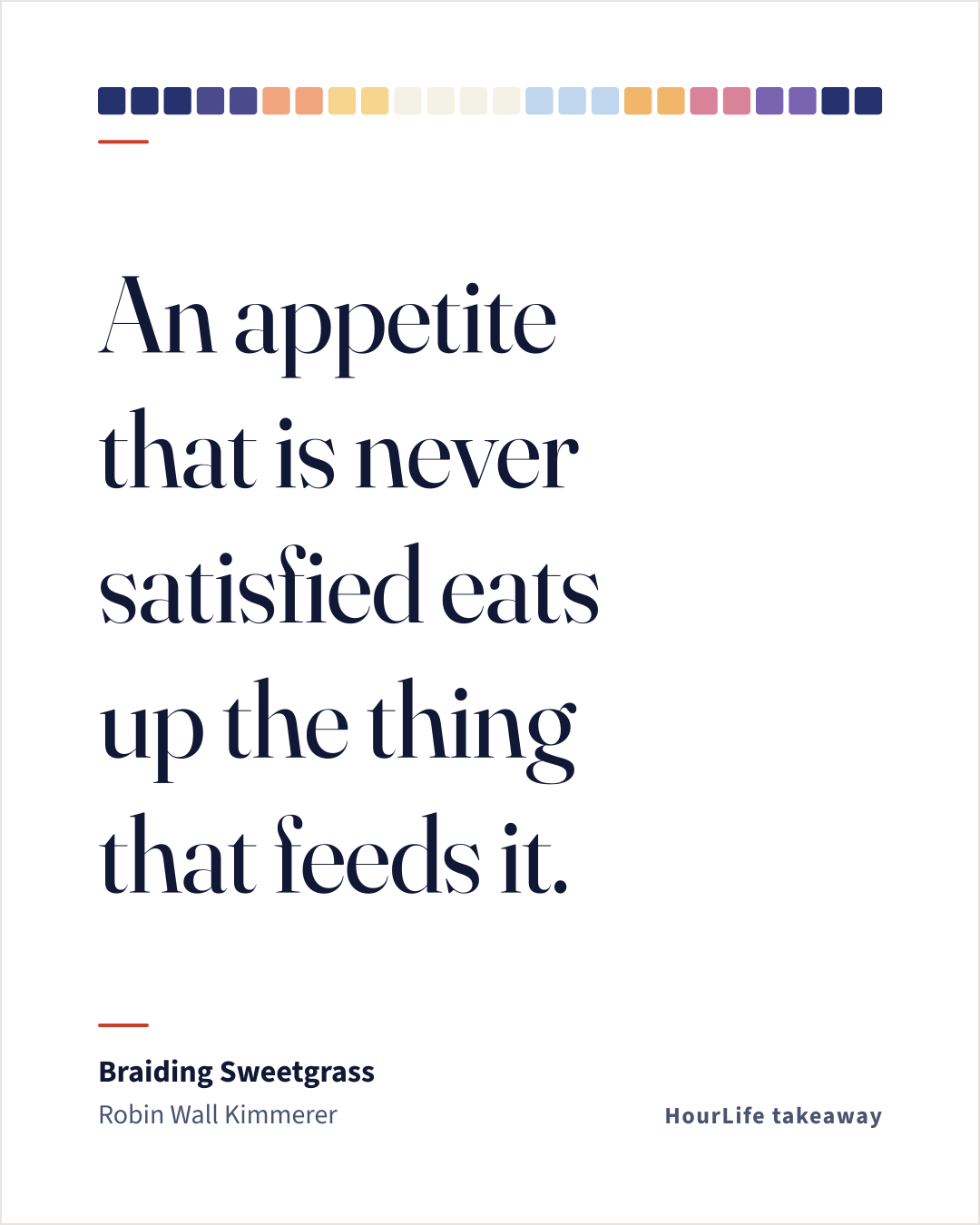
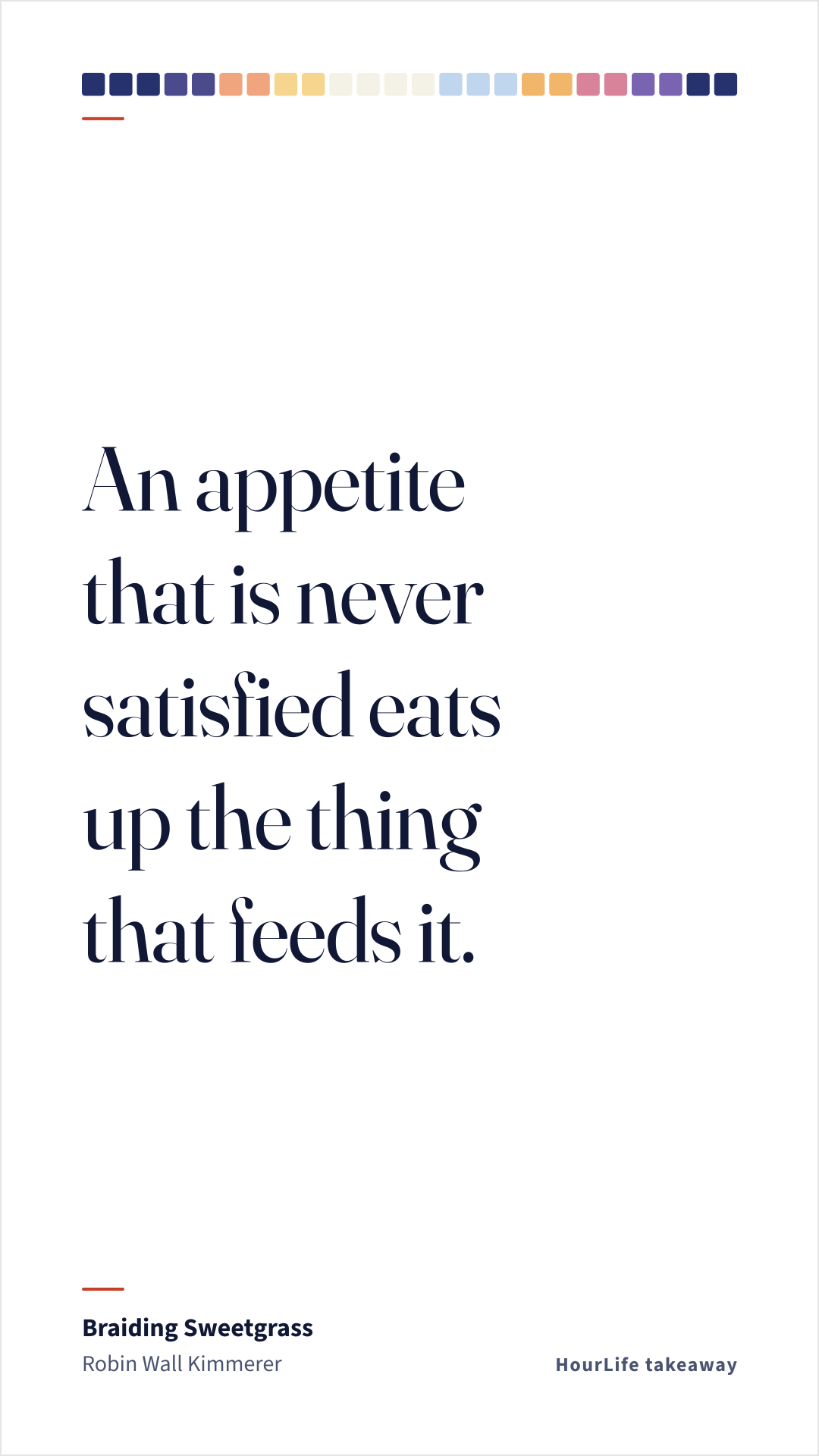
An appetite that is never satisfied eats up the thing that feeds it.

Braiding Sweetgrass Robin Wall Kimmerer HourLife takeaway

Kimmerer draws on the Windigo of Anishinaabe stories, a being whose hunger grows the more it eats. She uses it to describe an economy of endless consumption, and answers it with the habits that starve it: gratitude, restraint and reciprocity.

Keep this going in the app.

HourLife turns these ideas into a daily system — goals, habits, focus, and reflection in one private place.