Keep this author quotes for later
Sign in to save

Sasha Hamdani

The most-loved lines from Sasha Hamdani, drawn from 1 book in the library.

Lines labelled “HourLife takeaway” are our wording of the book’s ideas and may paraphrase it. Only lines in quotation marks are the author’s own words, with where they appear. Check the book for exact wording before you quote it. Spot an error?

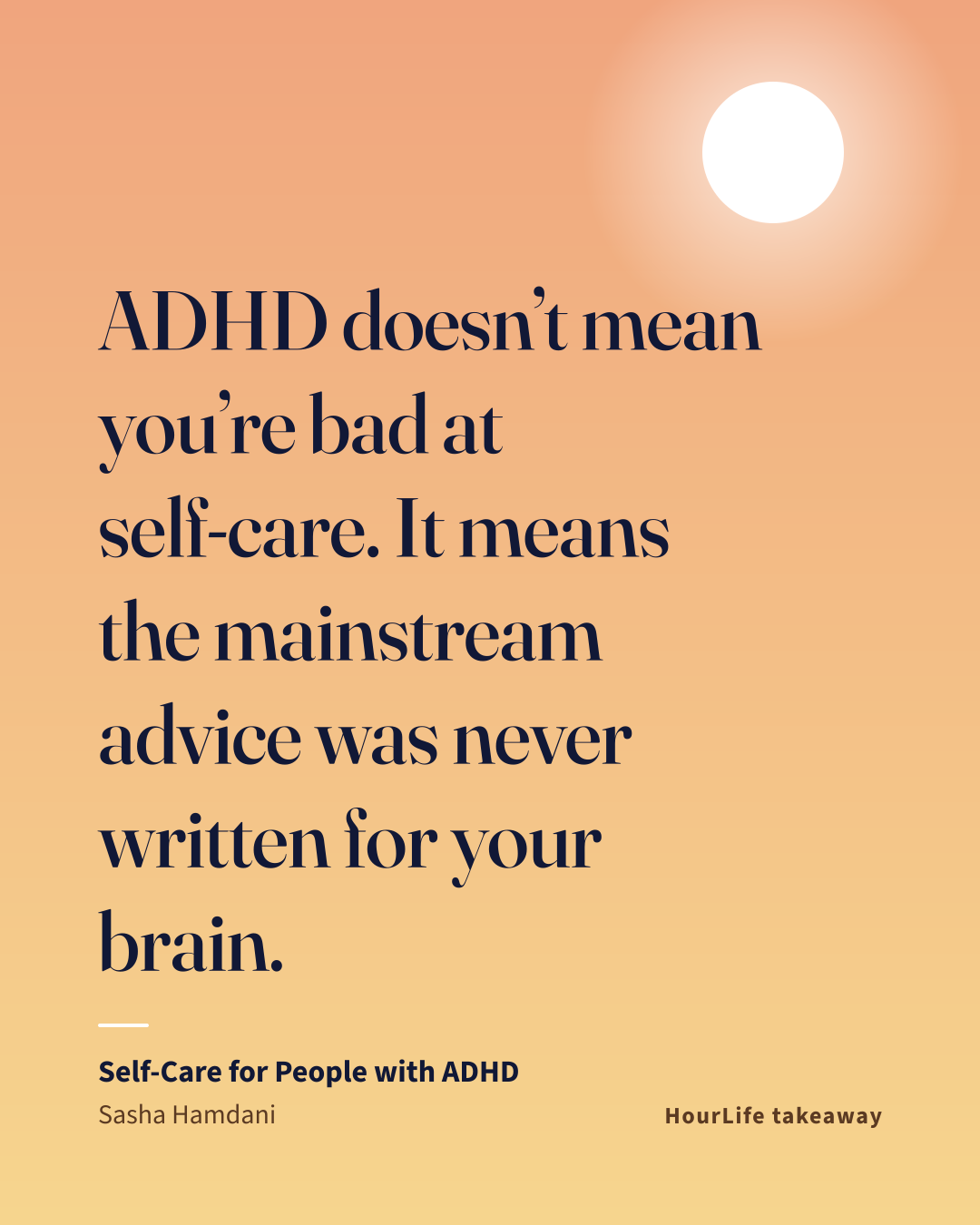
ADHD doesn’t mean you’re bad at self-care. It means the mainstream advice was never written for your brain.

Self-Care for People with ADHD Sasha Hamdani HourLife takeaway

The self-care industry produces advice for regulated nervous systems. For ADHD brains, most routines fail not from lack of effort but from a category mismatch — the instructions assumed a brain that wasn't theirs. Hamdani's central reframe is that this is a design problem, not a character problem.


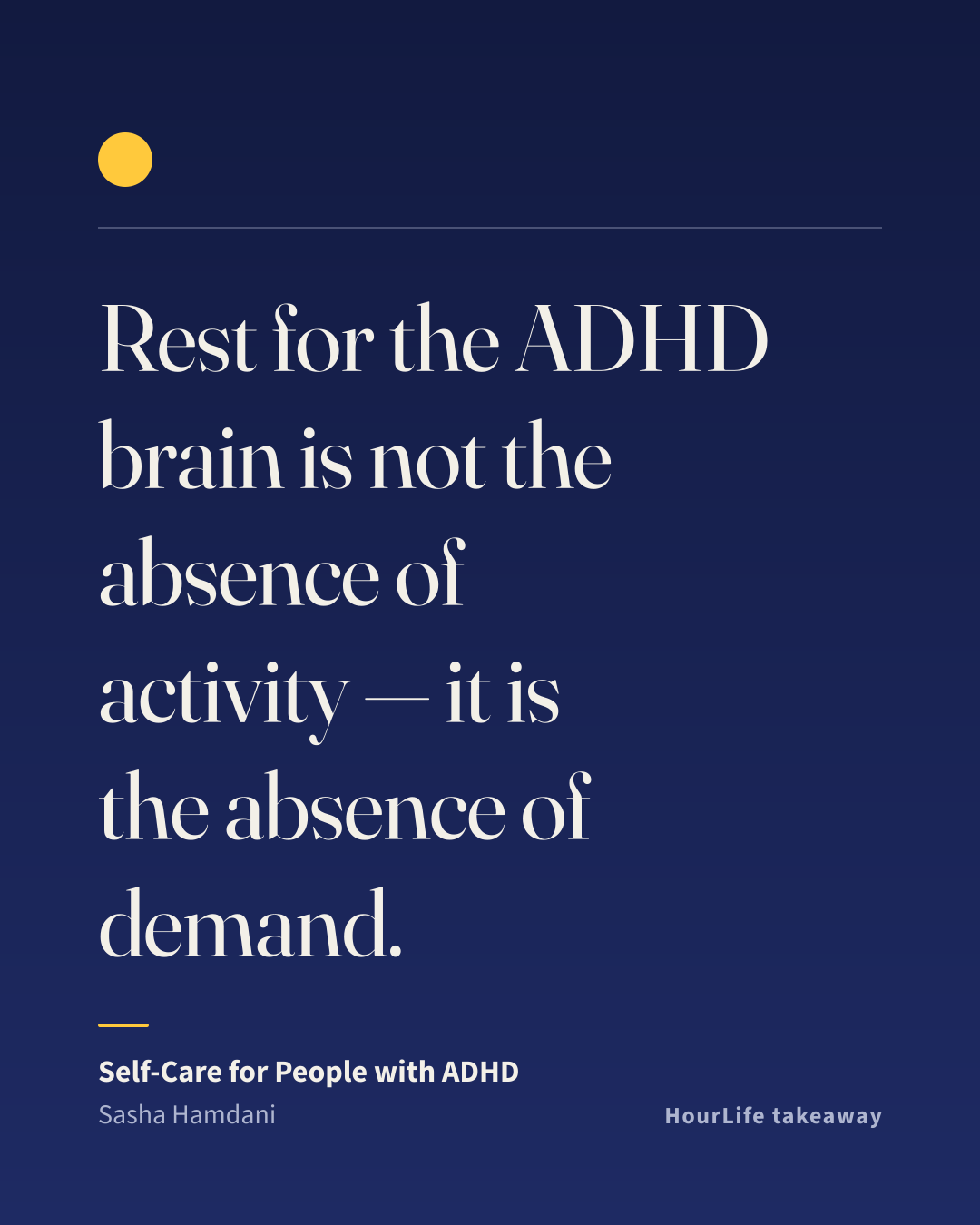
Rest for the ADHD brain is not the absence of activity — it is the absence of demand.

Self-Care for People with ADHD Sasha Hamdani HourLife takeaway

Neurotypical rest often looks like quiet stillness. For ADHD, that can feel worse than working. True rest is the removal of cognitive and emotional demands, which might mean a walk, a familiar show, or purposeless movement rather than meditation. Recognizing this distinction removes enormous guilt.

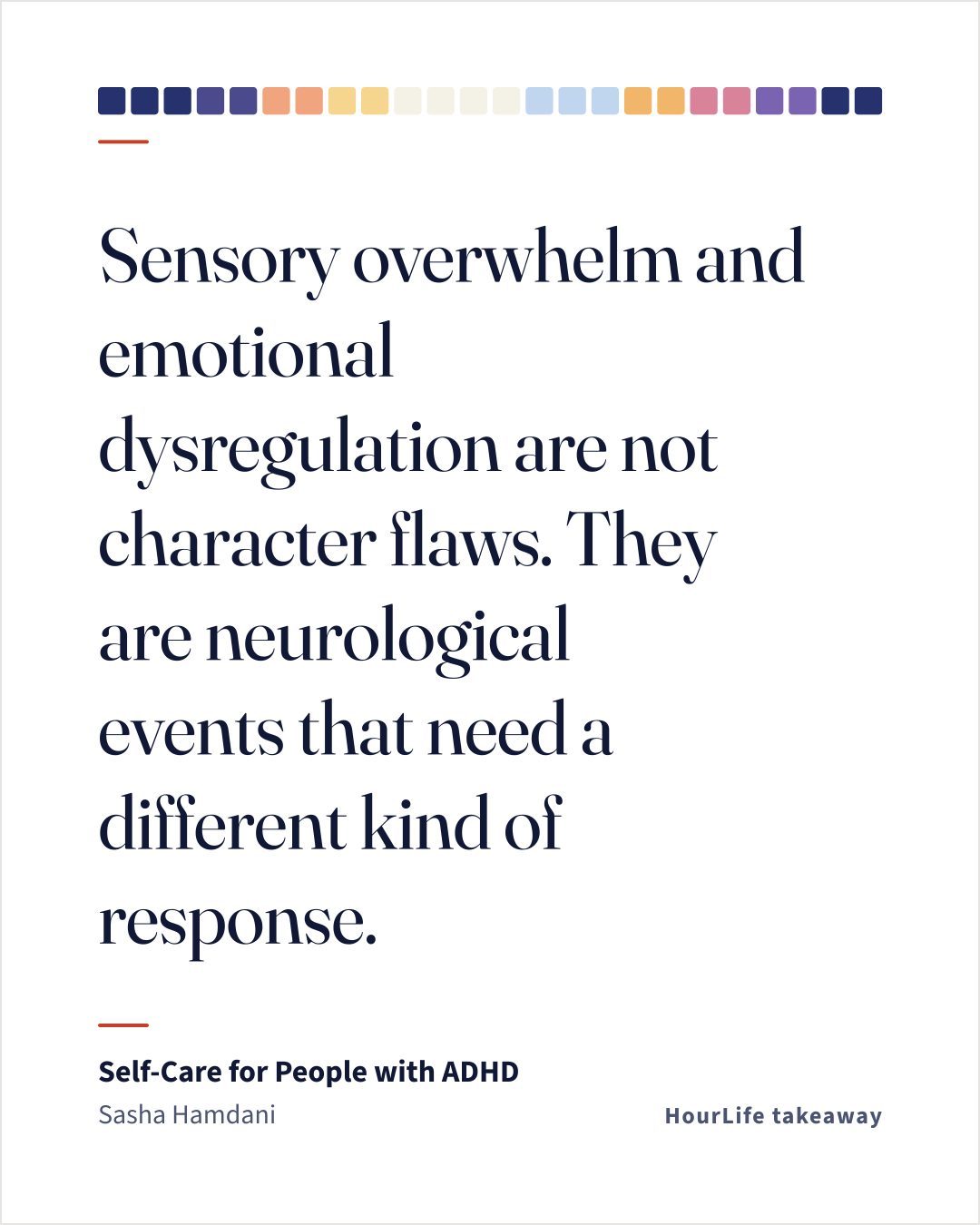
Sensory overwhelm and emotional dysregulation are not character flaws. They are neurological events that need a different kind of response.

Self-Care for People with ADHD Sasha Hamdani HourLife takeaway

ADHD is a disorder of regulation — attention, impulse, and emotion all belong to the same underlying neurological system. When you become flooded by a sensory environment or an emotion, the corrective is not willpower or shame but a system designed in advance for those moments.

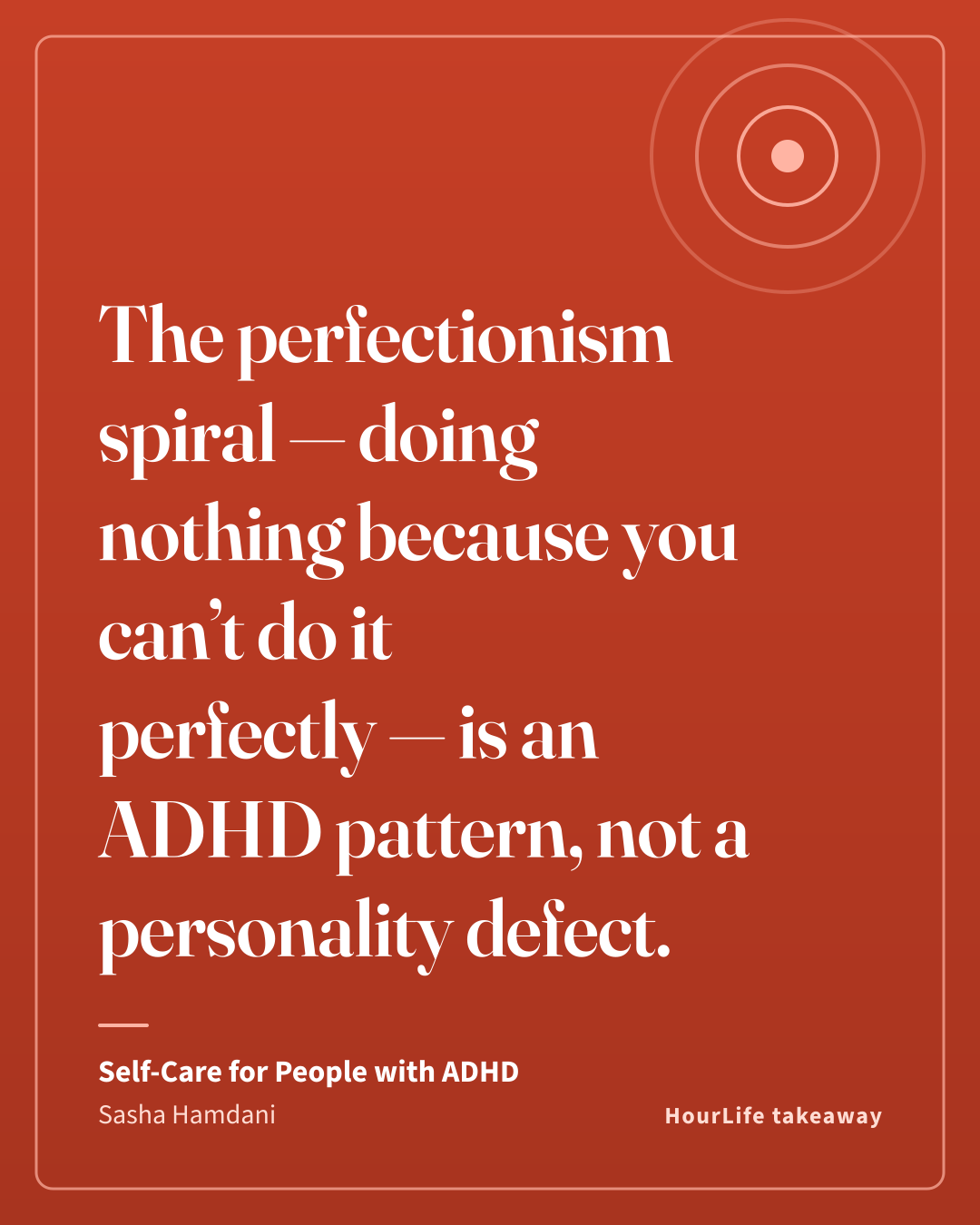
The perfectionism spiral — doing nothing because you can’t do it perfectly — is an ADHD pattern, not a personality defect.

Self-Care for People with ADHD Sasha Hamdani HourLife takeaway

Perfectionism in ADHD is a coping mechanism masquerading as a standard. It protects the brain from the anticipated shame of imperfect performance. Hamdani addresses this directly: the smallest sustainable action consistently outperforms the ideal action that never starts.

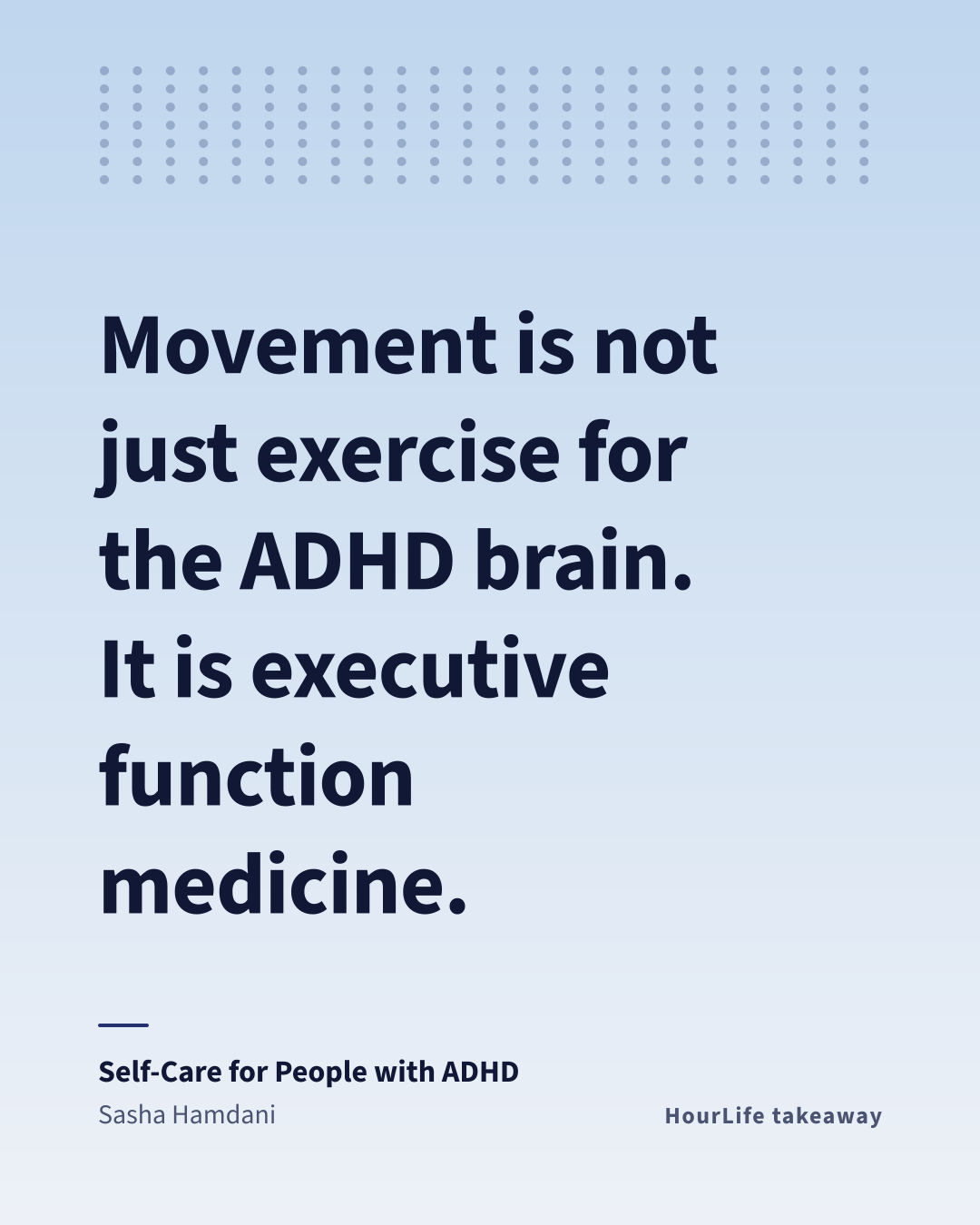
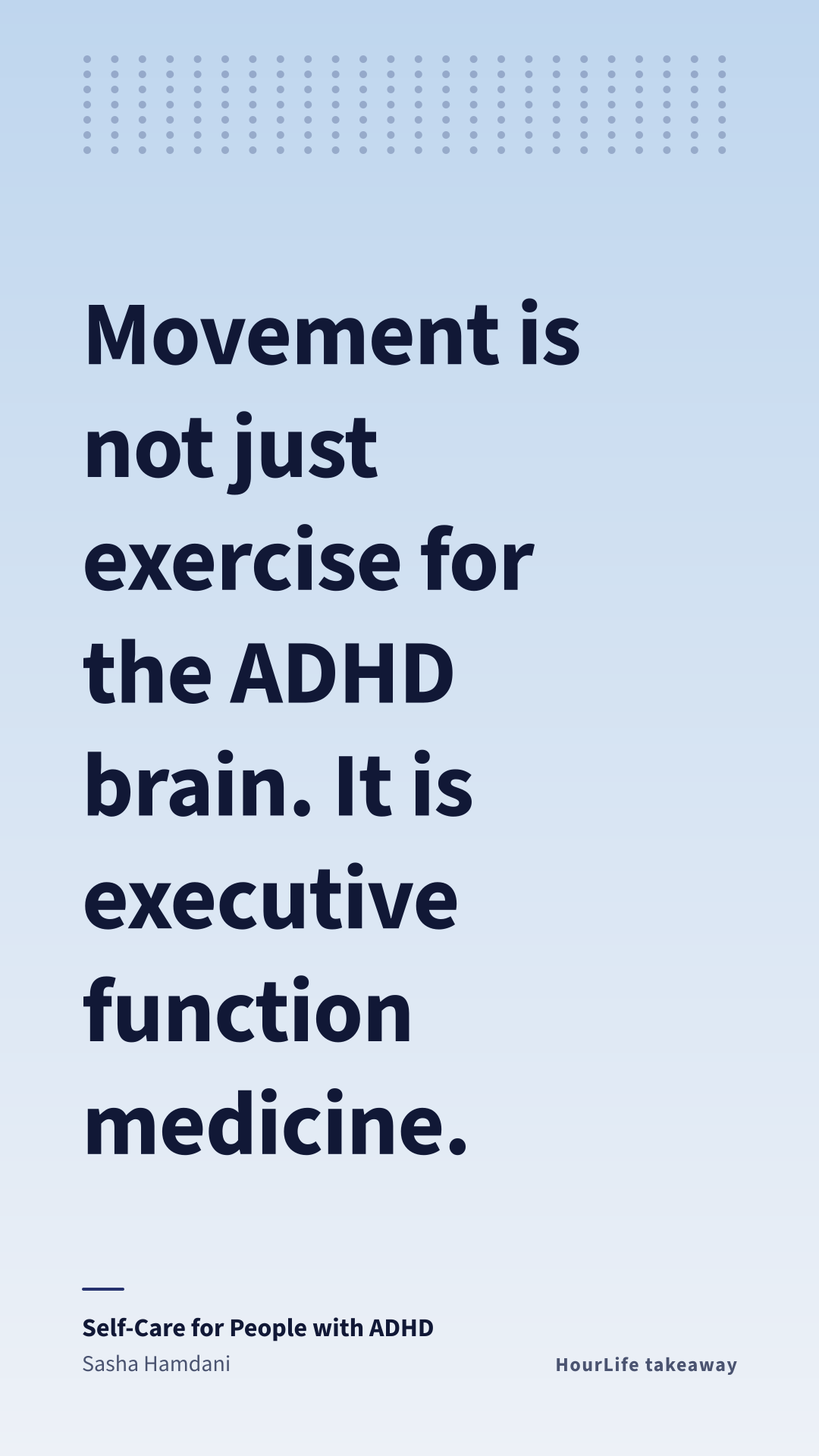
Movement is not just exercise for the ADHD brain. It is executive function medicine.

Self-Care for People with ADHD Sasha Hamdani HourLife takeaway

Physical movement raises dopamine and norepinephrine — the same neurotransmitters targeted by stimulant medication. Hamdani frames this not as optional self-improvement but as a neurochemical intervention. Five minutes of movement before a hard task often accomplishes what 30 minutes of trying harder cannot.

Keep this going in the app.

HourLife turns these ideas into a daily system — goals, habits, focus, and reflection in one private place.