Keep this author quotes for later
Sign in to save

Sebastian Mallaby

The most-loved lines from Sebastian Mallaby, drawn from 1 book in the library.

Lines labelled “HourLife takeaway” are our wording of the book’s ideas and may paraphrase it. Only lines in quotation marks are the author’s own words, with where they appear. Check the book for exact wording before you quote it. Spot an error?

For Hassabis, games were never a detour from science. They were the training ground.

The Infinity Machine Sebastian Mallaby HourLife takeaway

Chess as a boy, designing video games as a teenager, then Atari, Go and chess again for DeepMind's programs. Mallaby shows one thread running through all of it: a game gives you clear rules and a clear score, which is exactly what a learning system needs to practise on.


A two-step mission kept the lab pointed at the far goal: solve intelligence, then use it on everything else.

The Infinity Machine Sebastian Mallaby HourLife takeaway

DeepMind's founding aim was unusually long-range for a start-up. Mallaby uses it to explain choices that looked odd at the time, such as spending years on games with no product in sight. The far goal set the order of the near steps.

Studying the brain was Hassabis’s way of studying how to build a mind.

The Infinity Machine Sebastian Mallaby HourLife takeaway

Between his games company and DeepMind, Hassabis did a PhD in cognitive neuroscience at University College London, working on memory and imagination. The book treats this as groundwork, not a career change: he wanted to know how the one working example of general intelligence does it.

Sometimes the move that looks like a mistake is the one that changes the game.

The Infinity Machine Sebastian Mallaby HourLife takeaway

In the second game of the 2016 match in Seoul, AlphaGo played a move that strong players first read as an error. It turned out to be part of a winning plan. Mallaby uses the match to show the moment many people saw that a machine could find ideas humans had missed.

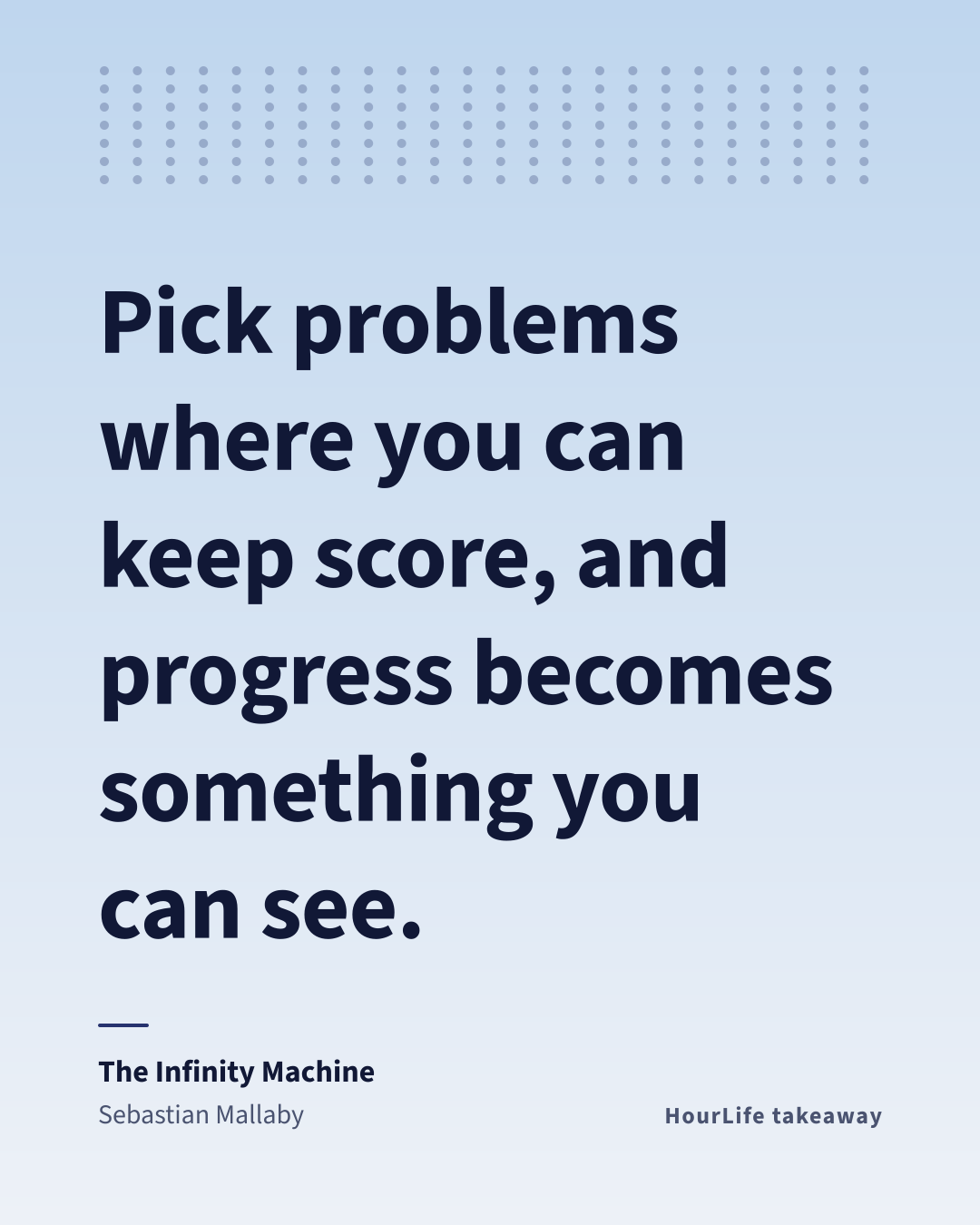
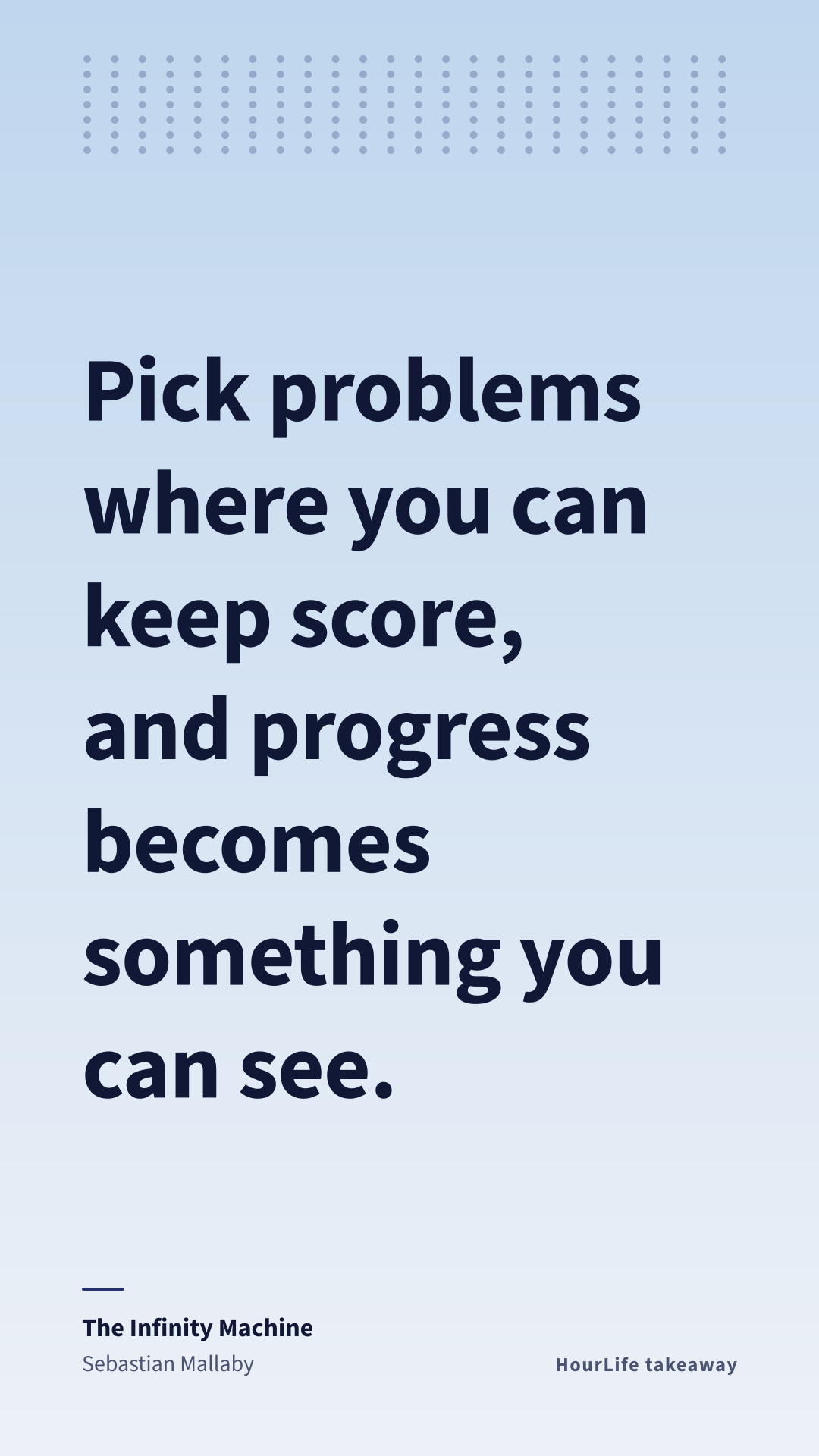
Pick problems where you can keep score, and progress becomes something you can see.

The Infinity Machine Sebastian Mallaby HourLife takeaway

Protein folding had a huge space of possible shapes, a clear measure of how close a prediction is, and a public blind test, the CASP competition, that showed who was ahead. That made it a natural next target after Go, and AlphaFold's results there led to the 2024 Nobel Prize in Chemistry.

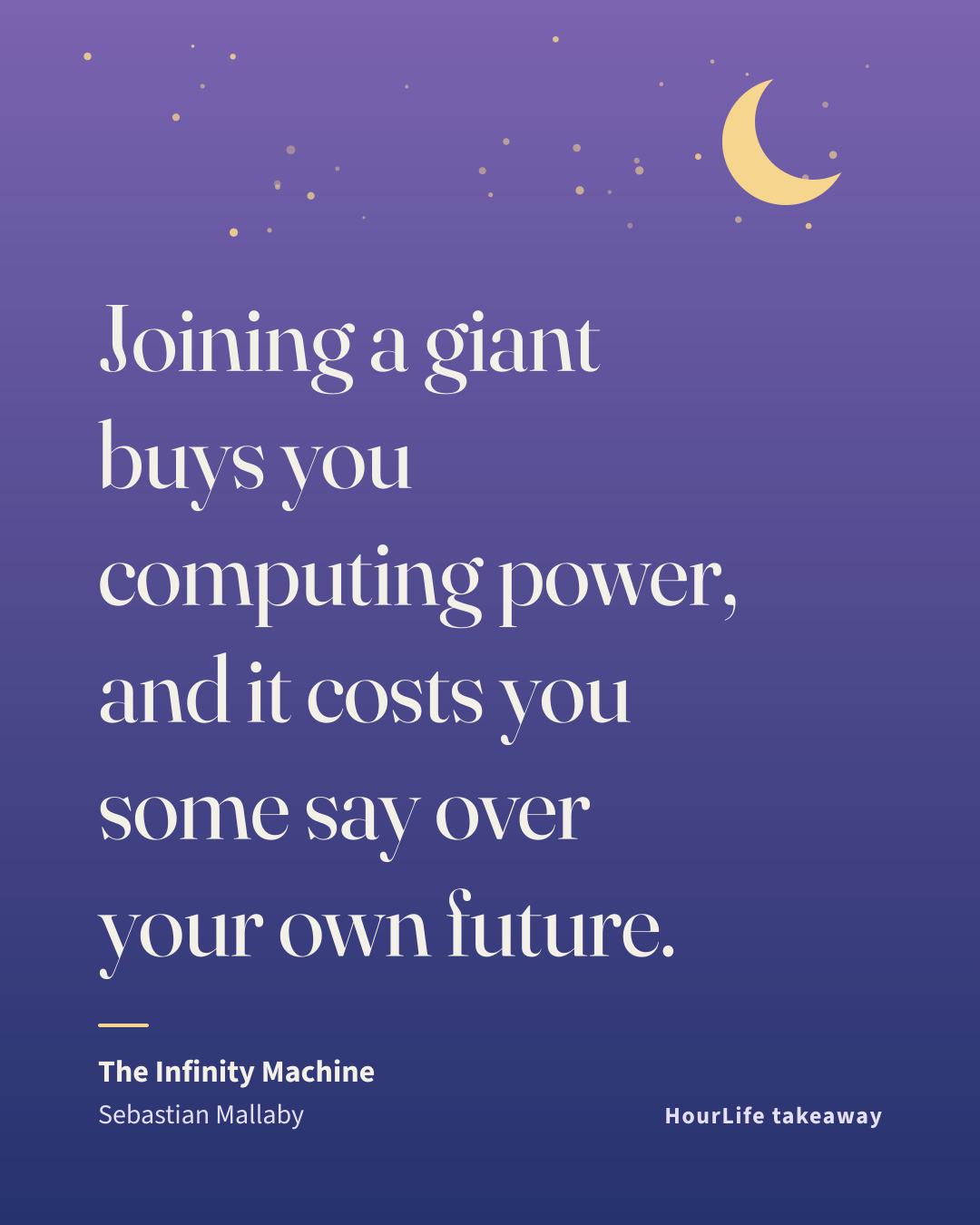
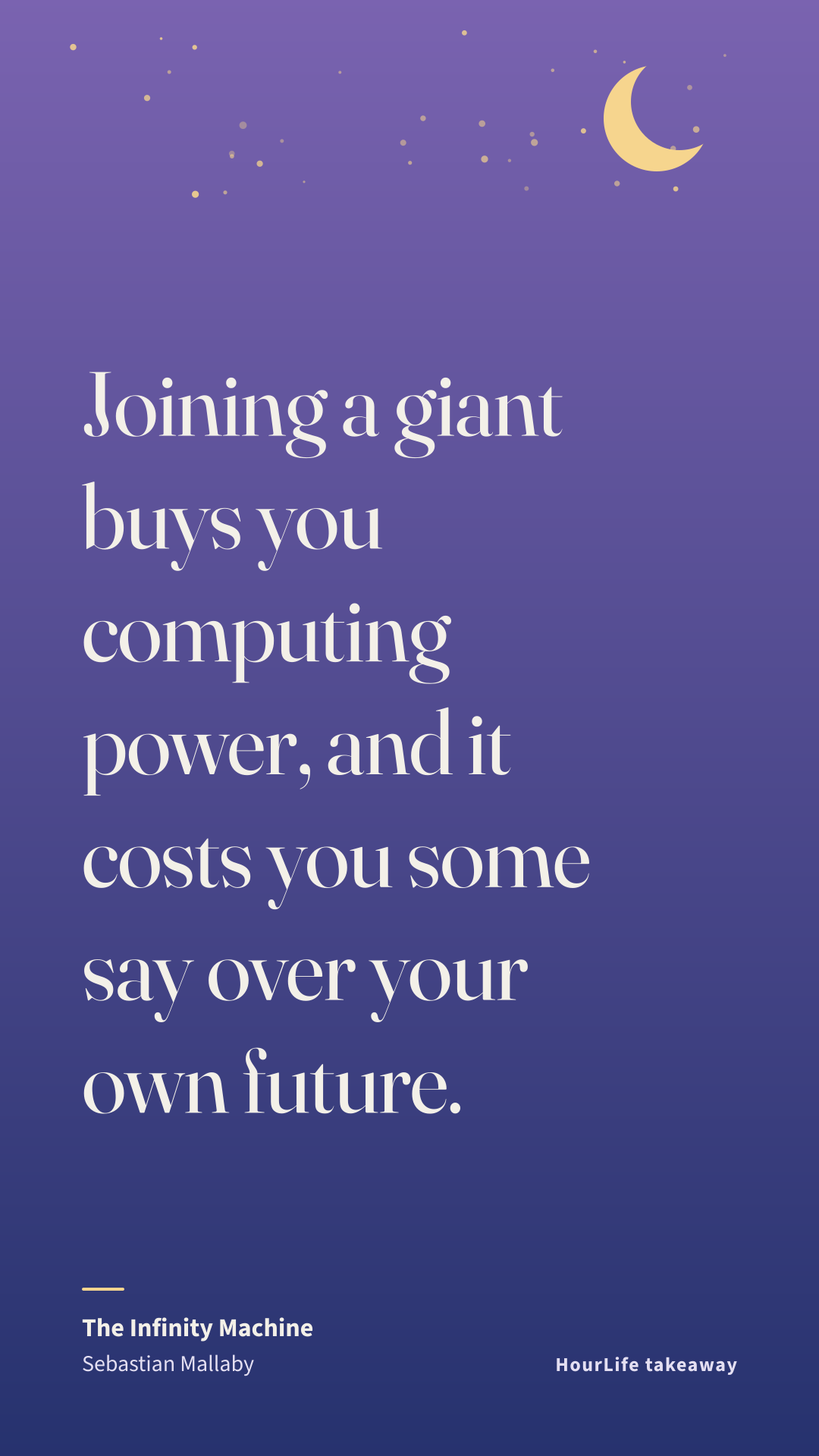
Joining a giant buys you computing power, and it costs you some say over your own future.

The Infinity Machine Sebastian Mallaby HourLife takeaway

Google bought DeepMind in 2014, and the money and computers that came with it paid for the work that followed. Mallaby traces how the lab tried to keep its independence and its safeguards inside a large company, and how that became harder as the stakes rose.

A rival’s launch can rewrite a patient plan almost overnight.

The Infinity Machine Sebastian Mallaby HourLife takeaway

When ChatGPT came out in late 2022, a lab known for careful research found itself behind in the product race. The book follows the scramble that followed, including Google merging its two AI groups into Google DeepMind under Hassabis in 2023 and the push to ship Gemini.

Caution is easy to promise before the race starts, and hard to keep once it has.

The Infinity Machine Sebastian Mallaby HourLife takeaway

Mallaby describes people around DeepMind disagreeing about how fast to go, and how competitive pressure moved safety down the list across the industry. He presents the debate from several sides rather than settling it, which leaves the reader with the question of who should decide.

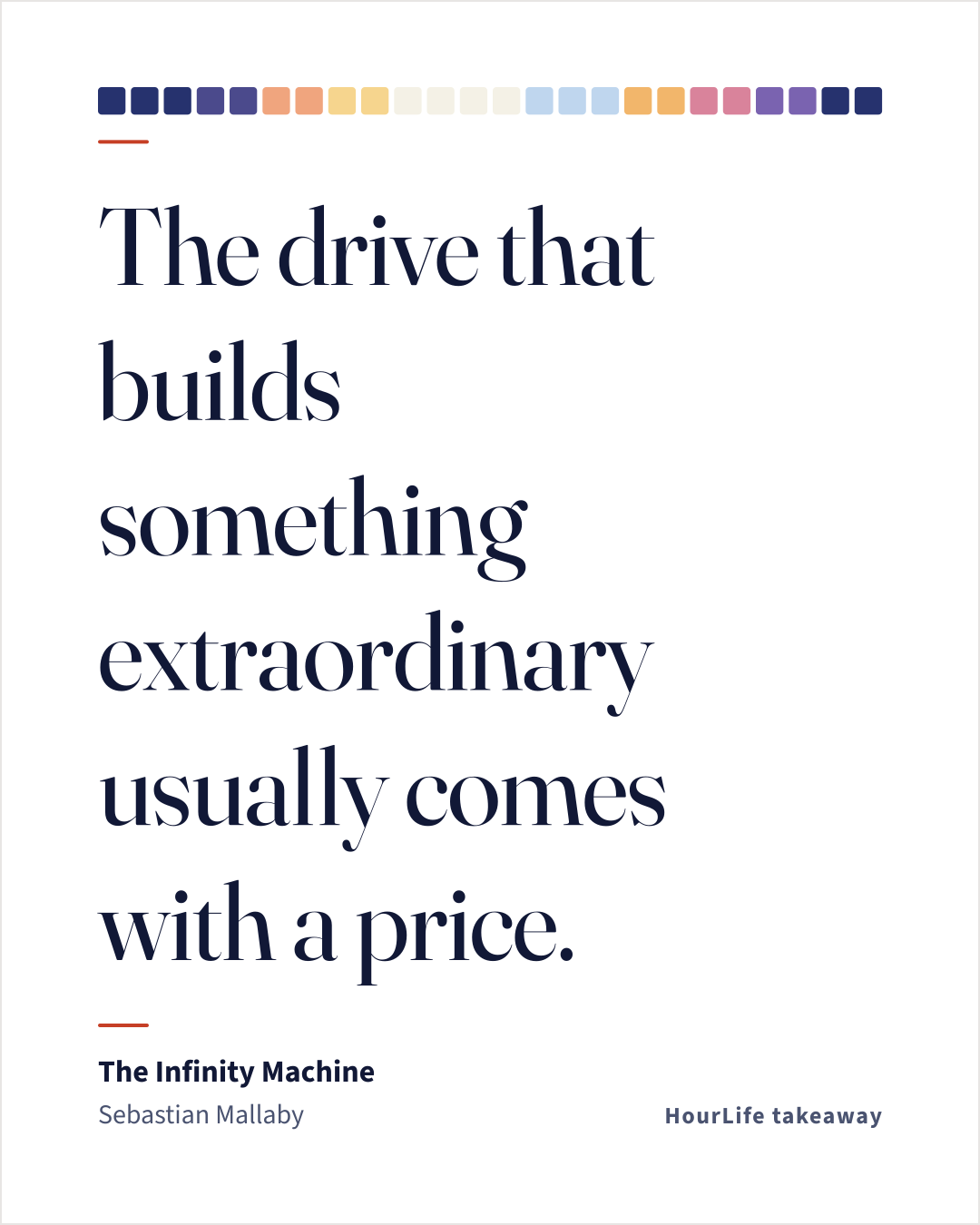
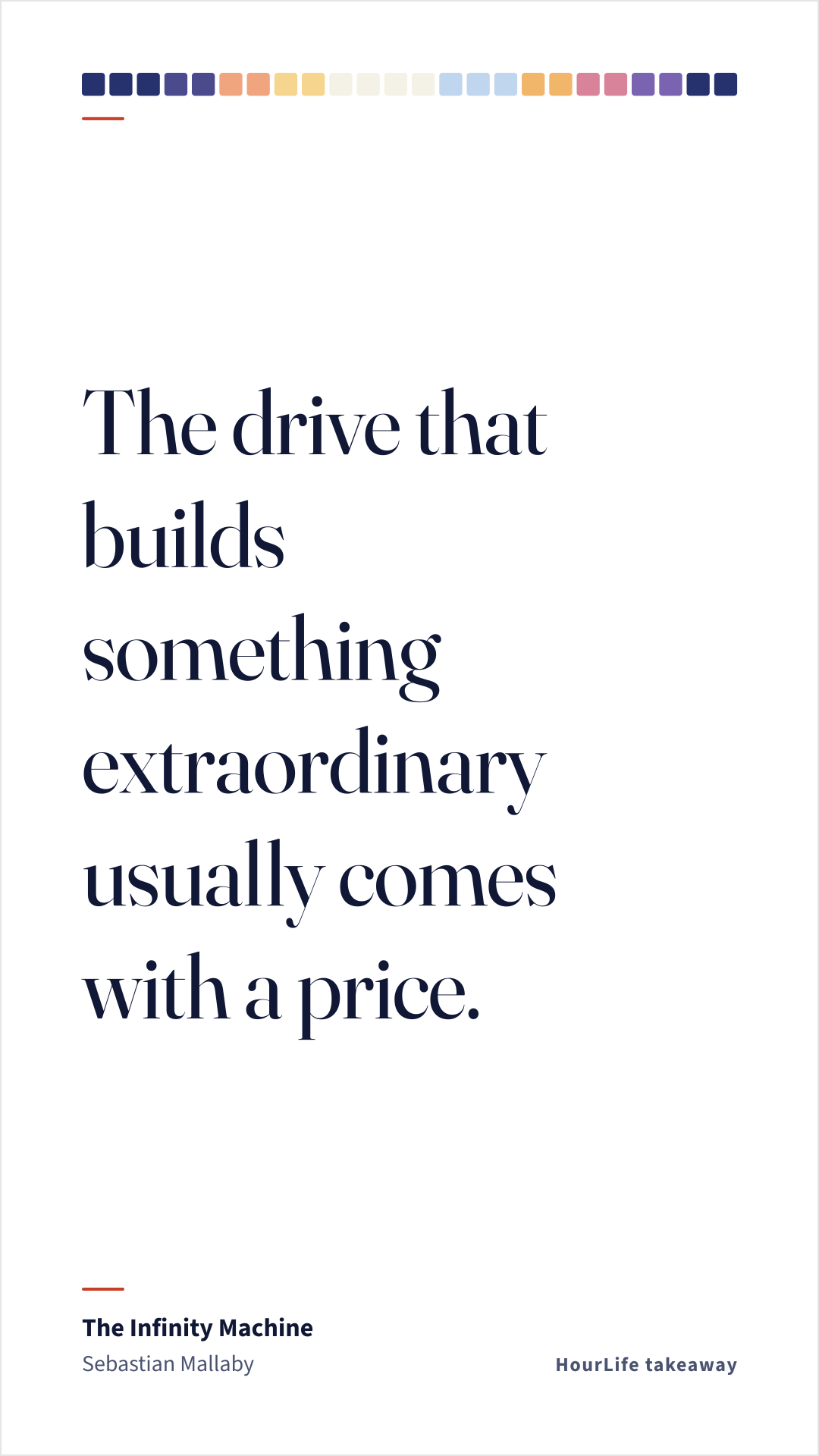
The drive that builds something extraordinary usually comes with a price.

The Infinity Machine Sebastian Mallaby HourLife takeaway

Mallaby writes about Hassabis with admiration and with a critic's eye. The perfectionism and intensity that took him from chess tournaments to a Nobel Prize also shaped how he ran a lab and treated rivals. The portrait is of a person, not a legend.

Keep this going in the app.

HourLife turns these ideas into a daily system — goals, habits, focus, and reflection in one private place.