Keep this author quotes for later
Sign in to save

Vanessa Van Edwards

The most-loved lines from Vanessa Van Edwards, drawn from 2 books in the library.

Lines labelled “HourLife takeaway” are our wording of the book’s ideas and may paraphrase it. Only lines in quotation marks are the author’s own words, with where they appear. Check the book for exact wording before you quote it. Spot an error?

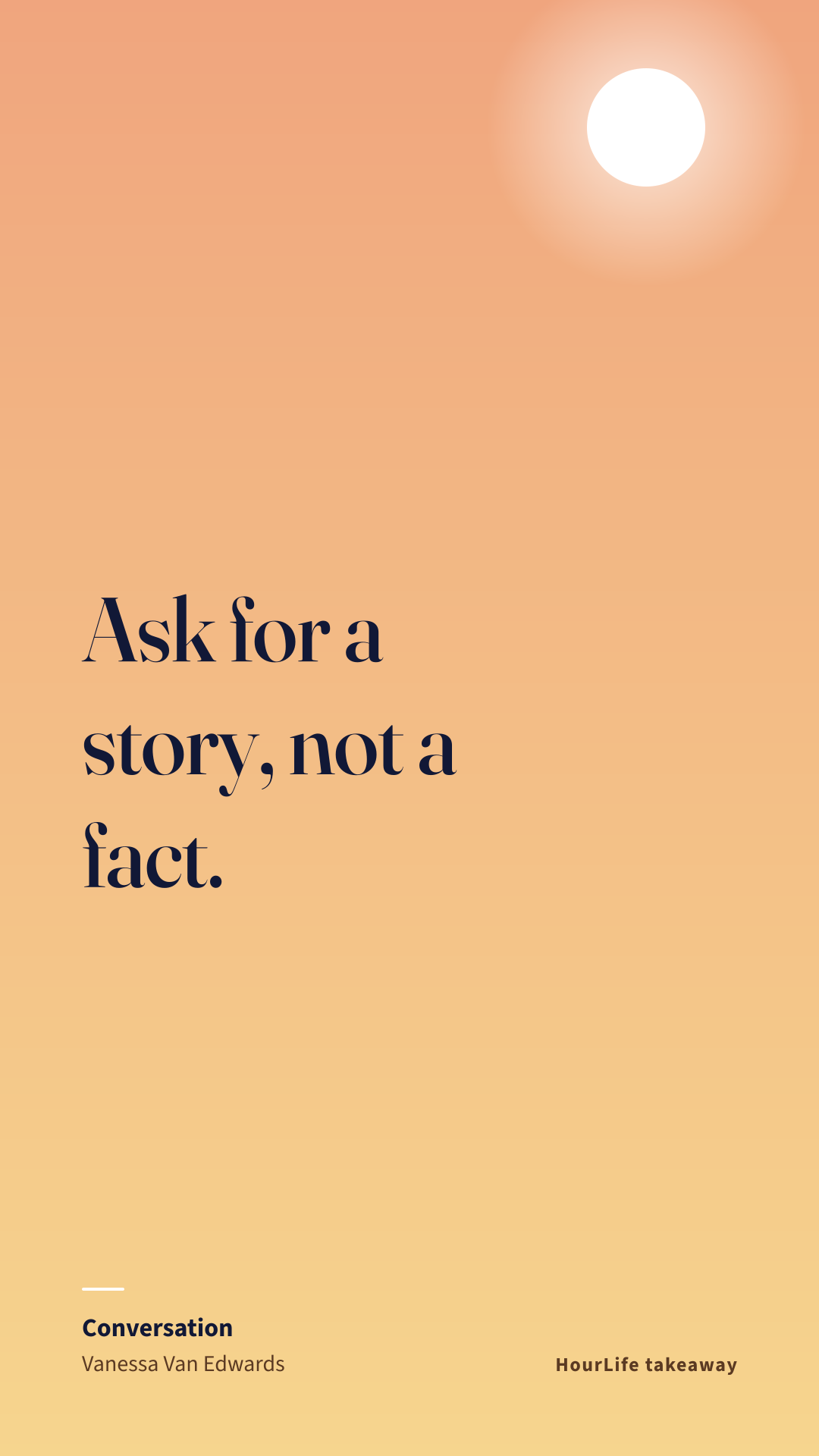
Ask for a story, not a fact.

Conversation Vanessa Van Edwards HourLife takeaway

Autopilot questions like what someone does for work tend to get a one-line answer and a dead end. Asking about the best part of their day, their plans or what they are excited about invites a story, and a story gives you something to follow.


Charisma is a signal, not a mysterious trait.

Cues Vanessa Van Edwards HourLife takeaway

Van Edwards makes charisma observable. The point is not to become someone else, but to notice which signals already shape how people experience your warmth, confidence, and attention.

Go one level deeper at a time.

Conversation Vanessa Van Edwards HourLife takeaway

The book sorts questions into three levels: the facts of someone's life, what they want and worry about, and the story they tell about who they are. Each step down is earned at the one above. Jumping straight to the deepest question feels like an interview.

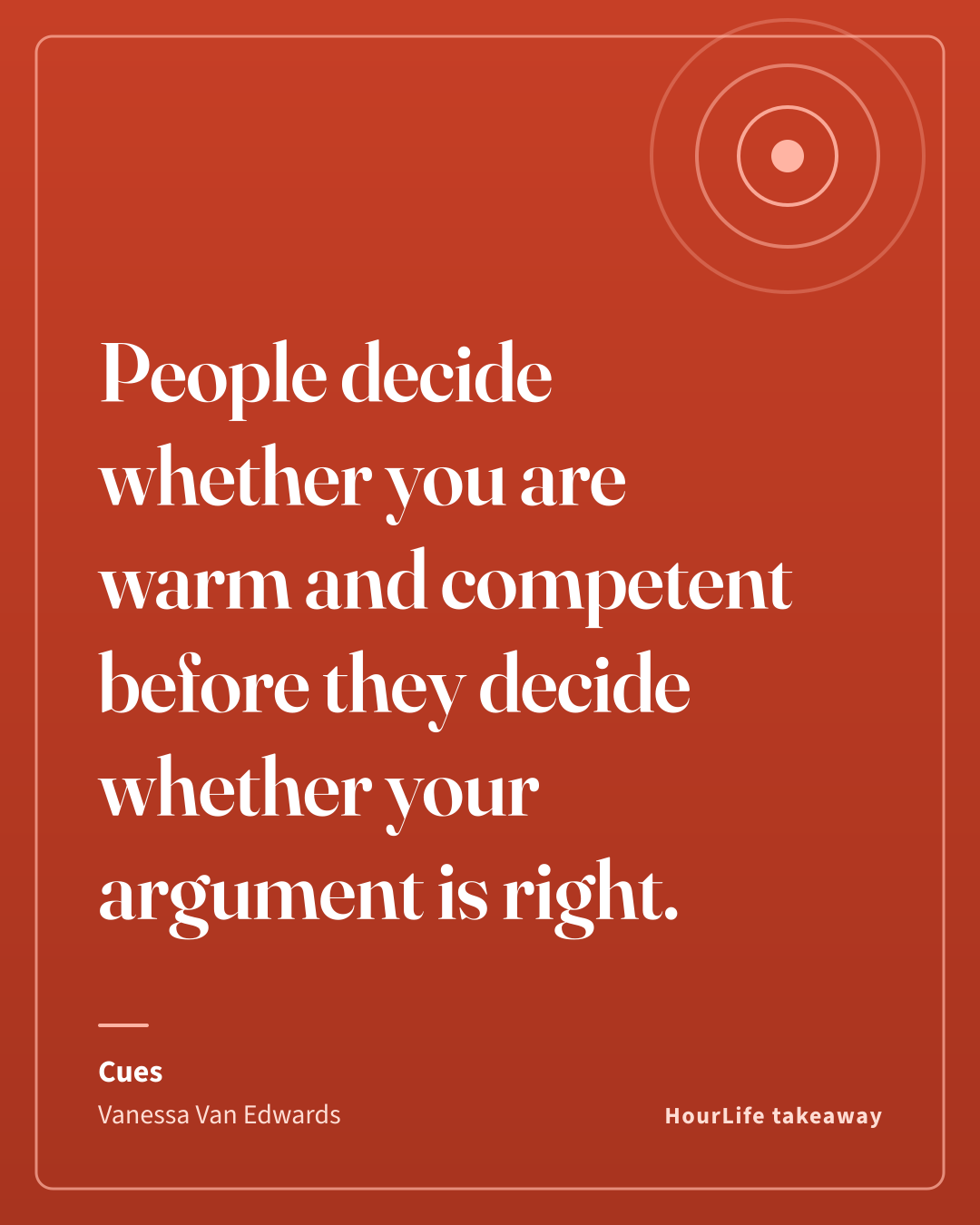
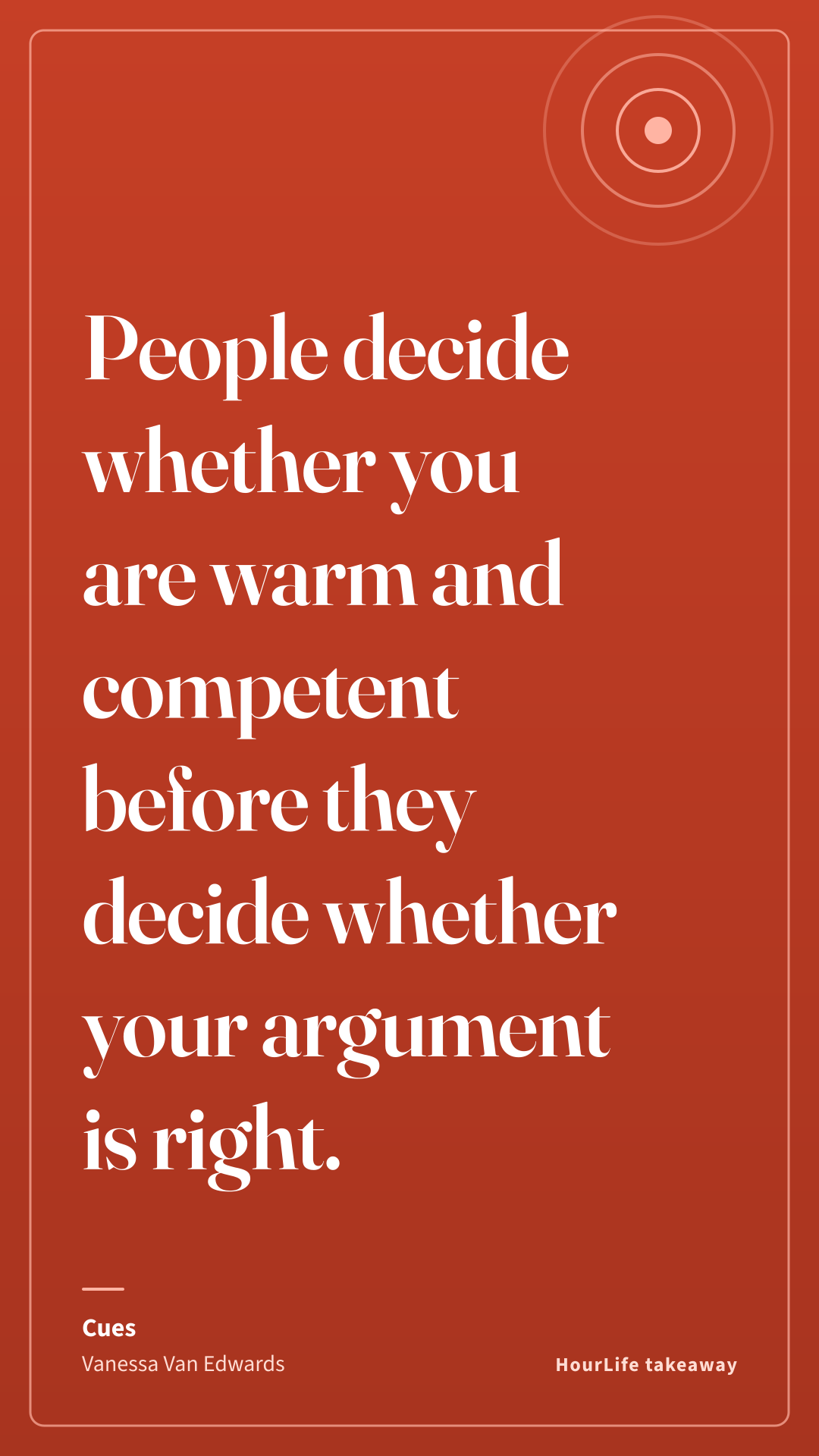
People decide whether you are warm and competent before they decide whether your argument is right.

Cues Vanessa Van Edwards HourLife takeaway

The first read is emotional and social. If your cues make people feel unsafe, cold, or uncertain, even a strong message has to fight uphill.

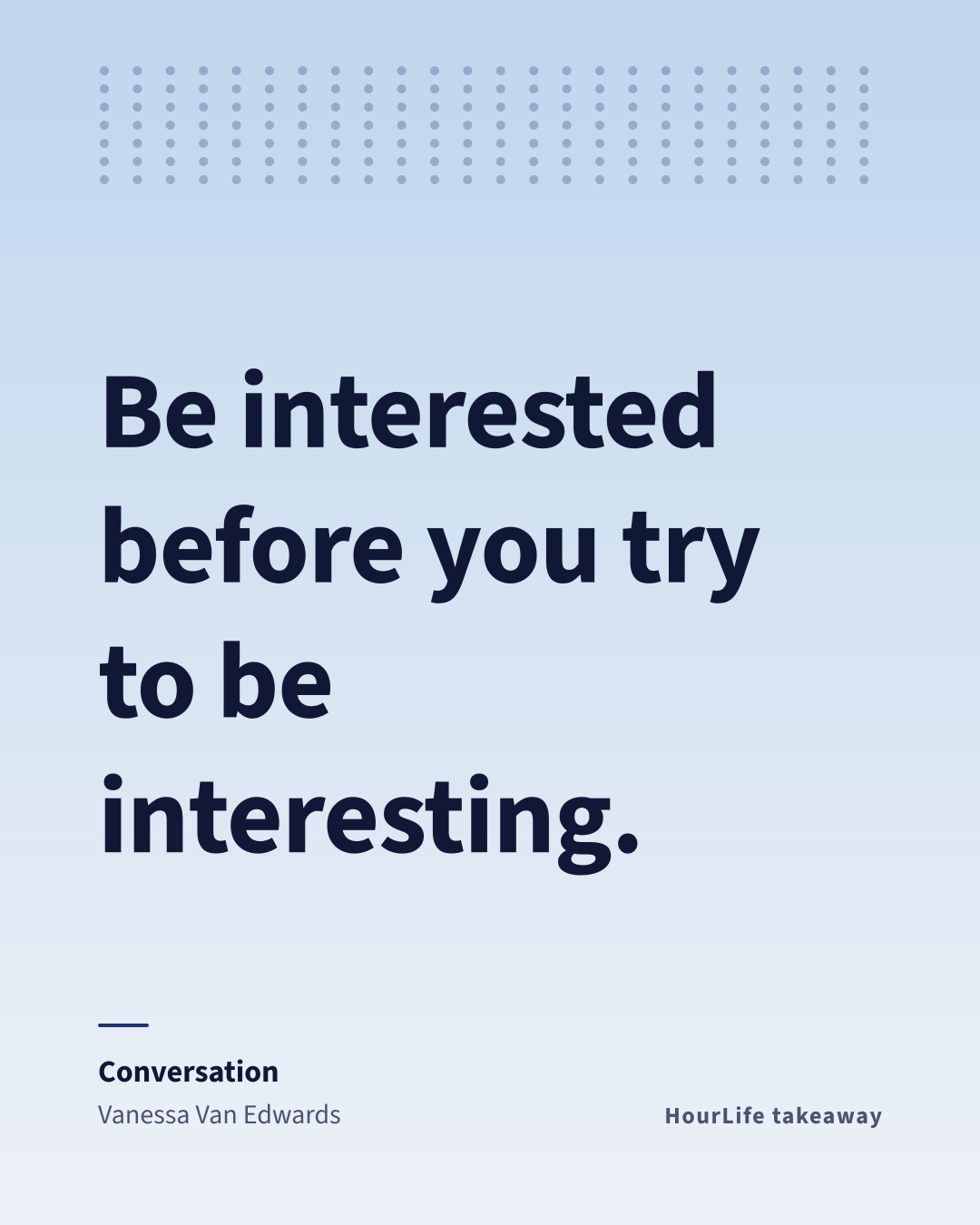
Be interested before you try to be interesting.

Conversation Vanessa Van Edwards HourLife takeaway

A good test after any conversation: could you name one thing the other person cares about? If you could not, you probably did most of the talking.

A single cue is a clue; a cluster is evidence.

Cues Vanessa Van Edwards HourLife takeaway

The book's discipline is restraint. Crossed arms, eye contact, or a pause can mean many things alone. Patterns across face, body, voice, words, and context are what deserve interpretation.

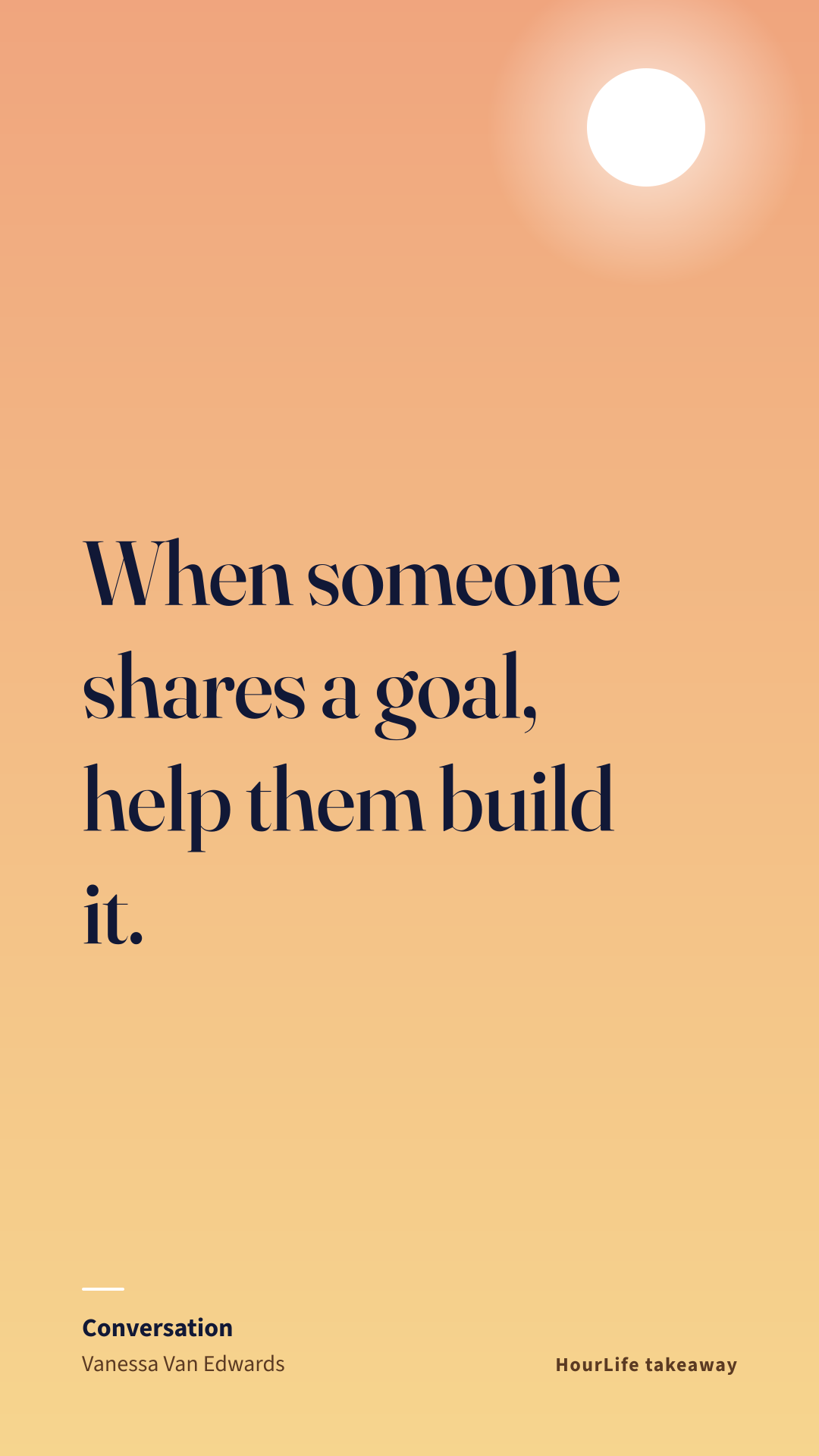
When someone shares a goal, help them build it.

Conversation Vanessa Van Edwards HourLife takeaway

The second level is goals, learning and worries. The book calls the encouraging response dream building. Ask more about the goal before you point out the risks or offer advice.

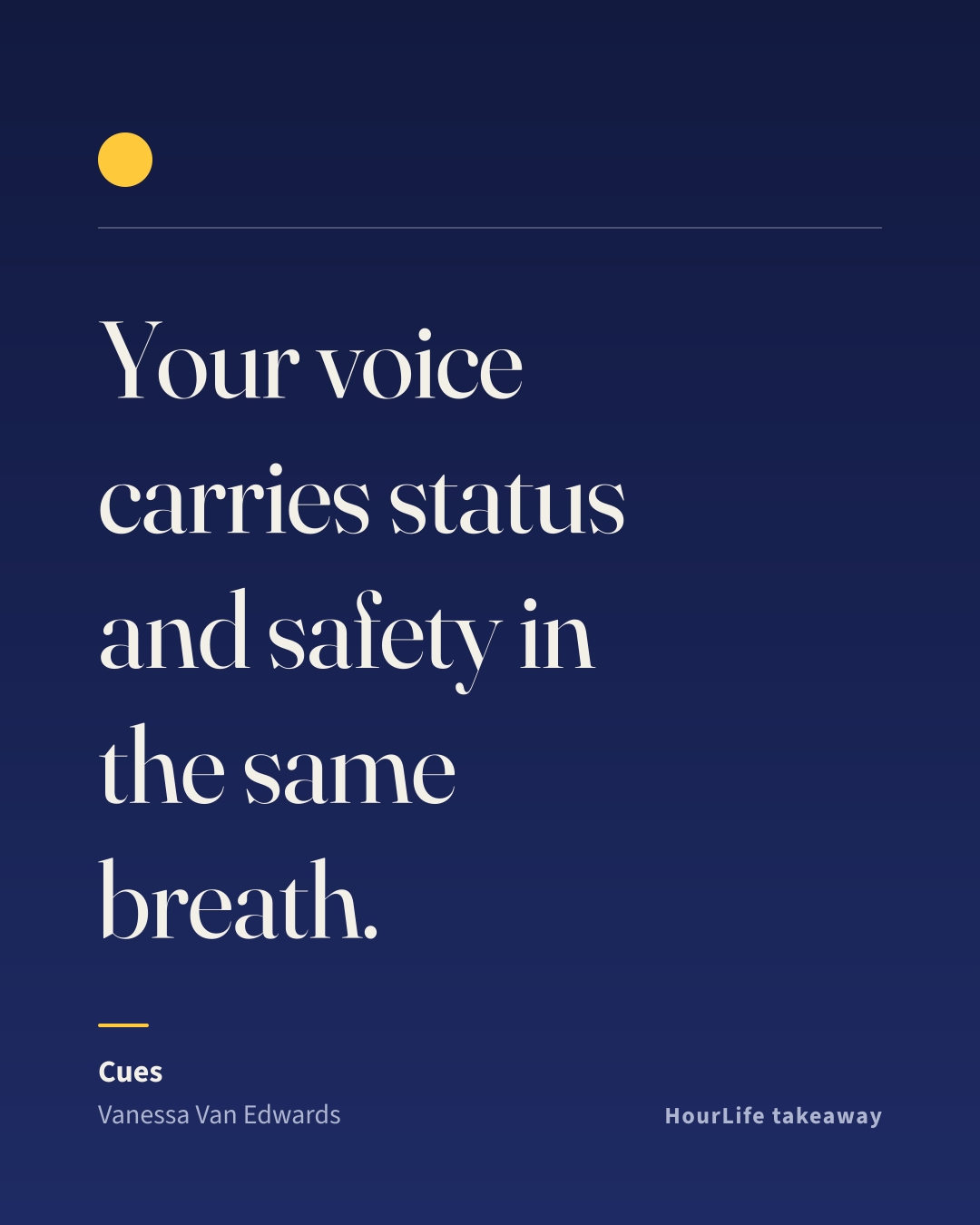
Your voice carries status and safety in the same breath.

Cues Vanessa Van Edwards HourLife takeaway

Pitch, pace, pauses, and cadence change how authority feels. A grounded voice can project competence without becoming harsh if warmth stays visible in the rest of the stack.

The story people tell about their life shapes how they act.

Conversation Vanessa Van Edwards HourLife takeaway

The third level is self-narrative. Someone who tells a comeback story behaves differently from someone who feels life keeps happening to them. Listening for which story you are hearing tells you how to respond.

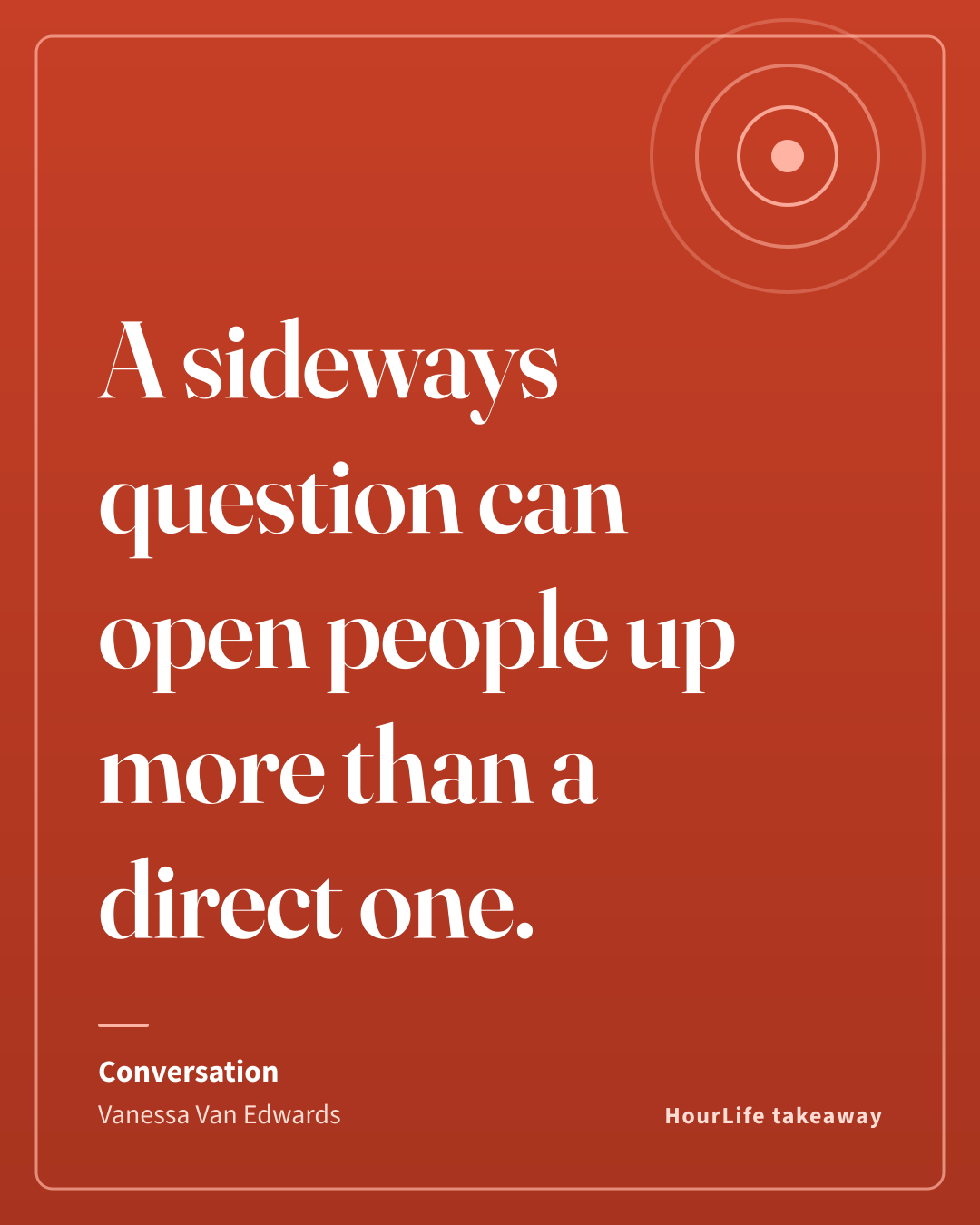
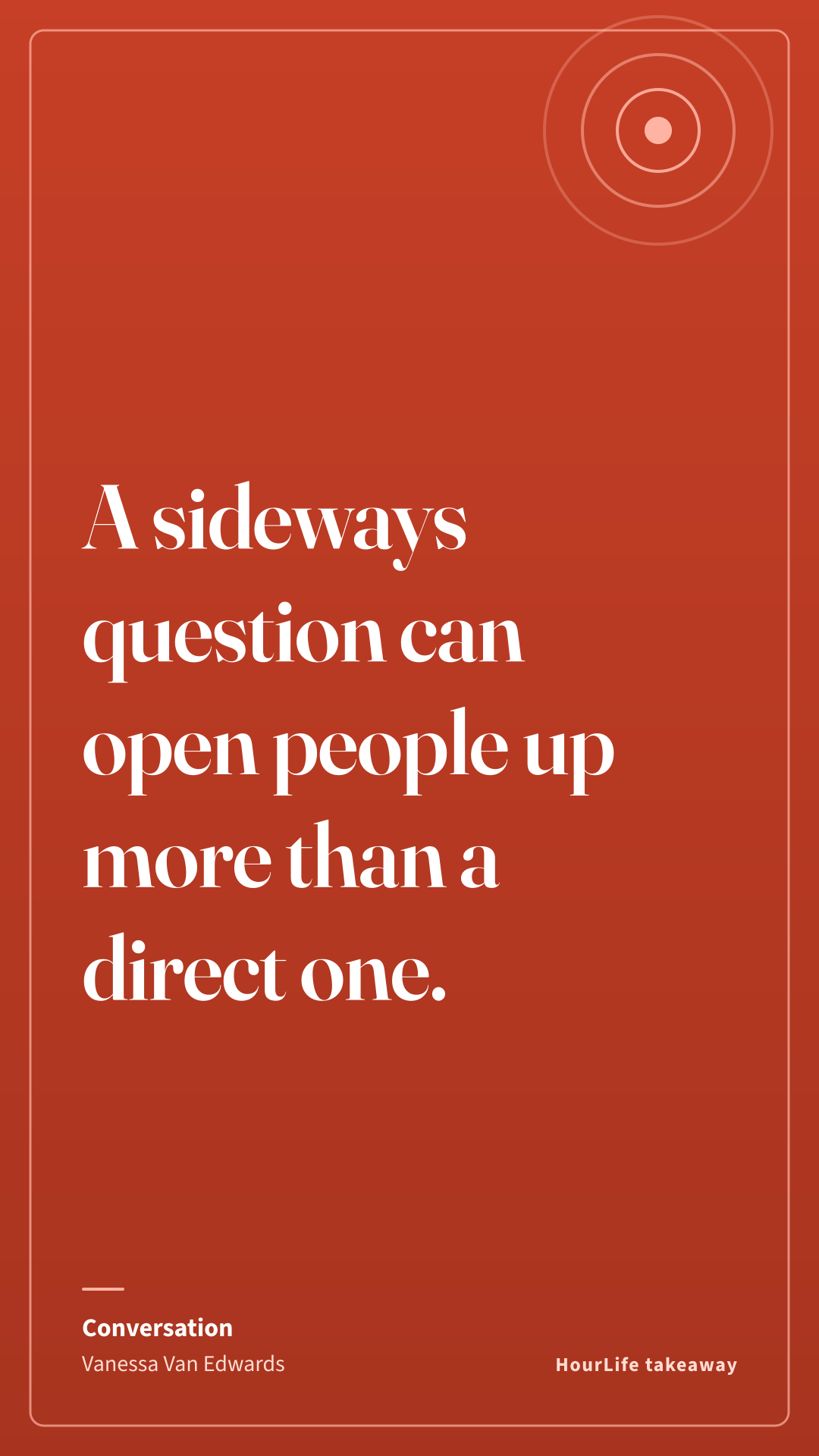
A sideways question can open people up more than a direct one.

Conversation Vanessa Van Edwards HourLife takeaway

Asked to describe themselves, many people freeze. Asked which character in a book or film they are most like, they get a playful way in, and you still learn how they see themselves.

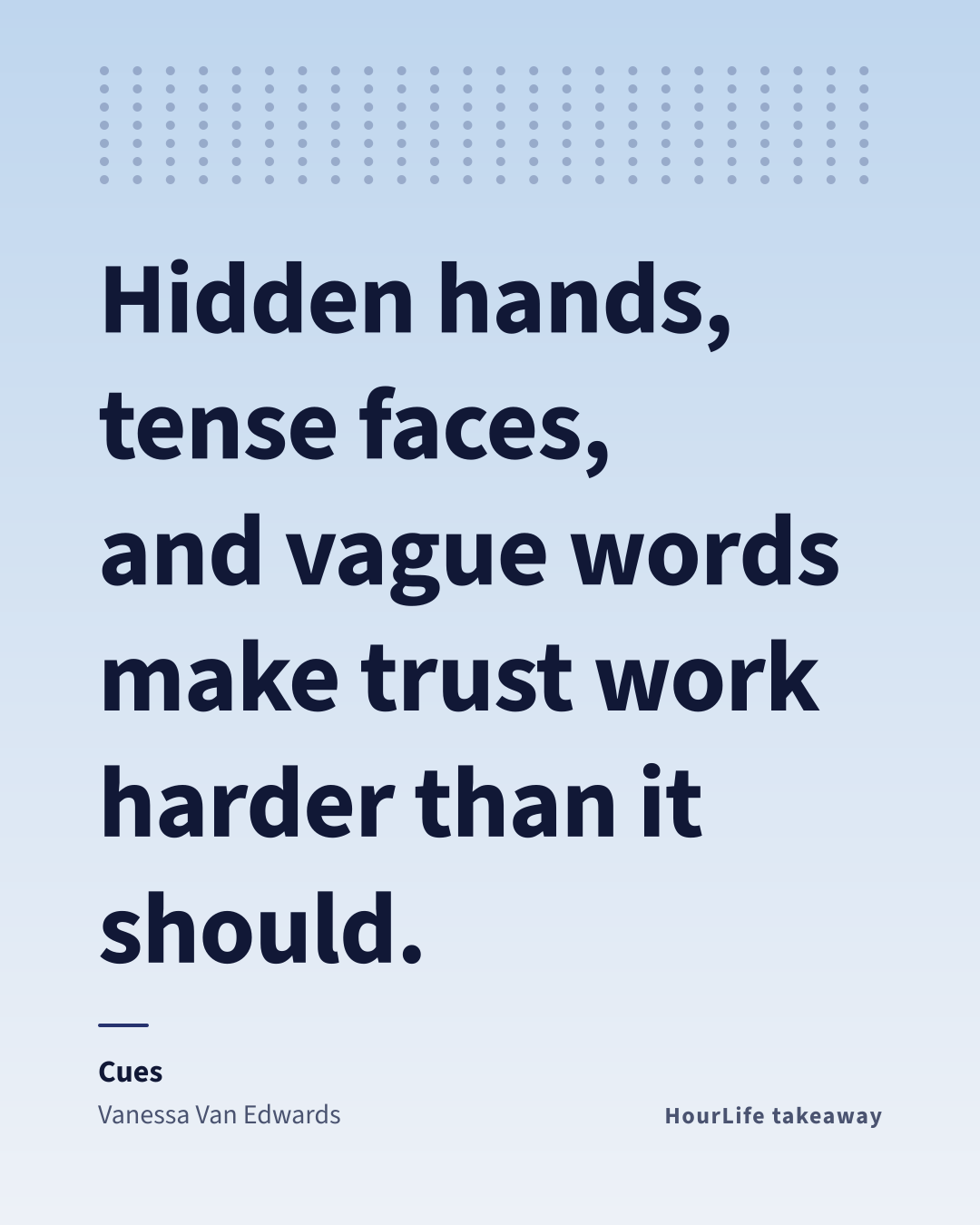
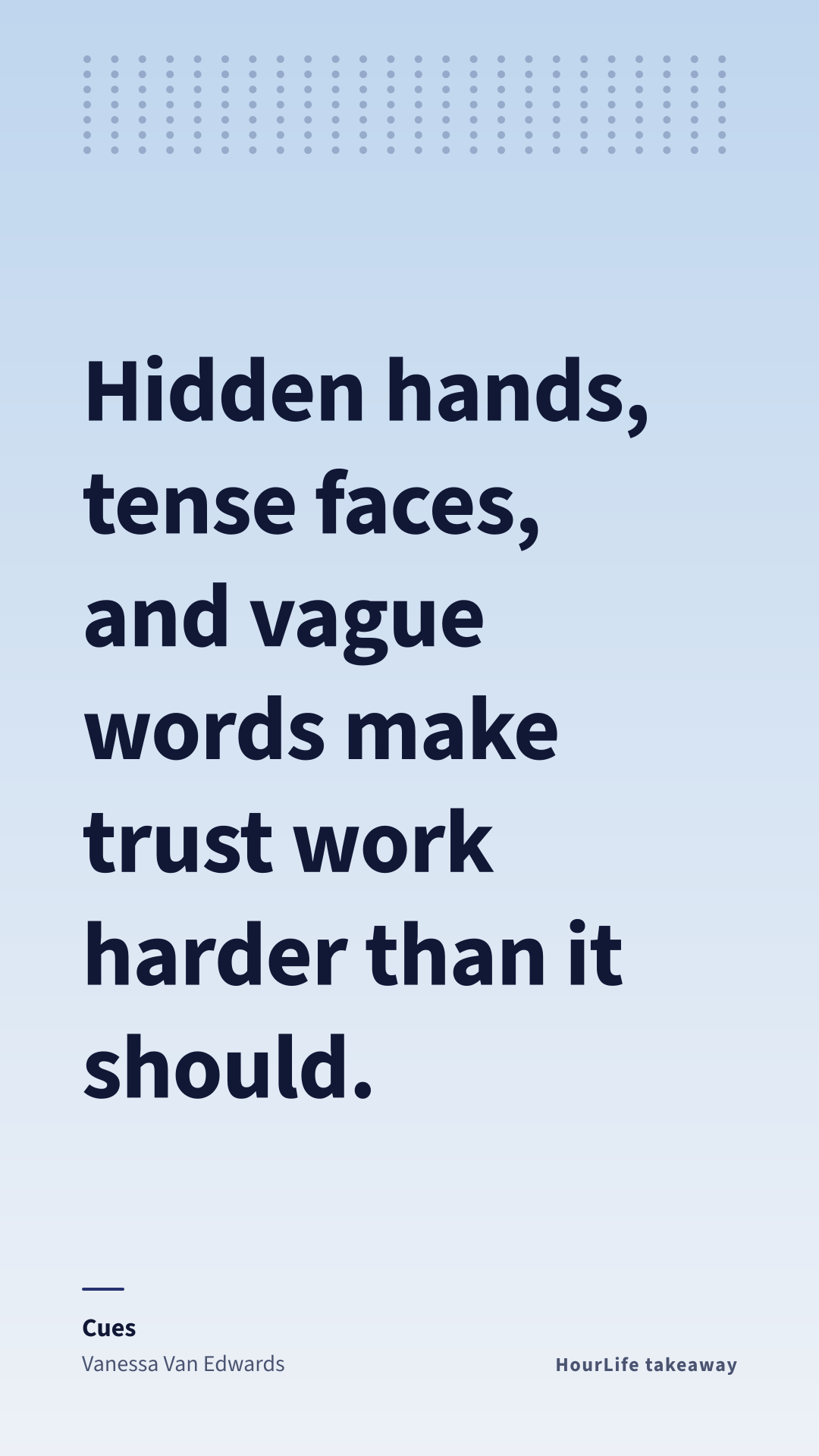
Hidden hands, tense faces, and vague words make trust work harder than it should.

Cues Vanessa Van Edwards HourLife takeaway

Small friction cues force people to spend energy decoding you. Clear cues reduce that tax and let the relationship focus on substance.

Match the energy you are given.

Conversation Vanessa Van Edwards HourLife takeaway

Mirroring someone's tone, warmth and enthusiasm tells them you are on the same page. Start where they are, then move the conversation where you want it to go.

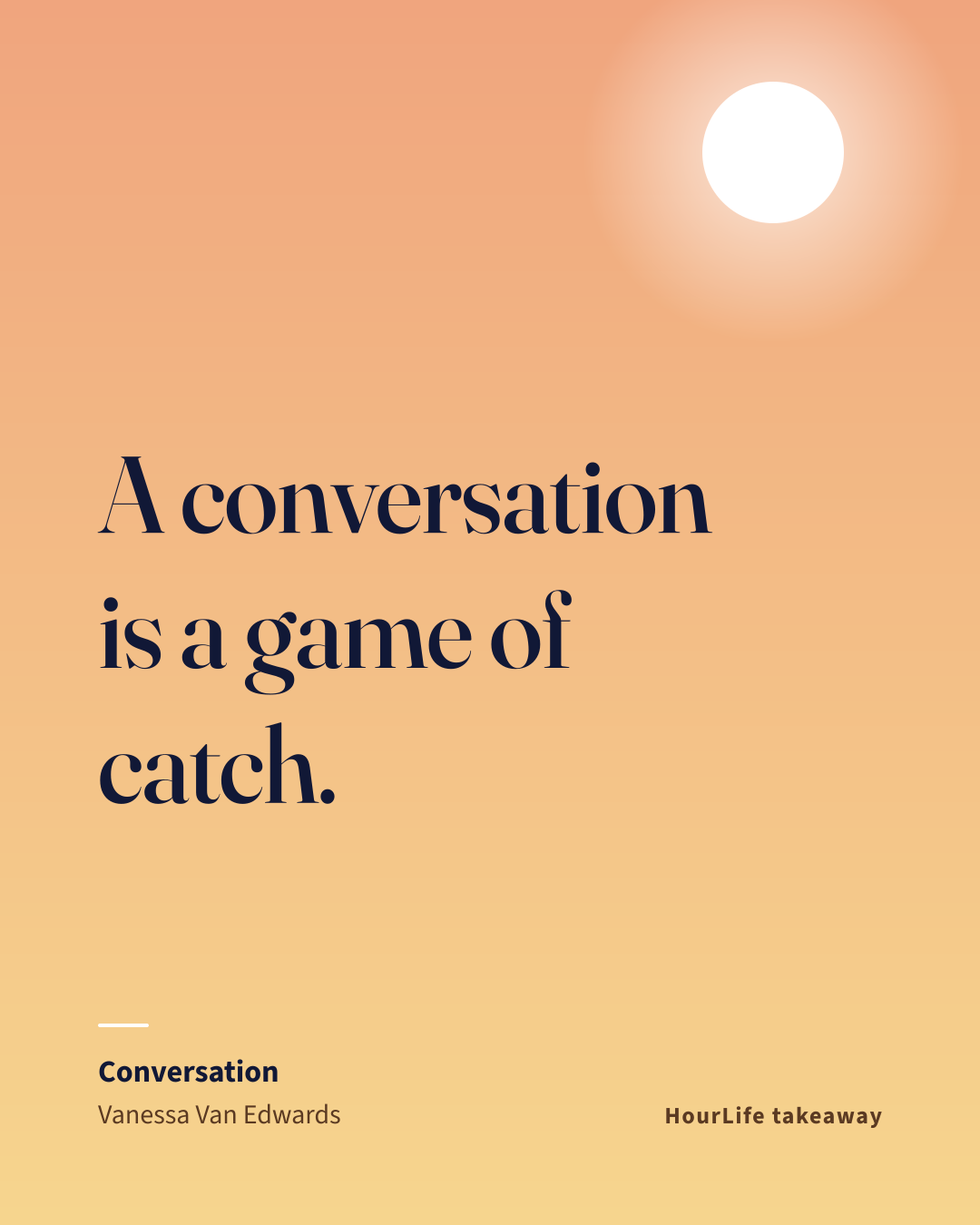
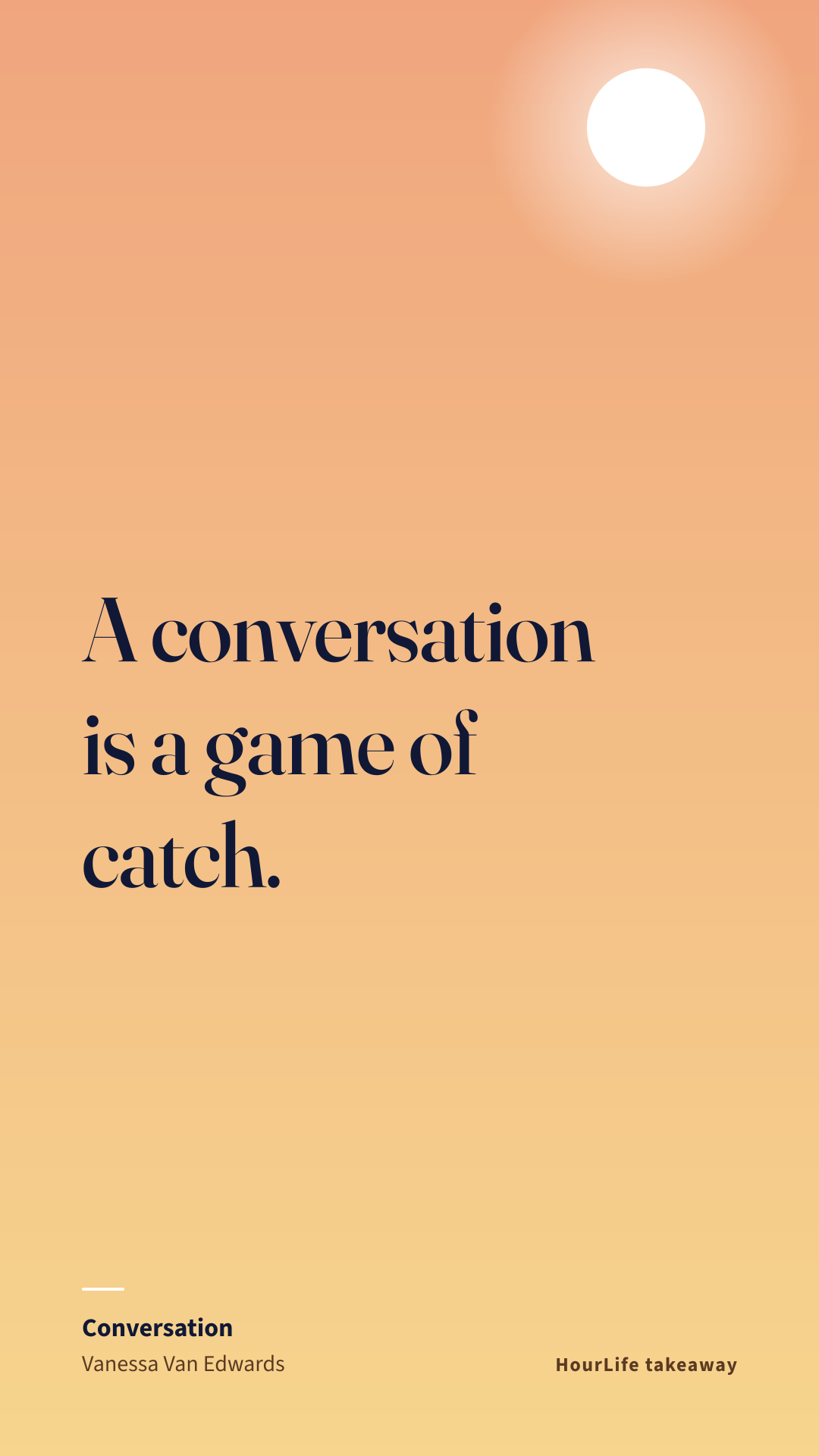
A conversation is a game of catch.

Conversation Vanessa Van Edwards HourLife takeaway

Take a turn, then hand it back. A long story, even a good one, leaves the other person standing with nothing to do.

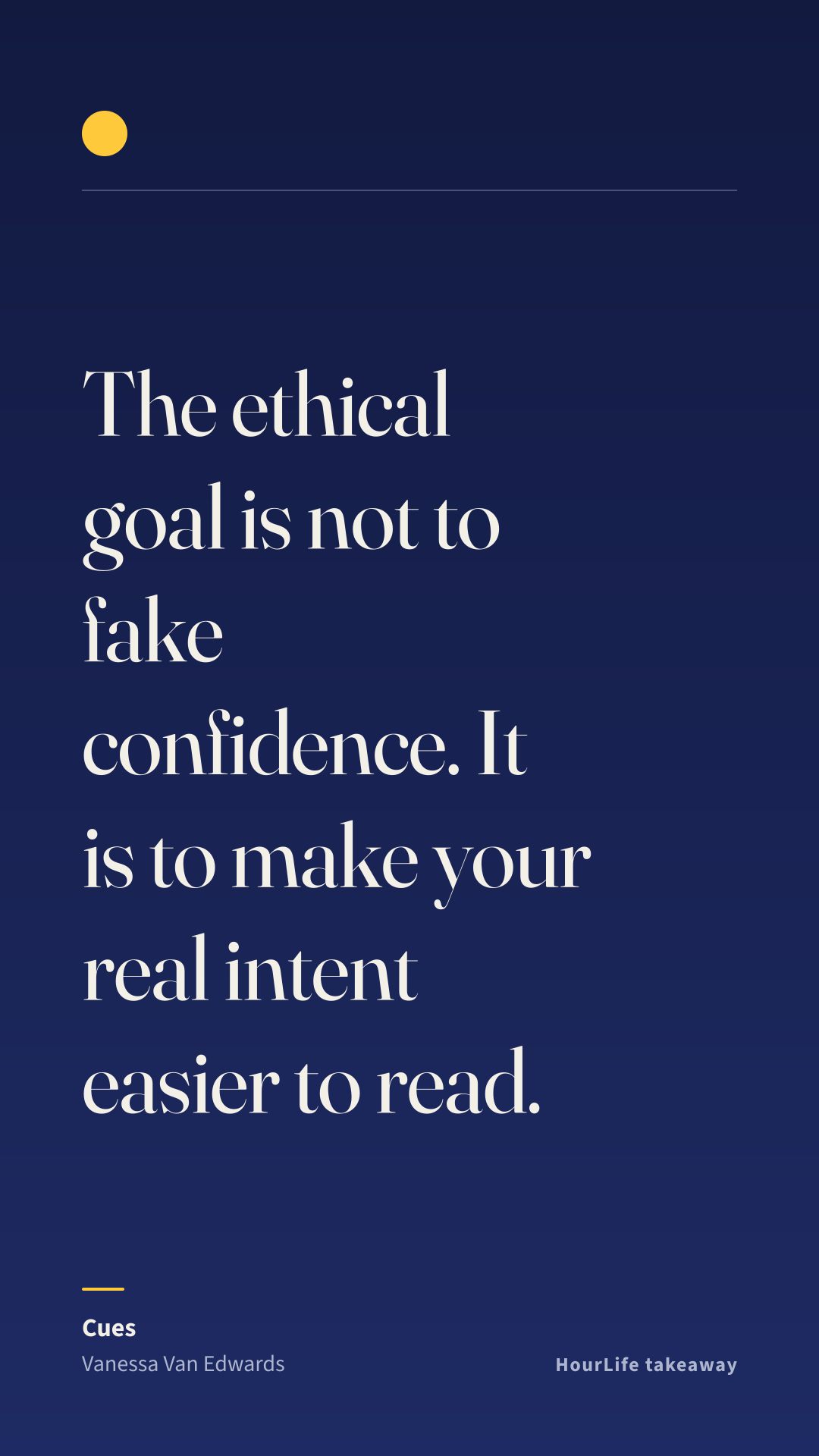
The ethical goal is not to fake confidence. It is to make your real intent easier to read.

Cues Vanessa Van Edwards HourLife takeaway

Cues works best as alignment, not manipulation. When your external signals match your internal intent, people do not have to guess where they stand with you.

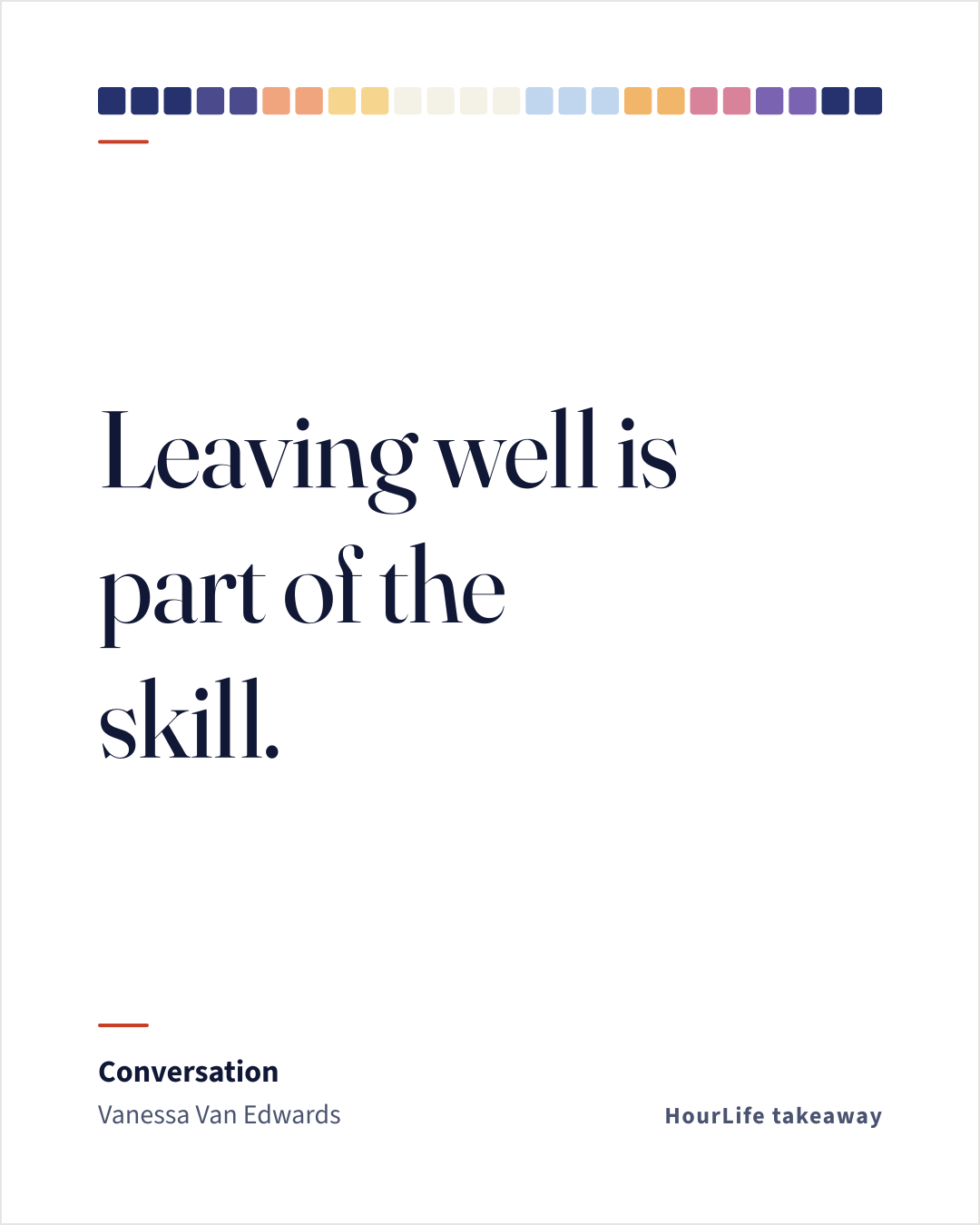
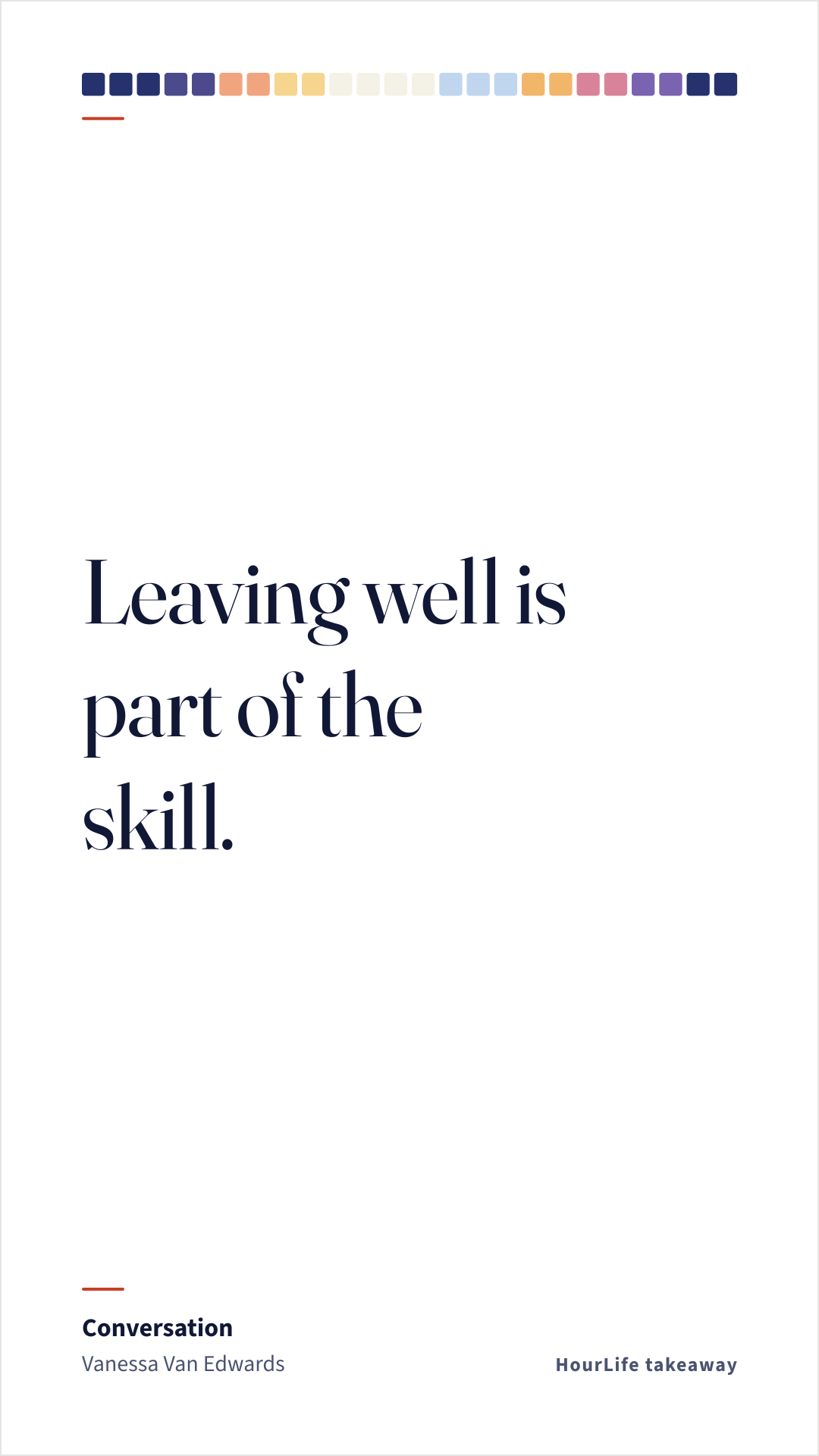
Leaving well is part of the skill.

Conversation Vanessa Van Edwards HourLife takeaway

End on a plan, a sincere compliment or a clear next step, in a voice that signals you are wrapping up. People remember the end of a conversation, so make it warm rather than awkward.

Keep this going in the app.

HourLife turns these ideas into a daily system — goals, habits, focus, and reflection in one private place.