Keep this author quotes for later
Sign in to save

William W. Li

The most-loved lines from William W. Li, drawn from 1 book in the library.

Lines labelled “HourLife takeaway” are our wording of the book’s ideas and may paraphrase it. Only lines in quotation marks are the author’s own words, with where they appear. Check the book for exact wording before you quote it. Spot an error?

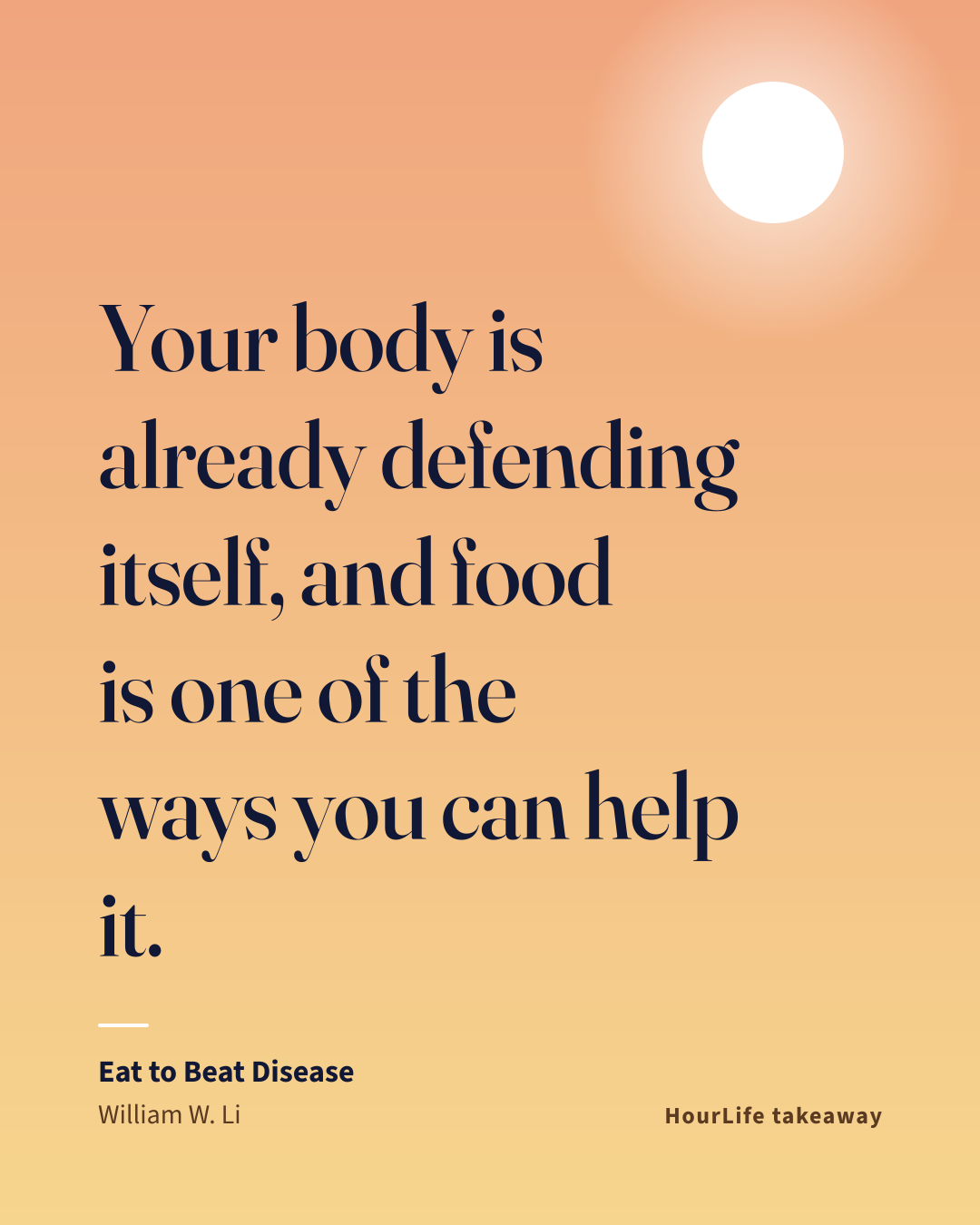
Your body is already defending itself, and food is one of the ways you can help it.

Eat to Beat Disease William W. Li HourLife takeaway

Li starts from health, not disease. He describes five systems that work quietly all the time: angiogenesis, regeneration, the microbiome, DNA protection and immunity. In his account, illness tends to take hold when one of them slips, so the question becomes what keeps each one working.


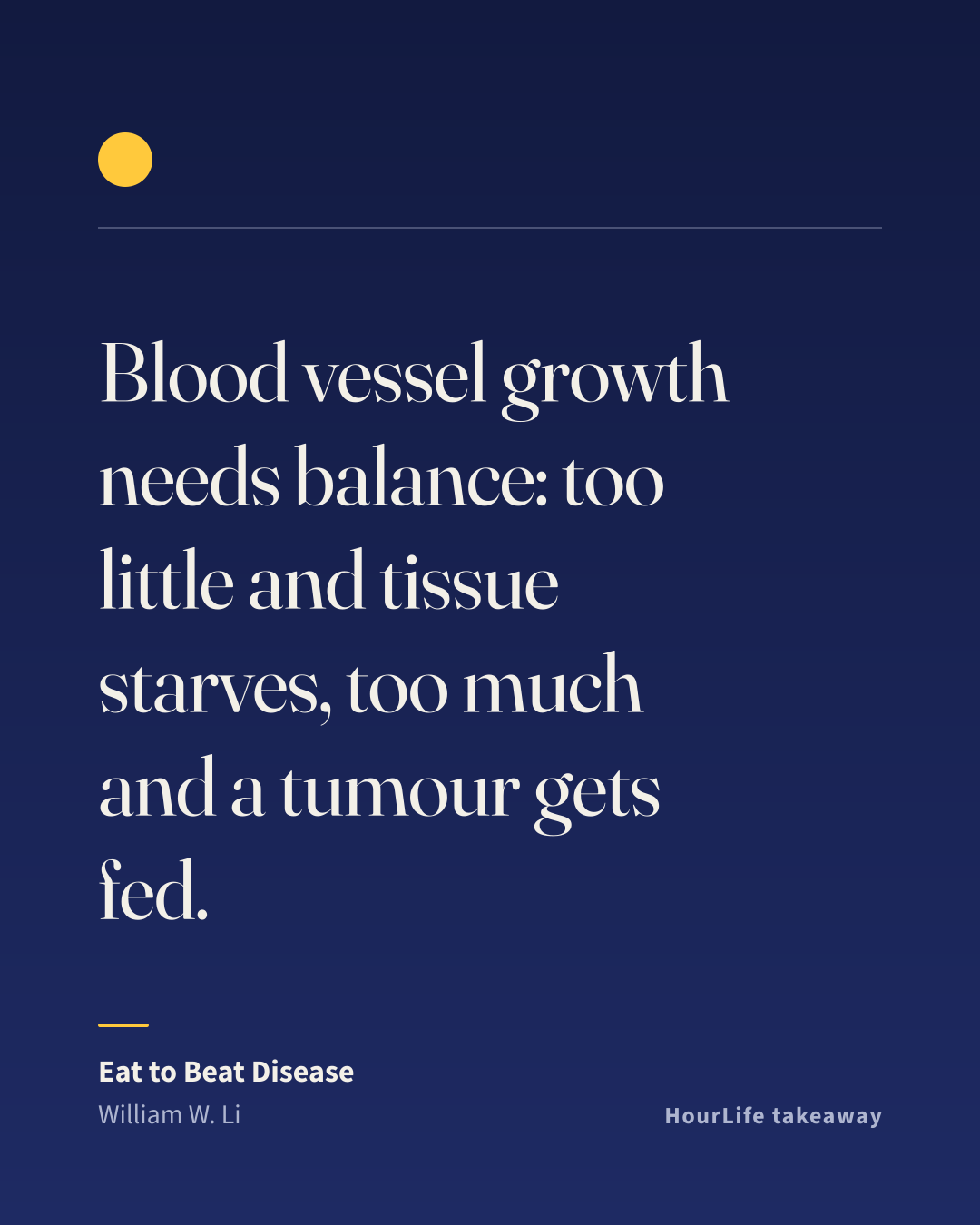
Blood vessel growth needs balance: too little and tissue starves, too much and a tumour gets fed.

Eat to Beat Disease William W. Li HourLife takeaway

Angiogenesis is Li's own research field. He shows how too little vessel growth shows up in wounds that will not heal and in heart disease, while too much helps cancers grow and drives some eye diseases. His claim is that certain foods help keep the system in balance rather than pushing it one way.

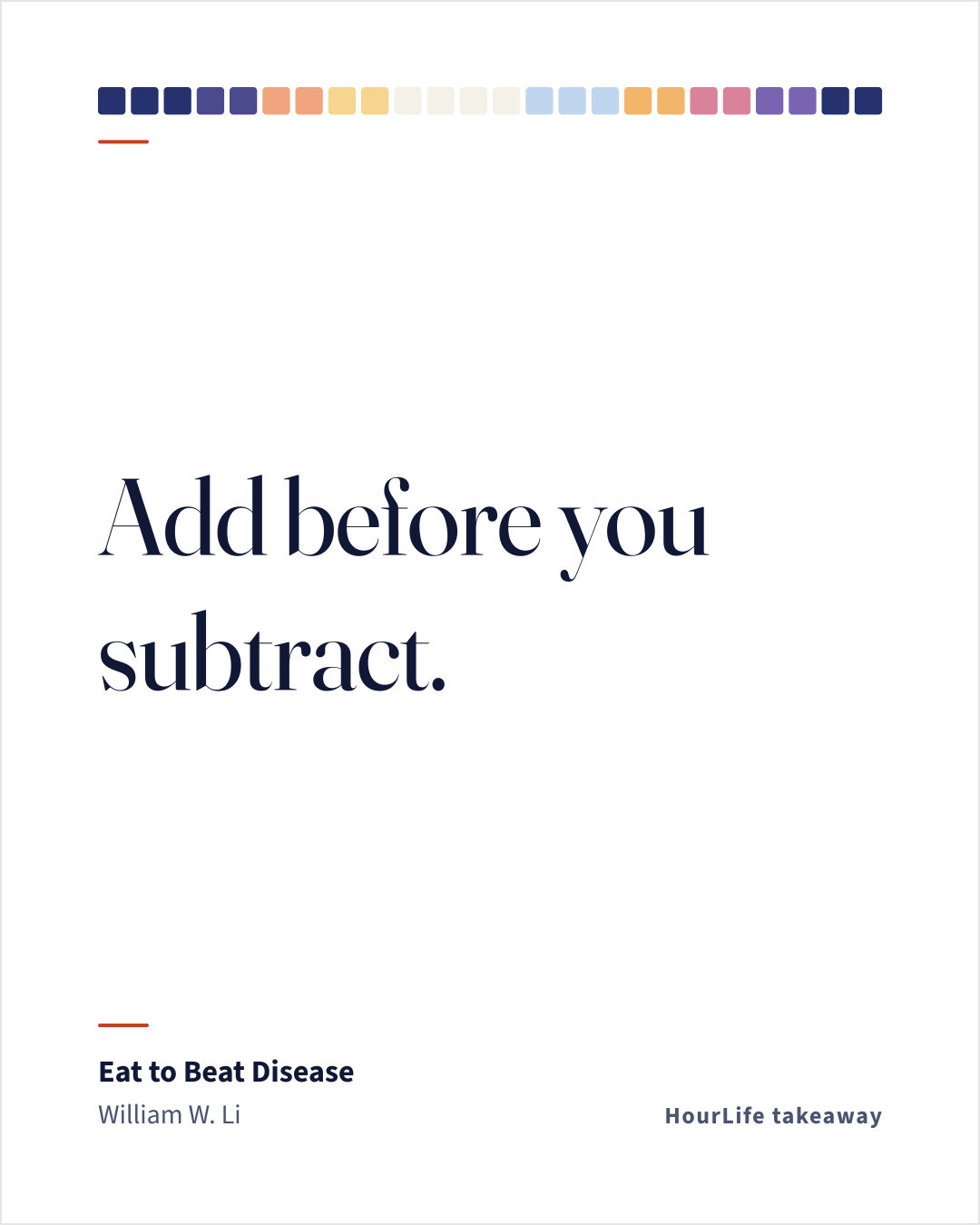
Add before you subtract.

Eat to Beat Disease William W. Li HourLife takeaway

The book spends far more time on foods to bring in than on foods to cut out, and Li builds the plan around foods you already enjoy. HourLife's reading: a plan like that is one you can keep, which a list of bans rarely is.

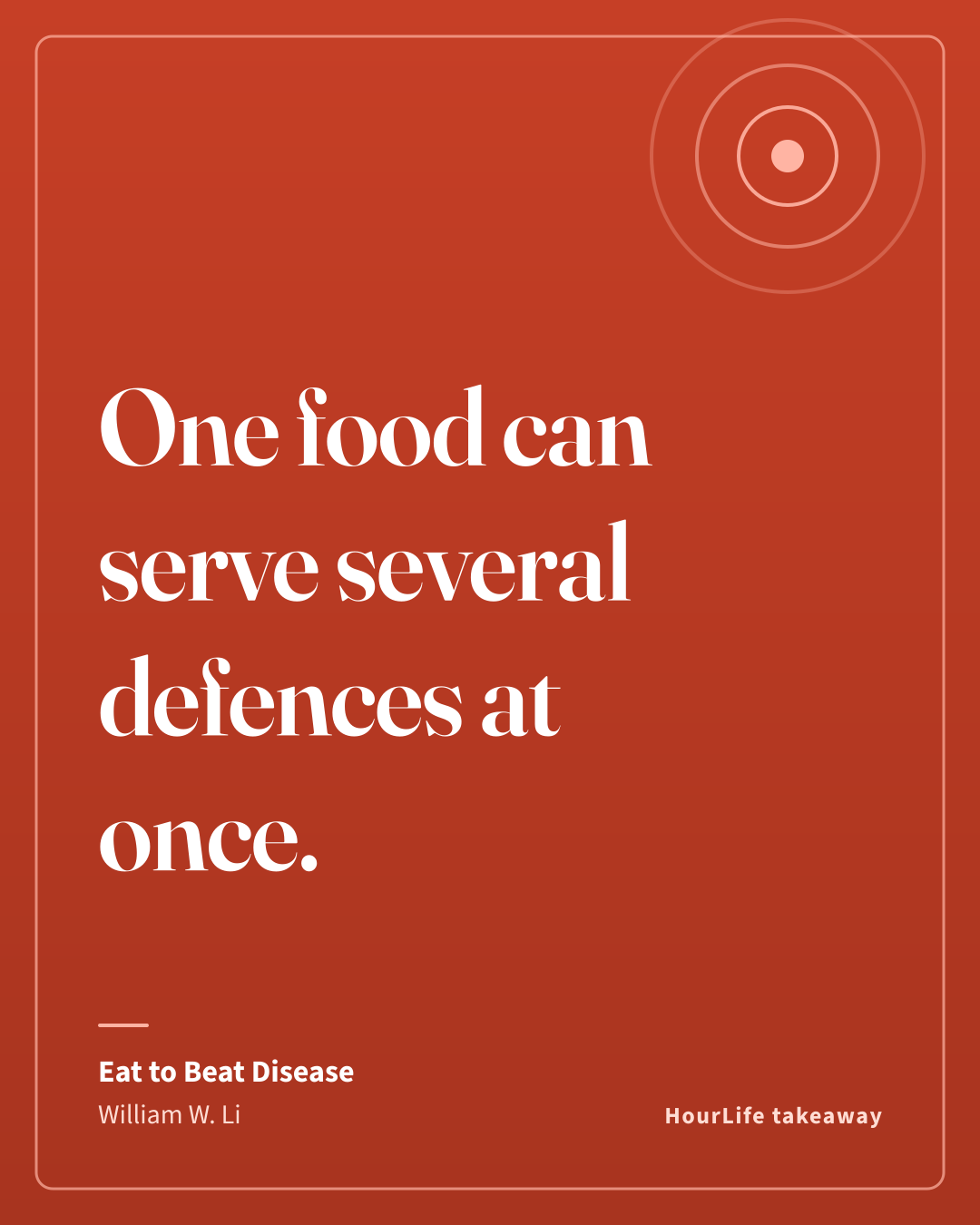
One food can serve several defences at once.

Eat to Beat Disease William W. Li HourLife takeaway

Green tea, berries, walnuts and olive oil turn up on more than one of the book's lists. That overlap is what makes the 5x5x5 framework easy in practice: a handful of well-chosen foods can cover all five systems in a day.

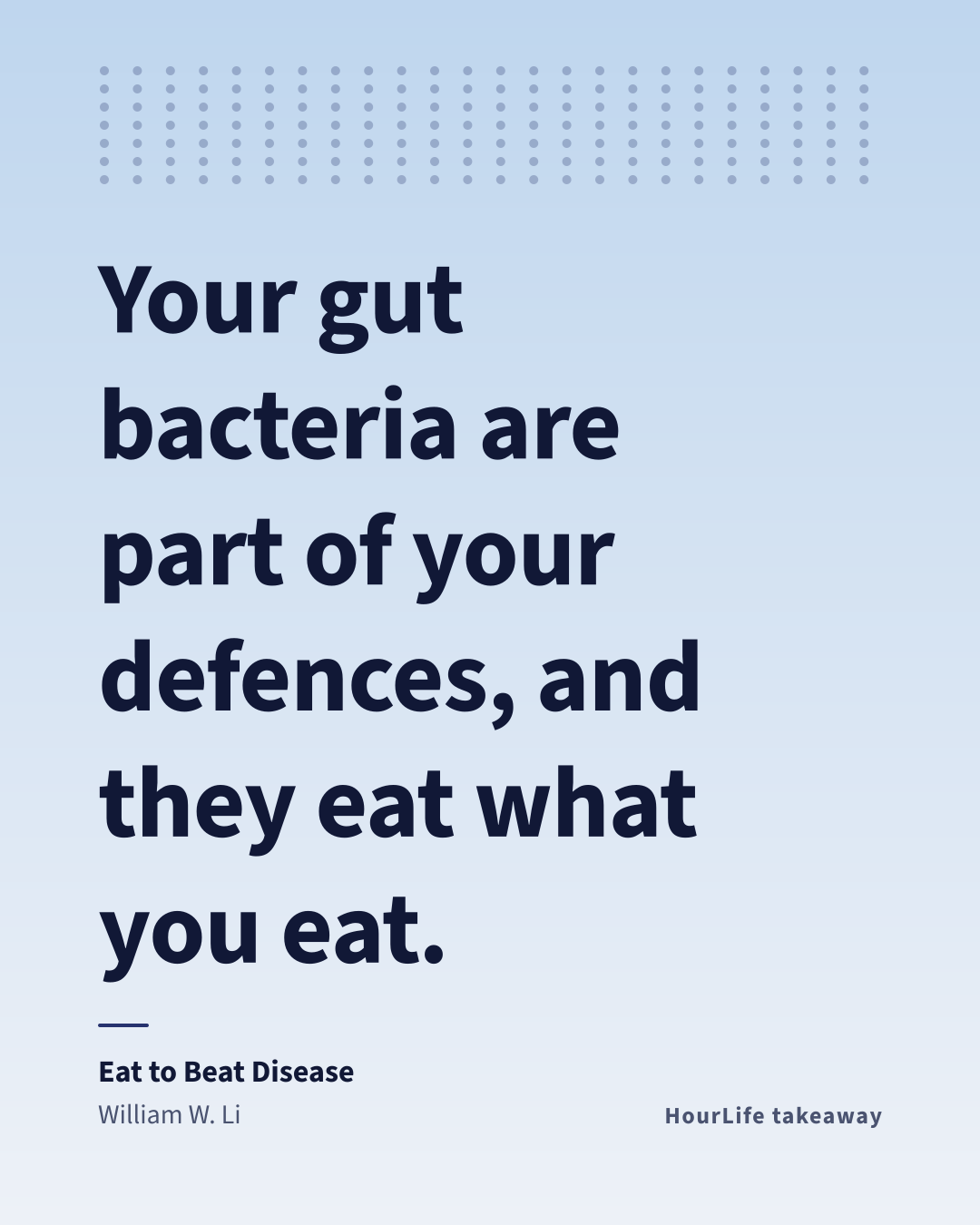
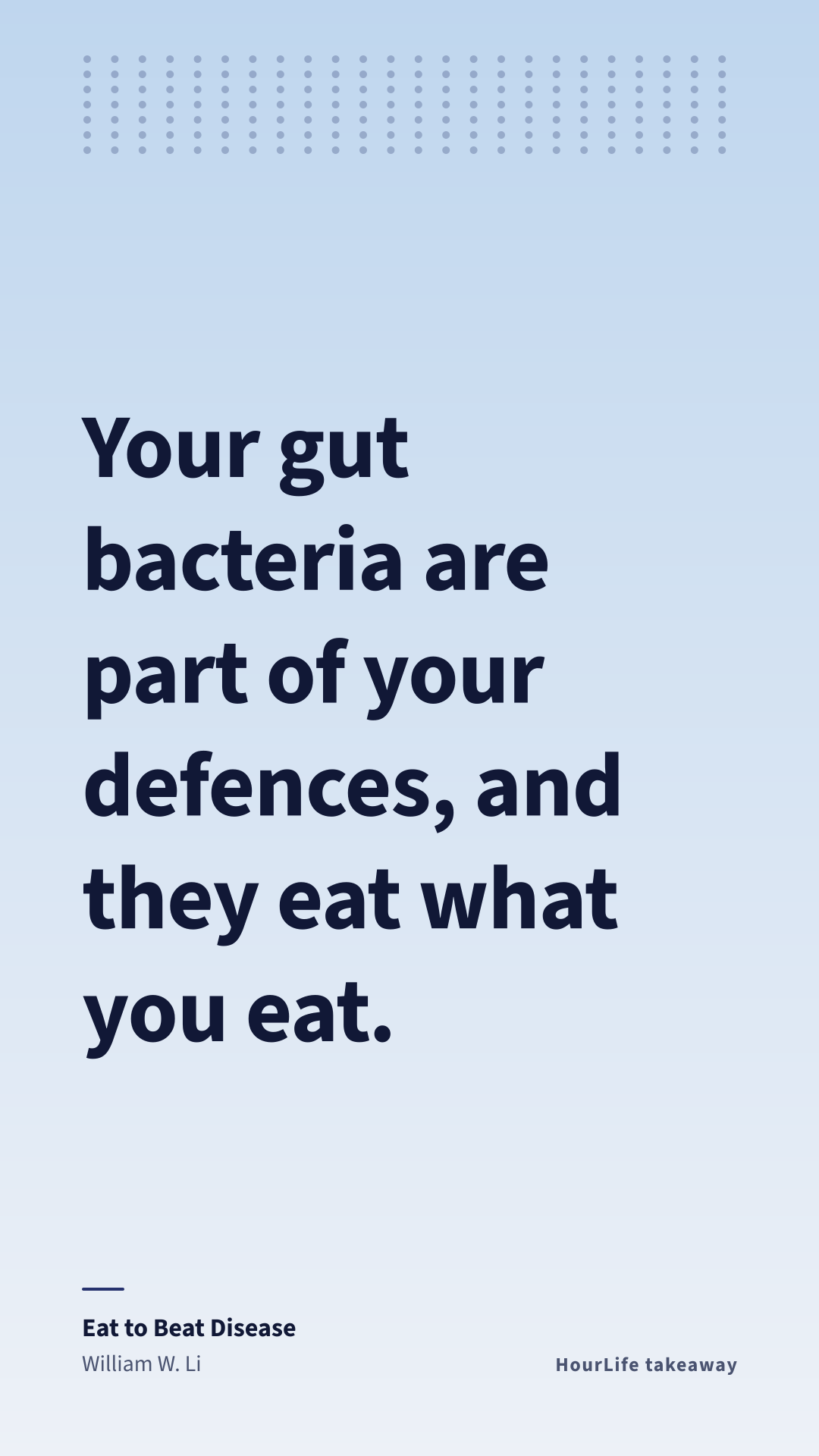
Your gut bacteria are part of your defences, and they eat what you eat.

Eat to Beat Disease William W. Li HourLife takeaway

Li treats the microbiome as a defence system in its own right, tied to digestion, immunity and more. He points to fibre-rich plants and fermented foods such as kimchi, sauerkraut, yoghurt and sourdough as ways to feed it.

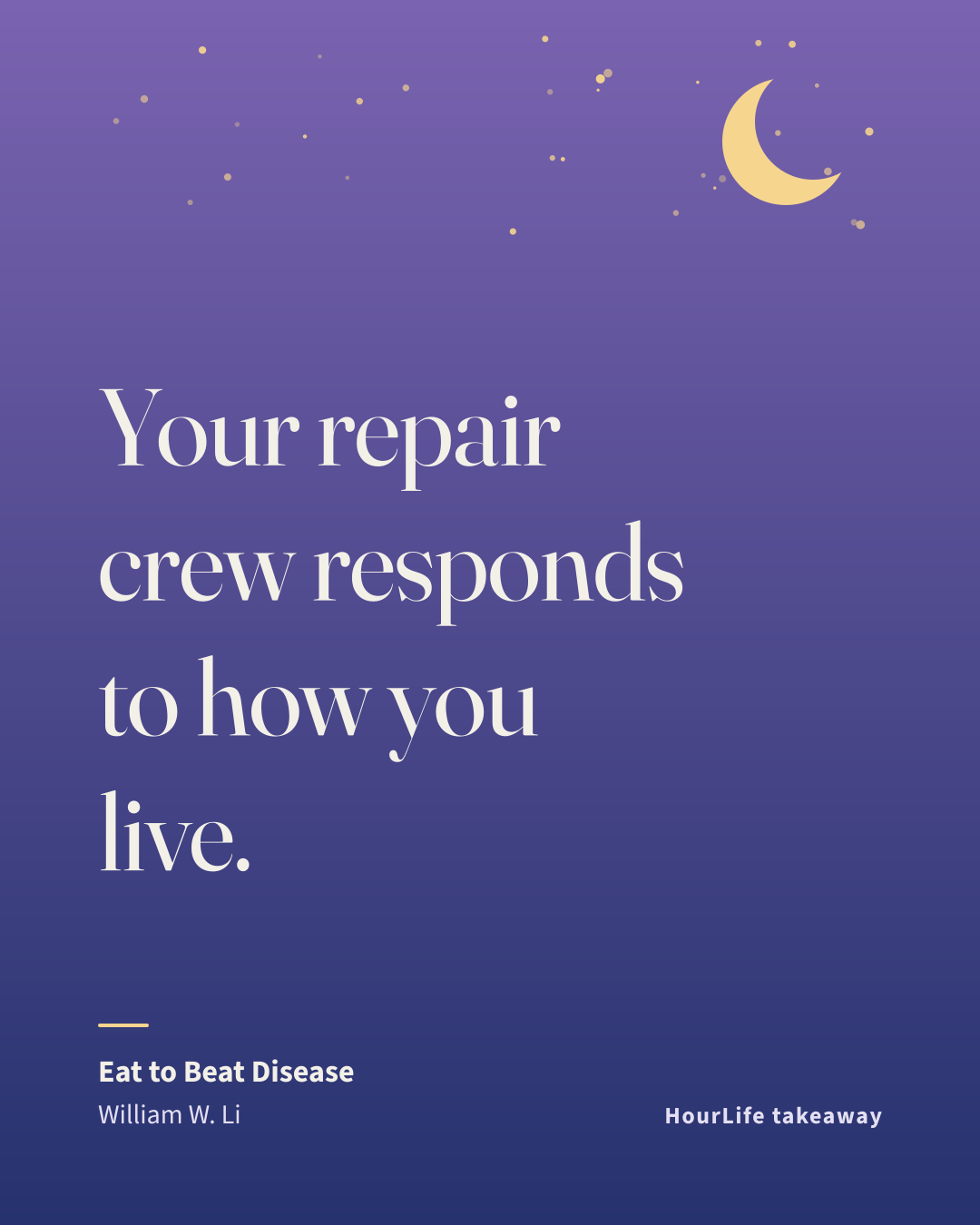
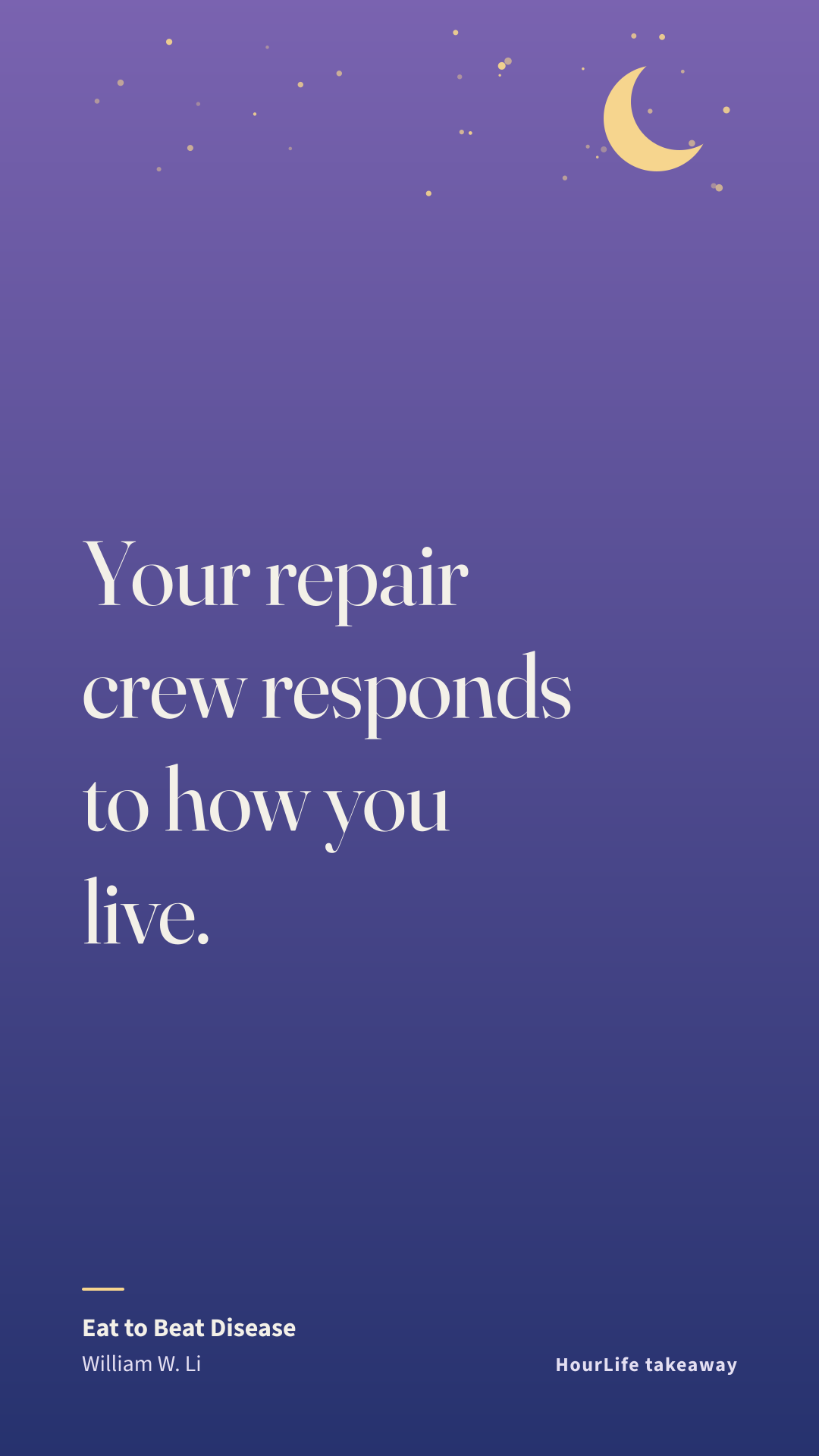
Your repair crew responds to how you live.

Eat to Beat Disease William W. Li HourLife takeaway

Regeneration is the work of stem cells that replace and repair tissue. Li argues that diet and habits can strengthen or weaken them: he names smoking, high blood sugar and diets heavy in fat, salt and sugar as harms, and lists foods such as dark chocolate, tea and berries among those he says can help.

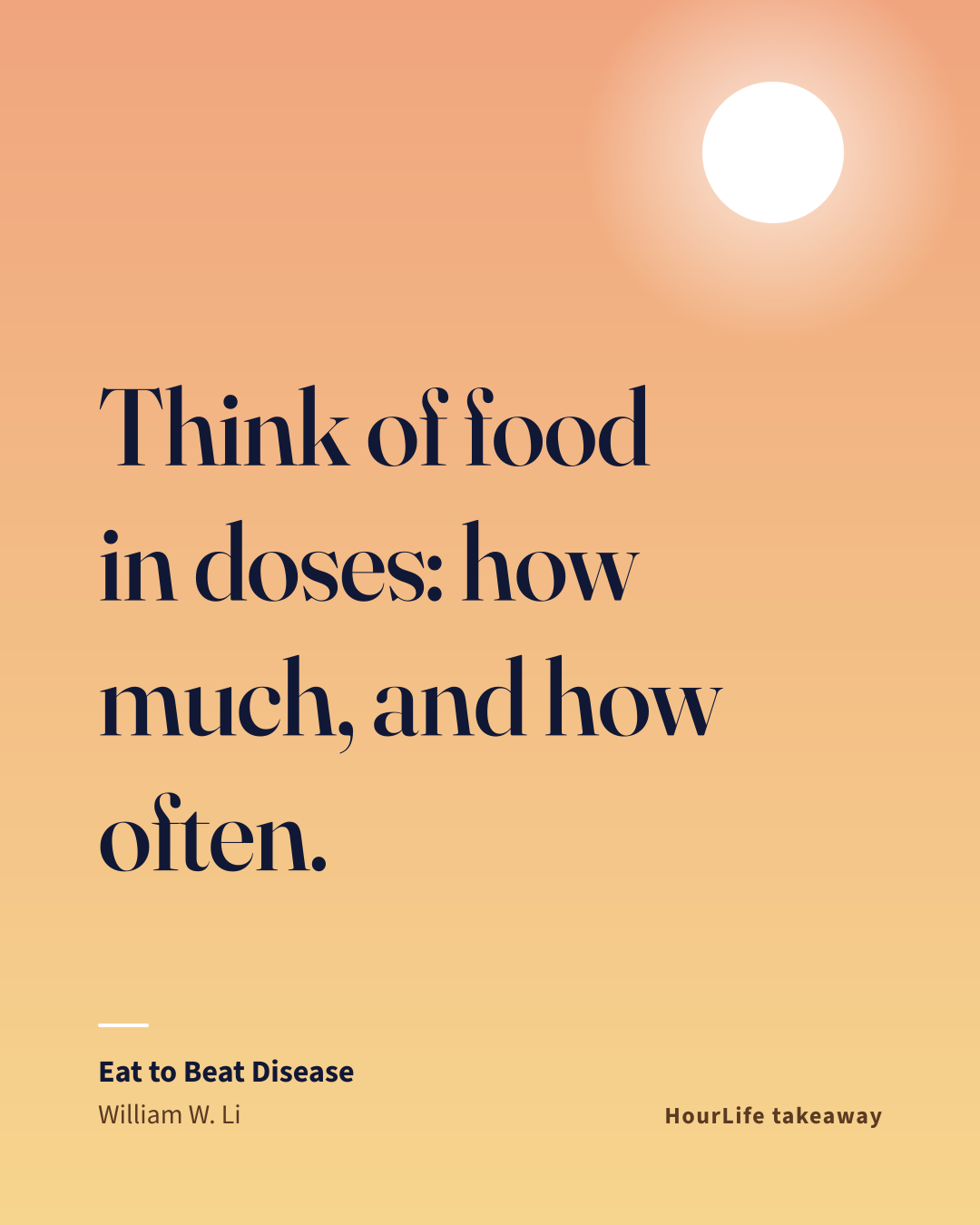
Think of food in doses: how much, and how often.

Eat to Beat Disease William W. Li HourLife takeaway

Li gives rough doses for many foods, drawn from the studies he cites: how much, and how often. They are useful as a guide to what a normal portion habit might look like, not as a prescription.

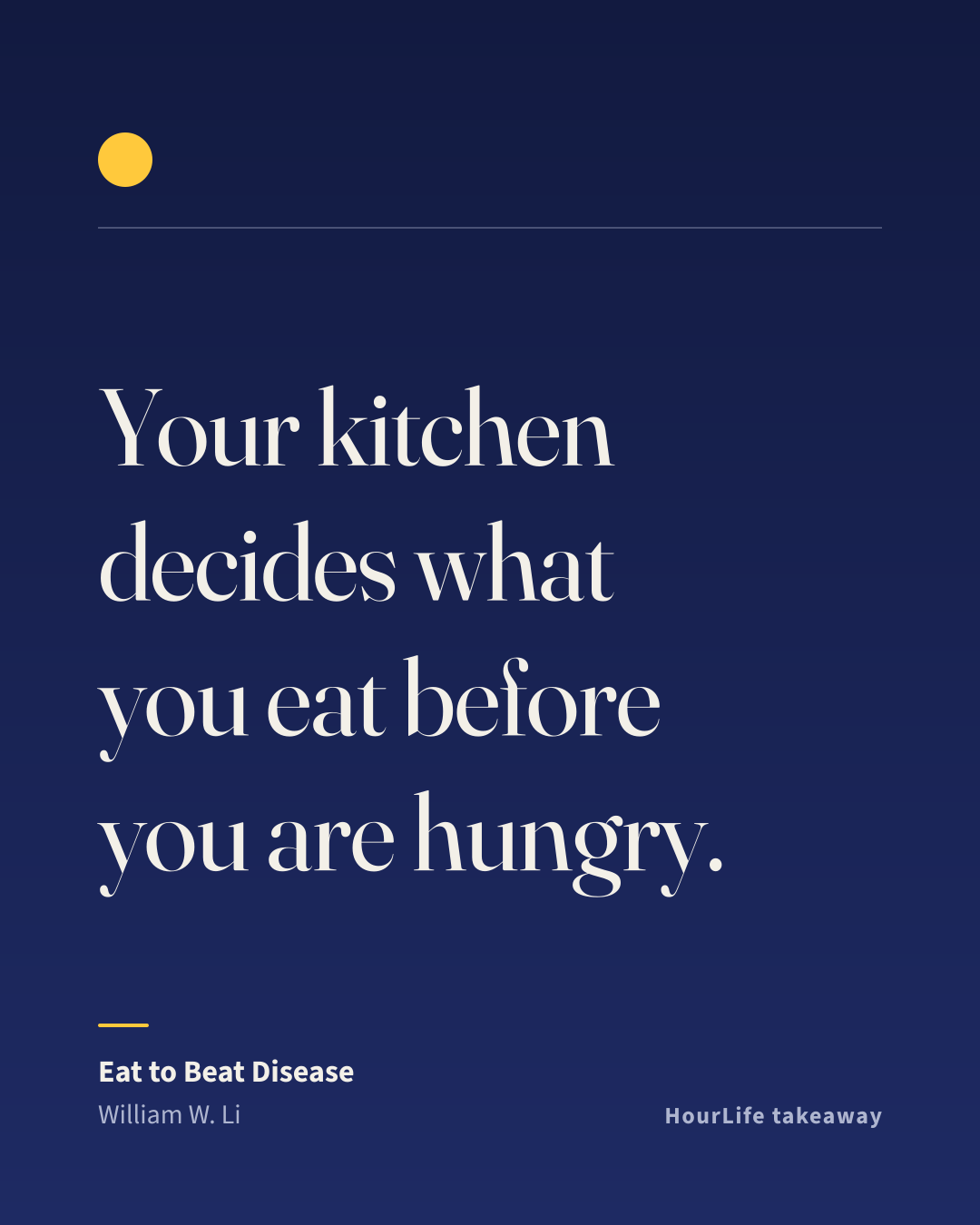
Your kitchen decides what you eat before you are hungry.

Eat to Beat Disease William W. Li HourLife takeaway

The final part of the book turns from science to practice: the 5x5x5 framework, kitchen equipment, sample menus and recipes. HourLife's advice: stock the foods on your list where they are easiest to reach, because a plan that lives only in your head loses to whatever is on the counter.

Read the food science as a nudge, not a guarantee.

Eat to Beat Disease William W. Li HourLife takeaway

Many of the links in the book come from lab, animal and population studies, which can show an association but not prove that a food prevents a disease. The safe reading is to eat more whole plants and fewer processed foods, and never to treat food as a replacement for medical care.

Keep this going in the app.

HourLife turns these ideas into a daily system — goals, habits, focus, and reflection in one private place.