
Deliberate daily planning is worth the ritual
Sitting down each morning to decide what the day is actually for beats reacting to whatever arrives first. Planners built around that ritual are answering a real problem, and the people who use them are right about the value of a considered plan.
The question is how much of your life the plan is allowed to include.
Work planning and life planning are different jobs
A workday planner tends to organize around tasks and the calendar: what will fit today, in what order, with what time reserved. That is the right frame when the workday is the problem.
It is the wrong frame when the day that wore you out included a bad night of sleep, a habit you dropped three weeks ago, and a goal you have not looked at since spring. Those things do not appear on a work plan, and they are frequently the explanation.
What HourLife adds around the plan
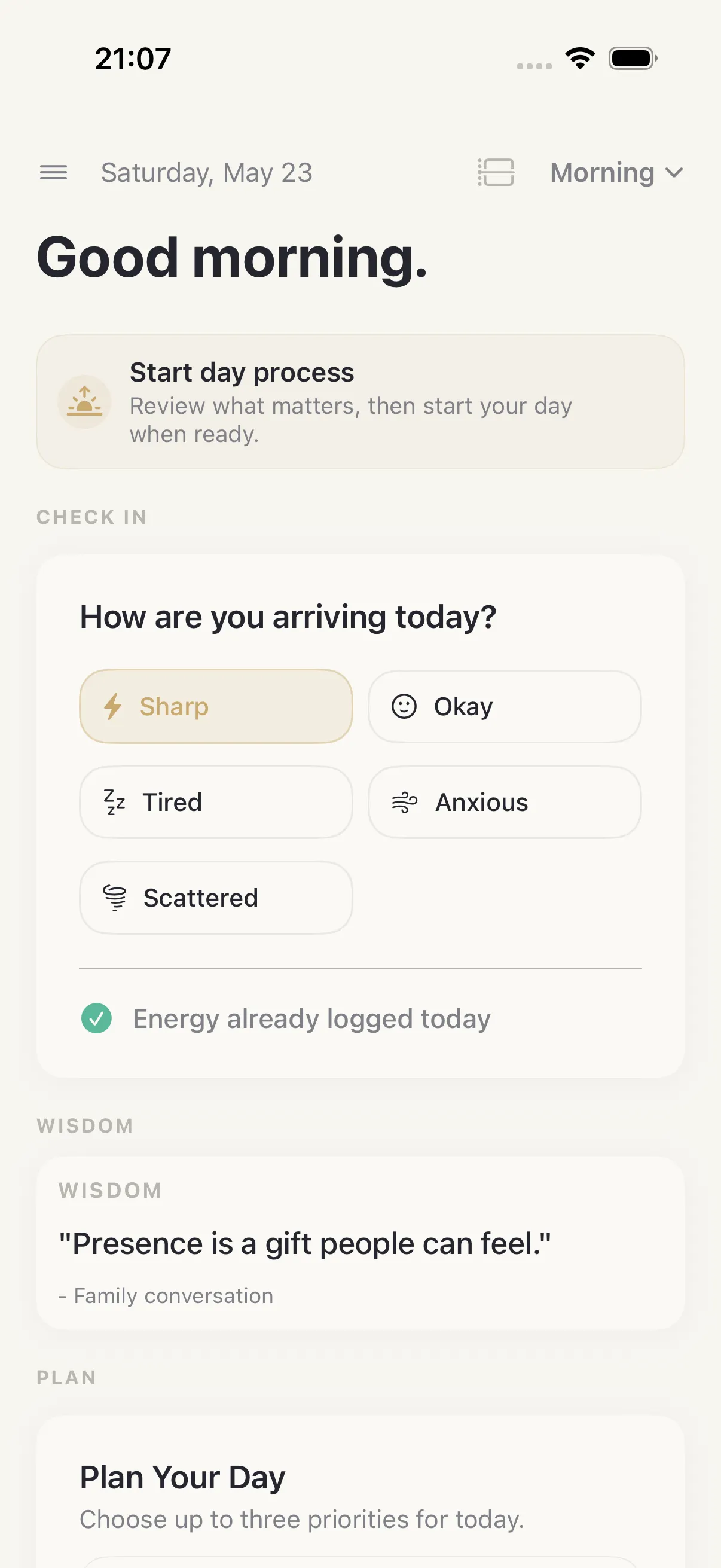
HourLife covers daily planning and focus, then keeps going into the parts of life a work planner leaves out:
- Habits and routines alongside the day's tasks.
- Goals and projects, so today connects to something longer.
- Journal and daily review.
- Mood and energy as context for how the day went.
- Gratitude and highlights worth keeping.
- Decisions and learning.
- Markdown export for a private, readable record.
HourLife is not built to consolidate work tools into one queue. It is built to run a personal system on your own device.
Choosing between them
If the workday is the center of the problem, and the main friction is deciding what realistically fits between meetings, a work planner is the closer match.
If the day includes work but the shape of it is set by habits, energy, goals, and everything happening outside the job, HourLife is built for that wider frame.