
Weekly review should use real evidence
A weekly review is only useful if it is grounded in what actually happened. Memory is noisy by Friday. The loudest task is not always the most important one. A week can feel bad even when meaningful work moved forward, or feel productive while the important goal stayed untouched.
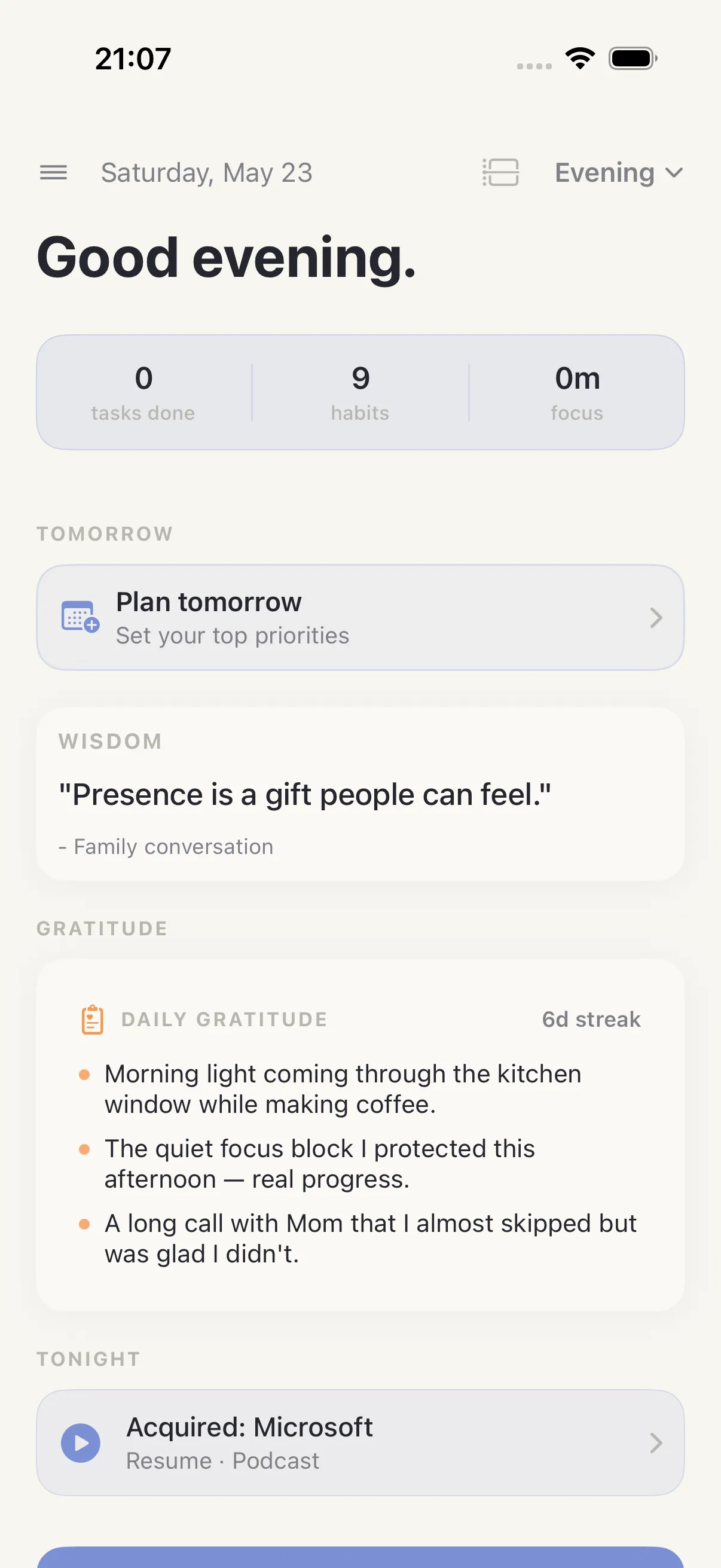
HourLife gives weekly review more context because the daily record is already connected.
Review tasks, habits, and goals together
Tasks show what got done. Habits show what repeated. Goals show whether the work mattered beyond the day. A useful weekly review needs all three.
HourLife is built around that connection. A task can belong to a goal. A habit can sit beside the day instead of living in a separate tracker. A focus session can show effort, not just intention.
Notice energy and patterns
Weekly review is not only about output. It is also about conditions. When was focus easiest? Which days carried the most friction? Which routines held up? Which commitments drained attention?
HourLife's mood, energy, journal, gratitude, highlights, and decision records give review a more complete picture without turning it into a spreadsheet project.
Set up next week with fewer open loops
The point of review is not to grade yourself. It is to make the next week clearer. Move unfinished tasks deliberately. Choose which goals need attention. Protect the habits that matter. Revisit decisions that no longer fit.