
Task management is a solved problem
A mature task manager captures quickly, organizes into projects, schedules, prioritizes, and filters. If throughput is your constraint, that is exactly the tool you want, and swapping it for something broader will feel like a downgrade.
So the honest framing is not which app wins. It is which problem you have.
What a list cannot tell you
A completed list is a weak record. It shows what got ticked, not which goal moved, which habit held through a hard week, where your attention actually went, or what you learned along the way.
That gap is why people end up running a task app plus a habit app plus a journal plus a notes tool, and then spend Sunday trying to reconcile four separate stories about the same week.
How HourLife connects the work
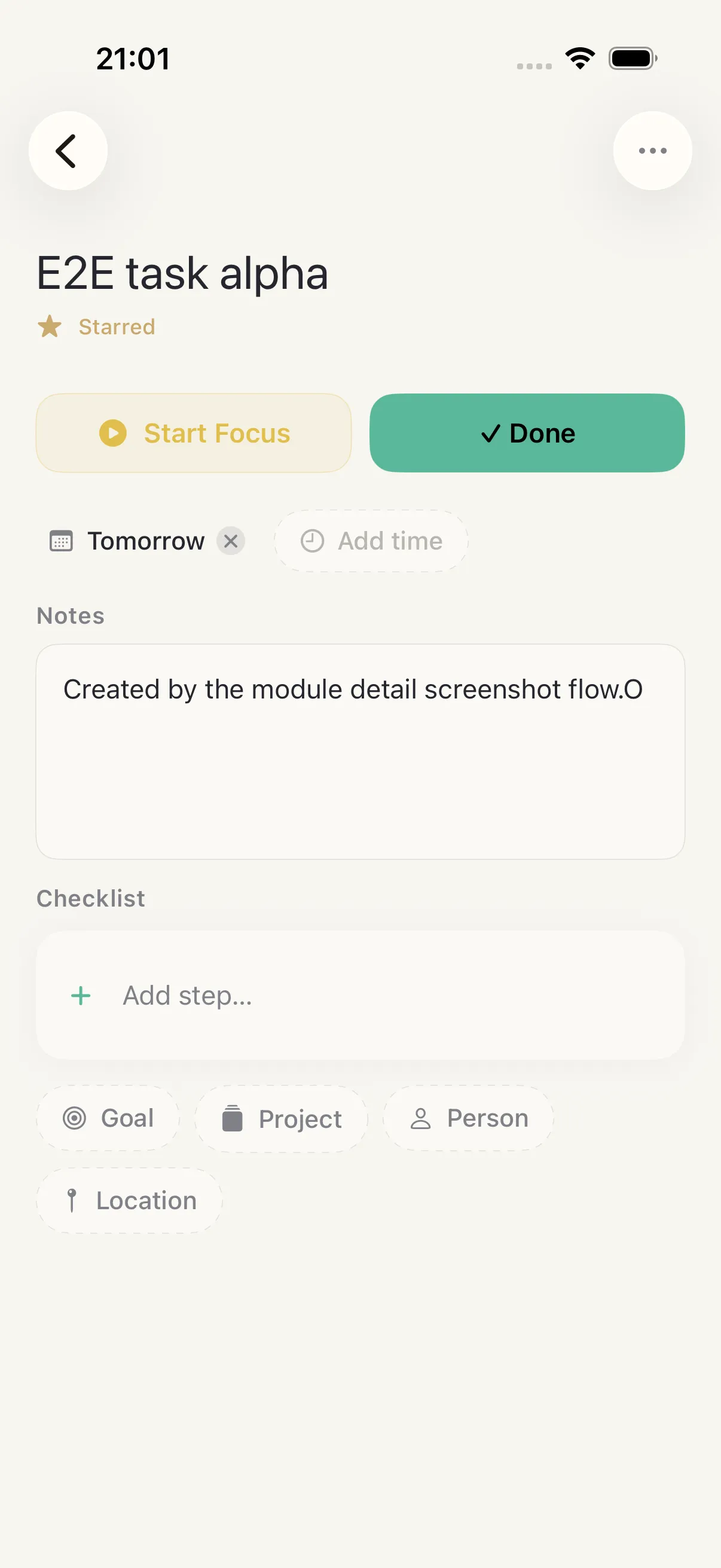
HourLife keeps tasks, but puts them inside a system that knows why they exist:
- Today for the daily plan.
- Brain for capture before a thought is a task.
- Goals and Projects, so a task can trace back to something that matters.
- Habits and Routines beside the one-off work.
- Focus sessions, so effort is recorded and not just intended.
- Journal, Mood, Gratitude, Highlights, Decisions, and Learning.
- Markdown export for a readable record you keep.
Same tasks, more context. The daily plan becomes evidence you can review rather than a list you clear and forget.
Where HourLife is the wrong choice
HourLife is personal software. There are no shared projects, no assigning work to other people, and no ambition to become a team tool. If your list is how a team coordinates, keep the tool that does that.
It is also Apple-native by design. If you plan your day across a mix of operating systems, a cross-platform task manager will serve you better.