Annie Duke · 2018 · decision quality
Thinking in Bets
Duke separates good decisions from lucky outcomes. Treat beliefs as probabilities, update with evidence, and stop calling every win wisdom.
Core idea.
Most people evaluate decisions after seeing the score. This book asks for a cleaner habit: record the odds before the reveal, separate process from outcome, and invite disagreement while the belief is still movable.
interactive tool
Decision Odds Desk
calibrated verdict
Hold the bet lightly.
Strong confidence with thin evidence needs a smaller bet or a faster feedback loop.
Write the odds and the reason before the outcome arrives.
Reader notes.
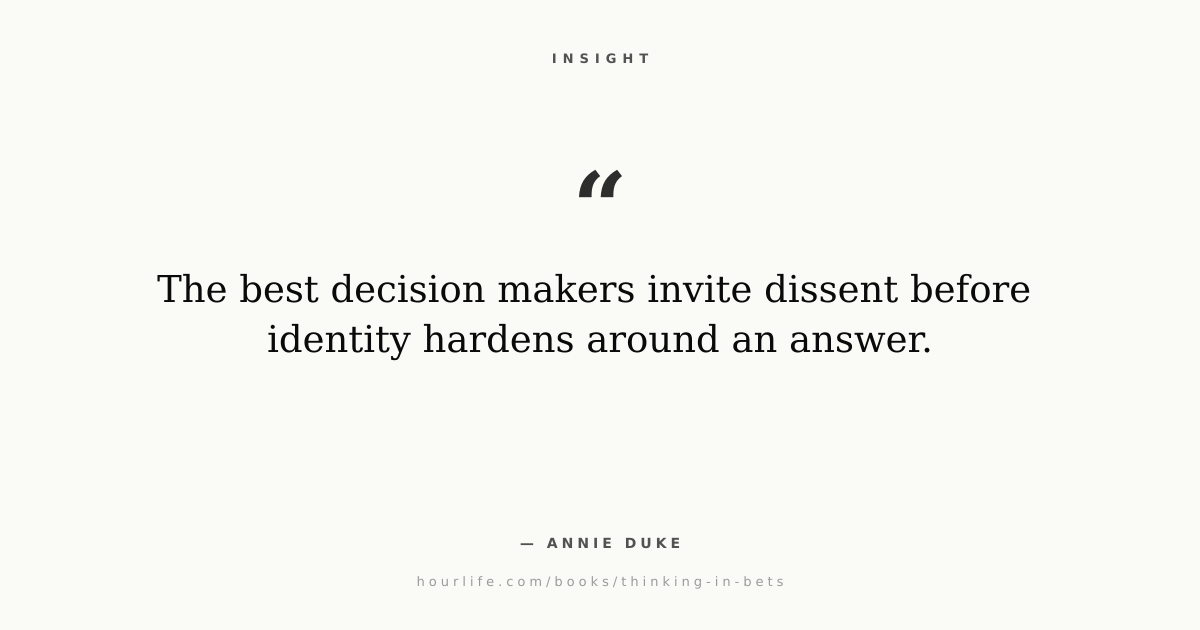
"The best decision makers invite dissent before identity hardens around an answer."
Practice better bets.
Write the probability
Before a decision, write the outcome you expect and the confidence percentage you assign to it.
Name the base rate
Find one outside comparison class before deciding the current case is special.
Separate process from result
After an outcome, list what was skill, what was luck, and what was unknowable at the time.
Invite one dissent
Ask someone smart to make the strongest case against your preferred choice.
Log the assumptions
Record the three assumptions that would make your decision wrong.
Shrink the stake
If confidence is high but evidence is thin, turn the decision into a cheaper experiment.
Review without ego
Revisit one past decision and judge the process using only information available then.
Use a premortem
Imagine the decision failed and write the most likely reason before committing.
Update publicly
When new evidence changes your view, say what changed instead of quietly switching positions.
Build your mini action book.
Pick setup actions and daily habits from Thinking in Bets, choose a start date, and download a printable checklist with real calendar pages.
Put Thinking in Bets on paper.
Worksheets that pair with this book's ideas. Customize them online, download a clean PDF, and leave nothing behind.
Frequently asked
What is Thinking in Bets about?
A decision-making guide that teaches readers to separate outcome quality from decision quality, think probabilistically, and update beliefs with better evidence.
What are the key takeaways from Thinking in Bets?
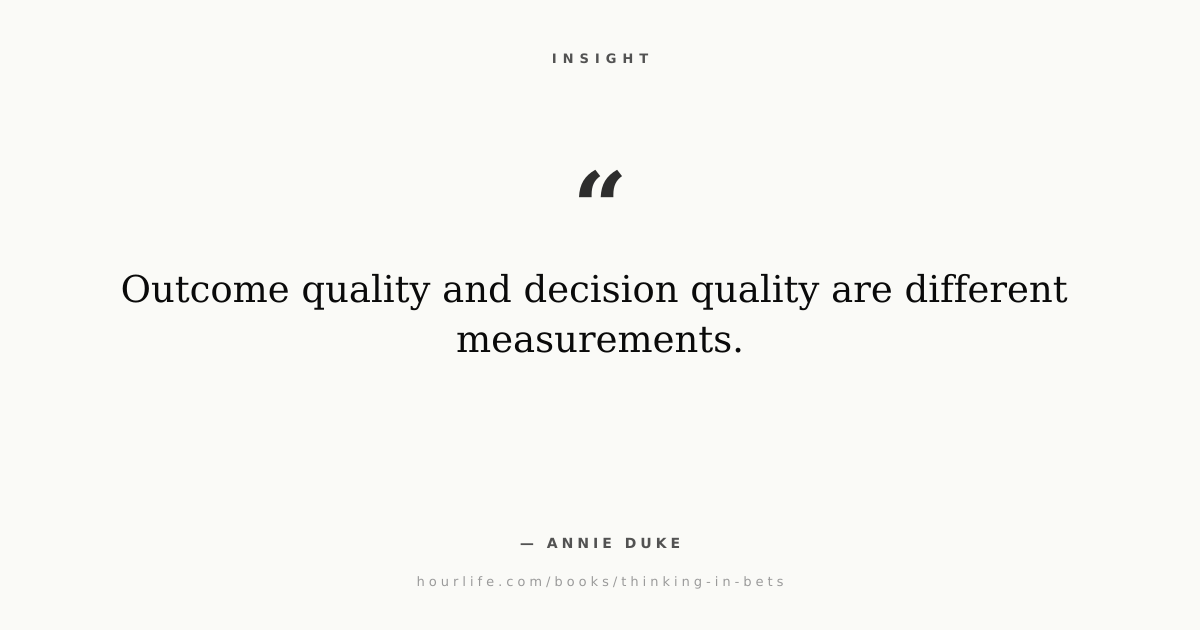
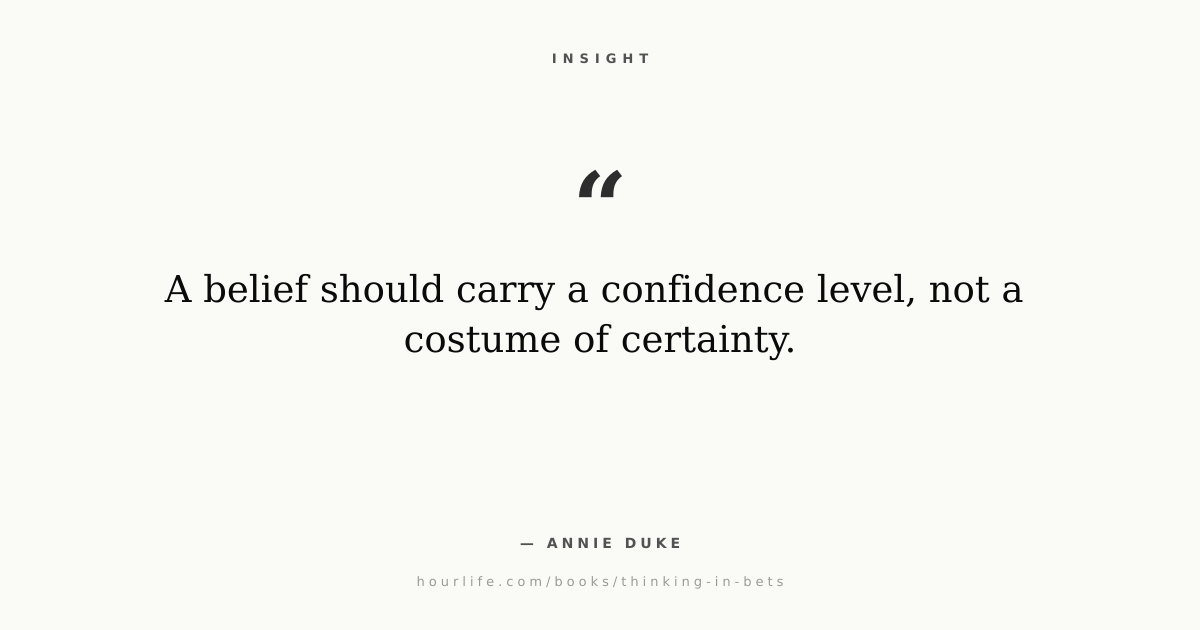
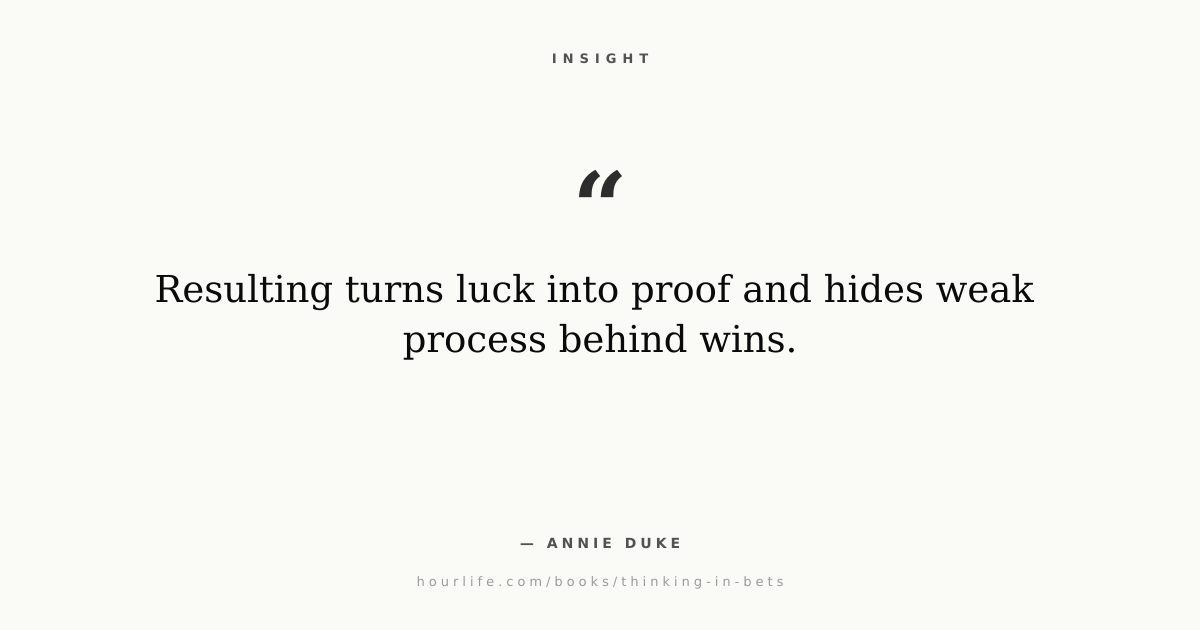
Readers on HourLife most often highlight ideas such as: “Outcome quality and decision quality are different measurements.” “A belief should carry a confidence level, not a costume of certainty.” “Resulting turns luck into proof and hides weak process behind wins.”
Who should read Thinking in Bets?
It's a strong pick for readers exploring Decision Making. HourLife distills its core idea into community-voted insights and one practical action worth trying.
What's one thing I can do after reading Thinking in Bets?
Write the probability — Before a decision, write the outcome you expect and the confidence percentage you assign to it.
How long does it take to read the Thinking in Bets summary?
About five minutes. The HourLife summary distills Thinking in Bets into its core idea, 7 community insights, and 9 practical actions you can apply right away.
Downloads & shareables
Print it, pin it, post it. Ways to take Thinking in Bets off the screen and into the world.
-
Read the text summary
The core idea, key takeaways, and how to apply Thinking in Bets, as one clean, readable page.
Read summary -
Action checklist
Every action from this page as a printable to-do list, with a 7-day tracker.
Download PDF -
Book summary card
A shareable card with the book and its top-voted insight, for saving or posting.
Resource library
The summary card and every quote card in six sizes: Instagram feed, Story, Pinterest, YouTube thumbnail, phone wallpaper, and link preview.
Turn this book into a daily practice.
Save the insights that land, build the habits that stick, and keep what you learn from Thinking in Bets working long after you close the page — inside HourLife.