
A built-in reminder list is often enough
Plenty of days need nothing more than a list and an alert at the right moment. Remember the prescription. Call back at four. Buy the thing before the shop closes. A simple native list handles that well, costs nothing to set up, and is already on the device.
There is no reason to replace a tool that is doing its job. The question worth asking is whether the job has changed.
Signs the list has stopped explaining your day
You have probably outgrown a plain reminder list when:
- Your tasks belong to larger goals, and the list has no way to show that.
- Habits and routines are competing with one-off tasks in the same flat list.
- Thoughts arrive that are not tasks yet and have nowhere to land.
- You want to review a week, not just clear a day.
- Mood, energy, or reflection would explain more than a completion count.
- You want a readable record of the day after the checkboxes reset.
None of that is a criticism of a reminder app. It is a different problem, and it wants a different shape of tool.
How HourLife widens the task list
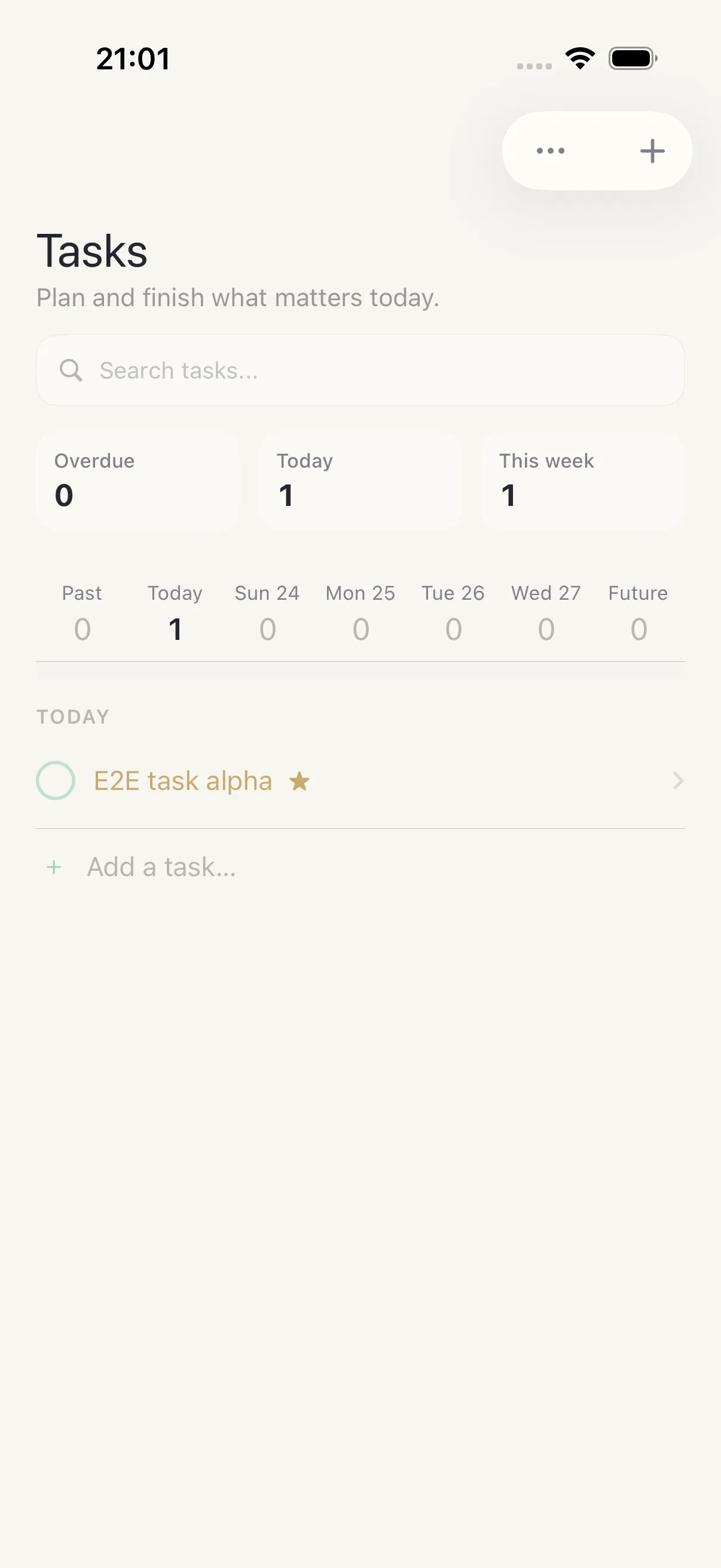
HourLife starts at Today, but the task is only the entry point. You can capture a loose thought in Brain, attach a task to a goal or project, keep habits and routines visible beside the one-off work, run a focus session against something specific, and write a short reflection when the day is done.
The result is a plan that survives contact with a real day, and a record afterwards that is worth looking back at.
You can keep both
This is not usually an either-or decision. A quick native alert for the errand you must not forget, HourLife for the day you are actually trying to run. Many people settle there and stop thinking about it.
The simple rule: if a task needs a nudge at a moment, a reminder is fine. If it belongs to the shape of your week, it belongs in a planner.