
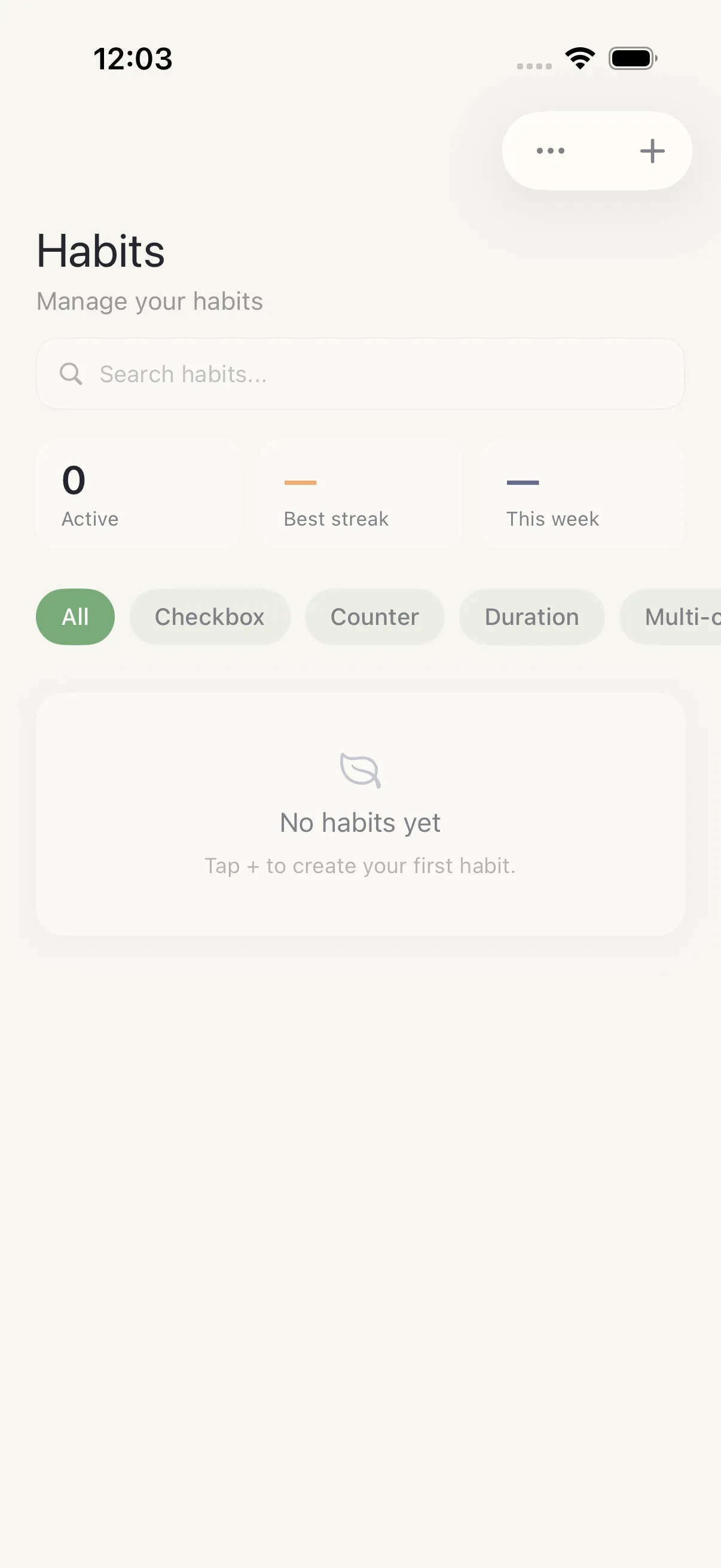
Habits need context
Standalone habit trackers are useful until the rest of the day gets loud. A checkbox by itself does not know that you slept badly, worked late, had a heavy meeting day, or spent your best focus block on a major task.
HourLife keeps habits close to the rest of your day, so behavior change is not separated from planning, energy, tasks, routines, and reflection.
Tasks, habits, and routines each have a job
Tasks are one-off commitments. Habits are recurring behaviors. Routines are repeatable sequences. A useful daily system should not blur those together, but it should let them coexist.
HourLife gives each kind of action a place. You can plan today's tasks, keep habits visible, run routines, and still capture unexpected items without breaking your system.
Track the day, not just the streak
Habit streaks can motivate, but they are not the whole story. HourLife also gives room for energy, mood, health context where permissions allow, journaling, gratitude, and review.
That makes habit tracking more useful over time. You are not only asking "Did I do it?" You can also notice what kind of day made the habit easier or harder.
Start small
You do not need to build a perfect life dashboard before HourLife becomes useful. Start with a few habits, the tasks already in front of you, and a simple daily review. Add routines, goals, or deeper reflection when they help.