Keep this book quotes for later
Sign in to save

ADHD 2.0

6 memorable lines from ADHD 2.0 by Edward M. Hallowell, John J. Ratey, each with the idea behind it.

As an Amazon Associate, HourLife earns from qualifying purchases.

Lines labelled “HourLife takeaway” are our wording of the book’s ideas and may paraphrase it. Only lines in quotation marks are the author’s own words, with where they appear. Check the book for exact wording before you quote it. Spot an error?

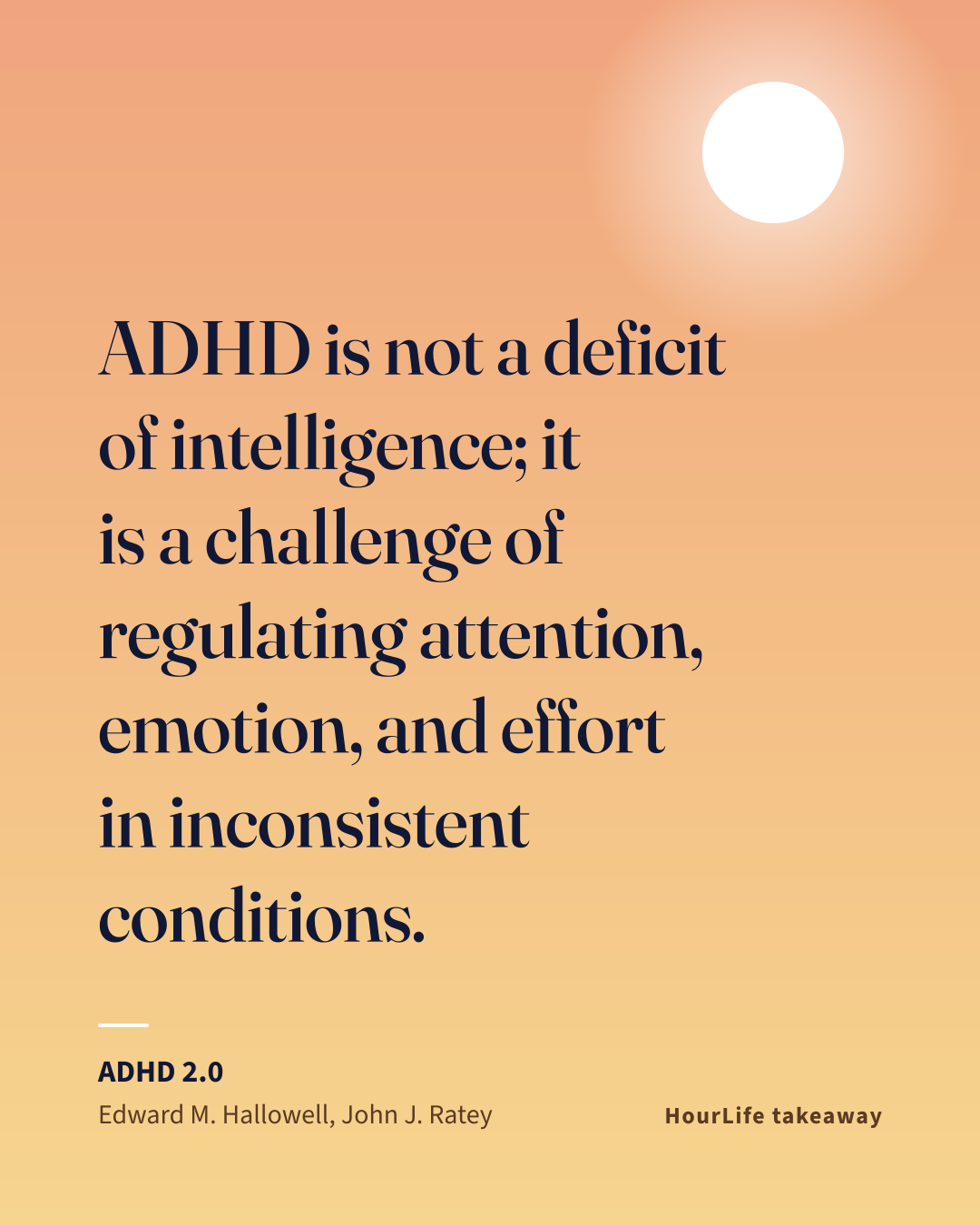
ADHD is not a deficit of intelligence; it is a challenge of regulating attention, emotion, and effort in inconsistent conditions.

ADHD 2.0 Edward M. Hallowell, John J. Ratey HourLife takeaway

Hallowell and Ratey shift the lens from character flaw to regulation mechanics. The right support system changes outcomes more than self-criticism ever will.


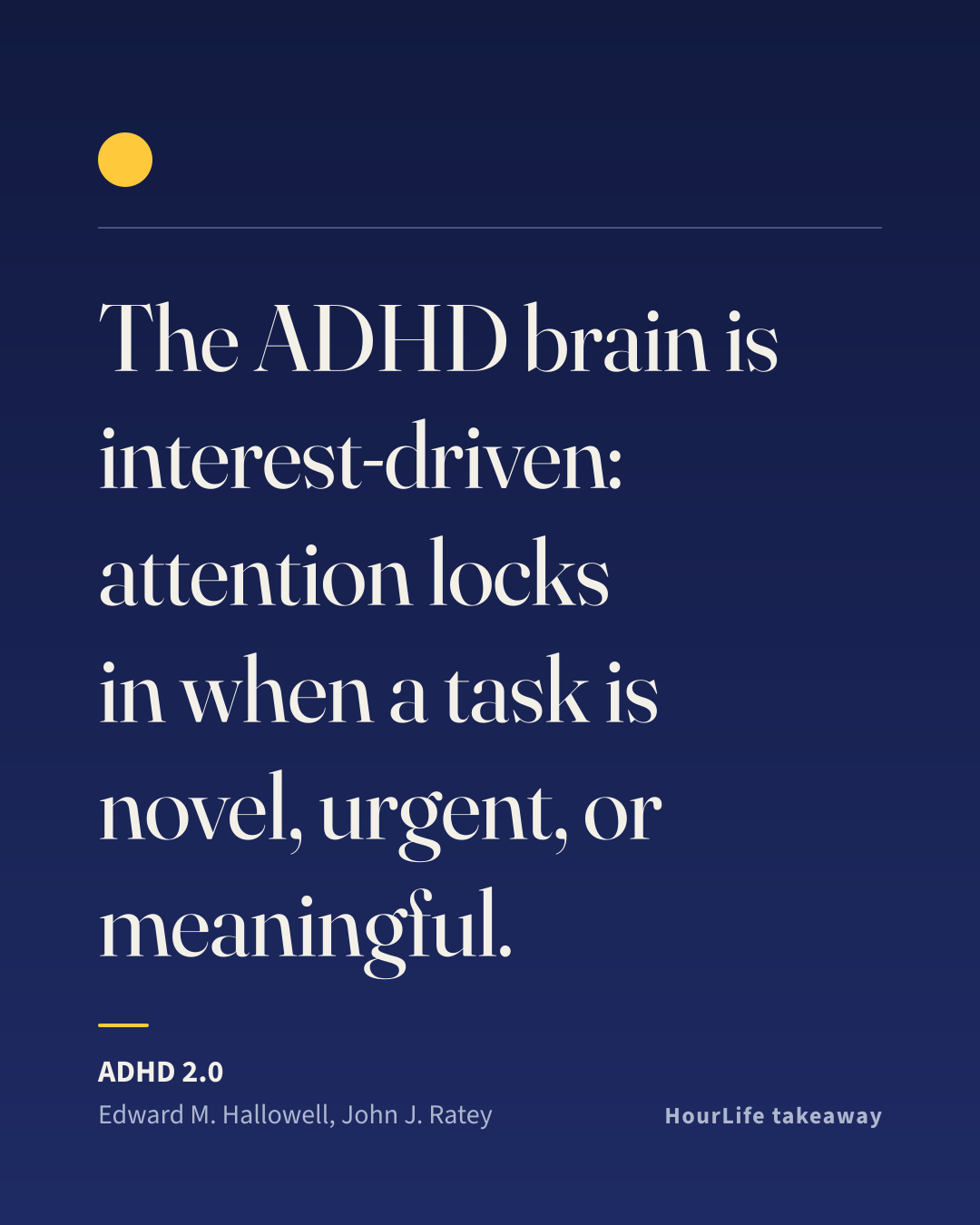
The ADHD brain is interest-driven: attention locks in when a task is novel, urgent, or meaningful.

ADHD 2.0 Edward M. Hallowell, John J. Ratey HourLife takeaway

Motivation is not linear in ADHD. Strategy means designing entry conditions that trigger engagement, not waiting for generic discipline to appear.

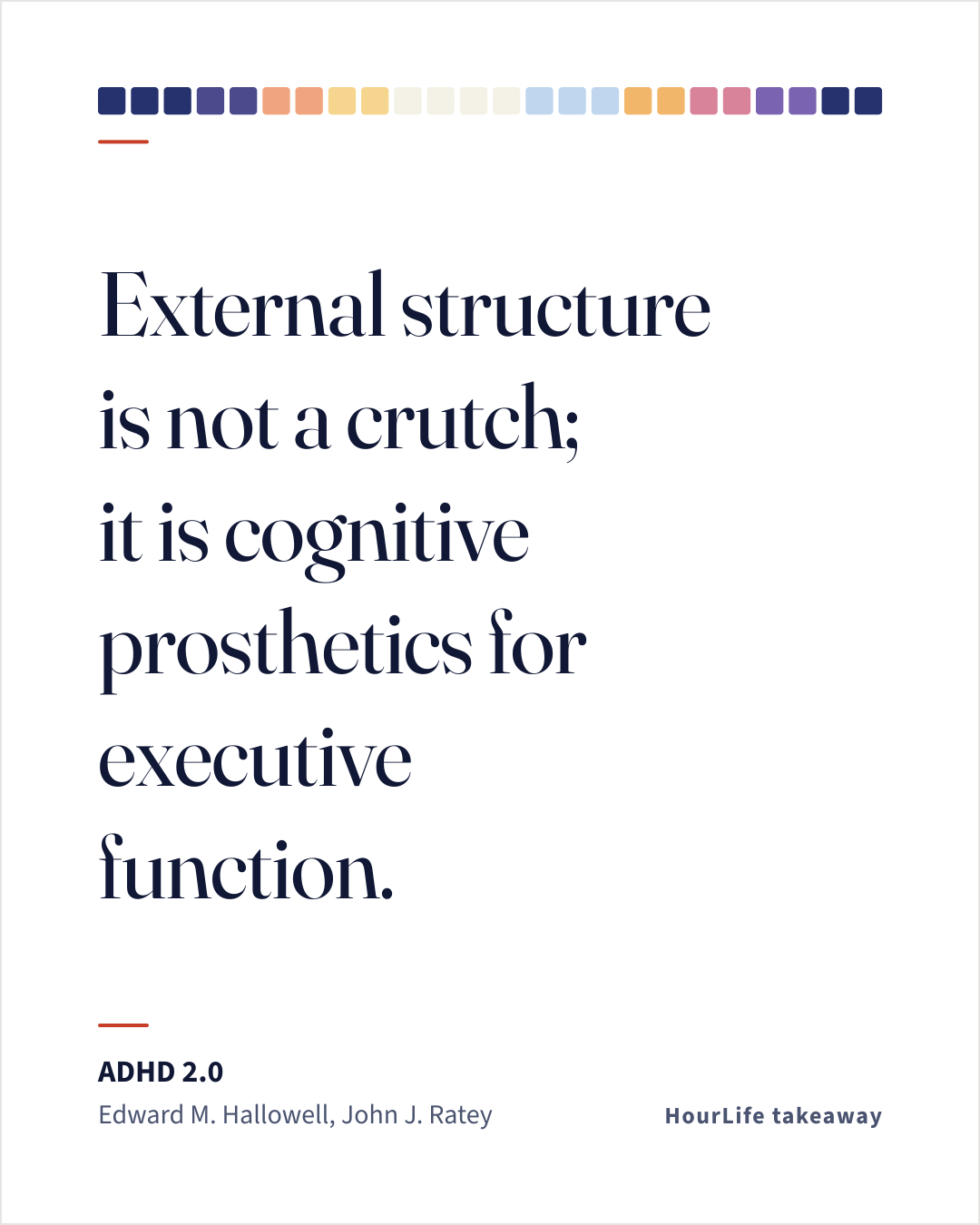
External structure is not a crutch; it is cognitive prosthetics for executive function.

ADHD 2.0 Edward M. Hallowell, John J. Ratey HourLife takeaway

Timers, body doubling, visual plans, and constrained environments function as load-bearing systems for planning and follow-through.

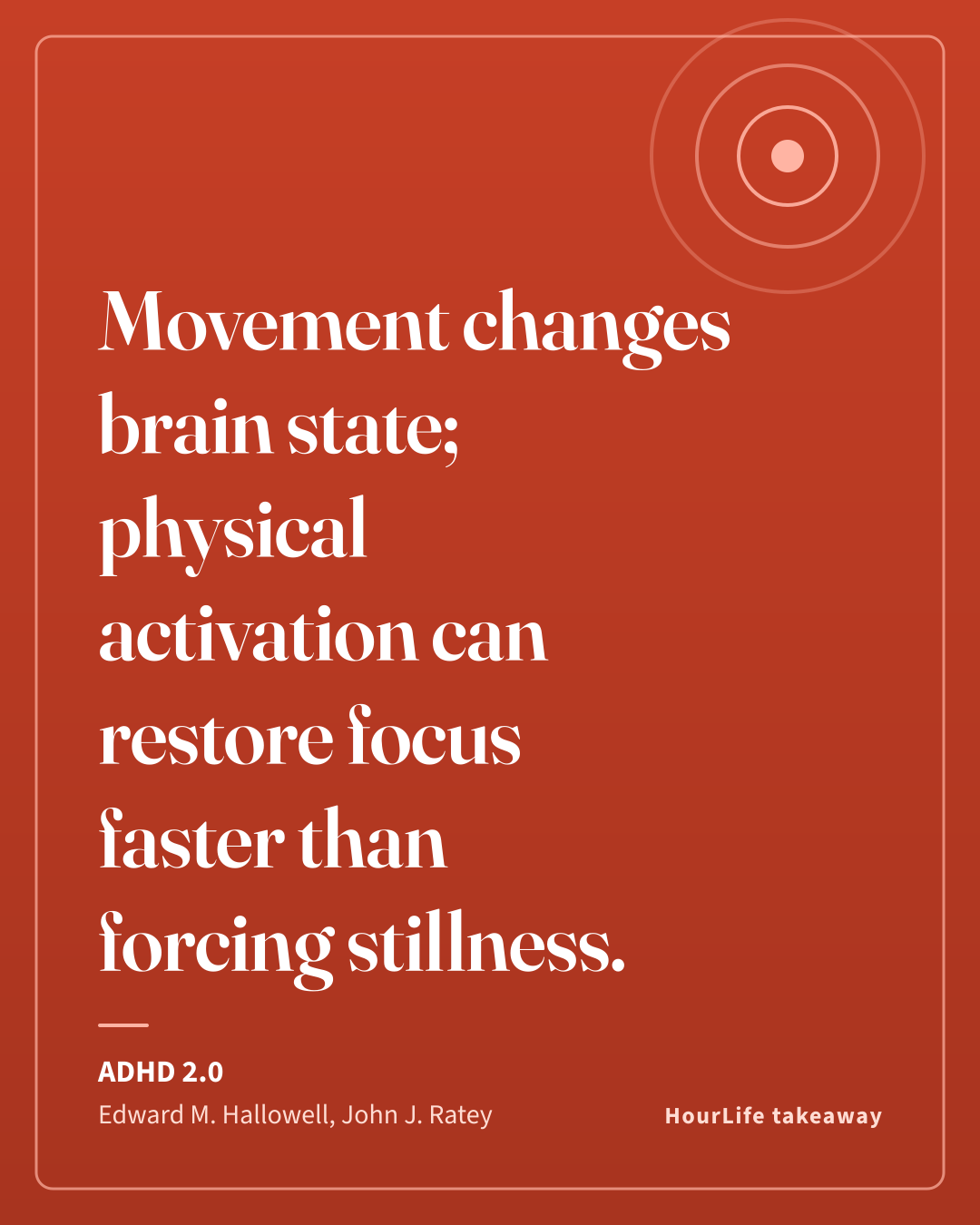
Movement changes brain state; physical activation can restore focus faster than forcing stillness.

ADHD 2.0 Edward M. Hallowell, John J. Ratey HourLife takeaway

Exercise and micro-movement regulate arousal and improve attention control. For many with ADHD, motion is therapeutic, not distracting.

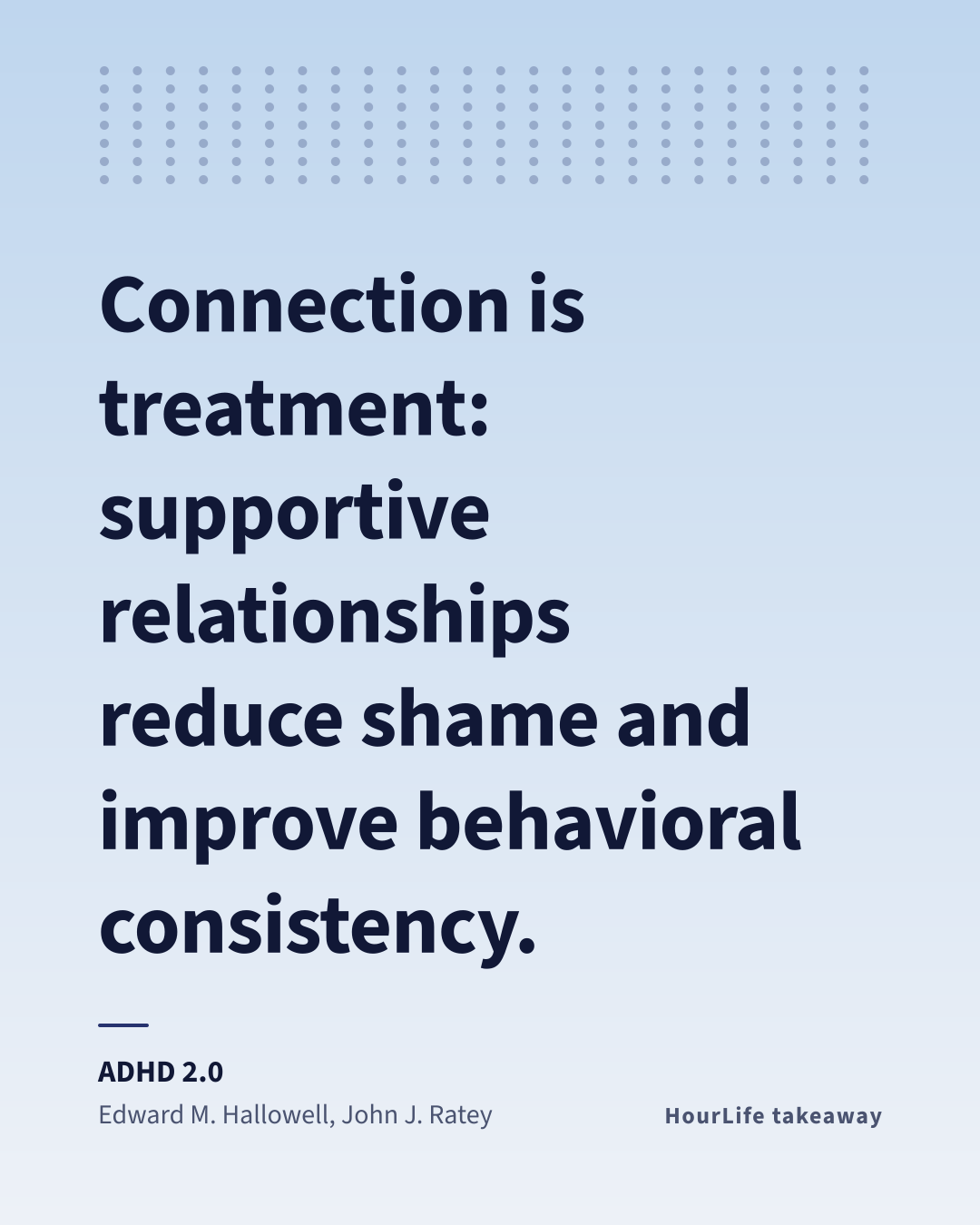
Connection is treatment: supportive relationships reduce shame and improve behavioral consistency.

ADHD 2.0 Edward M. Hallowell, John J. Ratey HourLife takeaway

Accountability plus emotional safety helps sustain routines. Isolation amplifies symptom load; structured support lowers it.

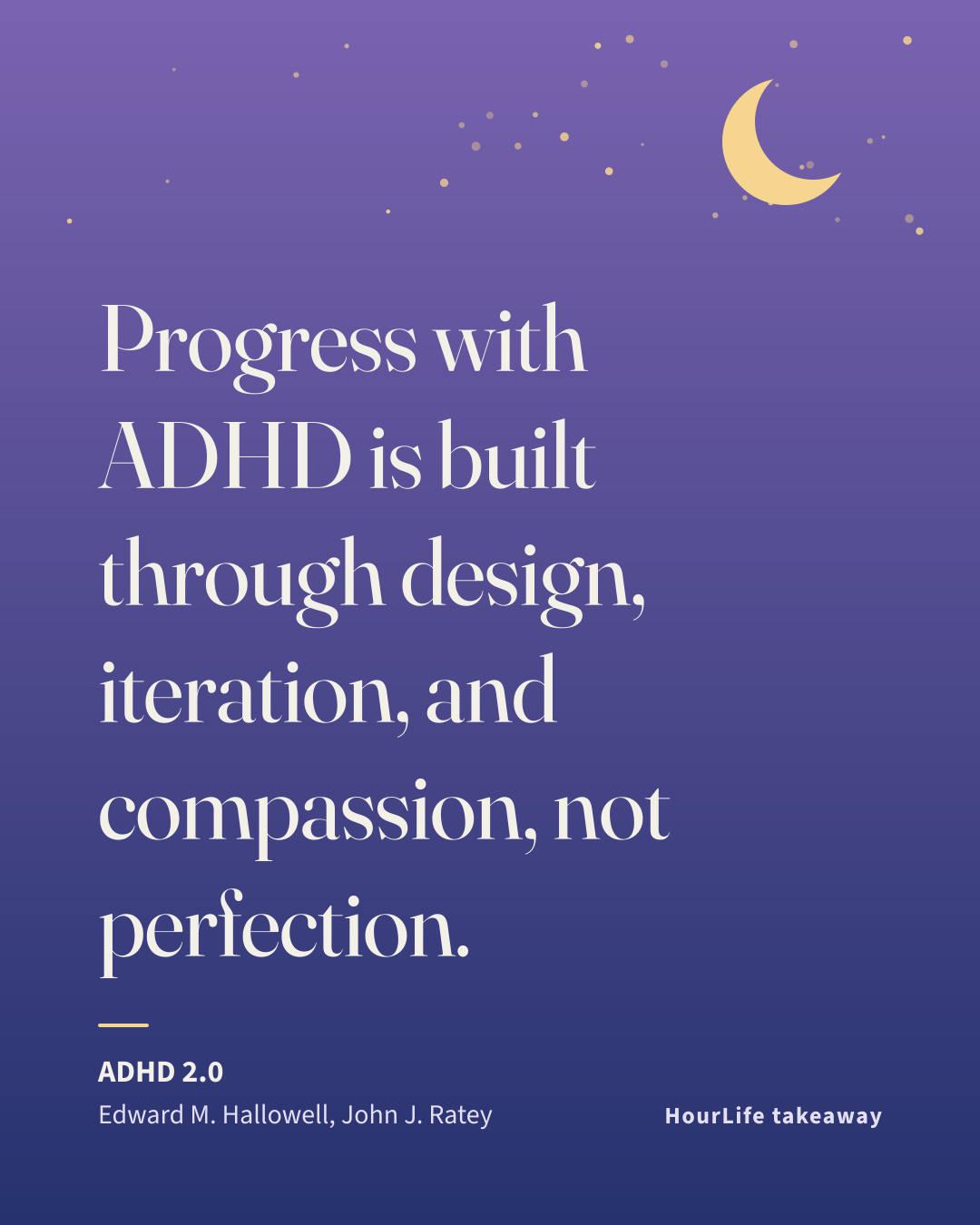
Progress with ADHD is built through design, iteration, and compassion, not perfection.

ADHD 2.0 Edward M. Hallowell, John J. Ratey HourLife takeaway

Long-term improvement comes from experimenting with systems, reviewing what works, and reducing self-attack during setbacks.

Keep this going in the app.

HourLife turns these ideas into a daily system — goals, habits, focus, and reflection in one private place.