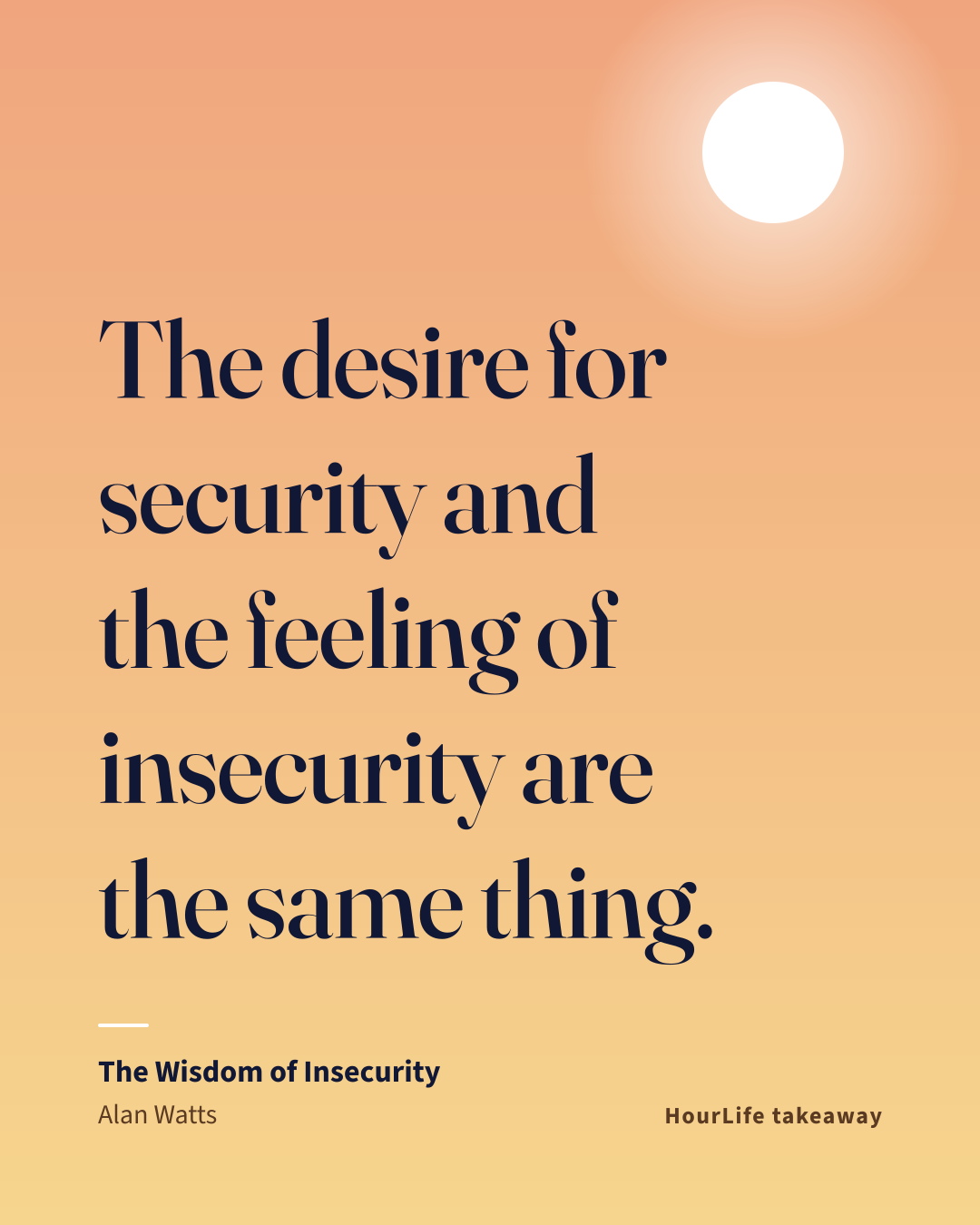
The desire for security and the feeling of insecurity are the same thing.
Watts names the central paradox: the more the mind demands a guarantee, the more intensely it experiences life as unsafe.
The most-loved lines from Alan Watts, drawn from 1 book in the library.
Lines labelled “HourLife takeaway” are our wording of the book’s ideas and may paraphrase it. Only lines in quotation marks are the author’s own words, with where they appear. Check the book for exact wording before you quote it. Spot an error?
The desire for security and the feeling of insecurity are the same thing.
Watts names the central paradox: the more the mind demands a guarantee, the more intensely it experiences life as unsafe.
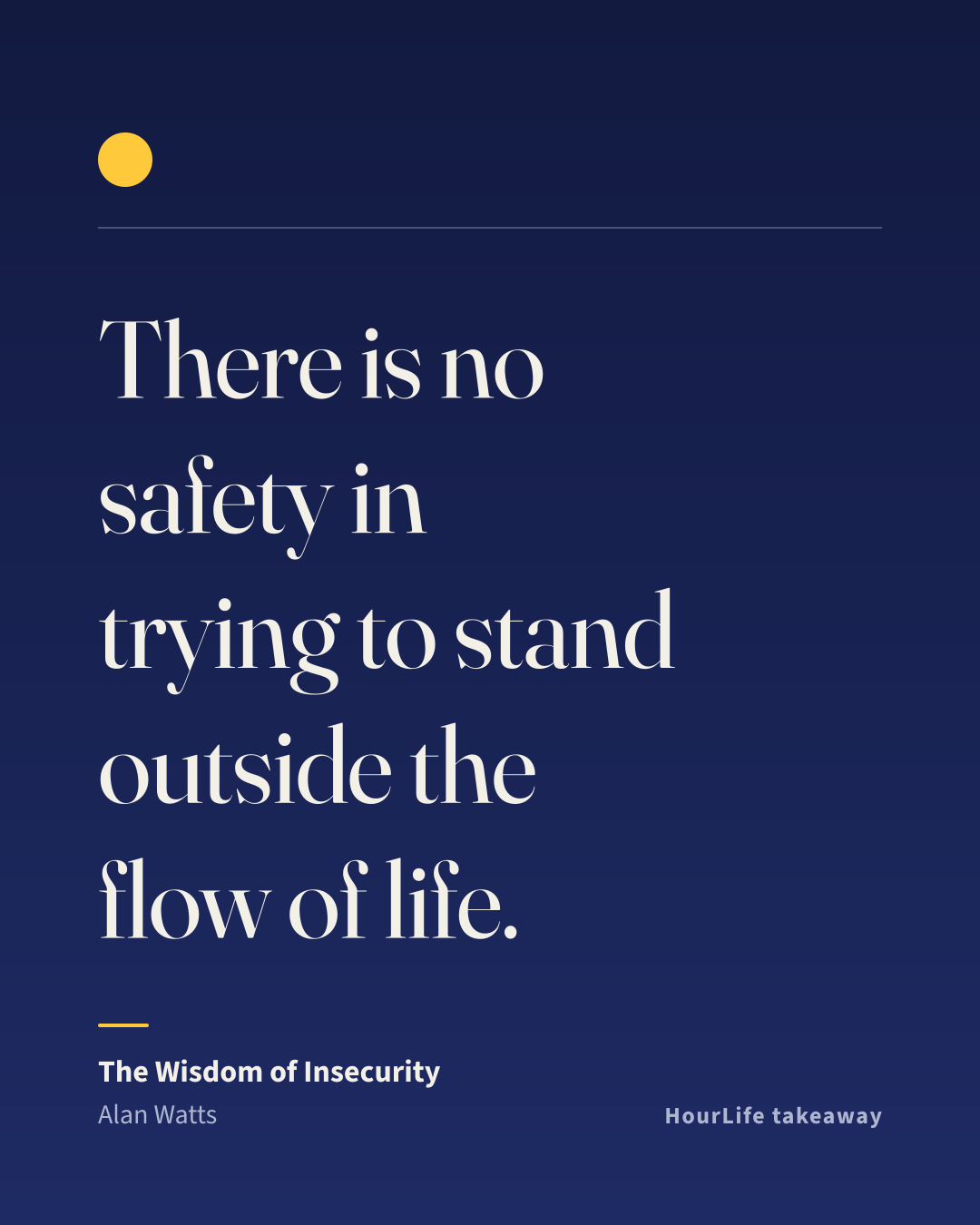
There is no safety in trying to stand outside the flow of life.
The book keeps pulling us back from the spectator position. You do not secure life by retreating from it into analysis.
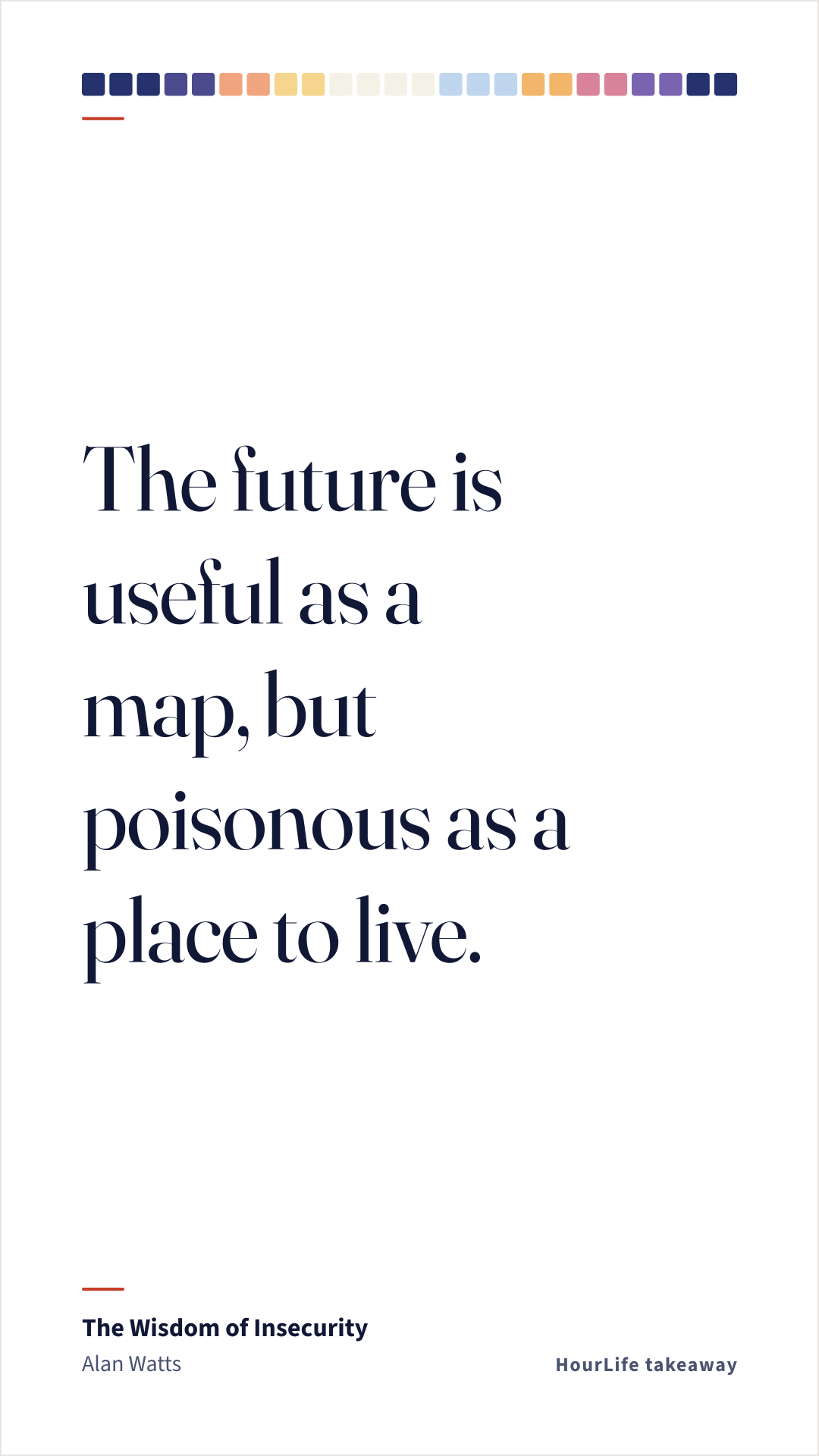
The future is useful as a map, but poisonous as a place to live.
Planning becomes suffering when the present is treated only as raw material for a later rescue.
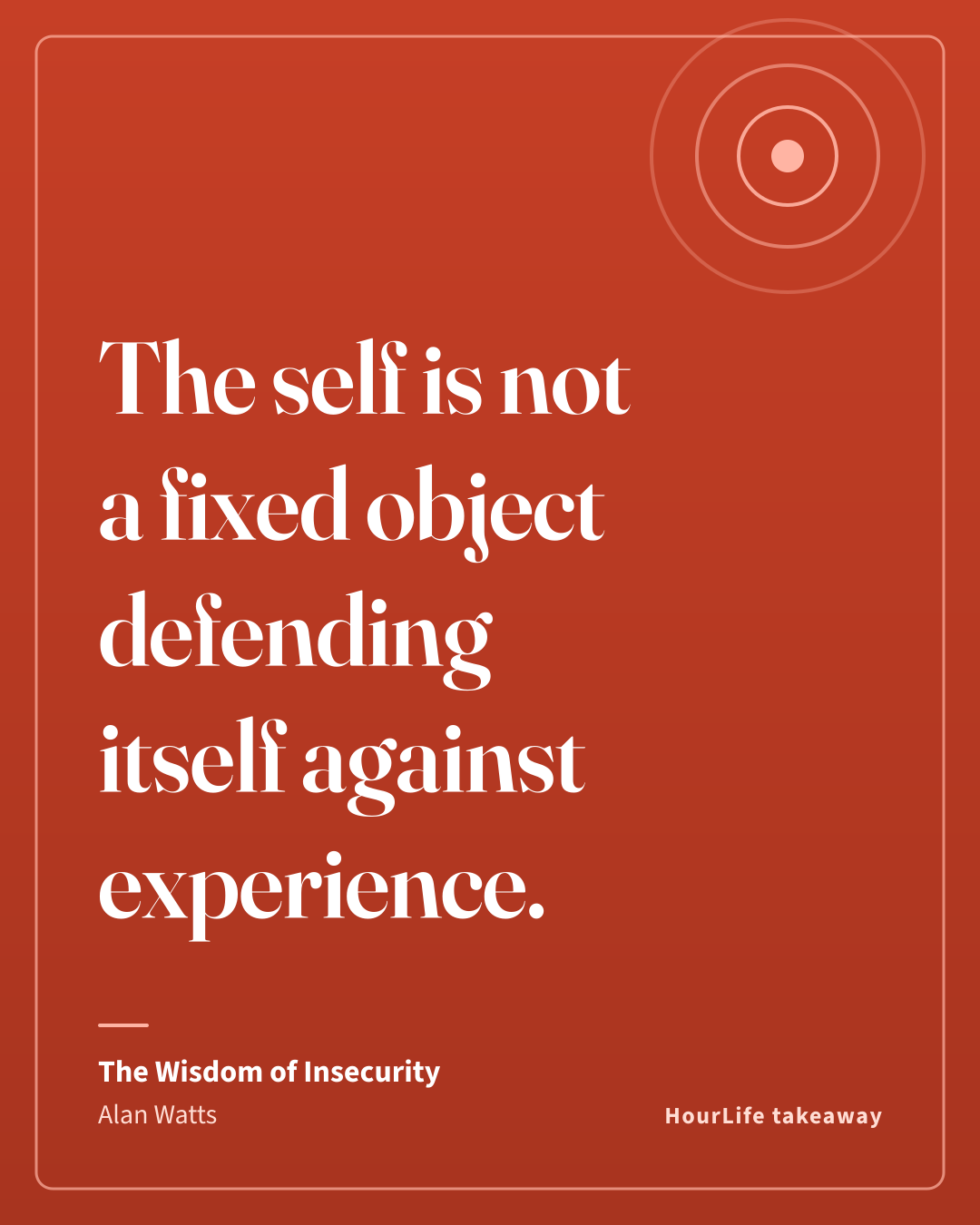
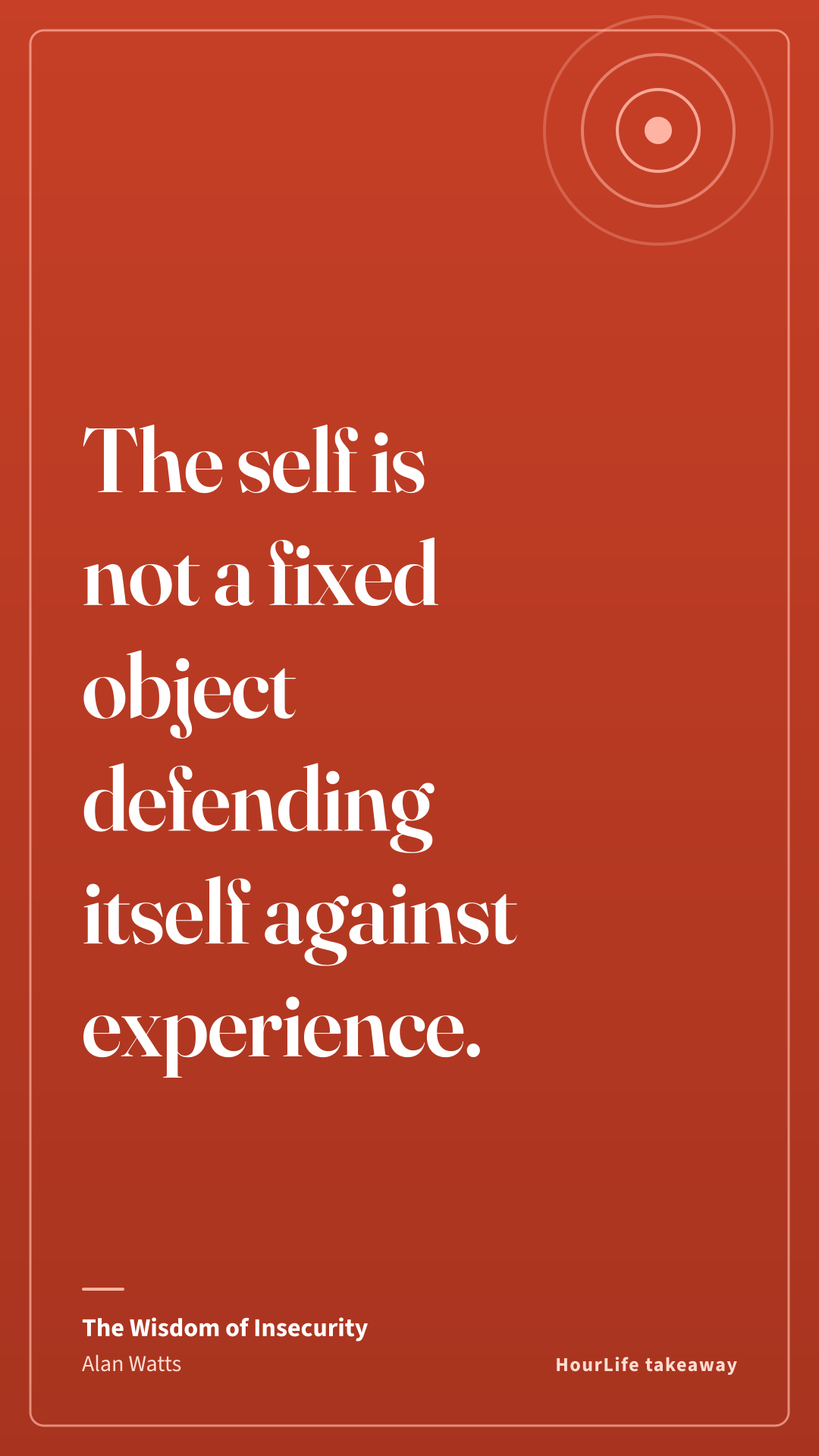
The self is not a fixed object defending itself against experience.
Watts dissolves the hard boundary between the person and the world, making identity feel more like movement than property.
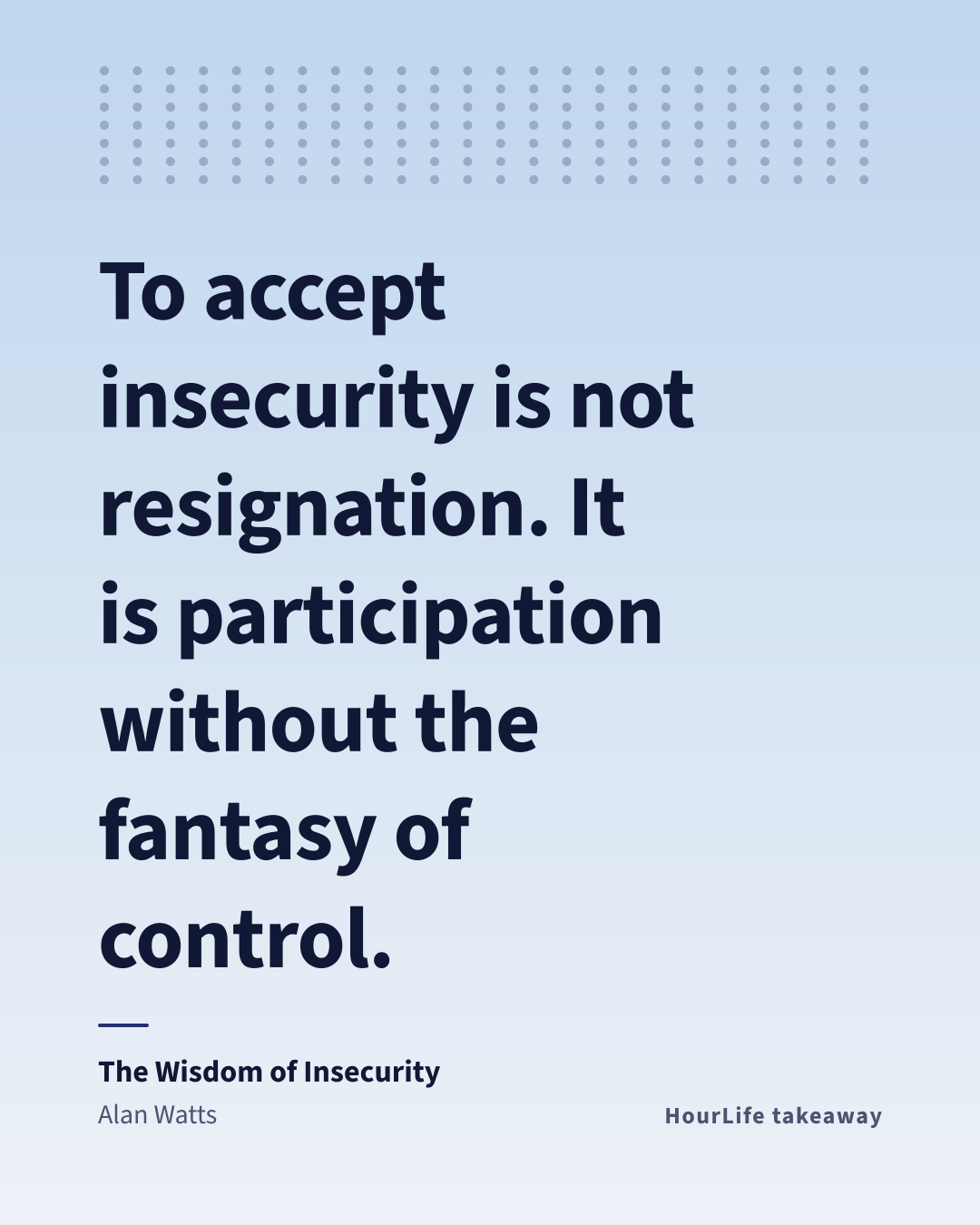
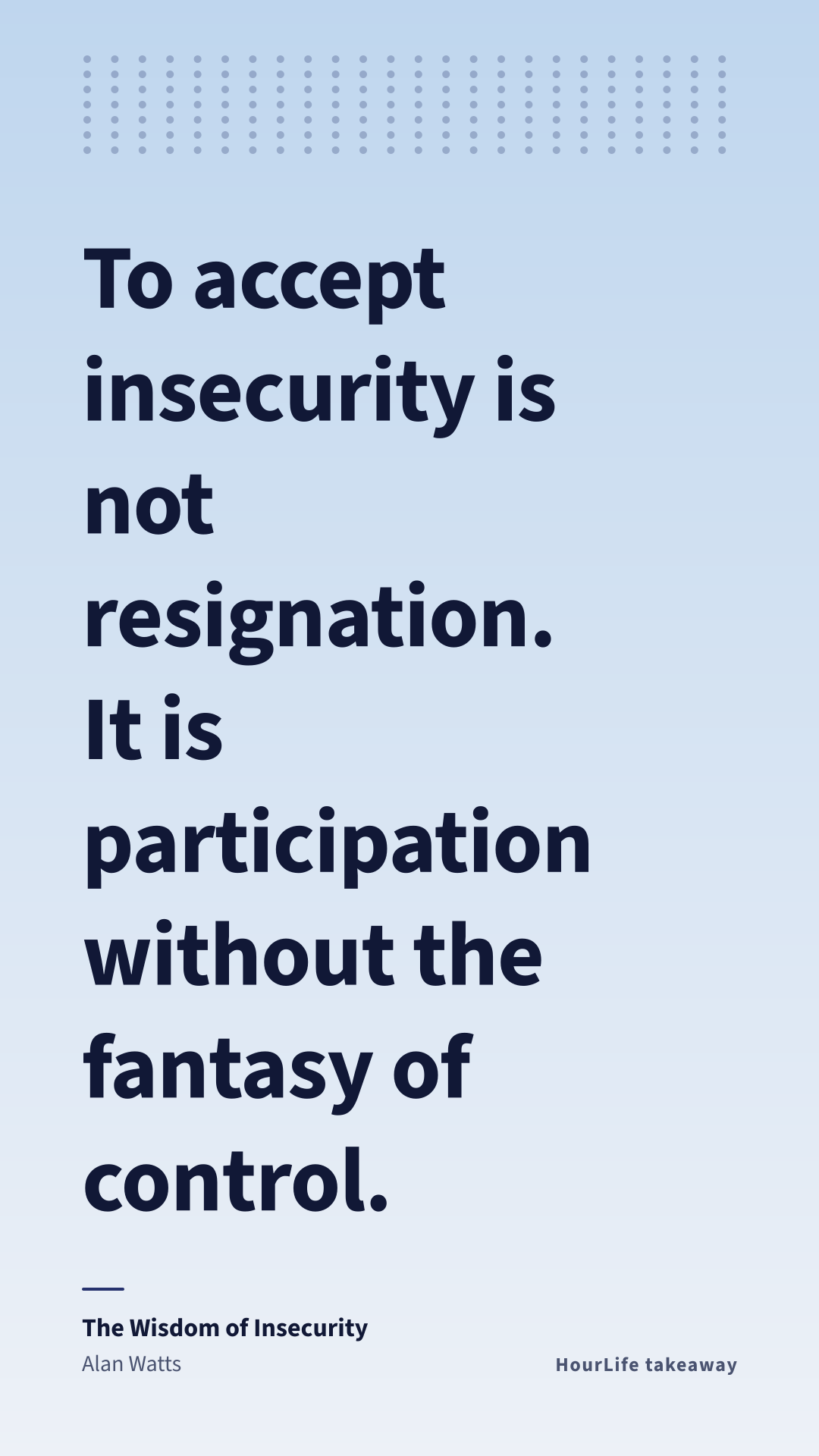
To accept insecurity is not resignation. It is participation without the fantasy of control.
The practical turn is subtle: stop waiting for perfect certainty, then act with fuller contact.
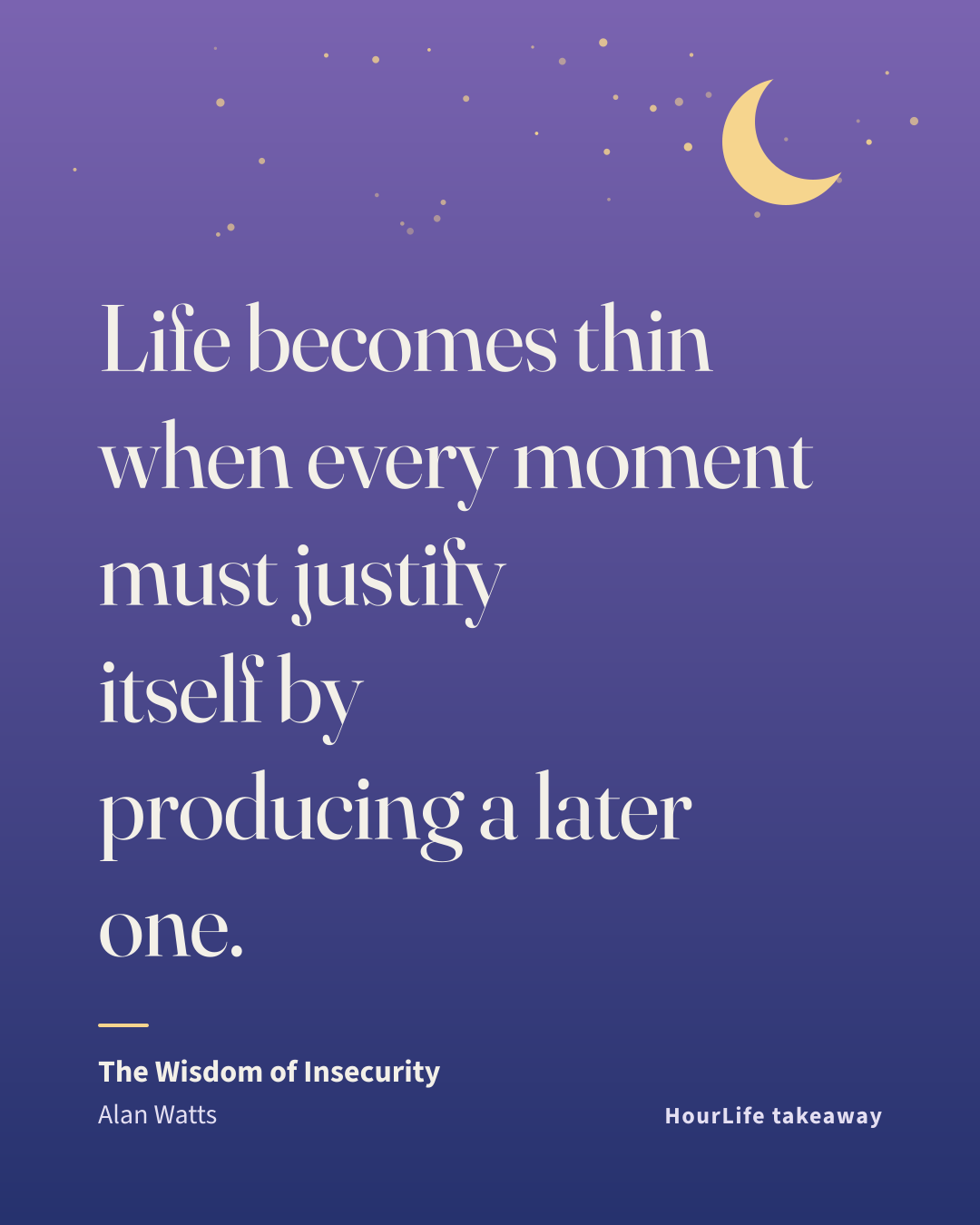
Life becomes thin when every moment must justify itself by producing a later one.
This is the book's quiet critique of endless self-improvement, deferred peace, and instrumental living.
HourLife turns these ideas into a daily system — goals, habits, focus, and reflection in one private place.