Keep this author quotes for later
Sign in to save

David Epstein

The most-loved lines from David Epstein, drawn from 2 books in the library.

Lines labelled “HourLife takeaway” are our wording of the book’s ideas and may paraphrase it. Only lines in quotation marks are the author’s own words, with where they appear. Check the book for exact wording before you quote it. Spot an error?

Total freedom tends to send you down the most familiar path.

Inside the Box David Epstein HourLife takeaway

Thinking is effort, so with no limits the mind takes the cheapest route: the idea it already had. A boundary that rules out the obvious answer forces a wider search, and that is where the better ideas usually are.


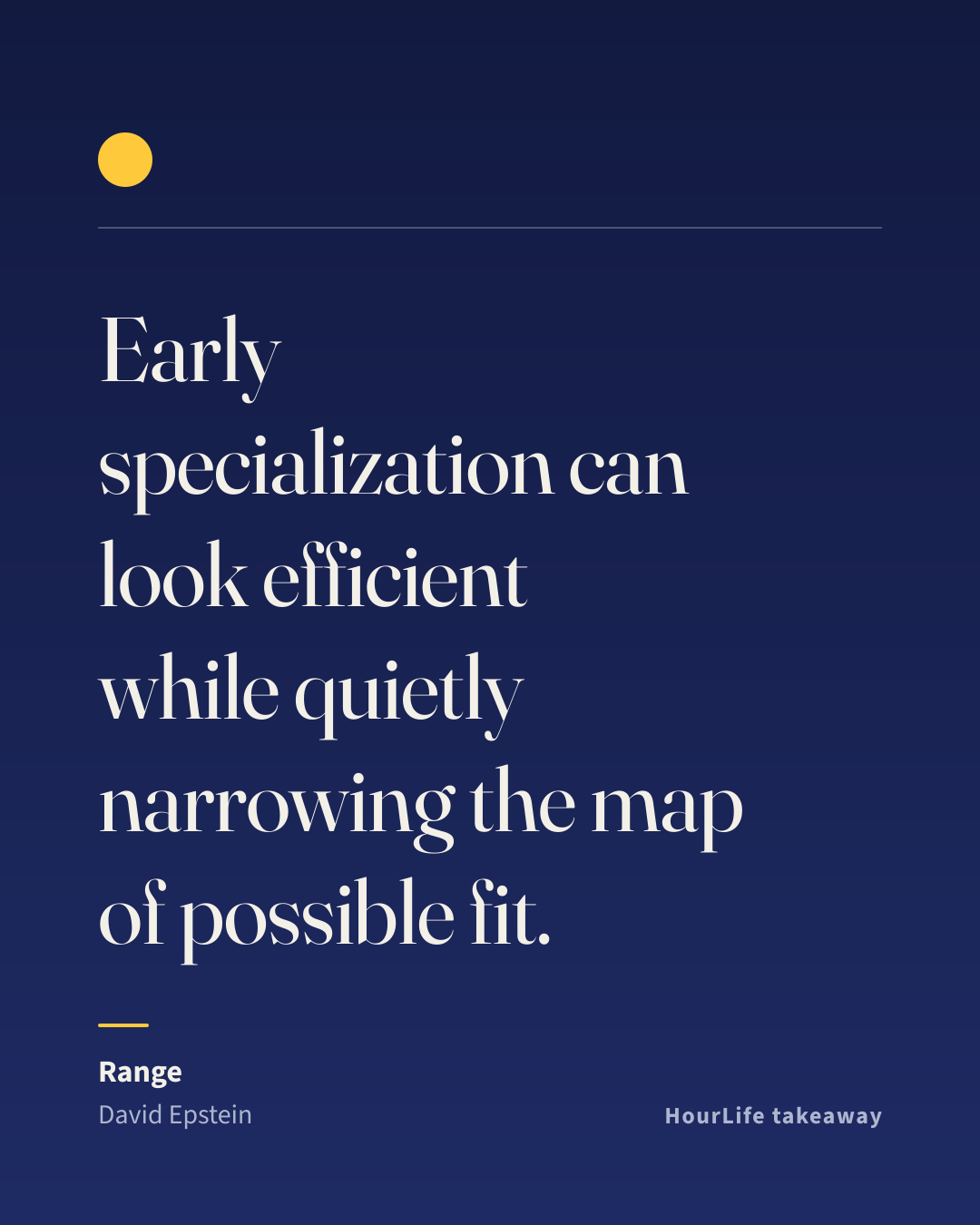
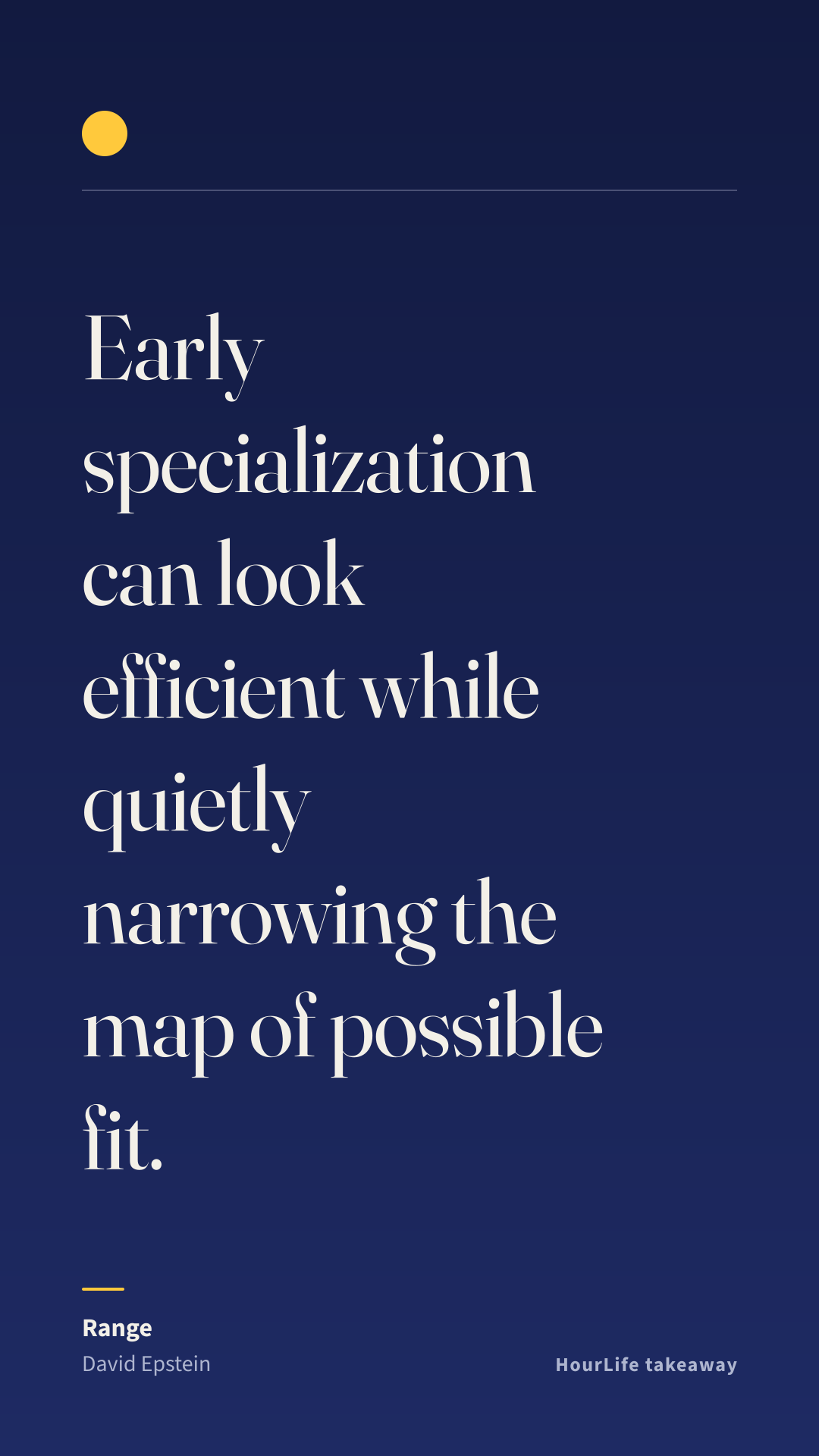
Early specialization can look efficient while quietly narrowing the map of possible fit.

Range David Epstein HourLife takeaway

Epstein reframes exploration as data collection: trying more paths can make later commitment sharper, not weaker.

The periodic table came out of a book with limited pages, not a dream.

Inside the Box David Epstein HourLife takeaway

The book opens by taking apart the story that Mendeleev saw the table in his sleep. Epstein traces it instead to a textbook he had to write, with too little room to treat every element on its own. Grouping them into families was the way to fit.

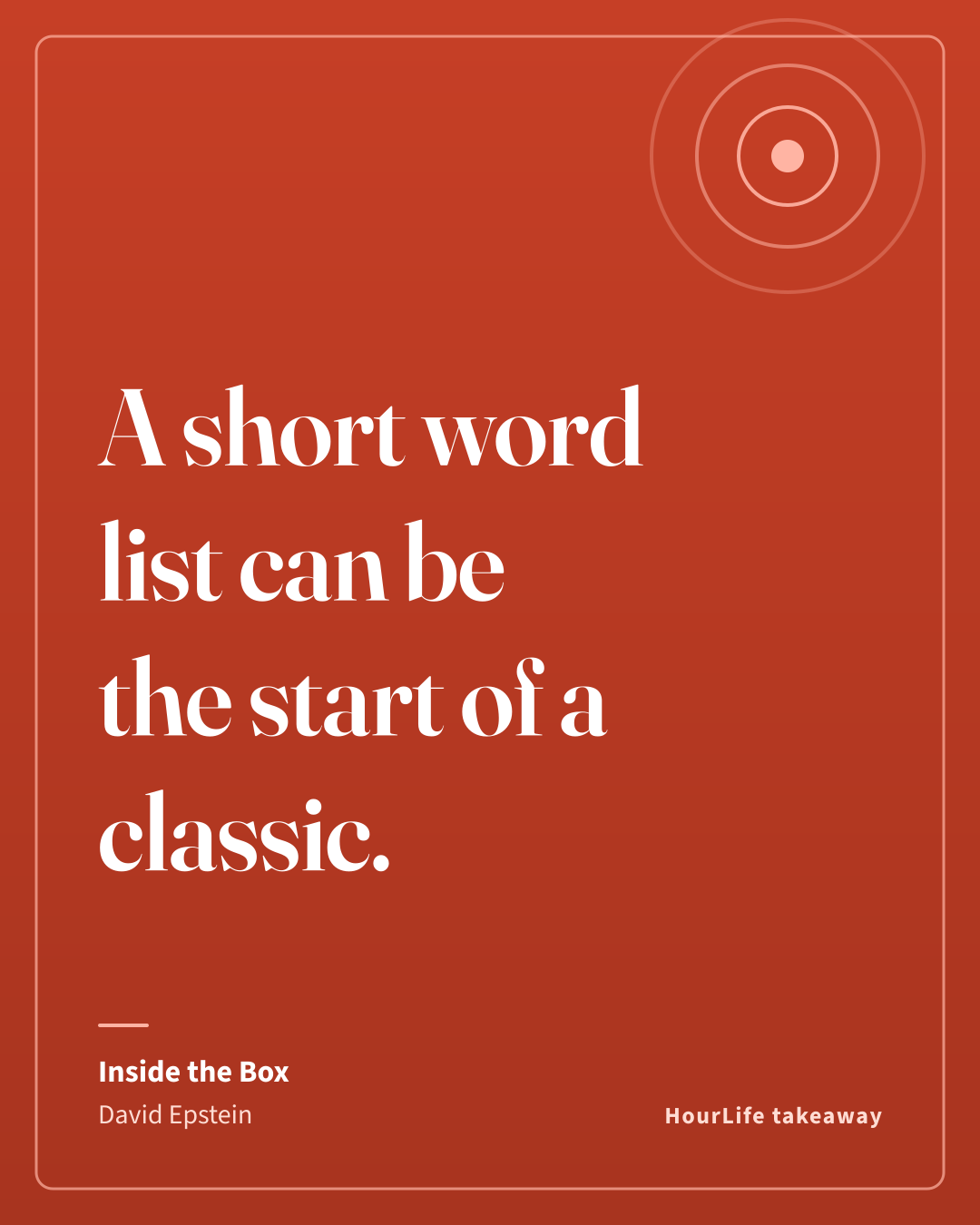
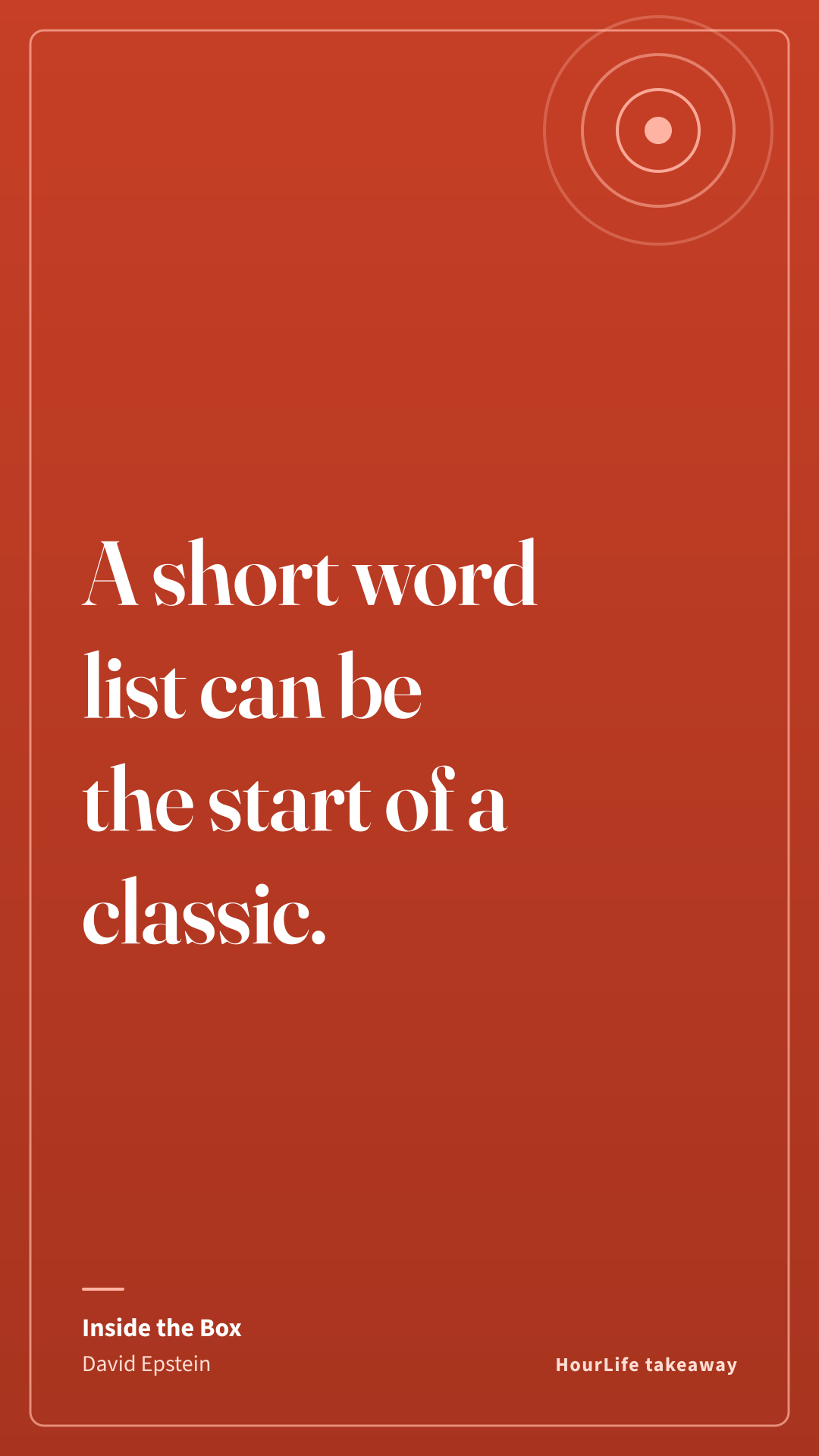
A short word list can be the start of a classic.

Inside the Box David Epstein HourLife takeaway

Dr. Seuss wrote Green Eggs and Ham on a bet that he could not write a book with only 50 different words. A chapter is named after it. A limit on materials closes off the easy moves and leaves the interesting ones.

Wicked environments reward people who can transfer ideas, not just repeat procedures.

Range David Epstein HourLife takeaway

When rules shift and feedback arrives late, breadth becomes a practical advantage for pattern recognition.

People overlook subtraction, even when removing something is the best fix.

Inside the Box David Epstein HourLife takeaway

Asked to improve something, most of us add a part, a meeting or a step. Taking one away rarely occurs to us. A regular subtraction audit, where you list what has outlived its purpose and cut one item, puts that option back on the table.

Quitting is not always a failure of grit; sometimes it is how match quality improves.

Range David Epstein HourLife takeaway

Range gives permission to leave a poor-fit path before sunk cost becomes identity.

A project with no edges can keep growing until it never ships.

Inside the Box David Epstein HourLife takeaway

General Magic had brilliant people and few limits, and its features and deadlines kept expanding. Pixar put structure around its creativity instead: small story teams, several pitches before committing, and a visible budget of animator time.

The best generalists are not shallow. They build bridges between deep wells.

Range David Epstein HourLife takeaway

The book's strongest argument is for connected breadth: enough depth to understand, enough distance to compare.

A system moves only as fast as its narrowest step.

Inside the Box David Epstein HourLife takeaway

This is Eli Goldratt's theory of constraints, from his novel The Goal. Speeding up any other step only piles work up in front of the slow one. Find the bottleneck and widen it before you touch anything else.

Stop starting, and start finishing.

Inside the Box David Epstein HourLife takeaway

Switching between tasks has a cost, and most of us switch far more than we notice, even when no notification asks us to. Holding one thing open at a time and finishing it before taking the next is a constraint that frees attention.

Analogies are the generalist’s microscope: they reveal structure hidden by surface details.

Range David Epstein HourLife takeaway

Distant examples can make a hard problem solvable by changing the frame around it.

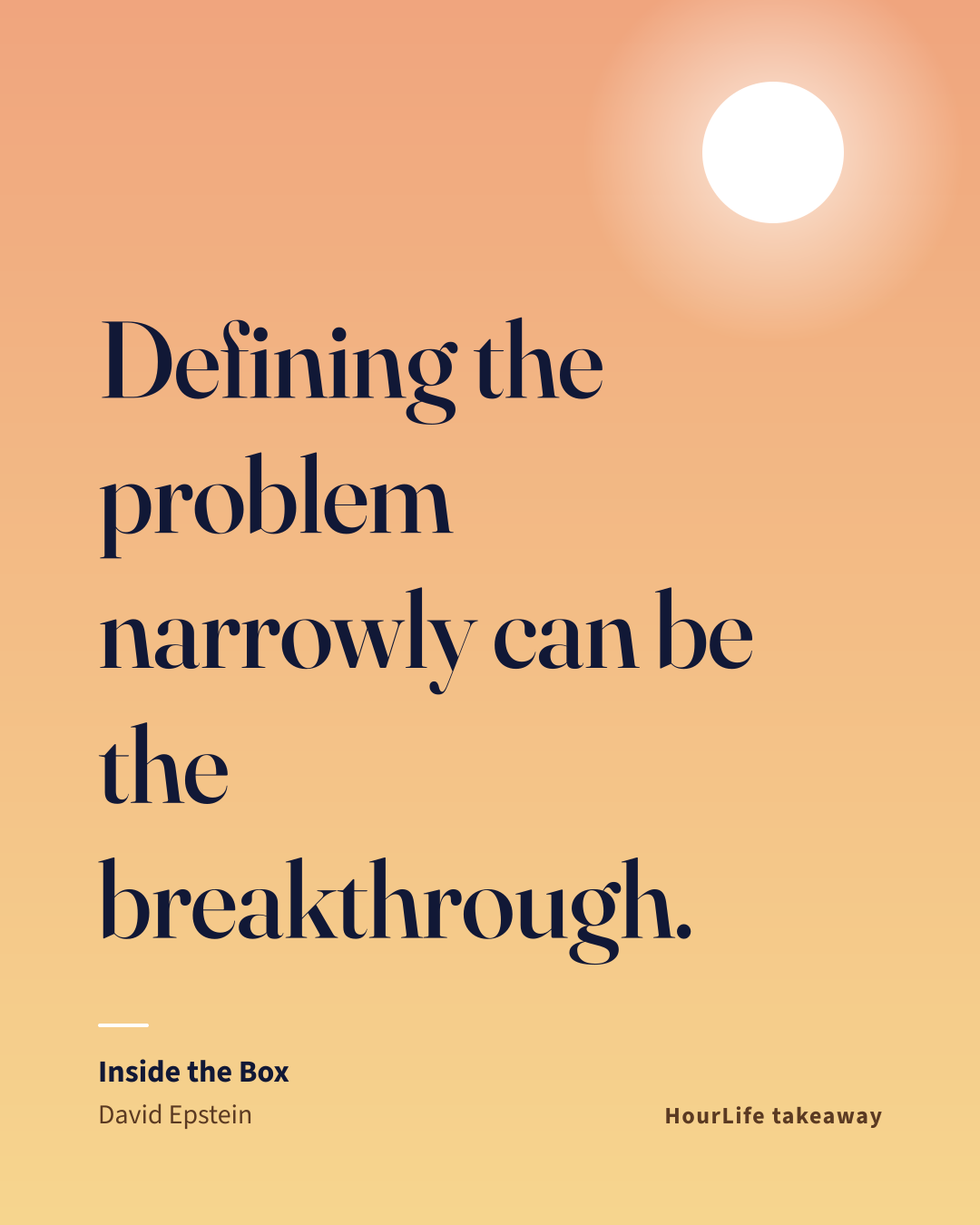
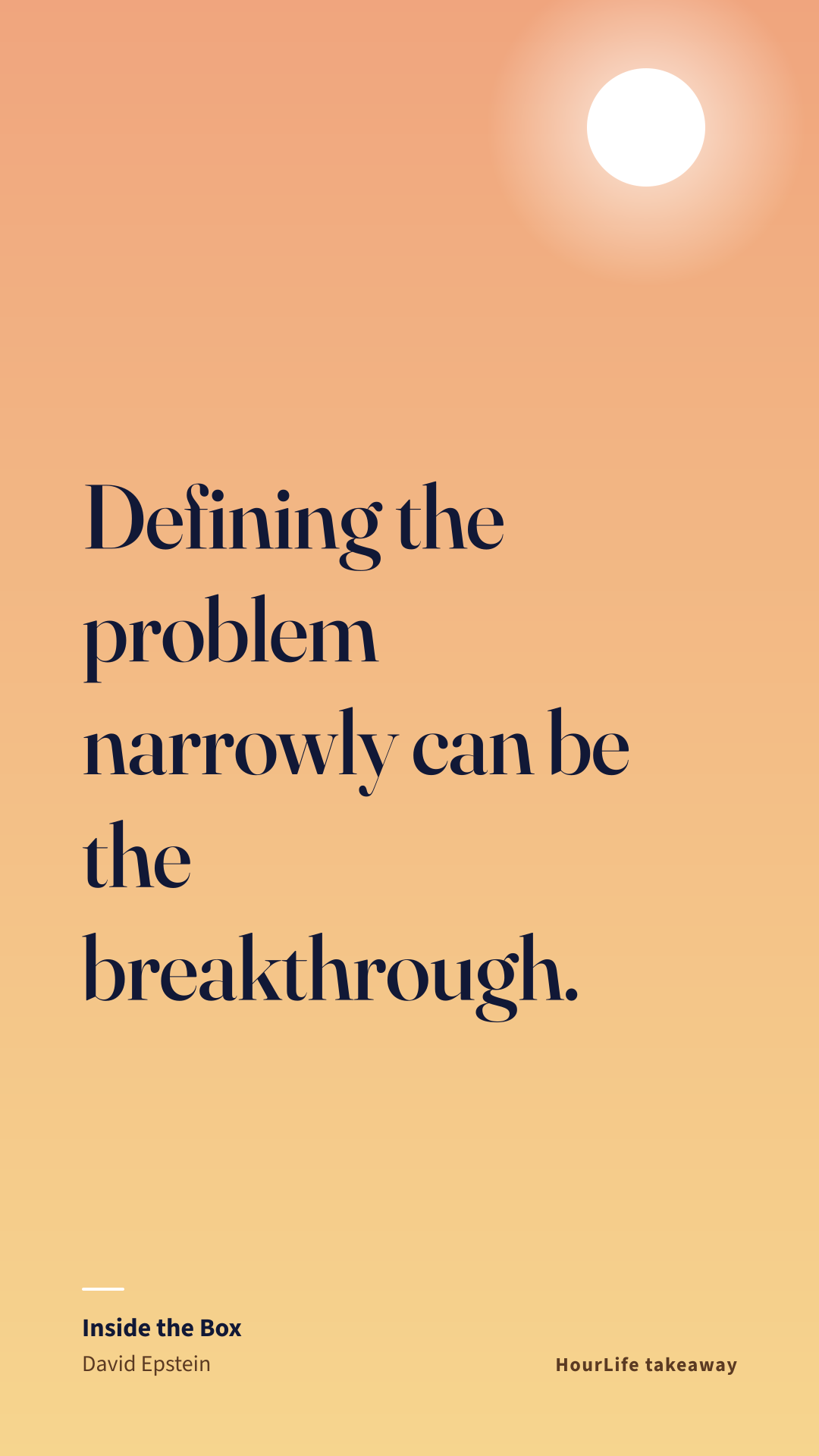
Defining the problem narrowly can be the breakthrough.

Inside the Box David Epstein HourLife takeaway

Epstein calls the people who frame a clear, narrow problem for others to solve problem setters. The Palm Pilot took three functions out of General Magic's sprawling design, and built the product around a clear problem for one kind of customer.

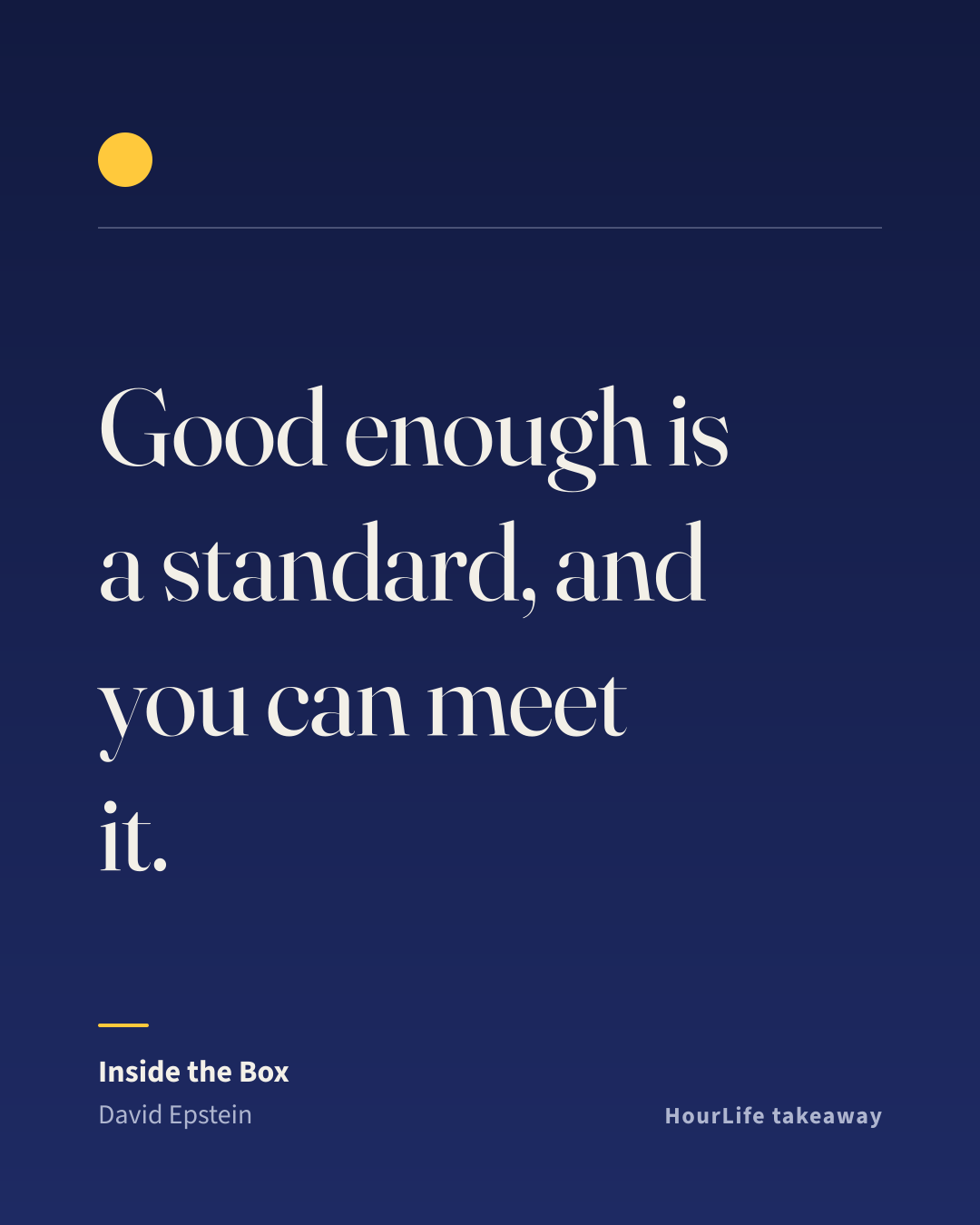
Good enough is a standard, and you can meet it.

Inside the Box David Epstein HourLife takeaway

Herbert Simon called it satisficing: setting a bar and taking the first option that clears it. Trying to find the very best of everything wears people out. The point is not low standards, but standards that can actually be met.

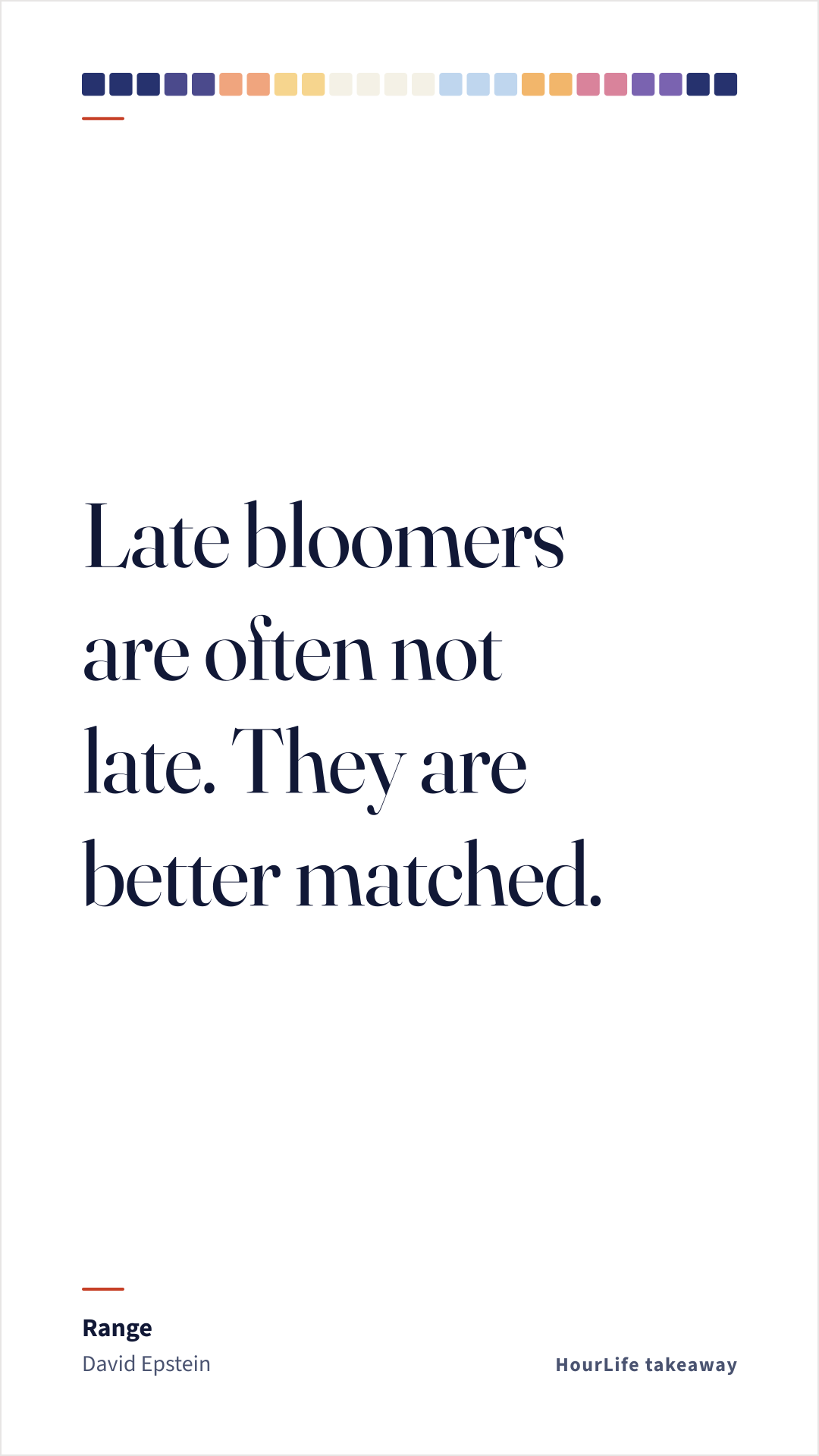
Late bloomers are often not late. They are better matched.

Range David Epstein HourLife takeaway

The slower path can look inefficient until the right domain makes accumulated variety suddenly useful.

Keep this going in the app.

HourLife turns these ideas into a daily system — goals, habits, focus, and reflection in one private place.