Happiness is not a lucky accident. It has causes, and many of those causes can be cultivated.
The page centers on this practical optimism: joy becomes less mysterious when you study the mental habits that support it.
The most-loved lines from Howard C. Cutler, drawn from 1 book in the library.
Lines labelled “HourLife takeaway” are our wording of the book’s ideas and may paraphrase it. Only lines in quotation marks are the author’s own words, with where they appear. Check the book for exact wording before you quote it. Spot an error?
Happiness is not a lucky accident. It has causes, and many of those causes can be cultivated.
The page centers on this practical optimism: joy becomes less mysterious when you study the mental habits that support it.
Compassion turns other people from obstacles into fellow sufferers.
The Dalai Lama keeps bringing moral warmth back down to earth. It is a way to see more accurately, not a way to become soft.
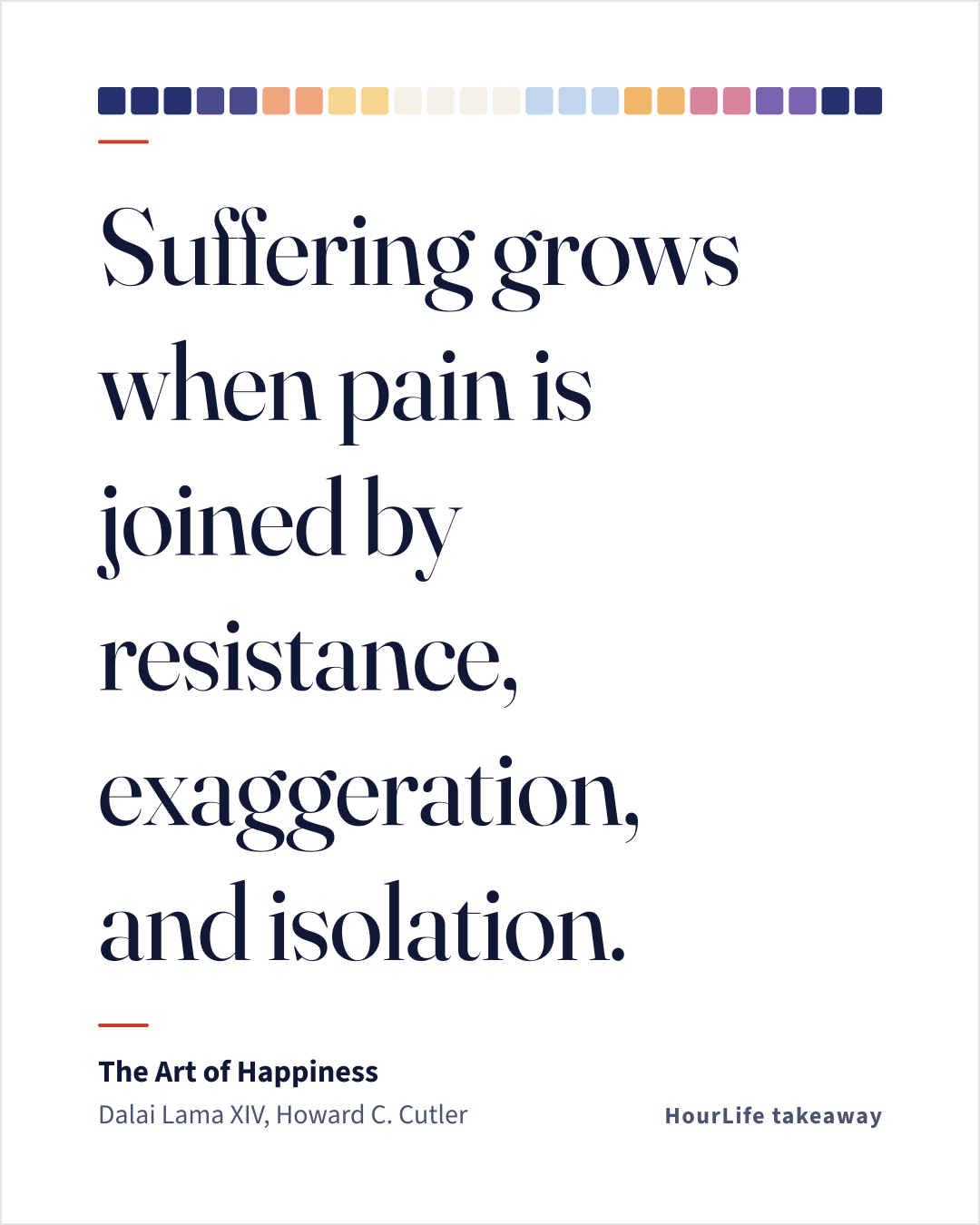
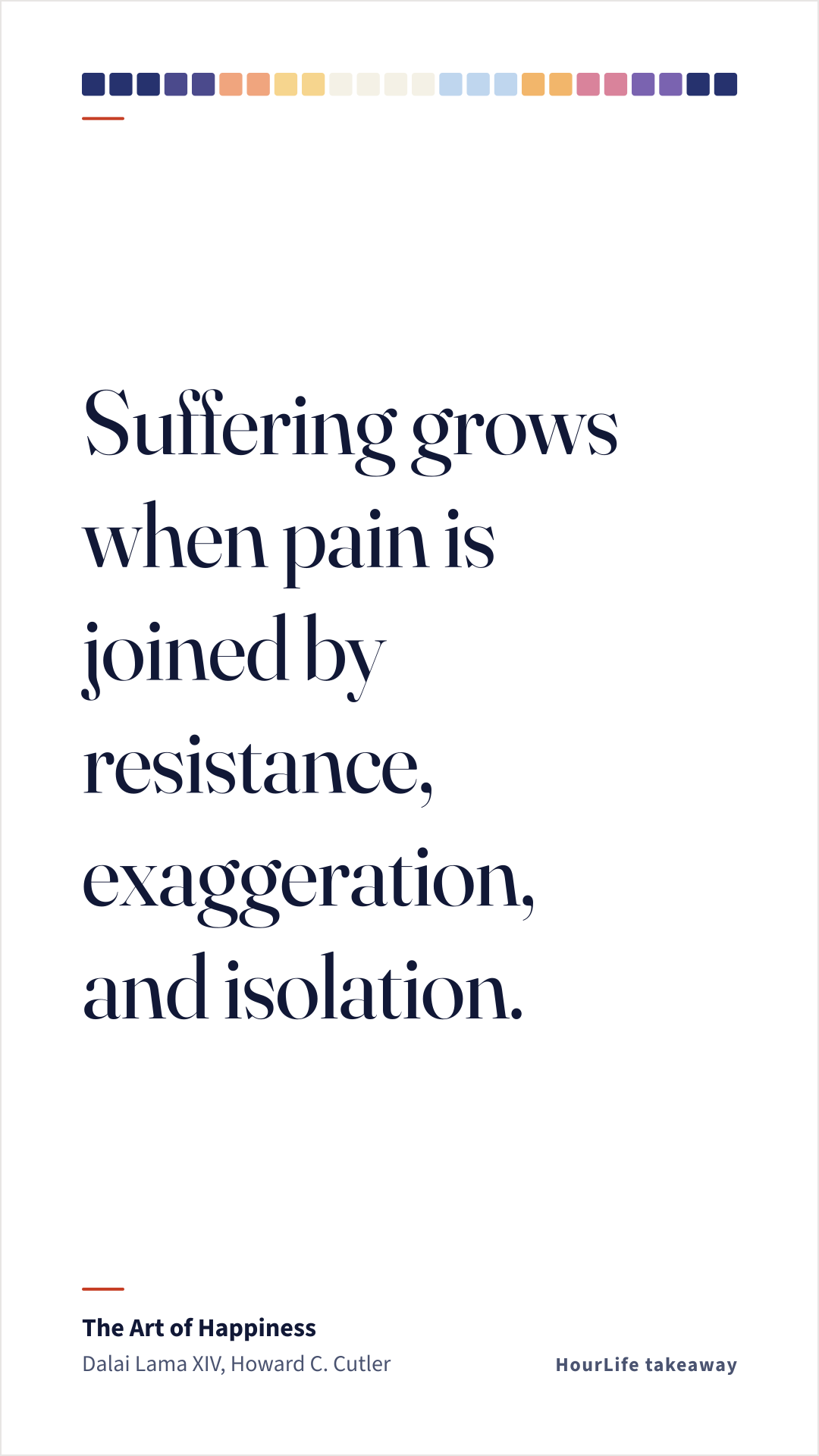
Suffering grows when pain is joined by resistance, exaggeration, and isolation.
The useful distinction is pain versus added suffering. One may be unavoidable; the other can often be trained down.
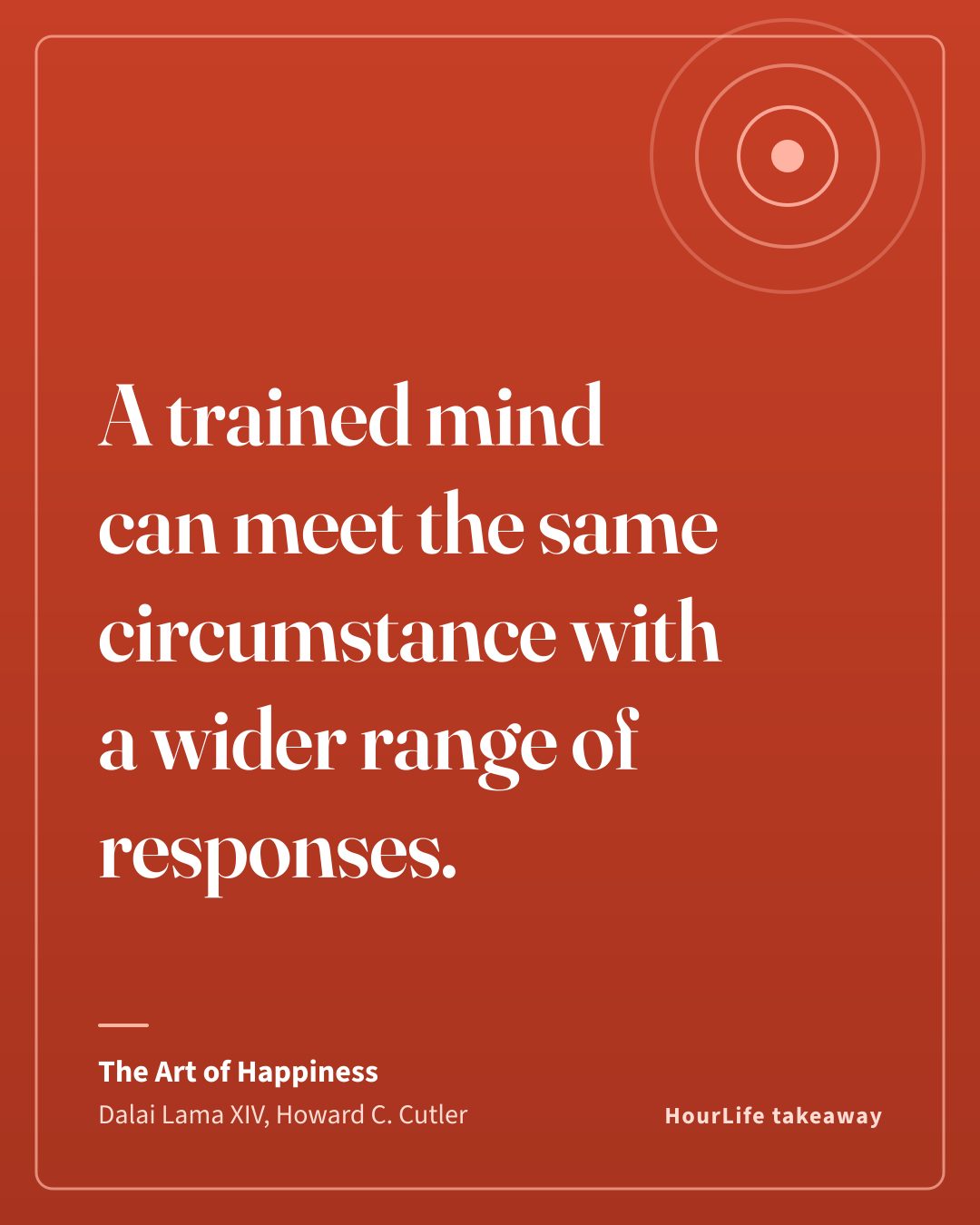
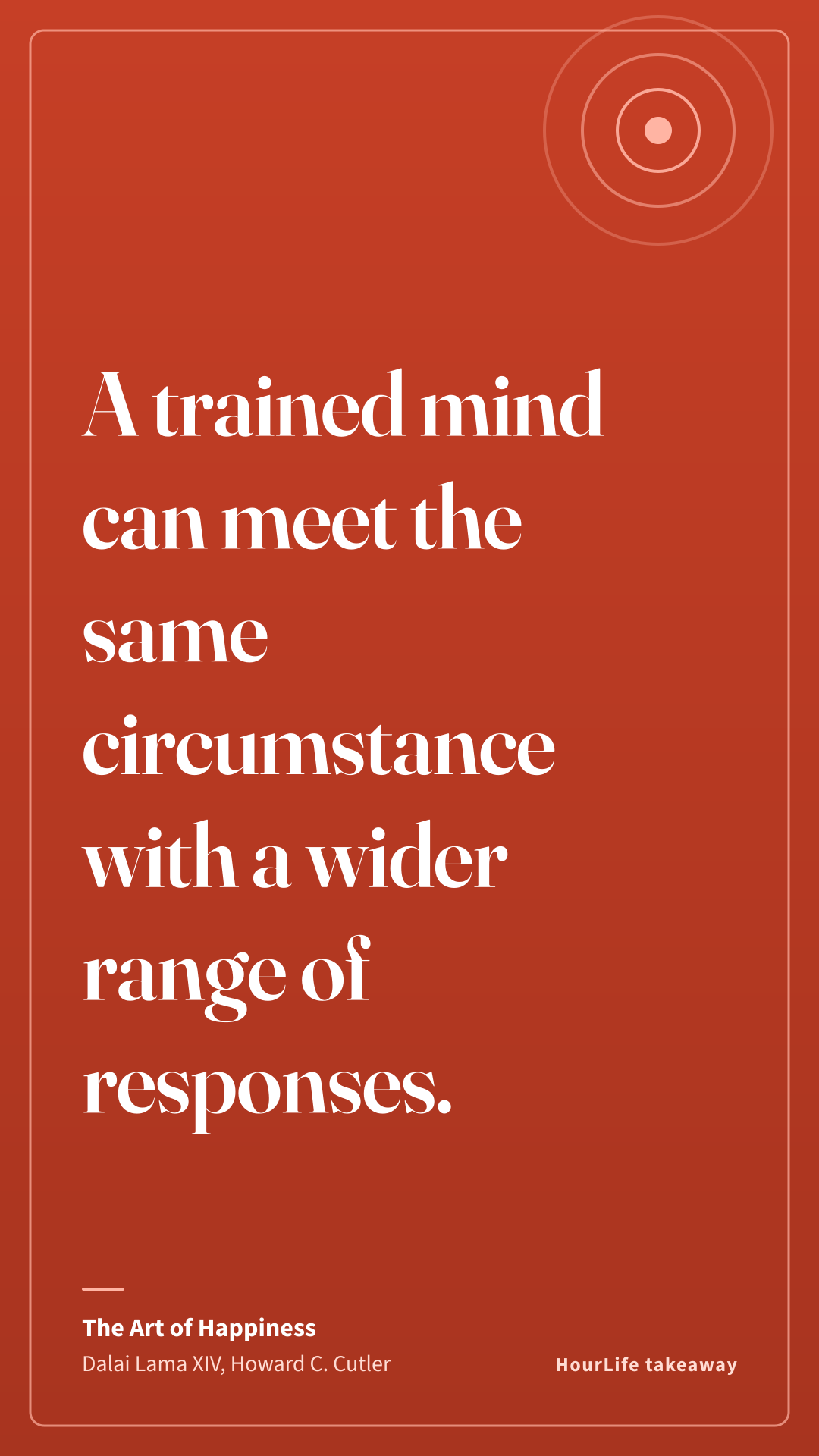
A trained mind can meet the same circumstance with a wider range of responses.
This is the bridge between Buddhist practice and psychology: attention, interpretation, and response are all practice fields.
Warm-heartedness is a survival skill disguised as a virtue.
Connection is not decorative in this book. It is one of the most reliable conditions for durable happiness.
HourLife turns these ideas into a daily system — goals, habits, focus, and reflection in one private place.