Keep this author quotes for later
Sign in to save

Immanuel Kant

The most-loved lines from Immanuel Kant, drawn from 1 book in the library.

Lines labelled “HourLife takeaway” are our wording of the book’s ideas and may paraphrase it. Only lines in quotation marks are the author’s own words, with where they appear. Check the book for exact wording before you quote it. Spot an error?

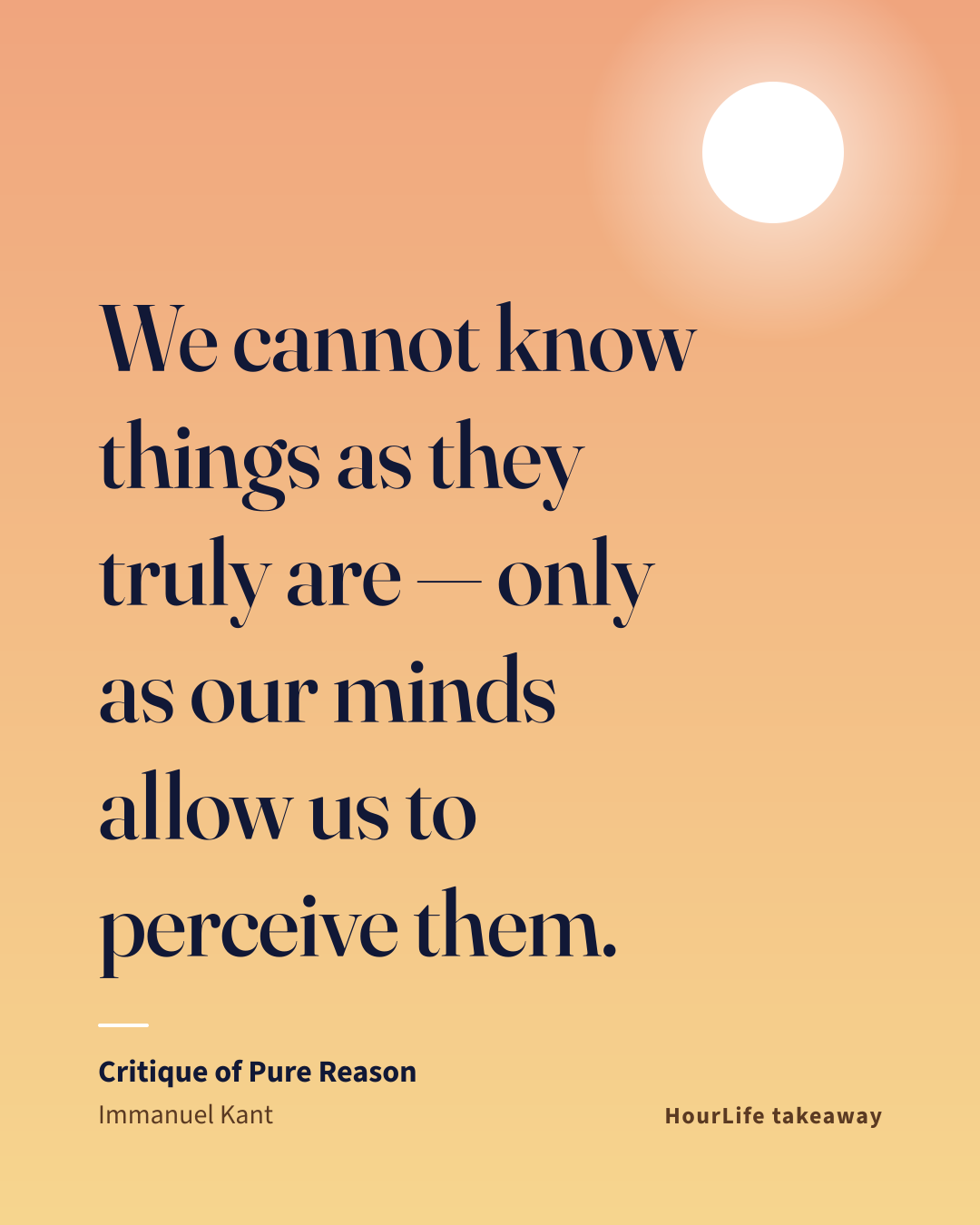
We cannot know things as they truly are — only as our minds allow us to perceive them.

Critique of Pure Reason Immanuel Kant HourLife takeaway

Kant's Copernican revolution: we don't passively receive reality, we actively shape it through the categories of our understanding. Space, time, and causality are features of the mind, not the world.


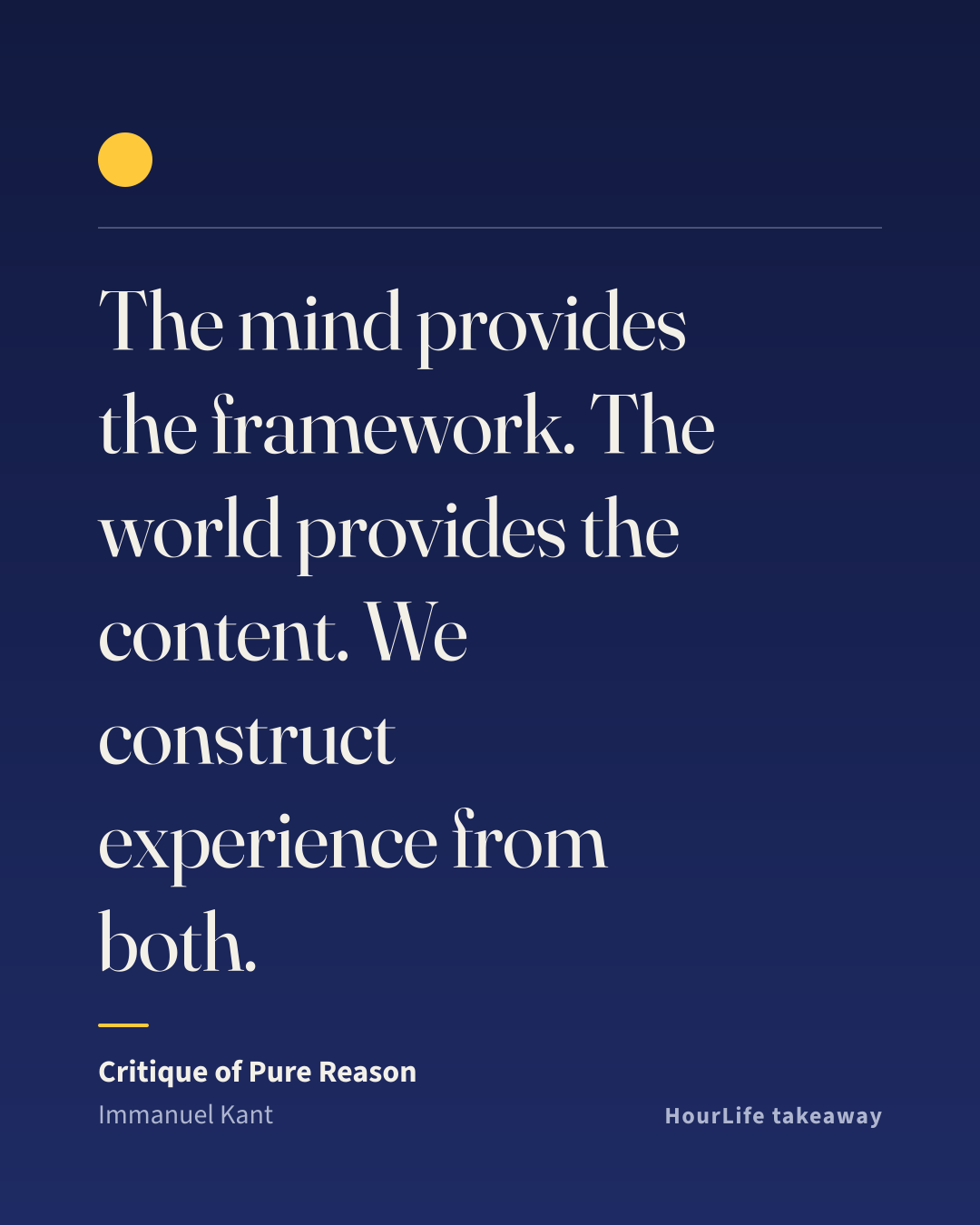
The mind provides the framework. The world provides the content. We construct experience from both.

Critique of Pure Reason Immanuel Kant HourLife takeaway

This is Kant's synthesis: neither pure rationalism (mind alone) nor pure empiricism (world alone) can account for human knowledge. Both are necessary; neither is sufficient.

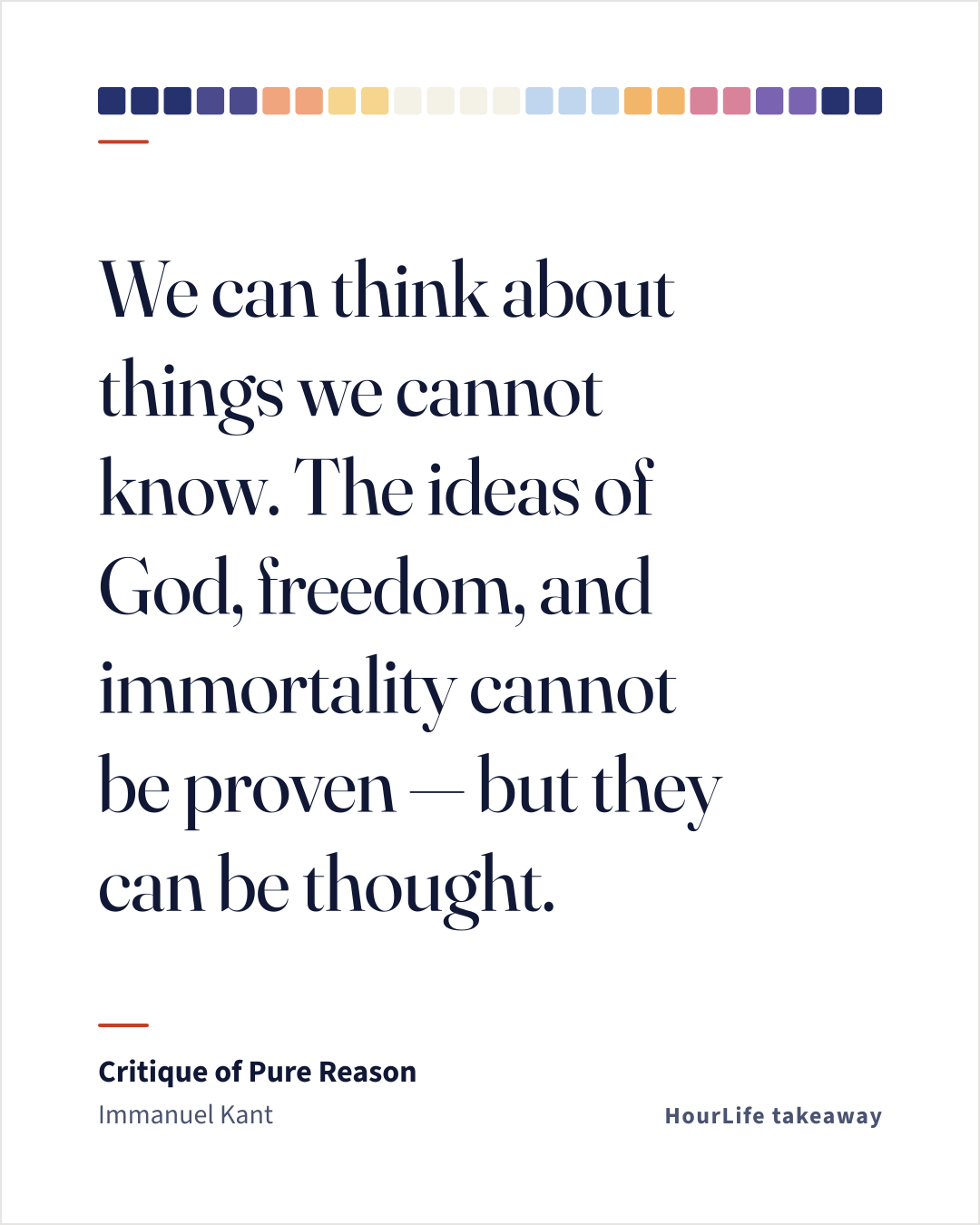
We can think about things we cannot know. The ideas of God, freedom, and immortality cannot be proven — but they can be thought.

Critique of Pure Reason Immanuel Kant HourLife takeaway

Kant calls these 'transcendental ideas.' They exceed empirical knowledge but remain legitimate objects of thought. The limits of knowledge open onto a space for practical faith.

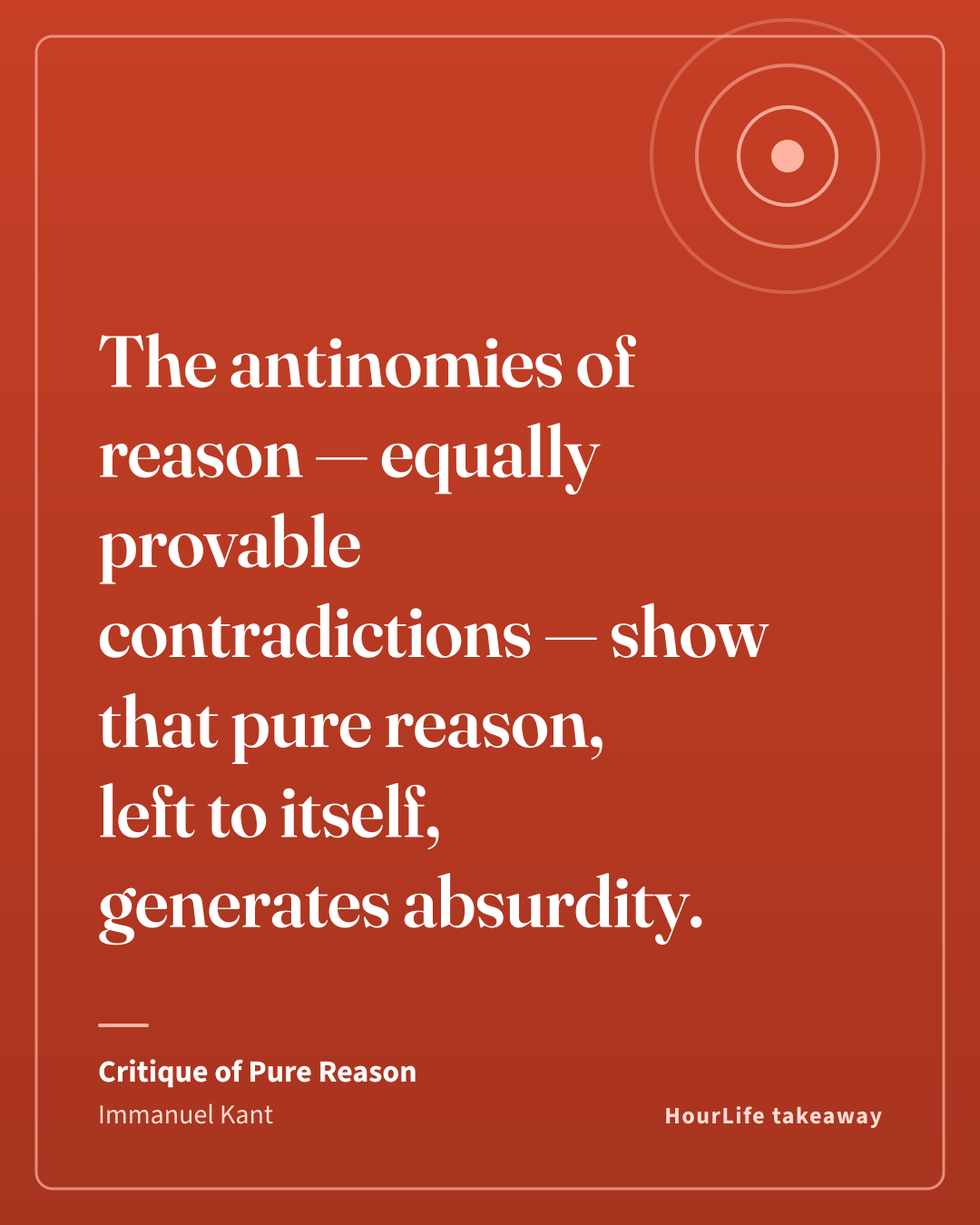
The antinomies of reason — equally provable contradictions — show that pure reason, left to itself, generates absurdity.

Critique of Pure Reason Immanuel Kant HourLife takeaway

Kant's discovery: when reason operates beyond experience, it produces unresolvable paradoxes. This isn't a flaw — it's evidence that reason needs the check of experience.

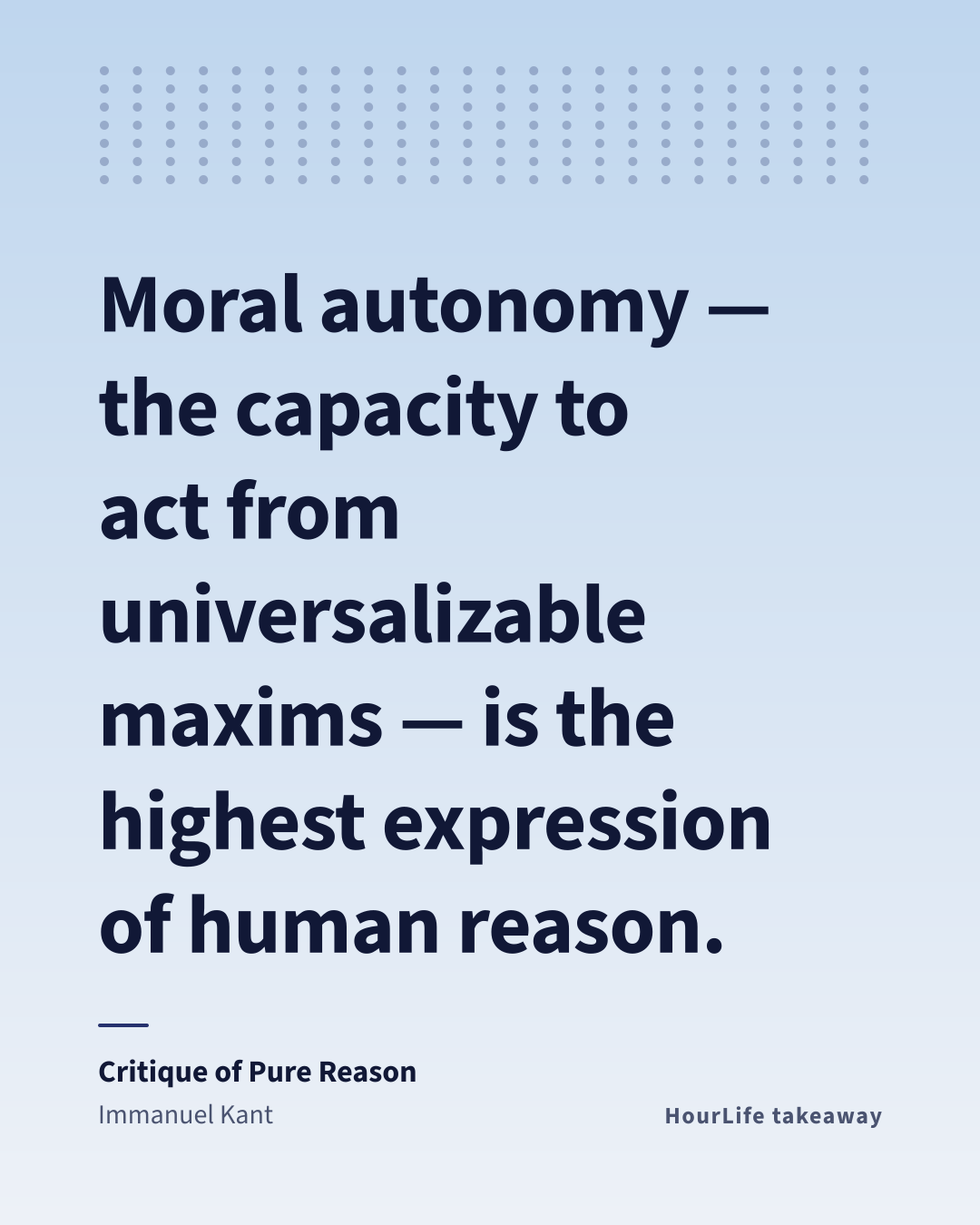
Moral autonomy — the capacity to act from universalizable maxims — is the highest expression of human reason.

Critique of Pure Reason Immanuel Kant HourLife takeaway

Kant's practical philosophy: the same reason that discovers the limits of theoretical knowledge reveals moral law. Freedom isn't freedom from law — it's freedom to give law to yourself.

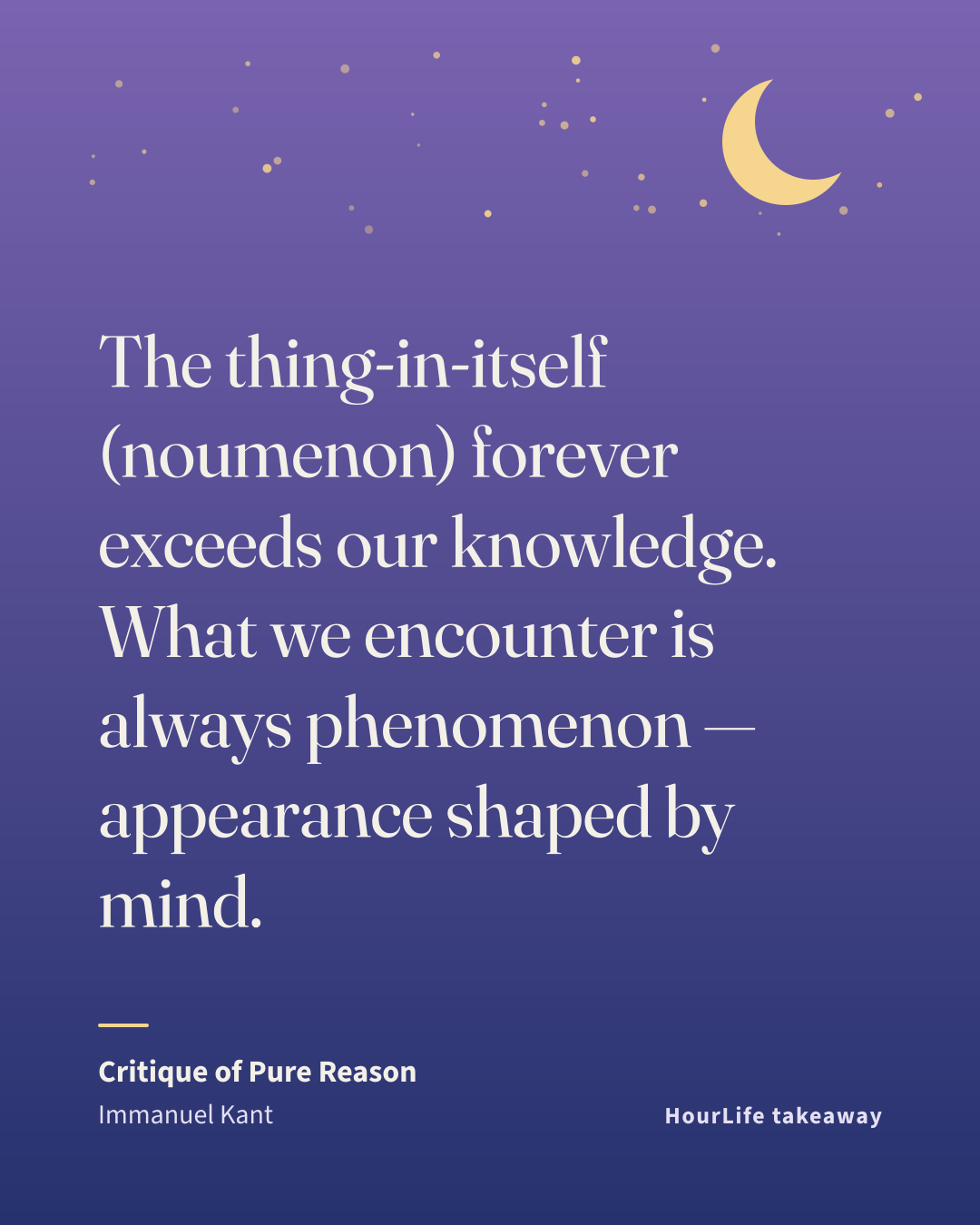
The thing-in-itself (noumenon) forever exceeds our knowledge. What we encounter is always phenomenon — appearance shaped by mind.

Critique of Pure Reason Immanuel Kant HourLife takeaway

Reality as it exists independent of our perception is inaccessible. We inhabit a world of appearances — but those appearances are structured, coherent, and knowable. That's enough.

Keep this going in the app.

HourLife turns these ideas into a daily system — goals, habits, focus, and reflection in one private place.