Influence works fastest when it borrows a shortcut the brain already trusts.
Cialdini's core move is to treat persuasion as automatic pattern recognition. The cue feels like evidence because, in ordinary life, it often is evidence.
The most-loved lines from Robert Cialdini, drawn from 2 books in the library.
Lines labelled “HourLife takeaway” are our wording of the book’s ideas and may paraphrase it. Only lines in quotation marks are the author’s own words, with where they appear. Check the book for exact wording before you quote it. Spot an error?
Influence works fastest when it borrows a shortcut the brain already trusts.
Cialdini's core move is to treat persuasion as automatic pattern recognition. The cue feels like evidence because, in ordinary life, it often is evidence.
What is focal is causal: the thing people are led to notice first becomes the thing they believe matters most.
Cialdini's central move is attention management. Before the argument begins, the communicator selects the mental category the audience will use to judge it.
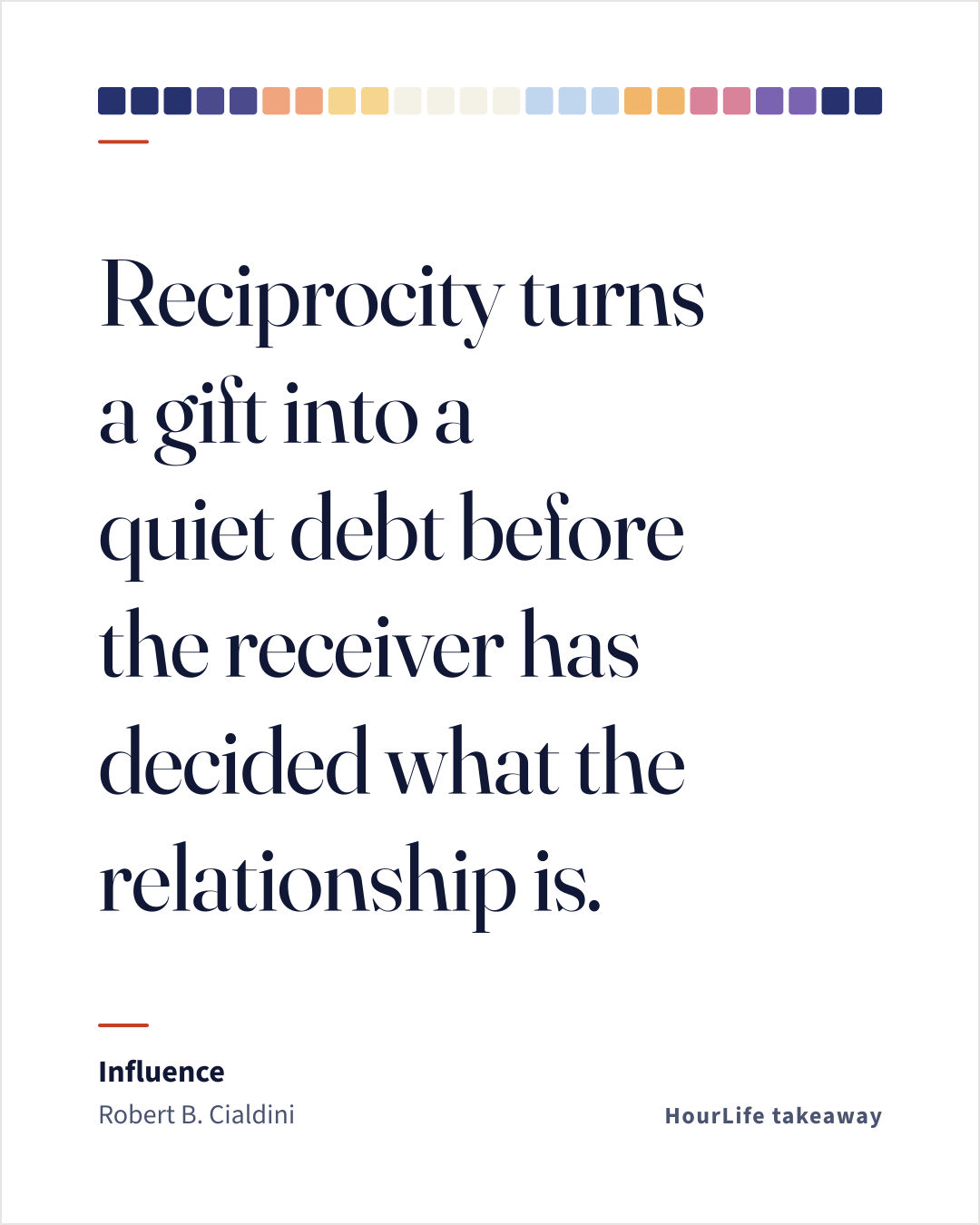
Reciprocity turns a gift into a quiet debt before the receiver has decided what the relationship is.
The free sample, favor, concession, and useful diagnosis all create motion. The ethical line is whether the gift helps the person think or pressures them to repay.
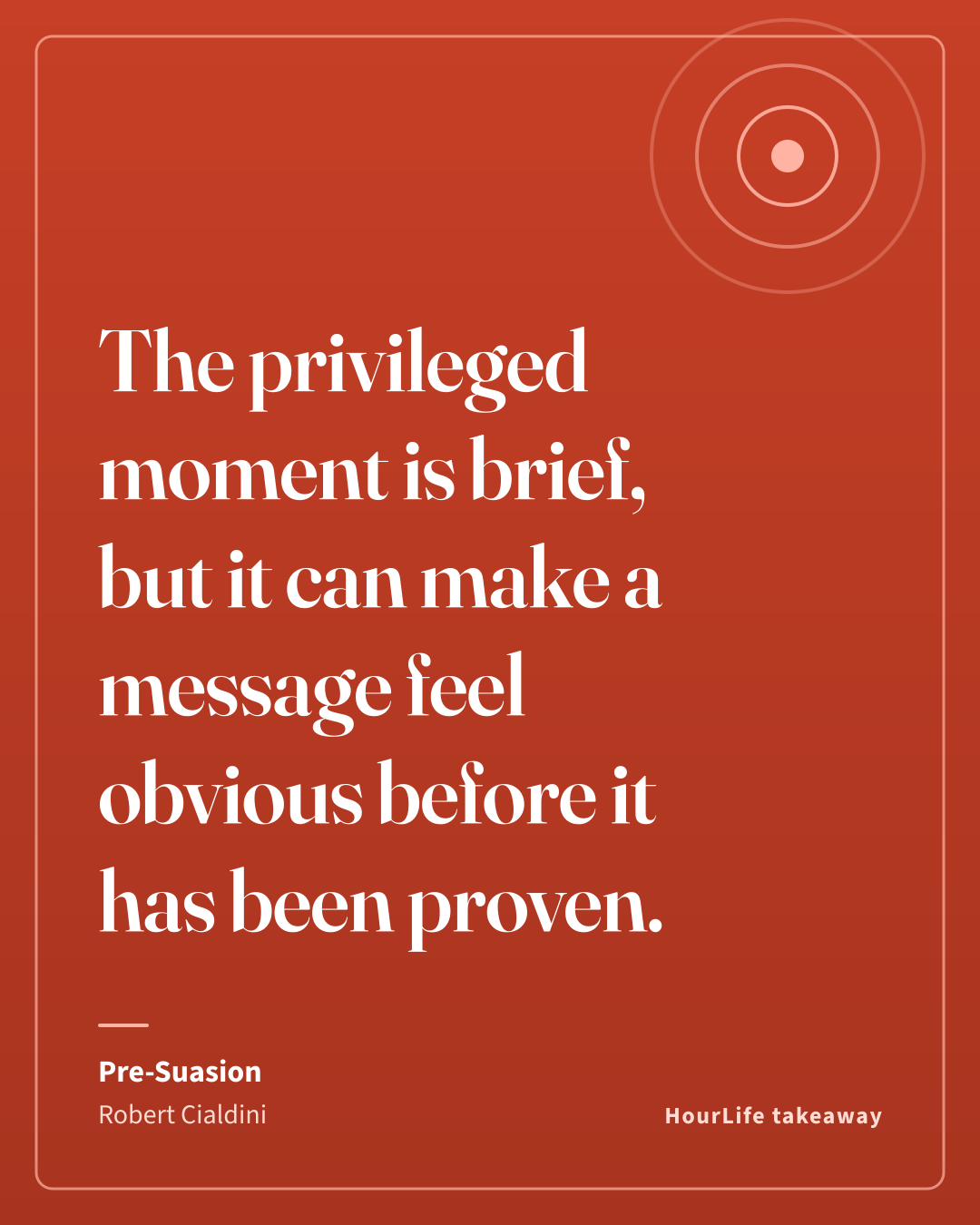
The privileged moment is brief, but it can make a message feel obvious before it has been proven.
Pre-suasion is not stronger copy. It is timing, sequence, and context arranged so the mind is already leaning toward the conclusion.
Social proof is strongest when the crowd looks like you and the situation feels uncertain.
People do not follow crowds in the abstract. They follow similar people in ambiguous moments because the crowd appears to contain local knowledge.
Scarcity sharpens attention by making loss feel more vivid than evaluation.
Limited time, limited seats, and vanishing access compress judgment. The tactic becomes manipulative when the limit is fake or louder than the truth of the offer.
A question can be a doorway: ask people to think about helpfulness, and they become more ready to help.
Questions direct attention without appearing forceful. The topic introduced by the question becomes psychologically available for the request that follows.
Commitment is identity in motion: once people say a small yes, they want the next yes to feel like who they already are.
This is why public pledges, tiny first steps, and written choices matter. Consistency is not weakness. It is how people protect a coherent self-image.
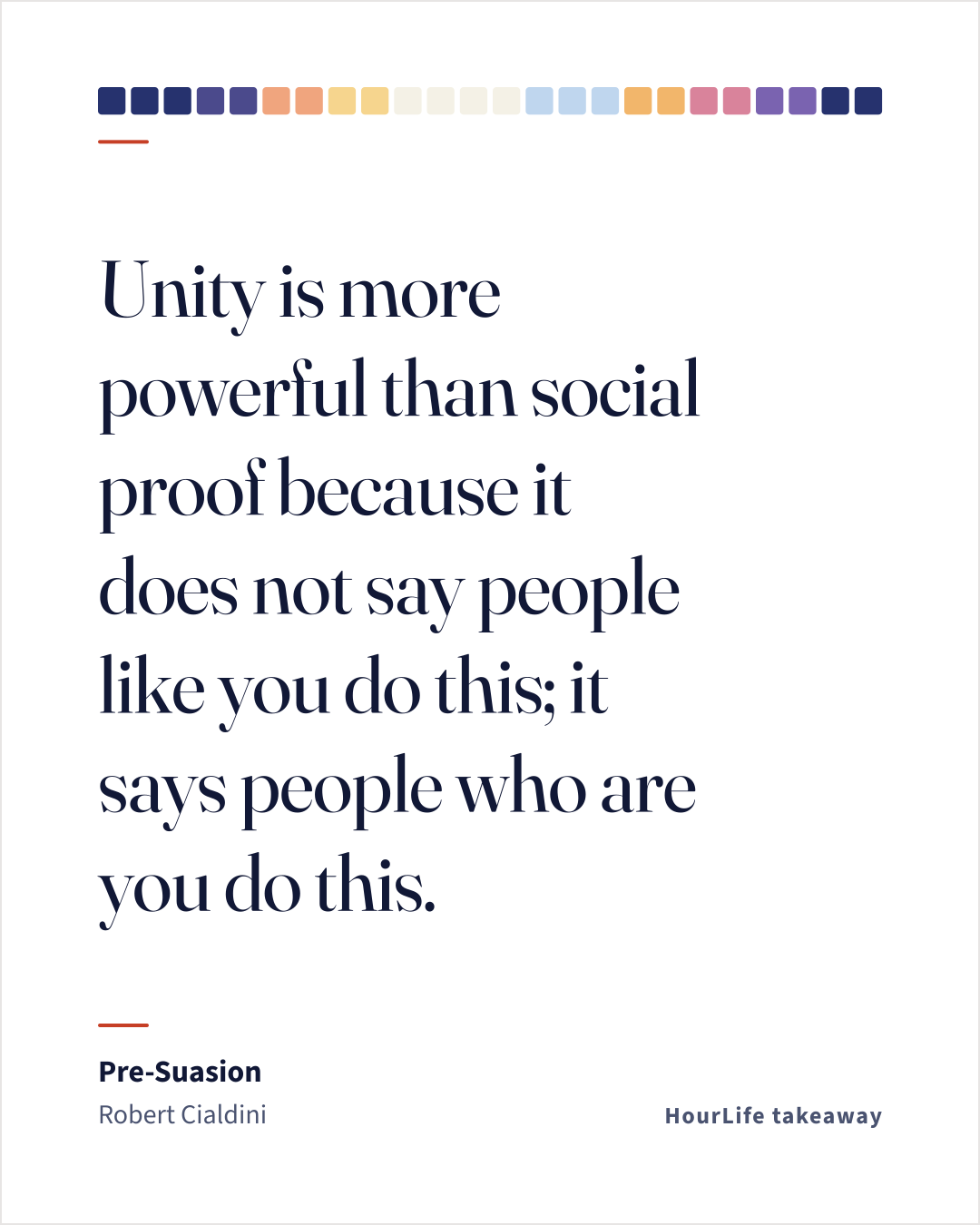
Unity is more powerful than social proof because it does not say people like you do this; it says people who are you do this.
Shared identity moves persuasion from outside pressure to internal consistency. The ethical burden is making sure the shared identity is real.
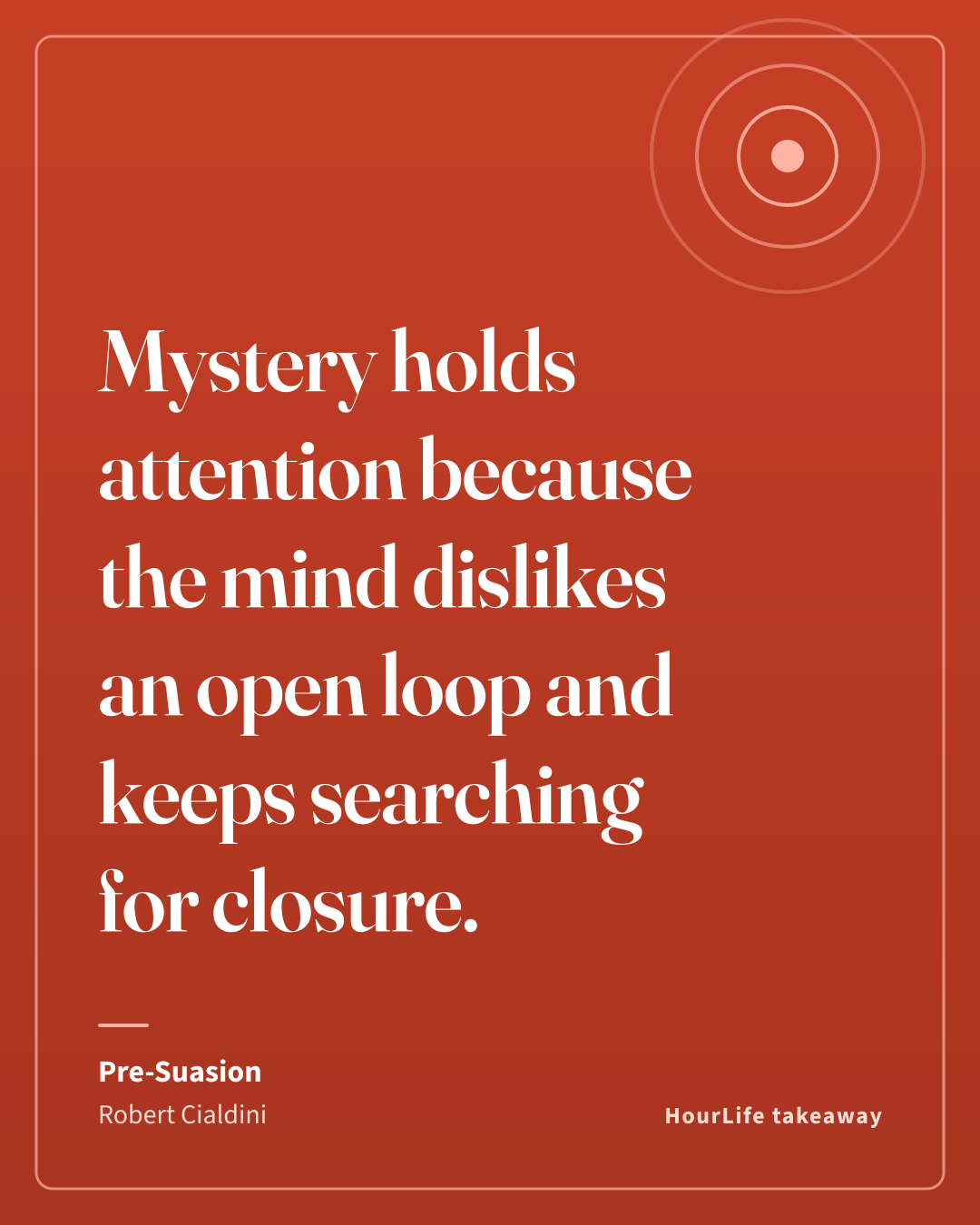
Mystery holds attention because the mind dislikes an open loop and keeps searching for closure.
A well-formed mystery earns sustained attention. It creates tension that the message can resolve, which is why sequence matters as much as substance.
The best defense is not cynicism. It is noticing which principle just got activated.
Influence is useful because it gives names to pressure. Once you can name reciprocity, scarcity, authority, liking, commitment, and proof, you can slow the automatic yes.
The ethics of pre-suasion depend on whether the frame clarifies the choice or quietly steals it.
Cialdini's ideas are powerful enough to require restraint. A frame should make real relevance visible, not hide costs, fabricate urgency, or exploit confusion.
HourLife turns these ideas into a daily system — goals, habits, focus, and reflection in one private place.