Carrots and sticks can get movement, but they often shrink the very curiosity modern work depends on.
Pink's central warning is that external rewards are not neutral. For creative and judgment-heavy work, control can crowd out intrinsic motivation.
5 memorable lines from Drive by Daniel H. Pink, each with the idea behind it.
As an Amazon Associate, HourLife earns from qualifying purchases.
Lines labelled “HourLife takeaway” are our wording of the book’s ideas and may paraphrase it. Only lines in quotation marks are the author’s own words, with where they appear. Check the book for exact wording before you quote it. Spot an error?
Carrots and sticks can get movement, but they often shrink the very curiosity modern work depends on.
Pink's central warning is that external rewards are not neutral. For creative and judgment-heavy work, control can crowd out intrinsic motivation.
Autonomy is not an employee perk. It is the operating condition where responsibility starts to feel owned.
Drive reframes self-direction as a serious performance variable across task, time, technique, and team.
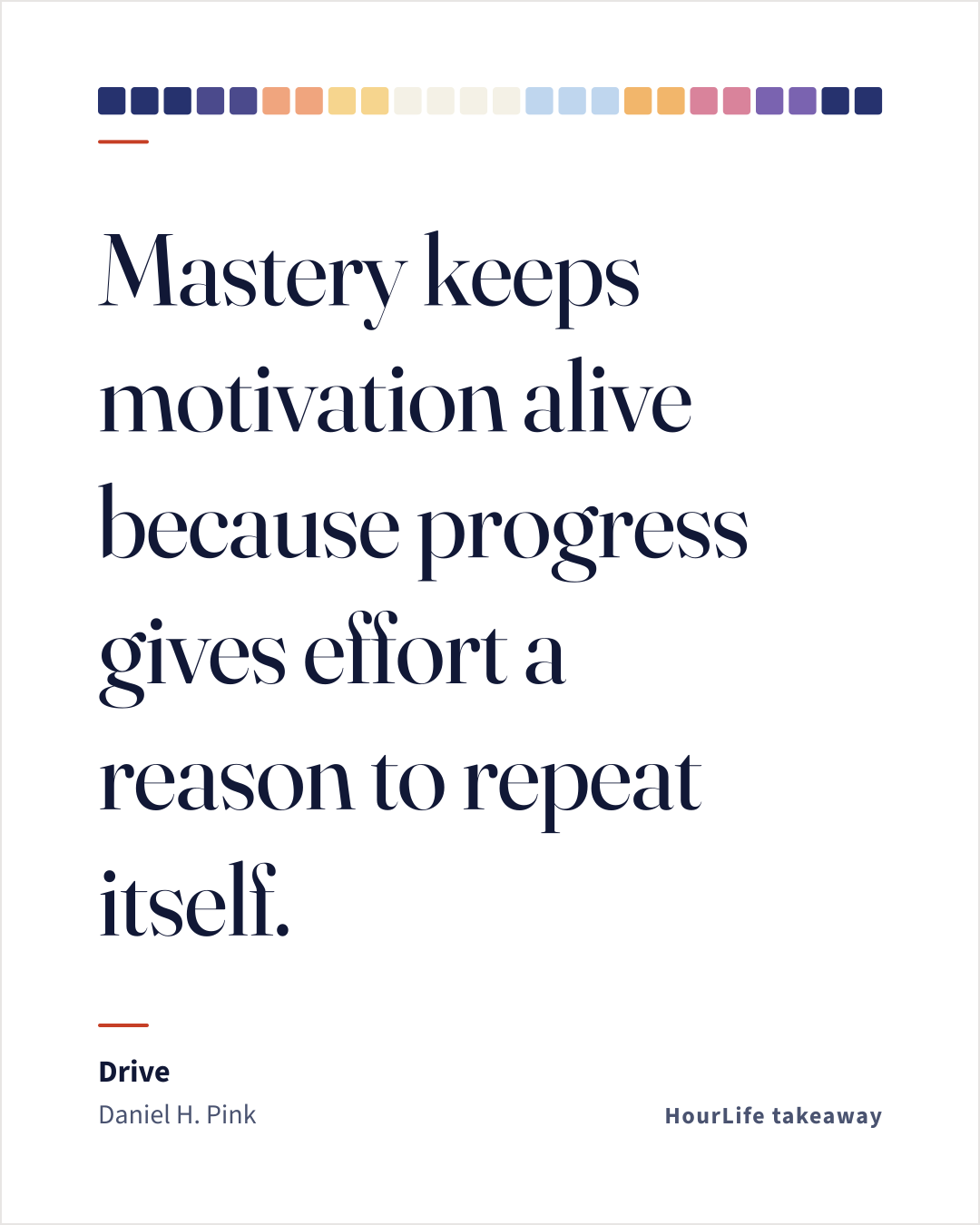
Mastery keeps motivation alive because progress gives effort a reason to repeat itself.
The book makes improvement feel less like discipline theater and more like a renewable source of energy.
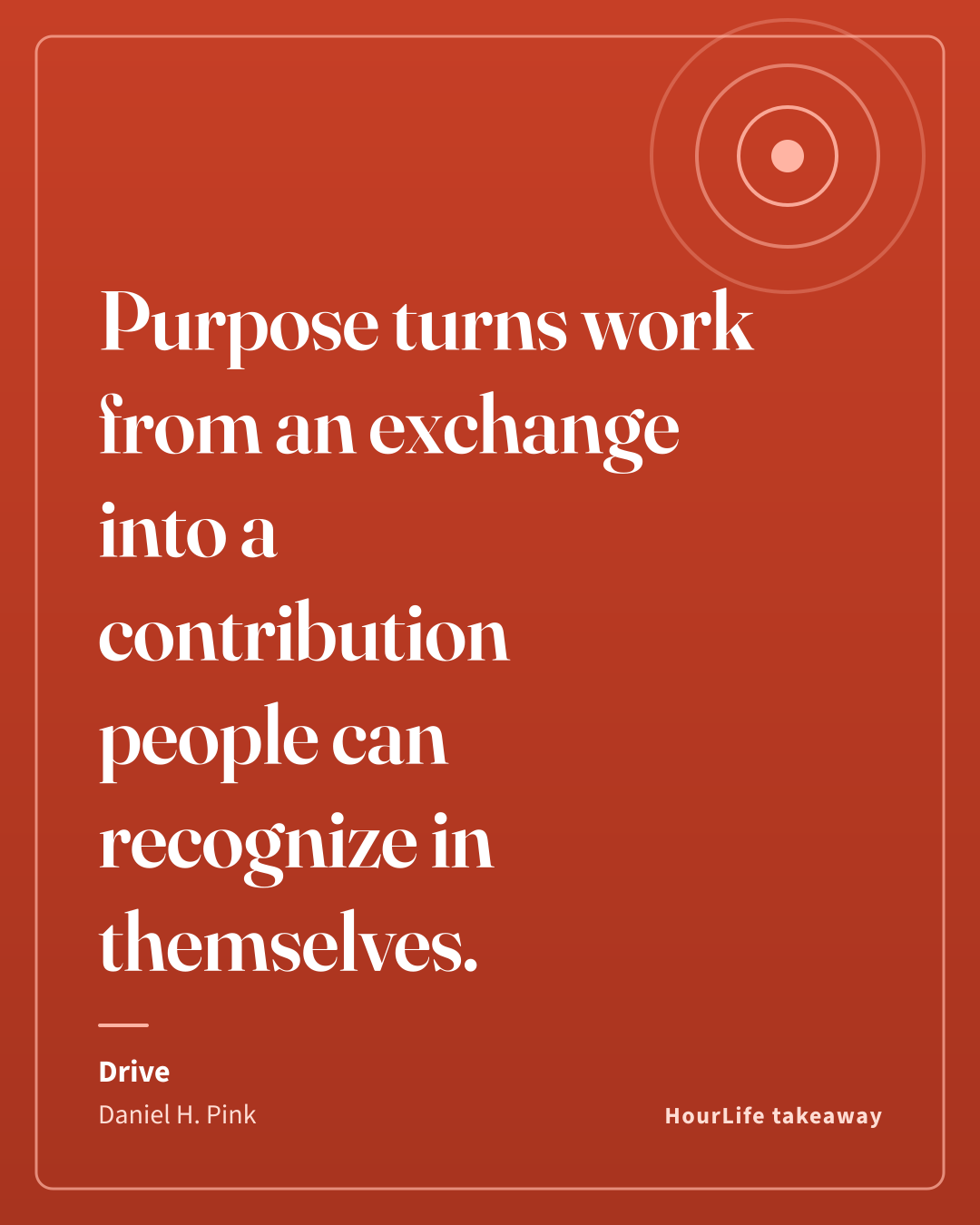
Purpose turns work from an exchange into a contribution people can recognize in themselves.
Pink is not arguing against money. He is arguing that fair pay should clear the stage for meaning, growth, and self-direction.
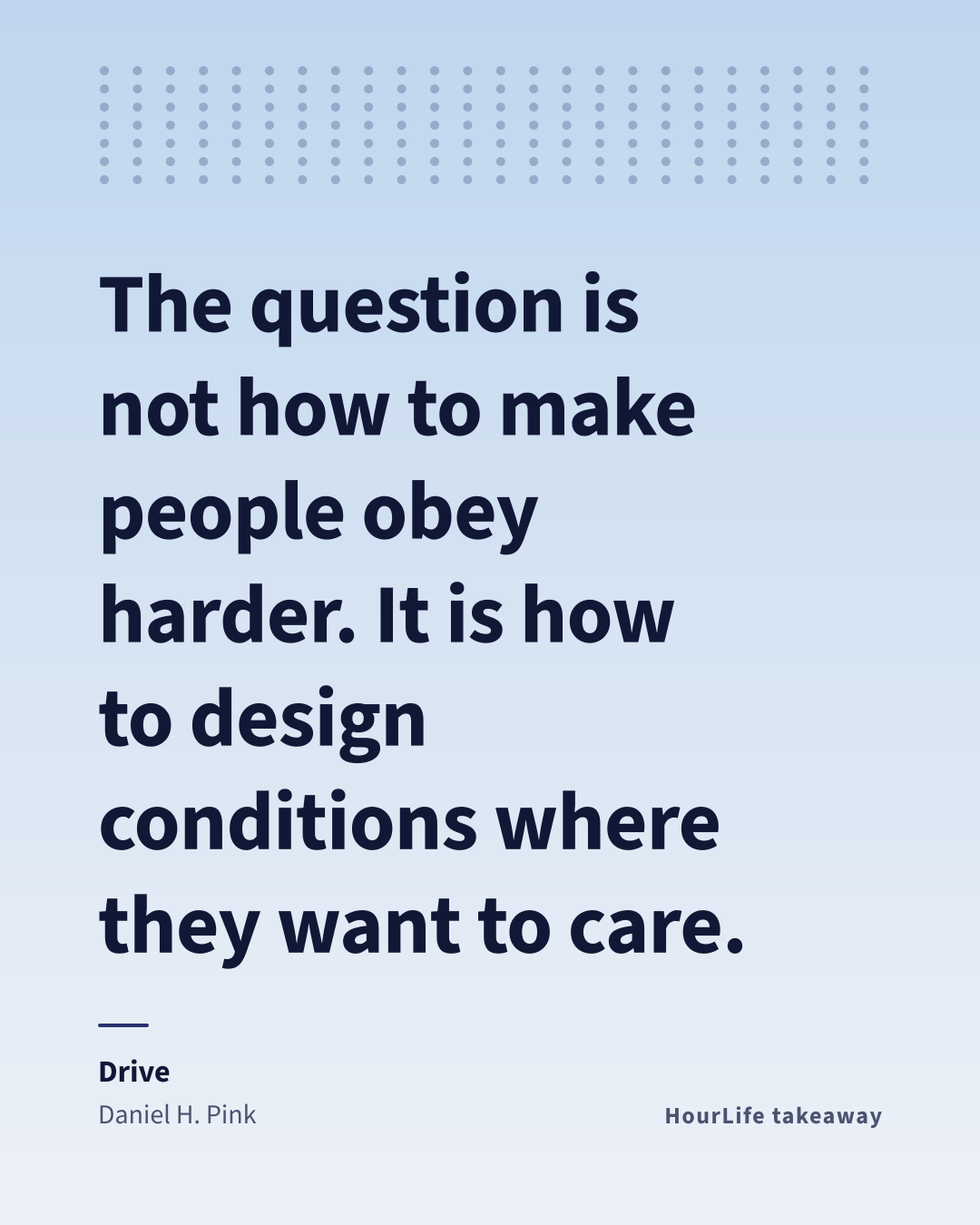
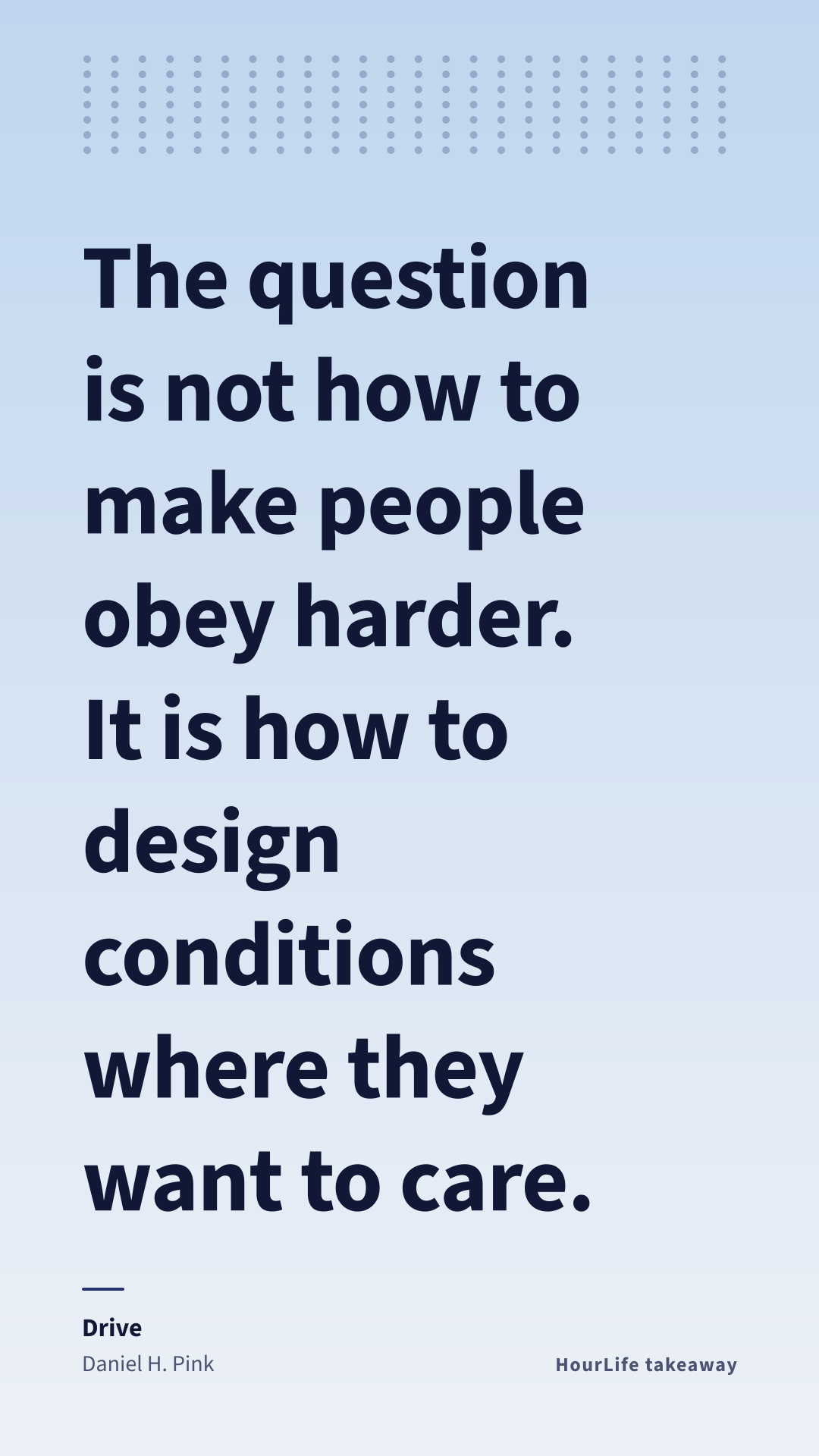
The question is not how to make people obey harder. It is how to design conditions where they want to care.
This is the book's most practical management shift: motivation improves when the system stops treating people like mechanisms.
HourLife turns these ideas into a daily system — goals, habits, focus, and reflection in one private place.