How you feel is not determined by what happens to you — it’s determined by what you tell yourself about what happens.
Burns' restatement of the Stoic/Elliot overlap: the cognitive distortion is always in the middle, between event and feeling.
6 memorable lines from Feeling Good by David D. Burns, each with the idea behind it.
As an Amazon Associate, HourLife earns from qualifying purchases.
Lines labelled “HourLife takeaway” are our wording of the book’s ideas and may paraphrase it. Only lines in quotation marks are the author’s own words, with where they appear. Check the book for exact wording before you quote it. Spot an error?
How you feel is not determined by what happens to you — it’s determined by what you tell yourself about what happens.
Burns' restatement of the Stoic/Elliot overlap: the cognitive distortion is always in the middle, between event and feeling.
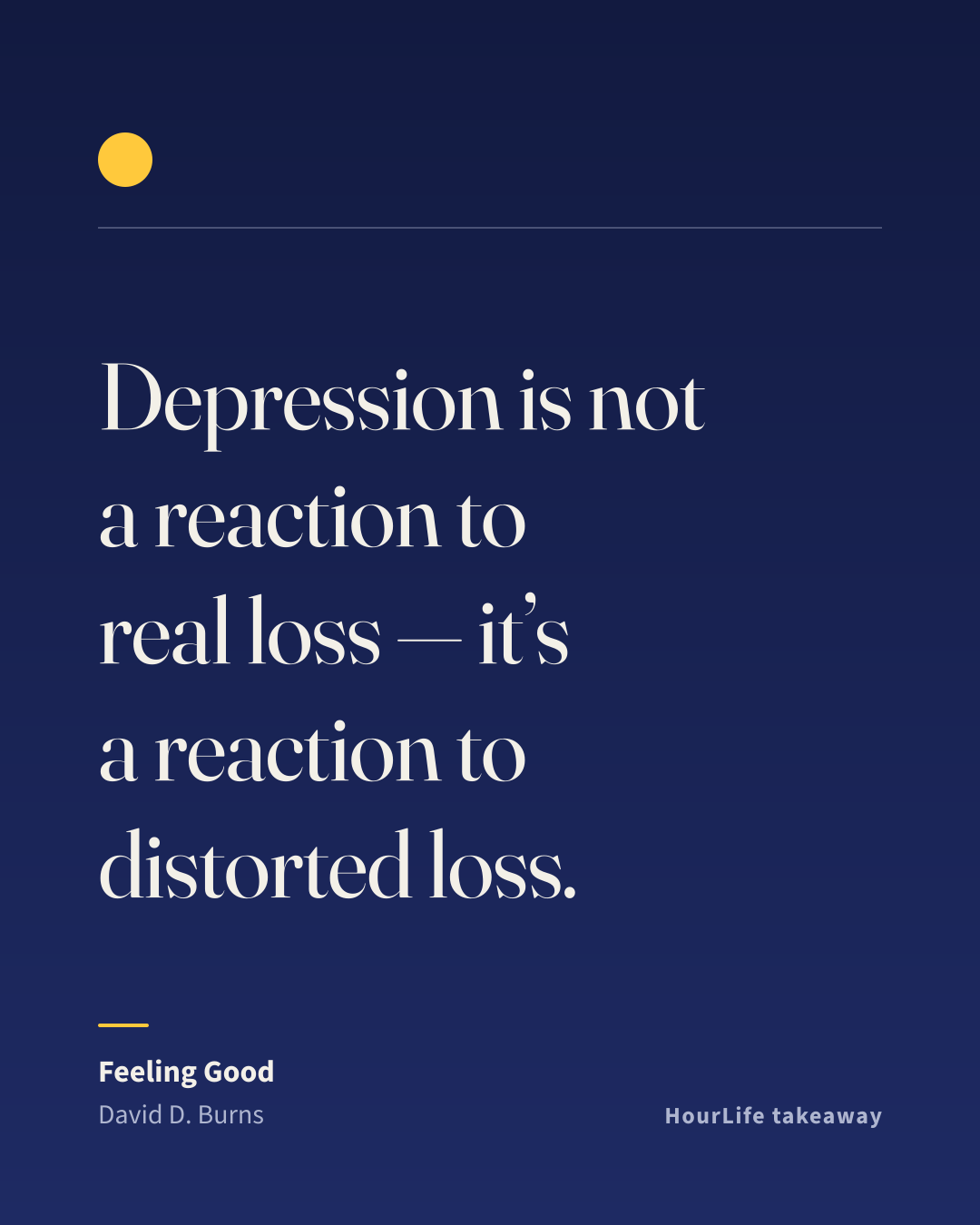
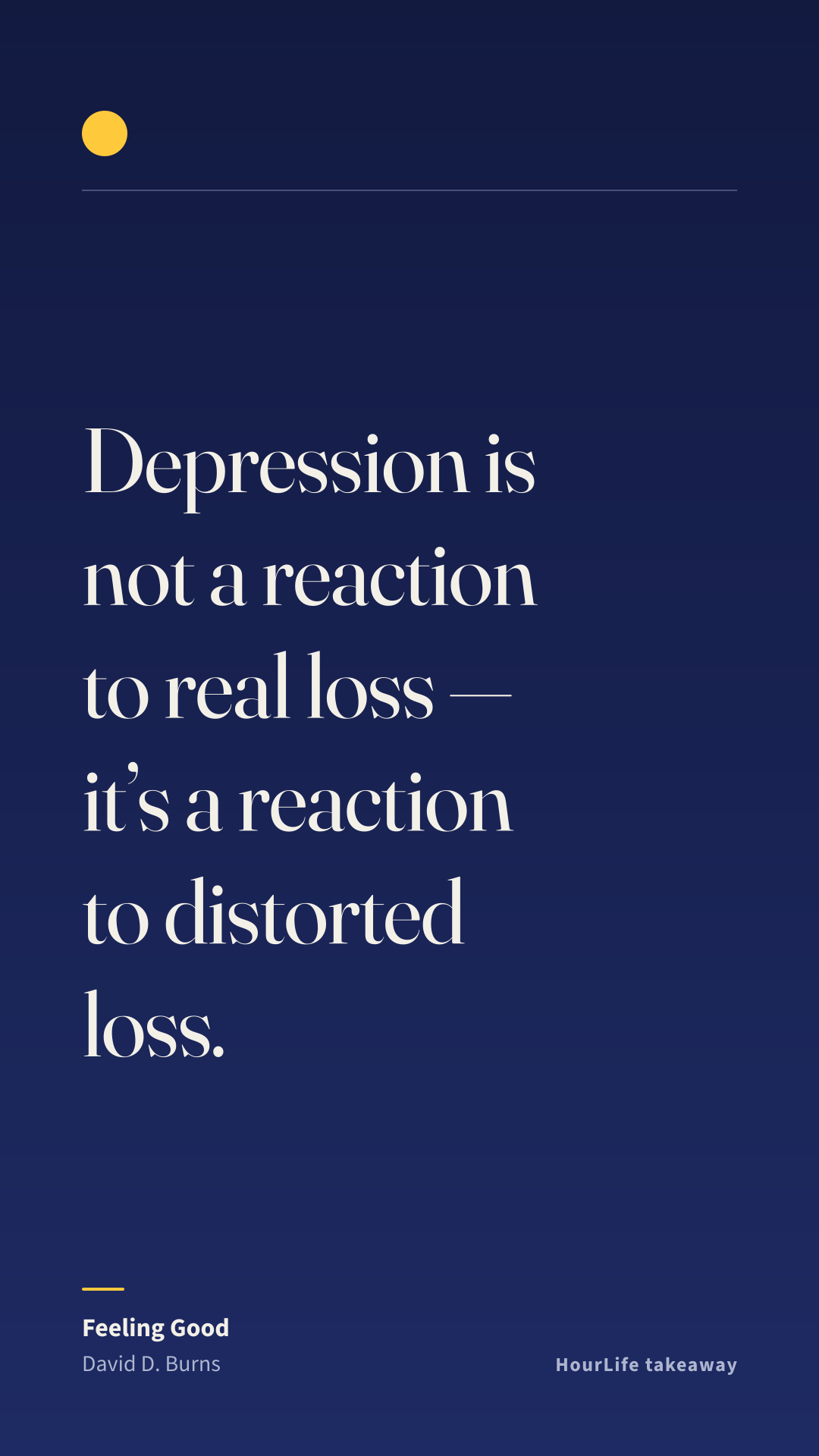
Depression is not a reaction to real loss — it’s a reaction to distorted loss.
Burns' clinical framing: much of what depressed people experience as 'realistic despair' is actually cognitive distortion masquerading as objectivity.
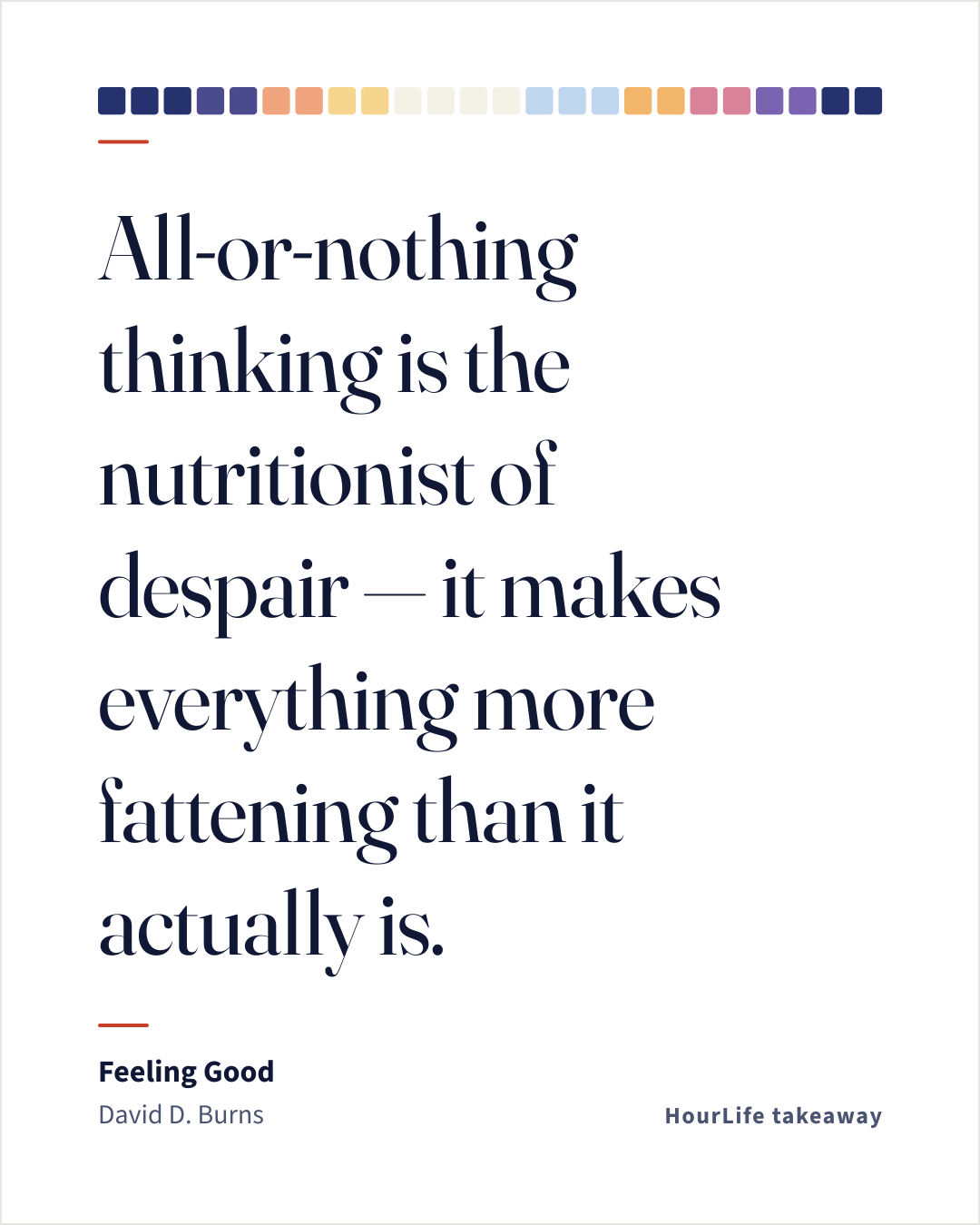
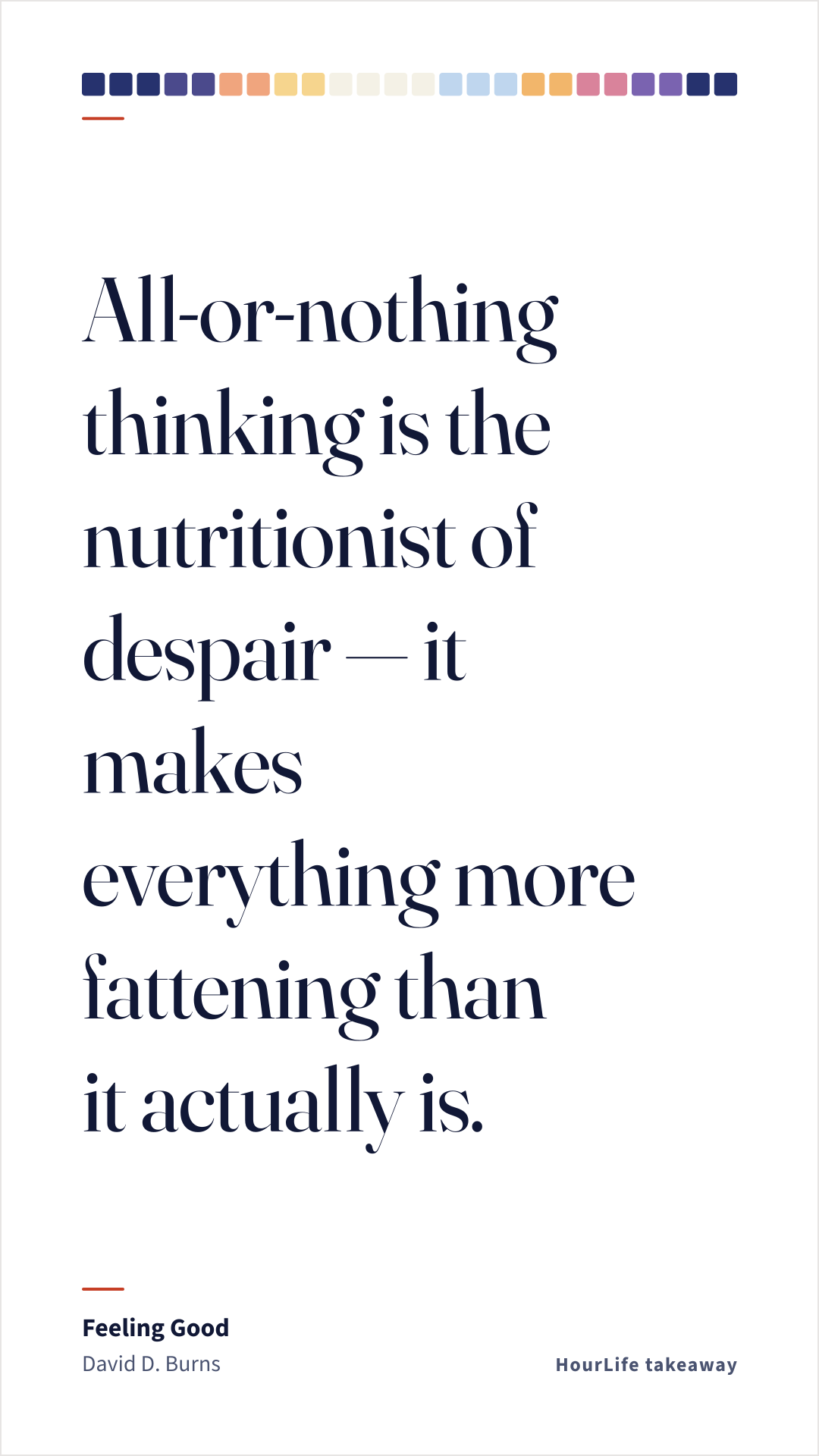
All-or-nothing thinking is the nutritionist of despair — it makes everything more fattening than it actually is.
One of Burns' most memorable formulations: black-and-white thinking makes every setback more devastating than it is.
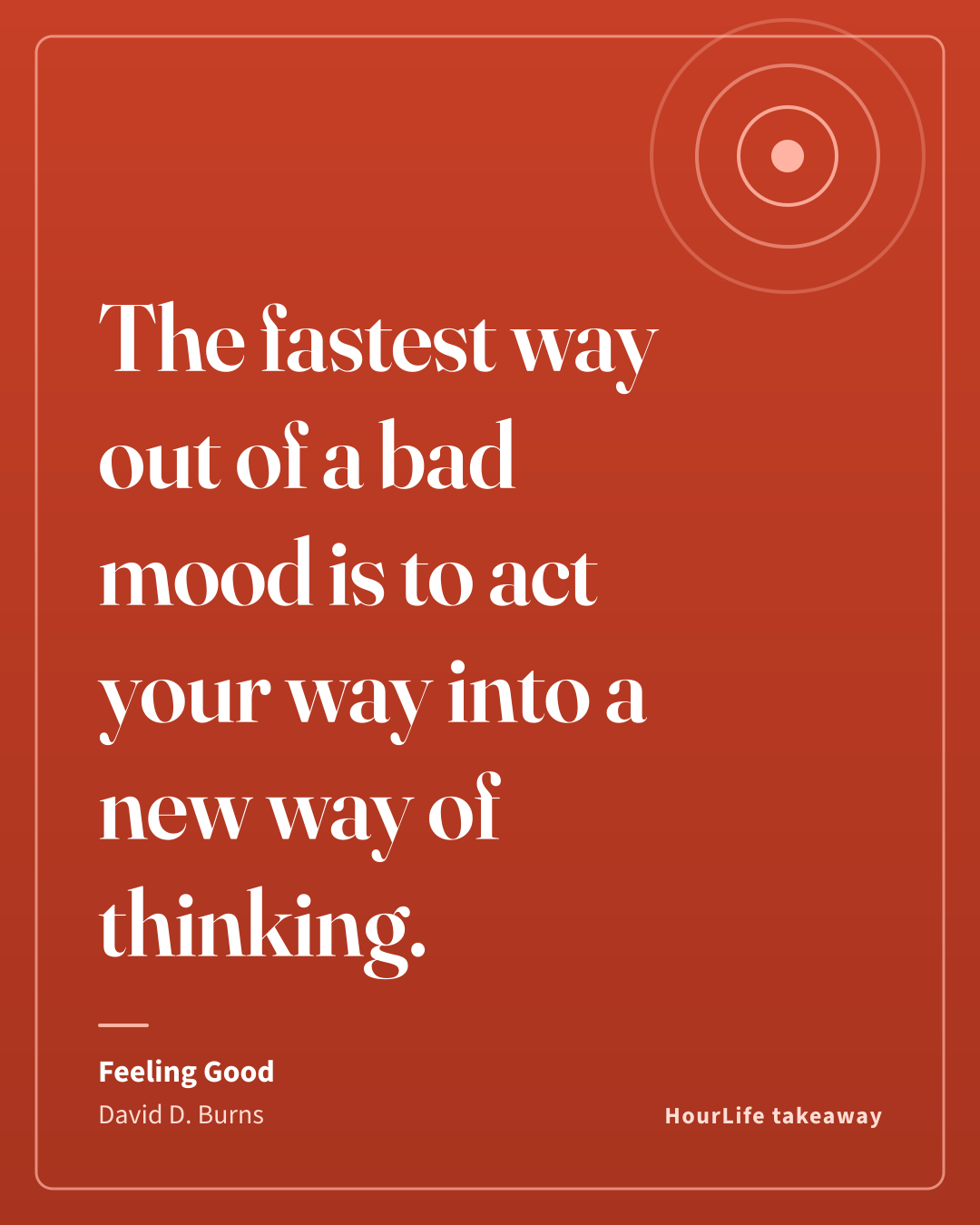
The fastest way out of a bad mood is to act your way into a new way of thinking.
Counterintuitive but consistent with the behavioral activation literature: action precedes mood change, not the other way around.
Your thoughts are not facts.
The foundational skill of Cognitive Behavioral Therapy: developing the ability to observe your thoughts as mental events rather than accurate reflections of reality.
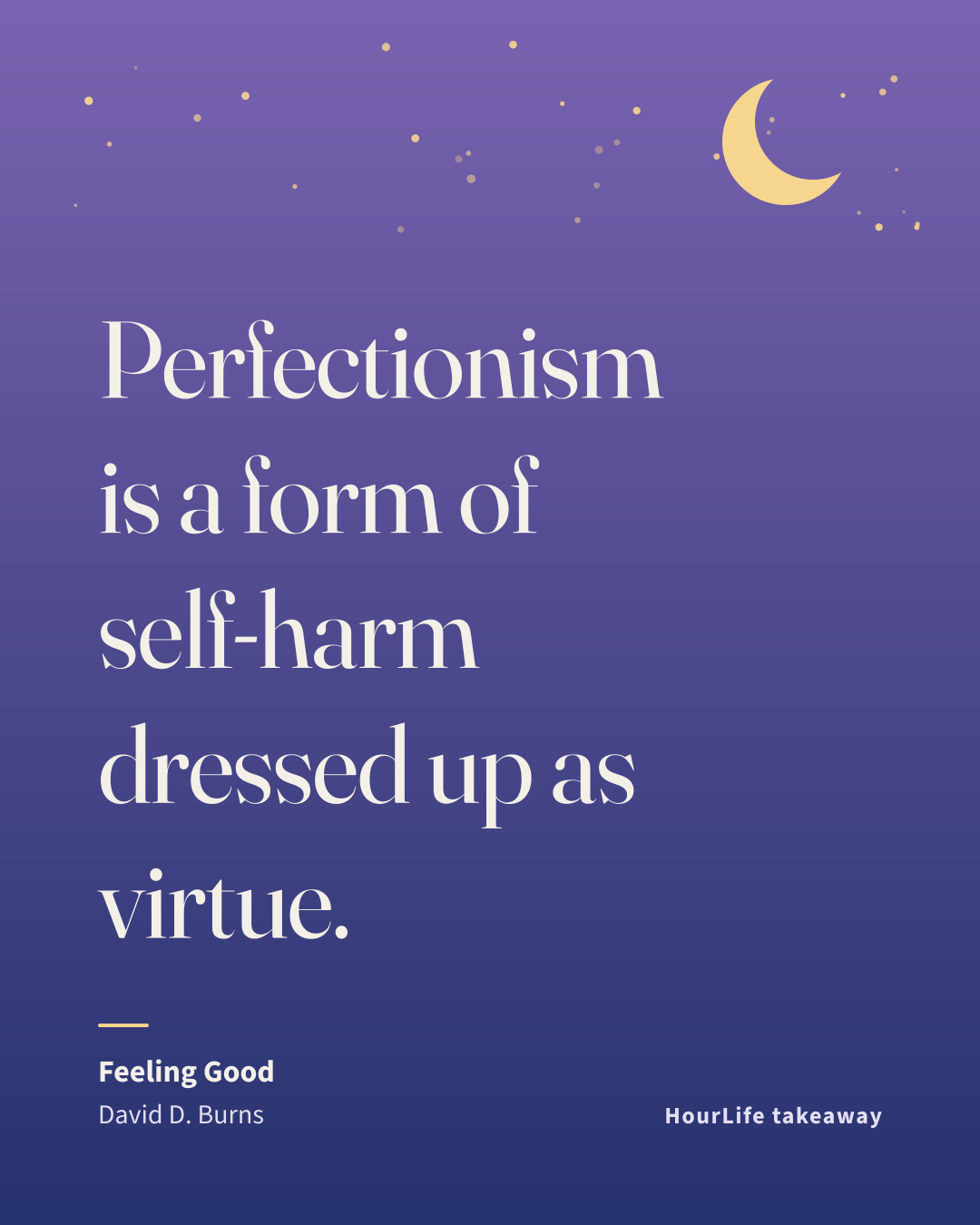
Perfectionism is a form of self-harm dressed up as virtue.
Burns is unsparing: perfectionism isn't high standards, it's a defense mechanism against the terror of being seen as imperfect.
HourLife turns these ideas into a daily system — goals, habits, focus, and reflection in one private place.