Potential is easier to see in hindsight than in the beginning.
Grant pushes readers to stop treating early polish as destiny. The better question is whether a person improves when the environment gives them challenge, advice, and room to practice.
6 memorable lines from Hidden Potential by Adam Grant, each with the idea behind it.
As an Amazon Associate, HourLife earns from qualifying purchases.
Lines labelled “HourLife takeaway” are our wording of the book’s ideas and may paraphrase it. Only lines in quotation marks are the author’s own words, with where they appear. Check the book for exact wording before you quote it. Spot an error?
Potential is easier to see in hindsight than in the beginning.
Grant pushes readers to stop treating early polish as destiny. The better question is whether a person improves when the environment gives them challenge, advice, and room to practice.
Character skills are not soft extras. They are the machinery of growth.
Discipline, proactivity, humility, and determination matter because they help people keep learning when natural ability is no longer enough.
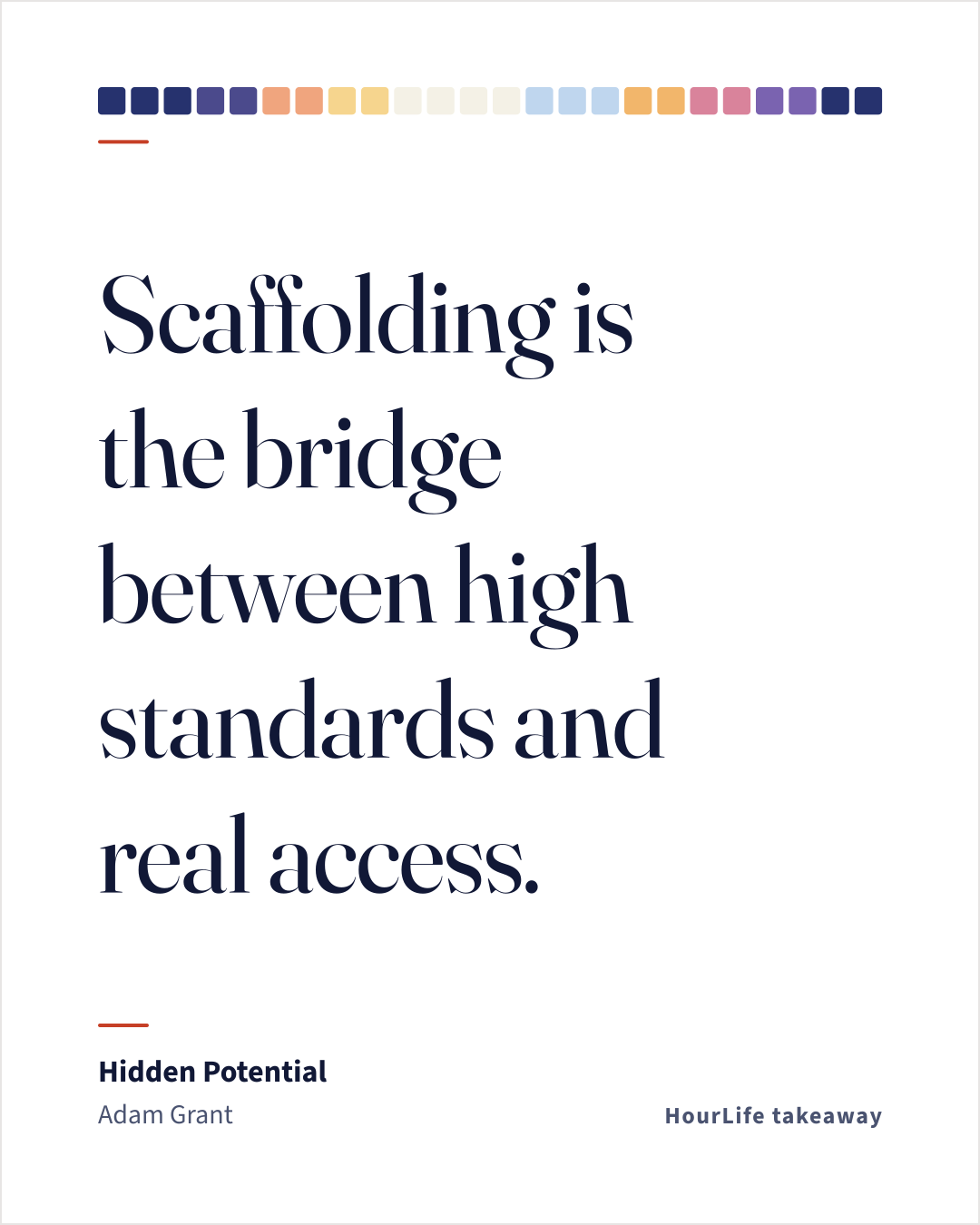
Scaffolding is the bridge between high standards and real access.
The book's most useful idea is that support should not lower the bar. It should help people reach a higher bar until they can stand on their own.
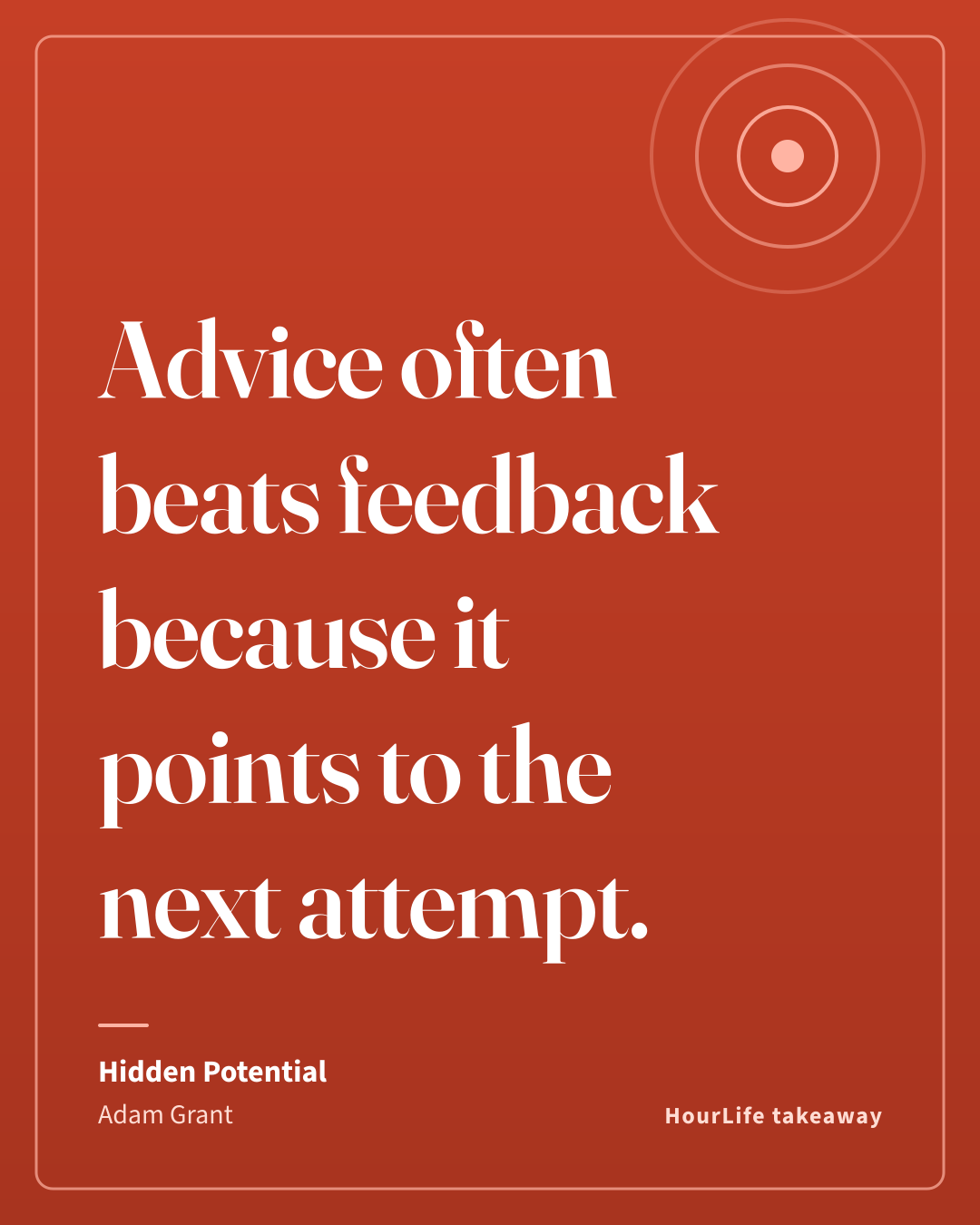
Advice often beats feedback because it points to the next attempt.
Feedback can trap people in what already happened. Advice turns attention toward a concrete next move, which is where improvement actually happens.
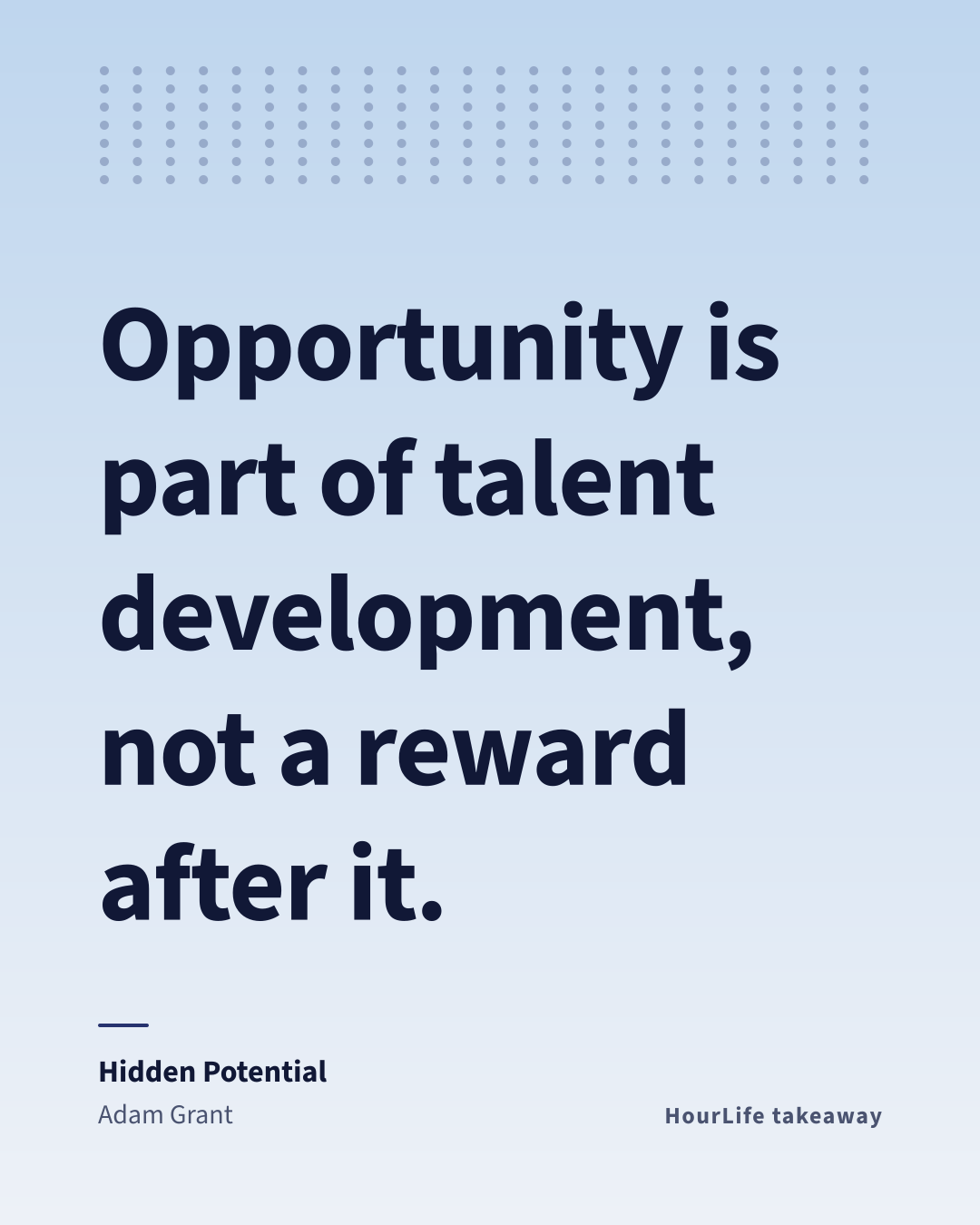
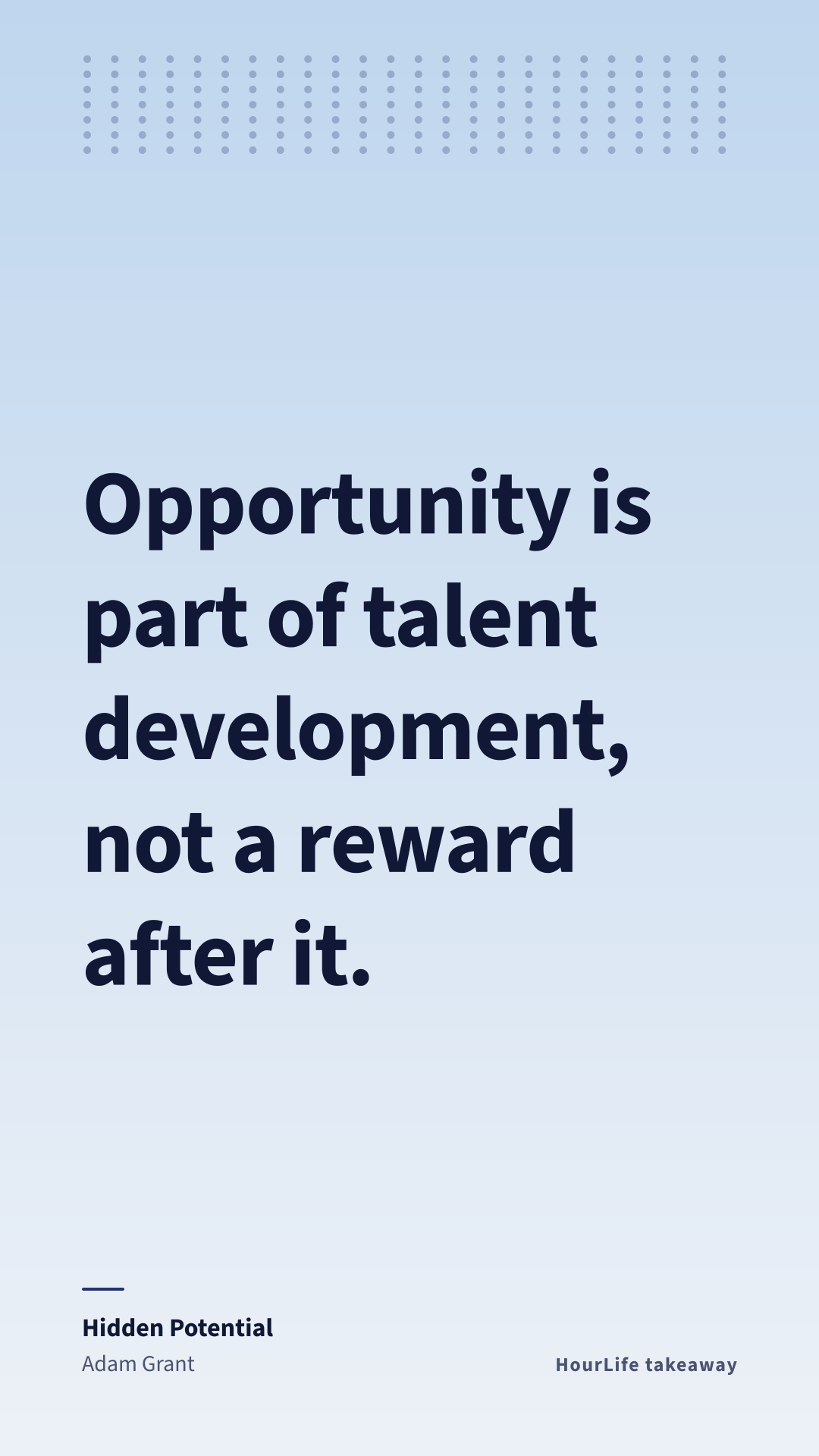
Opportunity is part of talent development, not a reward after it.
Hidden potential stays hidden when people never get the right assignment, mentor, classroom, team, or second chance to reveal it.
The slope matters more than the snapshot.
A single performance score tells you where someone is. The pattern of correction, persistence, and learning tells you where they might go.
HourLife turns these ideas into a daily system — goals, habits, focus, and reflection in one private place.