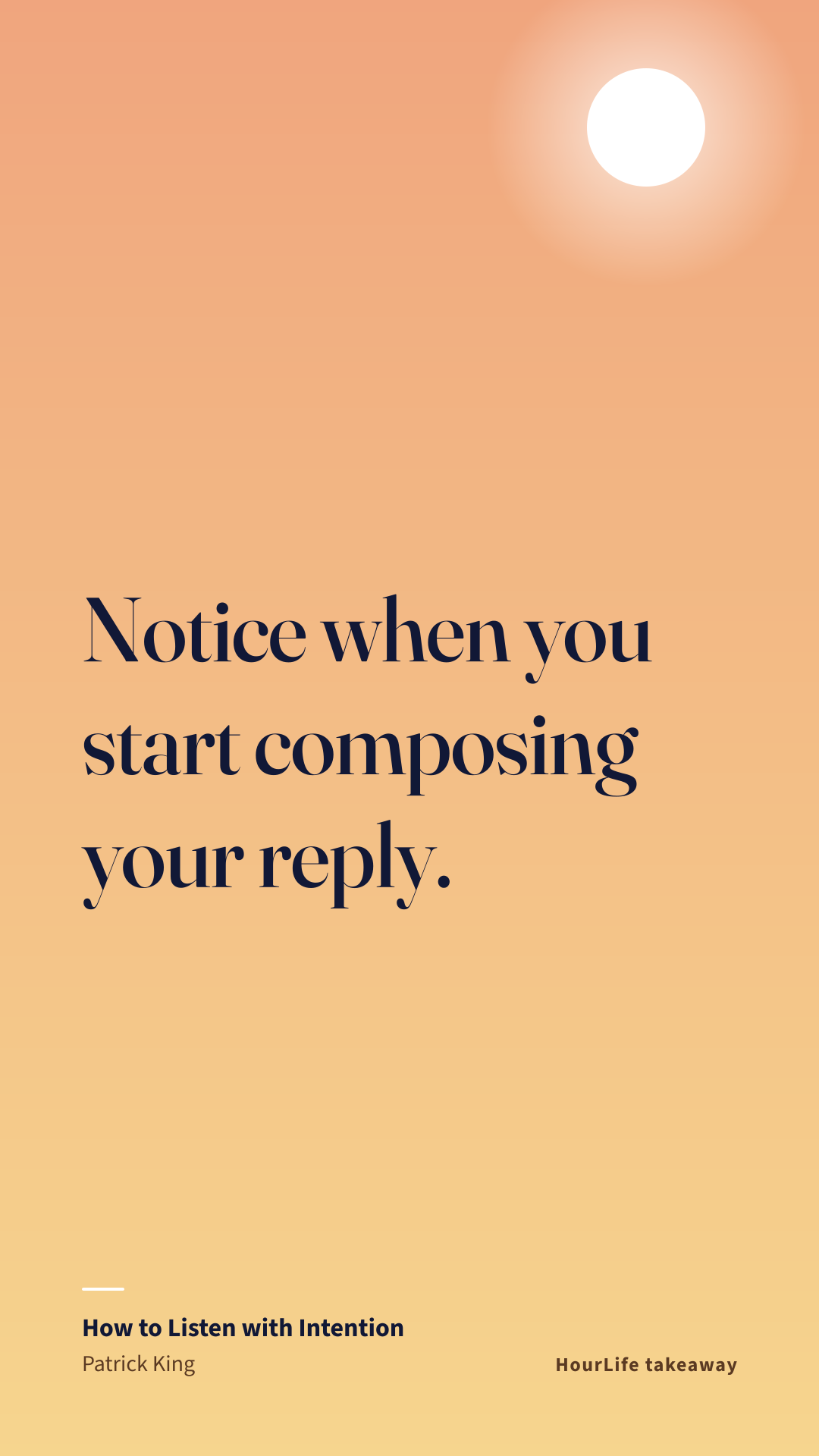
Notice when you start composing your reply.
A practical reminder for reading King: when your own answer takes over your attention, return to what the speaker is saying before you decide what to add.
6 memorable lines from How to Listen with Intention by Patrick King, each with the idea behind it.
As an Amazon Associate, HourLife earns from qualifying purchases.
Lines labelled “HourLife takeaway” are our wording of the book’s ideas and may paraphrase it. Only lines in quotation marks are the author’s own words, with where they appear. Check the book for exact wording before you quote it. Spot an error?
Notice when you start composing your reply.
A practical reminder for reading King: when your own answer takes over your attention, return to what the speaker is saying before you decide what to add.
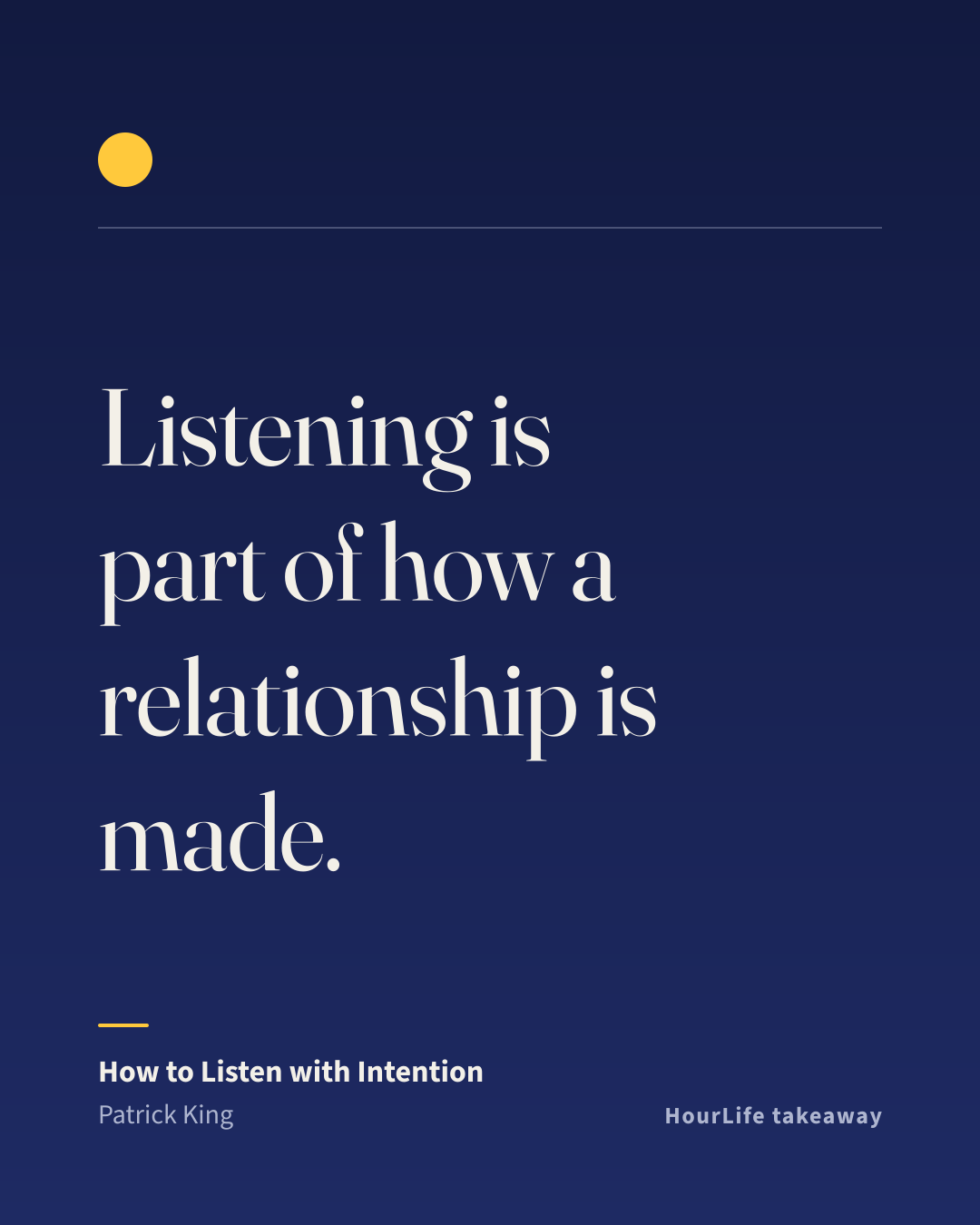
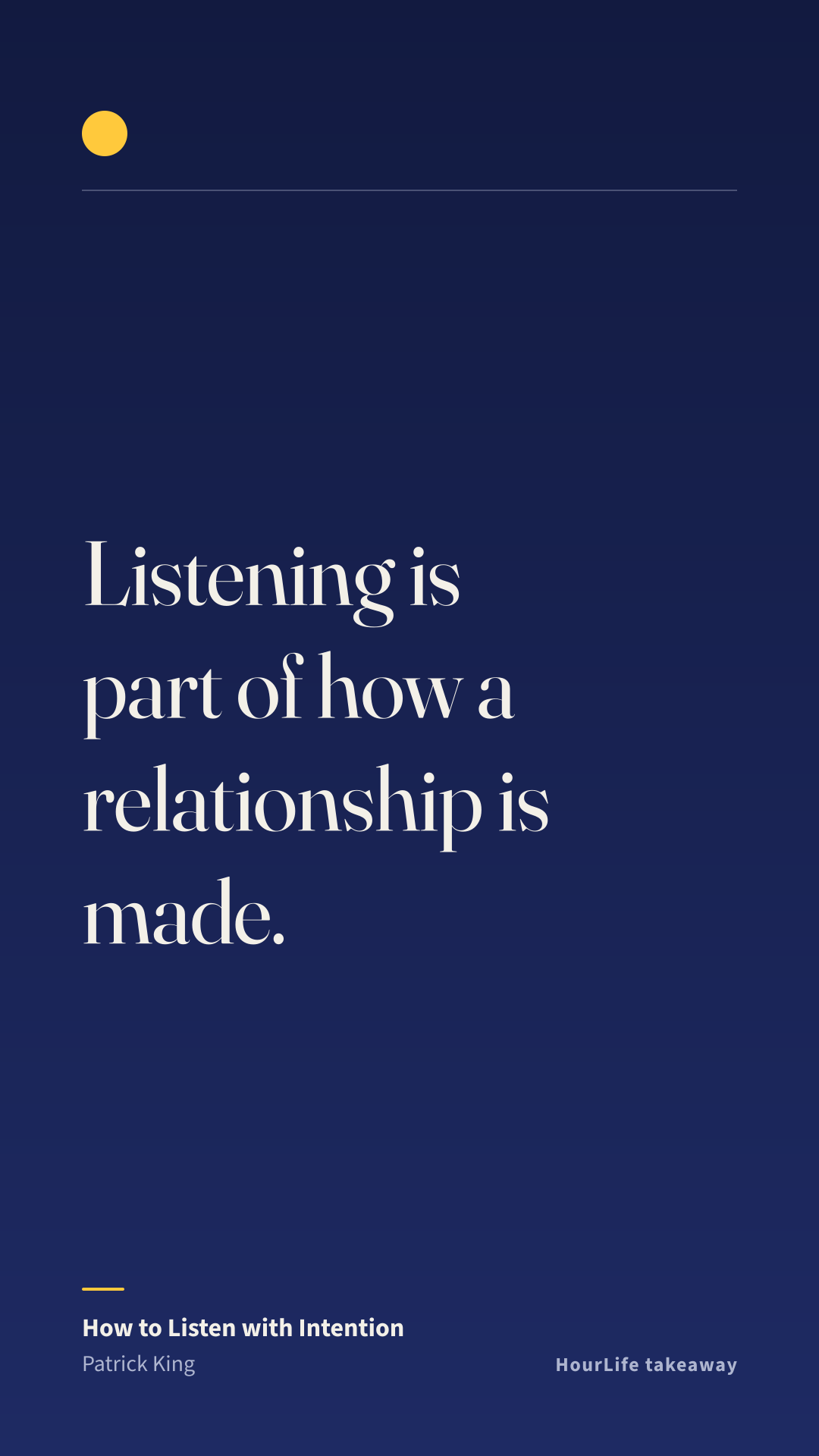
Listening is part of how a relationship is made.
The book’s concern is connection. Ask whether the other person had room to say what mattered, and whether your response showed that you heard it.
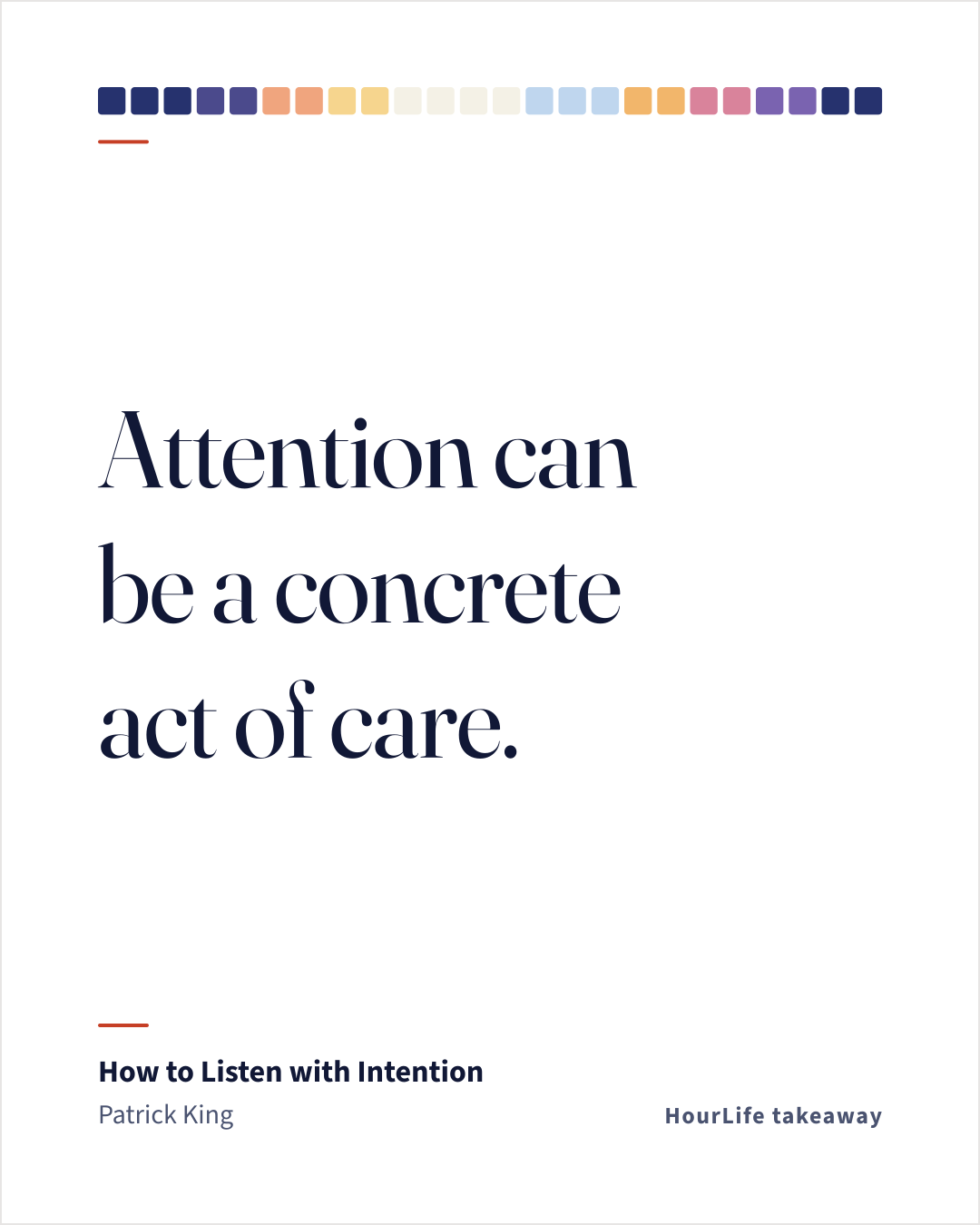
Attention can be a concrete act of care.
Put the phone aside, leave time for an answer, and follow the detail they offered. Make your attention visible in the way you participate.
A complaint may contain a need you have not understood.
Treat the meaning beneath the words as something to ask about. “What part of this matters most to you?” leaves more room than deciding for them.
Give the thought a chance to finish.
A pause can reveal whether the person has more to say. Reflect their meaning before moving to your own experience or advice.
Let the answer change your understanding.
A reflection is useful when it can be corrected. If they say you have missed the point, ask them to help you hear it more clearly.
HourLife turns these ideas into a daily system — goals, habits, focus, and reflection in one private place.