Motivation is not a personality trait. It is a standard you decide to uphold when comfort argues otherwise.
Burchard's main argument is agency: motivated people are usually not waiting for emotion, they are enforcing a declared standard.
6 memorable lines from The Motivation Manifesto by Brendon Burchard, each with the idea behind it.
As an Amazon Associate, HourLife earns from qualifying purchases.
Lines labelled “HourLife takeaway” are our wording of the book’s ideas and may paraphrase it. Only lines in quotation marks are the author’s own words, with where they appear. Check the book for exact wording before you quote it. Spot an error?
Motivation is not a personality trait. It is a standard you decide to uphold when comfort argues otherwise.
Burchard's main argument is agency: motivated people are usually not waiting for emotion, they are enforcing a declared standard.
Fear does not disappear before action. It retreats after repeated acts of courage.
The manifesto treats fear as expected friction, not a stop sign. Courage is trained through exposure, not contemplation.
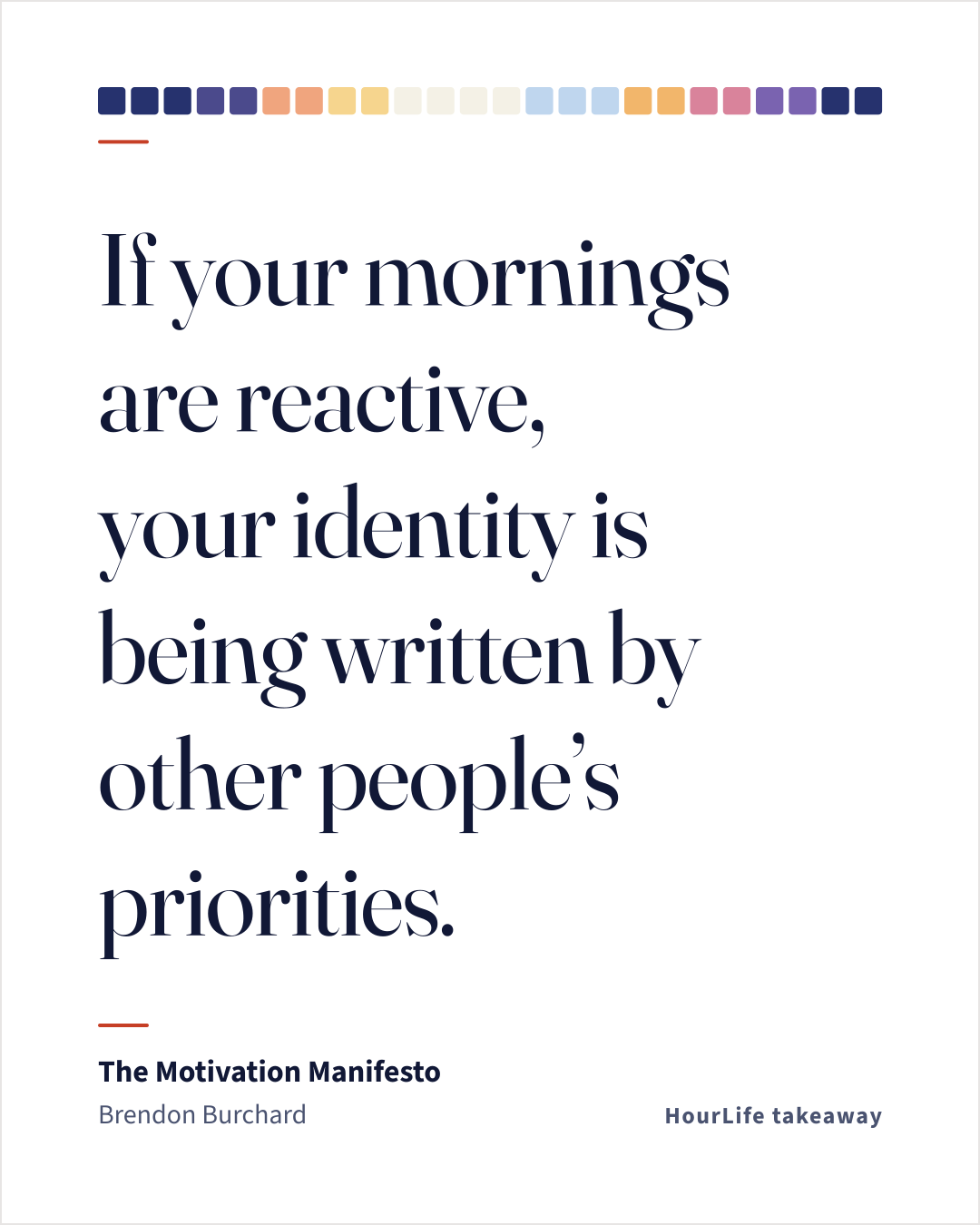
If your mornings are reactive, your identity is being written by other people’s priorities.
Burchard emphasizes owning the first part of the day. The first hour is a leadership decision, not a scheduling detail.
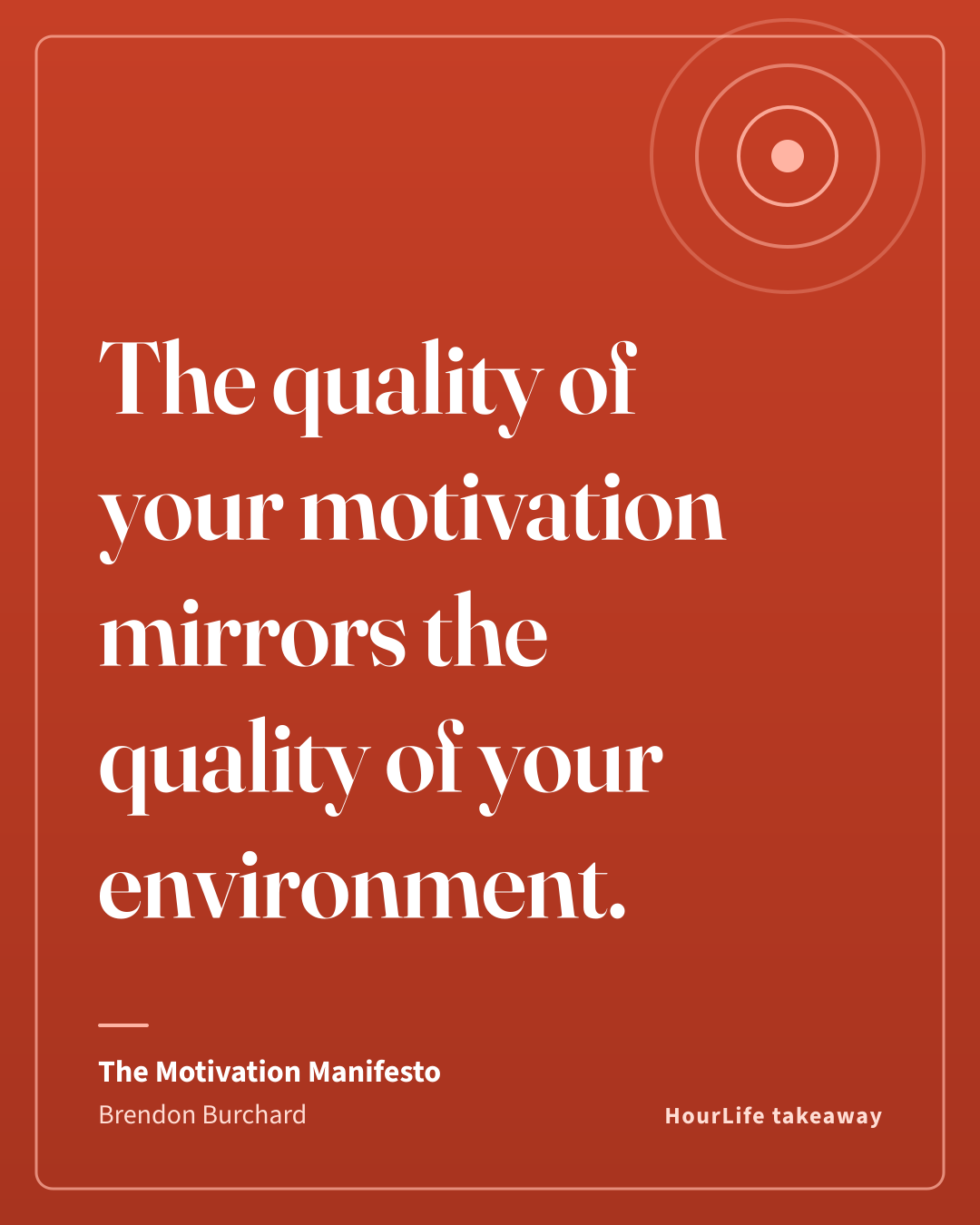
The quality of your motivation mirrors the quality of your environment.
Motivation is easier when cues, tools, and accountability are designed in advance. Architecture reduces emotional negotiation.
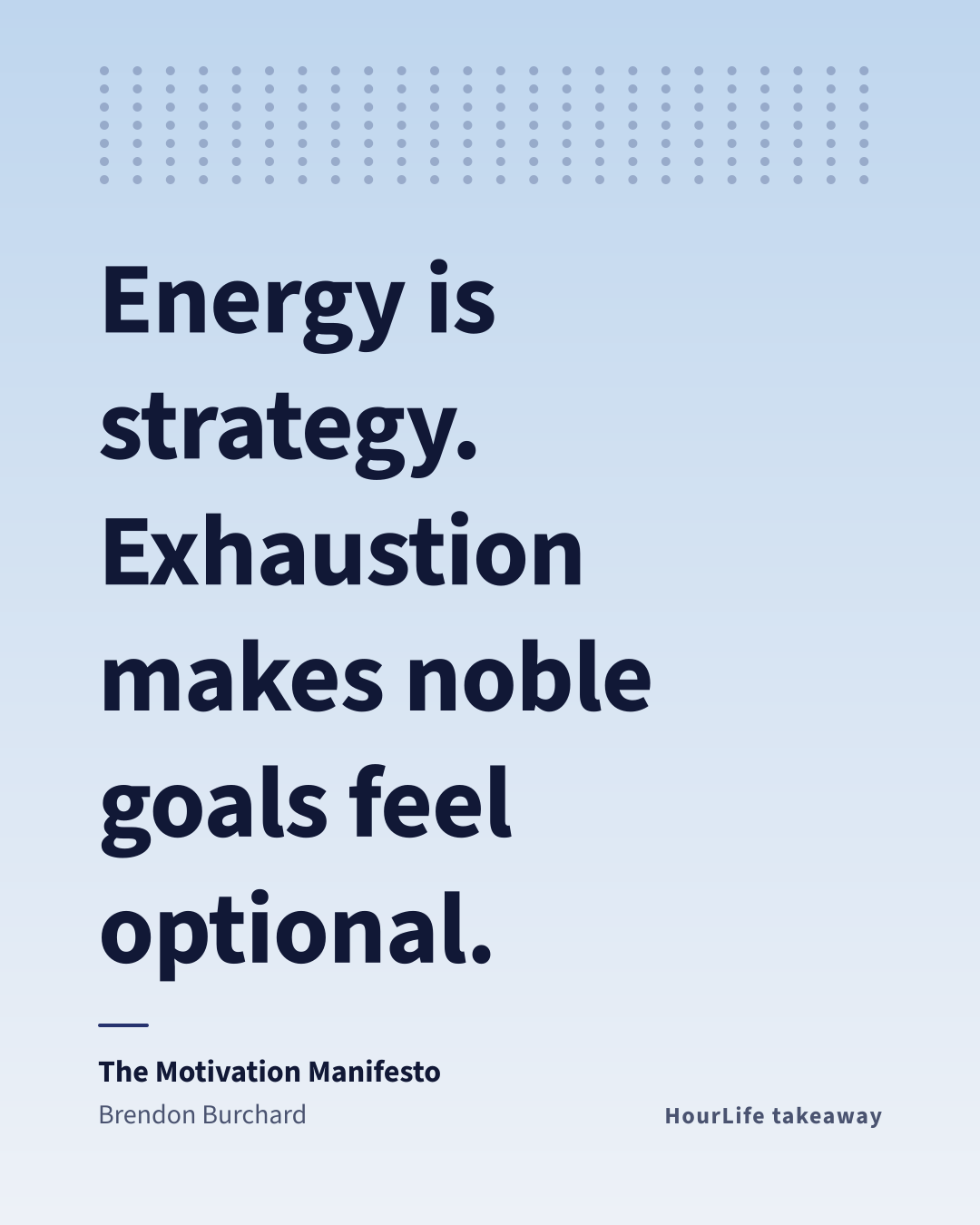
Energy is strategy. Exhaustion makes noble goals feel optional.
He rejects the martyr model of success. Sustainable motivation requires recovery, boundaries, and deliberate restoration.
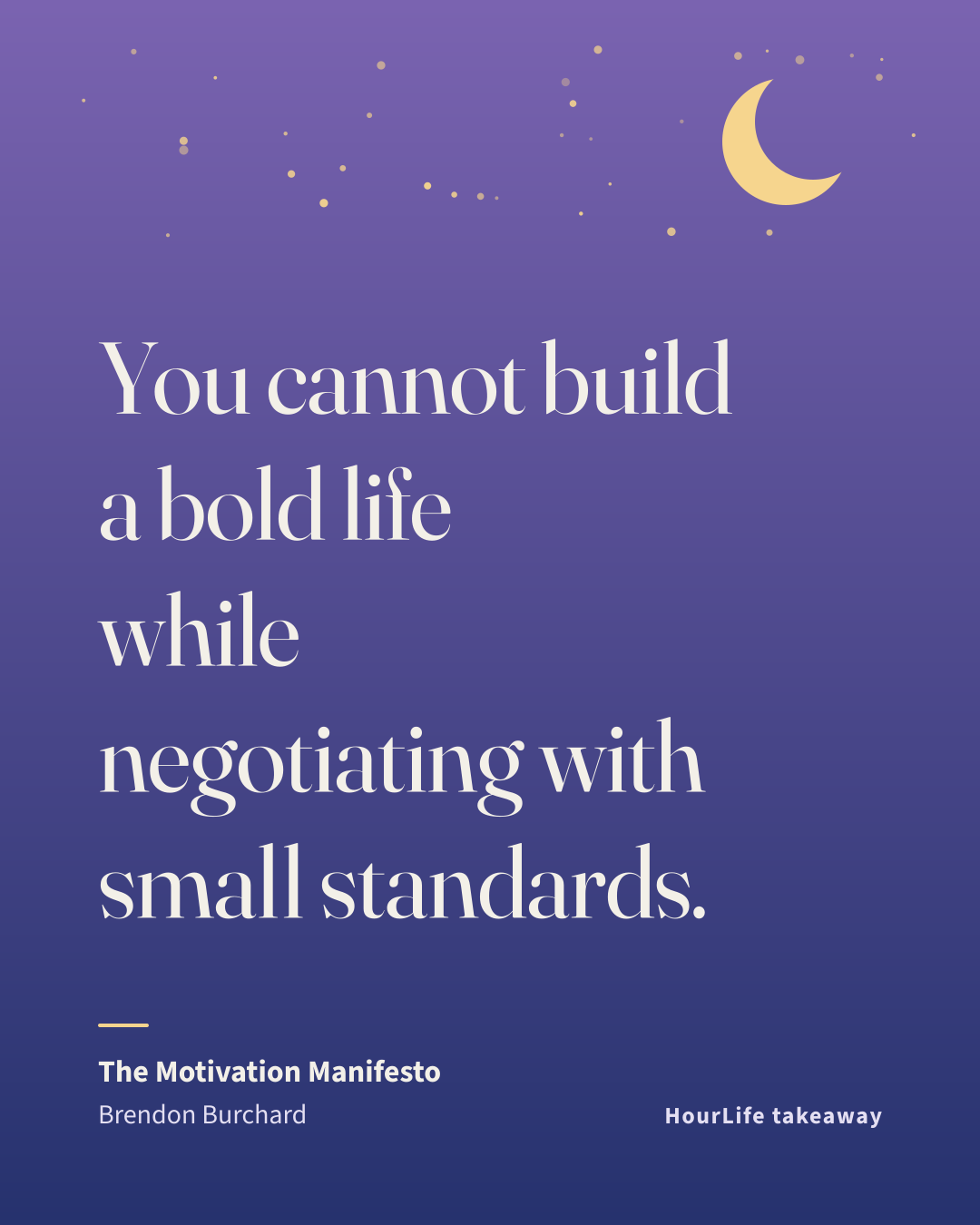
You cannot build a bold life while negotiating with small standards.
The manifesto presses for identity-level commitments. Small standards produce small behavior; raised standards reshape outcomes.
HourLife turns these ideas into a daily system — goals, habits, focus, and reflection in one private place.