Wealth is what you do not see.
Housel's cleanest distinction is between looking rich and actually being rich. Visible spending is evidence of money used. Hidden assets are evidence of flexibility preserved.
6 memorable lines from The Psychology of Money by Morgan Housel, each with the idea behind it.
As an Amazon Associate, HourLife earns from qualifying purchases.
Lines labelled “HourLife takeaway” are our wording of the book’s ideas and may paraphrase it. Only lines in quotation marks are the author’s own words, with where they appear. Check the book for exact wording before you quote it. Spot an error?
Wealth is what you do not see.
Housel's cleanest distinction is between looking rich and actually being rich. Visible spending is evidence of money used. Hidden assets are evidence of flexibility preserved.
Reasonable beats rational when the goal is survival.
A mathematically perfect plan that you abandon under stress is worse than a slightly less efficient one you can stick with for decades.
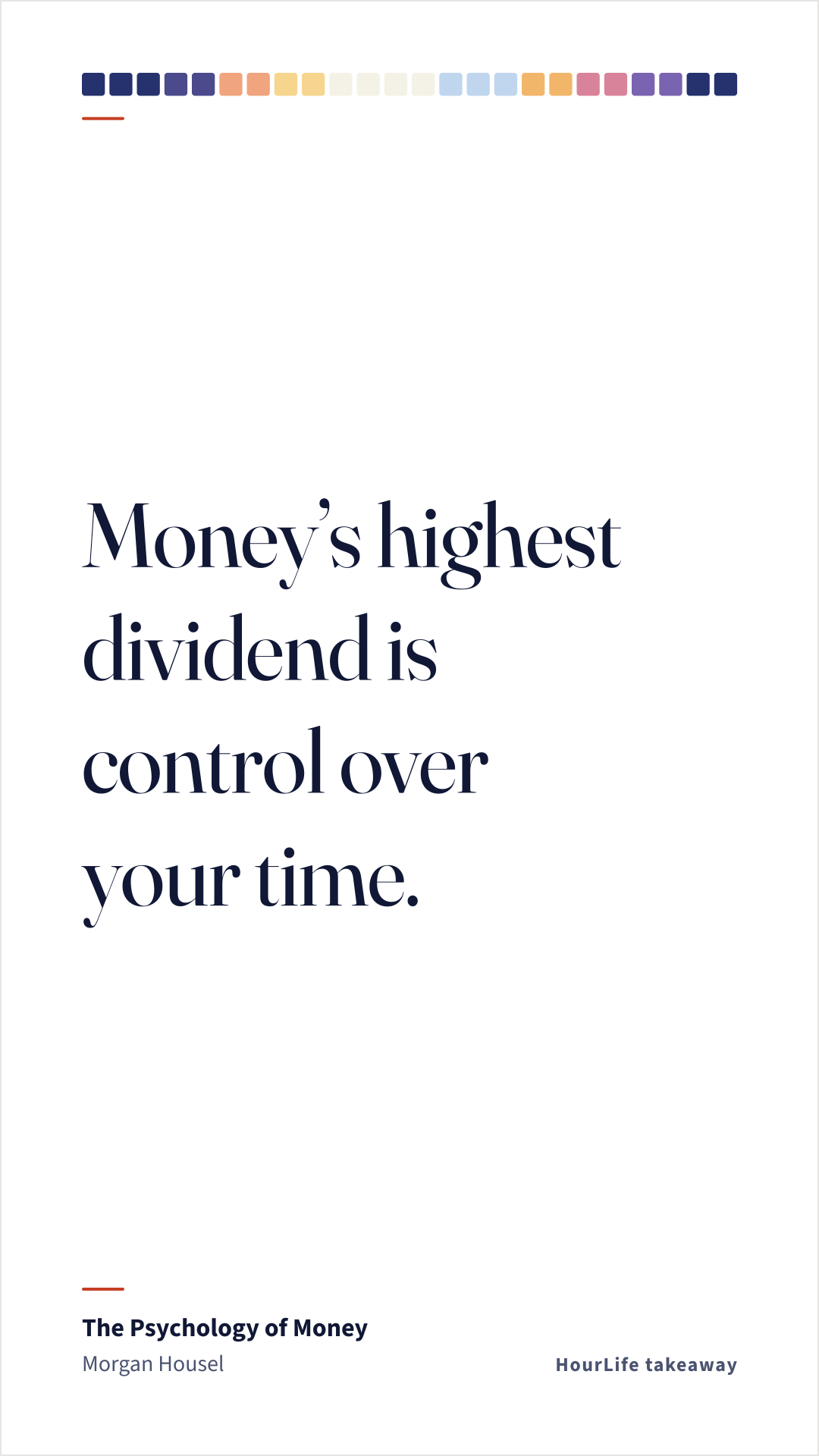
Money’s highest dividend is control over your time.
The book keeps redefining success away from trophies and toward autonomy: the ability to choose what you do, when you do it, and with whom.
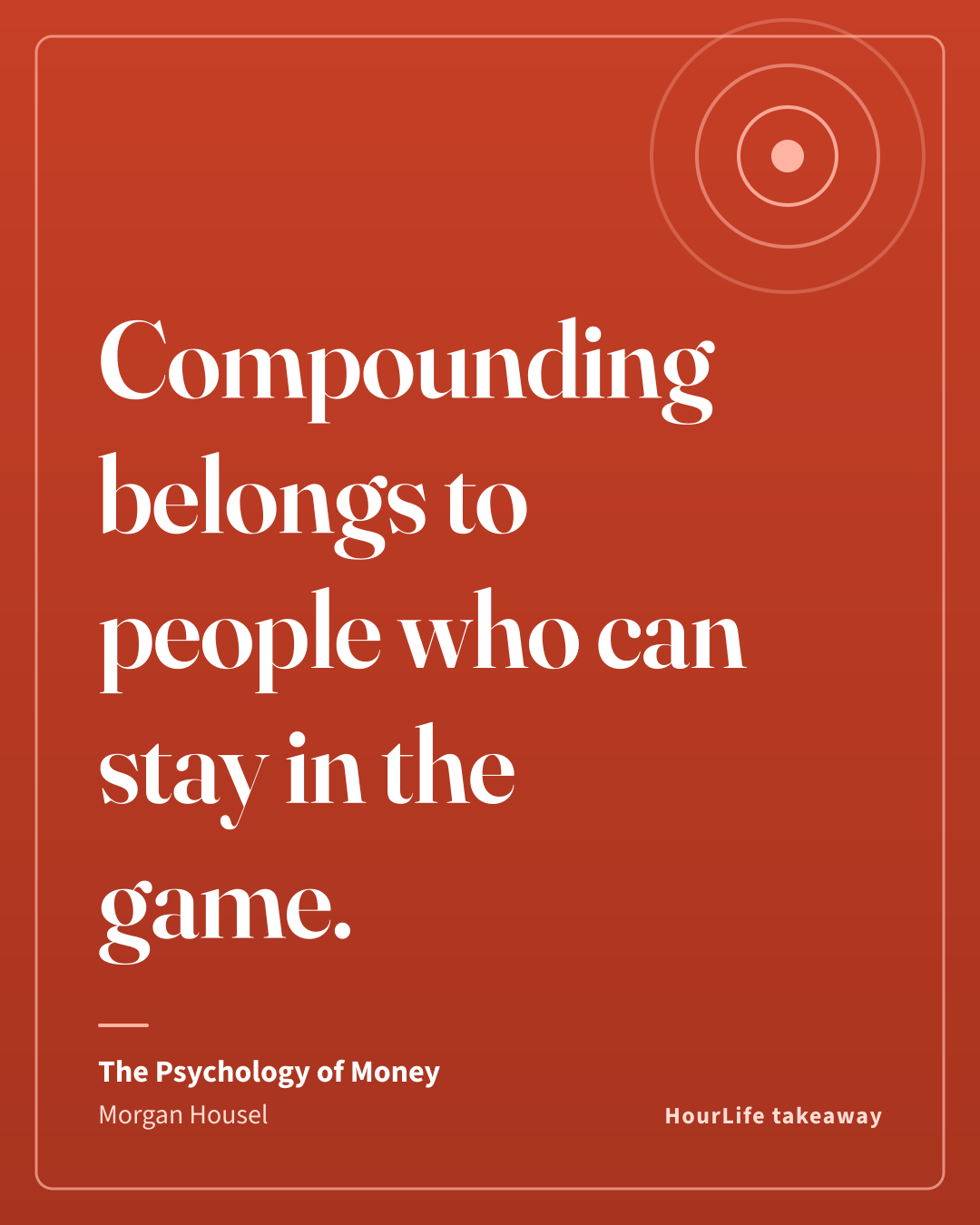
Compounding belongs to people who can stay in the game.
Returns matter, but endurance matters first. The extraordinary outcome usually comes from surviving ordinary stretches for a very long time.
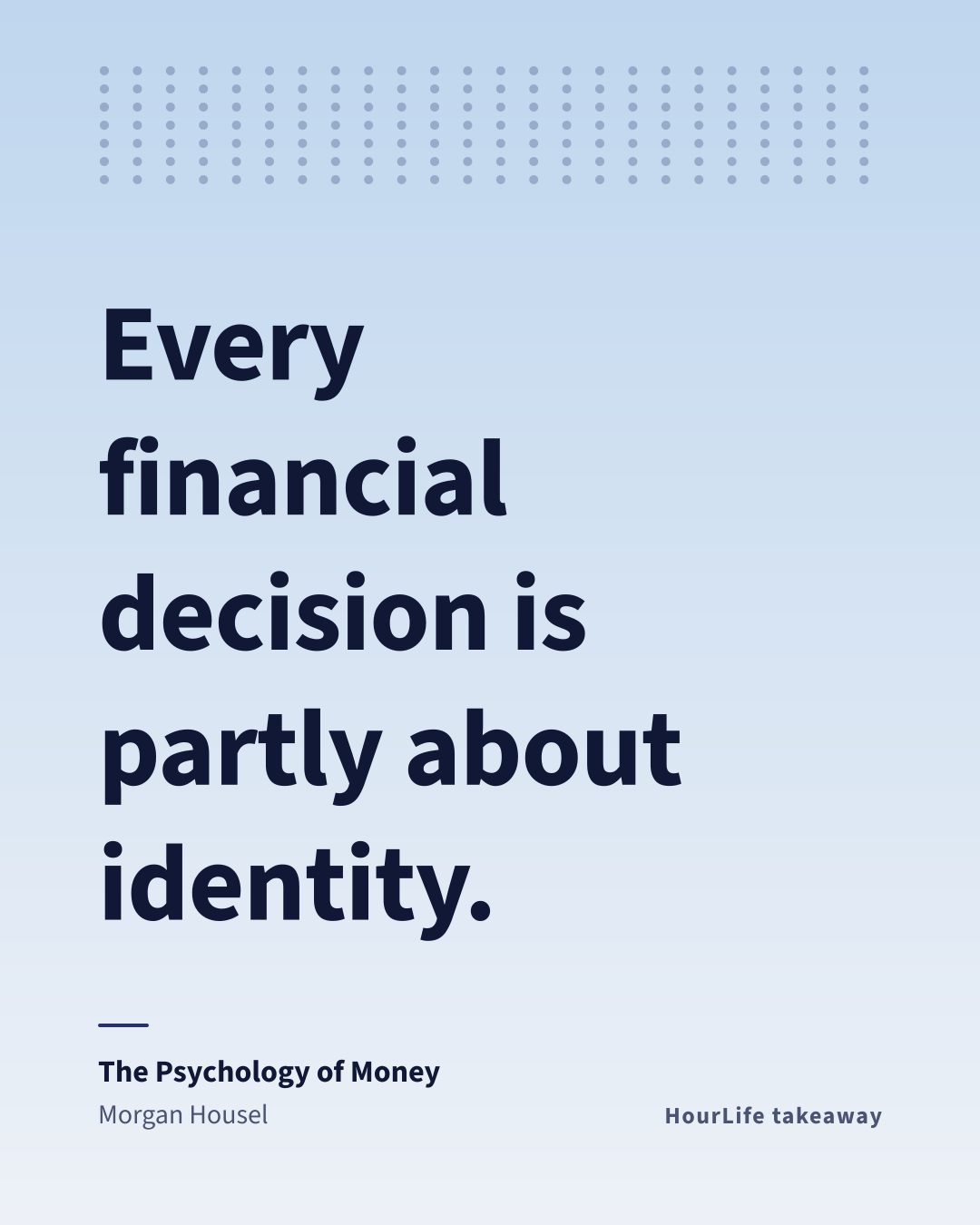
Every financial decision is partly about identity.
Envy, pride, fear, and comparison distort money choices long before spreadsheets arrive. Housel treats psychology as part of the balance sheet.
Enough is a financial skill.
Without a stopping point, ambition mutates into fragility. Knowing when more no longer improves your life is part of building a durable relationship with money.
HourLife turns these ideas into a daily system — goals, habits, focus, and reflection in one private place.