The book reframes time as a design material, not a neutral container. The question becomes less how much can I do and more what kind of work belongs in this hour?
Readers use this idea to stop treating every calendar slot as equal.
6 memorable lines from When by Daniel H. Pink, each with the idea behind it.
As an Amazon Associate, HourLife earns from qualifying purchases.
Lines labelled “HourLife takeaway” are our wording of the book’s ideas and may paraphrase it. Only lines in quotation marks are the author’s own words, with where they appear. Check the book for exact wording before you quote it. Spot an error?
The book reframes time as a design material, not a neutral container. The question becomes less how much can I do and more what kind of work belongs in this hour?
Readers use this idea to stop treating every calendar slot as equal.
Peak, trough, and rebound explain why the same person can be brilliant, sloppy, and imaginative on the same day.
The daily arc makes performance feel observable instead of mysterious.
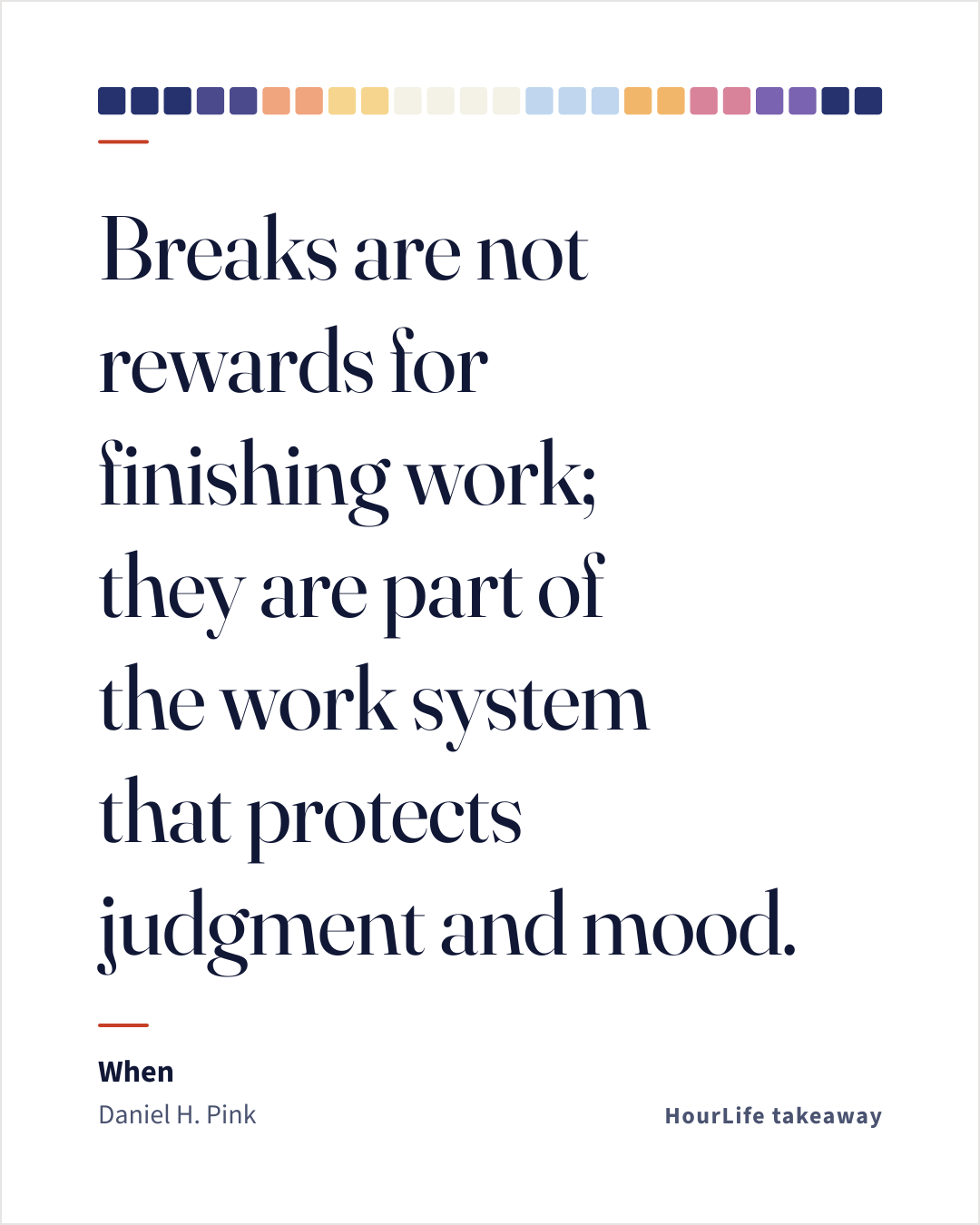
Breaks are not rewards for finishing work; they are part of the work system that protects judgment and mood.
This is one of Pink's most practical reversals for busy people.
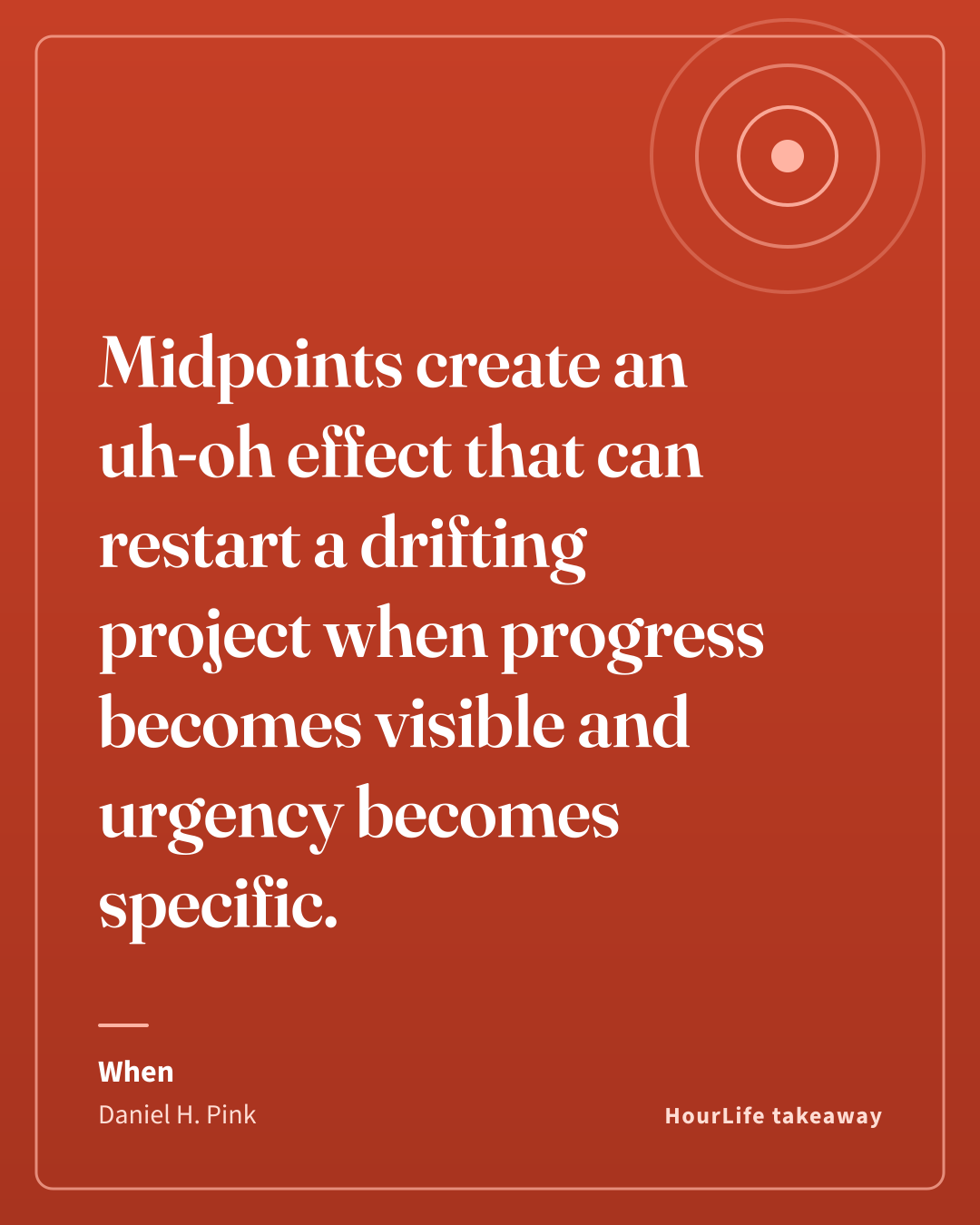
Midpoints create an uh-oh effect that can restart a drifting project when progress becomes visible and urgency becomes specific.
The halfway mark becomes a tool rather than a source of panic.
Endings shape memory. The final note of a day, meeting, project, or relationship can change what people carry forward.
The book's timing lens applies beyond productivity into meaning.
Social timing matters too: groups perform better when they synchronize starts, pauses, handoffs, and endings.
Timing becomes a team practice, not just a personal optimization trick.
HourLife turns these ideas into a daily system — goals, habits, focus, and reflection in one private place.