
How to use this template
Start by defining what done means. A vague goal produces vague action. A useful goal has a success definition you could show someone else, a next milestone, and a next action small enough to start this week.
Then connect the goal to the day. The most important part of this template is not the goal statement at the top. It is the daily action table. If a goal never changes what is on today's list, it stays an intention.
Fill in the risks section honestly. Some goals should change when the context changes, and naming those conditions in advance makes the later review far more useful than a yes or no on progress.
Turning a goal into work
The path from a goal to a finished thing is short when you write it out:
- Name the outcome and why it matters to you.
- Define what done looks like in observable terms.
- Pick the next visible milestone, not the whole roadmap.
- Write the smallest action that moves that milestone.
- Add a supporting habit only if a repeated behavior is genuinely required.
- Set a review date before you need one.
One goal with a next action beats five goals with none.
How HourLife supports this
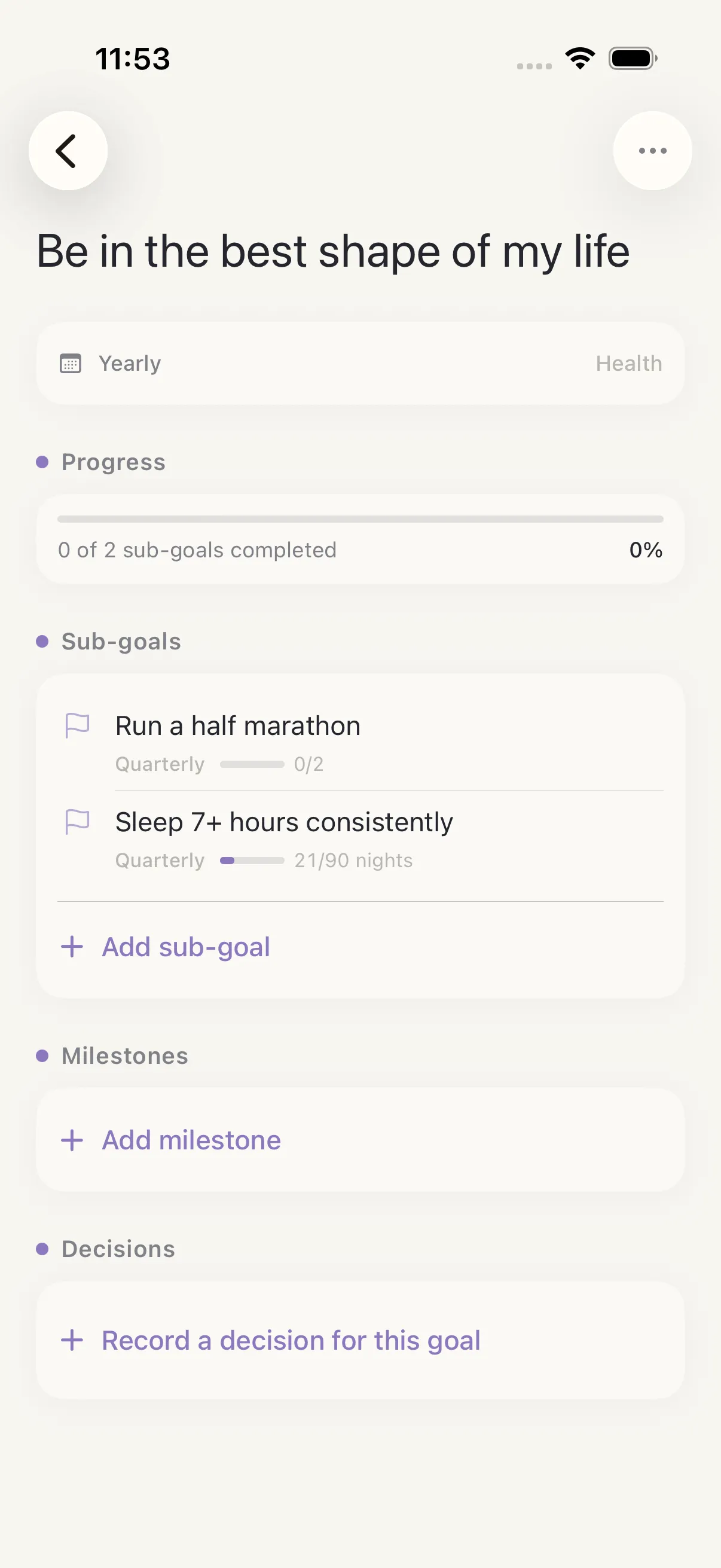
HourLife is built around connecting the bigger picture to the day: goal, project, task, focus session, review. Goals can carry projects and tasks, tasks can appear in Today, and focus sessions attach real effort rather than intention.
That makes progress something you can read back. Daily review, highlights, and journal records accumulate into a history, so a goal check-in draws on evidence instead of a percentage bar.